“Erin go Bragh” in Alberta

“What is the matter with the Calgary Irishmen?” asked a frustrated correspondent to the Calgary Herald in March 1916. The writer, who identified themself as ‘F. Fitzsimmons,’ was complaining about the city’s apparent lack of enthusiasm for St. Patrick’s Day, with no public events planned to celebrate the day. Fitzsimmons conceded that people were likely distracted by the war effort, but lamented that Calgary’s leading Irish citizens had gotten “cold feet” and failed to plan any celebrations. “If all Irishmen were like the Calgary bunch” closed the writer, then “‘God Save Ireland.’”

The language used by Fitzsimmons in this letter is highly suggestive. By stating that Calgary’s Irish leaders had gotten ‘cold feet,’ he/she was implying that they lacked the courage to publicly celebrate their ethnic heritage. Further, ‘God Save Ireland’ was an explicitly nationalist slogan, associated with the last words of three Irish revolutionaries executed by the British in 1867. In short, Fitzsimmons was calling for an open celebration of Irish identity that did not shy away from nationalist politics. What Fitzsimmons saw as a simple issue, however, was much more complex for the majority of Irish people in Calgary and across Alberta. The often turbulent politics of the Irish homeland, and the campaign for Irish autonomy from Britain, raised difficult questions about what it meant to be Irish in Canada in the early twentieth century. Did public expressions of Irish identity automatically imply support for Irish nationalist politics, or could the two issues be separated? Could a person support Irish nationalism and still affirm loyalty to Canada and, by extension, the British Empire? What was the best way to frame St. Patrick’s Day celebrations in such a way as to affirm devotion to both the Irish homeland and Canada? The stakes of these questions were heightened after 1914, as supporters of Irish nationalism were accused of threatening British imperial unity during a time of war, and again after Easter 1916, when Irish nationalists launched an uprising against British rule in Ireland.
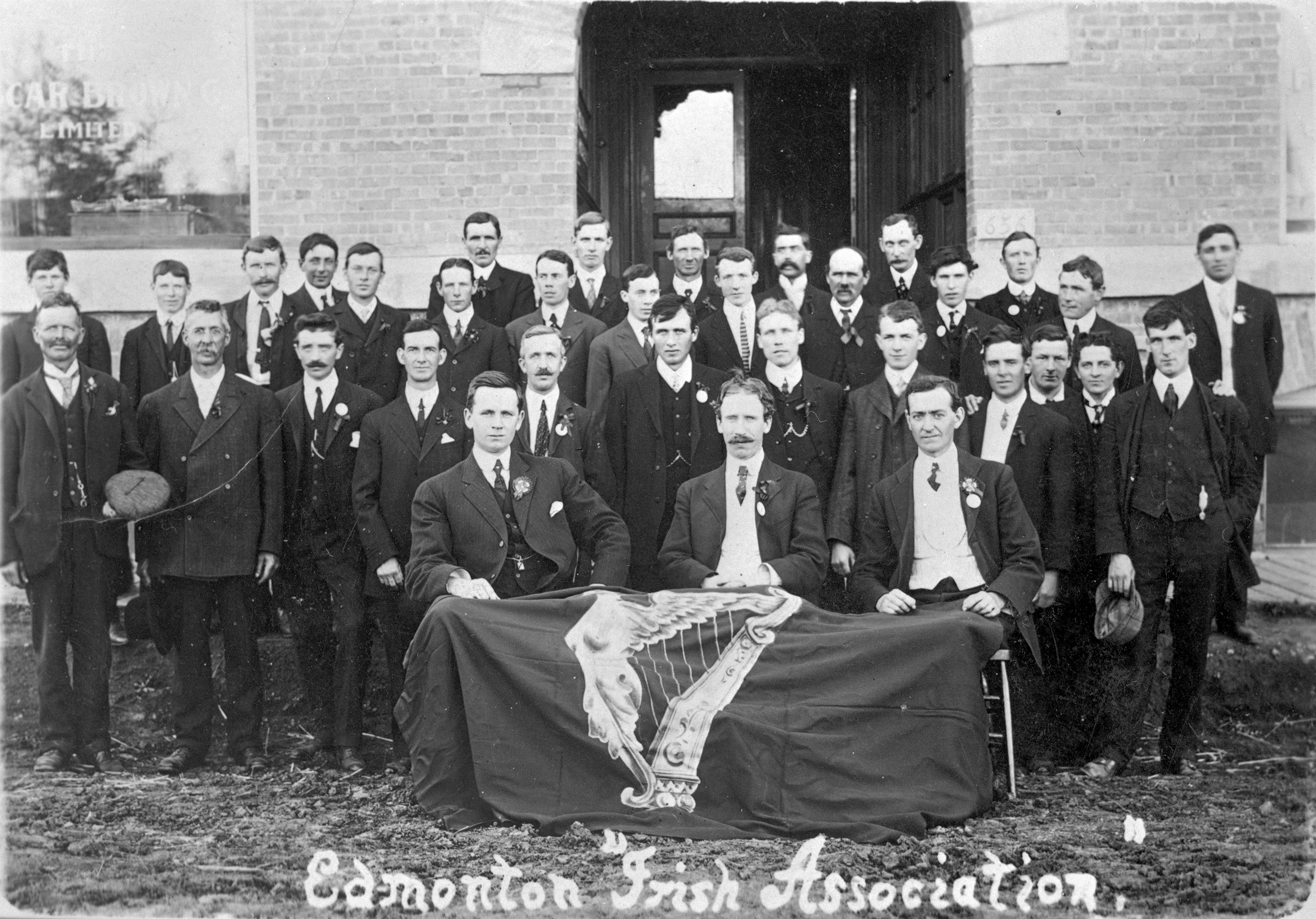
Group portrait of the Edmonton Irish Association (Provincial Archives of Alberta, A16110).

The uneasy relationship between Irish politics, identity and citizenship are reflected in the history of St. Patrick’s Day celebrations in early twentieth century Alberta. The general picture that emerges is of an Irish population that celebrated its ethnic heritage in ways that emphasized loyalty to Ireland, Canada and the British Empire. At particular times, such as the Great War (1914-18), this balancing act proved to be too difficult, and St. Patrick’s Day celebrations largely disappeared from public view. With the emergence of Ireland as an independent state in the early 1920s, Alberta’s Irish once again organized into associations dedicated to celebrating Irish heritage and St .Patrick’s Day soon emerged as an important event in the province.

The population boom of the early 1900s set the stage for significant St. Patrick’s Day celebrations in both Edmonton and Calgary. The 1916 census enumerated 58,068 Irish people in Alberta, of whom approximately 63% were Canadian-born descendants of Irish immigrants; 25% were American-born descendants of Irish immigrants; and 12% were direct immigrants from Ireland (most of whom had arrived in Canada between 1905 and 1914). The diverse origins of the province’s Irish population were reflected in the decorations chosen for the 1908 St. Patrick’s Day banquet at St. Mary’s Hall in Calgary – the platform was decorated with Union Jacks and American flags, over which hung a silk banner with the phrase “Erin go Bragh” (‘Ireland forever’). Toasts were delivered to ‘The King,’ ‘Canada,’ ‘Alberta,’ ‘The United States’ and ‘Ireland’s Future,’ and the event closed with a rousing rendition of “God Save the King,” leaving little doubt that the guests’ vision of ‘Ireland’s Future’ involved its continued association with the British Empire.

Similar scenes played out in Edmonton, where St. Patrick’s Day events were organized by the highly successful Edmonton Irish Association (EIA). Founded in 1909, the EIA grew to approximately three hundred members by 1911. While primarily a cultural and literary organization, the EIA also sponsored a number of sports teams, including the Irish Canadian Amateur Athletic Association, the Hibernian Football Club and the Irish Canadian Baseball Club. A 1911 profile in the Edmonton Capital stressed that the EIA was “non-political and non-sectarian in character,” and had “from the outset avoided the controversial.” This emphasis echoed the celebrations in Calgary, and indeed reflected a broader pattern across the Prairie West, where explicitly non-political and non-sectarian Irish associations emerged in the early 1900s.

With the worsening Home Rule crisis in Ireland in 1913-1914, it became increasingly difficult for Alberta’s Irish to continue to celebrate their ethnic heritage in an explicitly non-political way. In April 1914, for example, the Edmonton Capital advertised a meeting for those interested in forming an “Imperial British-Irish Association,” suggesting that some of the city’s Irish were no longer satisfied with the Edmonton Irish Association. The outbreak of World War One added another layer of complexity, as the British government put Ireland’s political future on hold for the duration of the war. By the end of 1914, the Edmonton Irish Association had dissolved. Similarly, there is no evidence of any Irish fraternal or benevolent societies in Calgary during the war years. Despite the non-political and non-sectarian nature of pre-war St. Patrick’s Day events, there appears to have been little appetite for Irish organization and celebration during the Great War or the subsequent Irish War of Independence (1919-21). The one exception is a short lived organization called the Irish Glee Club, which emerged in Calgary in 1919 to organize small concerts on St. Patrick’s Day. These events, however, were on a considerably smaller scale than those held prior to World War One.

With the end of the Irish War of Independence and the emergence of the Irish Free State in 1922, the province’s Irish citizens once again organized to publicly celebrate Ireland’s patron saint. Potentially awkward questions about how to reconcile devotion to Ireland and loyalty to Canada and/or Britain faded, as Alberta’s Irish honoured both Irish independence and service to Canada during the Great War. At the 1924 St. Patrick’s Day banquet, for example, the St. Patrick’s Society of Calgary celebrated Irish independence, but placed equal if not greater emphasis on Irish service, “loyalty and allegiance” to Canada during the Great War. The evening’s keynote speaker refused to take a political stance on the divisive civil war in Ireland, commenting only that “the Irish had settled the matter for themselves,” and that whether it had been settled “rightly or wrongly” was irrelevant to him as a Canadian. In place of politics, the new St. Patrick’s Society focused on the celebration of Irish folk culture, arts and crafts. A similar situation emerged in Edmonton, with the founding of the new St. Patrick’s Society of Edmonton in 1927. Like its Calgary counterpart, the society emphasized culture and avoided politics – a safely depoliticized way to honour Ireland. By the mid-1920s, Alberta’s Irish had found a comfortable balance between celebrating their Irish heritage and their contributions to Canadian growth and development.

The history of St. Patrick’s Day celebrations in Alberta thus yields significant insight into the province’s early Irish community. St. Patrick’s Day events represented an important point of intersection between the ethnic community and the rest of the population. It was a holiday intimately associated with Ireland, but widely observed by mainstream society – as such, it offered Irish organizations the opportunity to represent their heritage and their community’s values to a wide and receptive audience. The nature of those celebrations (or the absence of any organized events) is a reflection of what image Irish community leaders wanted to project to the larger population. At times, the tense situation in Ireland complicated those efforts and made it difficult for Alberta’s Irish to publicly embrace and celebrate their ethnic heritage. By the 1920s, such concerns had faded and St. Patrick’s Day celebrations flourished once again.

Written by: Allan Rowe, Historic Places Research Officer.

Further reading:

Cronin, Mike, and Daryl Adair. The Wearing of the Green: A History of St. Patrick’s Day. London & New York: Routledge, 2001.

African American Immigration to Alberta

In the early twentieth century, hundreds of African Americans crossed the border in search of land and opportunity in the Prairie West. Many of these immigrants ultimately settled in Alberta, establishing communities such as Wildwood, Keystone (now Breton), Campsie and Amber Valley. The story of these settlers is one of perseverance on both sides of the border – driven out of the United States by persecution and violence, African American migrants had to overcome racist hostility and other barriers on the road to successful settlement in Alberta.

In the minds of many African Americans in the late nineteenth and early twentieth centuries, Canada was a land of freedom and opportunity. As detailed by historian Sarah-Jane Mathieu, this positive view was rooted in several factors, including Canada’s status as a refuge for runaway slaves in the mid-nineteenth century, and a general perception that African Americans would enjoy fairer treatment under Canadian than American law. This idealization of Canada was heightened by the harsh reality of life for many African Americans, as promises of land and equality in the Reconstruction Era (1865-1877) gave way to segregation, violence and legally-sanctioned discrimination. By the late nineteenth century, many African Americans viewed migration to Canada with increasing favour.

L-R: Thomas Mapp, Richard Hinton, Geneva Mapp, Eva Mapp, Ferris Mapp, Nouvella Hinton, an African American family from Amber Valley, Alberta, ca. 1925 (Glenbow Archives, NA-316-1).
L-R: Thomas Mapp, Richard Hinton, Geneva Mapp, Eva Mapp, Ferris Mapp, and Nouvella Hinton, from Amber Valley, Alberta, ca. 1925 (Glenbow Archives, NA-316-1).

This view of Canada as a haven for African American settlers would prove overly optimistic. A sharp increase in African American immigration to western Canada in 1909-1910 sparked a severe backlash across the region, including several cities in Alberta. The Edmonton Board of Trade prepared a petition calling on the federal government to act against the “serious menace” of ‘negro’ immigration, warning that it would result in “bitter race hatred” if left unchecked. The petition was endorsed by the Boards of Trade for Fort Saskatchewan, Strathcona and Calgary, and was signed by over three thousand citizens of Edmonton, at a time when the city’s population was only twenty-four thousand. Newspapers printed sensationalist stories about the impending “invasion of Negroes,” and while some voices were raised in support of the rights of African American settlers, the federal government came under intense public pressure to take action.

This pressure placed the Government of Canada in a very awkward position. The government was reluctant to openly admit that its immigration policy was dictated by considerations of race (even though that precedent had already been set with the passage of the Chinese Head Tax in 1885). Specifically barring African Americans from entry into Canada at a time when the government was working hard to attract white American homesteaders would create a glaring inconsistency in Canada’s immigration policy. Further, the Canadian government did not want to risk a public dispute with the American government over the issue by explicitly banning the free movement of some of its people across the border.

Instead of enacting an outright ban, the Canadian government took other measures to try and restrict African American immigration. For example, medical examiners stationed at border crossings were instructed to scrutinize African American immigrants for any medical condition that would justify their exclusion, quietly offering a financial bonus to doctors for each African American immigrant rejected at the border. Inspectors were also told to make certain that African American immigrants had adequate cash on hand to successfully homestead – at least two hundred dollars – even though such agents had the power to waive such a requirement for white immigrants. Frustratingly for the federal government, these measures were met with limited success – African American immigrants proved to be healthy, prosperous and well prepared for the challenge that met them at the border. The influx of African American immigrants thus continued through 1910 and 1911.

Facing continued pressure to act, Minister of the Interior Frank Oliver drafted an Order in Council in 1911 that banned “any immigrants belonging to the Negro race” from entering Canada for one year. The Order in Council was approved by Prime Minister Laurier, but the government continued to stall, fearing that enacting an open ban would harm Canadian-American relations at a time when the two governments were negotiating a major trade agreement. Instead, the Canadian government made one final effort to cut off African American immigration at the source by deploying agents to warn potential immigrants about Canada’s harsh and unforgiving climate. The hypocrisy of this strategy was remarkable – at a time when the Canadian government was working hard to assure white Americans that rumours of Canada’s cold climate were exaggerated, other agents were telling potential African American immigrants that Canada was a barren, arctic wasteland. These measures, coupled with the hostile reception already given to African American immigrants, worked to discourage potential migrants and African American immigration to Canada declined after 1911.

To some degree, this legacy of hostility dictated the settlement patterns of those African Americans, about one thousand, who did make it across the border to settle in Alberta in this period. Rather than accepting the best available land as individual homesteaders, they tended to settle in somewhat isolated rural areas where land was plentiful, if somewhat marginal, and they could establish self-sufficient, independent communities. The isolation that allowed such cohesive communities to form also worked against their survival, however, as the children of the first wave of immigrants tended to move on to Alberta’s urban centres in search of better economic opportunity. Of the early settlements, Amber Valley proved to be the most durable, surviving through the Great Depression and World War Two as an important centre of African American settlement in the province.

The story of early twentieth-century African American immigration is an important chapter in the broader history of agricultural settlement in the Canadian west. African Americans sought land and security in Canada at a time when the federal government was eager to attract homesteaders with farming experience. There was little question that the African Americans fleeing Oklahoma possessed the qualifications that the Canadian government prized in immigrants – even the Edmonton Board of Trade’s petition did not deny that “these people may be good farmers or good citizens.” However, the backlash against them, at a time when they comprised up a miniscule proportion of the population, illustrates the extent to which considerations of race entered into immigration policy and what constituted, in the public mind, a desirable settler for Canada. Approximately one thousand African Americans managed to find a home in Alberta between 1909 and 1911, but the public reaction and sustained effort to keep them from entering Canada speaks volumes about the challenges they had to overcome on the road to starting a new life in Alberta.

Written by: Allan Rowe, Historic Places Research Officer.

Sources:

Mathieu, Sarah-Jane. North of the Colour Line: Migration and Black Resistance in Canada, 1870-1955. Chapel Hill: The University of North Carolina Press, 2010.

Palmer, Howard, and Tamara Palmer, eds. Peoples of Alberta: Portraits of Cultural Diversity. Saskatoon: Western Producer Prairie Books, 1985.

Winks, Robin W. The Blacks in Canada: A History. 2nd ed. Montreal & Kingston: McGill-Queen’s University Press, 1997.

Ancient Origins, Modern Marvels in Drumheller

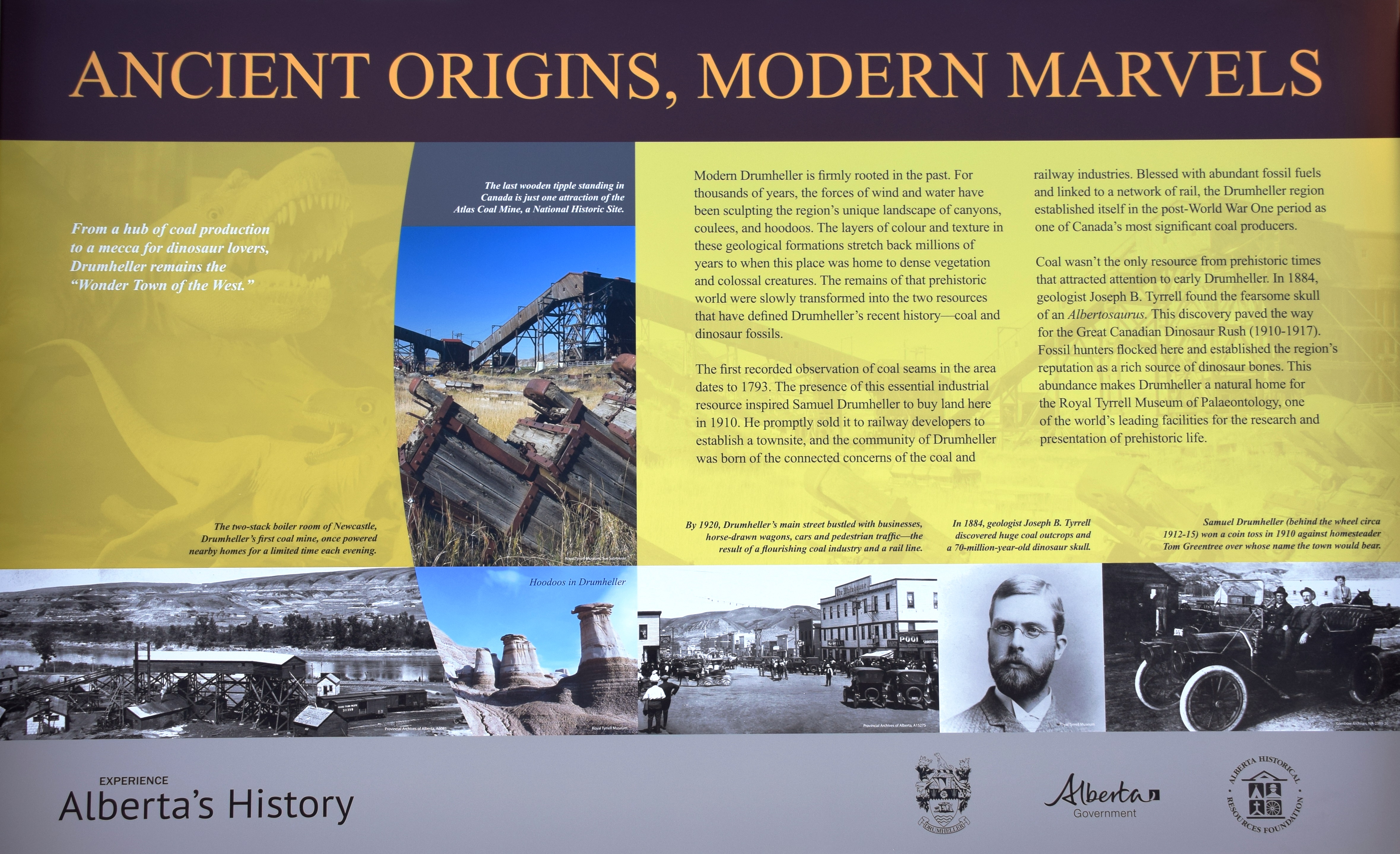
Visitors to the Town of Drumheller can now learn more about the history, geology and natural resources of the community with the installation of a new Alberta Historical Resources Foundation Heritage Marker. Combining text with contemporary and archival photographs, the marker describes how the forces of nature shaped the area’s striking landscape and left the region rich in the two resources that would define Drumheller’s future – coal and dinosaur fossils.

Heritage Marker along Highway 9, north of Drumheller.
The Drumheller Heritage Marker up-close (Courtesy of Stefan Cieslik, Historic Resources Management Branch).

It was coal that first attracted the attention of railway and mining investors, who established a townsite to support the booming coal industry. By the end of World War One, the Drumheller region was one of Canada’s leading coal producers. The area also caught the imagination of fossil hunters, who flocked to the region from 1910 onward in search of fossils like the massive Albertosaurus skull unearthed by Joseph B. Tyrrell in 1884. The abundance of dinosaur bones made Drumheller a natural home for the Royal Tyrrell Museum of Palaeontology, one of the world’s leading facilities for the research and presentation of prehistoric life.

The marker was installed on November 20, 2014, along Highway 9, one-and-a-half kilometers north of the Town of Drumheller. The Town of Drumheller applied for the development of the heritage marker through the Alberta Heritage Markers Program. The program was established in 1955 to promote greater awareness of the historic people, places, events and themes that have defined the character of our province. The program brings Alberta’s dynamic history alive through heritage markers placed at roadside pullouts, within parks and in other community locales.

Written by: Allan Rowe, Historic Places Research Officer.

Trick or Treat, Halloween in Alberta

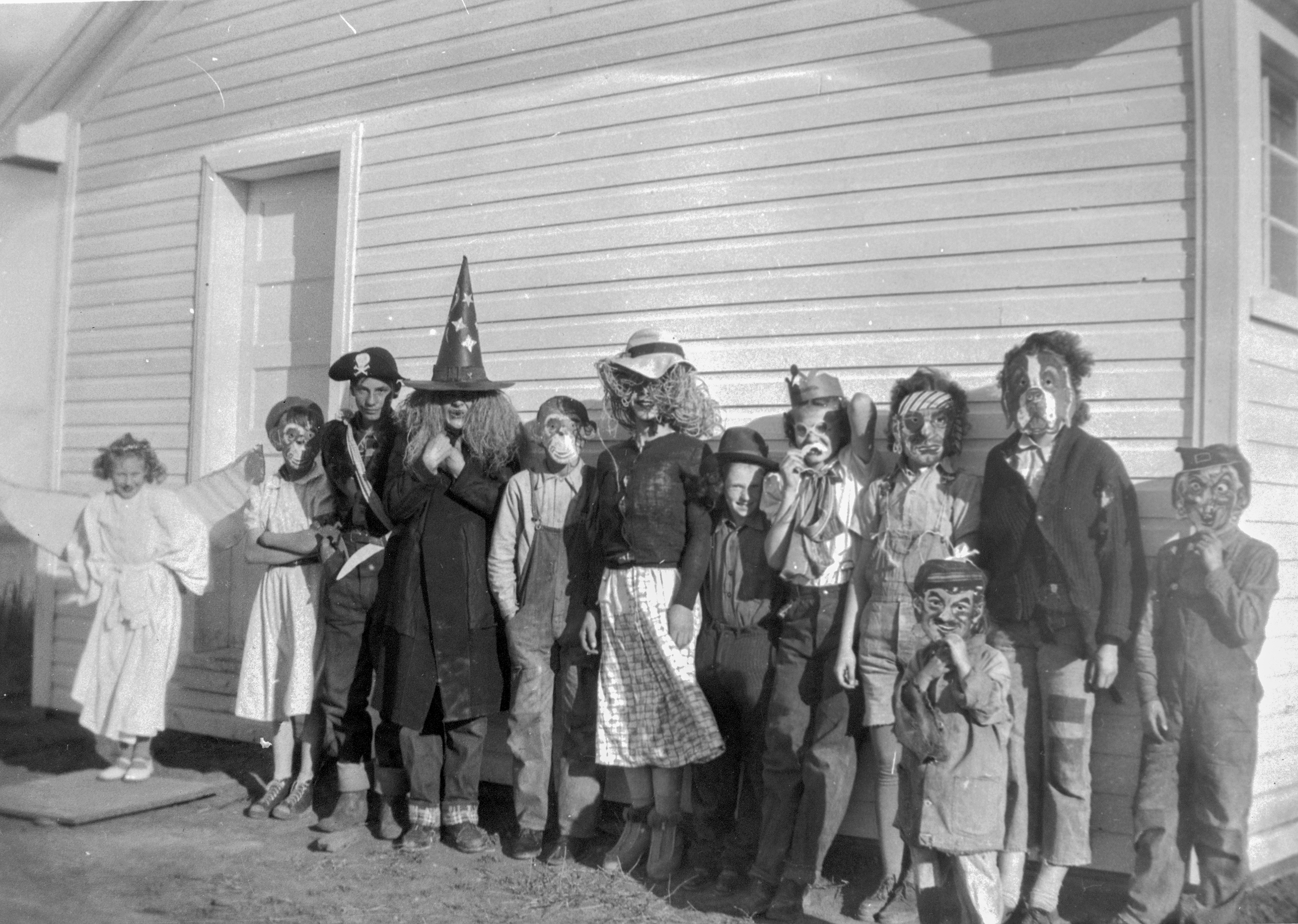
Halloween is tomorrow. I wanted to take this opportunity to look back at the different ways Halloween has been celebrated in Alberta since the late nineteenth century. Early newspapers offer a fascinating window into how we celebrated Halloween, ranging from private and public parties, to ‘trick-or-treating’ and pranking.

Halloween at the Wineglass Ranch near Brocket (1907-08). Courtesy of the Glenbow Archives, NA-4035-188.

Like most holidays, Halloween is a fusion of ancient and modern traditions. Halloween traces its origins back thousands of years to the Celtic festival of Samhain (October 31 – November 1), which marked the start of the Celtic New Year. It was believed that the boundary between the physical and supernatural worlds broke down during Samhain, and spirits, ghosts and fairies could cross over and walk the earth. The festival was Christianized in the ninth century becoming ‘All Hallows Day’ (November 1, now generally called ‘All Saints Day’). Though Christianized, many of the customs associated with Samhain endured, particularly among the Celtic peoples of Ireland, Scotland and Wales. These cultural traditions were brought to North America by waves of immigrants and evolved into what we know today as Halloween.

From the start Halloween in Alberta was marked by “general nuisance” and “sundry pranks,” such as soaping windows, unhinging gates, or moving property. Reporting on Halloween in Innisfail in 1897, the Calgary Herald noted that “several small buildings took the usual trot around town during the evening.” Generally speaking, these items were left where they could be found – the goal was to create a nuisance, not to steal. Occasionally, however, people were left searching for their property the next day. In 1925, a farmer posted a notice in the Red Deer News requesting that the “Halloween revellers” who removed his garden gate “kindly return the same forthwith or indicate…where they have taken it.” Carriages and cars were also popular targets for Halloween pranksters, who enjoyed taking them for a joyride. Such tricks occasionally had unforeseen consequences: One prankster in Rockyford, for example, got more than he bargained for in 1919 when he took a car for a joyride, only to find that there was a baby asleep in the backseat. After a frantic half-hour of searching, the car was found abandoned at the town’s bank, and the baby was found “fast asleep as if nothing had happened at all.”

Aftermath of Halloween pranking in Airdrie (1930s). Courtesy of the Glenbow Archives, NA-598-12.

The boundaries of acceptable behaviour on Halloween were quite clear – pranks that could be rectified with minimal expense or effort were considered harmless fun, but any destruction of property was strongly condemned. The Edmonton Bulletin commented in 1912 that Halloween was a “recognized night of immunity from punishment” for pranksters, provided that “no serious depredations were committed.” Similar comments from newspapers across Alberta suggest a broad tolerance for relatively benign pranks, though it is also clear that this tolerance had limits. Halloween in Edmonton in 1917, for example, was marked by significant destruction of property – Chinese laundries were targeted for vandalism, sidewalks were torn up, and many fences and outbuildings were heavily damaged or destroyed. The Edmonton Bulletin expressed indignation at the night’s events, denouncing revellers as “youthful marauders” and commenting that their actions had “quite passed the limits of joking.” The Raymond Recorder struck a similar tone in a 1932 editorial pleading for a “Sane Halloween.” “Why is there any amusement in destroying private property?” asked the clearly frustrated editor, who issued a rather ominous warning to potential troublemakers: “any person who is the victim of meddlesome pranks on Halloween night…is quite within the law in protecting his property, and if anyone is hurt, the trespasser is entirely at fault.”

It is also clear from newspaper coverage that different standards of behaviour were expected from boys and girls. Minor social disorder on Halloween was clearly viewed as a by-product of youthful exuberance and a rite of passage –for boys. Most newspapers were very clear that Halloween pranks had been carried out by “the boys of the town” or “the male portion of the population.” In 1914, the Didsbury Pioneer urged the “boys and girls” to “conduct themselves properly in their fun and not damage other peoples’ property,” but such statements explicitly suggesting that girls participated in pranking are very rare. The extent to which girls actually took part in Halloween disorder is unclear, but such behaviour would clearly have not been socially acceptable.

Trick-or-treating near Little Smokey River (ca. 1950). Courtesy of the Provincial Archives of Alberta, A15910.

For those Albertans who wanted no part in pranking, Halloween offered many other opportunities for celebration. Archival photographs and newspaper stories reveal that private costume parties have been a part of Halloween fun in Alberta since the late nineteenth century. Similarly, a wide range of clubs and societies hosted costume parties for their members. The Edmonton Caledonian Society pointed with satisfaction to the Celtic roots of the holiday, inviting its members in 1908 to “celebrate this old-fashioned Scottish festival” (as late as 1919, the city’s Scots were promoting Halloween as a “peculiarly Scotch night”). During World War One, Halloween balls doubled as fundraisers for causes associated with the war effort, such as the Red Cross and the Returned Soldiers’ Fund. Such events offered people a respectable way to celebrate Halloween, free from any association with pranking or social disorder.

The most famous activity associated with Halloween, of course, is ‘trick-or-treating.’ The practice of going door-to-door in costume asking for food may echo cultural traditions that date back hundreds of years to the British Isles. The use of the term ‘trick-or-treat’ – and the implied promise that giving youth a treat will stop them from taking your carriage for a joyride – appears to be a North American phenomenon. “The kids are expected to be out in full forces on their quest for Halloween treats” remarked the Western Globe in 1938, “and the old cry of ‘Trick or Treat’ will be the password.” The popularity of ‘trick-or-treating’ took off after World War Two, and the annual custom anchored itself as the most characteristic practise associated with Halloween night.

From the ancient customs of Celtic Britain to the practise of dressing up and collecting candy from strangers, Halloween has undergone a significant transformation over the past several thousand years. However you choose to observe the day, have a safe and happy Halloween!

Written by: Allan Rowe, Historic Places Research Officer.

Sources and Further Reading

Peel’s Prairie Provinces, Digitized Newspaper Collection.   http://peel.library.ualberta.ca/newspapers/

Rogers, Nicholas. Halloween: From Pagan Ritual to Party Night. New York: Oxford University Press, 2002.

Santino, Jack. “Halloween in America: Contemporary Customs and Performances.” Western Folklore 42,1 (January 1983), 1-20.

Alberta Coal!

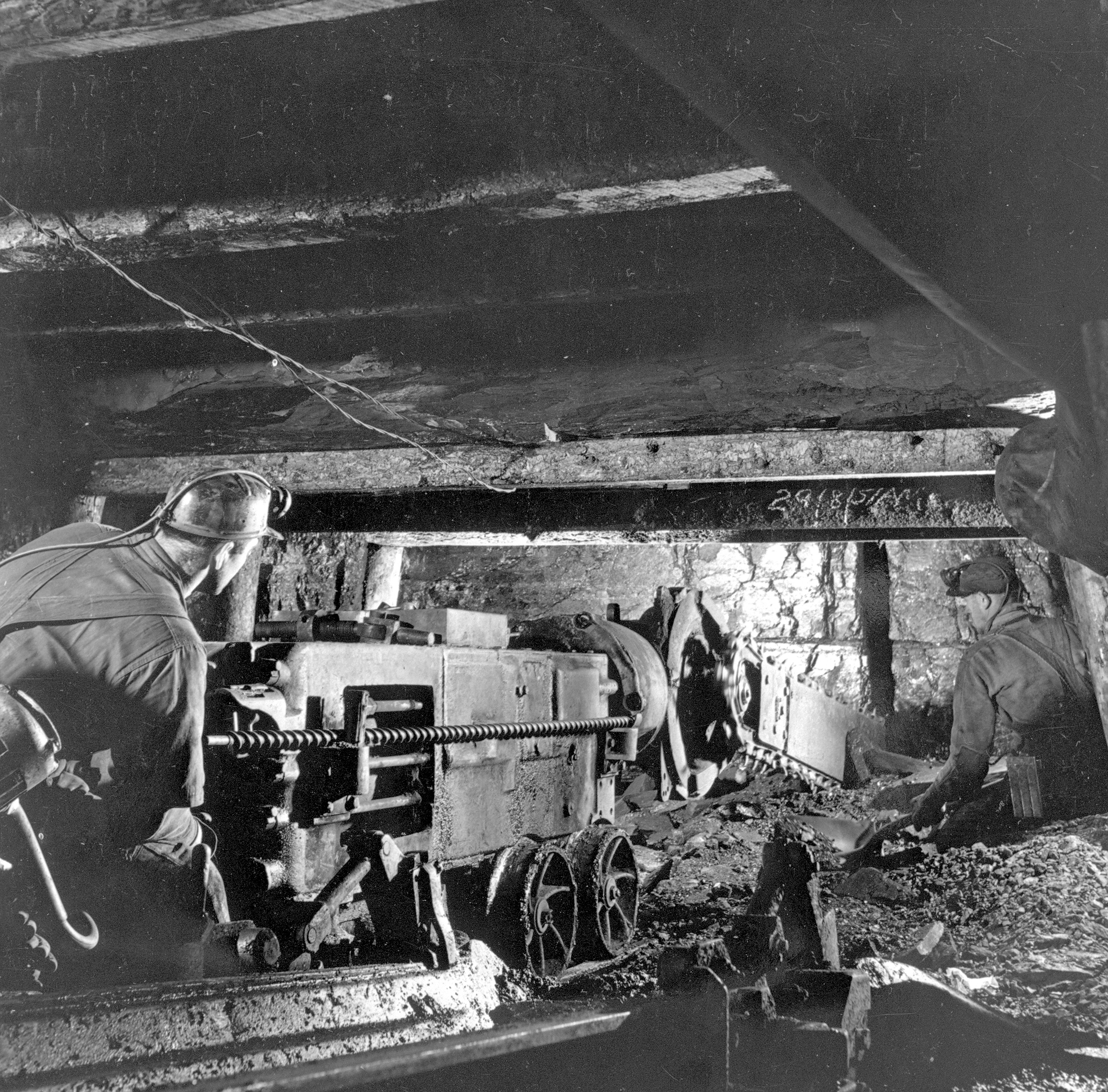
Miners using a universal coal cutter at Lethbridge Collieries, ca. 1950 Source: Provincial Archives of Alberta, A9908
Miners using a universal coal cutter at Lethbridge Collieries, ca. 1950
Source: Provincial Archives of Alberta, A9908

Alberta Culture has developed a comprehensive website that explores and promotes a deeper appreciation for the rich history of energy resources in our province and their role in shaping Alberta’s past, present, and future. The Energy Resources Heritage website explores the Alberta history of coal, conventional oil, oil sands, natural gas, electricity and alternative energy. It also profiles Bitumount, the pioneering industrial facility north of Fort McMurray that laid the foundations for Alberta’s modern oil sands industry.

The coal section of the Energy Resource Heritage Website examines the history of coal from the earliest times through the Industrial Revolution and the development of the coal industry in Alberta. It explores how the science and technology associated with coal mining has evolved, and how the industry responded to the sharp decline in demand for coal with the rise of oil and natural gas use after World War Two. It also explores topics relevant to the social history of the coal industry in Alberta, such as the evolution of coal towns; the roles played by women and children in coal communities; and the emergence of organized labour, which fought for better wages and safer working conditions in one of the world’s most dangerous industries.

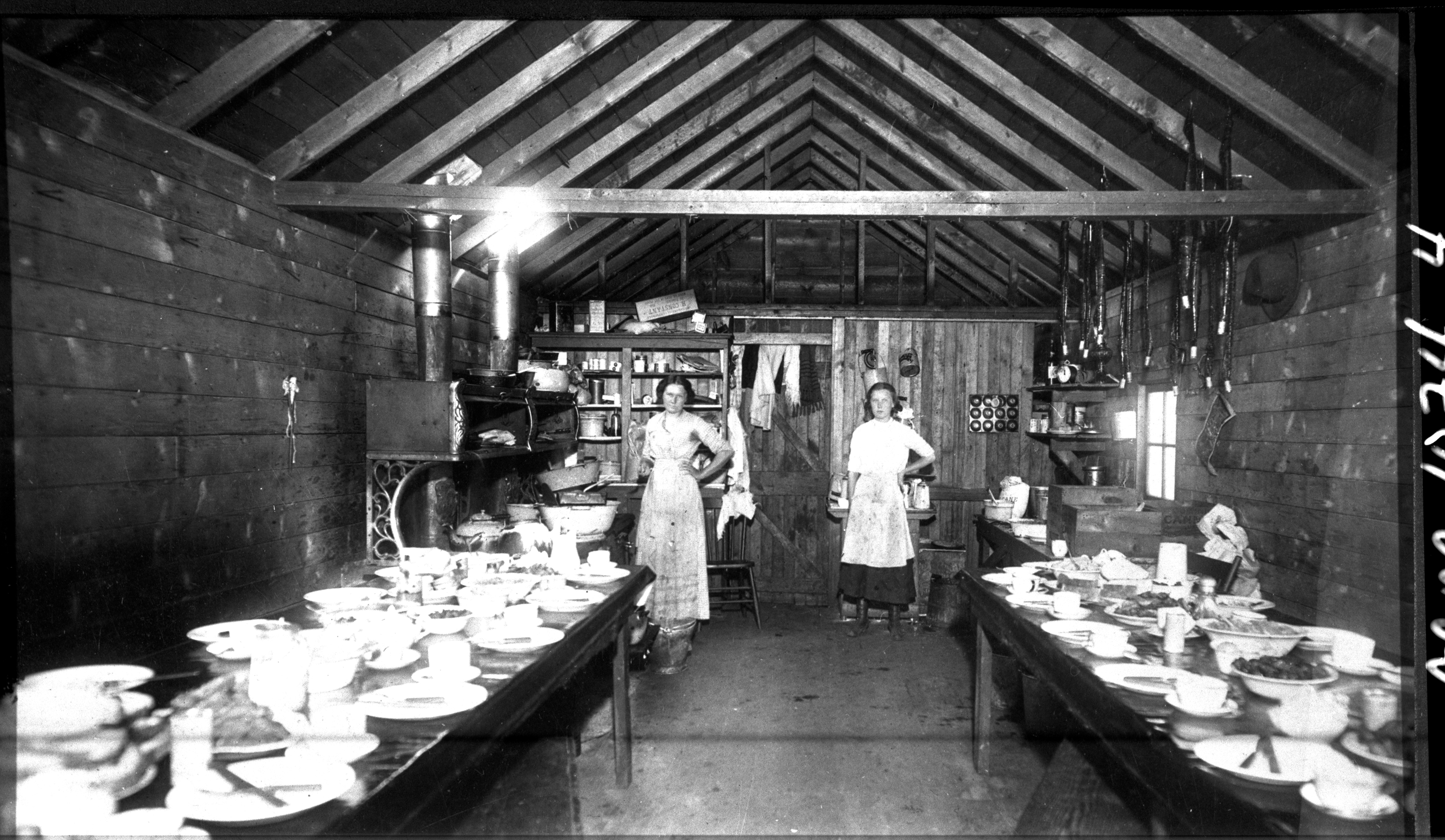
Two women stand in a cookhouse at Newcastle Mine in Drumheller Valley, ca. 1912; Newcastle was one of the first mine operations in Drumheller Valley to establish a cookhouse, which fed up to 100 miners three times a day. Source: Courtesy of Atlas Coal Mine National Historic Site
Two women stand in a cookhouse at Newcastle Mine in Drumheller Valley, ca. 1912; Newcastle was one of the first mine operations in Drumheller Valley to establish a cookhouse, which fed up to 100 miners three times a day.
Source: Courtesy of Atlas Coal Mine National Historic Site

The history of coal use by humans stretches back thousands of years, as coal’s ready availability and different properties have long made it a valuable resource in many parts of the world. In addition to burning it for heat, ancient peoples used coal for cultural and artistic expression. Bronze Age people in Wales, for example, incorporated coal into their burial customs, while ancient artisans in China carved coal into jewelry and other ornamental items. Similarly, First Nations people in Alberta used coal for decoration and carving, such as the extraordinary bison sculptures unearthed in a farmer’s field near Barrhead in 1949 (now housed at the Royal Alberta Museum).

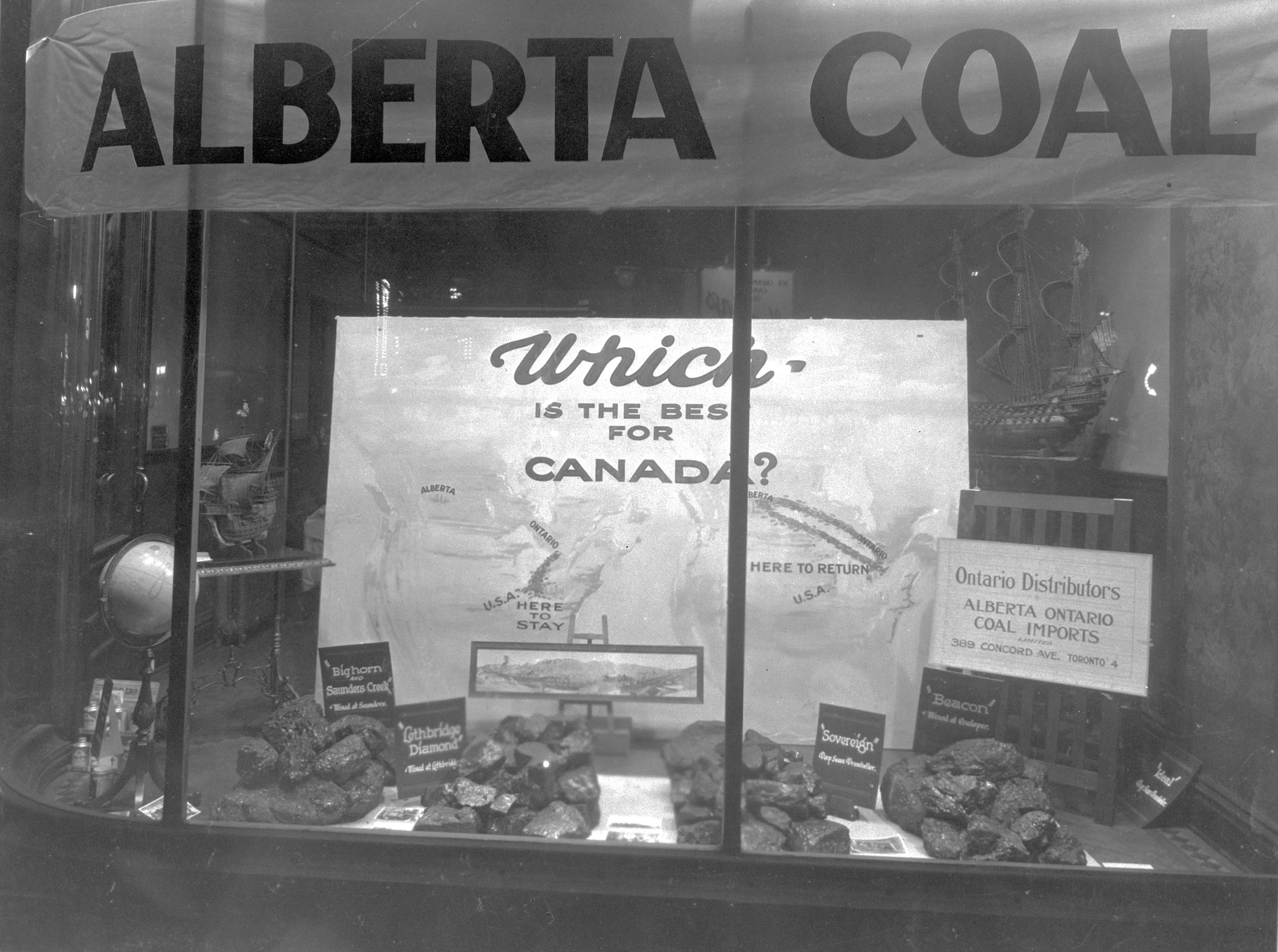
An Alberta coal company advertises in Ontario, n.d. Source: Provincial Archives of Alberta, A3975
An Alberta coal company advertises in Ontario, n.d.
Source: Provincial Archives of Alberta, A3975

The key turning point in the history of coal was the Industrial Revolution. As the primary fuel that drove steam engines in factories and railroads, coal became extremely valuable and was mined on an enormous scale. Railways quickly took over from watercraft as the most important means of commercial transportation, which in turn had a decisive impact on the history of Alberta. In 1881, the Canadian Pacific Railway was contracted to build a railway line across Canada and the company turned to the rich coal seams of Alberta as a crucial source of fuel. The province’s early coal industry was centred in southern Alberta (primarily near Lethbridge and in the Crowsnest Pass) but as rail lines spread throughout the province other centres of coal production emerged, including Drumheller and the communities of the Coal Branch. The rise of major cities like Calgary and Edmonton further drove the demand for coal, both for heating and for the generation of electricity at the province’s earliest coal-fired power plants.  Coal thus played a crucial role in the growth of Alberta in the late nineteenth and early twentieth centuries – it attracted investment and immigration and led to the development of some of Alberta’s earliest communities.

From the earliest use of coal to the challenges faced by the industry today, the coal section of the website offers visitors an introduction to the fascinating history of one of Alberta’s most important natural resources.

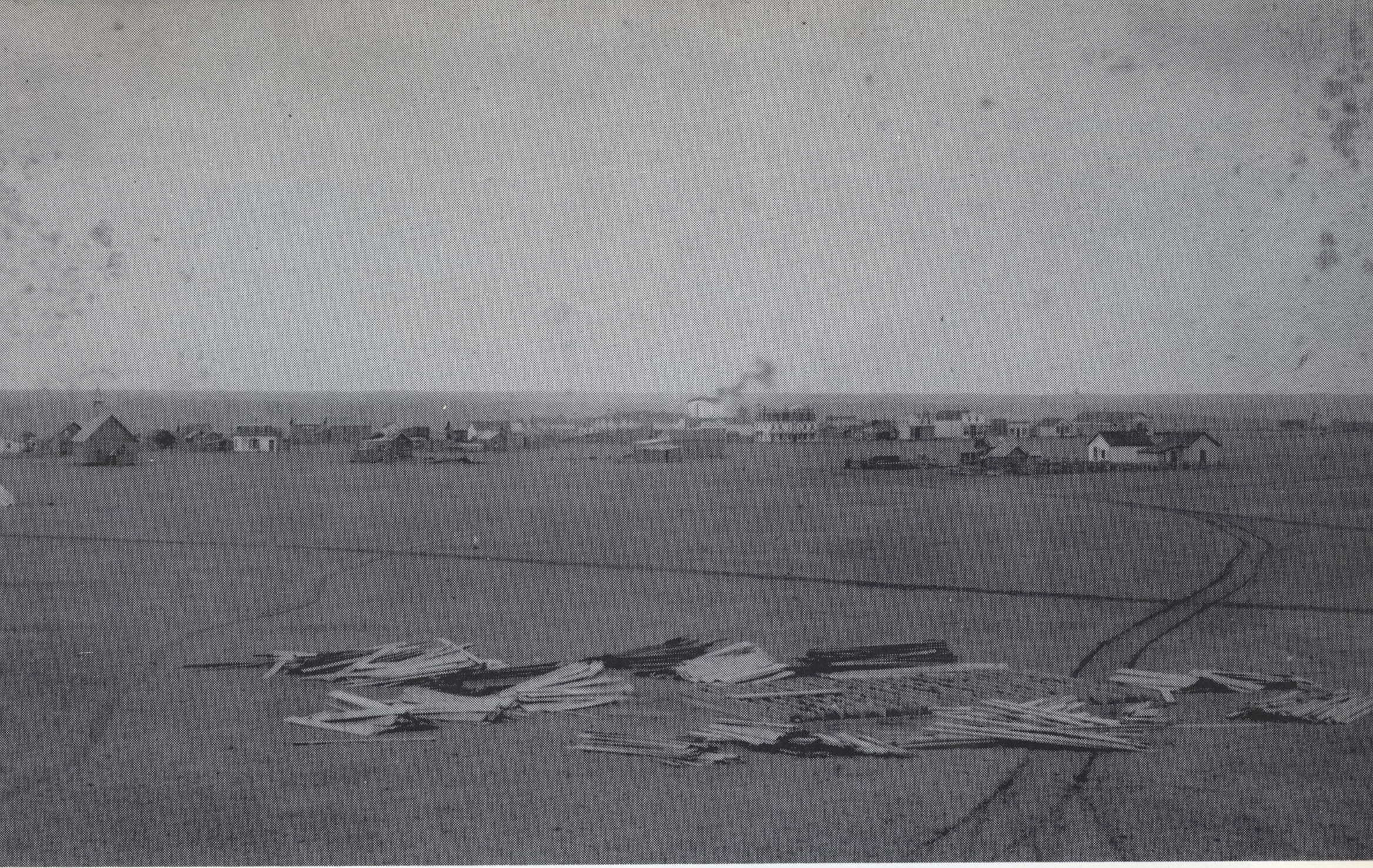
Lethbridge, an early coal producing centre, as it looked by November of 1886 Source: Galt Museum & Archives, P19770171000GP
Lethbridge, an early coal producing centre, as it looked by November of 1886
Source: Galt Museum & Archives, P19770171000GP

Written by: Allan Rowe, Historic Places Research Officer

Labour Day in Alberta, 1894-1914

As a social historian, I am fascinated by the history of holidays and public celebrations. Holidays are one way that political authority and popular culture influence each other: governments decide which holidays to recognise, but the people decide how to celebrate them. Records of these celebrations offer a unique window into the past, yielding insight into how our culture and society has (or has not) changed. In honour of this year’s September long weekend, I took the opportunity to look back at how Albertans celebrated Labor Day in the late nineteenth and early twentieth centuries.

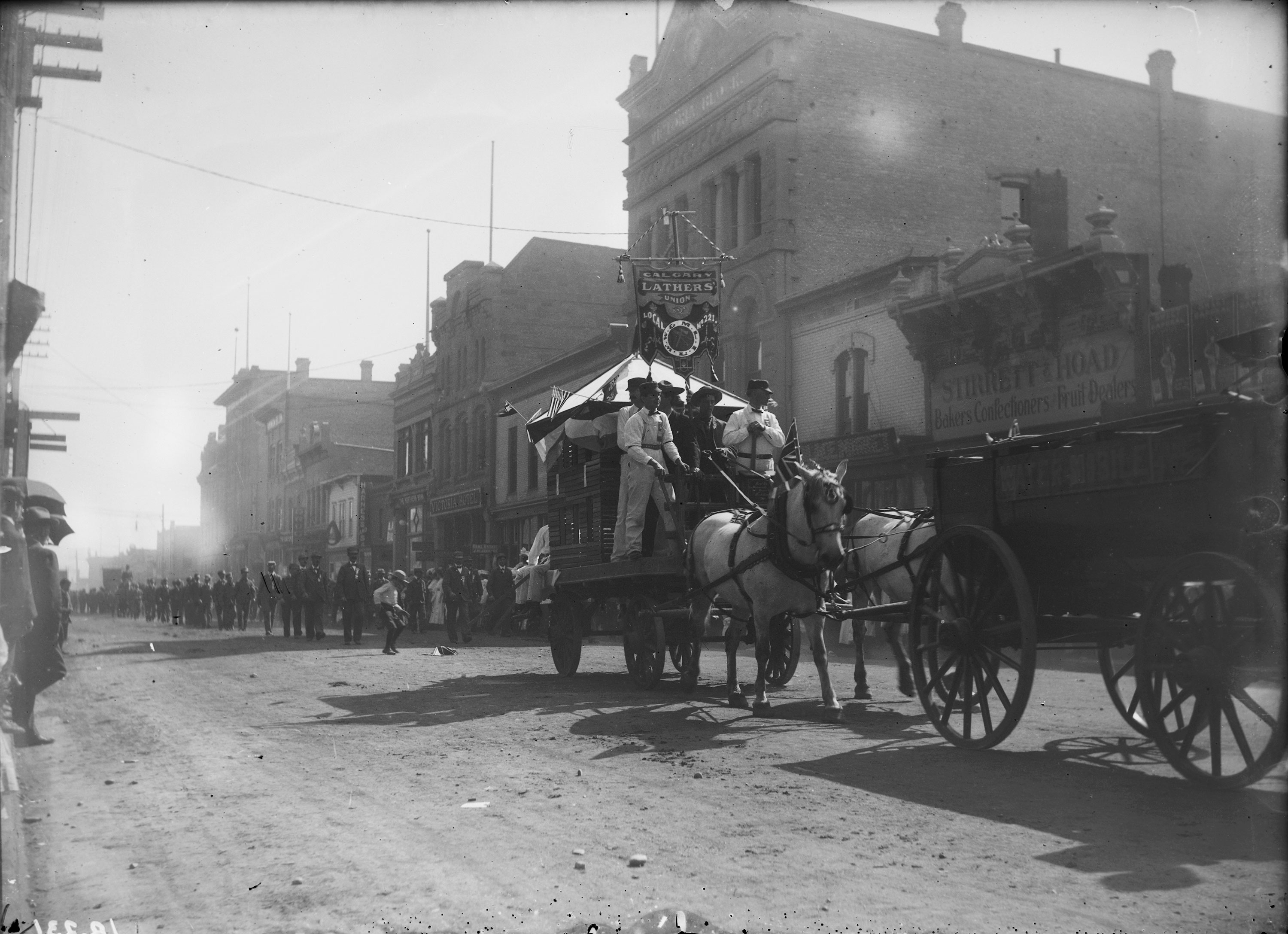
The Calgary Lathers’ Union, Local 221, participating in an early twentieth-century Labour Day parade (ca. 1908). Courtesy of the Provincial Archives of Alberta, IR231

The Parliament of Canada passed legislation in 1894 setting aside the first Monday in September as a statutory holiday. The proclamation of this new holiday was one of the many recommendations in the final report of the Royal Commission on the Relations of Labour and Capital (1889), which had investigated conditions in factories and industrial worksites across Canada. Given the range of problems exposed by the Commission – including low wages, unsafe working conditions, and the widespread use of child labour – a new holiday was perhaps less urgently needed than other reforms. Nonetheless, the idea of a new holiday received widespread support, and Canada celebrated its first Labour Day on September 3, 1894.

In the heavily-industrialised cities of eastern Canada, this legislation merely caught up with what was already happening in many urban communities, where organised labour had started to take root in the late nineteenth century. Skilled workers such as carpenters, printers, stonemasons and pipefitters organised into craft unions to protect their particular interests. Leaders of these craft unions began to push hard for a holiday that recognised the importance of their labour, and many cities responded by declaring Labour Day a civic holiday in the 1880s. By the time Labour Day was declared a national holiday in 1894, workers in cities like Toronto, Hamilton and Montreal had already been celebrating it for many years.

By contrast, in the relatively new and lightly-industrialised cities of Alberta, the first Labour Day passed with little fanfare. “To-day is Labor day, or rather, no labor day,” the Edmonton Bulletin dryly commented in September 1894, “and as a consequence, the stores in town are closed.” Within a few years, however, each Labour Day was met with greater enthusiasm, and Albertans enjoyed the holiday in ways that would be familiar to us over a century later.

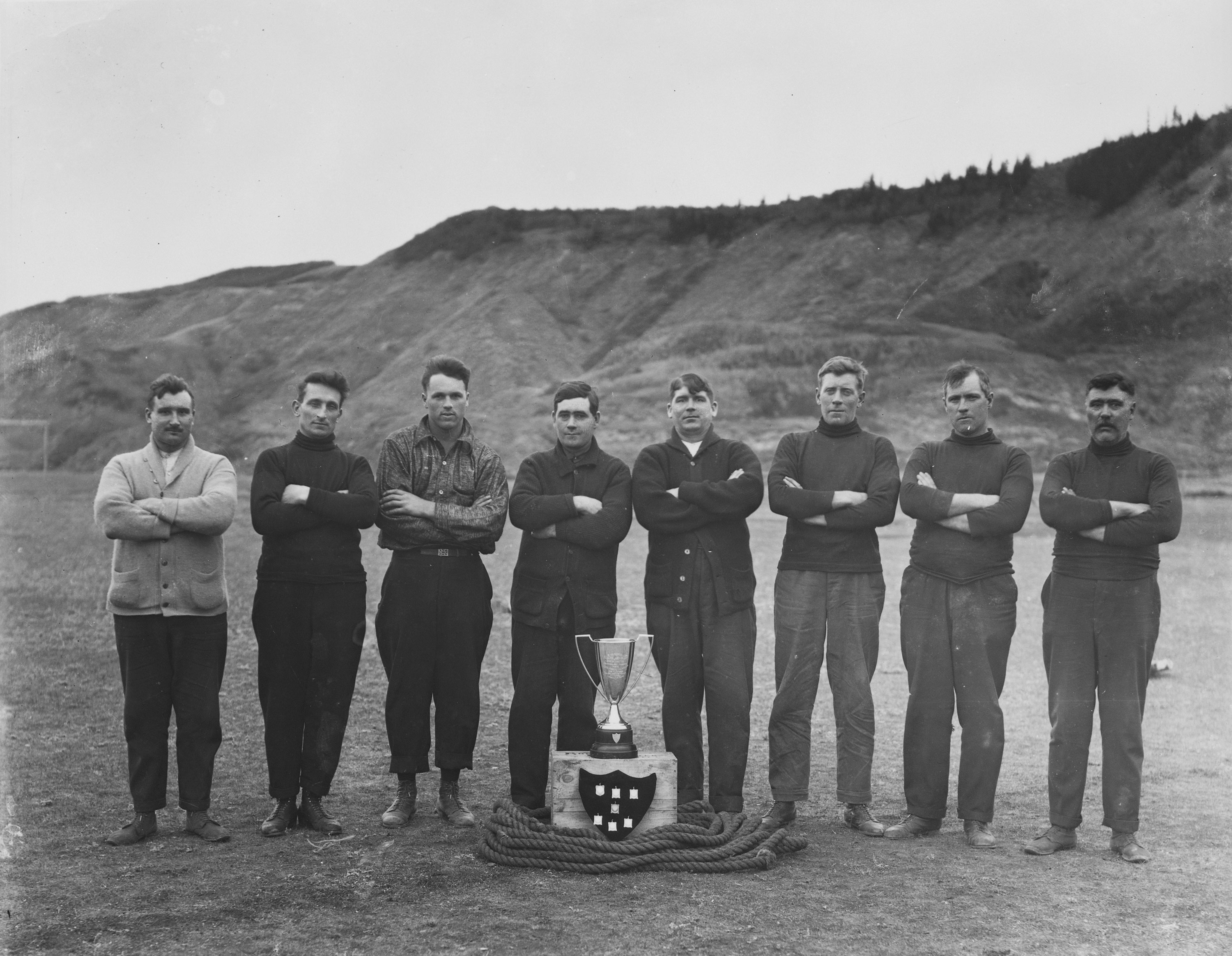
From the outset, sports were an important part of Labour Day celebrations. These miners pose with their trophy after winning the Labour Day Tug-of-War in Drumheller (ca. 1920). Courtesy of the Provincial Archives of Alberta, A15048.

Outdoor recreation soon became an important feature of the day, as sportsmen took advantage of the newly-created long weekend for hunting and fishing excursions. Organised sports were soon an important part of Labour Day as well, with bicycle races, track and field competitions, and team sports organised in different parts of the province by the late 1890s. In 1899, the Edmonton Cricket Club invited their rivals from Calgary for a tournament on the Labour Day weekend – an early example of the Calgary-Edmonton sports rivalry that remains such a feature of Labour Day in present-day Alberta.

Early Labour Day celebrations in Alberta were marked by sports, leisure and recreation, but had little to do with recognising the working class.

This changed after 1900 with the rise of organised labour in Alberta, particularly in its largest cities. Between 1900 and 1910, roughly one-third of the skilled tradesmen in Calgary and Edmonton organised into craft unions.  As a result, Labour Day celebrations in Calgary and Edmonton began to resemble the much larger events held in eastern Canada, with parades, speeches, and labour-organised leisure events. In 1904, for example, the Edmonton Trades and Labour Council organised a “monster parade” of the city’s craft unions down Jasper Avenue. The men (and they were all men – early twentieth-century craft unions were exclusively male organisations) marched in orderly procession behind banners, flags and brass bands, wearing find clothes to emphasise their respectability to the general public. The parade included a number of floats where tradesmen demonstrated their craft to the audience. The day ended with organised sports, pitting one union against another in good-natured competition, and speeches where union leaders spoke about the contributions of labour to social and economic prosperity. In Calgary in 1907, an estimated two thousand people marched down Stephen Avenue, followed by an afternoon of sports and family entertainment in Victoria Park. Similar scenes played out on a smaller scale in Alberta’s coal mining centres such as Drumheller and the Crowsnest Pass.

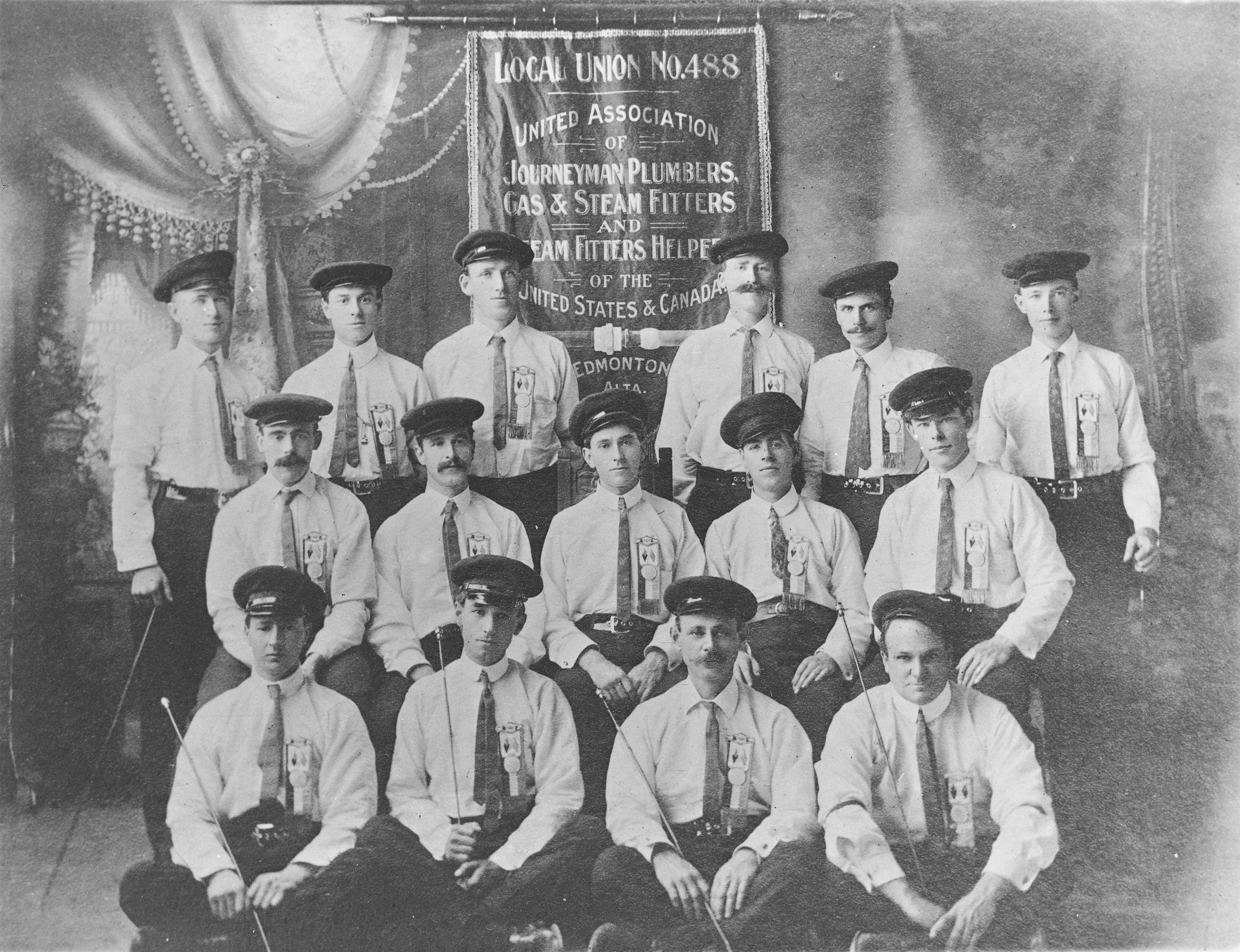
Local 488 of the United Association of Plumbers and Pipefitters, Edmonton (1904). This portrait illustrates the images that craft unions wanted to project to the public during Labour Day parades – well dressed, respectable and dignified. Courtesy of the Provincial Archives of Alberta, A19670.

These events, of course, did not represent Alberta’s entire working class. Early Labour Day celebrations were driven by craft unions – unskilled workers had little official presence at the events. The labour contributions of women were not generally recognised at these events, though women certainly took part in the leisure and recreation activities after the parade. Further, the exclusive focus on organised labour was soon diluted by the participation of other community groups and organizations in the annual parade. Nonetheless, these parades represent a colourful and important part of Alberta’s labour history, when craft unions sought to use a holiday to claim public space and promote an image of respectability and dignity. Such events were very uncommon after World War Two, as Labour Day celebrations returned to the pattern established in the 1890s – informal recreation, family leisure, and of course, sports rivalries.

Written by: Allan Rowe, Historic Places Research Officer.

Sources

Bright, David. Limits of Labour: Class Formation and the Labour Movement in Calgary, 1883-1929. Vancouver: UBC Press, 1998.

Finkel, Alvin. Working People in Alberta: A History. Edmonton: Athabasca University Press, 2012.

Herron, Craig and Steve Penhold. The Workers’ Festival: A History of Labour Day in Canada. Toronto: University of Toronto Press, 2005.

Meet our new Historic Places Research Officer

Allan Rowe
Allan Rowe, 2013.

Greetings everyone,

My name is Allan Rowe, and I am the new Historic Places Research Officer. Following the example set by my colleagues, I’m taking a moment to introduce myself.

I am originally from British Columbia, born in White Rock and raised in the beautiful Okanagan Valley. Halfway through my grade twelve year, I made the fateful decision to change my upcoming college major from computer information systems to history, and I haven’t looked back. I completed my BA in history at the University of British Columbia in 1994, and followed up with a Public History Diploma at Simon Fraser University. It was during that time that I got my first taste of heritage work as a summer student at a small British Columbian museum. In my case, it was the Elphinstone Pioneer Museum (now the Sunshine Coast Museum and Archives) where I spent the summer of 1996 answering tourists’ questions about The Beachcombers (we were located just up the road from Molly’s Reach – apparently The Beachcombers was a huge hit in Japan).

Unable to find permanent work in the heritage sector, I spent two tedious years working in corporate cell phone distribution (ugh), until the muse of history called me back to service and I received my MA in Canadian History from SFU in 2000. I then moved to Edmonton to pursue my Ph.D. at the University of Alberta, and during my time as a graduate student, I was fortunate enough to work with Historic Places Stewardship on several occasions, mostly working on heritage markers and assisting with the Alberta Heritage Survey Program. I finished my Ph.D. in history in 2008 and taught Canadian, Irish and American history, most recently at Keyano College in Fort McMurray. Though I enjoyed my time as a history instructor, I have always been fascinated by the heritage sector, and I was thrilled when I was given the opportunity to join the Historic Places Stewardship team in Edmonton.

On the personal side of things, I am blessed with a great wife and three amazing daughters, whose own interests range from bird-watching to dog-sledding to Shakespeare. I enjoy cooking (with mixed success) and continuing to learn as much history as possible. I remain a staunch Vancouver Canucks fan, and I welcome everyone’s scorn and derision.

I’m excited to join the team and I look forward to meeting everyone in person.

Written by: Allan Rowe, Historic Places Research Officer.