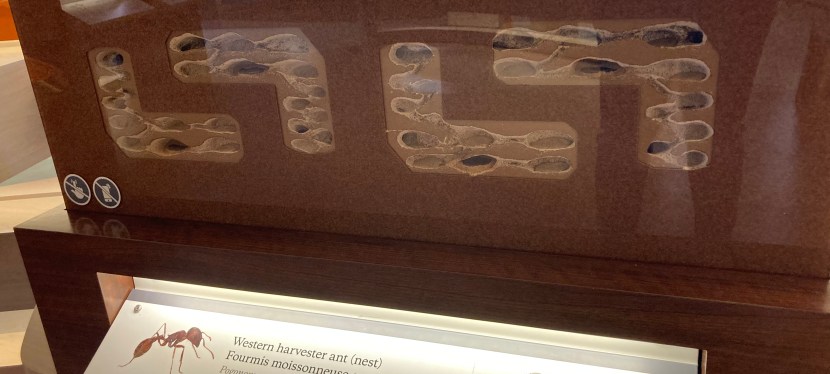

Editor’s note: The post originally appeared on the Royal Alberta Museum blog in March 2026.The image above is the finished, cleaned ant colony. Image courtesy of the Royal Alberta Museum.
Written by: Camilla Leurini, Live Animals Assistant
The Bug Gallery at the Royal Alberta Museum is one of those rare places where time seems to slow down. Visitors of all ages and backgrounds wander through, leaning close to the glass, captivated by the small but mighty creatures going about their lives. You can watch paper wasps build their nests without worrying about a sting. You can observe cockroaches with the comforting knowledge that they are definitely not in your kitchen. But one exhibit consistently draws a crowd: the ant chambers.
At first glance, the ants you see while camping or crossing your backyard might not seem remarkable. Yet those surface wanderers are only the tip of the iceberg. Beneath the soil lies a hidden world—the queen, the eggs, the larvae, the pupae—all part of a complex and thriving colony. Our ant exhibition gives visitors a rare opportunity to peer into that underground world.
The display includes eight nest units made of aerated concrete, each with one glass-facing side that allows guests to observe the colony’s daily life. You can see ants moving larvae, collecting seeds and maintaining their carefully organized society. Over time, however, the ants began to redecorate.
Editor’s note: Aba Wathtech. June is National Indigenous History Month, an invitation to honour the history, diversity, strength and contemporary achievements of Indigenous Peoples.
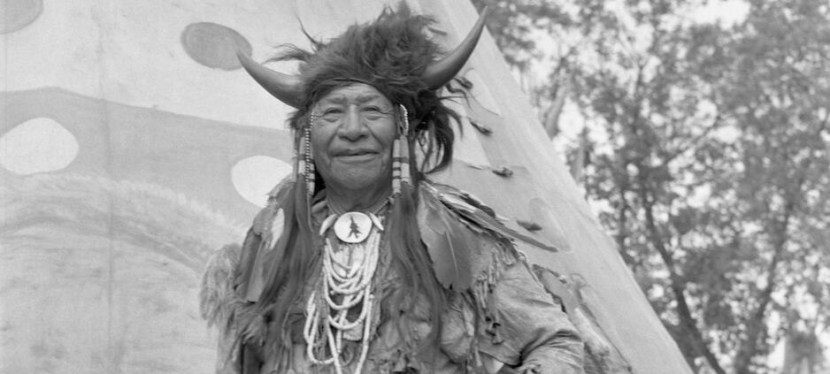
The banner image above features Walking Buffalo, Stoney, at Calgary Exhibition and Stampede grounds, Calgary, Alberta, unknown date, (CU189040) by Oliver, W. J. Source: Glenbow Library and Archives, Glenbow Archives, Libraries and Cultural Resources Digital Collections, University of Calgary.
Reading residential school histories can be a painful process. If reading this is causing pain or bringing back distressing memories, please call the Indian Residential Schools Crisis Line at 1-866-925-4419. The Crisis Line is available 24 hours a day and can also provide information on other health supports provided by the Health Canada Indian Residential Schools Resolution Health Support Program.
Written by: Laura Golebiowski, Indigenous Consultation Adviser, in collaboration with the Stoney Nakoda Nations
When Tatanga Mani was a small boy, he went by the name of Little Bear. He grew up under the protection of his maternal and paternal grandmothers and the sheltered forests of the Bow Valley. The Stoney Nakoda (contemporarily the Bearspaw, Chiniki and Goodstoney First Nations) lived in small familial groups, hunting buffalo, moose, deer and goat. Wild carrot, wild rhubarb and sour grass were harvested from the mountains. Sweet tree sap was harvested and boiled in the springtime and cranberries, huckleberries, chickenberries and chokecherries were harvested through the summer. In the winter, groups would gather together in the valley flats of what is now Banff National Park. By Tatanga Mani’s own recollections, life was simple and happy:
In my young days, [there were] no roads, no horses. One time I remember there was five in a family. I would be about five years old. There’s my grandmother, my uncle Ben Kaquitts, there’s another uncle, and one aunt…and just one horse, to travel around with. And one dog. And I always remembered that that time, that [we were] the poorest people…but at that time we didn’t notice at all, we still lived contented and happy. We didn’t worry about nothing.
For Stoney children born one generation prior, their education was informal but holistic, grounded in respect and reciprocity. Nature was the teacher. Per Chief John Snow in These Mountains are Our Sacred Places, “A child would grow up learning about nature and the importance of respecting all things in creation…It was an ongoing educational process about religion, life, hunting, and so on. Other topics were bravery, courage, kindness, sharing, [and] survival…”
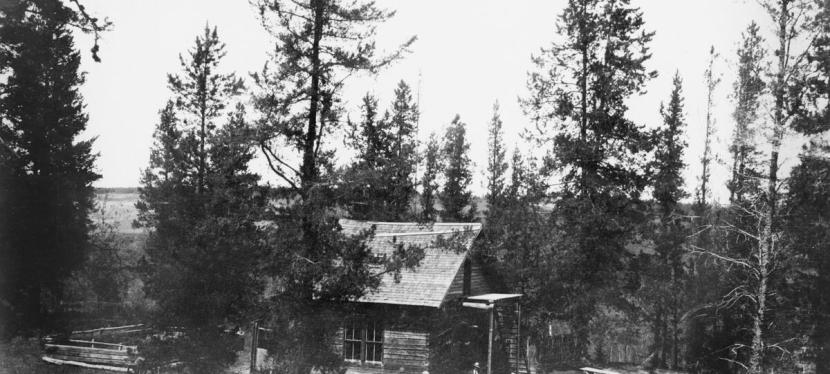
But by the 1870s when Tatanga Mani was born, Methodist missionaries had established their foothold in Stoney Nakoda territory. Despite having an extended family and community who loved and cared for him, Tatanga Mani was adopted by Methodist missionary John McLean. He was assigned the name George McLean and forced to attend the McDougall Orphanage at Mînî Thnî. (The “Orphanage” was a misnomer, per Chief John Snow: “The reason for the name is not clear; my people’s extended family system made the use of European-style orphanages unnecessary and records suggest that many children in the institution certainly had parents who were willing and able to care for them.”).
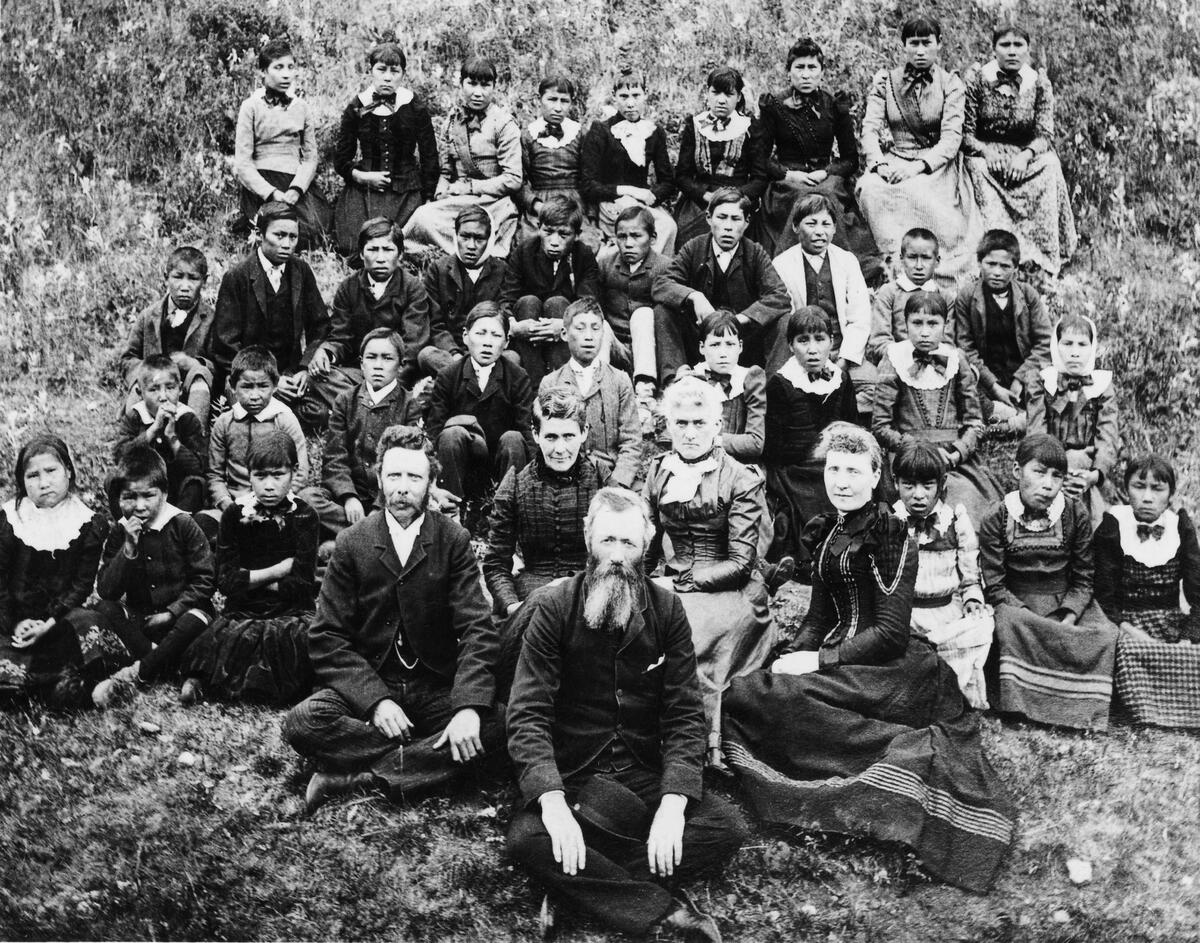
“Teachers and pupils, McDougall orphanage, Morley, Alberta.”, 1885, (CU184411) by Thom, A. B.. Tatanga Mani has been identified as the third from the left child in the second-last row. Source: Glenbow Library and Archives, Glenbow Archives Collection, Libraries and Cultural Resources Digital Collections, University of Calgary.
Written by: Robert Gustas, PhD, Geomatics Technologist, Archaeological Survey of Alberta
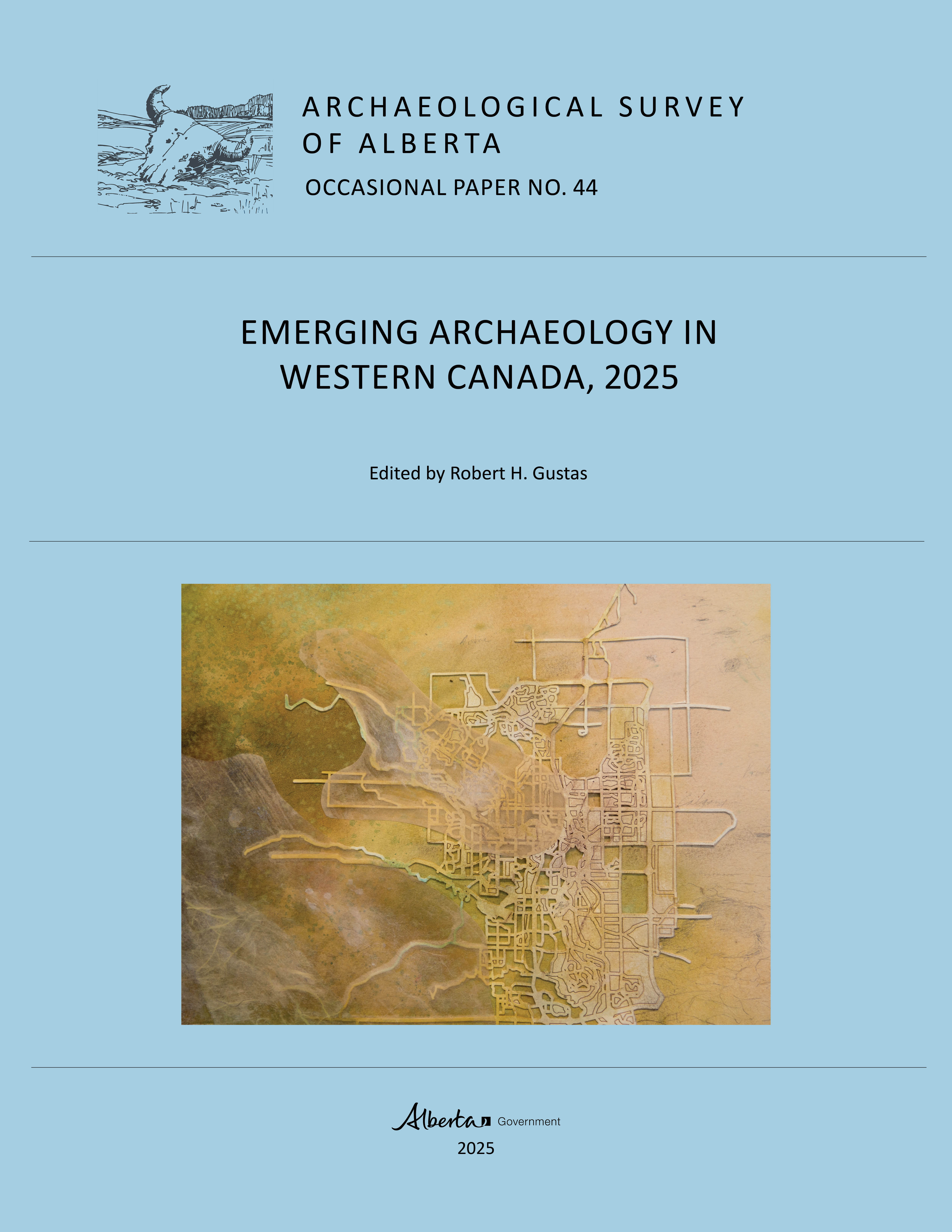
The Archaeological Survey of Alberta is excited to release a complete volume of our latest Occasional Paper Series (No. 44) available for free download here.
The current volume is dedicated to synopses or components of graduate theses and dissertations written over the last 15 years. The initial six articles were released in April and the final four articles are featured below. They explore projectile points, the use of space at archaeological sites, and a bison skull ceremonial feature.
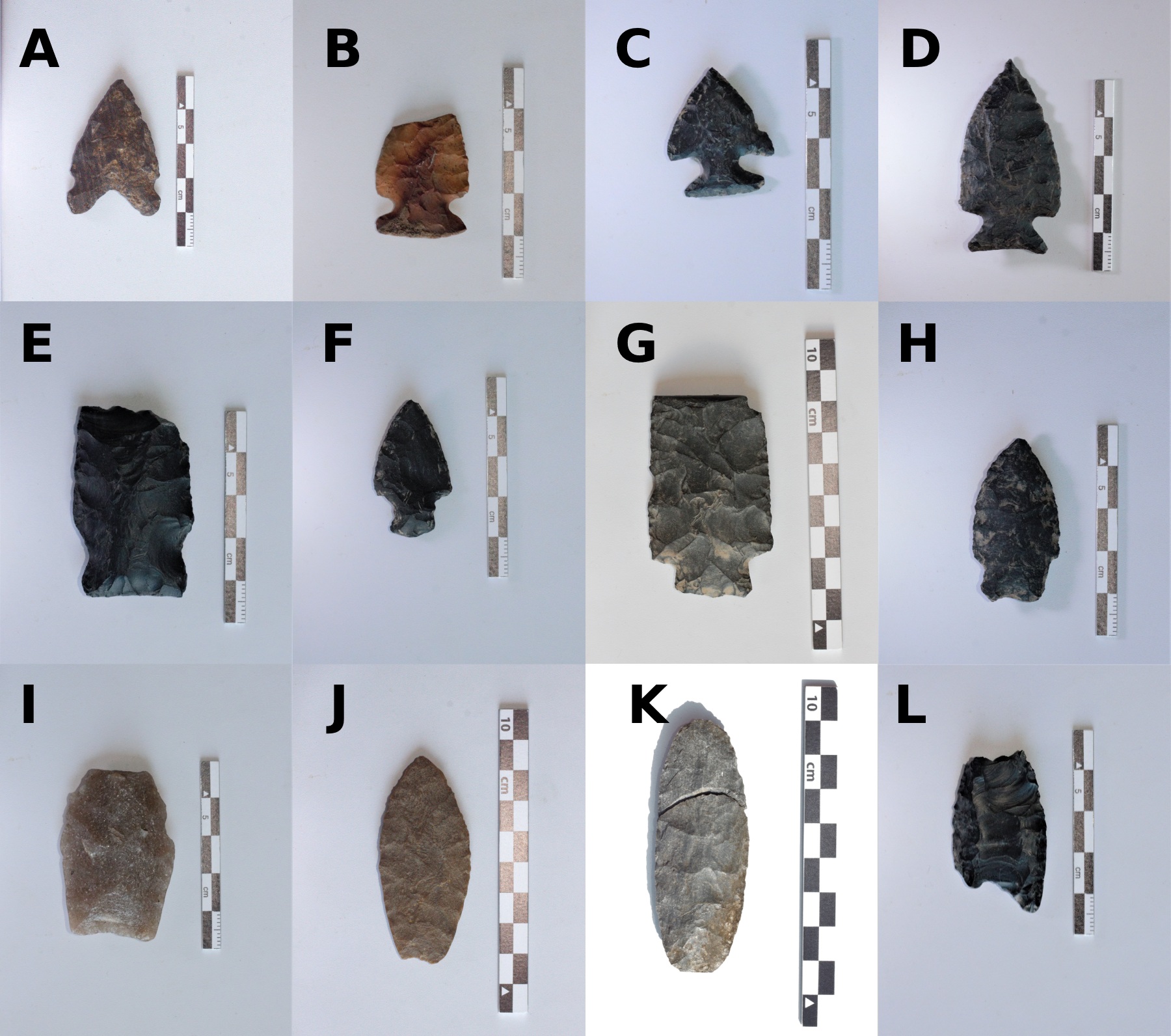
The seventh article in the volume compiles information about projectile points in the Peace Region to inform cultural contact, technologies, and chronological change. Northeastern British Columbia and northwestern Alberta were fluid places with long histories of cultural influence from neighbouring regions that are detectable in the shape and function of lithic artifacts.
A composite of some of the variety of projectile point morphologies in northeastern British Columbia. Source: Jen Hogan, 2025.
The last RETROactive Live Alberta Heritage Speaker Series for the next few months is taking place on Thursday, June 18. Click the registration link to sign up. You can also watch recordings of the previous four webinars.
The Russian Revolution and Civil War (1917-22) created an enormous refugee crisis, as hundreds of thousands of people fled Russia to escape violence and persecution. Approximately 16,000 sought refuge in Harbin, China, where they appealed to the international community for assistance. In 1924, Canada agreed to open its borders to several groups of Russian refugees on the condition that they pay for their own passage and settle on agricultural land. Between 1924 and 1927, over 1,000 Russian refugees arrived in Canada to start a new life, with hundreds initially settling in central Alberta.
The RETROactive Live Alberta Heritage Speaker Series continues. Join us on Monday, June 8 for a discussion about the Okotoks Erratic. Click this registration link to sign up.
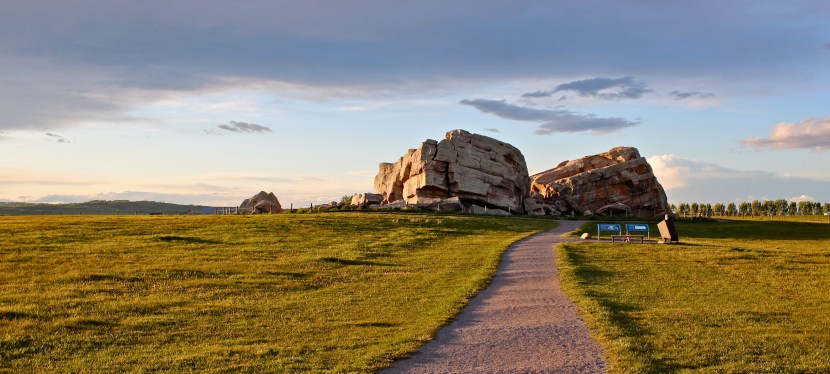
The Okotoks Erratic has been a site of visitation and ceremony for as long as anyone can remember. Join Historic Resources Management Branch staff Christina Robinson and Blair First Rider in a discussion about Blackfoot perspectives of Okotoks, and the network of knowledge that has expanded our understandings of how to respectfully preserve and share this special place.
Blair First Rider can still remember the first time he heard the Okotoks creation story. Raised as a kiipita pooka—a grandparent’s child—he grew up with the stories shared by his grandfather, Maatoom Kitopi (George First Rider). Despite generations of government policy that forcibly separated Indigenous peoples from their language, community and places of significance, the stories and oral traditional prevailed. “I used to listen to the old men who would come around to the house, and they would tell stories way into the night. One of the stories was about Okotoks. That’s how they impart knowledge and life lessons and morals to the children, through Napi stories.”
Watch a special video from Blair First Rider, discussing the significance of this site to the Blackfoot Confederacy.
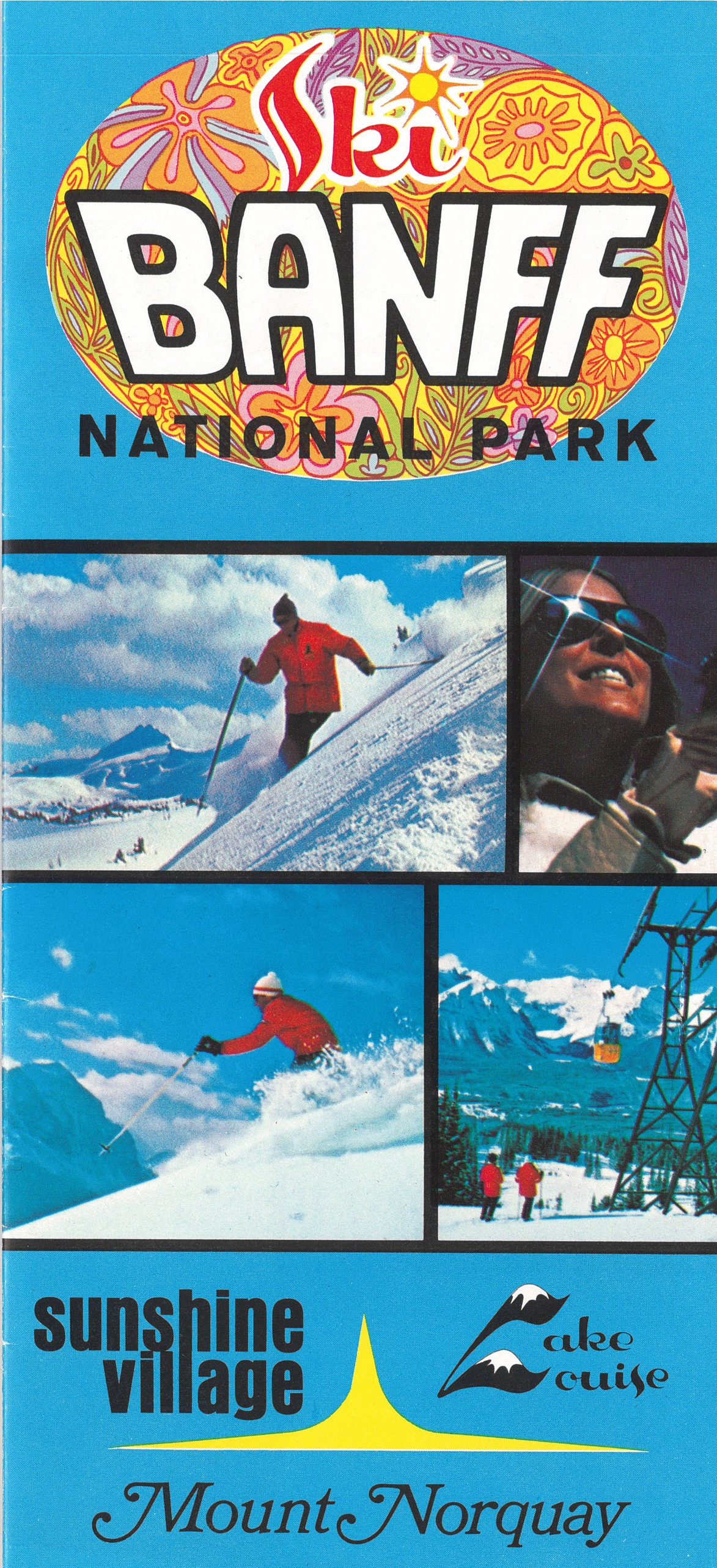
Editor’s note: The banner image above features a travel brochure on ski resorts at Banff and Jasper, courtesy of the Provincial Archives of Alberta.
Written by: Emily Guthrie-Plouffe, Government Records Archivist, Provincial Archives of Alberta
While some Albertans may balk at the lengthy transition from winter to spring, wishing for temperatures to rise and snow to disappear, there are others who gladly embrace the snow for as long as possible, especially from the sunny slopes of the Rocky Mountains.
Travel Brochure on ski resorts at Banff and Jasper, n.d. (Tourism marketing publications records, GR1970.0442/1). Source: Provincial Archives of Alberta.
If you scroll all the way down to the very first RETROactive blog post from January 2011, you’ll see that it began as an initiative of the Historic Places Stewardship section to share information about historic places in Alberta. Over 800 blog posts and 15 years later, RETROactive has become a staple for heritage enthusiasts across the province. In that spirit, we are now launchingRETROactive Live: the Alberta Heritage Speaker Series. Join us for free, online evening presentations on Alberta history and heritage topics later this spring.
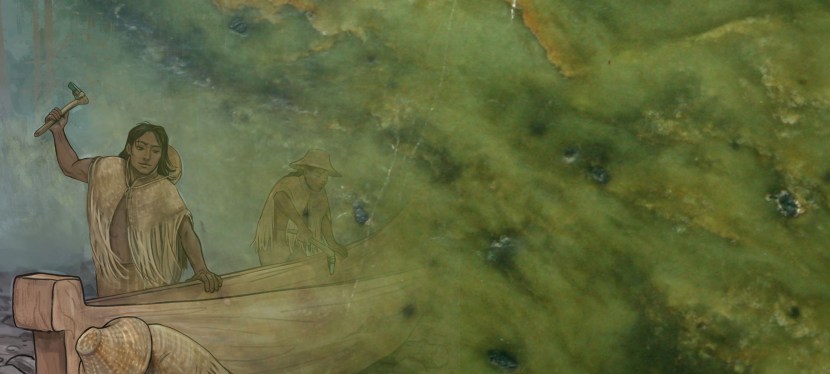
Our first presentation will be delivered on May 4, 2026 by staff Archaeologist, Dr. Todd Kristensen. Todd will be speaking about ancient jade artifacts and the role the public played in helping to discover this aspect of Alberta’s archaeological history. Click the link below for more information and to register.
Editor’s note: The banner image above featuring James Hargrave family, Medicine Hat, Alberta ca. 1887-1888, is courtesy of the Glenbow Library and Archives Collection, Libraries and Cultural Resources Digital Collections, University of Calgary.
Author Julia Stanski is a scholar and recent MA History grad from the University of Alberta. Her research centers on western Canadian women’s history in the Victorian and Edwardian periods.
Written by: Julia Stanski
If you think about women’s history in relation to Alberta, the first thing that comes to mind is probably the Famous Five, a group of women whose activism earned Canadian women the legal status of “persons” permitted the rights and privileges of “qualified persons,” including the possibility of being appointed to the Senate. Emily Murphy, Nellie McClung, Louise McKinney: these are names that most Albertans have seen before, in social studies textbooks and on statues and parks. But today, I want to introduce you to another woman from Alberta’s past: Lillian Adkins.
She was not a famous author or speaker. There are no statues of her. But many Albertans can trace their roots to women like her. Lillian spent roughly five years of her youth working as a domestic servant in what became Edmonton.
Do you know a person or group in your community helping to support Alberta’s history and heritage? It could be a local historical society helping preserve a physical piece of local history; a researcher publishing a book or article; or a member of the community who’s shown long-term leadership and contribution to the preservation and presentation of Alberta’s history. If so, consider nominating them for a 2026 Heritage Award.
Presented by the Government of Alberta, the Heritage Awards recognize individuals, non-profit organizations, corporations, municipalities and First Nations and Metis settlements for their significant contributions to the protection, preservation and promotion of Alberta’s heritage. Heritage awards are presented every two years.
The Heritage Awards are divided into three categories:
Heritage Awareness Recognizes research, publications or public engagement projects that have deepened our understanding and promoted greater awareness of Alberta’s heritage.
Heritage Conservation Recognizes projects that demonstrate excellence in the protection and management of palaeontological and archaeological resources; conservation of a Provincial Historic Resource, Municipal Historic Resource or Indigenous Historic Place; or identification, protection and management of historic places
Outstanding Achievement Recognizes an individual’s or organization’s exemplary long-term leadership and contribution to the preservation and presentation of Alberta’s history.
Take a look at the information and fill out a nomination form. And to get a sense of the scope and range of nominations across the province, check out past winners of the Heritage Awards.
The nomination period begins March 1 and closes June 1.
Editor’s note: Learn more about the history and heritage of Black Albertans from the Royal Alberta Museum.
Written by: Michael Gourlie, Government Records Archivist, Provincial Archives of Alberta
Since the 1960s, the Provincial Archives of Alberta (PAA) has acquired kilometres of records, millions of photographs and thousands of hours of audiovisual recordings about the lives and activities of Albertans. While Alberta’s Black community is underrepresented among these archival holdings, it faces a similar challenge to other groups. For every famous individual whose life is documented in detail in numerous sources, there are dozens of other individuals who remain nameless and forgotten until someone researches their stories.
Among the famous individuals found in the PAA’s holdings is John Dee (Johnny) Bright. Born in Indiana in 1930, he attended Drake University on a track and field scholarship, which led to a remarkable collegiate football career marked by several National Collegiate Athletic Association (NCAA) records as well as a national profile. His senior year in 1951 was also notable when he was the target of a racially motivated assault on the playing field during a game with Oklahoma A&M University (now Oklahoma State University), an incident documented in a Pulitzer Prize winning series of photographs. While some on-field rules changed because of the incident, the opposing team and its university administration denied any wrongdoing for decades and only apologized for the incident in 2005.
File OS.1843: Johnny Bright, 1954. (Frank Oliver Studios fonds, PR1992.0261/1096, OS.1843). Source: Provincial Archives of Alberta.
He graduated from Drake University in 1952 with a Bachelor of Science in Education, specializing in physical education. He was the first pick chosen by the Philadelphia Eagles in the 1952 draft, but fearing his treatment in the National Football League, he chose to emigrate to Canada and play for the Calgary Stampeders. He was traded to Edmonton in 1954, where he primarily played offense. Bright set several Canadian Football League (CFL) records, helped the team win the Grey Cup in 1954, 1955 and 1956, and was named Edmonton Athlete of the Year in 1959.