RETROactive Live: The Okotoks Erratic – Stories, Knowledge and Understanding

Written by: RETROactive staff

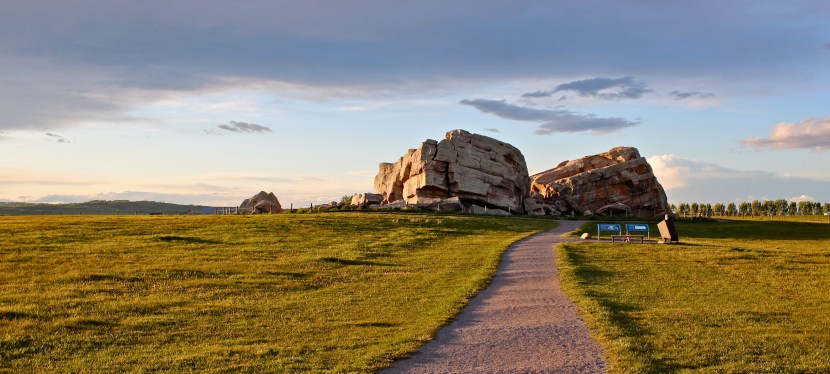
The RETROactive Live Alberta Heritage Speaker Series continues. Join us on Monday, June 8 for a discussion about the Okotoks Erratic. Click this registration link to sign up.

The Okotoks Erratic has been a site of visitation and ceremony for as long as anyone can remember. Join Historic Resources Management Branch staff Christina Robinson and Blair First Rider in a discussion about Blackfoot perspectives of Okotoks, and the network of knowledge that has expanded our understandings of how to respectfully preserve and share this special place.

Blair First Rider can still remember the first time he heard the Okotoks creation story. Raised as a kiipita pooka—a grandparent’s child—he grew up with the stories shared by his grandfather, Maatoom Kitopi (George First Rider). Despite generations of government policy that forcibly separated Indigenous peoples from their language, community and places of significance, the stories and oral traditional prevailed. “I used to listen to the old men who would come around to the house, and they would tell stories way into the night. One of the stories was about Okotoks. That’s how they impart knowledge and life lessons and morals to the children, through Napi stories.”

Watch a special video from Blair First Rider, discussing the significance of this site to the Blackfoot Confederacy.
RETROactive Live: Historic Windows FAQ

Written by: RETROactive staff

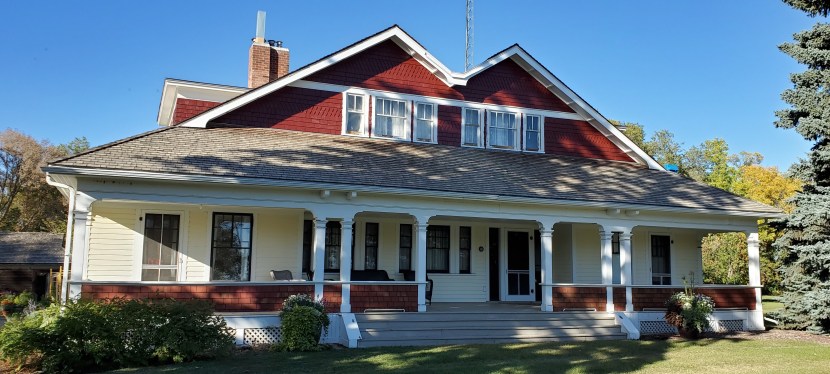
We are pleased to invite you to the third instalment of the RETROactive Live Alberta Heritage Speaker Series. This online webinar will be presented by Heritage Conservation Advisor Fraser Shaw, as he explores the world of windows. Specifically, their contribution to the heritage value of a place, as well as considerations for building functionality, comfort and overall performance.

Historic buildings help shape community identity and continuity. Their value lies not only in age, but in design, craftsmanship, and the cultural meanings they embody. Heritage conservation focuses on identifying and protecting features or “character-defining elements” that convey this value while allowing buildings to remain in active use. Decisions are guided by an understanding of what makes a place significant and how those important qualities can be maintained over time.

Windows are among the most prominent of these character-defining elements. They strongly influence a building’s appearance through their placement, proportions, and detailing, while also serving essential functional roles. They are consequently often a focal point for concerns about comfort, energy efficiency, and maintenance. While historic windows are sometimes assumed to perform poorly, their effectiveness depends critically on condition and upkeep — and they represent only one aspect of overall building performance.

Historic window conservation requires a balanced, case-by-case approach. Many common issues are attributable to deferred maintenance and can be addressed through repair or modest upgrades, such as weatherstripping or storm windows. Replacement may be appropriate in some circumstances, but it is not always necessary or optimal. Effective decision-making prioritizes long-term outcomes, retaining historic material where feasible while meeting contemporary performance needs.

May 27, 2026
7 p.m. – 8 p.m. MST
Registration link

RETROactive Live: Bits, Bytes and Borden Numbers

Written by: RETROactive staff

After the launch of the RETROactive Live Alberta Heritage Speaker Series a couple days ago, we are pleased to invite you to our next online webinar. This talk will be delivered by Robert H. Gustas, geomatics technologist for the Historic Resources Management Branch.

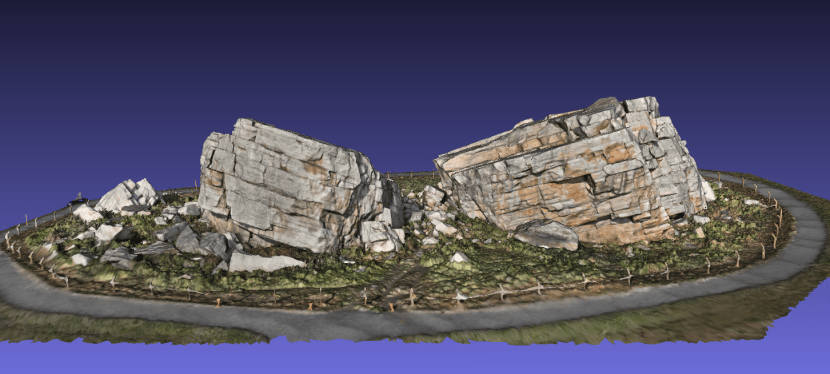
Digital heritage is the use of digital representations, records and datasets to document, interpret and preserve archaeological sites, artifacts, built heritage and traditional use locations. The implementation of digital technologies in archaeological and historical research and conservation has ushered in a foundational change to the practice of preserving, documenting and recording Alberta’s history. In this presentation we will learn how different sections at the Historic Resource Management Branch (HRMB) use these new technologies by exploring case studies from projects across the province.

Have you ever wondered how an archaeological site gets its name? Or how GPS knows your exact location? What is the deal with drones and how are they revolutionizing data collection? In Bits, Bytes and Borden Numbers we will answer these and many more questions and learn the basics behind the technologies that power the modern practice of heritage management. Additionally, we will learn about different digital resources and datasets that are available to the public and how you can engage with digital heritage.

For your reference, Robert will be consulting a number of public-facing digital resources during his presentation, including:

View the registration link to sign up.