Written by: Dorothy Field, Heritage Survey Program Coordinator and Ron Kelland, Historic Places Research Officer
The Alberta Heritage Survey Program is happy to announce that digitized versions of eight additional Occasional Papers, published by the Historic Sites Service between 1985 and 1992, are now available online via the Alberta Open Government Portal.
In June 2025, the first 15 Occasional Papers were made available online. With the release of these remaining eight, the entirety of the original Historic Sites Service Occasional Papers is now accessible online.
The Occasional Papers series was started in 1976 to make Albertans, historians and heritage professionals better aware of certain themes in Alberta’s history and built heritage. Similar to the Archaeological Survey of Alberta’s Occasional Papers, popularly known as the “Blue Books” or the “Blue Series,” the Historic Sites Service Occasional Papers series were produced by staff historians and contractors based on their in-house research done to support the development and interpretation of Alberta’s historic sites.
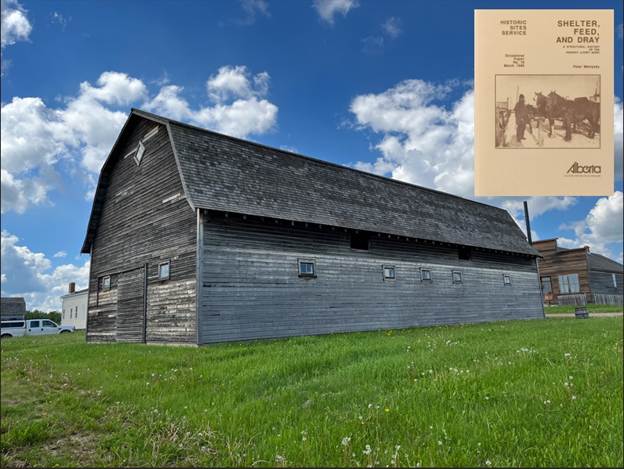
The Radway Livery Barn, Ukrainian Cultural Heritage Village. Built in 1928, it was acquired by the Ukrainian Cultural Heritage Village in 1978 as one of the province’s last extant examples of a livery barn. Historic Sites Service historian Peter Melnycky’s research about the barn was published as Occasional Paper No. 18. Source: Conservation and Construction Services.
Editor’s note: Aba Wathtech. June is National Indigenous History Month, an invitation to honour the history, diversity, strength and contemporary achievements of Indigenous Peoples.
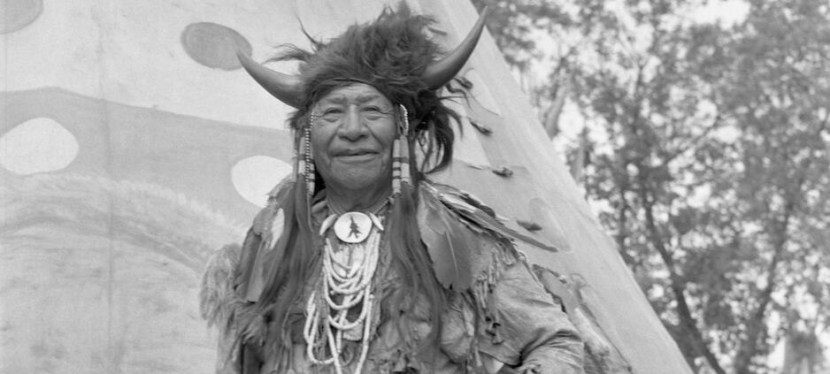
The banner image above features Walking Buffalo, Stoney, at Calgary Exhibition and Stampede grounds, Calgary, Alberta, unknown date, (CU189040) by Oliver, W. J. Source: Glenbow Library and Archives, Glenbow Archives, Libraries and Cultural Resources Digital Collections, University of Calgary.
Reading residential school histories can be a painful process. If reading this is causing pain or bringing back distressing memories, please call the Indian Residential Schools Crisis Line at 1-866-925-4419. The Crisis Line is available 24 hours a day and can also provide information on other health supports provided by the Health Canada Indian Residential Schools Resolution Health Support Program.
Written by: Laura Golebiowski, Indigenous Consultation Adviser, in collaboration with the Stoney Nakoda Nations
When Tatanga Mani was a small boy, he went by the name of Little Bear. He grew up under the protection of his maternal and paternal grandmothers and the sheltered forests of the Bow Valley. The Stoney Nakoda (contemporarily the Bearspaw, Chiniki and Goodstoney First Nations) lived in small familial groups, hunting buffalo, moose, deer and goat. Wild carrot, wild rhubarb and sour grass were harvested from the mountains. Sweet tree sap was harvested and boiled in the springtime and cranberries, huckleberries, chickenberries and chokecherries were harvested through the summer. In the winter, groups would gather together in the valley flats of what is now Banff National Park. By Tatanga Mani’s own recollections, life was simple and happy:
In my young days, [there were] no roads, no horses. One time I remember there was five in a family. I would be about five years old. There’s my grandmother, my uncle Ben Kaquitts, there’s another uncle, and one aunt…and just one horse, to travel around with. And one dog. And I always remembered that that time, that [we were] the poorest people…but at that time we didn’t notice at all, we still lived contented and happy. We didn’t worry about nothing.
For Stoney children born one generation prior, their education was informal but holistic, grounded in respect and reciprocity. Nature was the teacher. Per Chief John Snow in These Mountains are Our Sacred Places, “A child would grow up learning about nature and the importance of respecting all things in creation…It was an ongoing educational process about religion, life, hunting, and so on. Other topics were bravery, courage, kindness, sharing, [and] survival…”
But by the 1870s when Tatanga Mani was born, Methodist missionaries had established their foothold in Stoney Nakoda territory. Despite having an extended family and community who loved and cared for him, Tatanga Mani was adopted by Methodist missionary John McLean. He was assigned the name George McLean and forced to attend the McDougall Orphanage at Mînî Thnî. (The “Orphanage” was a misnomer, per Chief John Snow: “The reason for the name is not clear; my people’s extended family system made the use of European-style orphanages unnecessary and records suggest that many children in the institution certainly had parents who were willing and able to care for them.”).
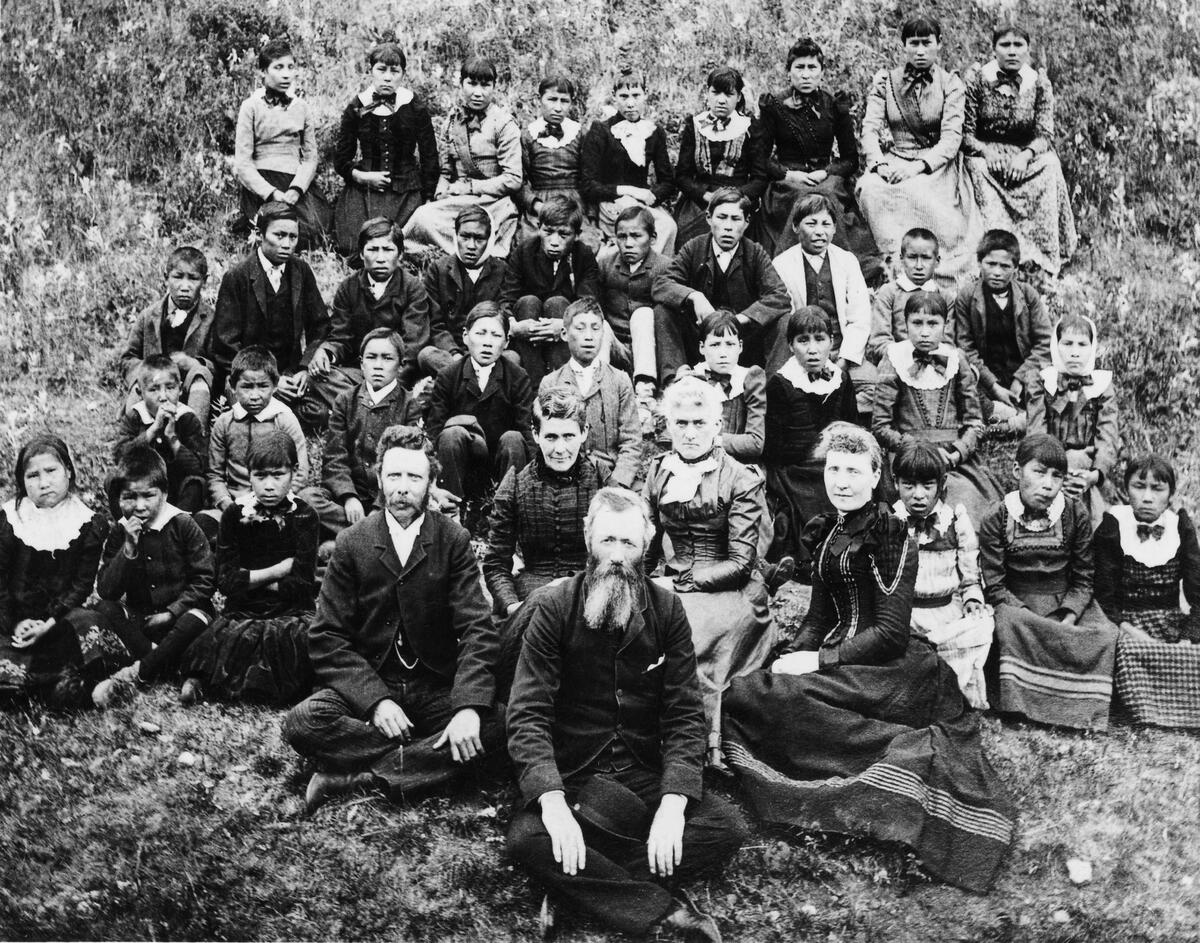
“Teachers and pupils, McDougall orphanage, Morley, Alberta.”, 1885, (CU184411) by Thom, A. B.. Tatanga Mani has been identified as the third from the left child in the second-last row. Source: Glenbow Library and Archives, Glenbow Archives Collection, Libraries and Cultural Resources Digital Collections, University of Calgary.
Written by: Robert Gustas, PhD, Geomatics Technologist, Archaeological Survey of Alberta
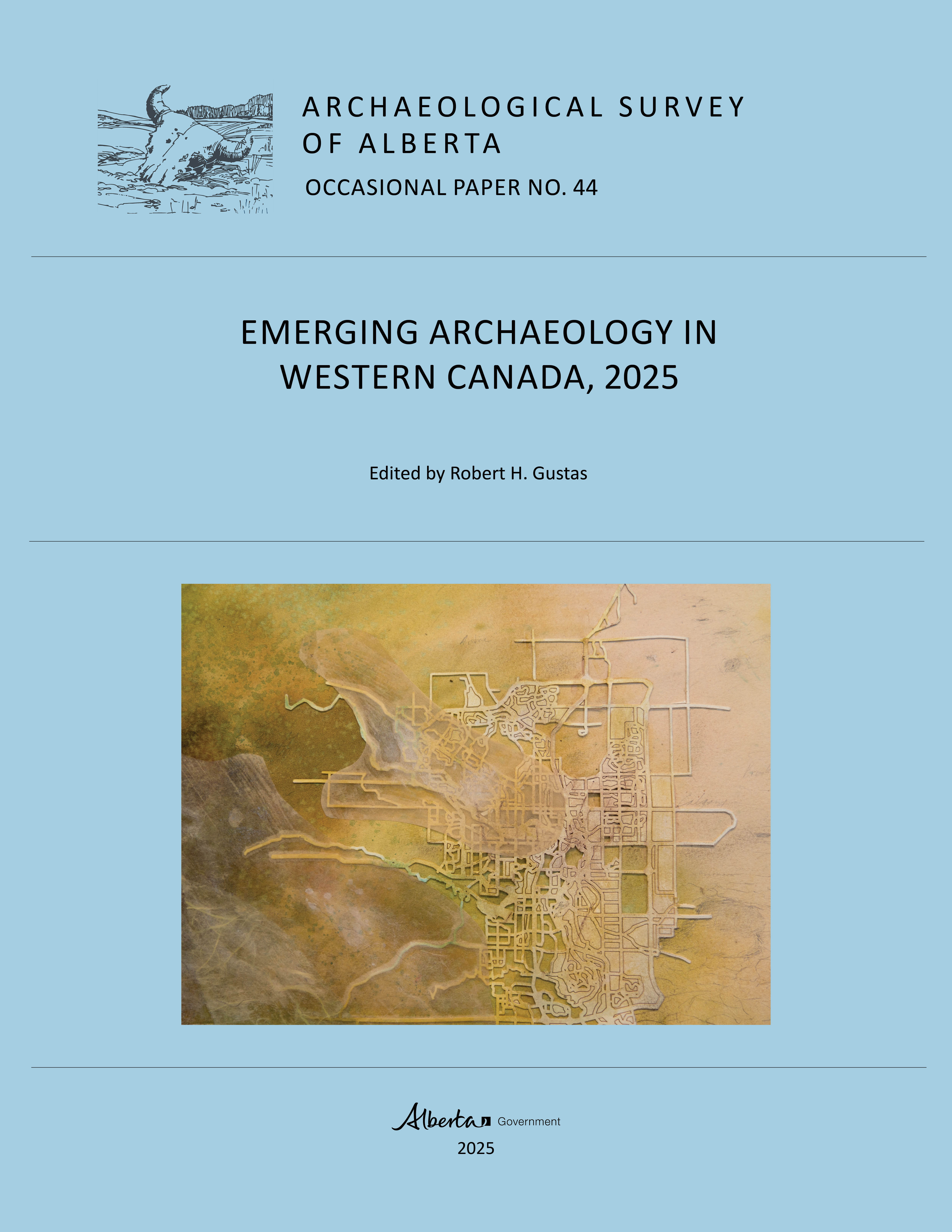
The Archaeological Survey of Alberta is excited to release a complete volume of our latest Occasional Paper Series (No. 44) available for free download here.
The current volume is dedicated to synopses or components of graduate theses and dissertations written over the last 15 years. The initial six articles were released in April and the final four articles are featured below. They explore projectile points, the use of space at archaeological sites, and a bison skull ceremonial feature.
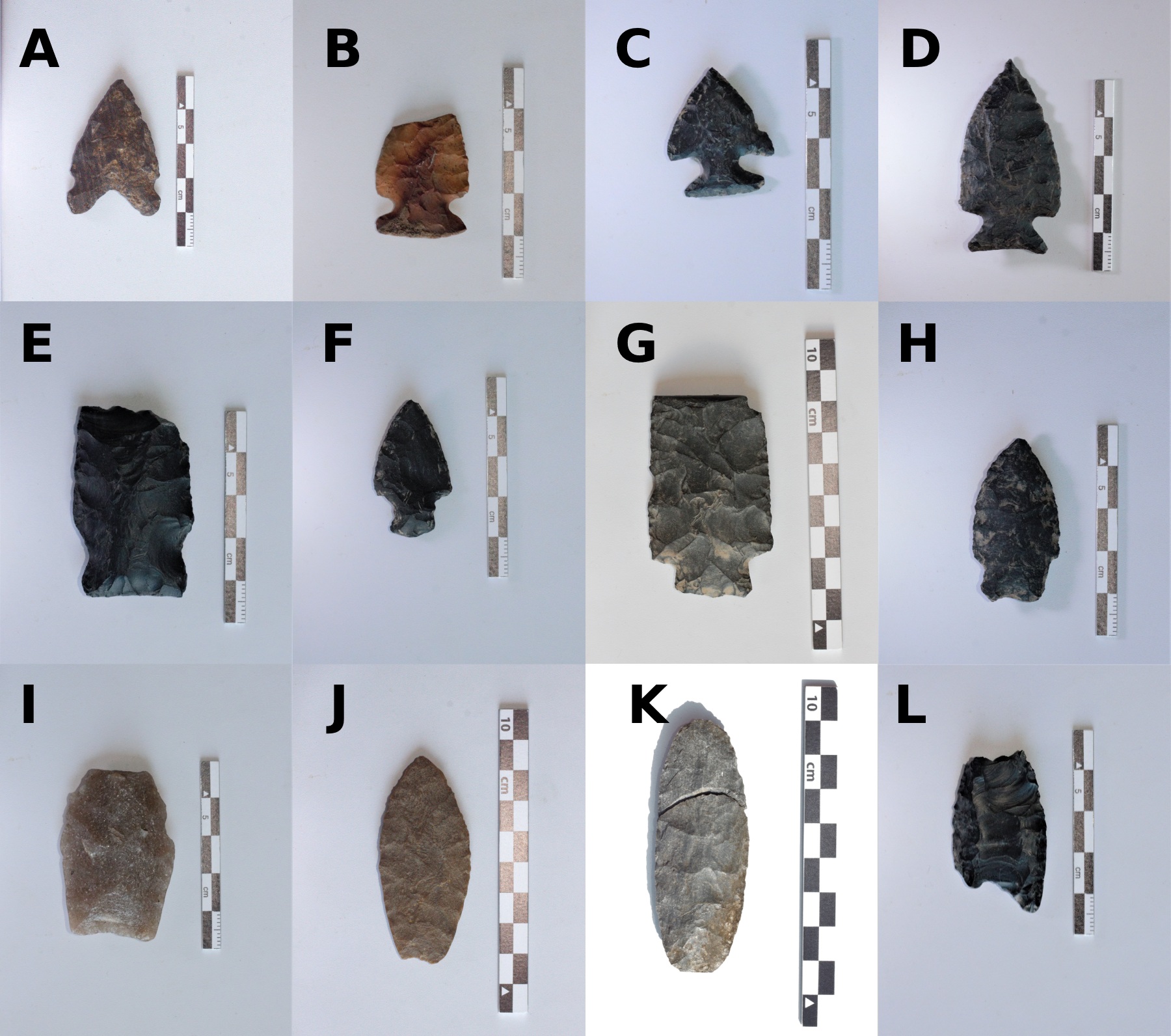
The seventh article in the volume compiles information about projectile points in the Peace Region to inform cultural contact, technologies, and chronological change. Northeastern British Columbia and northwestern Alberta were fluid places with long histories of cultural influence from neighbouring regions that are detectable in the shape and function of lithic artifacts.
A composite of some of the variety of projectile point morphologies in northeastern British Columbia. Source: Jen Hogan, 2025.
The last RETROactive Live Alberta Heritage Speaker Series for the next few months is taking place on Thursday, June 18. Click the registration link to sign up. You can also watch recordings of the previous four webinars.
The Russian Revolution and Civil War (1917-22) created an enormous refugee crisis, as hundreds of thousands of people fled Russia to escape violence and persecution. Approximately 16,000 sought refuge in Harbin, China, where they appealed to the international community for assistance. In 1924, Canada agreed to open its borders to several groups of Russian refugees on the condition that they pay for their own passage and settle on agricultural land. Between 1924 and 1927, over 1,000 Russian refugees arrived in Canada to start a new life, with hundreds initially settling in central Alberta.