
Editor’s note: Aba Wathtech. June is National Indigenous History Month, an invitation to honour the history, diversity, strength and contemporary achievements of Indigenous Peoples.
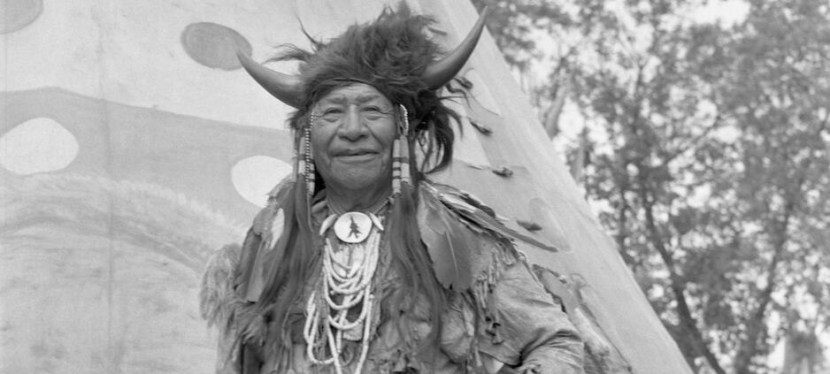
The banner image above features Walking Buffalo, Stoney, at Calgary Exhibition and Stampede grounds, Calgary, Alberta, unknown date, (CU189040) by Oliver, W. J. Source: Glenbow Library and Archives, Glenbow Archives, Libraries and Cultural Resources Digital Collections, University of Calgary.
Reading residential school histories can be a painful process. If reading this is causing pain or bringing back distressing memories, please call the Indian Residential Schools Crisis Line at 1-866-925-4419. The Crisis Line is available 24 hours a day and can also provide information on other health supports provided by the Health Canada Indian Residential Schools Resolution Health Support Program.
Written by: Laura Golebiowski, Indigenous Consultation Adviser, in collaboration with the Stoney Nakoda Nations
When Tatanga Mani was a small boy, he went by the name of Little Bear. He grew up under the protection of his maternal and paternal grandmothers and the sheltered forests of the Bow Valley. The Stoney Nakoda (contemporarily the Bearspaw, Chiniki and Goodstoney First Nations) lived in small familial groups, hunting buffalo, moose, deer and goat. Wild carrot, wild rhubarb and sour grass were harvested from the mountains. Sweet tree sap was harvested and boiled in the springtime and cranberries, huckleberries, chickenberries and chokecherries were harvested through the summer. In the winter, groups would gather together in the valley flats of what is now Banff National Park. By Tatanga Mani’s own recollections, life was simple and happy:
In my young days, [there were] no roads, no horses. One time I remember there was five in a family. I would be about five years old. There’s my grandmother, my uncle Ben Kaquitts, there’s another uncle, and one aunt…and just one horse, to travel around with. And one dog. And I always remembered that that time, that [we were] the poorest people…but at that time we didn’t notice at all, we still lived contented and happy. We didn’t worry about nothing.
For Stoney children born one generation prior, their education was informal but holistic, grounded in respect and reciprocity. Nature was the teacher. Per Chief John Snow in These Mountains are Our Sacred Places, “A child would grow up learning about nature and the importance of respecting all things in creation…It was an ongoing educational process about religion, life, hunting, and so on. Other topics were bravery, courage, kindness, sharing, [and] survival…”
But by the 1870s when Tatanga Mani was born, Methodist missionaries had established their foothold in Stoney Nakoda territory. Despite having an extended family and community who loved and cared for him, Tatanga Mani was adopted by Methodist missionary John McLean. He was assigned the name George McLean and forced to attend the McDougall Orphanage at Mînî Thnî. (The “Orphanage” was a misnomer, per Chief John Snow: “The reason for the name is not clear; my people’s extended family system made the use of European-style orphanages unnecessary and records suggest that many children in the institution certainly had parents who were willing and able to care for them.”).
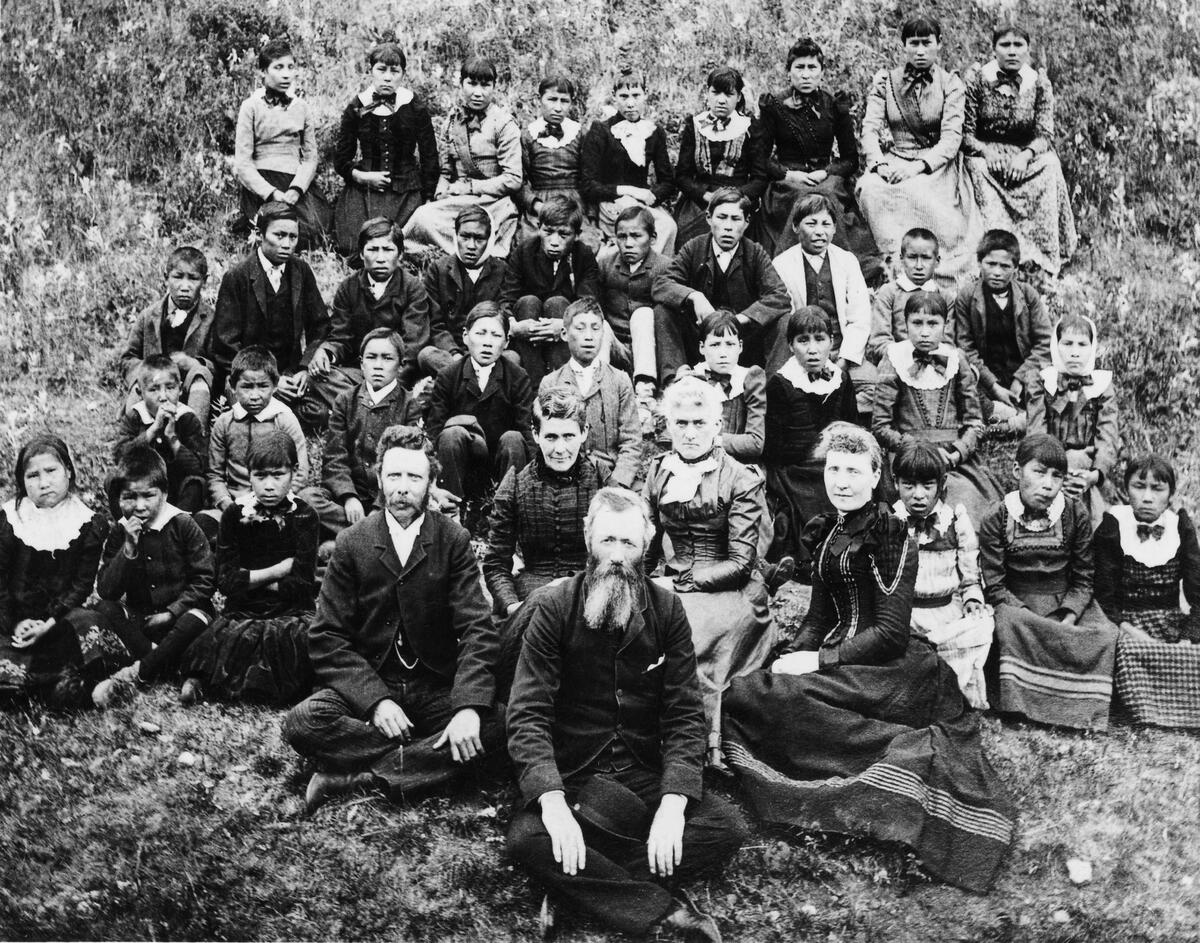
Thus began Tatanga Mani’s colonial education. According to some archival sources, he stayed at the McDougall Orphanage for eight years. His granddaughter, Elder Clarice Kootenay/Thuthâge Wathte Wîyan (Eagle Plume Woman), knows he and his classmates suffered abuse there. Later, it was decided that Tatanga Mani would attend the newly-opened Red Deer Industrial School. Per his own recollections: “…When I’d be about 14, 16, when I became to be a young man—the government built an industrial school, about six miles west of the present Red Deer town now, up the river. And that’s where I went again. To be taught a higher education.”
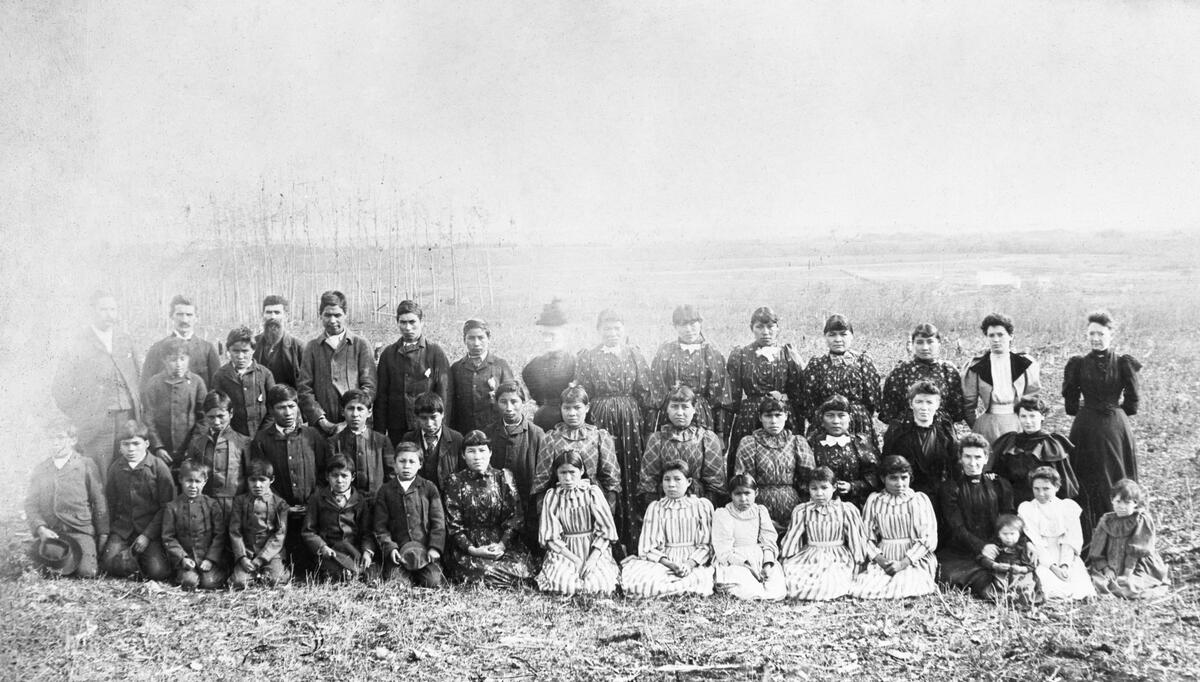
At Red Deer Industrial School, Tatanga Mani was assigned the vocation of “farmer.” The archival record suggests he was also instructed in carpentry. In an 1894 report by the Inspector of Indian Agencies and Reserves noted: “The carpenter’s shop contains four benches. Three boys, Henry Steinhauer, James Cardinal and George McLean, were working there, but as many as ten boys are learning this trade, and Mr. Lougheed, instructor, informed me that they were doing very well. The boy McLean is the one whom I spoke about learning a trade last year at the McDougall Orphanage. He was proving to be an apt learner, and Mr. Lougheed is pleased with him.”
Multiple information sources indicate that Tatanga Mani’s experience at Red Deer Industrial School was not positive. One of very few Nakoda language speakers, it is suggested he was ostracized by the school’s overwhelmingly Cree population of children at the time. The student register alludes to theft, as well as attempts to escape the school.
Chiniki First Nation Elder Marhpiya Thkân (White Heaven, Henry Holloway), who spent considerable time with Tatanga Mani as a young man, relayed the story of his attempted escape from Red Deer Industrial School. In the video below, Marhpiya Thkân explains how Tatanga Mani and his classmates skated the frozen Red Deer River and walked several kilometres before seeking refuge at a ranch house. The elderly couple that lived there took the boys in and fed them, but not before calling the North West Mounted Police to bring them back to the school.
John McDougall himself wrote of Stoney children running away from Red Deer; the information helps corroborate the oral histories that Marhpiya Thkân shared:
In reference to the transfer of pupils from [McDougall Orphanage] to Red Deer School—in May 1894 three boys were sent there from this school, and I am sorry to say it has not proved satisfactory at all. To my certain knowledge these boys have run away three times since sent up there, and about two weeks or a month ago two of them were arrested here by the police, and taken to the barracks at Calgary, and sent from there under the escort of the N.W.M.P. to Red Deer. All of this has conspired to make Red Deer School very unpopular among our Indians.
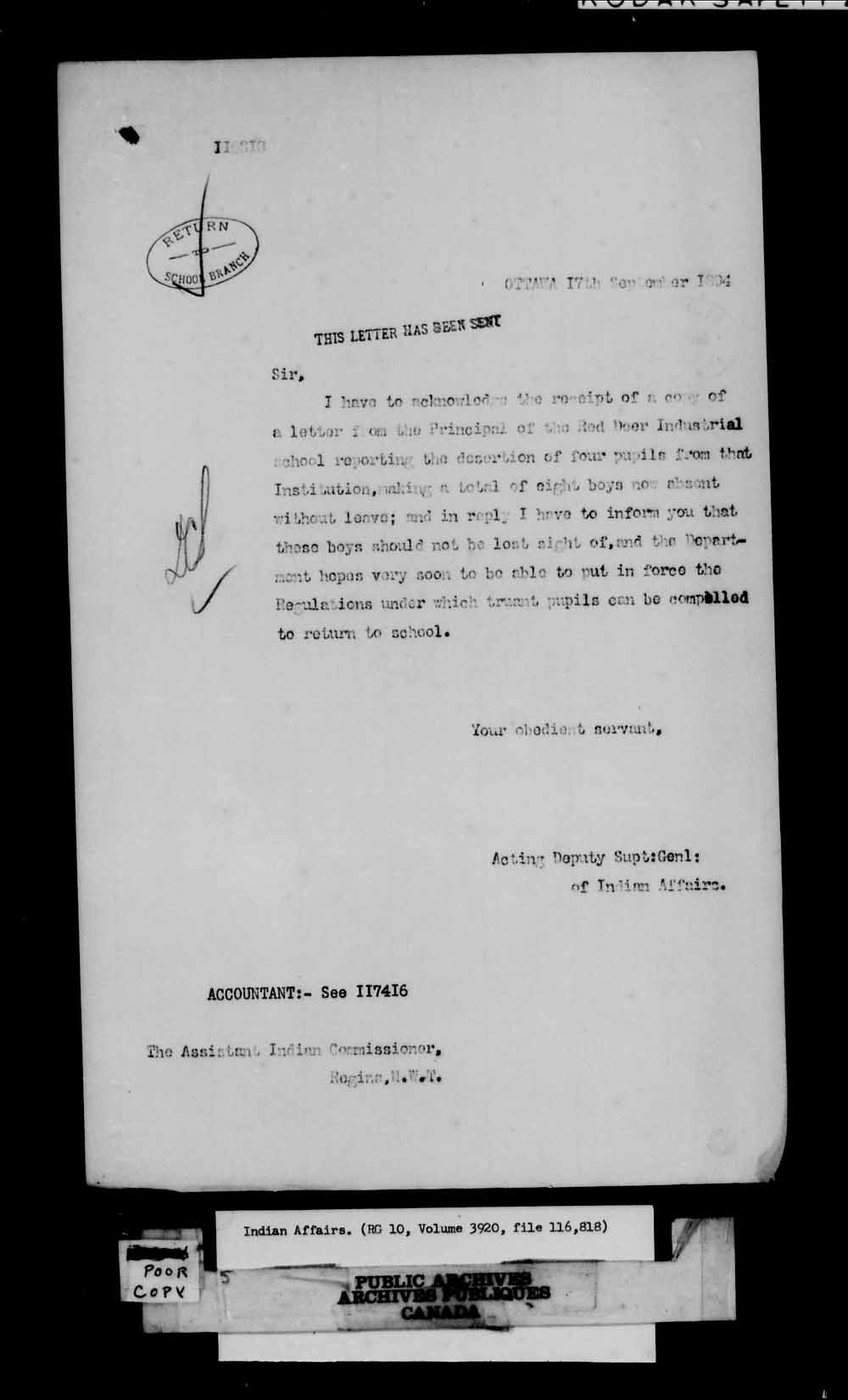
Tatanga Mani was likely one of the first children to try to escape Red Deer Industrial School, but he was not the last. By September 1894, eight boys were recognized as being “absent without leave,” and Indian Affairs was scrambling to enact regulations to force “truant pupils” to return to school. That same year, changes to the Indian Act permitted any constable or employee of the Indian Department to arrest—without warrant—any child found escaping residential school.
Tatanga Mani successfully deserted Red Deer Industrial School on July 14, 1895, and was officially dropped from enrollment records on July 10, 1896. After attending St. John’s School in Winnipeg and spending time in Calgary, he returned to Mînî Thnî in his early twenties to serve his Nation, providing translation support to Chief Bearspaw and later serving as both Minor Chief and Chief of Bearspaw First Nation. After more than a decade of colonial education, he returned to his ancestors’ pedagogy:
I read the bible, I read school books, I read newspapers. I wasn’t satisfied with it. I had to get back to studying nature…that is God’s bible. Humans didn’t make that, that’s nature’s university. Nature’s university is the true education.
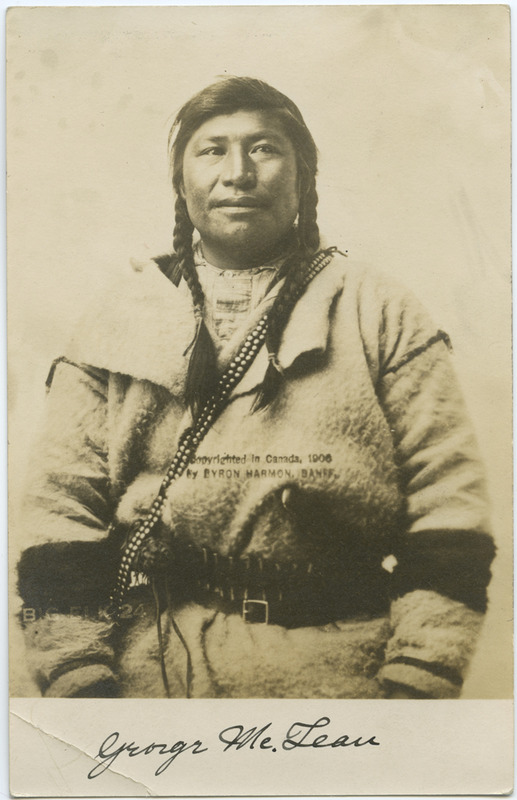
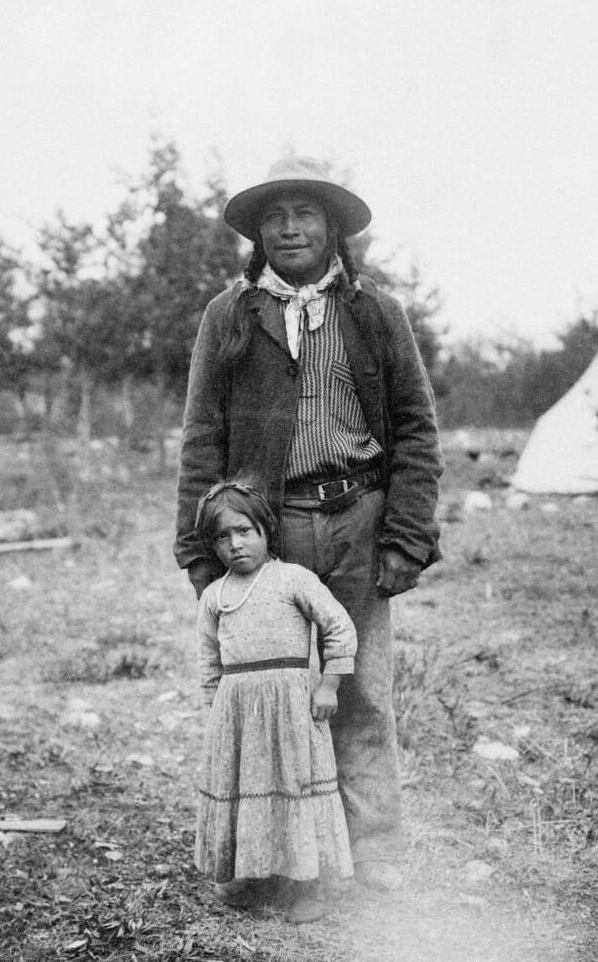
Tatanga Mani became a great leader, for his Nation and beyond. He travelled the world sharing a message of peace, equality, and our connection to nature and to each other. In his later years, Tatanga Mani referred to himself as an “adult educator.” He consistently advocated for an education system that was holistic, compassionate, and centered in Indigenous ways of knowing and cultural continuity. “I didn’t get as far as high school,” he is quoted as saying in Grant McEwan’s biography Tatanga Mani: Walking Buffalo of the Stonies, “but the Great Spirit gave me something I could have never found in the classroom—the heart and will to understand…I didn’t go to [the white man’s] high school, but I attended the best university of all, nature’s great university of the outdoors.”
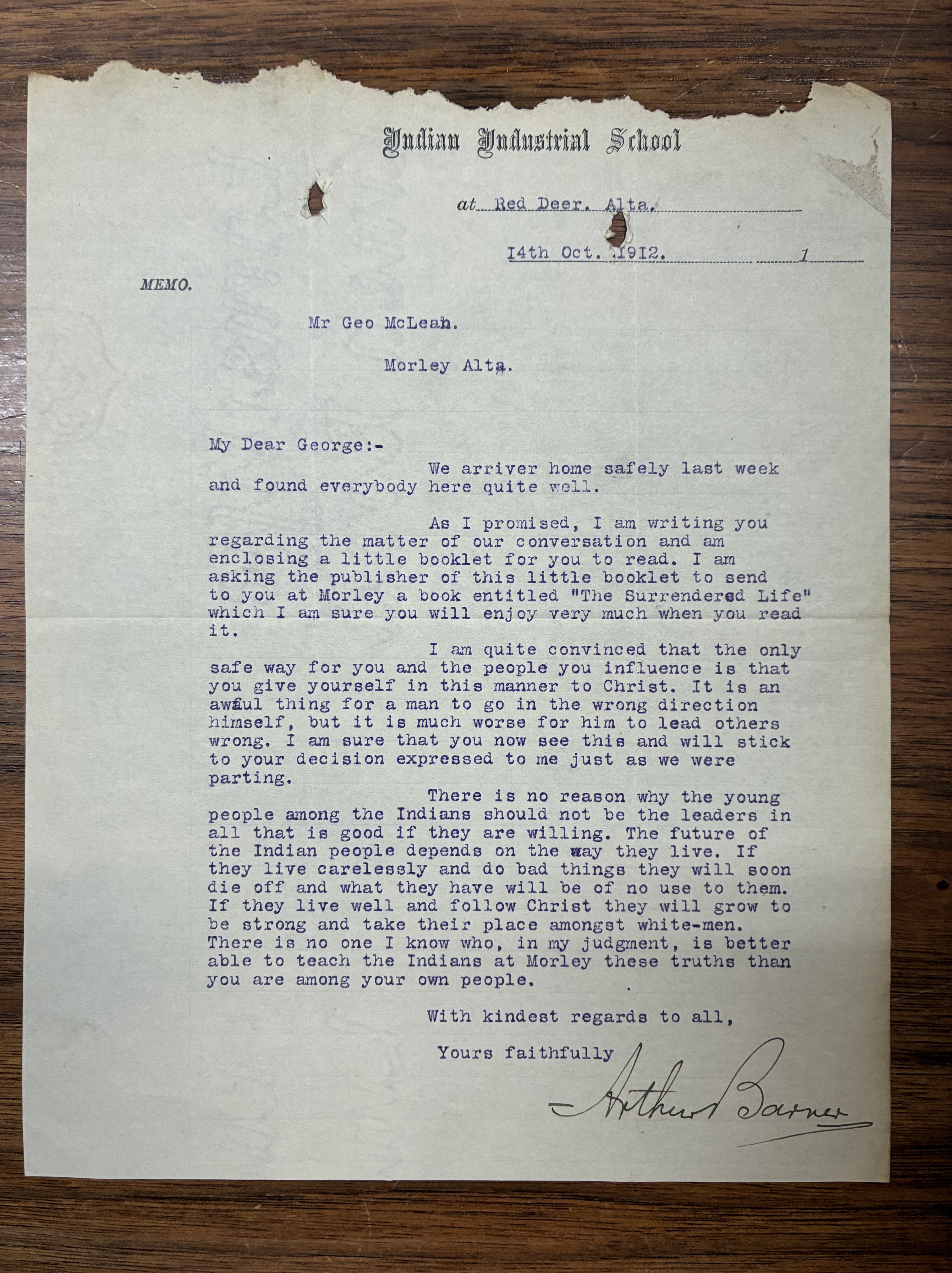
Did Tatanga Mani think back on his experiences at Red Deer Industrial School often? We cannot say for certain. But we know the school was thinking of him. On October 14, 1912—almost two decades after his forced attendance, Red Deer principal Arthur Barner penned a letter to Tatanga Mani, then the newly-appointed Chief of Bearspaw First Nation. With a tone bordering on threatening, Barner implored: “I am quite convinced that the only safe way for you and the people you influence is that you give yourself in this manner to Christ,” and, “The future of the Indian people depends on the way they live….If they live well and follow Christ they will grow to be strong and take their place amongst white-men.” There is no indication in the archival record that Tatanga Mani humoured Barner with a response.
Throughout his adult life, Tatanga Mani taught and demonstrated grace, forgiveness and compassion: values that were likely seldom afforded to him as a child in Red Deer Industrial School. Marhpiya Thkân, who as a teenager accompanied Tatanga Mani to 18 countries on Tatanga Mani’s Moral Re-Armament world tour, remembers the lessons received from him fondly:
Walking Buffalo was a great man of wisdom and knowledge. He had a philosophy of life: of how life should be. It should be respected. No matter who you are, no matter where you are from—Mother Earth takes care of us. Everything in this world is a living thing. Everything has a spirit, has a communication for us. Everything is a sign for us to live by.
[Tatanga Mani] used to tell me a lot of things, about how we should respect and honour the earth, so it can become a better place for future generations.
The experience I had with Tatanga Mani, at a very young age, helped me to get this far. It helped me and supported me in a lot of ways, in understanding Mother Earth and human life. There is no difference: we are all the same, no matter who we are. We all come from Mother Earth: every human in this world. When we die, we go back to Mother Earth.
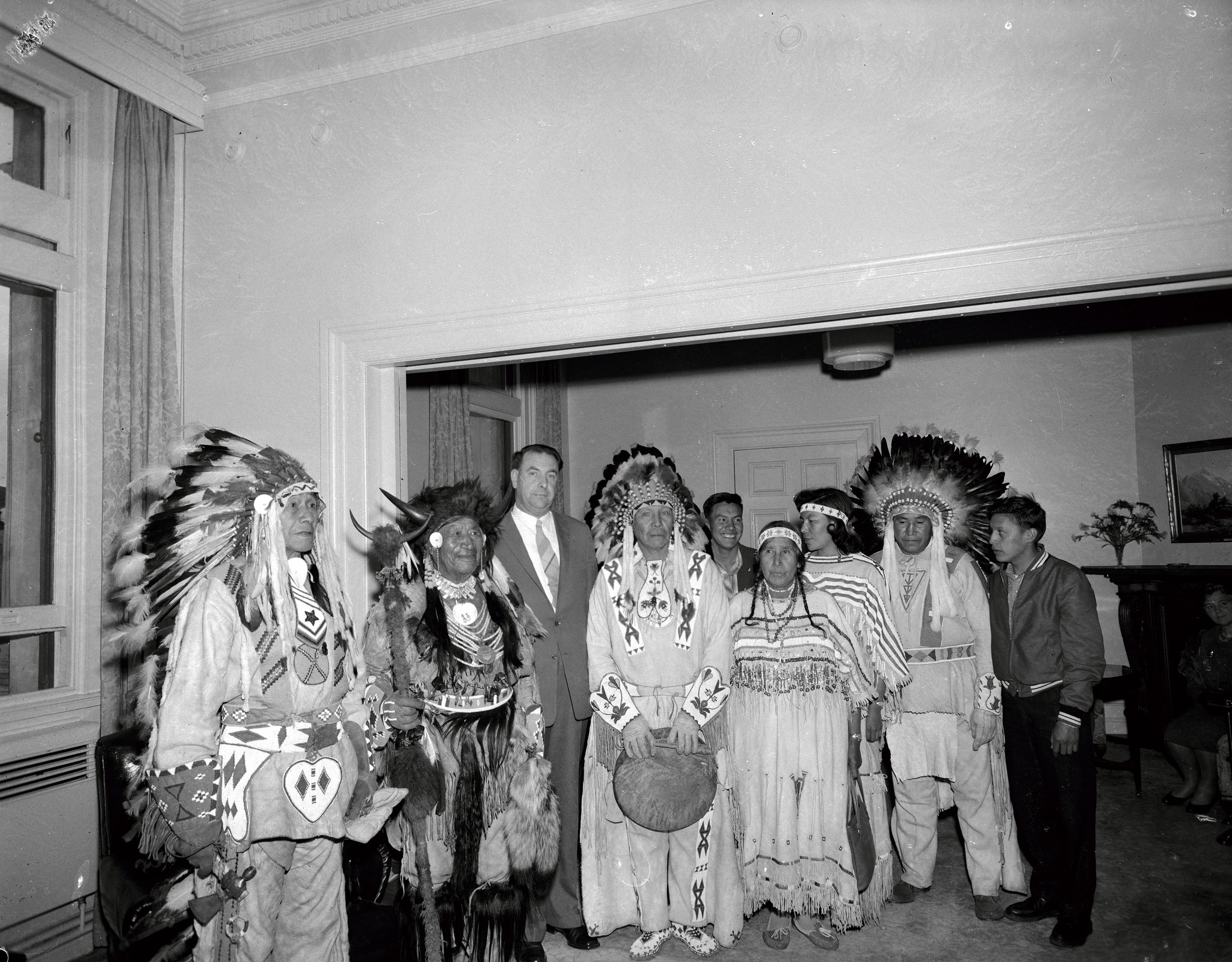
Similarly, Elder Clarice Kootenay/Thuthâge Wathte Wîyan reflected on her grandfather’s stories, lived experiences and the life philosophies he taught her:
In this life we live, it required of us to forgive one another, and we are to live in harmony…We were to go forward without bitterness, a clean heart, mind, body and soul. Building good relations is important, regardless of resentment, prejudice, hatred or hard feelings. Be of good spirit and enjoy life.
Red Deer Industrial School’s oral testimonies, family recollections and archival record are full of examples of resistance and resilience. Survivor communities tell us that stories must be shared as well. Tatanga Mani’s success in life is celebrated, but his forced attendance at Red Deer Industrial School deserves no credit. Instead, we honour his survival, his strength, and his generosity in sharing his message of peace for the world.
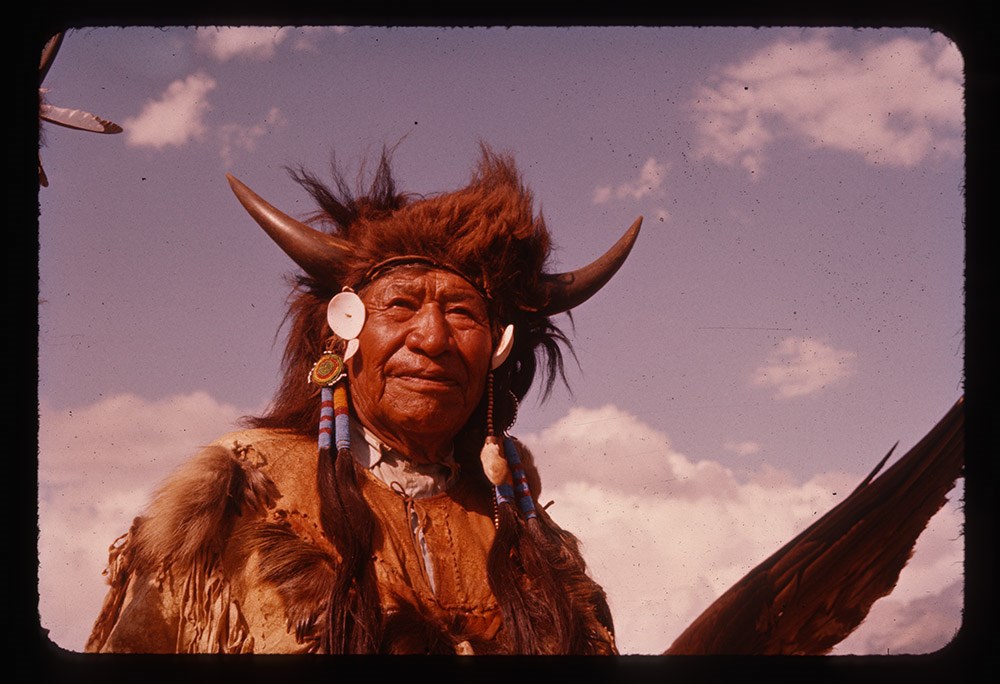
Tatanga Mani was one of more than 350 children who were forced to attend Red Deer Industrial School during its 26 years of operation. The Historic Resources Management Branch is honoured to be collaborating with Survivor communities regarding the preservation and recognition of the Red Deer Industrial School cemetery, and on broader truth-telling initiatives. Thank you to Bearspaw First Nation, Chiniki First Nation and Goodstoney First Nation, especially Gavin Ear, Conal Labelle, Chris Goodstoney, William (Bill) Snow, and Cathy Arcega for their ongoing collaboration and guidance. Thank you to Elder Marhpiya Thkân and Elder Clarice Kootenay/Thuthâge Wathte Wîyan, for helping share Tatanga Mani’s story. Isniyes.
References and further learning
Conversations with Stoney Nakoda First Nations and Banff Indian Days recordings. 1950 – 1973. Peter and Catharine Whyte fonds. S37 / 57 – 83. Archives and Library, Whyte Museum of the Canadian Rockies.
General correspondence relating to the Red Deer Industrial School from its inception, 1889-1912. RG10, Volume number: 3920, Microfilm reel number: C-10161, File number: 116818. Library and Archives Canada.
George and John McDougall family fonds, fonds F1265, 1841 – 1969. Glenbow Archives. Glenbow Archives Collection, Libraries and Cultural Resources Digital Collections, University of Calgary.
George McLean, Chief Walking Buffalo, March 3, 1967. 1967. Peter and Catharine Whyte fonds. S37 / 70. Archives and Library, Whyte Museum of the Canadian Rockies.
George McLean fonds. 1909-1967. McLean, George (Tatâga Mânî) (Walking Buffalo). George McLean fonds. M42 / V422. Archives and Library, Whyte Museum of the Canadian Rockies.
Holloway, Henry/Marhpiya Thkân. Chiniki First Nation, Treaty 7 Territory. Mînî Thnî. Personal communication, March 6, 2026.
Kootenay, Clarice. (n.d.) Îyârje Stoney Stories. McDougall Stoney Mission Society, retrieved online from https://www.mcdougallstoneymission.com/ckvideo.
Kootenay, Clarice/Thuthâge Wathte Wîyan. Bearspaw First Nation, Treaty 7 Territory. Mînî Thnî. Personal communication, May 25, 2026.
LeBeuf, Marcel-Eugéne, on behalf of the RCMP. (2011). The role of the Royal Canadian Mounted Police during the Indian residential school system. Retrieved online from https://nctr.ca/wp-content/uploads/2021/01/RCMP-role-in-residential-school-system-Oct-4-2011.pdf.
MacEwan, Grant. (1969). Tatanga Mani: Walking Buffalo of the Stonies. Edmonton, AB: Hurtig Publishers.
Red Deer Industrial Student Register, Provincial Archives of Alberta PR1979.0268/162.
Sessional papers of the Dominion of Canada: volume 9, fifth session of the seventh Parliament, session 1895. Library and Archives Canada. Retrieved online from: https://www.canadiana.ca/view/oocihm.9_08052_28_9/6
Snow, Chief John. (1977). These mountains are our sacred places: The story of the Stoney People. Toronto, ON: Fifth House Publishing.
The Canadian Encyclopedia. (2020). Walking Buffalo (Tatanga Mani). Retrieved online from https://thecanadianencyclopedia.ca/en/article/walking-buffalo.
Editor’s note: The various information sources cited in this post contain minor discrepancies regarding some of the details of Tatanga Mani’s life. These inconsistencies do not detract from the greater truths regarding his experiences in residential school and his contributions to society.

