Klondike Trail

You have all probably seen them – large blue heritage markers located at highway rest areas or points of interest throughout Alberta. These interpretive signs tell of Alberta’s rich heritage. Come, travel Alberta and read a featured heritage marker:
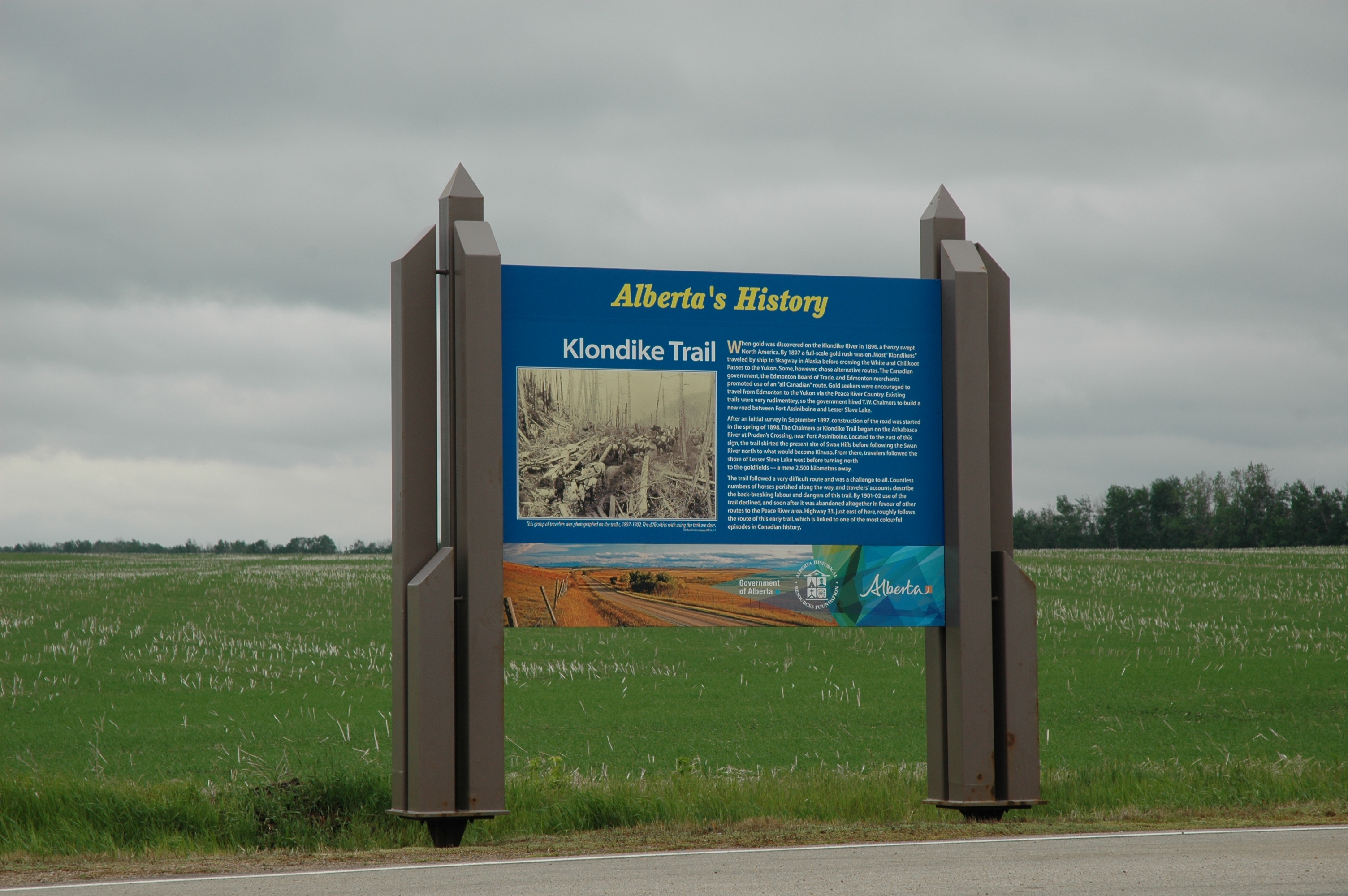
Driving westward on Highway 18, I found this roadside sign a few kilometers east of the Highway 33 intersection, near the Town of Barrhead. Stopping to read it, I learned how close I was to the “all Canadian” route to the Klondike, used during the gold rush. Continuing on my way, I used part of the trail (now Highway 33) to get to High Prairie.

Klondike Trail

When gold was discovered on the Klondike River in 1896, a frenzy swept North America. By 1897 a full-scale gold rush was on. Most “Klondikers” traveled by ship to Skagway in Alaska before crossing the White and Chilikoot Passes to the Yukon. Some, however, chose alternative routes. The Canadian government, the Edmonton Board of Trade, and Edmonton merchants promoted use of an “all Canadian” route. Gold seekers were encouraged to travel from Edmonton to the Yukon via the Peace River Country. Existing trails were very rudimentary, so the government hired T.W. Chalmers to build a new road between Fort Assiniboine and Lesser Slave Lake.

After an initial survey in September 1897, construction of the road was started in the spring of 1898. The Chalmers or Klondike Trail began on the Athabasca River at Pruden’s Crossing, near Fort Assiniboine. Located to the east of this sign, the trail skirted the present site of Swan Hills before following the Swan River north to what would become Kinuso. From there, travelers followed the shore of Lesser Slave Lake west before turning north to the goldfields – a mere 2,500 kilometers away.

The trail followed a very difficult route and was a challenge to all. Countless numbers of horses perished along the way, and travelers’ accounts describe the back-breaking labour and dangers of this trail. By 1901-02 use of the trail declined, and soon after it was abandoned altogether in favour of other routes to the Peace River area. Highway 33, just east of here, roughly follows the route of this early trail, which is linked to one of the most colourful episodes in Canadian History.

Heritage Marker Location

North side of Highway 18, 1 kilometer east of Highway 33.


Prepared by: Michael Thome, Municipal Heritage Services Officer
Speakers’ Studio – Doors Open Edmonton

Saturday, July 7, 2012

Time: 1pm

Location: Prince of Wales Armoury, Edmonton – Jefferson Room.

Ever wonder how the Government of Alberta evaluates places to determine if they are historic? I’m giving a talk on how historic places are evaluated in Alberta as part of the Edmonton Historical Society’s Historic Festival and Doors Open Edmonton Speakers’ Studio. If you’d like to learn more about heritage value, statements of significance and the heritage inventory process come down to the Prince of Wales Armoury on Saturday July 7th. The talk begins in the Jefferson Room at 1pm.

The Prince of Wales Armoury (which is a Provincial Historic Resource) is located south of the Royal Alexandra Hospital at 10440 – 108 Avenue, Edmonton.

Written by: Michael Thome, Municipal Heritage Services Officer
The Signing of Treaty No. 8

You have all probably seen them – large blue heritage markers located at highway rest areas or points of interest throughout Alberta. These interpretive signs tell of Alberta’s rich heritage. Come, travel Alberta and read a featured heritage marker:

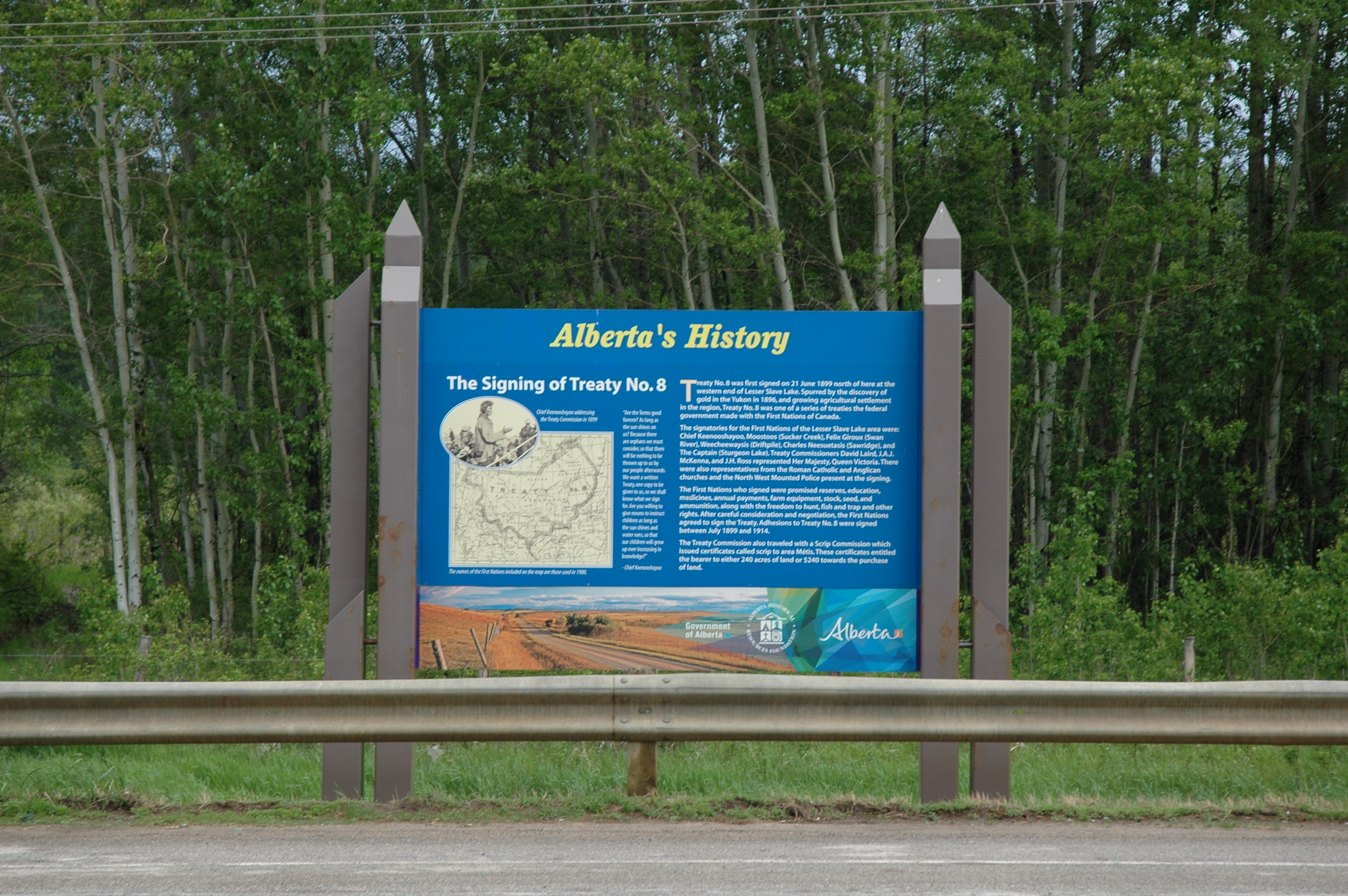
Driving towards High Prairie on Highway 2, I encountered this roadside sign a few kilometres past the western tip of Lesser Slave Lake. Stopping to read it, I didn’t realise how close I was to the place where one of the numbered treaties was signed.

The Signing of Treaty No. 8

Treaty No. 8 was first signed on 21 June 1899 north of here at the western end of Lesser Slave Lake. Spurred by the discovery of gold in the Yukon in 1896, and growing agricultural settlement in the region, Treaty No. 8 was one of a series of treaties the federal government made with the First Nations of Canada.

The signatories for the First Nations of the Lesser Slave Lake area were: Chief Keenooshayoo, Moostoos (Sucker Creek), Felix Giroux (Swan River), Weecheewaysis (Driftpile), Charles Neesuetasis (Sawridge), and The Captain (Sturgeon Lake). Treaty Commissioners David Laird, J.A.J. McKenna, and J.H. Ross represented Her Majesty, Queen Victoria. There were also representatives from the Roman Catholic and Anglican churches and the North West Mounted Police present at the signing.

The First Nations who signed were promised reserves, education, medicines, annual payments, farm equipment, stock, seed, and ammunition, along with the freedom to hunt, fish and trap and other rights. After careful consideration and negotiation, the First Nations agreed to sign the Treaty. Adhesions to Treaty No. 8 were signed between July 1899 and 1914.

The Treaty Commission also traveled with a Scrip Commission which issued certificates called scrip to area Métis. These certificates entitled the bearer to either 240 acres of land or $240 towards the purchase of land.

Heritage Marker Location

North side of Highway 2, about 15 kilometres east of the town of High Prairie. https://goo.gl/maps/1H6QBZtfYkn

St. Bernard Mission (Church and Cemetery) is a Provincial Historic Resource located nearby in the hamlet of Grouard. Bishop Grouard was a famous Roman Catholic oblate missionary. Bishop Grouard encouraged many tribes to sign Treaty No. 8.

Prepared by: Michael Thome, Municipal Heritage Services Officer
It’s All About Context

The Alberta Historical Resources Foundation awarded the Municipal District of Big Lakes a grant to aid them in developing a context paper, the first step in completing their first inventory of potential historic places. On June 6th, I facilitated a workshop for members of the M.D. of Big Lakes’s Heritage Advisory Committee. The daylong workshop was about context papers: what they are, what they’re used for and why you cannot identify or understand historic places without them. The committee was appointed by council last year to find ways to protect local historic places. In March, they finished the first phase of a municipal heritage survey.

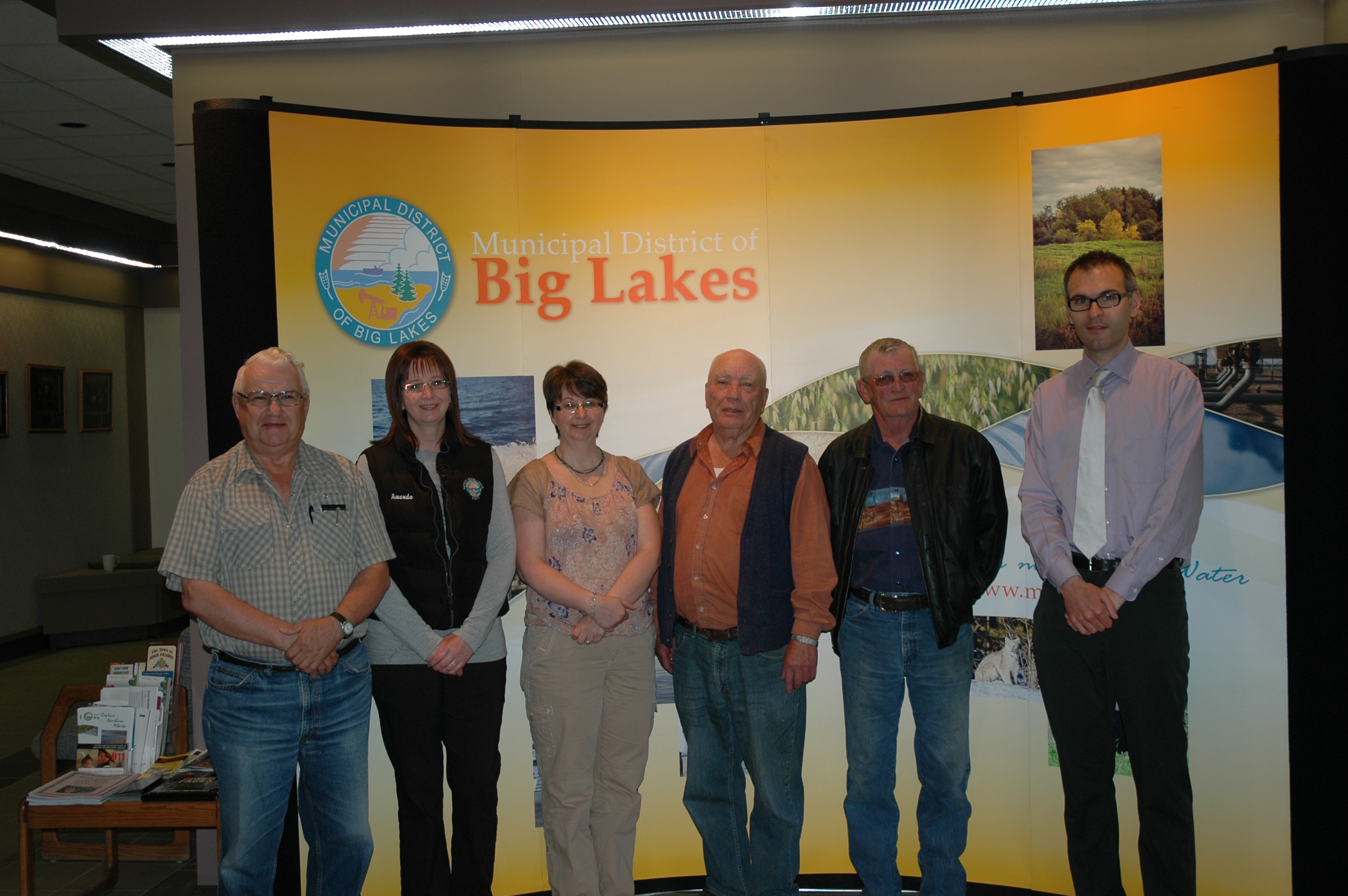
Members of the Heritage Advisory Committee (unless otherwise noted), left to right: Mike Sekulich; Amanda Backs, Assistant Development Officer; Pat Olansky, Community Development Officer; Garth Lodge; Harvey Nielsen; Michael Thome, Municipal Heritage Services Officer.

We started the day by discussing heritage value. A context paper at its simplest and most useful is a document that describes a community’s heritage values. What is heritage value? In Canada it is commonly defined as, the aesthetic, historic, scientific, cultural, social or spiritual importance or significance” assigned to a place. In other words, heritage value can be articulated through a historic place’s ability to tell us something about the past: perhaps how people lived during a particular time-period, how a certain type of building was constructed, how an important event took place, among other things. Each community will value the past differently. In fact, members of the same community will think that different aspects of their common history are important. The first step when evaluating historic places is for a community to decide what their common heritage values are.

Why is understanding your heritage values so important? Heritage value is communicated through a historic place’s materials and form. It isn’t a place’s age or uniqueness that makes it significant; significance is rooted in a place’s ability to teach us about the past. You can’t decide if something is a historic place unless you understand the heritage values that make your historic places significant. Distinguishing between places with heritage value and old buildings that cannot offer a window into significant aspects of the past is the key.

Over the summer, the M.D. of Big Lakes will determine what their community’s heritage values are and describe them in writing. The result is called a context paper. Heritage value can be nebulous, but writing a context paper before looking at specific places helps answer the question “why should we conserve this place”. Once the context paper is finished the Heritage Advisory Committee can determine the significance of potential historic places.

We then spent the afternoon discussing what Big Lakes’ heritage values might be. We worked through a list of eight themes:

  • community life;
  • health and welfare;
  • economic development;
  • learning;
  • music and the arts; politics,
  • government and law enforcement;
  • religion and spirituality; and
  • transportation.

Each theme was intended to be a starting point to discuss events, groups or people that reflect the theme; each theme was to be inclusive of all people, places and time periods within the municipality.

One of the great parts of my job is the opportunity to learn about each community’s unique history and Big Lakes didn’t disappoint. The committee members began telling stories illustrating some of these themes, talking about events and people that made Big Lakes what it is. In just one afternoon, I learned that mink farming, logging and commercial fishing on Lesser Slave Lake were important sources of income. I learned about the sports days, rodeos and community dances that were the important social events. We started to organise these stories under sub-themes and even components within subthemes.

The committee will be working with a consultant on the context paper over the summer. When the committee finishes the framework, the results will be presented to the community for further input and then written up. The context paper will give the Heritage Advisory Committee the framework within which to evaluate individual places for heritage value. If a place contains buildings or other works that illustrate one of the themes from their context paper, it is a historic resource.

Evaluating individual places for heritage value will be the subject of a future workshop, probably in the fall. I’m really looking forward to reading drafts of their context paper, in the meantime.

Written by: Michael Thome, Municipal Heritage Services Officer
Tour of the Peace (Part II)

I previously wrote about the Alberta Historical Resources Foundation board receiving a tour of historic places on the Peace River, during their May board meeting (see Part I). This blog post continues that tour with visits to the St. Augustine Roman Catholic Mission and the Twelve Foot Davis grave site.

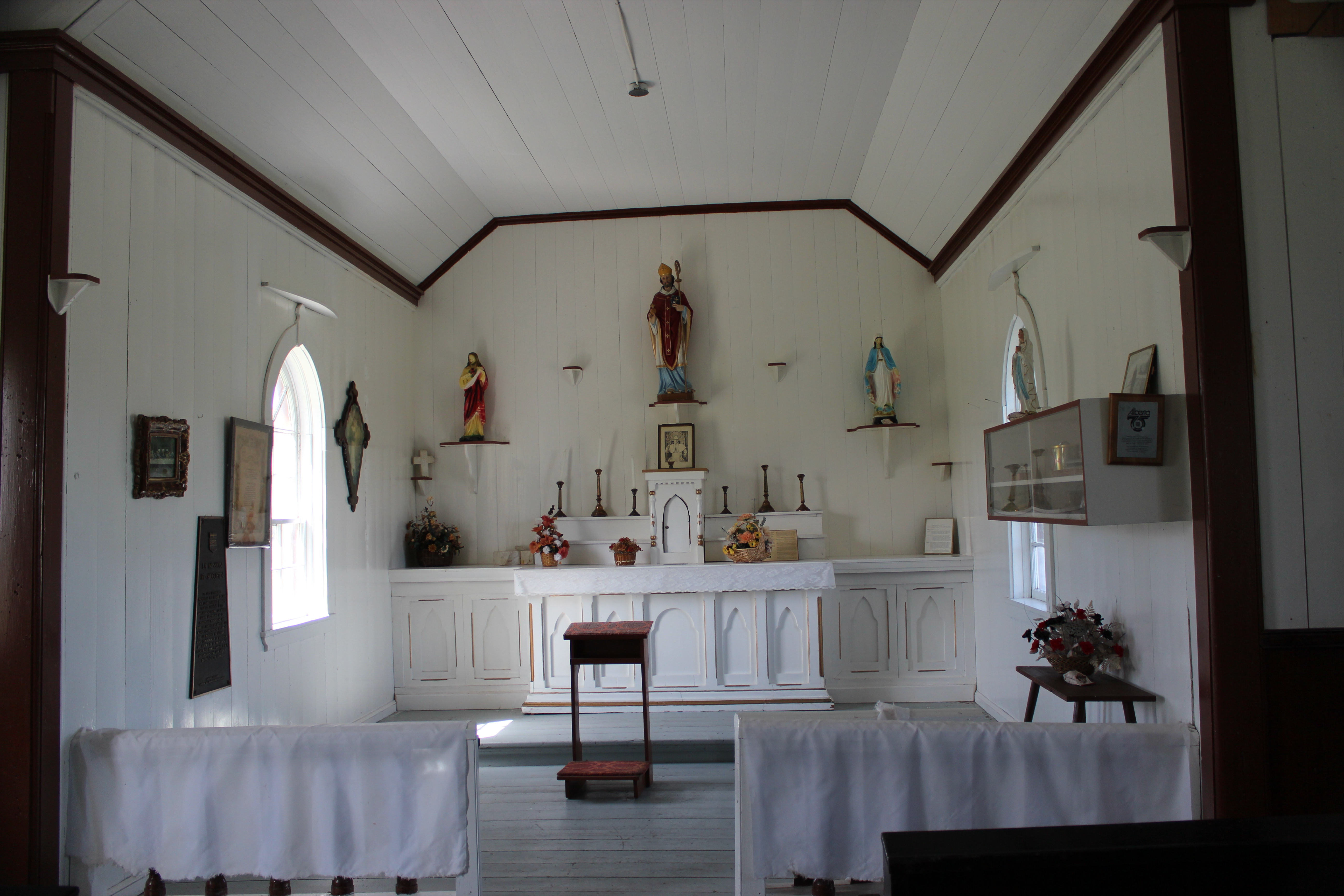
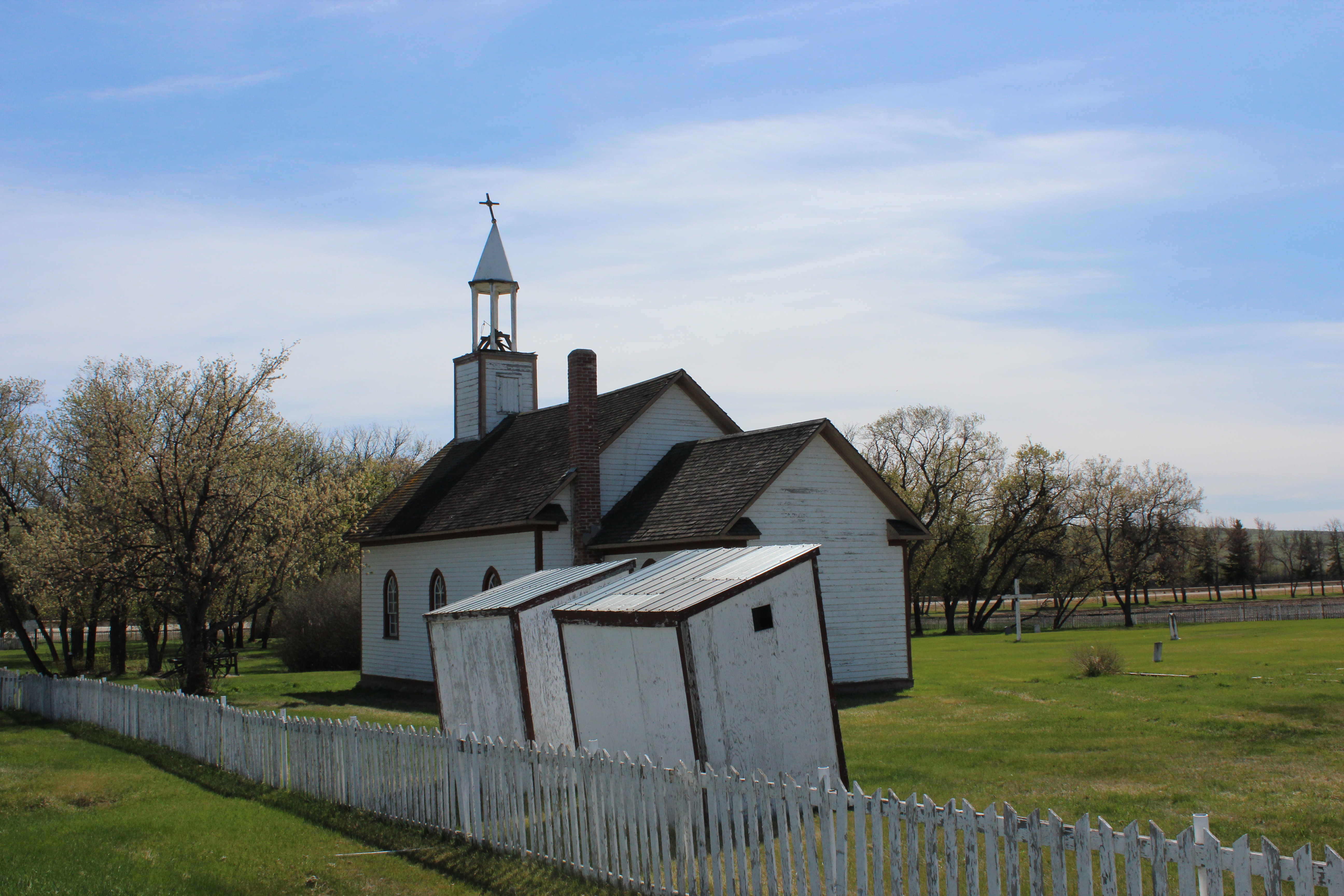
The St. Augustine Roman Catholic Mission is located on the grounds of the Peace River Correctional Centre, south-west of the Town of Peace River. The church was once part of a mission established by the Oblates of Mary Immaculate, a Catholic religious institute of missionary priests. The oblates sent several waves of missionaries to western Canada during the second half of the 19th century. This church was built in 1894 by the oblate missionaries and brothers who ministered to First Nations and settlers in the area. It was part of the settlement that included farm buildings, a school and a small clinic. The vibrant religious community that lived here came to include members of the Sisters of Providence. In 1978 the site was designated a Provincial Historic Resource. Click here to read the Statement of Significance.

I first saw the church as we came round a small hill. Its size is striking. Even the most modest modern parish church is much, much larger than this tiny church. This church nevertheless housed a large community of worshippers. Entering the church, the other thing that strikes you is how carefully the building has been designed and decorated. You enter under a choir loft and the elaborate, pre-second Vatican council alter is visible against the opposite wall. Small statues of various saints are set upon wall mounted platforms surrounding the altar. Pointed-arch windows line the long-walls. They are simple but nevertheless designed with great care. The oblates efforts were even more impressive when you consider that these buildings were made of wood they hewed themselves.

The church was part of a settlement that included farm buildings, a convent and a school. The missionaries first served the surrounding aboriginal community and starting around 1907 the settlers. The sisters and the oblates ministered to the inhabitants and setters in the area, providing a church, school and makeshift hospital. The SS St. Charles, the fist steamboat on the Peace River, was built here in 1903. As the area was opened to settlement, the missionaries offered assistance to the newcomers who often arrived with very little.

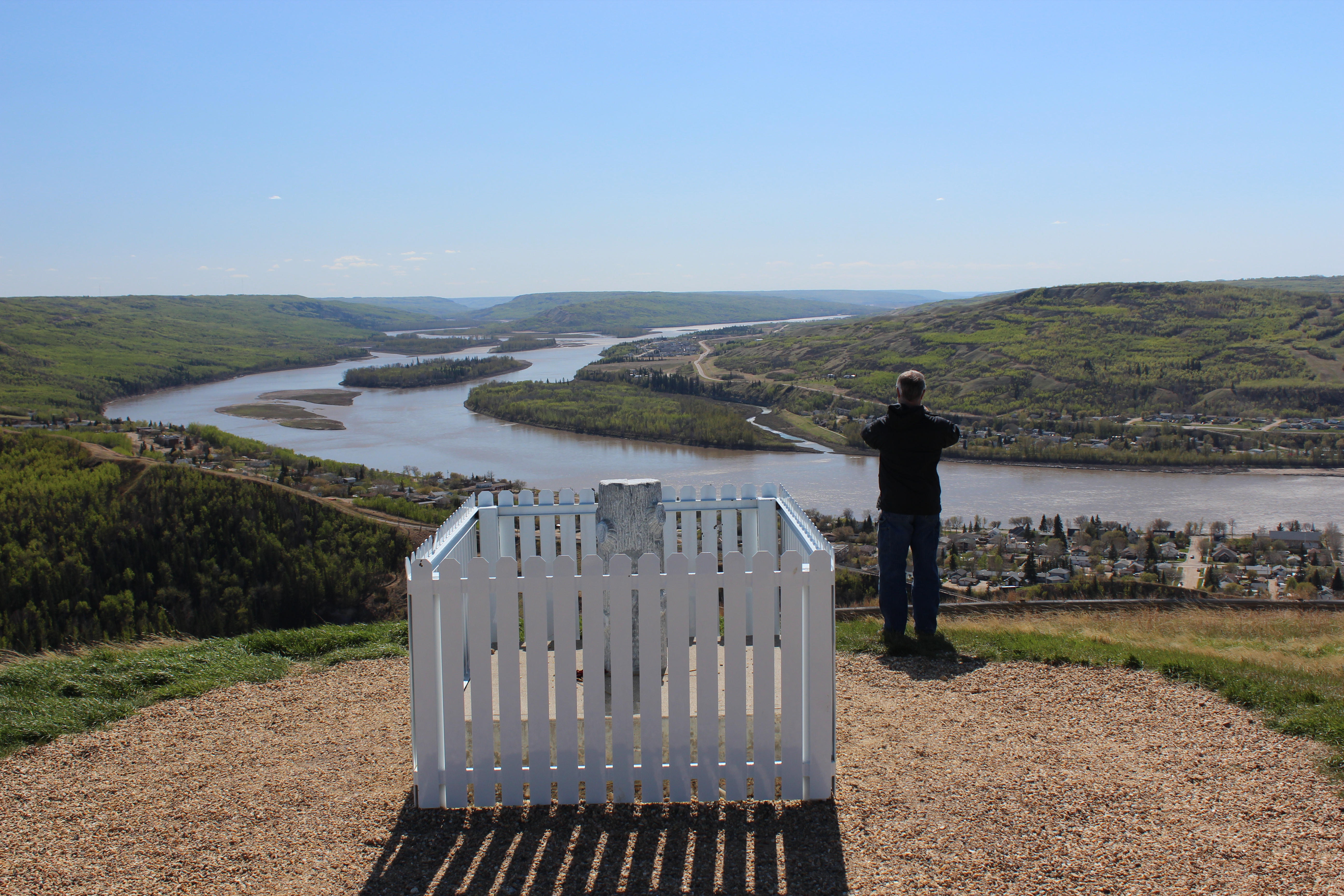
Later, our tour concluded by visiting the Twelve Foot Davis grave site. Henry Fuller Davis was an American-born prospector who came to Canada to prospect during the Cariboo Gold Rush in the early 1860s. Davis earned his nickname (and a small fortune) by filing a claim on a 12 foot wide piece of land between two existing claims in Barkerville, BC. He subsequently began trading along Peace River in competition to the Hudson’s Bay Company.

Davis requested of his friend, Jim Cornwall, that he be interred on a hill overlooking the confluence of the Peace and Smoky rivers. The spot is just adjacent to Greene Valley Provincial Park and offers a magnificent view of the two rivers and the town itself. The Town of Peace River, Northern Sunrise County and Alberta Parks jointly oversaw the recent landscaping of the site and installed interpretive markers (including some interesting audio recordings).

After taking in the breathtaking views, the board went to a reception hosted by the Peace River Museum, Archives and Mackenzie Centre. They met members of the Town of Peace River council and many local history enthusiasts.

The board had a great discussion the next day and made several funding recommendations (which will be announced as soon as they are finalised. We had a great day and I know the board appreciates learning about how historic sites are conserved and appreciated.

Read Tour of the Peace (Part I), which featured the Board’s visit to the Northern Alberta Railway Station and the Shaftesbury Ferry.

Written by: Michael Thome, Municipal Heritage Services Officer
Tour of Peace River (Part I)

The Alberta Historical Resources Foundation held a board meeting in Peace River on May 11 and 12. The staff of the Peace River Museum, Archives and Mackenzie Centre organized a tour of the area, allowing the board members to experience first-hand a few of the community’s historic places.

We began at the Northern Alberta Railway Station in Peace River. The wooden railway station still sits on its original sitting, adjacent to the railway tracks. The station was constructed in 1916 just as the railway connecting Peace River to southern Alberta was finished. The Northern Alberta Railway Company’s new line linked Peace River to the Canadian railway system and its opening increased the flow of people and goods coming into the region.

The station is divided into rooms for passengers, freight and staff. Historical artifacts are displayed throughout the building, and many relate to the operation of the railway station. The station was a communications hub; mail and freight first moved through here and later it housed the telegraph and telephone switching equipment.

The building has been beautifully restored and is used by Peace River’s Chamber of Commerce as a visitor centre for the community. It’s fitting that the building has been repurposed as a visitor information centre. The building will continue to welcome visitors to Peace River. It was designated as a Provincial Historic Resource in 1988. You can learn more about the station by checking out its entry on the Alberta Register of Historic Places.

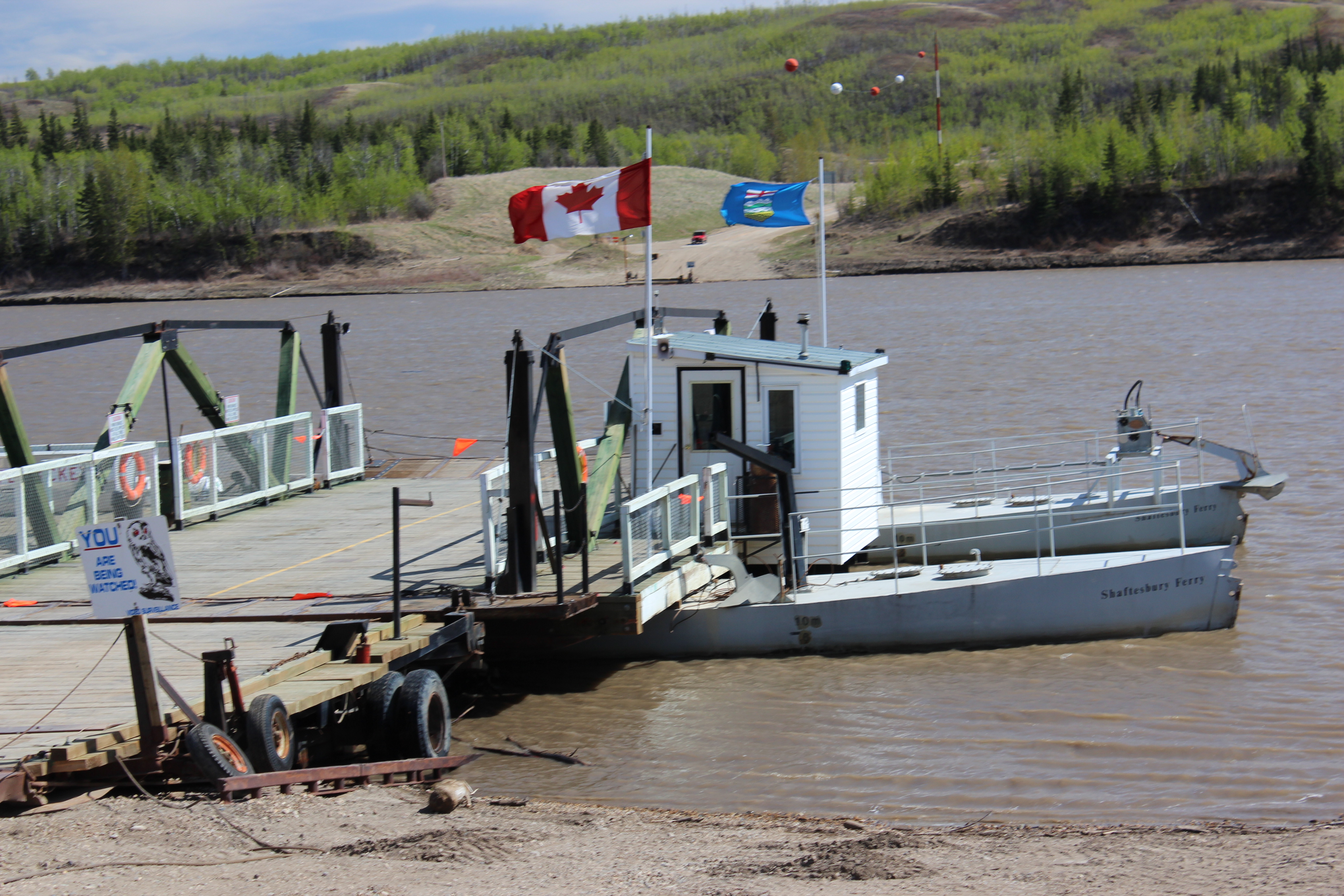
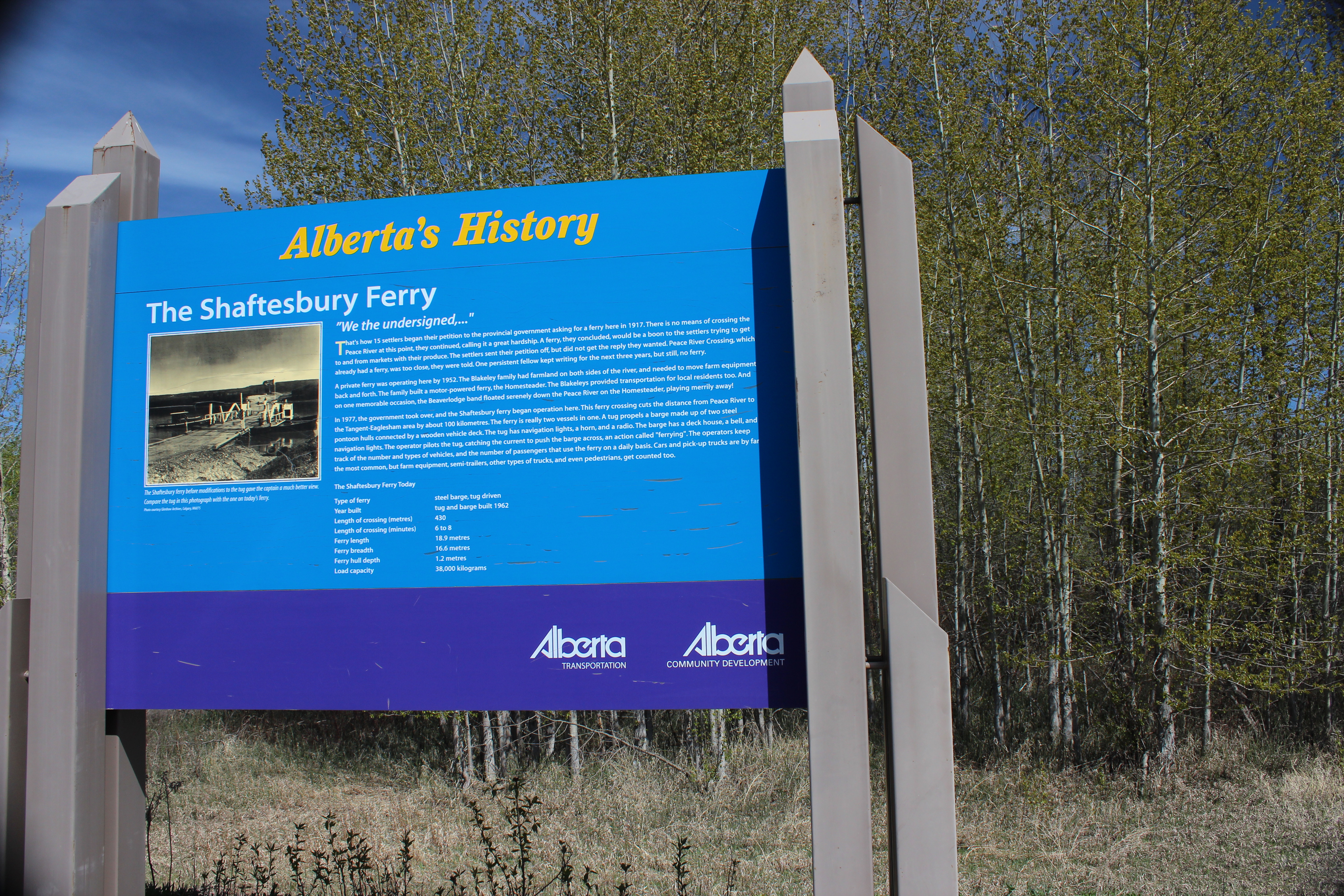
Later, we drove down the Shaftesbury Trail and arrived at the Shaftesbury Ferry. The ferry has been transporting people, vehicles and farm equipment over the Peace River for over 50 years. The confluence of the Peace and Smoky rivers is just south of the town. Without the ferry travelers arriving from south of the confluence would have needed to travel an extra 100 kilometers simply to get to Peace River. This would have been unworkable for a famer to haul grain or produce to market. Everett Blakely, a local resident, built a ferry privately in 1951. Mr. Blakely wanted to acquire farmland near the banks of the Peace south of its confluence with the Smoky and needed a ferry to access it. Mr. Blakely allowed his neighbors the use of the ferry and it quickly became indispensible. In 1977 the provincial government established a public ferry service on this location.

Seeing the ferry moored on the riverbank reminded me that Alberta transportation infrastructure is not just roads and our geography is more than just the plains. A hundred years ago, barges steamed up and down the Peace River loaded with goods and people. Both David Thompson and Sir Alexander Mackenzie both visited the area while exploring the northwest.

After visiting the ferry, we headed back towards Peace River. Stay tuned for Part II, to learn about other sites visited by the Alberta Historical Resources Foundation board.

Written by: Michael Thome, Municipal Heritage Services Officer
Planning in the Peace

Heritage Management Planning in Peace River

On May 10th, I had the pleasure of attending a heritage management planning open house, hosted by the Town of Peace River. The town wanted public feedback on the heritage management policies they have been working on with the Municipal Heritage Partnership Program since September. Posters describing the proposed designation and management policies where hung in various locations around the museum and staff were available to answer public questions. The open house was held near the river at the Peace River Museum and Mackenzie Centre. The plan includes two components: a Municipal Historic Resource designation policy and a plan to manage designated sites.

Open house attendees arriving at the Peace River Museum.

The Municipal Historic Resource designation policy explains how Peace River will determine if a site is historic and if it should be protected as a Municipal Historic Resource. The policy will specify who can nominate a site for designation and what the town must know about the history and condition of a place to make a recommendation to the town council. These policies will help the town decide if designating a site will protect a place that embodies an important part of Peace River’s heritage. It will help the Town determine if protection is in the public interest. The policy will also help the Town and property owners understand their obligations towards one another should a property be designated.

The second part of the management plan is the alteration permitting process. A Municipal Historic Resource cannot be altered without the municipality’s approval. The management policy will explain how an owner applies for a permit, what information they need to provide and how applications will be evaluated. For instance, it is important to be able to answer questions such as:

  • will the changes affect the heritage value of the historic place, allowing the destruction of character-defining elements?
  • will the changes impact the site as little as possible?
  • who within the municipal administration makes these decisions?

The management policy ensures that these questions are answered in a consistent and transparent way.

Staff at the Town of Peace River are putting the final touches on the management plan and will present it to Town Council in June. We will bring you more details after the plan has been approved by council.

If you have question about management planning or any other aspect of heritage conservation, check out the Municipal Heritage Partnership Program website or drop us a line.

Written by: Michael Thome, Municipal Heritage Services Officer
News from Calgary’s Heritage Scene

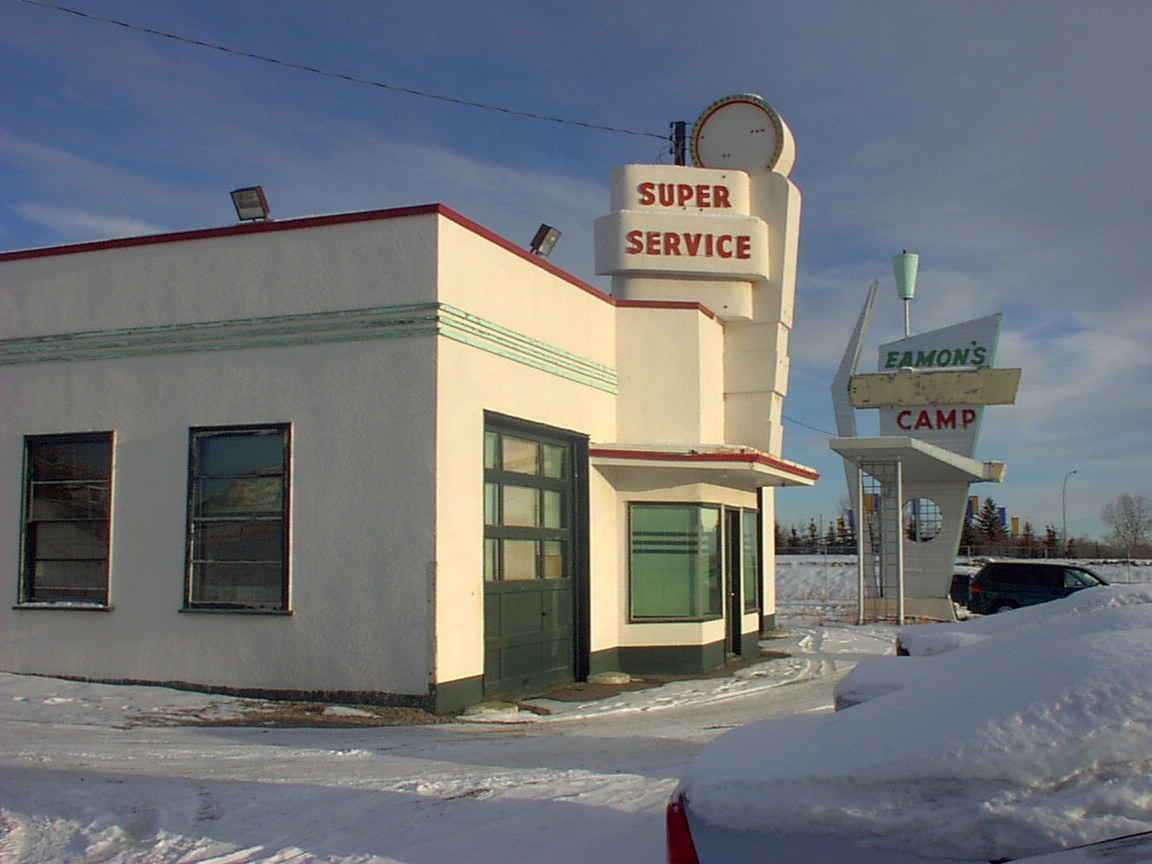
You may have read that Calgary’s city council has decided to incorporate the Eamon’s Gas Station (also known as the Eamon’s Bungalow Camp) into the planned Tuscany LRT Station. Calgary will conserve a historic resource rather than demolishing it to make room for parking. This is exciting news!

We recently talked with Christy Caswell, one of the City’s Heritage Planners, and she said that Calgarians today are enthusiastic in supporting their city’s historic places. The interest garnered by the Eamon’s project has been one of many catalysts for people to think about historic places in a new way, and how they can be creatively integrated with new development.

Alberta’s municipalities can identify and conserve historic resources without the provincial government’s permission or involvement by legally protecting these places as Municipal Historic Resources. If interested, municipalities can also offer conservation incentives. By extension, each municipality is free to determine its own criteria for deciding what to designate. Calgary is a fine example of this.

Calgary has identified a range of heritage values that a place must reflect to be considered for conservation. For example, the Calgary Heritage Authority has overseen the development of context papers for many of Calgary’s historic communities. The city’s heritage planning program regularly evaluates potential historic place for significance. The result is Calgary’s Inventory of Evaluated Historic Resources. Each place on the city’s inventory reflects a local heritage value. Indeed, the Eamon’s Bungalow Camp is one of over 600 places included on Calgary’s Inventory. Be sure to read the listing to learn about the site’s history.

The Municipal Heritage Partnership Program (MHPP) helps municipalities develop programs that will identify, evaluate and conserve locally significant historic places. For more information, visit the MHPP website.

Written by: Matthew Francis and Michael Thome, Municipal Heritage Services

Delburne Alberta Government Telephones Exchange Building

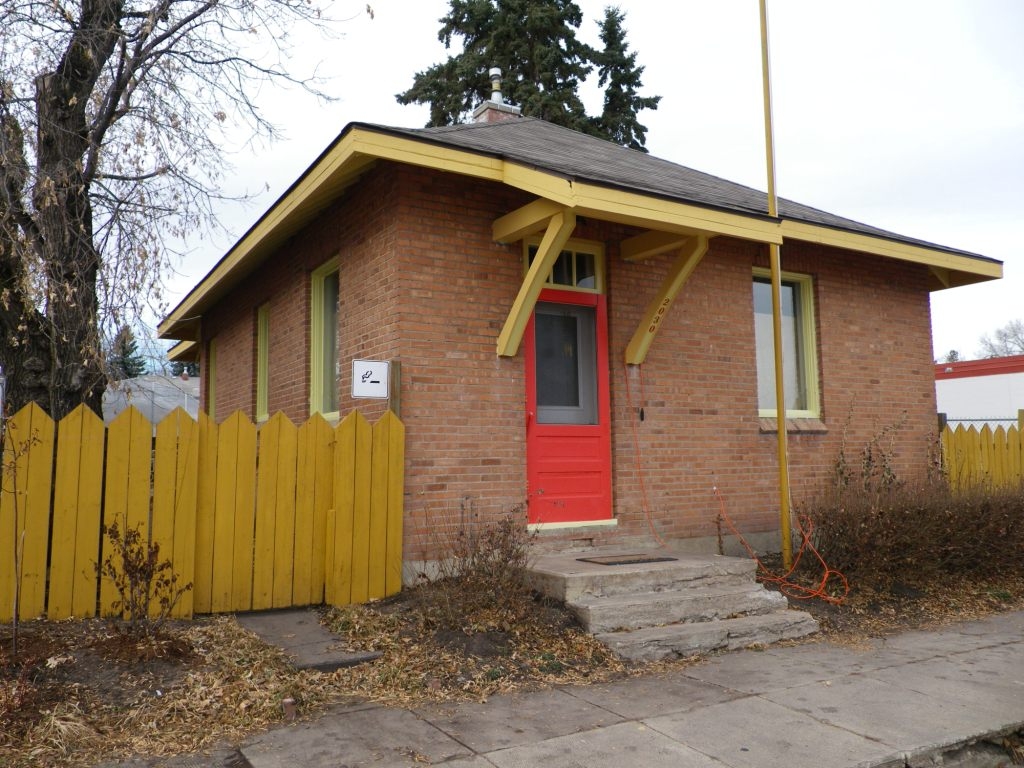
One of Alberta’s most recently designated historic resources is the Delburne Alberta Telephones Exchange Building. Designated in January as a Municipal Historic Resource by the Village of Delburne, it has recently been listed on the Alberta Register of Historic Places.

Although now a residence, the building once housed the switching equipment that first connected the village and the surrounding area to the long-distance telephone network. To read more about the heritage value of this building take a look at the statement of significance on the Alberta Register of Historic Places.

Municipal Heritage Services staff helped the Village of Delburne finalize the documentation needed to designate and then list the site on the Alberta Register of Historic Places. If you want to learn more about identifying, evaluating and protecting local heritage resources, please visit the Municipal Heritage Partnership Program website. We are available to assist your municipality.

Written by: Michael Thome, Municipal Heritage Services Officer
Heritage Open House in Lacombe

I attended the City of Lacombe’s Heritage Inventory Open House a few weeks ago. Over the past year, Lacombe has been busily evaluating several properties in its historic residential areas for significance and integrity. Thirty properties were selected for evaluation and at the open house draft statements of significance were presented to the community for review. The event was a smashing success. I’d tell you more, but I think you might prefer to head over to the City of Lacombe’s blog and hear about it in their own words.

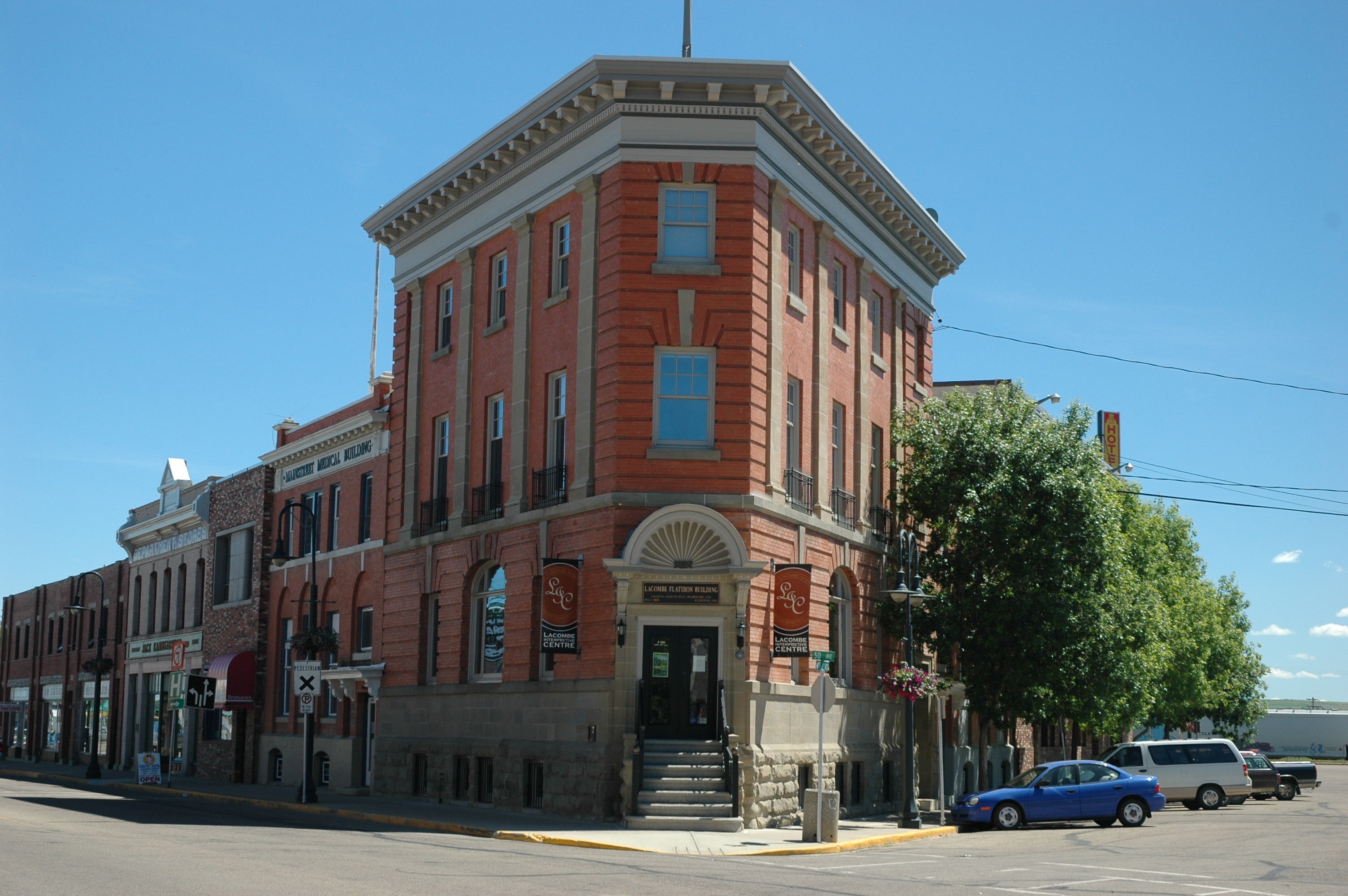
Flatiron Building, Provincial Historic Resource, City of Lacombe

The Municipal Heritage Partnership Program has worked with the City of Lacombe for three years now, helping them identify and evaluate locally significant historic places. You can also learn more about the City of Lacombe’s Heritage Preservation Program from Lacombe’s website.

Written by: Michael Thome, Municipal Heritage Services Officer