Nearly $1.3 million in funding awarded to help Albertans conserving and interpreting our heritage.
The Alberta Historical Resources Foundation awarded nearly $1.3 million in support of 71 heritage projects through two grant programs. A scholarship was also awarded. This funding will be directed at applications submitted in February 2013 for the spring adjudication cycle.
Sixty-six projects will receive funding through the Heritage Preservation Partnership Program. This program provides financial assistance to individuals, municipalities and organizations working on projects that preserve or interpret Alberta’s heritage through conservation, heritage awareness, publications and research grants and scholarships.
Five municipalities will receive funding through the Municipal Heritage Partnership Program. These funds assist municipalities in identifying, evaluating, protecting and conserving locally significant historic places.
For a complete list of the projects funded please take a look at this Government of Alberta Information Bulletin. You can also find a complete list of grant recipients here.
It’s always interesting to see the range of projects Albertans are working on. This grant cycle brought forward a range of projects from all over Alberta. I look forward to seeing the applications submitted on September 1, 2013 for the next evaluation cycle.
Written By: Carina Naranjilla, Grant Program Coordinator, Alberta Historical Resources Foundation
First Steps in the Recovery of Alberta’s Flood-Damaged Historic Buildings
Cleaning up in the Elbow Park Neighbourhood (July 5, 2013)
As the floodwaters in southern Alberta recede, we must take care to preserve the integrity of our historic resources. It is very important that old and historic buildings dry slowly. Accelerated drying will warp, twist or split floors, doors and paneling; draw salts through stone and plaster, leading to blistering and exfoliation; and painted surfaces will flake and peel.
Historic buildings are particularly vulnerable to damage from inappropriate remedial work after the floodwaters recede. This can lead to unnecessary removal and loss of significant finishes and fittings as well as use of unsuitable materials for repairs. Building conservation is concerned with retaining original historic fabric and cleaning or repairing it sensitively with the least impact, even in the aftermath of a flood.
The slow and gentle process required to save irreplaceable historic fabric may take several months and involves a number of steps.
Consult with Emergency Services
Ensure that the building’s electrical, gas, water and waste lines are safe and operating normally and that the building is structurally sound.
Document the Damage
Take photographs or videos and make notes about the damage to your historic building to assist with future planning for repairs and restoration.
The white staining indicates the high water mark (Elbow Park, Calgary, July 5, 2013)
Reinstate Drainage Systems
Clear debris and open blocked underground and surface drainage systems to help remove water from the building and its foundations. Use sump pumps or temporary pumps to help remove water from basements, although if water continues to rise pumping should be postponed. In that case, the water table is still high and the difference in pressure between the waterlogged soil and the water-less basement could damage foundation walls.
Identify Moisture Reservoirs
Debris, insulation, and piles of earth can prevent moisture from draining or evaporating. Identify current or potential moisture reservoirs to help specialists determine positions for localized drainage and through-the-wall ventilation that will allow long term drying and prevent decay of vulnerable materials.
Remove Only Non-Historic Furnishings, Fittings, Carpets, and Rubbish
Consult with your Heritage Conservation Adviser about damp historic materials such as plaster, brick, masonry, floors or finishes. Most historic materials are inherently durable and resistant to flooding and can often be carefully dried and restored.
Clean Mud, Dirt and Debris from Surfaces
Mud and debris deposited during the flooding can be removed with clean water and is more easily removed while still wet. Do not use high-pressure water to clean historic materials: pressure-washing historic material can do more damage than the flood itself.
Drying Out Slowly
Remove moisture gradually. Use natural ventilation to slowly dry the structure and historic finishes, particularly plaster and wood. Do not use mechanical dehumidification or heaters to accelerated drying. Fans may be used to circulate cool air. Open windows and doors to assist with ventilation. Install security protection and screens on windows and doors that will be open for an extended period of time.
Interior Finishes
Carefully remove water soaked gypsum board, which can trap mold spores. Do not remove plaster or wood finishes and consult with your Heritage Conservation Advisor about strategies to dry and stabilize historic finishes.
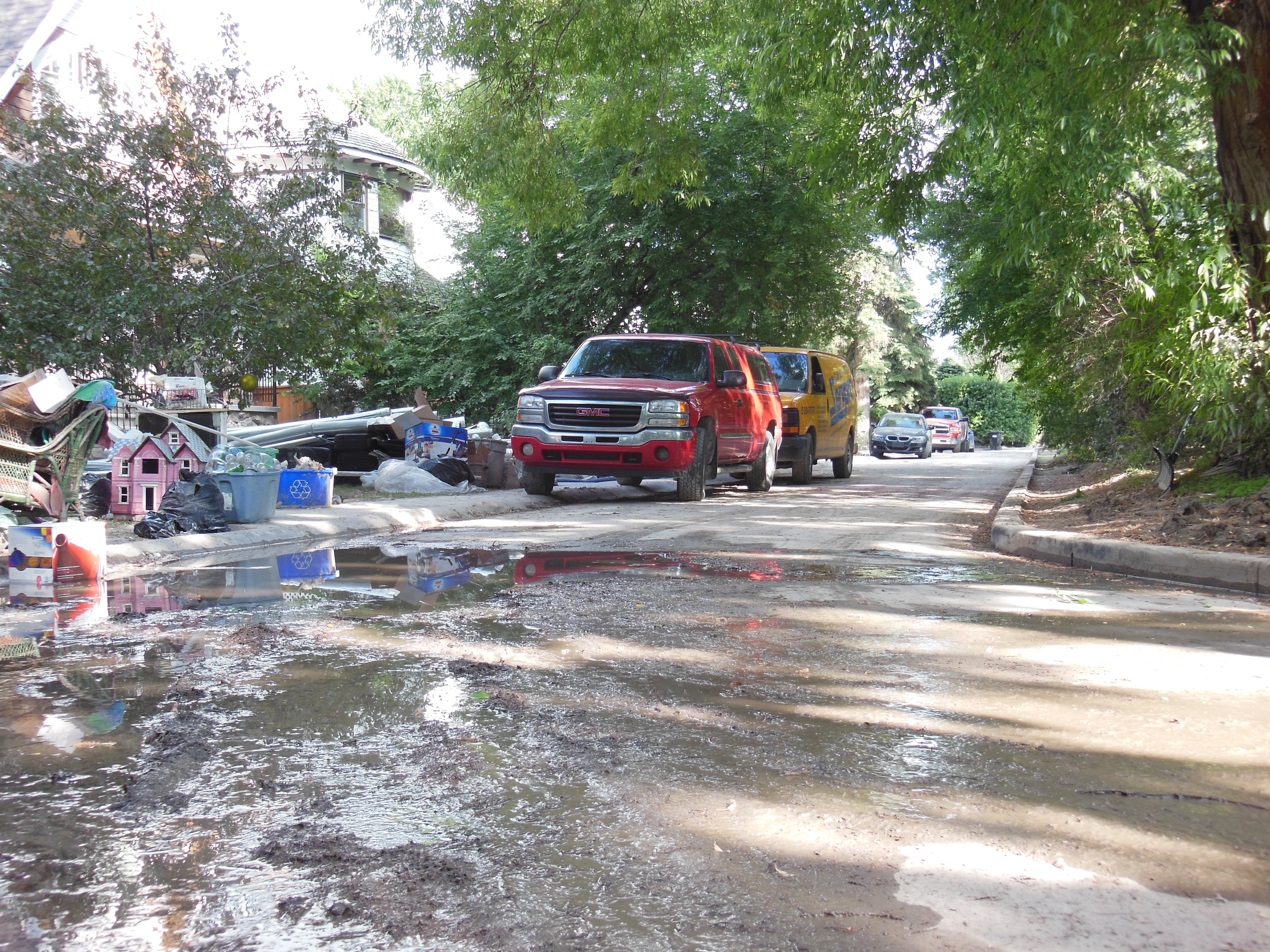
The cleanup will take time. (Elbow Park, Calgary, July 5, 2013)
Plan for Repairs and Restoration
As the drying process takes place, observe any long term damage to historic fabric and initiate discussions with your Heritage Conservation Advisor and qualified specialists to plan repairs to your historic building and restoration of its historic materials.
For more information contact your Heritage Conservation Advisor:
Calgary Region: Sandy Aumonier (403-355-4544) and Stefan Cieslik (403-297-4074).
The M.D. of Opportunity contributes to the Alberta Heritage Survey
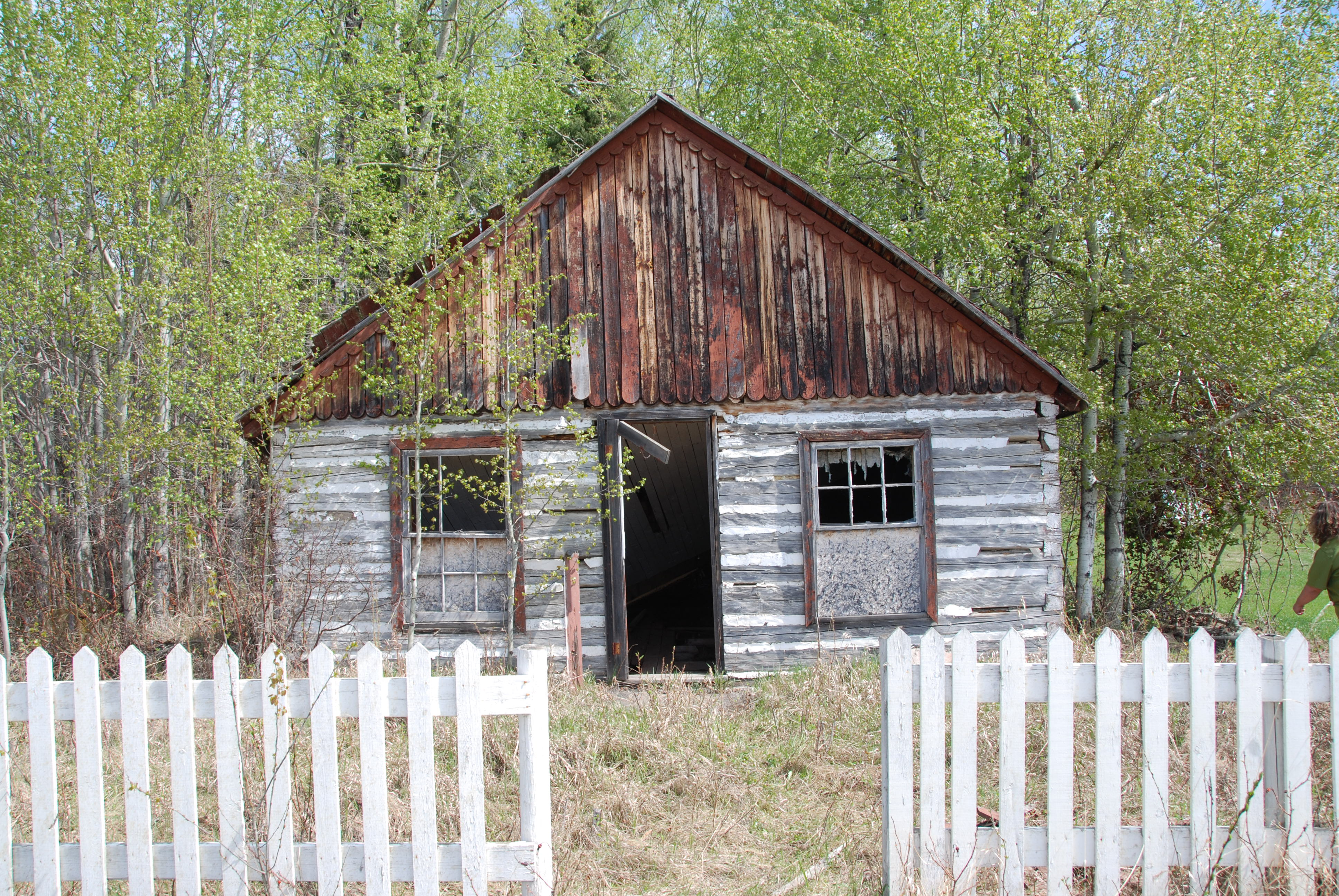
St. Leon Le Grande church in the Hamlet of Calling Lake
The Municipal District of Opportunity is a large rural municipality located north of the Athabasca River. I don’t get the opportunity chance to travel to north-eastern Alberta very often, so I was excited to visit the Hamlet of Calling Lake in May. I found that yes, there are indeed trees and lakes outside of our Rocky Mountains.
I was in Calling Lake to facilitate a daylong workshop for local volunteers preparing to survey the M.D.’s potential historic resources. The Municipal Heritage Partnership Program granted funds to help the M.D. add a few hundred sites to the Alberta Heritage Survey Program. Like so many municipalities before it, Opportunity will use the information to learn more about some of the potential historic resources within its boundaries.
What’s a survey? Essentially, a community identifies properties over a certain age or ones that appear to have historical or architectural interest. A volunteer from the survey team visits each site, taking photos and noting the design and construction of any buildings or structures. Information collected during the site visit is supplemented through historical or architectural research. The results is recorded on a Site Form (one form per site) and recorded in the Alberta Heritage Survey Program’s database. (You can learn a great deal about the survey program by reading Identifying Historic Places, Part 1–Conducting a Municipal Heritage Survey.)
The survey of the M.D. of Opportunity is quite interesting because it will focus on buildings, structures and trails from the settlement period around the Hamlets of Wabasca, Calling Lake, Red Earth Creek and Sandy Lake. This area has a rich aboriginal and Metis heritage and was an important fur trapping and trading area. It is also the first municipal survey to focus on sites related to aboriginal people.
During the training, we actually went to one of these sites: the St. Leon Le Grande Roman Catholic Church. It was built by the Oblates. Unfortunately the roof collapsed last winter. The survey will allow for it to be recorded for posterity—and perhaps provide the information necessary to designate it as a Municipal Historic Resource and to rehabilitate it in the near future.
Stay tuned, I will keep you updated on this project as it develops.
Written by: Michael Thome, Municipal Heritage Services Officer
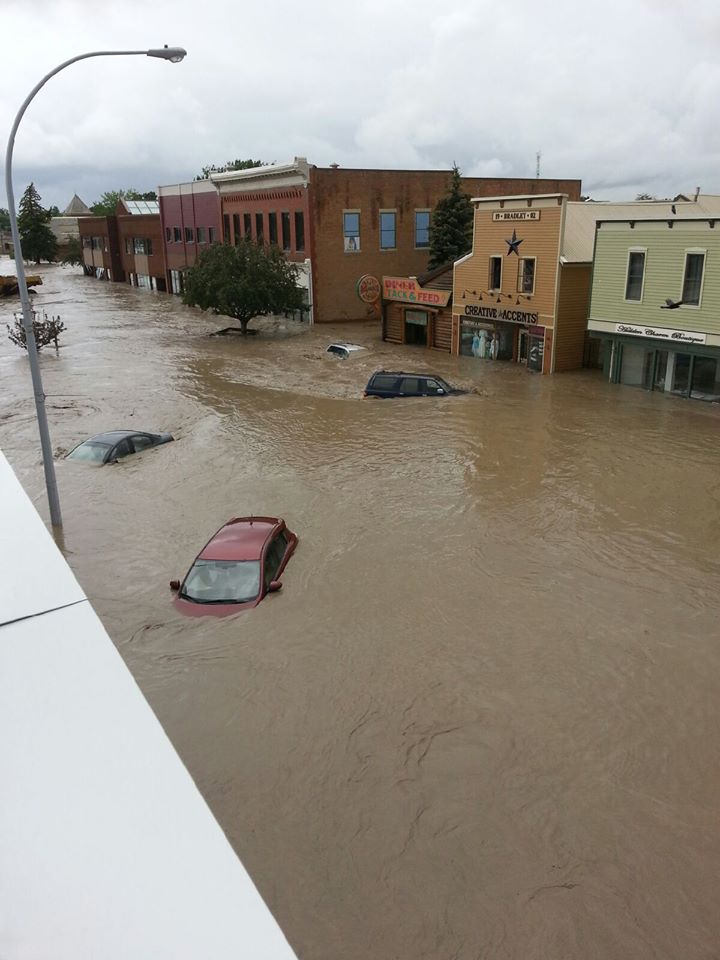
We know from receiving calls from many people that several historic places have been affected by the catastrophic flooding in southern Alberta. Historically, communities in Alberta were often built close to rivers – sources of water to accommodate trade and travel. Needless to say, these low-lying areas where our communities grew up in the late 19th and early 20th centuries are also floodplains. We know that there are a total of 75 Provincial and Municipal Historic Resources within the evacuated areas of the City of Calgary alone.
The Town of High River is one of the communities that has been devastated, and is still in a state of emergency evacuation. Over the past year, the Municipal Heritage Partnership Program has been working together with the Town on the second phase of an Inventory Project to evaluate the community’s significant historic places. It will remain to be seen how many of these places will survive the floods, and the extent of the damage. Other communities are in similar situations.
At this point, still early on the recovery efforts, there are still more questions than answers. Some owners of designated historic places that have been flooded are wondering what they should do. Once the emergency needs for safety and the basics of life are provide for – what are the first steps in safeguarding and stewarding these historic places?
The Historic Resources Management Branch has staff that are available to talk with owners of historic places, and to provide technical advice and support. We know that a major clean-up and conservation effort is now only beginning. We encourage owners of designated Provincial Historic Resources and Municipal Historic Resources to contact the Heritage Conservation Adviser for their region. Let us know how you are doing, and the current state of your historic property. We can help you to prioritize steps and make plans to help conserve your historic place for the future.
Calgary Region: Eileen Fletcher, her office number is (403) 297-4074 and her cell number is (403) 618-4180.
Southern Region: Fraser Shaw, his office number is (403) 297-4088 and his cell number is (403) 921-8139.
Municipal and community officials can contact Matthew Francis, Manager of Municipal Heritage Services at (780) 438-8502. Their office numbers are toll-free by first dialing 310-0000.
Above all, we hope everyone stays safe as we work together to create a future for Alberta’s historic places.
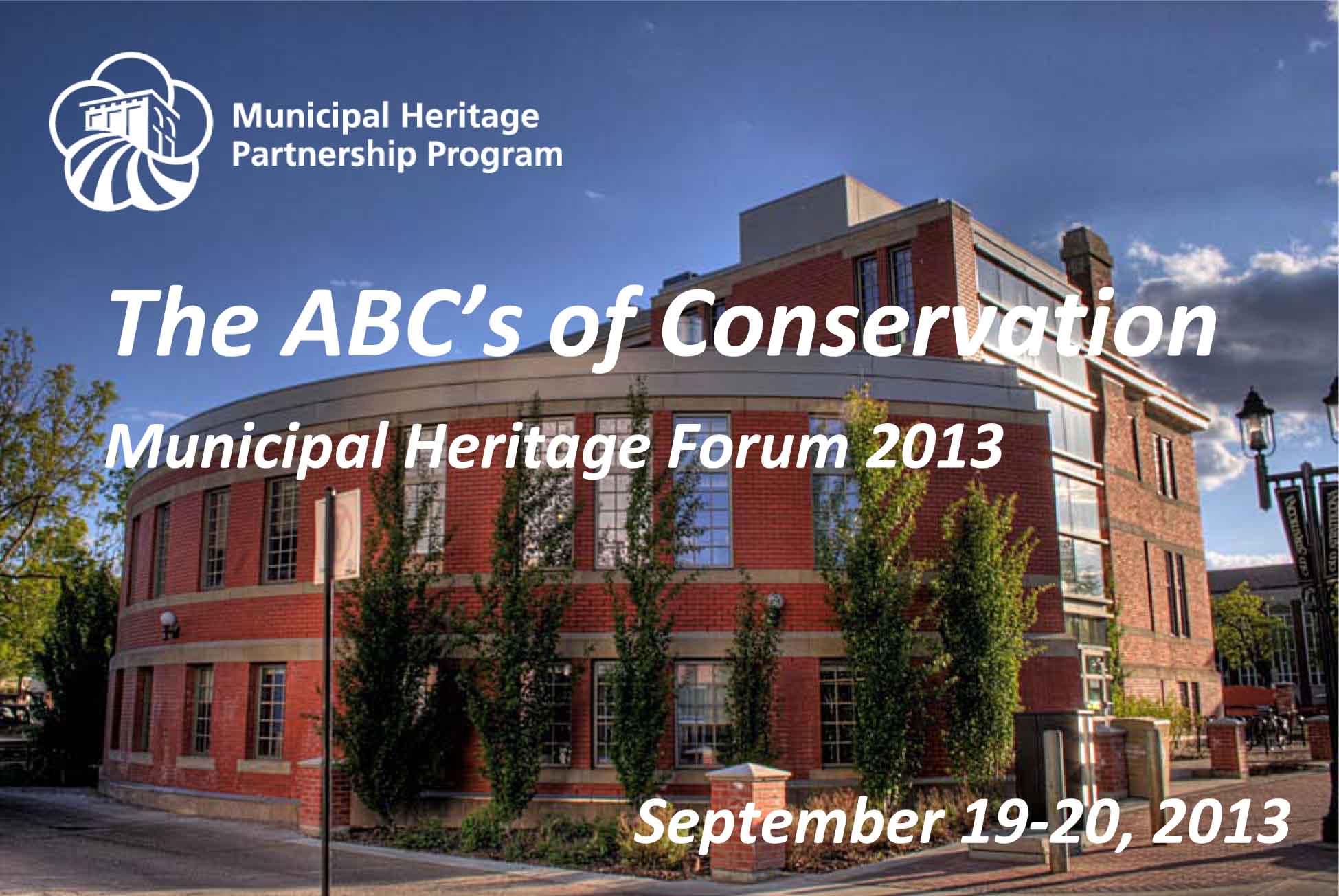
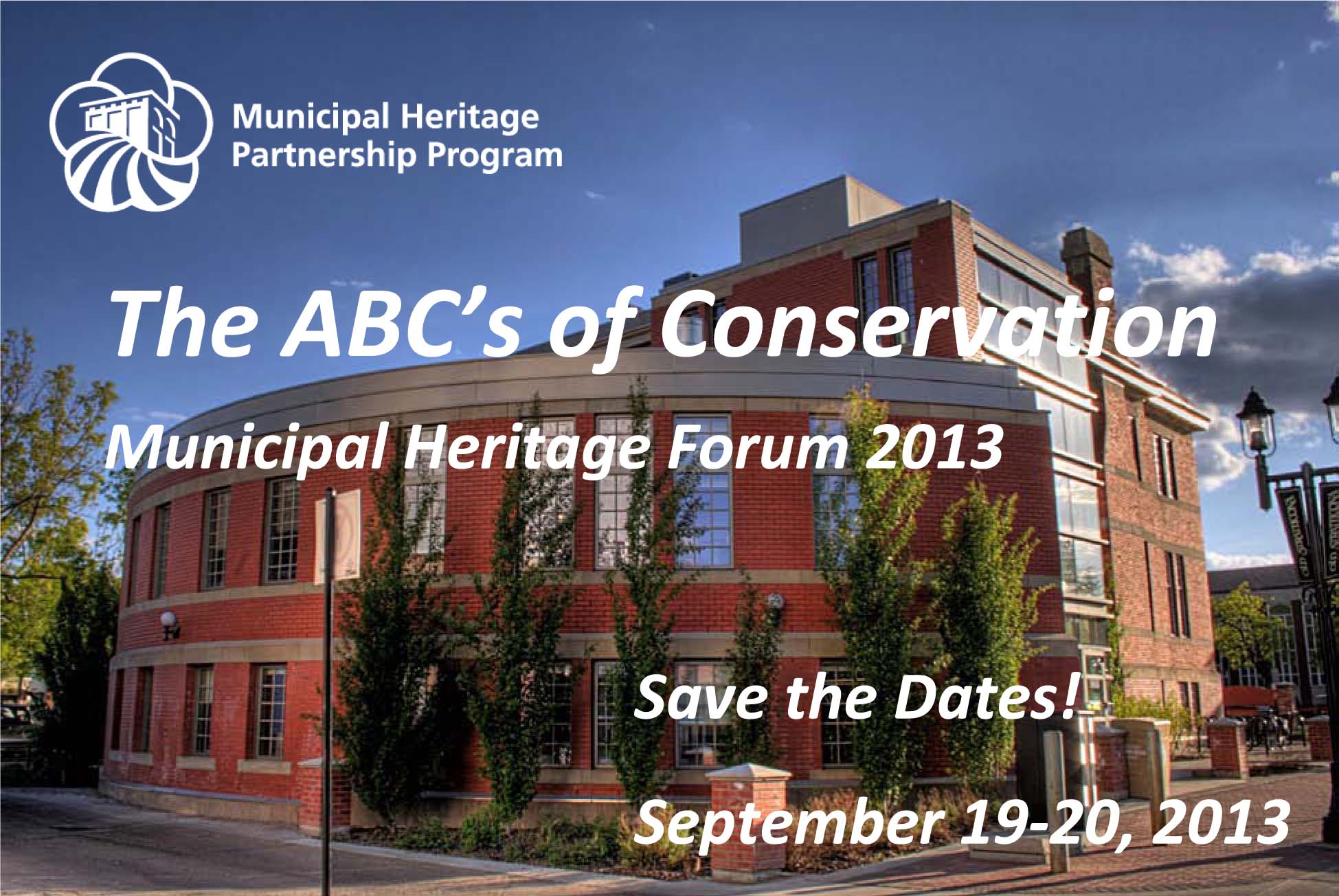
Registration is now open for the 2013 Municipal Heritage Forum: The ABC’s of Conservation.
You are invited to attend the Forum, September 19-20th, 2013, taking place at the Ukrainian Cultural Heritage Village and at Knox Church in the Old Strathcona Provincial Historic Area in Edmonton. The agenda and information package is available below:
This year will feature not only informative and inspiring keynote presentations from Bernard Flaman and Todd Babiak, but also hands-on demonstrations of conservation practices. RETROactive will keep you informed about Forum workshops, schedule, and details.
“Hey, that’s a neat old building. I wonder what it looked like new?”
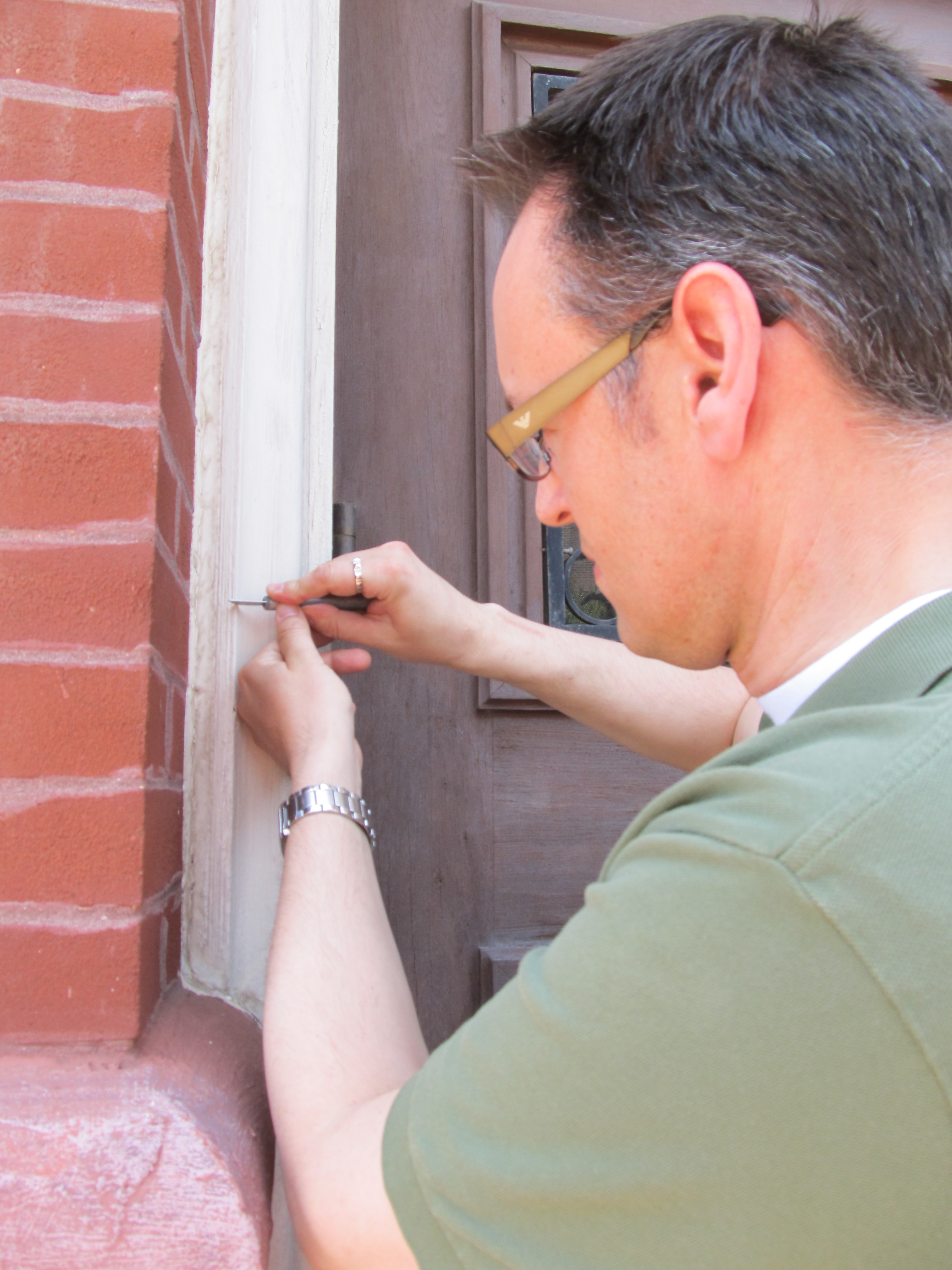
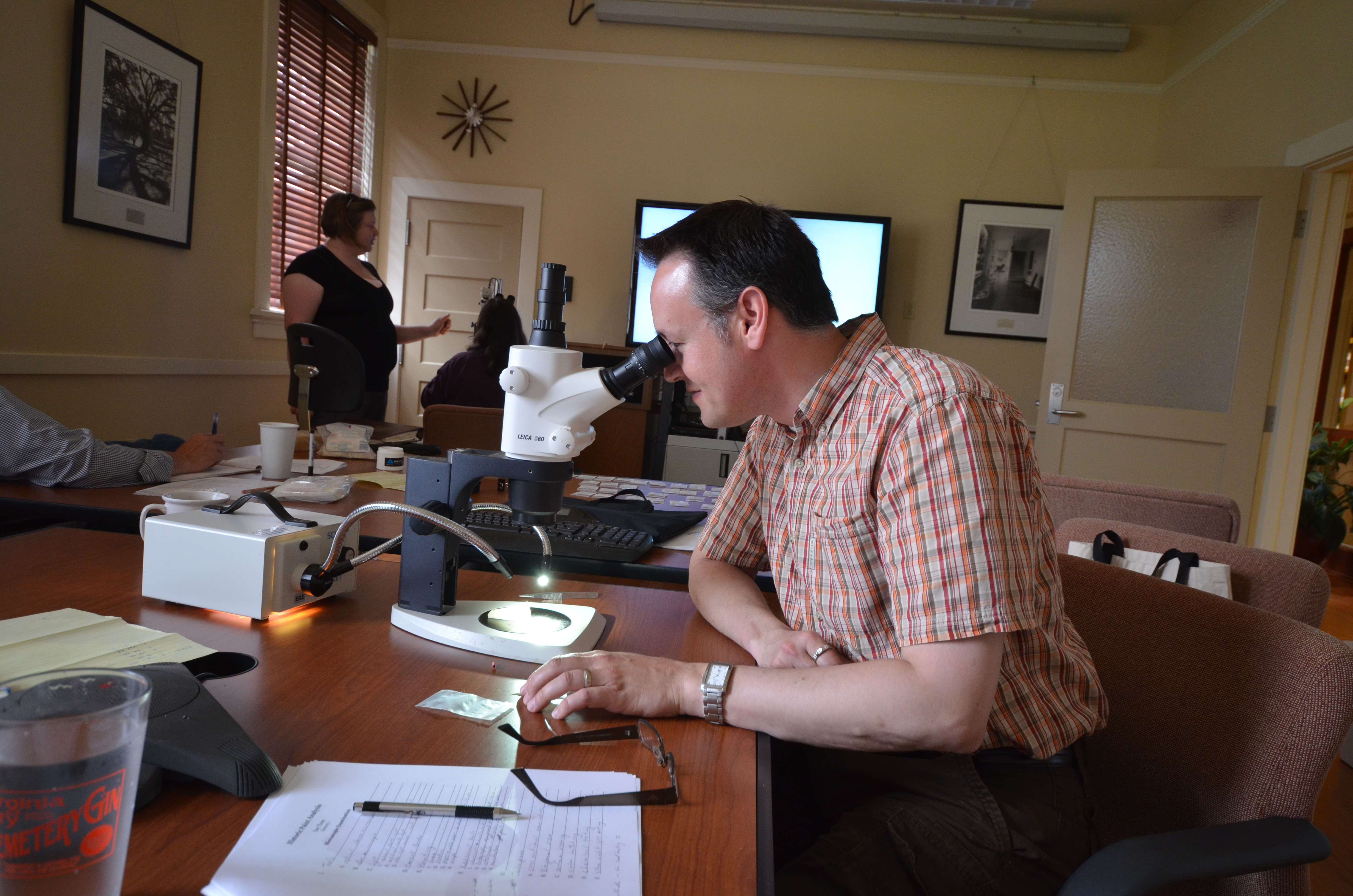
Gathering samples for analysis
I recently had the good fortune of attending a course at the National Center for Preservation Technology and Training in Natchitoches, Louisiana on paint analysis for historic buildings. The Town of Natchitoches is in northern Louisiana and is situated around historic cotton plantations. The movie “Steel Magnolias” was filmed in Natchitoches during the late 1980’s.
The course, Paint Analysis for Historic Buildings, was taught by David Arbogast. Mr. Arbogast is a renowned architectural conservator and paint specialist from Davenport, Iowa. During three intensive days we learned a great deal about the history of applied finishes (paints, stains, and clear coatings), architectural paint chemistry, the proper technique to restore deteriorated window mechanisms, how to collect field samples and analyze them in a laboratory and how to write up the findings.
Analyzing a sample to identify layers and colours
During the second day, we collected 43 paint samples from the nearby Old Courthouse Museum. Most of our samples were smaller than the diameter of a pencil—more than enough for laboratory analysis. Using an optical stereo microscope, we examined each one. From these tiny specimens we were able to determine the number of layers of coatings applied to a particular area, and the colour of each layer. Observing the microscopic lines of atmospheric deposits (mostly soot and dirt) we established how frequently the building was painted. We documented each colour identified according to the Munsell System of Colour, a standardised colour palette book that does not change with time and fashion. It was amazing to see that such tiny samples could offer so much information about how a building evolved over its life.
It was a very intensive three days, but what I learned will be invaluable to my work as an architectural conservator or to anyone interested in knowing the evolution of coatings and colours used on their historic building.
Written by: Jim Nakonechny, Senior Restoration Officer
The 7th annual municipal heritage forum is coming up fast. We strive to present relevant and useful information for the municipalities we work with. Here in Old St. Stephen’s College, Matthew and I are busy planning two intensive, information-filled days.
The forum is the Municipal Heritage Partnership Program’s signature event. Many past participants have used what they’ve learned to improve their own municipal heritage conservation programs. We hope to build on that success.
We were wondering if you could help us? We’d like to hear a little about what you hope to learn at this year’s forum. Please take a few minutes to participate in our online survey. The information you provide will help us organise the best forum yet.
WHEN: Thursday September 19th at the Ukrainian Village & Friday September 20th in Old Strathcona
WHY: To help create a future for Alberta’s historic places.
While each year we try to carefully minimize scheduling conflicts with other important happenings on the heritage scene, sometimes overlaps occur. Some RETROactive readers will want to know that this year’s Forum is taking place at the same time and in the same fair city (Edmonton) as our friends from theAlberta Museums Association are hosting their Annual Conference. Please keep in mind that both the AMA Conference and our Municipal Heritage Forum allow for single-day registrations. This may allow some attendees to maximize their trip to Edmonton to take in the best of both great events. We will also be co-hosting a reception with the AMA on Thursday evening, Friday 19th.
Full information on Forum 2013, schedules, and registration materials will be available soon! Stay tuned to RETROactive for details.
The Society for the Study of Architecture in Canada is holding its annual conference in Edmonton from May 29 to June 1. This year’s event, Infrastructures and Institutions: Settings for Life, will bring people from across Canada together to share information and ideas about architectural history, heritage resource management and other related topics. Over 40 speakers will participate 10 sessions on the University of Alberta campus.
Ministry of Culture staff will make presentations in Session 5: The Role of Government Programs in the Conservation and Commemoration of the Built Environment. This will be a lively, Pecha Kucha format session that promises to be very interesting and engaging. Other sessions will address Aboriginal themes in contemporary architecture, teaching architectural or design history in Canada, the role of churches in our communities, and the place of Arthur Erickson in the history of Canadian public architecture, among other topics. The third day of the conference is given over to an all-day bus tour that includes a train ride and banquet.
You’re welcome to attend! To register, visit the conference page of the society’s website.
Written by: Dorothy Field, Heritage Survey Program Coordinator
A few weeks ago, I was live-blogging from the the U.S. National Trust for Historic Preservation’s Annual Main Street Conference. The conference is attended by leaders from hundreds of historic main street communities across North America. Here are some final thoughts, after returning home to Alberta.
Culinary Revival in Historic Places
The final session of the Main Street Conference in New Orleans featured Robert St. John , a celebrity chef and authority on southern culture and food, as speaker. His humorous presentation focused on his hometown of Hattiesburg, Mississippi. There is a lot of focus these days—and not only in New Orleans—on how culinary excellence works hand-in-hand with revitalizing historic main streets. The food scene—in all its dimensions—is major player in today’s “cultural economy.”
Robert’s presentation reminded me how a number of our historic Alberta Main Street communities are great places to enjoy good food in authentic, fun environments. In particular, his presentation reminded me of Downtown Lethbridge, where an exciting food and coffee culture has emerged over the past several years. Other places in Alberta are seeing great new restaurants, coffee-houses, artisan bakeries, micro-breweries, and fantastic food trucks enrich and enliven neighbourhoods, and jump-start uses for historic buildings. There are some tremendous entrepreneurial opportunities out there. The historic vibe, feel, and values in our traditional commercial districts only adds to the appeal.
Next Year in Detroit –Works in Progress!
Detroit will host the 2013 Main Street Conference.
The wrap-up session concluded with a presentation by next-year’s host city: Detroit, Michigan. Now, much ink has been spilt describing Detroit’s catastrophic urban decline over the past few decades. Hundreds of blocks of blighted houses and commercial buildings have been bulldozed due to the severity of the situation. But that is all changing. Detroit is using Main Street’s Four-Point Approach® to bring its downtown back from the ashes. Jane Jacobs said that “new ideas need old buildings,” and that is definitely part of what is happening in Detroit.
It’s inspiring to see what is happening around the world, but it’s even more exciting to see what’s happening across Alberta, in our own backyard. Stay tuned to RETROactive for updates on historic main street news from across the province.
Written by: Matthew Francis, Manager of Municipal Heritage Services


 The Alberta Historical Resources Foundation awarded nearly $1.3 million in support of 71 heritage projects through two grant programs. A scholarship was also awarded. This funding will be directed at applications submitted in February 2013 for the spring adjudication cycle.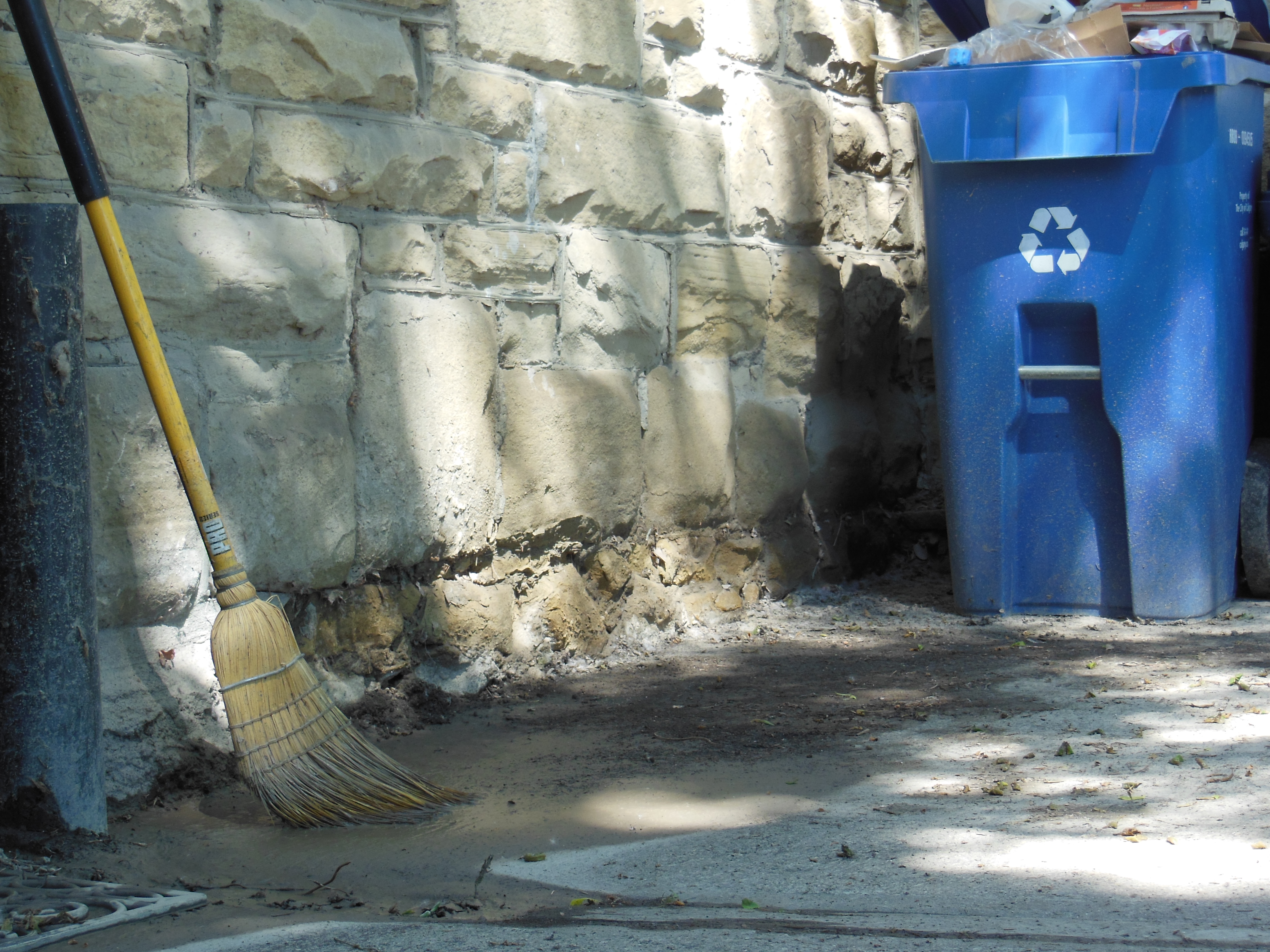


 RETROactive