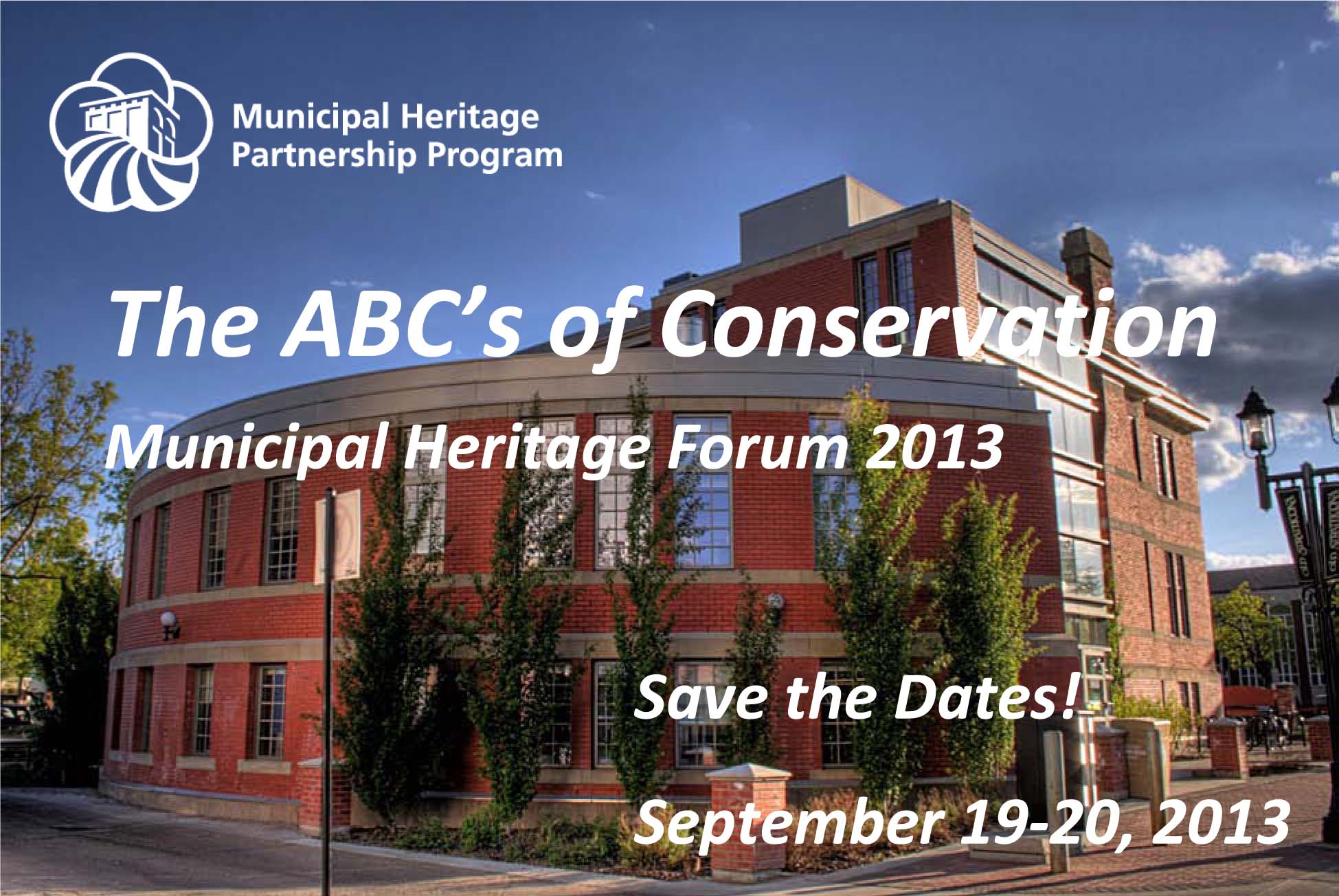
Registration is now open for the 2013 Municipal Heritage Forum: The ABC’s of Conservation.
You are invited to attend the Forum, September 19-20th, 2013, taking place at the Ukrainian Cultural Heritage Village and at Knox Church in the Old Strathcona Provincial Historic Area in Edmonton. The agenda and information package is available below:
This year will feature not only informative and inspiring keynote presentations from Bernard Flaman and Todd Babiak, but also hands-on demonstrations of conservation practices. RETROactive will keep you informed about Forum workshops, schedule, and details.
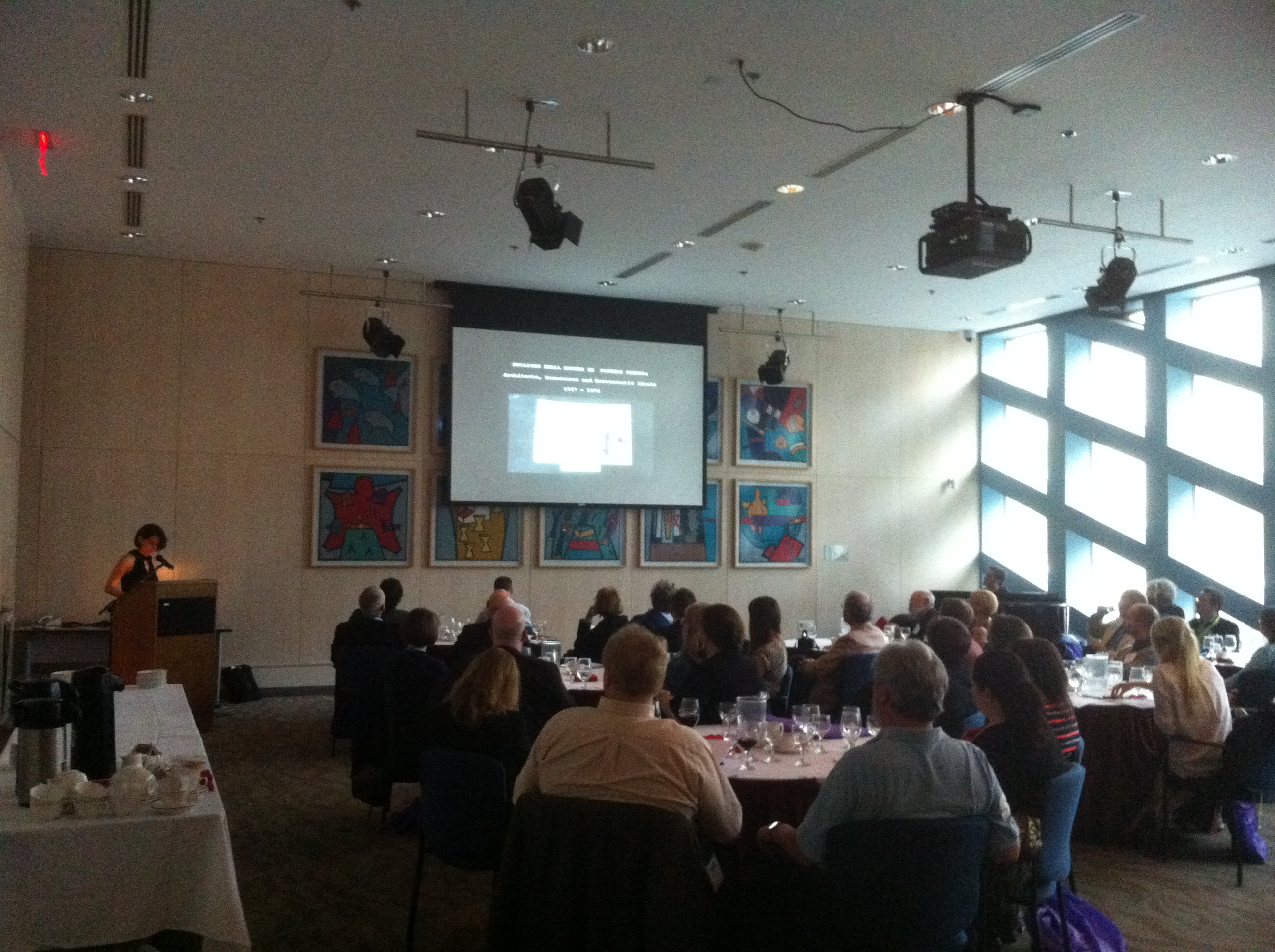
From May 29 through June 1 delegates from across the country (and a few from the United States and Europe) were treated to presentations, discussions and tours addressing a variety of aspects of Canadian architectural history. The conference kick-off was hosted at Edmonton’s city hall, and featured a talk and tour by the building’s architect, Gene Dub. Not surprisingly, he had many interesting anecdotes and insights to relate—including the memorable connection between the building and the Edmonton Sun newspaper’s 3rd page Sunshine Girls!
Three full days of events followed. There were 10 session featuring over 40 speakers. To fit them all in, there were always two sessions on the go. How to choose? Would you rather learn about how cities are transformed by renewal, or what trends are influencing how architecture is taught in Canada? Are you more interested in the future of historic churches, or the place of Arthur Erickson in Canada’s architectural history? Those interested in a lively Pecha Kucha format discussion of the role of government programs in the conservation and commemoration of the built environment had to forego a panel discussion entitled “Architecture and the Canadian Fabric.” For students and professionals in the architectural history field, these are difficult decisions!
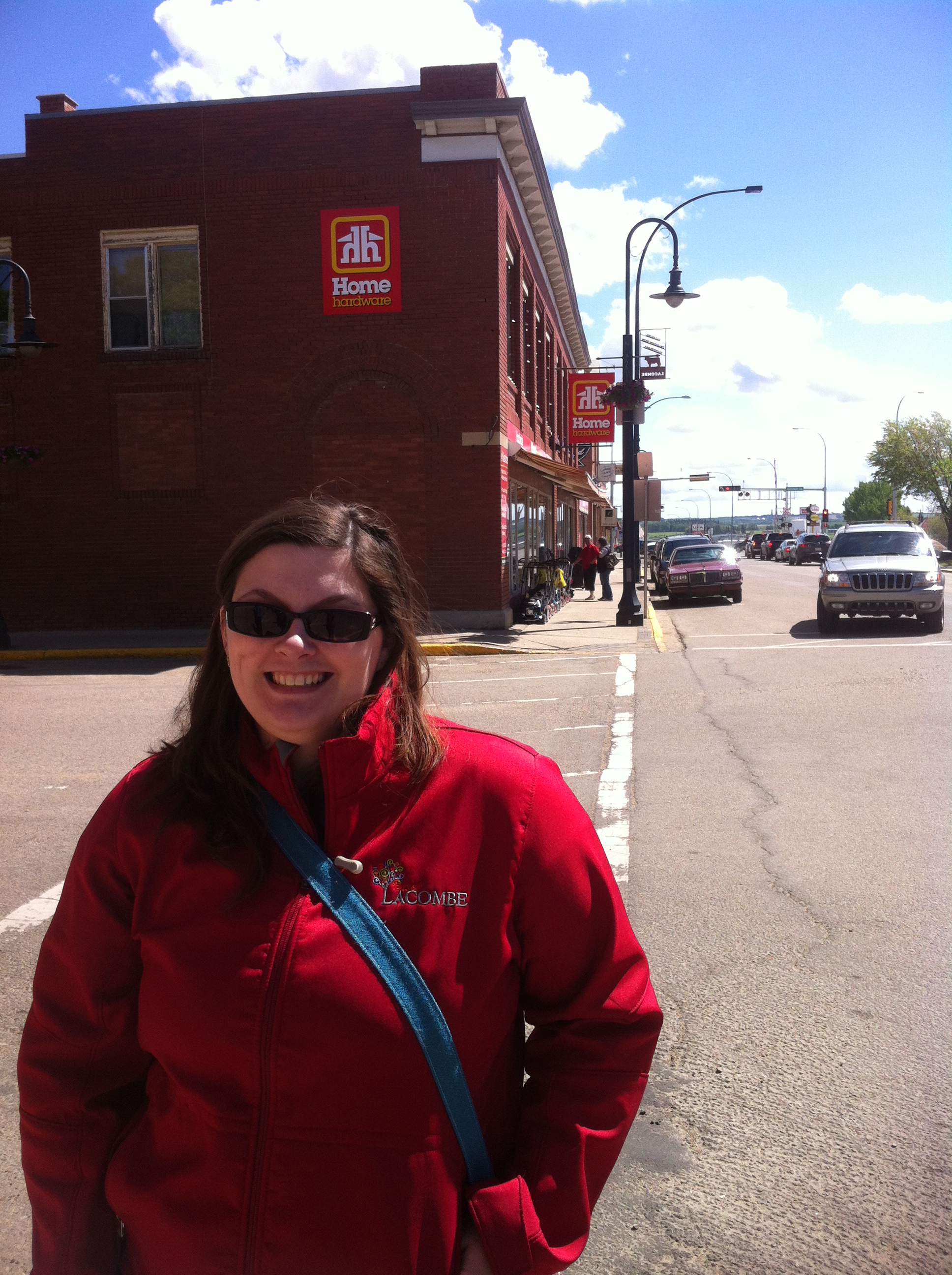
Jennifer Kirchner, Planner with the City of Lacombe, showed us around main street.
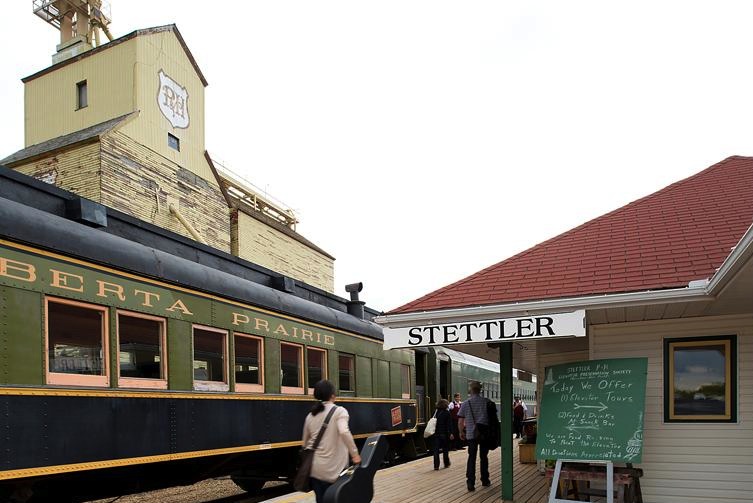
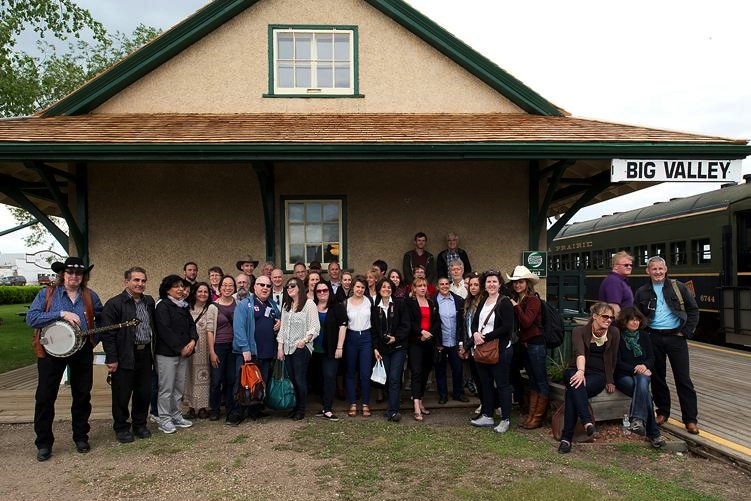
Of course, delegates also found time to socialize, make connections and catch up on all the latest work being done in the field. No conference is complete without receptions and a night on the town! The grand finale of the conference was an all-day bus tour of historic buildings and communities in central Alberta. The day was bright and sunny as the bus set off from Edmonton. First stop was the 1907 Wetaskiwin Court House, which was converted to serve as the city hall in 2006. Next on the route was Lacombe, where Roland Michener House and the Flat Iron Building are just two of the Provincial Historic Resources the delegates visited in the city’s historic main street area. After an excellent lunch, the group continued on to Stettler and boarded the Alberta Prairie Railway Excursion’s train for Big Valley.
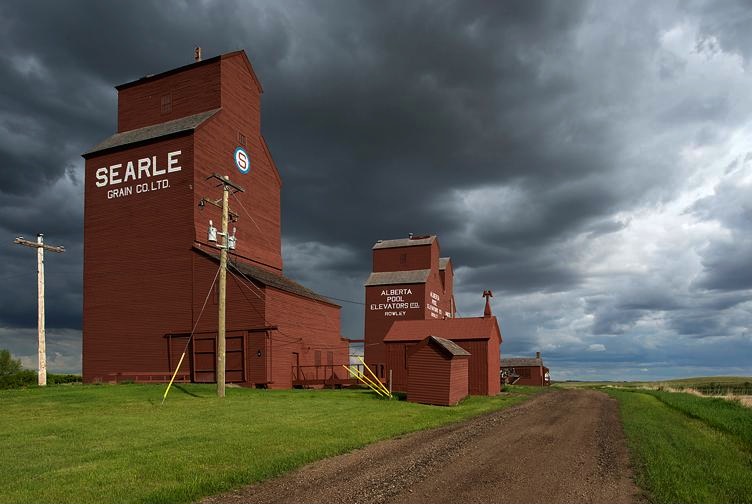
The final stop on the tour was Rowley, where the spectacular Rowley Grain Elevator Row symbolizes Alberta’s agricultural heritage. After a barbeque, a wander around town, and musical entertainment by Robin Woywitka and the Super 92, it was back on the bus and heading for home. The on-board movie was “Bye Bye Blues.” Watch it if you get a chance—it was filmed on location in Rowley! By the time the bus dropped us off in Edmonton, it was after midnight. Some went directly to their Whyte Avenue hotel, but on Whyte the night was just getting started, so doubtless others continued their Alberta adventures into the wee small hours!
I’d like to thank the people and organizations who contributed to the success of the SSAC 2013 Edmonton conference. It’s impossible to name them all, but special thanks go out to:
“Hey, that’s a neat old building. I wonder what it looked like new?”
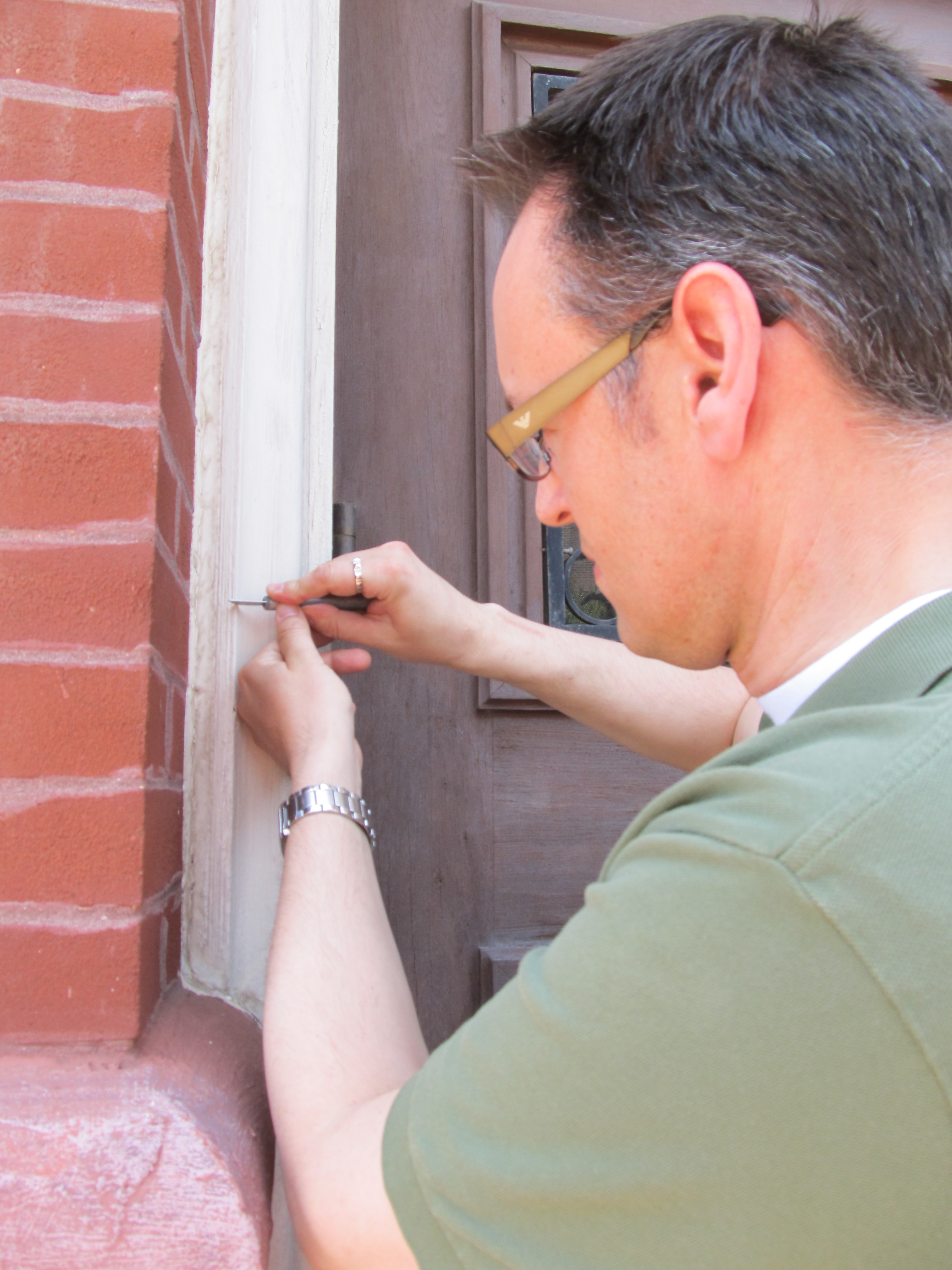
Gathering samples for analysis
I recently had the good fortune of attending a course at the National Center for Preservation Technology and Training in Natchitoches, Louisiana on paint analysis for historic buildings. The Town of Natchitoches is in northern Louisiana and is situated around historic cotton plantations. The movie “Steel Magnolias” was filmed in Natchitoches during the late 1980’s.
The course, Paint Analysis for Historic Buildings, was taught by David Arbogast. Mr. Arbogast is a renowned architectural conservator and paint specialist from Davenport, Iowa. During three intensive days we learned a great deal about the history of applied finishes (paints, stains, and clear coatings), architectural paint chemistry, the proper technique to restore deteriorated window mechanisms, how to collect field samples and analyze them in a laboratory and how to write up the findings.
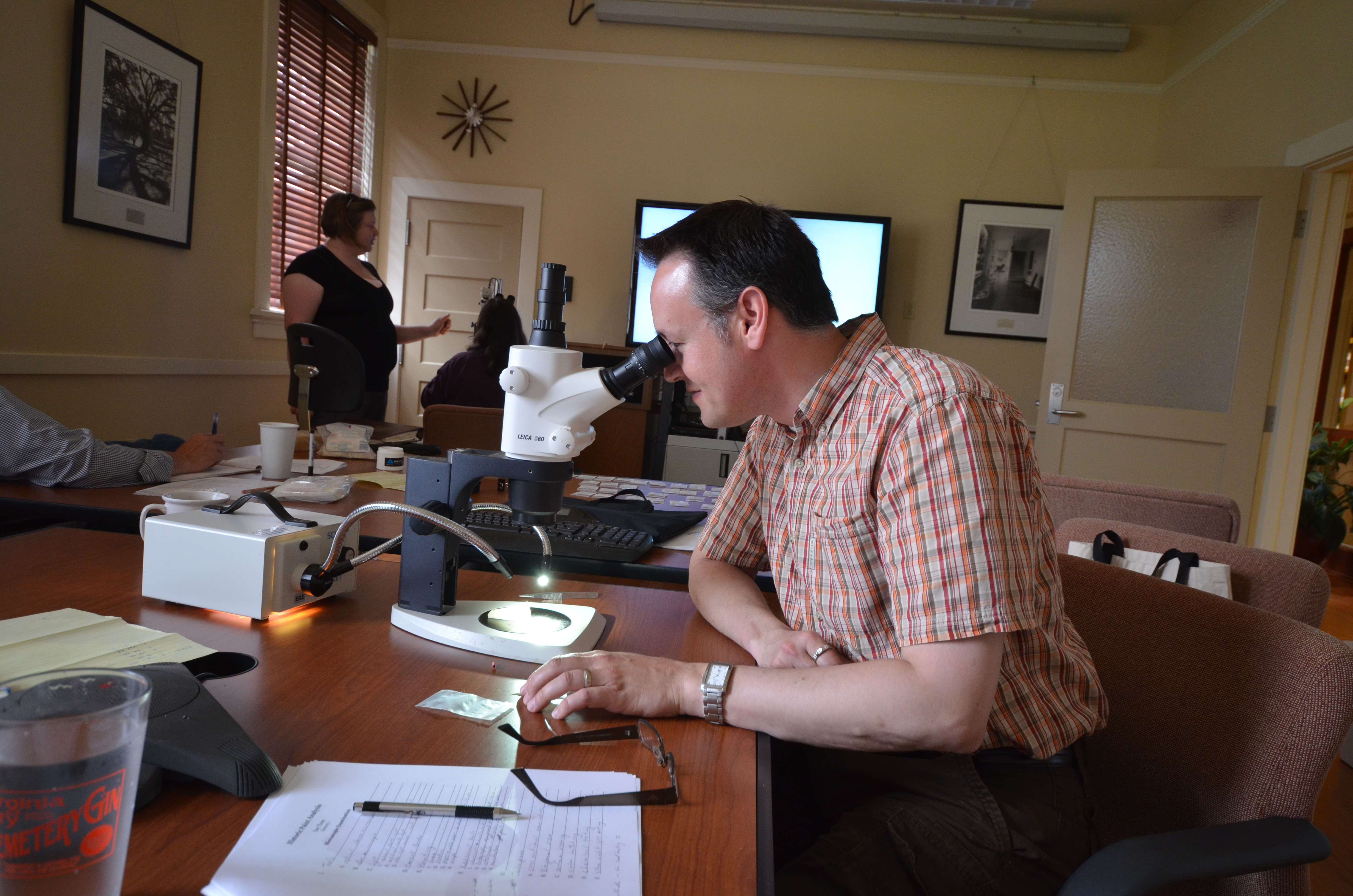
Analyzing a sample to identify layers and colours
During the second day, we collected 43 paint samples from the nearby Old Courthouse Museum. Most of our samples were smaller than the diameter of a pencil—more than enough for laboratory analysis. Using an optical stereo microscope, we examined each one. From these tiny specimens we were able to determine the number of layers of coatings applied to a particular area, and the colour of each layer. Observing the microscopic lines of atmospheric deposits (mostly soot and dirt) we established how frequently the building was painted. We documented each colour identified according to the Munsell System of Colour, a standardised colour palette book that does not change with time and fashion. It was amazing to see that such tiny samples could offer so much information about how a building evolved over its life.
It was a very intensive three days, but what I learned will be invaluable to my work as an architectural conservator or to anyone interested in knowing the evolution of coatings and colours used on their historic building.
Written by: Jim Nakonechny, Senior Restoration Officer
The 7th annual municipal heritage forum is coming up fast. We strive to present relevant and useful information for the municipalities we work with. Here in Old St. Stephen’s College, Matthew and I are busy planning two intensive, information-filled days.
The forum is the Municipal Heritage Partnership Program’s signature event. Many past participants have used what they’ve learned to improve their own municipal heritage conservation programs. We hope to build on that success.
We were wondering if you could help us? We’d like to hear a little about what you hope to learn at this year’s forum. Please take a few minutes to participate in our online survey. The information you provide will help us organise the best forum yet.
Misunderstandings about alterations to designated historic resources
Now and again, I receive a call or a question from someone who appears to be under the impression that their Provincial or Municipal Historic Resource cannot be “altered” and that it must be “preserved” as is. That is not entirely true. Under Alberta’s Historical Resources Act, “no person shall destroy, disturb, alter, restore or repair any historic resource…without the written approval from the minister (Section 20-9)” if the site is a Provincial Historic Resource. For Municipal Historic Resources, the written approval must come from “the council or a person appointed by the council for the purpose (Section 26-6).” To obtain a written approval, the proposed alteration must be evaluated under the Standards and Guidelines for the Conservation of Historic Place in Canada.
The Standards and Guidelines is a pan-Canadian document that is used as a tool to evaluate and sometimes enforce certain principles in the conservation of our historic resources. There are four major components to the document: the conservation decision-making process, the conservation treatments, the standards, and the guidelines – with each component going into more and more detail. The most critical of these is the “conservation decision-making process”. This process involves three stages that I like to refer to as the acronym U.P.I. (pronounced whoopee!) or Understanding, Planning, and Intervening.
The designation of a historic resource implies that we are trying to conserve it for future generations as part of our shared heritage. Understanding why a designation was put in place is the first step in determining what can and can’t be touched. This is summarised in a Statement of Significance (SoS). Each designated historic resource has one. If you do not know what the SoS for your designated building contains, you can search for it on the Alberta Register of Historic Places.
Planning is the most important part of any project and for historic resources it is critical in order to avoid mistakes and the potential damage or loss of heritage fabric – usually listed as character-defining elements within a SoS. As a Heritage Conservation Adviser, it is part of my job to help you understand and plan (and subsequently recommend approvals for Provincial Historic Resources) for projects that will affect your historic resource before any intervening occurs. When someone indicates to me that they will be going straight to an intervention (i.e. actual physical alteration to a historic resource) without any understanding or planning having taken place, I will tend to react like the guy in this video clip.
Ok, well maybe on the inside. Suffice it to say, that intervening without understanding or planning is not recommended. Although I did find the guy in the video’s treatment of the new homeowner’s lack of respect for their heritage building interesting – would you agree?!
Written by: Carlo Laforge, Heritage Conservation Adviser.
Hi, I’m Sandy I am the new Heritage Conservation Adviser in the Historic Places Stewardship Section. While new to Alberta’s Ministry of Culture, the field of Cultural Resource Management is not new to me.
I have worked for the City of Ottawa as a heritage planner; for the Heritage Canada Foundation as Medicine Hat’s Main Street Coordinator; was the Built Heritage Project Officer for Jasper National Park; and; the Parks Canada National Historic Sites Cost-Sharing Coordinator for Alberta and British Columbia. I was most recently a heritage resources and community planner with the Parks Canada Agency. Amongst my duties in that position I was the Federal Heritage Building Review Office Coordinator all of Western and Northern Canada.
My work with Parks Canada saw me working in massively diverse geographical areas from Waterton Lakes National Park in the far south west corner of the province to Sheep Creek Warden’s Station located in the middle of Ivvavik National Park in the far north and, from Riding Mountain National Park in Manitoba right across the prairies through the Rocky Mountain National Parks to Vancouver Island. The heritage buildings and properties that I was dealing with included everything from small wardens’ cabins in the remote back country of the Rocky Mountains National Parks; privately and publicly owned residential, commercial and institutional heritage buildings in national parks and national park communities, and; buildings and structures located at national historic sites. The variety and types of heritage buildings was endless and, when combined with their specific geographic locations, the experiences were all highly memorable.
My education has provided me with an understanding of historic place conservation and management. I hold a Bachelor of Arts Degree, in Canadian History and Urban and Regional Geography, from the University of Victoria; a Masters of Environmental Design in Urban and Regional Planning from the University of Calgary where I specialized in heritage planning, and; a Masters of Arts in Conservation Studies (Historic Buildings) from the Institute of Advanced Architectural Studies, the University of York, England.
You will find me to be a very personable person who is highly supportive of colleagues and who enjoys a team-based collaborative work environment. I am truly excited and absolutely thrilled about working as a Heritage Conservation Adviser and look forward to meeting new colleagues, and getting “out in the field” with the owners of designated properties.
Written by: Sandy Aumonier, Heritage Conservation Adviser.
WHEN: Thursday September 19th at the Ukrainian Village & Friday September 20th in Old Strathcona
WHY: To help create a future for Alberta’s historic places.
While each year we try to carefully minimize scheduling conflicts with other important happenings on the heritage scene, sometimes overlaps occur. Some RETROactive readers will want to know that this year’s Forum is taking place at the same time and in the same fair city (Edmonton) as our friends from theAlberta Museums Association are hosting their Annual Conference. Please keep in mind that both the AMA Conference and our Municipal Heritage Forum allow for single-day registrations. This may allow some attendees to maximize their trip to Edmonton to take in the best of both great events. We will also be co-hosting a reception with the AMA on Thursday evening, Friday 19th.
Full information on Forum 2013, schedules, and registration materials will be available soon! Stay tuned to RETROactive for details.
The Society for the Study of Architecture in Canada is holding its annual conference in Edmonton from May 29 to June 1. This year’s event, Infrastructures and Institutions: Settings for Life, will bring people from across Canada together to share information and ideas about architectural history, heritage resource management and other related topics. Over 40 speakers will participate 10 sessions on the University of Alberta campus.
Ministry of Culture staff will make presentations in Session 5: The Role of Government Programs in the Conservation and Commemoration of the Built Environment. This will be a lively, Pecha Kucha format session that promises to be very interesting and engaging. Other sessions will address Aboriginal themes in contemporary architecture, teaching architectural or design history in Canada, the role of churches in our communities, and the place of Arthur Erickson in the history of Canadian public architecture, among other topics. The third day of the conference is given over to an all-day bus tour that includes a train ride and banquet.
You’re welcome to attend! To register, visit the conference page of the society’s website.
Written by: Dorothy Field, Heritage Survey Program Coordinator
A few weeks ago, I was live-blogging from the the U.S. National Trust for Historic Preservation’s Annual Main Street Conference. The conference is attended by leaders from hundreds of historic main street communities across North America. Here are some final thoughts, after returning home to Alberta.
Culinary Revival in Historic Places
The final session of the Main Street Conference in New Orleans featured Robert St. John , a celebrity chef and authority on southern culture and food, as speaker. His humorous presentation focused on his hometown of Hattiesburg, Mississippi. There is a lot of focus these days—and not only in New Orleans—on how culinary excellence works hand-in-hand with revitalizing historic main streets. The food scene—in all its dimensions—is major player in today’s “cultural economy.”
Robert’s presentation reminded me how a number of our historic Alberta Main Street communities are great places to enjoy good food in authentic, fun environments. In particular, his presentation reminded me of Downtown Lethbridge, where an exciting food and coffee culture has emerged over the past several years. Other places in Alberta are seeing great new restaurants, coffee-houses, artisan bakeries, micro-breweries, and fantastic food trucks enrich and enliven neighbourhoods, and jump-start uses for historic buildings. There are some tremendous entrepreneurial opportunities out there. The historic vibe, feel, and values in our traditional commercial districts only adds to the appeal.
Next Year in Detroit –Works in Progress!
Detroit will host the 2013 Main Street Conference.
The wrap-up session concluded with a presentation by next-year’s host city: Detroit, Michigan. Now, much ink has been spilt describing Detroit’s catastrophic urban decline over the past few decades. Hundreds of blocks of blighted houses and commercial buildings have been bulldozed due to the severity of the situation. But that is all changing. Detroit is using Main Street’s Four-Point Approach® to bring its downtown back from the ashes. Jane Jacobs said that “new ideas need old buildings,” and that is definitely part of what is happening in Detroit.
It’s inspiring to see what is happening around the world, but it’s even more exciting to see what’s happening across Alberta, in our own backyard. Stay tuned to RETROactive for updates on historic main street news from across the province.
Written by: Matthew Francis, Manager of Municipal Heritage Services
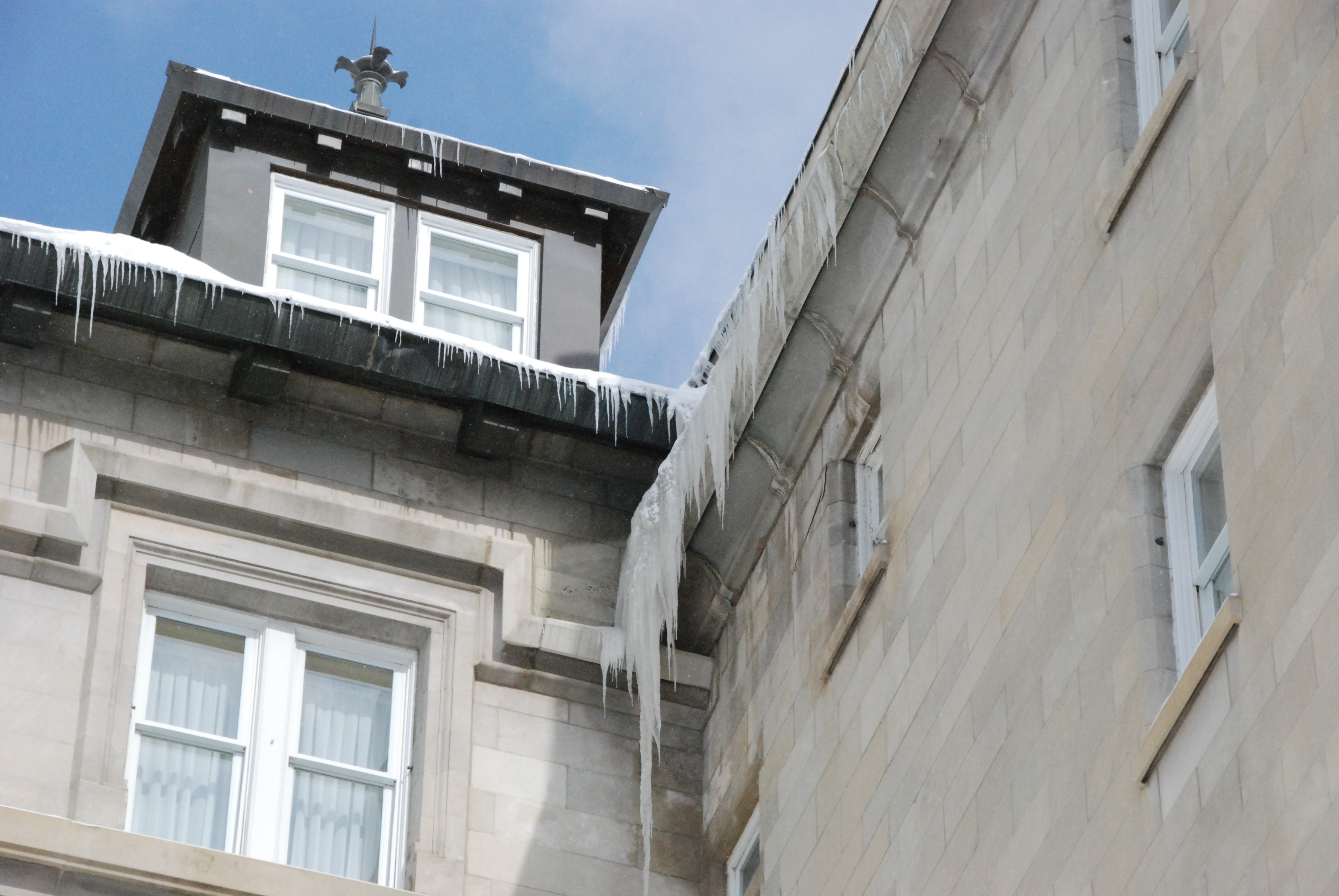
It’s been a long winter, but summer is almost here. The lengthening days signal that it is time to start planning some of the regular maintenance every building needs to deal with the winters still to come. Have you noticed long, heavy icicles hanging from your home’s eaves this winter? If you did, the building likely has a problem with ice damming. Examining the damage, effecting repairs and solving the underlying problem should be a priority.
Ice damming happens when warm air that rises in a building suddenly hits the frozen roof. Any snow or ice sitting on that roof melts and runs towards the eaves—where it promptly freezes again. That ice plugs the eavestroughs, overflows (hence the icicles) and is often forced into the roof itself. Many think that icicles hanging from the eaves are beautiful, but the water forced into the roof can wind up in the ceiling and walls. Ice damming is often the root cause of problems with mould, rot and even structural failure.
There are several ways to minimise ice damming. Keeping snow off the roof prevents it from melting in the first place. Heat cables can be installed at the base of the roof to prevent water from refreezing at the eaves. However, if the roof is nearing the end of its useful life and in need of rehabilitation, this is an opportunity to address the underlying problem.
Ice damming is indeed a symptom of a larger problem with the roof. Those long, heavy icicles are a sign that a roof lacks proper insulation or ventilation. The more heat escaping from the attic, the more quickly the snow on a roof will melt. The more poorly ventilated the roof is, the less likely the rising heat will dissipate evenly.
What to do? Careful observation and a little research is always the first step: you cannot solve a problem you don’t understand. Get into the habit of comparing the amount of snow on your roof to the amount on the roofs of other buildings in the area. If snow disappears more quickly from your roof, that could be evidence of poor insulation. If the amount of snow is unevenly distributed a few days after a snowfall, your roofing system may be poorly ventilated.
How to fix the underlying problem? Since ice damming is caused by melting snow that quickly refreezes, a solution will limit the amount of heat escaping through the attic while distributing the heat that does inevitably escape evenly across the roof. Be careful—adding too much or the wrong type of insulation or installing it poorly creates its own problems.
Insulating a roof in the wrong way can easily compromise the ventilation. The areas where a roof meets the walls will always be warmer than the peak. Proper ventilation moves heat from the warmer to the cooler areas of the roof, limiting the potential for the snow and ice to melt. In older homes, a lack of ventilation is quite common: exposed rafters or decorative boxed-in soffits with crown mouldings often restrict air flow within the attic. There are ways to improve ventilation that do not comprise the heritage value of your home.
It’s always a good idea to consult a professional. An architect or roofing engineer can help you evaluate the benefits and drawbacks of different solutions. You must consider all of the variables and materials that compose a roof before implementing a solution:a roof is not just a layer of shingles but a system complete with external and internal components.
Written by: Carlo Laforge, Heritage Conservation Adviser.





 RETROactive