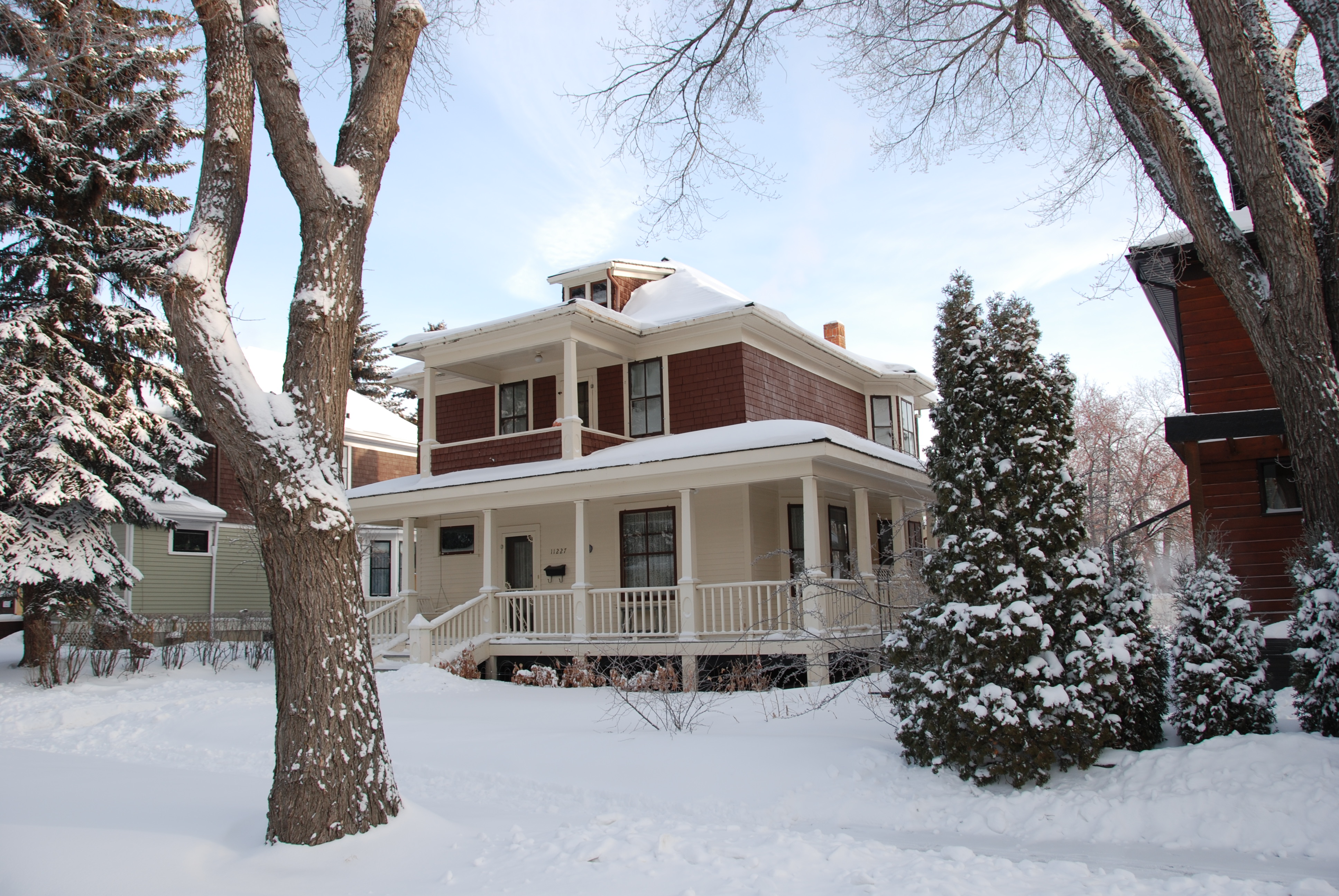
Campbell Block, Lacombe

With the completion of the Calgary & Edmonton Railway in 1891, a number of stations were erected along the rail line to accommodate the expanding agricultural population of the region. Next to several of these stations, the C & E subdivided townsites, several of which grew to some size.  One of these was Lacombe, which was named after the venerated Oblate priest. In 1896, Lacombe was incorporated as a village, and, in 1902, it became a town with over 500 people, possessing most of the amenities required of a northern farming community.
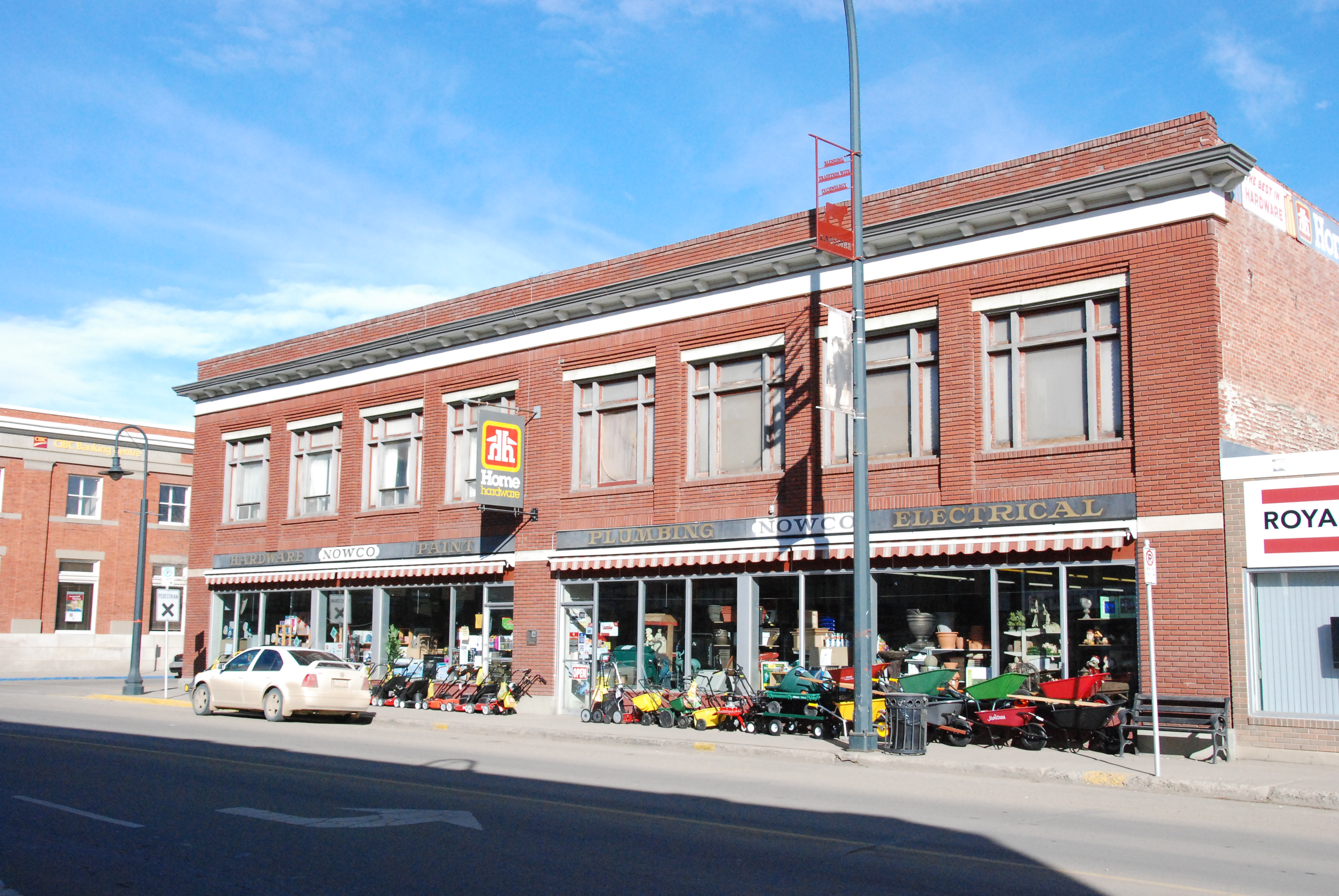
As years passed, Lacombe remained a farming town, its major industries being the grain elevators and the various stores, garages and equipment dealerships which served the farmers. One of leading merchants during the early 20th century was A.M. (Sandy) Campbell, who, like Gordon Puffer, was perpetually on Town Council and the executive of the Board of Trade.  He was also a leading member of the local lodge of Masons. In his memoir, Puffer wrote, “Sandy Campbell was a very popular and successful business man in Lacombe for many years. He was active in civic affairs and he and Mrs. Campbell were social leaders in the community.”

Campbell had run a general store in Lacombe since 1903, and, on 17 March 1920, the Lacombe newspaper, the Western Globe, wrote about the pending erection of a new store on 50th Avenue:

Mr. A.M. Campbell has completed arrangements for the erection of a modern building on the site of his present store…. The plan shows a well designed front, which will add greatly to the appearance of our main street.   

The new two-story brick store was almost a miniature department store, as it was anticipated to include hardware, clothing, dry goods and grocery departments, and also a millinery. It was a two-storey, red-brick building which featured a wide front facade accommodating two storefronts, eight large wood-framed windows on the second floor, and a bracketed cornice surmounted by a simple brick parapet prominently situated on two and a half lots.

The Campbell Block still maintains strong integrity and retains most of its original features, in particular, design, location and environment that are sufficient to communicate its significance in a local context and as a contributing resource to the Town of Lacombe’s distinctive historic commercial downtown area.  Its historical significance lies in its service as a general store, and hardware and furniture store since 1920.  It has served the town and district of Lacombe ever since, concentrating in recent years on hardware and furniture. It ties in well with other main street structures nearby, providing a glimpse of life in large-town Alberta throughout most of the 20th century.  In 2009, it was designated a Provincial Historic Resource.

Written by: David Leonard, Historian

Visit the Alberta Register of Historic Places to learn more about the heritage value of the Campbell Block. In order for a site to be designated a Provincial Historic Resource, it must possess province-wide significance. To properly assess the historic importance of a resource, a historian crafts a context document that situates a resource within its time and place and compares it to similar resources in other parts of the province. This allows staff to determine the importance of a resource to a particular theme, time, and place. Above, is some of the historical information used in the evaluation of the Campbell Block.
We have a Winner!

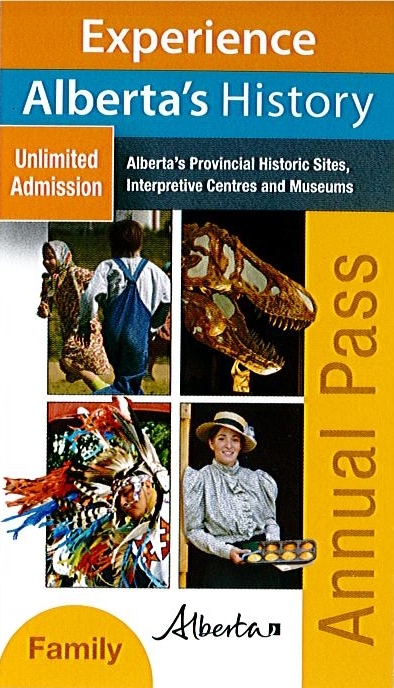
Last week we announced a contest to win an Annual Pass for Alberta’s Historic Sites, Interpretive Centres and Museum. Followers and new fans enthusiastically responded! Thank you to everyone – we were so pleased to read your feedback and very happy that many of you discovered RETROactive. Please, if you like what you read on this blog, spread the word!

We received feedback from 38 individuals. All names were entered to win the Annual Pass. I am pleased to announce that Janice MacDonald was randomly selected as the winner. Congratulations, Janice! Please email me at: albertahistoricplaces@gov.ab.ca so that we can arrange for you to receive the annual pass.

Thank you, again, to everyone that entered the draw. If you ever have a question about one of our blog posts, about heritage conservation in general or have a suggestion for a blog post, please do not hesitate to post a comment or email us at the above address. We would love to hear from you.

Win an Annual Pass to Alberta’s Provincial Historic Sites, Interpretive Centres and Museums

Today is RETROactive’s 1st birthday!

We want YOU to help us celebrate!

Please, no birthday cakes or flowers … but presents of the “feedback” variety are greatly appreciated. We want you, our dedicated followers, to tell us what you think about RETROactive/Alberta’s historic places. This is your opportunity to:

  • suggest ideas for a blog post;
  • ask a question about heritage conservation;
  • tell us about a memorable visit to a historic place in Alberta;
  • share a photo of your favourite historic place in Alberta; and/or
  • tell us what you think about RETROactive.

Everyone who submits feedback will have their names entered to win a 2012 Family Annual Pass (with unlimited admission) to visit all of Alberta’s Provincial Historic Sites, interpretive centres and museums.

How can I share my feedback?

Submit a comment at the end of this post, write on our Facebook page, Tweet something to @ABhistoricplace or send an email to: albertahistoricplaces@gov.ab.ca.

When will the winner be selected? 

All names associated with feedback received by 08:30MT, February 27, 2012 will be entered to win the Annual Pass. The winner will then be contacted to arrange for delivery of the Pass.

On behalf of staff of the Historic Places Stewardship Section (a.k.a. RETROactive Authors), we would like to thank you for your support and continued interest in the conservation of heritage AND in creating a future for Alberta’s historic places!

Written by: Brenda Manweiler, Municipal Heritage Services Officer

Sharman House, near Onoway

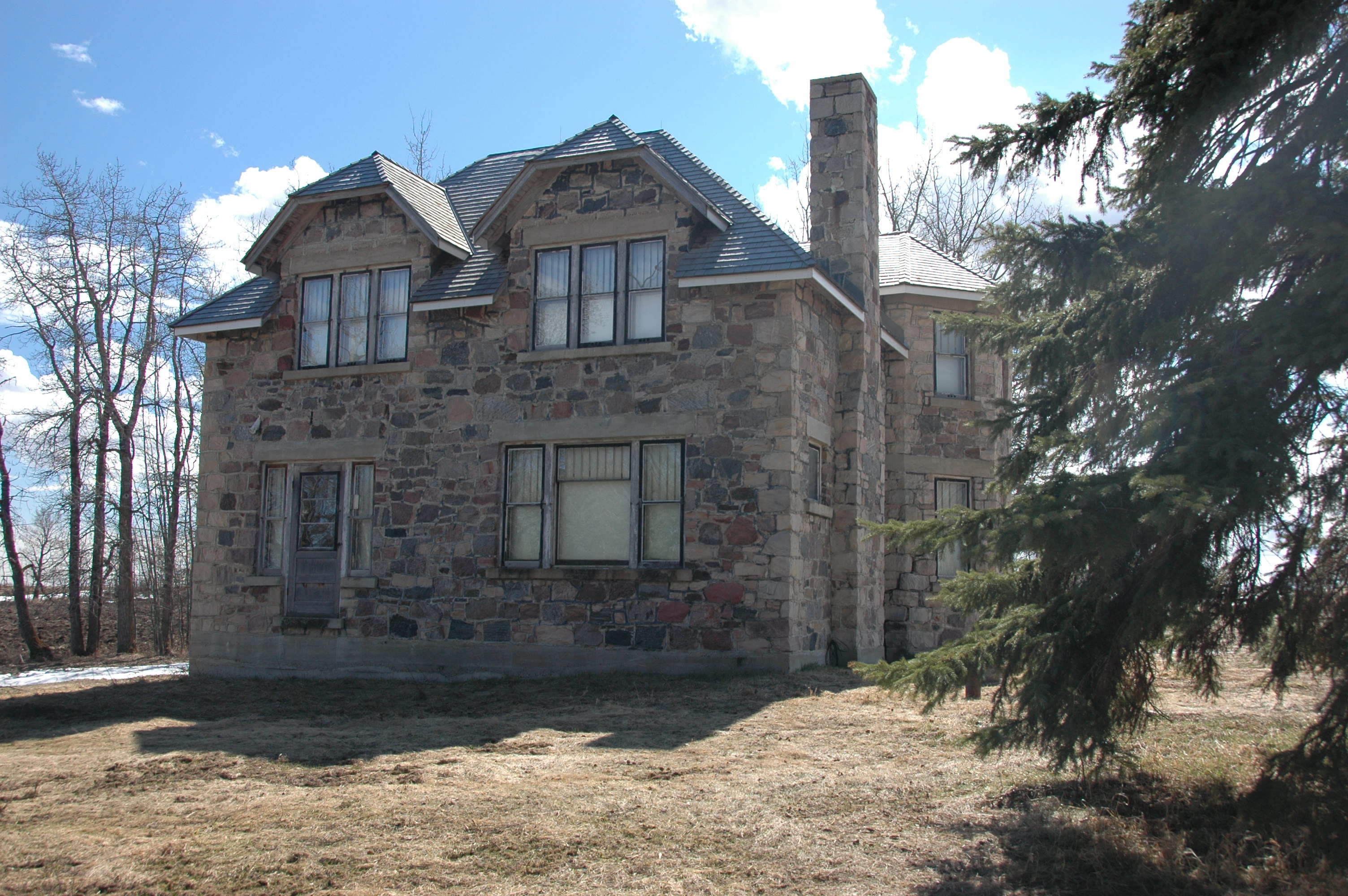
When the Canadian Northern Railway extended a line through Onoway in 1909, en route to Jasper and Vancouver, much of the rich agricultural land east of Lac Ste Anne was made immediately viable for homesteading.  Even before the railway arrived however, and indeed even before the Dominion Land Surveys of 1904-05, a number of settlers had taken up land in the Onoway area.  One of these was Thomas Sharman, who settled on NW34 TP52 R3 W5 in 1903, in a district soon to be known as Heatherdown.  Sharman was born in Ireland and had come to western Canada from North Dakota, where he had been a stonemason as well as a farmer.  He first attempted to homestead near Camrose, but was unsuccessful.  Near Heatherdown however, he and his wife succeeded in proving up, and eventually they acquired five quarters.

As he cleared and broke his land, Sharman made a point of salvaging pristine stones that inundated his fields.  Being a stonemason, he had an idea that one day these would prove useful.  By the mid 1920s, he decided to use these stones for a new house.  With the help of his youngest son, Lawrence, and local neighbors, he designed and built a large dwelling utilizing the material he had salvaged.  He moved into his new home in about 1927, and lived there with his wife until passing away a few years later.  The house and the farm were then taken over by Lawrence Sharman and his wife, Florence, who died tragically in a fire on the farm in 1936.  The Sharman House then continued to be occupied by Lawrence on his own until he moved to British Columbia in 1947.  It was then acquired by Gordon Stewart, his wife Lenabelle, and their son, Lowell.  With Lenabelle’s death, Gordon and Lowell continued to farm the land and occupy the house as bachelors.

The historical significance of the Sharman House  lies in its representation of the settlement of the Onoway area, and of the richness of the farmland in the district.  It is also significant in demonstrating the inventiveness and craftsmanship of one of Onoway’s early settlers.  Its heritage value lies in the excellent craftsmanship evident in its split fieldstone construction and the home’s picturesque aesthetic appeal.  It is distinguished by its picturesque exterior, which is composed of different shapes and sizes of split fieldstone.  Other prominent features of the home include a hipped roof with intersecting roof ridges, hipped wall dormers, three tall stone chimneys, and a two-storey bay projecting from the southwest corner of the building.  The yard of the home includes a garden and mature evergreen trees north of the house dating from the period of construction. The Sharman House was designated a Provincial Historic Resource in 2007.

Written by: David Leonard, Historian

Visit the Alberta Register of Historic Places to learn more about the heritage value of the Sharman House. In order for a site to be designated a Provincial Historic Resource, it must possess province-wide significance. To properly assess the historic importance of a resource, a historian crafts a context document that situates a resource within its time and place and compares it to similar resources in other parts of the province. This allows staff to determine the importance of a resource to a particular theme, time, and place. Above, is some of the historical information used in the evaluation of the Sharman House.

AHRF Grants Awarded

The Alberta Historical Resources Foundation’s (AHRF) Heritage Preservation Partnership Program has recently awarded total grants of over $630,000 to support projects for historic resource conservation, heritage awareness, publications and research projects and scholarship.

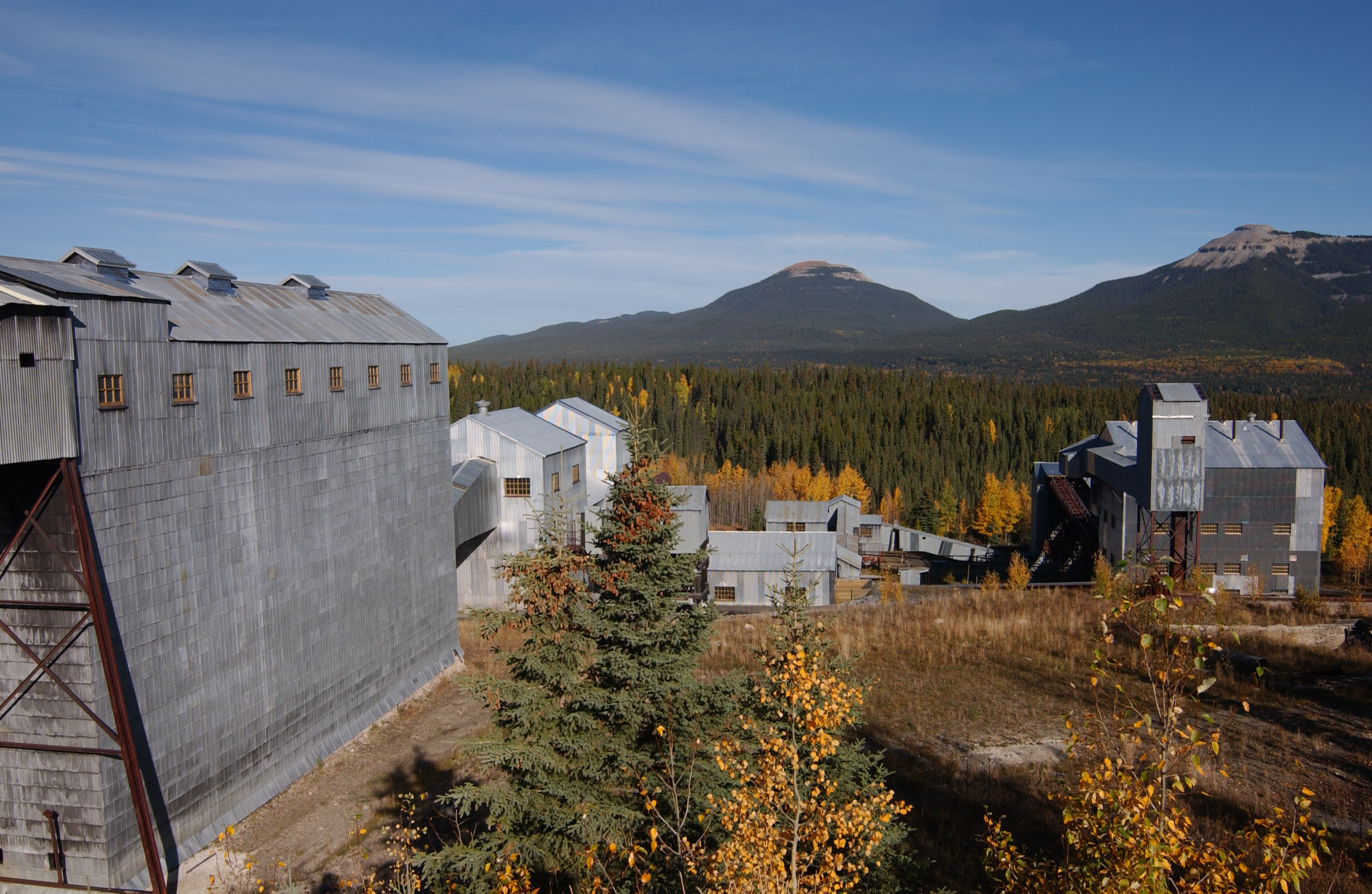
The Brazeau Collieries Minesite Provincial Historic Resource in Nordegg recently received a conservation grant from the Alberta Historical Resources Foundation.

With an allocation from the Alberta Lottery Fund, AHRF is the Government of Alberta’s primary window for heritage preservation funding.  To learn more about who has benefited from this program, click here.

Written by: Carina Naranjilla, Grant Program Coordinator

A Recipe for Success: Planning, Procedures and Policies

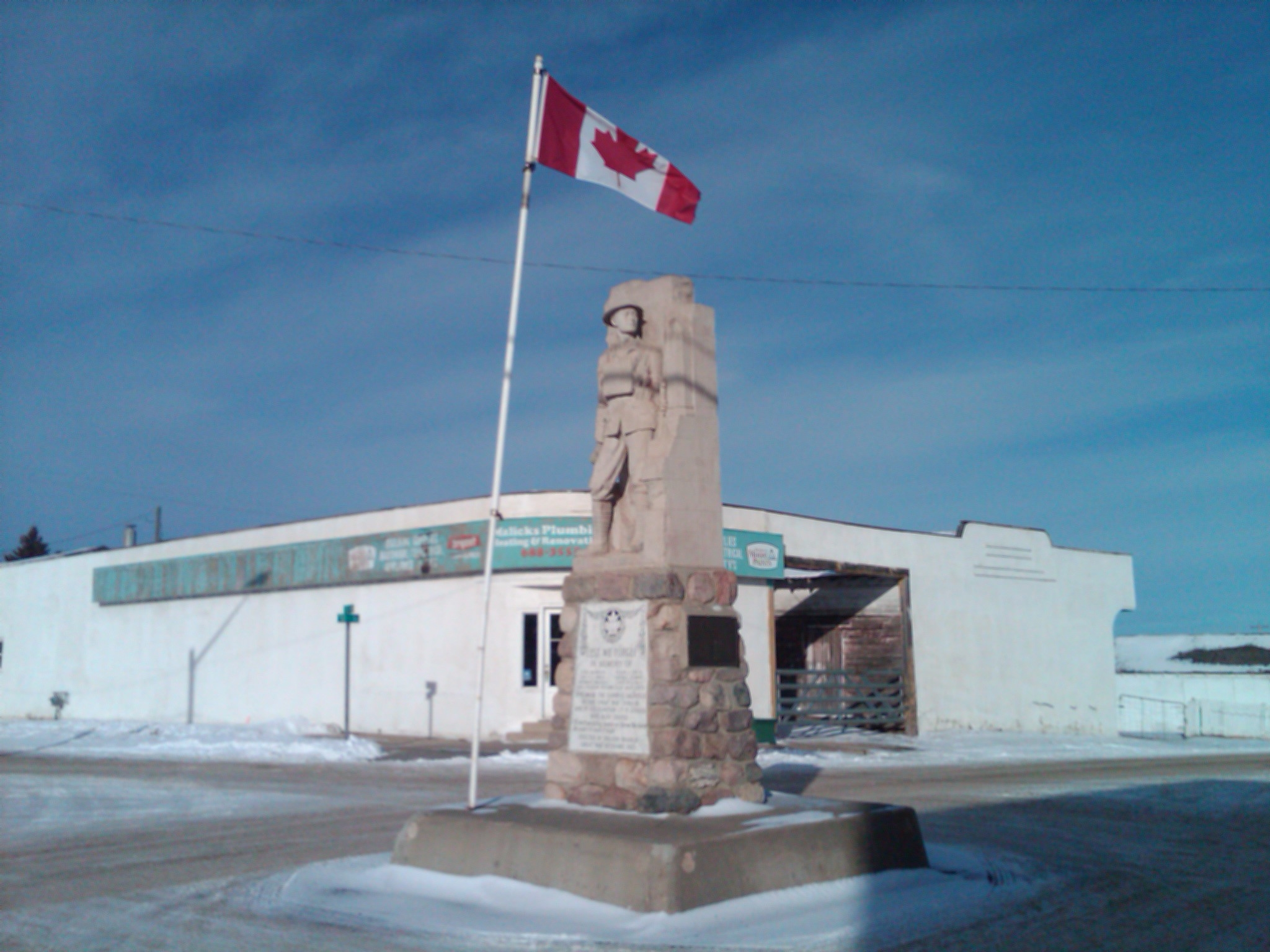
The Holden Cenotaph with the Globe Lumber Company Building. Both resources were evaluated for the Municipal Heritage Inventory project completed in 2011.

The Village of Holden, located an hour southeast of Edmonton on Highway 14 with a population of 400, is developing a Municipal Heritage Management Plan. In 2011 the Village completed a combined Municipal Heritage Survey and Inventory but decided that before proceeding with the designation of Municipal Historic Resources it would be best to have a “recipe” for establishing a successful local heritage conservation program.

Throughout 2012, Village staff and the Holden Heritage Resources Committee will be working with a heritage consultant to develop a plan appropriate to the Village’s needs and objectives. Elements of the plan will include:

  • a template bylaw for Municipal Historic Resource designations;
  • a policy outlining the designation process and eligibility requirements;
  • a terms of reference for the Holden Heritage Resources Committee (i.e. vision, mission);
  • a procedure for reviewing requests to alter Municipal Historic Resources;
  • a review of potential incentives (monetary and non-monetary) that the Village may offer to owners of Municipal Historic Resources; and
  • an assessment of other municipal planning documents to see how heritage might be integrated with land-use and  Village programs and services.

Over the course of this project, the greater community will also be engaged. Feedback from residents will be imperative for ensuring that the Heritage Management Plan appropriately serves the interests of residents and thereby conserves the valued places that make Holden a unique community.

Stay tuned throughout the year for updates on this project!

Written by: Brenda Manweiler, Municipal Heritage Services Officer

Alequiers Ranch House, near Longview

During the latter part of the 19th century, the foothills of what is now southern Alberta were given over largely as grazing leases to several big ranching companies, many of them with close ties to the Conservative Party.  With the election of the Liberal party in 1896 however, more emphasis came to be placed on settling the West with small, independent farmers.  Under Interior Minister Clifford Sifton therefore, many grazing leases, when expired, were not renewed, in order that the land could be subdivided into quarter-sections for homesteading, or given over to the CPR Land Department.

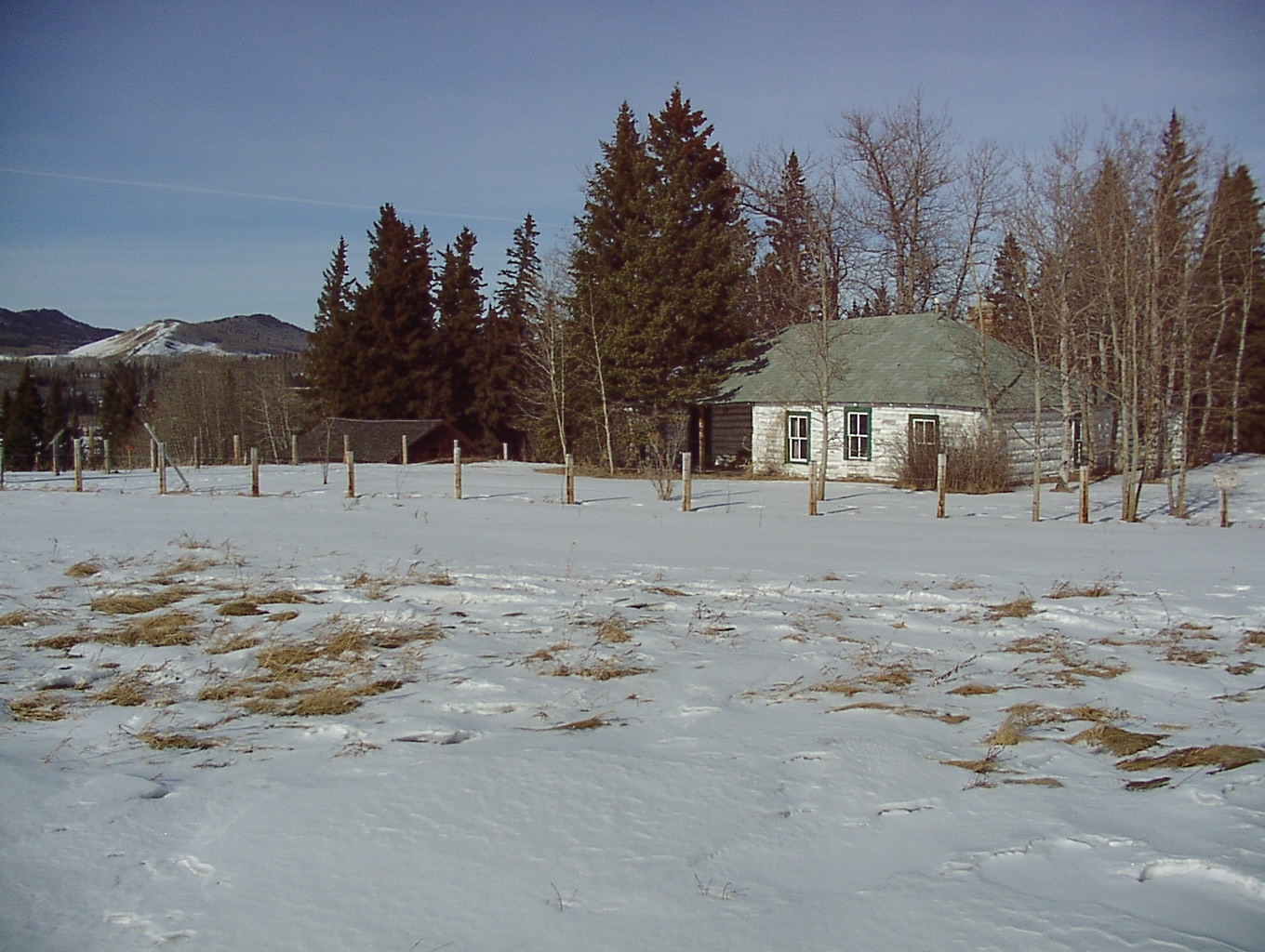
Among the many homesteaders to flock into the region during the turn of the 20th century were Nellie and Alexander Weir who, in July 1900, filed for SE18 TP18 R3 W5, on the east bank of the Highwood River, some 20 km northwest of High River.  This was on land previously occupied by the North-West Ranch Company.  The Weirs were from Ontario, and, like many of the new settlers, they combined dryland farming with cattle raising.  In May 1905, Alexander Weir received title to his land, and, in February 1906, the High River Times reported that he was erecting a new 26’ x 26’ log home on his ranch.

The Weirs never owned more than one single quarter-section of land, and, with grain prices declining during the early 1900’s, they probably found it difficult to make ends meet.  At the time, their property was surrounded by a large ranch owned by George Lane, which consisted of several sections.  At any rate, as soon as Weir gained title to his quarter, he mortgaged it to the Fairchild Company of Winnipeg.  Two years later, the Fairchild Company became owners of the land, while Weir apparently drifted off to some other form of employment.  Shortly thereafter, the western portion of the quarter-section was sold to an Italian immigrant named George Pocaterra, who turned it into a dude ranch called the Buffalo Head Ranch.  The eastern portion, which held Weir’s house, was acquired by an English immigrant named Owen Royal, who seems to have had business interests in Calgary.  It was Royal who upgraded the house, adding three bedrooms, a kitchen and a porch, while landscaping the yard and planting trees.  Royal named it Alequiers, a name derived from the spelling of Alex McQueen Weir.

In 1939, the Alequiers property was acquired by an artist named Ted Schintz.  Schintz had migrated to western Canada from Holland in the 1920’s, taking odd jobs and cultivating his skills as a painter.  In 1928, he stayed at the Buffalo Head Ranch and developed an affinity for the foothills environment.  In 1931, he married Jeanette Kay from England, and the couple stayed for a while at Algequiers before traveling to Europe.  While the couple took odd jobs, Ted enrolled in the Academy of Arts in Munich, studying under Angelo Yank.  Upon his graduation, the Schintzes returned to western Canada, and, soon, Ted began to sell his paintings at reasonably high prices, mostly to magazines like Country Guide and Cattleman, which were interested in images of the prairie West.  Jeanette was also able to sell some of her work.  Finally, in 1939, the couple had sufficient means to purchase Alequiers, where they lived until retiring to High River in the 1960’s.

The Alequiers Ranch House was designated a Provincial Historic Resource in 2005.  Its historical significance lies in its provision of structural evidence of the homesteading experience on the southern foothills of Alberta after the break-up of many of the large ranches that had dominated the area.  The expanded house of about 1920 is also important as the showpiece home of Owen Royal and, more importantly, the artist Ted Schintz, many of whose works have graced magazine covers with images of the southwestern plains of Canada, and several of which are stored in the Glenbow Museum.

Written by: David Leonard, Historian

Visit the Alberta Register of Historic Places to learn more about the heritage value of the Alequiers Ranch House. In order for a site to be designated a Provincial Historic Resource, it must possess province-wide significance. To properly assess the historic importance of a resource, a historian crafts a context document that situates a resource within its time and place and compares it to similar resources in other parts of the province. This allows staff to determine the importance of a resource to a particular theme, time, and place. Above, is some of the historical information used in the evaluation of the Alequiers Ranch House.

Updated Website, Funding Guidelines and Application Forms

As you may recall, changes to the funding policies of the Alberta Historical Resources Foundation’s Heritage Preservation Partnership Program will be adopted beginning the next application deadline, February 1, 2012.   These changes, along with updated and improved application forms for all grant categories, are now available. Click here.

Changes include:

  • grant ceiling of $100,000 for Provincial Historic Resources per application for conservation;
  • limiting applications to one application for conservation and one application for architectural/engineering studies/reports/plans per historic resource per calendar year;
  • stronger policies on retroactive funding for conservation grants;
  • second deadline for the Roger Soderstrom and Heritage Trades Scholarships of October 1st ;
  • significant changes on funding parameters for the Roger Soderstrom and Heritage Trades Scholarships.

If you need further information, please call 780-431-2305.

Written by: Carina Naranjilla, Grants Program Coordinator.

MHPP Funding Deadlines (2012)

The Municipal Heritage Partnership Program (MHPP) provides cost-shared funding opportunities to Alberta municipalities for the identification, evaluation and management of local historic places. Municipal Heritage Services staff are also available to provide guidance and training to Alberta municipalities to enable successful identification and conservation of local historic places.

Funding proposals from municipalities are accepted on an on-going basis. These proposals are then reviewed by the board of the Alberta Historical Resources Foundation.

2012 MHPP funding deadlines:

  • February 3, 2012
  • April 13, 2012
  • September 21, 2012
  • November 2, 2012 

If you would like to learn more about MHPP funding opportunities, or discuss project ideas please contact MHPP staff.

The Alberta Historical Resources Foundation also supports a range of community and individual heritage initiatives through the Heritage Preservation Partnership Program.

Written by: Brenda Manweiler, Municipal Heritage Services Officer

Brrrrr… Oh, wait! It isn’t that cold!

Sitting at my desk enjoying the sun streaming in through the window, I can’t help but wonder what Eda Owen would think about the unseasonably warm winter we are experiencing. Who is Eda Owen, you ask? Working out of the Owen Residence / Dominion Meteorological Station in Edmonton, Owen was a pioneering meteorologist serving from 1915 to 1943. She was one of only a small number of female meteorologists working at weather stations throughout the world.

The Owen Residence / Dominion Meteorological Station was designated a Provincial Historic Resource in 1994, in part, because of its association with Eda Owen. On the Alberta Register of Historic Places, the Statement of Significance says:

In 1908, Eda and Herbert William Owen emigrated from London to Edmonton. After a number of temporary employments in his new home, Herbert accepted a position as an assistant in the Dominion government’s Meteorological Office. In 1913, the weather office was moved into the Owen residence in the Highlands neighbourhood. Wartime exigencies prompted both Owen and his supervisor, Captain S. M. Holmden, to enlist in 1915 for active service overseas. In their absence, Eda Owen, who had learned the arts of reading navigational charts and employing scientific instruments from her husband, took over meteorological duties at the Highlands station. Herbert never returned home, dying in a prisoner of war camp in Europe. Though overcome by grief, Eda continued her work at the station. In 1921, following a brief spell as an assistant meteorologist, she was formally named Provincial Agent and Weather Observer for Alberta by the federal Department of Marine and Fisheries. Her work was incredibly demanding. The Highlands station was arguably the most significant meteorological post outside of Toronto. Eda was required to take hourly readings from 36 different instruments throughout the day and compile reports from over 140 stations in the region. The information she amassed had wide currency, being circulated to forest rangers, aviators, agriculturalists, as well as radio and newspaper personnel. For most of her service from 1915 until she resigned her post in 1943, Eda was the only woman employed as an observer at a major Canadian meteorological station. Indeed, she was one of only a handful of woman meteorologists at major stations in the world at the time. As a result of her trailblazing work, she garnered international acclaim. MacLeans, the Toronto Star Weekly, and the Christian Science Monitor all featured Eda in their pages, hailing the “Weather Woman of the West” as a pioneer in a scientific field largely dominated by men.

What would Owen think of our warm winter? We will never know, but I would like to think that between readings from the 36 meteorological instruments she would have found time to enjoy the warm spring-like conditions.

To read the complete Statement of Significance, please click here.

Written by: Brenda Manweiler, Municipal Heritage Services Officer