The ABC’s of Heritage Conservation (Part 2 of 3)


If Part 1 left you confused but less bemused hopefully the terms below will continue to explain the difference between some of our key terms. 

The Standards and Guidelines for the Conservation of Historic Places in Canada provides direction on how to conserve historic places. But what exactly is conservation and how does it differ from all the other “–tion” words related to historic places?  

  • Intervention:  Any action, other than demolition or destruction, that results in a physical change to an element of a historic place. 
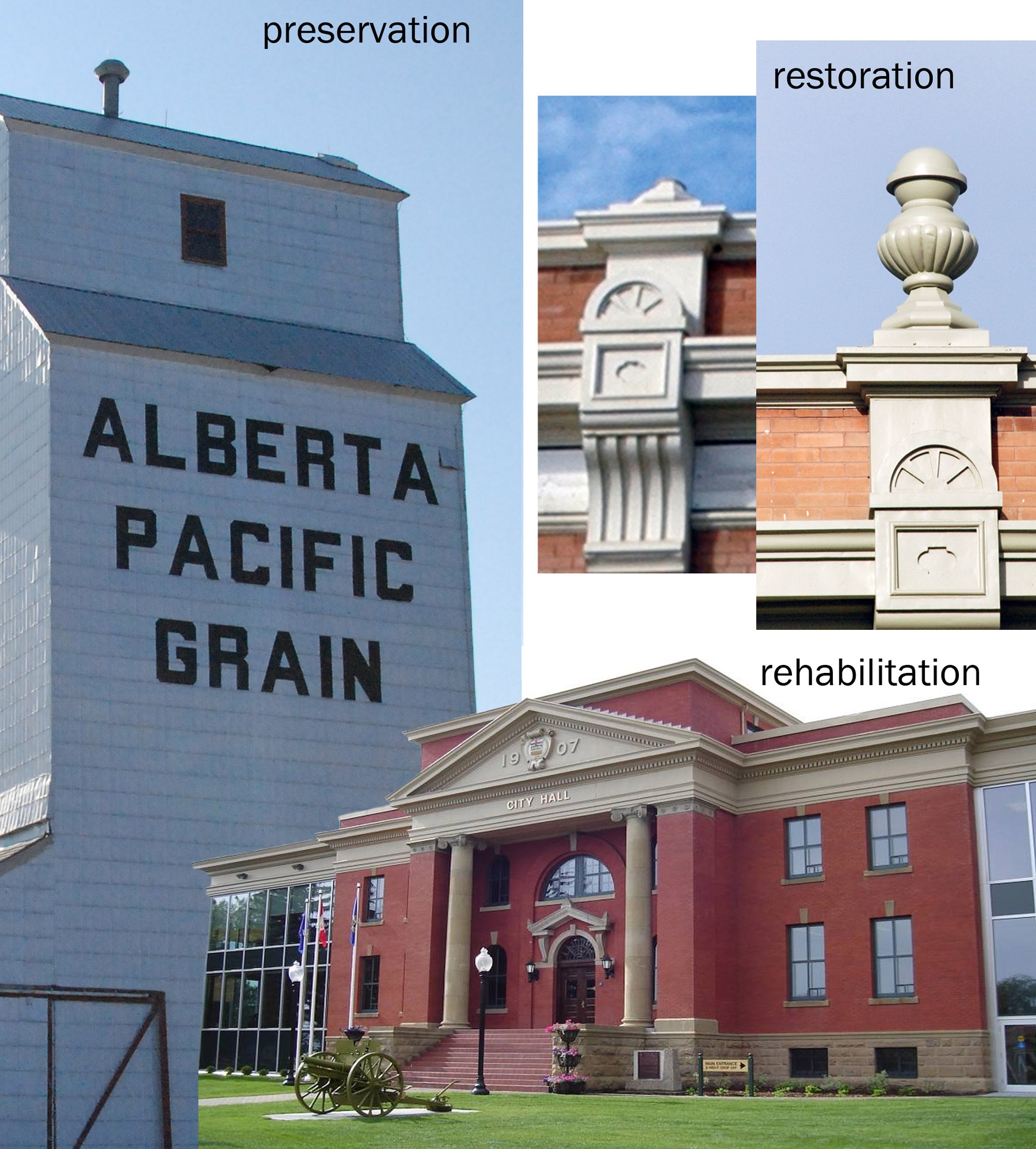
  • Conservation:  All actions or processes that are aimed at safeguarding the character-defining elements of a historic place so as to retain its heritage value and extend its physical life. This may involve “Preservation,” “Rehabilitation,” “Restoration,” or a combination of these actions or processes. 
  • Preservation:  The action or process of protecting, maintaining, and/or stabilizing the existing materials, form, and integrity of a historic place or of an individual component, while protecting its heritage value. 
  • Rehabilitation:  The action or process of making possible a continuing or compatible contemporary use of a historic place or an individual component, while protecting its heritage value. 
  • Restoration:  The action or process of accurately revealing, recovering or representing the state of a historic place or of an individual component, as it appeared at a particular period in its history, while protecting its heritage value. 
To learn more about the above terms or to read about additional conservation terms, please review the Standards and Guidelines for the Conservation of Historic Places in Canada. The Glossary section of the Municipal Heritage Partnership Program website is also a great resource. 

Written by: Brenda Manweiler, Municipal Heritage Services Officer (with definitions from the Standards and Guidelines).

The ABC’s of Heritage Conservation (Part 1 of 3)


The words of our trade can confuse and bemuse – below is a brief glossary of key terms designed to clarify and inform. 

Statements of Significance are used to understand how historic places should be conserved after a designating authority (i.e., a municipality – City, Town, Village or Municipal District, or the Government of Alberta) designates a place as a Municipal Historic Resource or a Provincial Historic Resource. 

  • Historic place:  A structure, building, group of buildings, district, landscape, archaeological site or other place that has been formally recognized for its heritage value. 
  • Statement of Significance (SoS):  A statement that briefly describes the historic place, identifies the heritage value or values associated with the place and lists the corresponding character-defining elements that must be conserved. 
  • Heritage value:  The aesthetic, historic, scientific, cultural, social or spiritual importance or significance for past, present or future generations. The heritage value of an historic place is embodied in its character-defining elements. 
  • Character-defining elements:  The materials, forms, location, spatial configurations and cultural associations or meanings that contribute to the heritage value of an historic place, which must be retained in order to preserve its heritage value. 

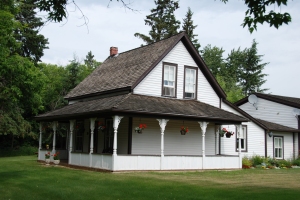
Village Treasures, in the Village of Mannville, is an example of a historic place. In January 2010 the Village designated it a Municipal Historic Resource. To read the Statement of Significance click here.

To learn more about the above terms or to read about additional conservation terms, please review the Standards and Guidelines for the Conservation of Historic Places in Canada. The Glossary section of the Municipal Heritage Partnership Program website is also a great resource. 

Written by: Brenda Manweiler, Municipal Heritage Services Officer (with definitions from the Standards and Guidelines).



Diverse Sites Tell Distinct Stories of Alberta’s History


Three sites from Alberta’s past – one that precedes the railway, one that was made possible by the railway and one that made the railway run – were recently designated as Provincial Historic Resources for their historical and architectural significance.

The McDonald Stopping House, a pre-railway lodging place in Smoky Lake County.

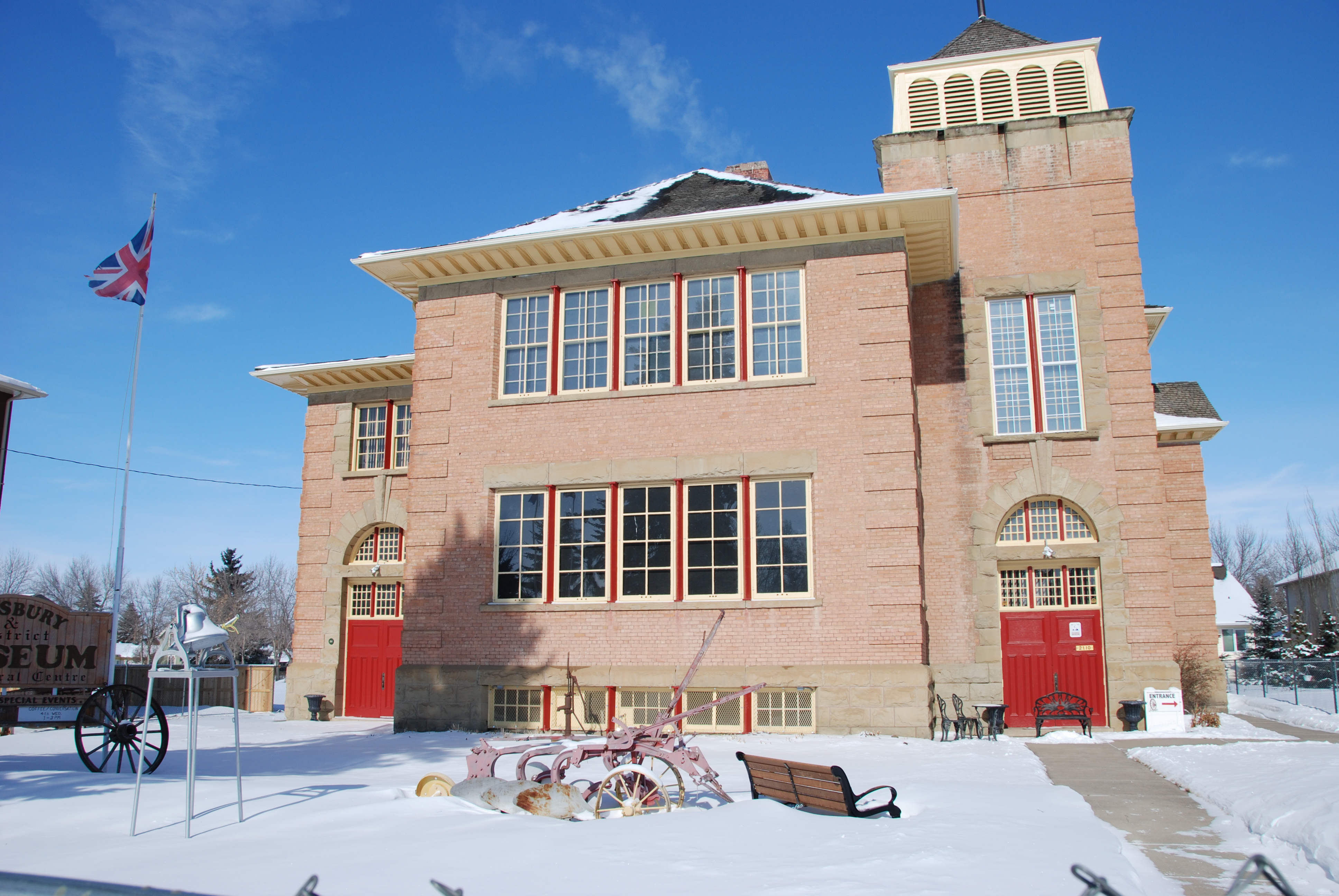
The Red Brick School, an imposing structure in Didsbury, built to accommodate the railway-fuelled population boom before World War One.

The West Canadian Collieries Mine Site in the Municipality of Crowsnest Pass, which sold virtually all of its 13 million tonnes of coal to the Canadian Pacific Railway.


Click on the above links to read the sites’ Statements of Significance on the Alberta Register of Historic Places. Alberta currently has over 330 Provincial Historic Resources.  These sites embody the richness and variety of our province’s history and include medicine wheels, tipi rings, fur trading and mounted police posts, coal mines, farmsteads, ranches, railway stations, grain elevators, churches, schools, government offices, commercial blocks and private residences.   

For more information on Alberta’s Provincial Historic Resource Designation Program, click here.

Written by: Matthew Wangler, Manager of Historic Places Research and Designation Program

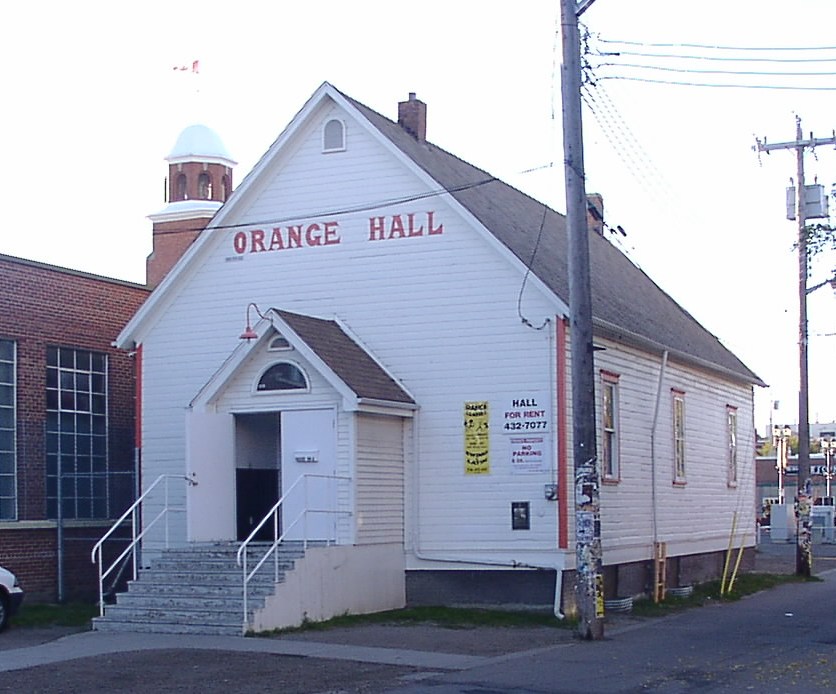
Orange Hall, Edmonton


The Orange Hall in Edmonton was designated a Provincial Historic Resource in 2007. In order for a site to be designated a Provincial Historic Resource, it must possess province-wide significance for either its history or architecture. To properly assess the historic importance of a resource, a historian crafts a context document that situates a resource within its time and place and compares it to similar resources in other parts of the province. This allows staff to determine the importance of a resource to a particular theme, time, and place. Below is some of the historical information used in the evaluation of the Orange Hall.

The Orange Order was founded in Ireland in 1795 as a fraternal social organization devoted to upholding the cause of the (Anglican) Church of Ireland and exposing and denouncing the purported evils of Catholicism.  It was named for William of Orange, who, with Queen Mary, was King of England from 1688 to 1696.  The Order began as a grass-roots organization, but made inroads into upper-class British Society in the 1820’s, when the King’s brother, the Duke of Cumberland, became a member and was elected Grand Master.  On the whole, with its rituals and penchant for secrecy, it appears to have served as an Anglican counterpart to the Presbyterian oriented Masons.  In time, however, it attracted people from all areas of British society who had strong anti-Catholic feelings.  Read more

Welcome to the Family!

R.T. Barker Building, Fort Macleod
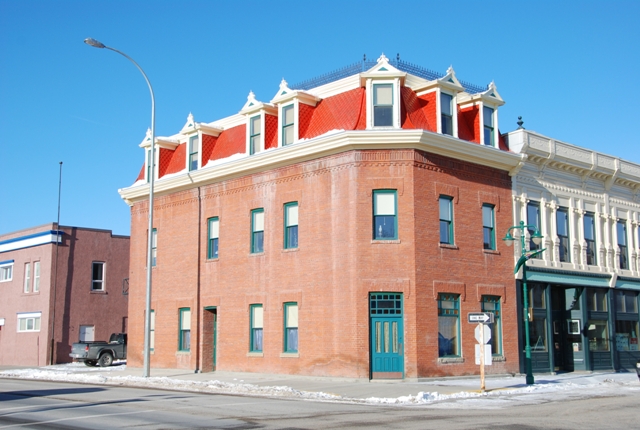
Union Bank Building, Fort Macleod
 
Alberta’s Historic Places Research and Designation Program is pleased to announce two new members of the Provincial Historic Resource family – the Union Bank Building and the R.T. Barker Building, both in Fort Macleod. These two buildings are vital contributors to the heritage character of the Fort Macleod Provincial Historic Area. This area includes a wealth of pre-World War One brick and sandstone buildings that embody the architecture of early twentieth century Alberta towns. This distinctive identity has established Fort Macleod as a tourist attraction and a shooting locale for major motion pictures. Learn more about the Union Bank Building and the R.T. Barker Building on the Alberta Register of Historic Places. For more information on Fort Macleod, click here

Written by: Matthew Wangler, Manager of Alberta’s Historic Places Research and Designation Program

Fort Macleod Provincial Historic Area

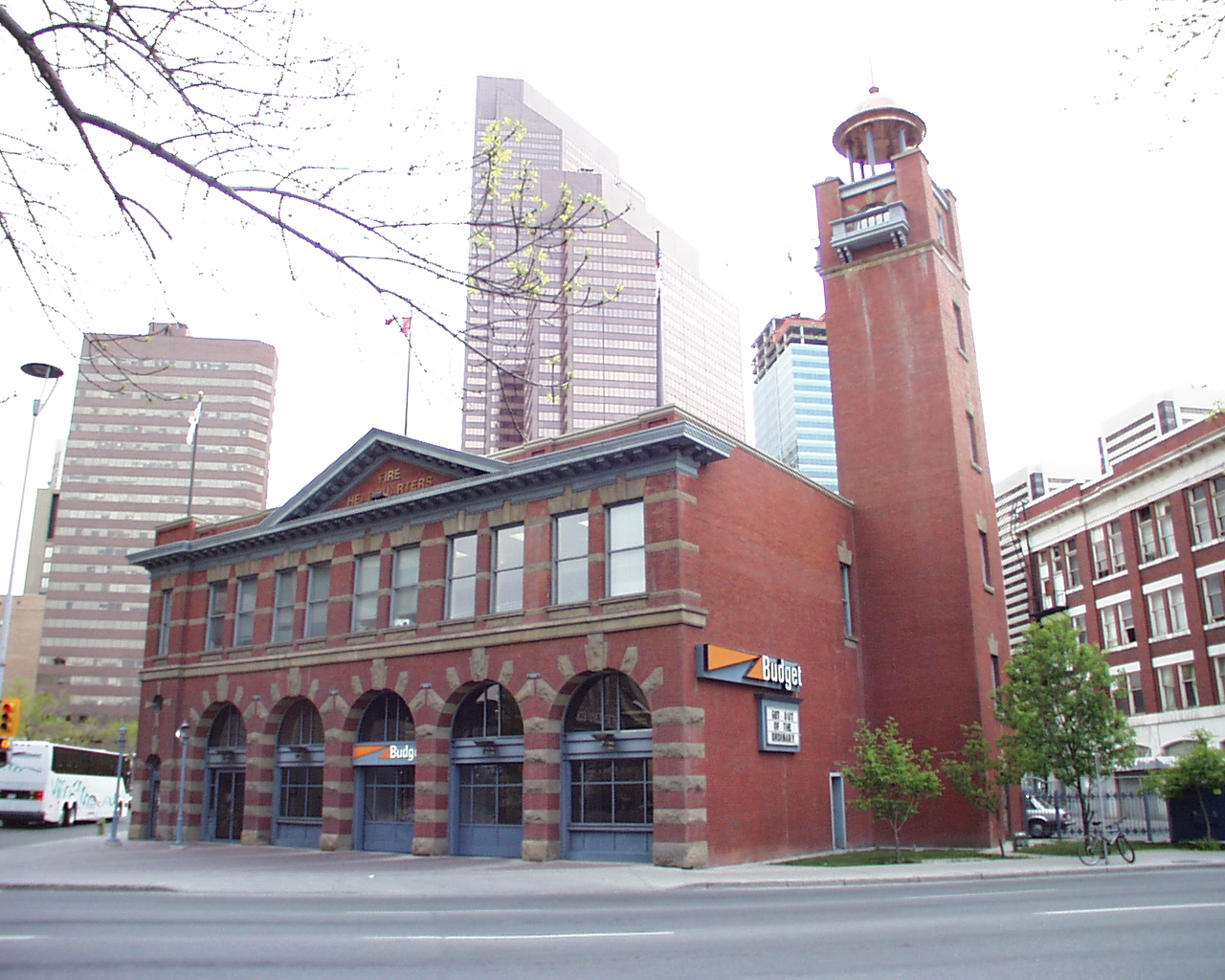
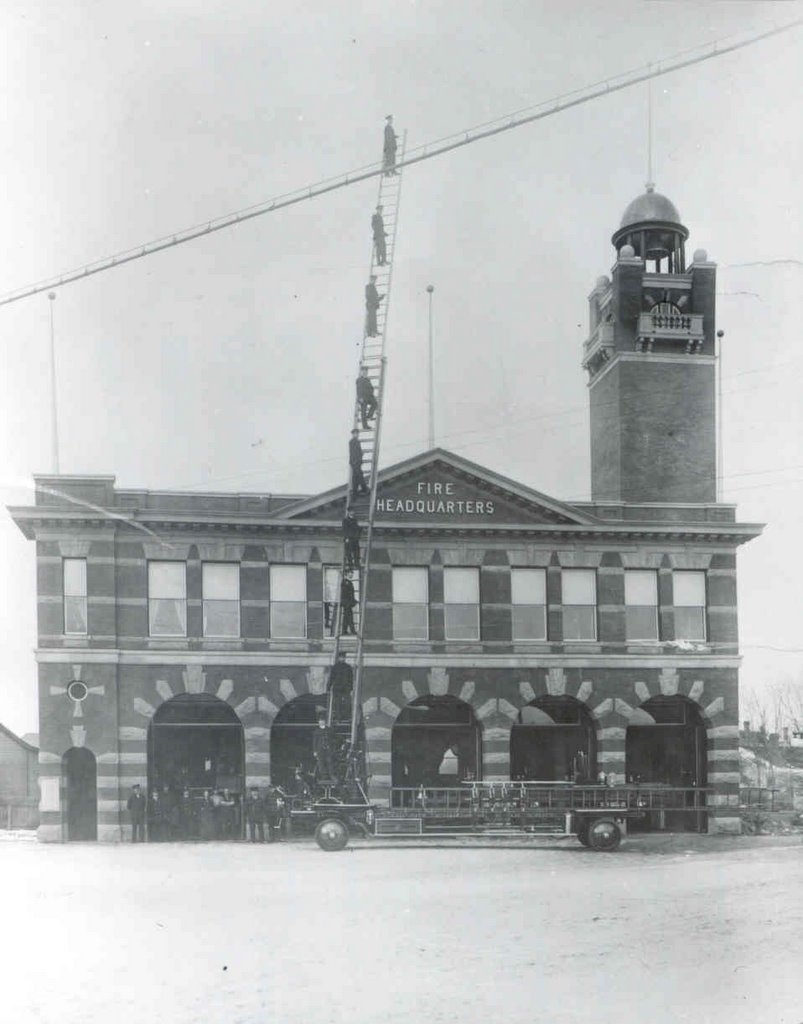
Calgary Fire Hall No. 1


CalgaryFire Hall No. 1 was designated a Provincial Historic Resource in 2009. In order for a site to be designated a Provincial Historic Resource, it must possess province-wide significance for either its history or architecture. To properly assess the historic importance of a resource, a historian crafts a context document that situates a resource within its time and place and compares it to similar resources in other parts of the province. This allows staff to determine the importance of a resource to a particular theme, time, and place. Below is some of the historical information used in the evaluation of the Calgary Fire Hall No. 1.

The first attempt to provide an orderly method of firefighting in the frontier community of Calgary came with its incorporation in 1884 when a volunteer fire committee was established.  One of its first acts was to acquire a horse drawn wagon for a volunteer bucket brigade.  In 1886, a major fire devastated the downtown and, as a result, most new commercial buildings were made of brick or stone, but these were still vulnerable to internal fires.  A serviceable fire hall was obviously required. 

In 1887, a wood frame fire hall was erected on 122 – 7th Avenue East.  This served the town well at first, but Calgary continued to grow rapidly, and the need for another facility was soon apparent.  It was not until 1905, however, that another fire hall was erected, this being another wood frame structure on 1801 Macleod Trail to serve the south side of the city.  Even this was hardly adequate, for Calgary continued to grow at a frantic pace, its population rising to over 43,000 in 1911.  

In 1911, both Calgary fire halls were replaced with modern brick facilities.  Other fire halls were also soon built in other parts of the city.  By this time, a Fire Department was a part of the civic administration, and paid fire fighters were stationed right at the halls.  Reports on fires were sent in through the newly installed telephone system, and responses were handled by motorized fire trucks with pressurized pumps. 

Read more