

The year 2012 marks the 150thanniversary of Alberta’s Victoria Settlement. In 1862 Methodist minister George McDougall established a mission at the “Hairy Bag” a buffalo feeding ground north of the North Saskatchewan River which was a favourite meeting place and camping site for Aboriginal peoples for thousands of years. The mission was named Victoria in honour of the reigning British monarch. The Hudson’s Bay Company soon noted the activity of free traders in the vicinity and the large numbers of Aboriginals gathering at the mission and established Fort Victoria in 1864, a post which operated for more than three decades.
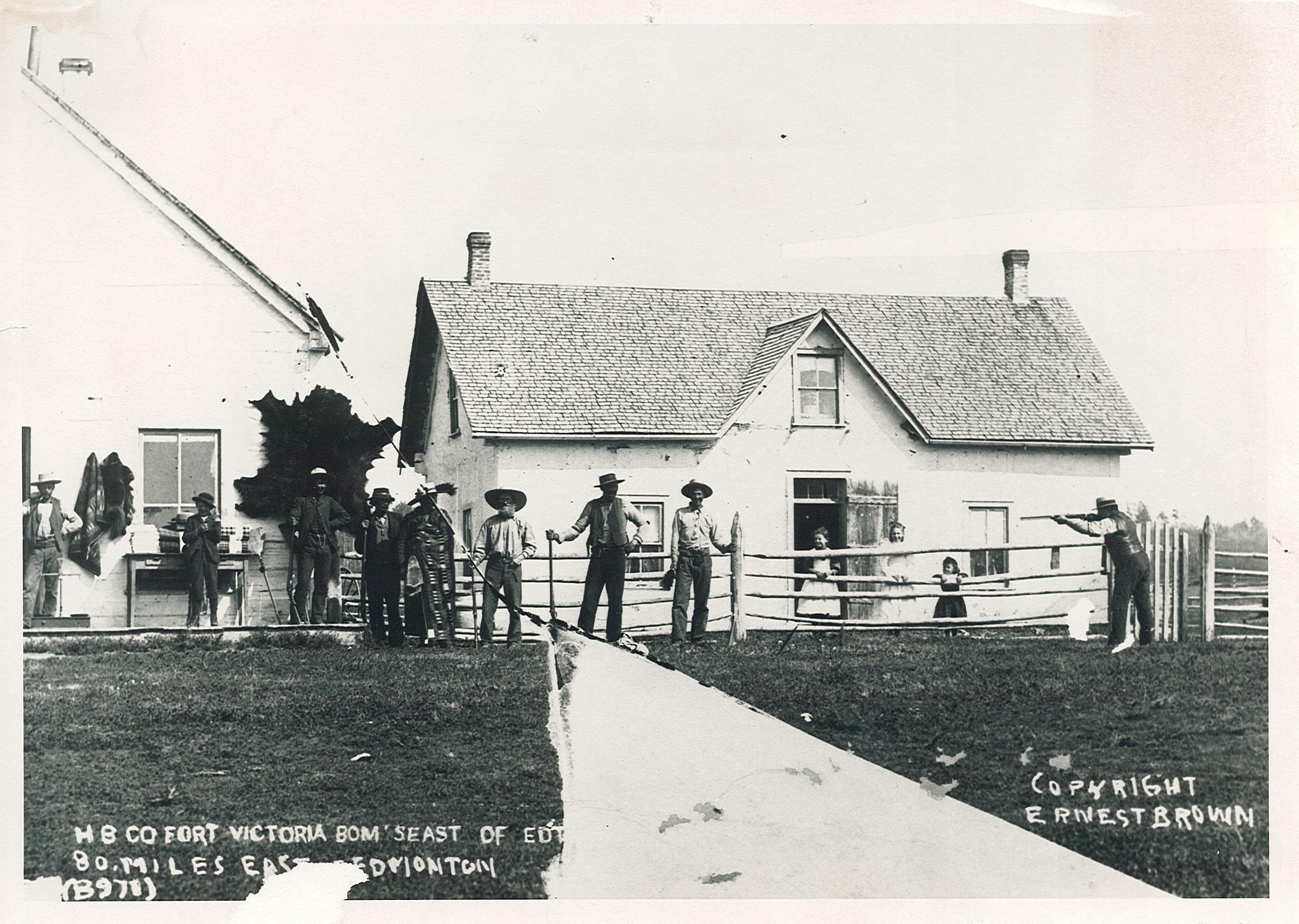
The mission and trading post attracted several hundred English-speaking Métis (historically known as Mixed-bloods) from the Red River Settlement, in what is now Manitoba, who established a permanent river lot settlement at Victoria. The river lot system was based upon the seigneurial system of New France. It consisted of long narrow river-front lots that provided all settlers river access for transportation and agricultural needs. Combining agriculture with the traditional buffalo hunt, a prosperous community of missionaries, fur traders, settlers and Cree hunters developed. In 1887, when the community established its first post office, it was named Pakan in honour of local Cree chief, James Seenum or “Pakannuk”, in tribute to his leadership during the 1885 Rebellion. During the 1890s, settlement in the district expanded as hundreds of Ukrainian and other European settlers took up homesteads. The community thrived as a commercial and service centre until 1918 when the Canadian Northern Railway line was established north of the settlement at Smoky Lake.
Fort Victoria was designated a Provincial Historic Resource in 1976, ensuring that Victoria Settlement’s historical ties to Alberta’s First Nations, Métis and Ukrainian settlers and it’s associations with the fur trade, mission and homestead history are conserved for the benefit of all Albertans. This site is interpreted as the Victoria Settlement Provincial Historic Site. It includes the Hudson’s Bay Company Clerk’s Quarters built in 1865, Alberta’s oldest structure remaining on its original location and the 1906 Pakan Methodist Church.
In 2001, the Historic Sites and Monuments Board of Canada commemorated the area as the Victoria Settlement National Historic Site of Canada. Its highly visible and physical attributes represent an exceptional illustration in a concentrated area of major themes in Prairie settlement including the development of the fur trade, the establishment of the Métis river lot system, the arrival of missions, Prairie agricultural development and the establishment of eastern European immigrants at the beginning of the 20th century. The national designation along the old Victoria Trail includes the Lobstick Settlement to the west, the Victoria (Pakan) Settlement to the east, and a Ukrainian settlement area to the north.
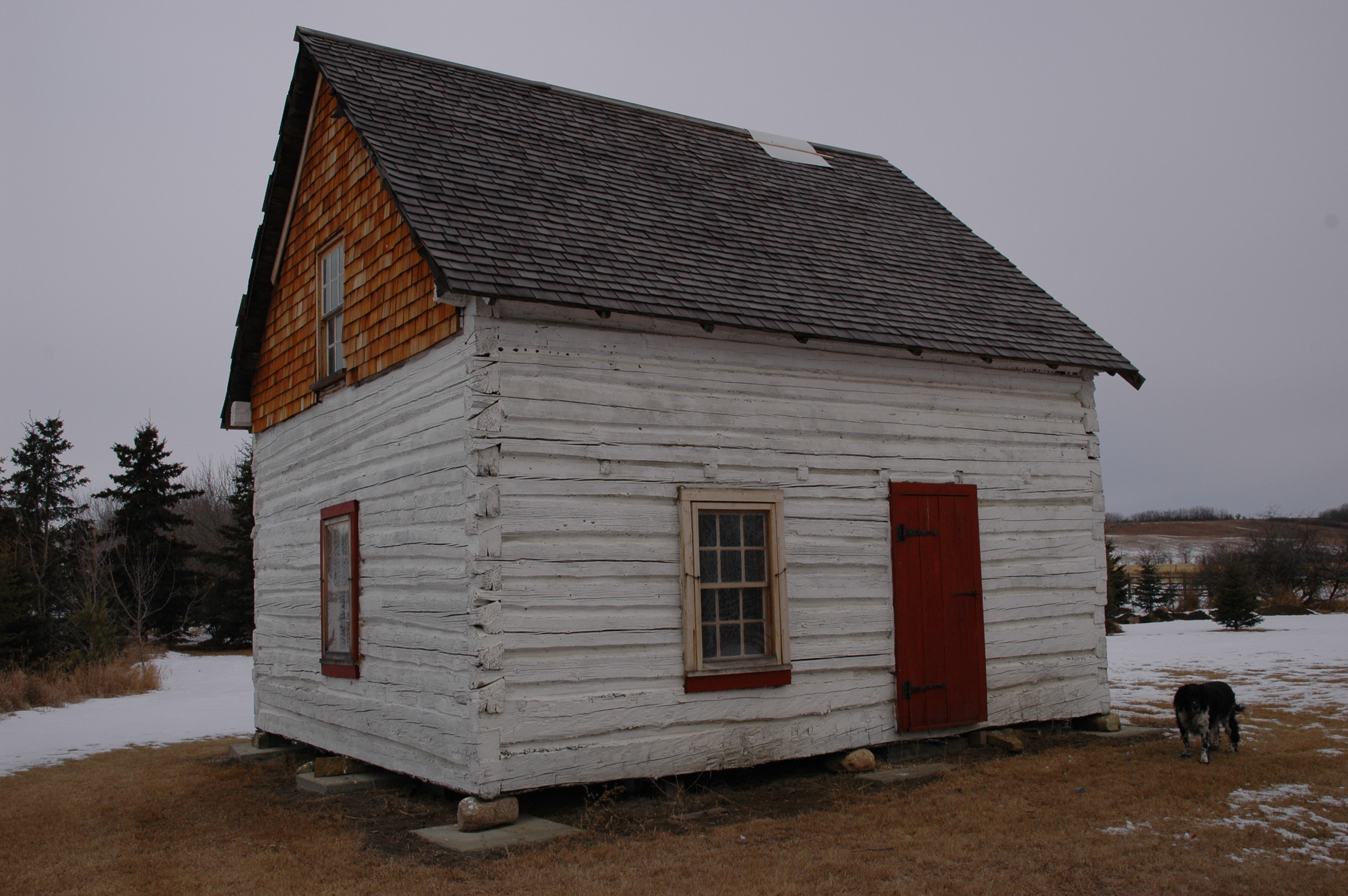
Historical points of interest in the National Historic Site include the site of the McDougall Mission, the McGillivray House originally located on River Lot 7 but currently found on River Lot 3, which is also designated as a Provincial Historic Resource and the Anderson House, a Municipal Historic Resource on River Lot 14 of the Lobstick Settlement. Other resources from the Settlement have been moved: the Erasmus House is currently displayed at Fort Edmonton Park, while the Sinclair House which for many years functioned as the Pakan Museum on the Mitchell property at River Lot 7 is currently displayed at Metis Crossing along with the Cromarty House from River Lot 12.
Written by: Peter Melnycky, Historian


 Not quite. For a place to be listed on the
 RETROactive