Tour of the Peace (Part II)

I previously wrote about the Alberta Historical Resources Foundation board receiving a tour of historic places on the Peace River, during their May board meeting (see Part I). This blog post continues that tour with visits to the St. Augustine Roman Catholic Mission and the Twelve Foot Davis grave site.
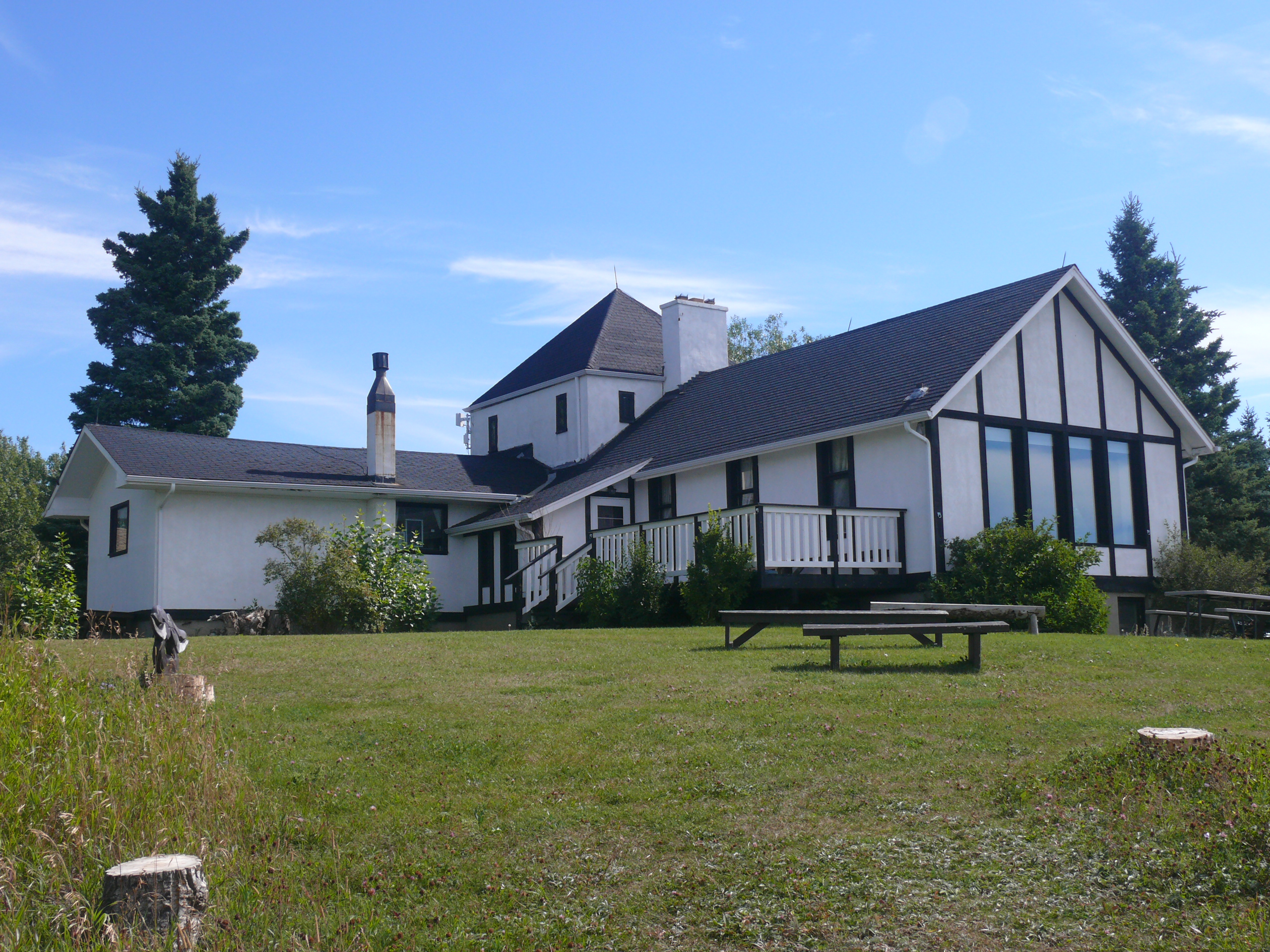
The St. Augustine Roman Catholic Mission is located on the grounds of the Peace River Correctional Centre, south-west of the Town of Peace River. The church was once part of a mission established by the Oblates of Mary Immaculate, a Catholic religious institute of missionary priests. The oblates sent several waves of missionaries to western Canada during the second half of the 19th century. This church was built in 1894 by the oblate missionaries and brothers who ministered to First Nations and settlers in the area. It was part of the settlement that included farm buildings, a school and a small clinic. The vibrant religious community that lived here came to include members of the Sisters of Providence. In 1978 the site was designated a Provincial Historic Resource. Click here to read the Statement of Significance.
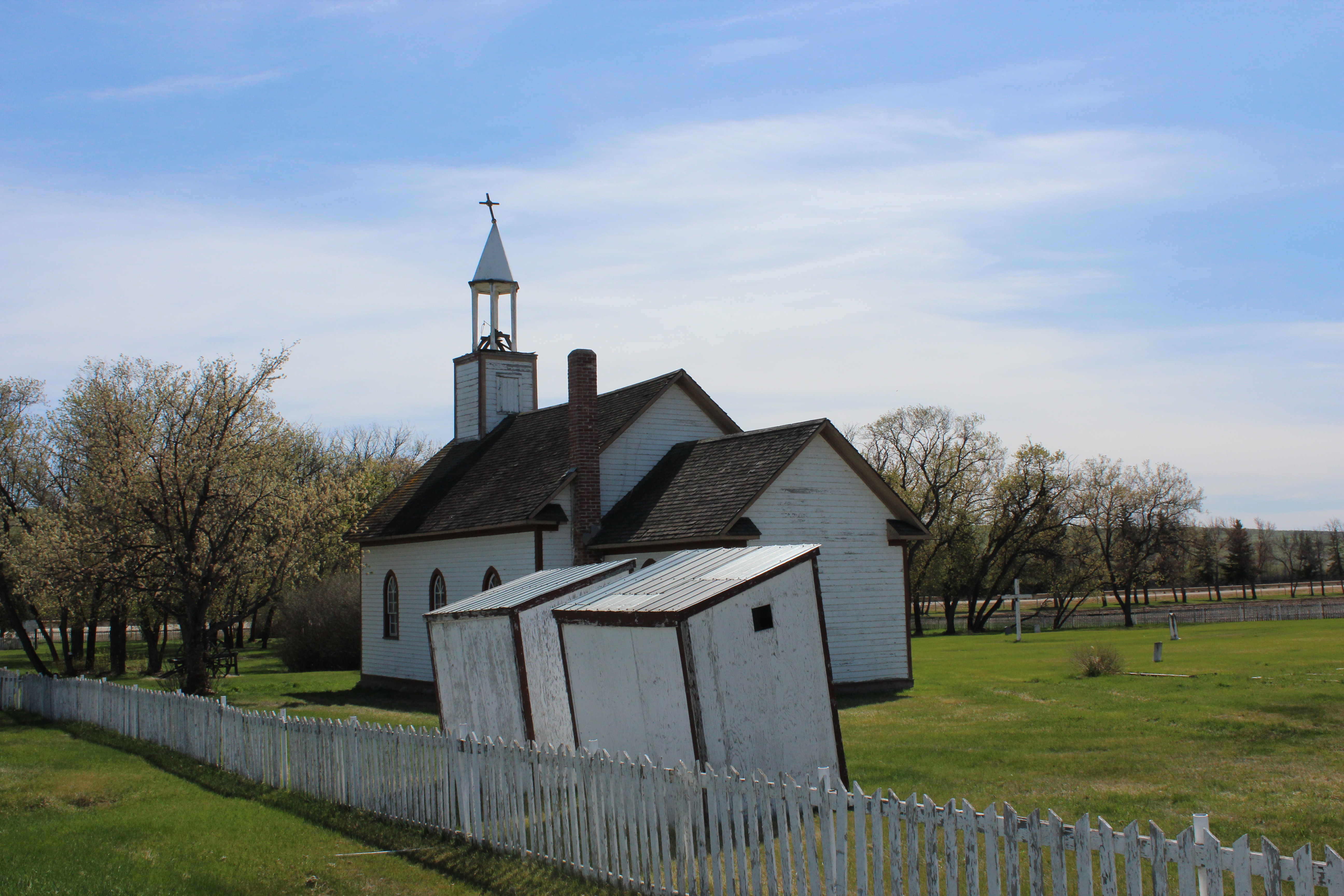
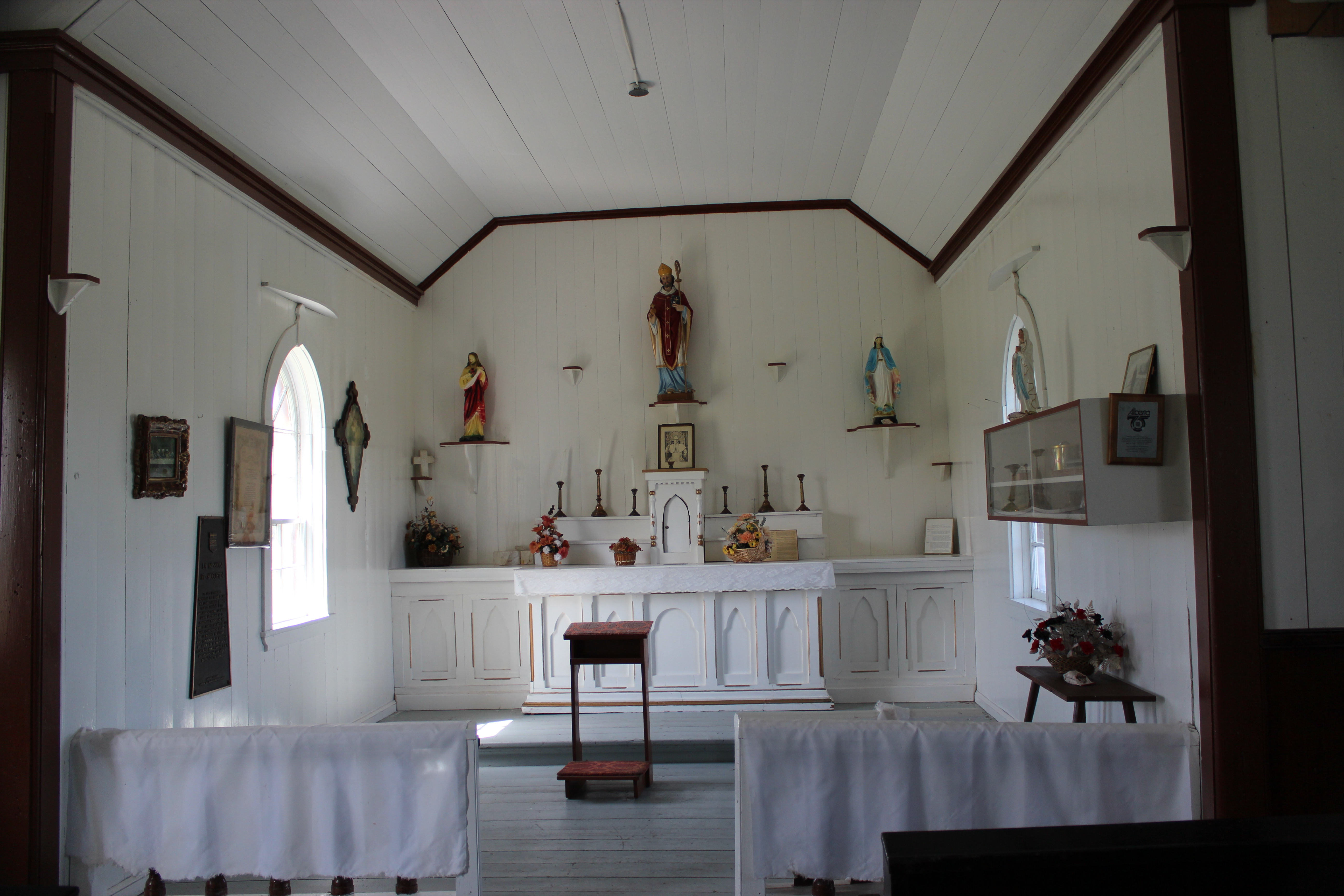
I first saw the church as we came round a small hill. Its size is striking. Even the most modest modern parish church is much, much larger than this tiny church. This church nevertheless housed a large community of worshippers. Entering the church, the other thing that strikes you is how carefully the building has been designed and decorated. You enter under a choir loft and the elaborate, pre-second Vatican council alter is visible against the opposite wall. Small statues of various saints are set upon wall mounted platforms surrounding the altar. Pointed-arch windows line the long-walls. They are simple but nevertheless designed with great care. The oblates efforts were even more impressive when you consider that these buildings were made of wood they hewed themselves.

The church was part of a settlement that included farm buildings, a convent and a school. The missionaries first served the surrounding aboriginal community and starting around 1907 the settlers. The sisters and the oblates ministered to the inhabitants and setters in the area, providing a church, school and makeshift hospital. The SS St. Charles, the fist steamboat on the Peace River, was built here in 1903. As the area was opened to settlement, the missionaries offered assistance to the newcomers who often arrived with very little.
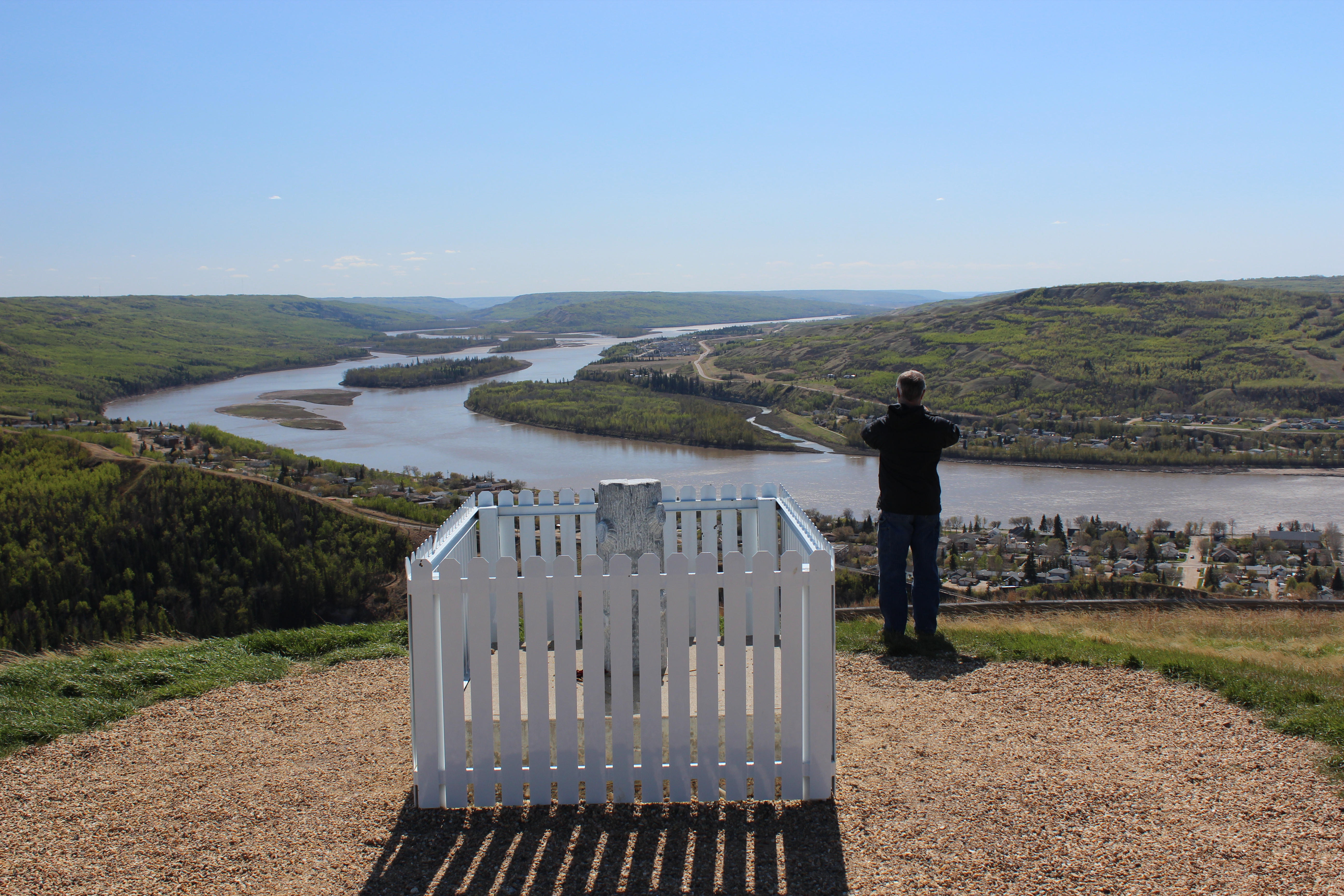
Later, our tour concluded by visiting the Twelve Foot Davis grave site. Henry Fuller Davis was an American-born prospector who came to Canada to prospect during the Cariboo Gold Rush in the early 1860s. Davis earned his nickname (and a small fortune) by filing a claim on a 12 foot wide piece of land between two existing claims in Barkerville, BC. He subsequently began trading along Peace River in competition to the Hudson’s Bay Company.

Davis requested of his friend, Jim Cornwall, that he be interred on a hill overlooking the confluence of the Peace and Smoky rivers. The spot is just adjacent to Greene Valley Provincial Park and offers a magnificent view of the two rivers and the town itself. The Town of Peace River, Northern Sunrise County and Alberta Parks jointly oversaw the recent landscaping of the site and installed interpretive markers (including some interesting audio recordings).

After taking in the breathtaking views, the board went to a reception hosted by the Peace River Museum, Archives and Mackenzie Centre. They met members of the Town of Peace River council and many local history enthusiasts.

The board had a great discussion the next day and made several funding recommendations (which will be announced as soon as they are finalised. We had a great day and I know the board appreciates learning about how historic sites are conserved and appreciated.

Read Tour of the Peace (Part I), which featured the Board’s visit to the Northern Alberta Railway Station and the Shaftesbury Ferry.

Written by: Michael Thome, Municipal Heritage Services Officer
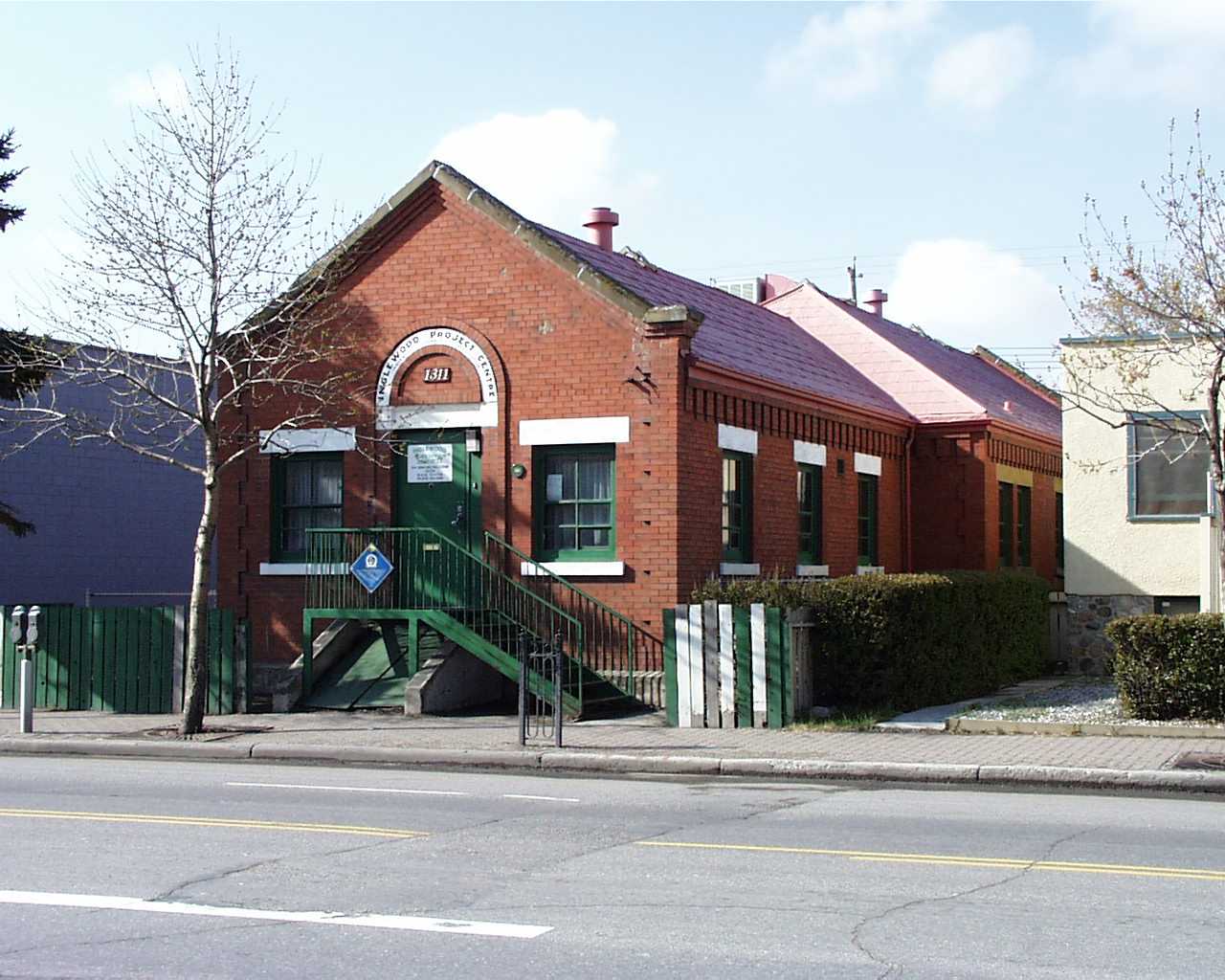
Inglewood Telephone Exchange, Calgary

When it was announced, in 1881, that the Canadian Pacific Railway would be passing by the site of Fort Calgary, interest in land around the Fort, which was east of the Elbow River, began to grow. By the time the railway was approaching, a community had sprung up outside the Fort. As land prices were consequently high, the CPR decided to skirt the existing community and acquire cheaper land to the west of the Elbow on which to erect its station. An exodus of people from east of the Elbow soon followed.  A few earlier residents stayed however, including Major James Walker of the North-West Mounted Police, Major John Stewart, also of the NWMP, and William Pearce of the federal Department of the Interior. Walker’s home, called Inglewood, would later give its name to this community, and it was from his house that the first crude telephone system was installed in Calgary, when, in 1885, Walker ran a line from it to his lumber mill, two miles away.

Walker’s telephone system eventually had several other subscribers, but it was scrapped shortly after 1887, when Calgary Town Council invited the Bell Telephone Company to erect a system in the rapidly growing town. By the turn of the 20th century, Bell had a complete network throughout the City, operating from a central exchange. The City however was not pleased by the monopoly enjoyed by Bell, a feeling reflected by the new provincial government which came into being in 1905. By this time, Bell had set up systems in both Calgary and Edmonton, and in most towns in Alberta, but it would not extend costly services to most rural areas. As a result, the government bought out Bell’s interests in the province and set up a Crown corporation called Alberta Government Telephones.  Soon, telephone services were moving to the rural areas, while those in the larger centers were improved.

In Calgary, which reached a population of 29,265 by 1909, the manual exchange system was proving woefully inadequate, and so AGT decided to install an automated one. This was a red brick structure at 1311-9th Avenue East, which was designed by Alberta’s Provincial Architect, A. M. Jeffers who designed most of the first major government buildings in the province. The new Calgary telephone building, which was opened in 1909, served as a sub-station to the main exchange on 7th Avenue.  It was equipped by the Automatic Electric Company to handle 300 telephone lines, but, as this soon proved inadequate, the building was enlarged the following year to enable it to handle 1,000 lines.

Before long, other exchanges became operational as, by 1921, most homes and businesses in Calgary were equipped with telephones. What became known as the East End Telephone Exchange continued to serve the southeast end of the City until 1957, when it was closed down in favor of newer and more modern facilities. The building was then leased to various other interests and served different purposes, including a nursery and a shoe repair store.

In 1972, the building was sold by AGT to the Inglewood Community Association and began to serve as the Silverthreads Community Center. In 1981, it was declared a Registered Historic Resource by the Alberta Minister of Culture, and, in April 2009, it was designated a Provincial Historic Resource.  Its historical significance lies both in its representation of the introduction of an automated telephone system to Calgary in 1909, and the establishment of Alberta Government Telephones, the province’s first Crown Corporation, the year before.  It is important too as a structural representative of the rapid urban development of Calgary prior to World War I, and as a landmark in the Inglewood district.

Written by: David Leonard, Historian

Visit the Alberta Register of Historic Places to learn more about the heritage value of the Inglewood Telephone Exchange. In order for a site to be designated a Provincial Historic Resource, it must possess province-wide significance. To properly assess the historic importance of a resource, a historian crafts a context document that situates a resource within its time and place and compares it to similar resources in other parts of the province. This allows staff to determine the importance of a resource to a particular theme, time, and place. Above, is some of the historical information used in the evaluation of the Inglewood Telephone Exchange.

Tour of Peace River (Part I)

The Alberta Historical Resources Foundation held a board meeting in Peace River on May 11 and 12. The staff of the Peace River Museum, Archives and Mackenzie Centre organized a tour of the area, allowing the board members to experience first-hand a few of the community’s historic places.

We began at the Northern Alberta Railway Station in Peace River. The wooden railway station still sits on its original sitting, adjacent to the railway tracks. The station was constructed in 1916 just as the railway connecting Peace River to southern Alberta was finished. The Northern Alberta Railway Company’s new line linked Peace River to the Canadian railway system and its opening increased the flow of people and goods coming into the region.

The station is divided into rooms for passengers, freight and staff. Historical artifacts are displayed throughout the building, and many relate to the operation of the railway station. The station was a communications hub; mail and freight first moved through here and later it housed the telegraph and telephone switching equipment.

The building has been beautifully restored and is used by Peace River’s Chamber of Commerce as a visitor centre for the community. It’s fitting that the building has been repurposed as a visitor information centre. The building will continue to welcome visitors to Peace River. It was designated as a Provincial Historic Resource in 1988. You can learn more about the station by checking out its entry on the Alberta Register of Historic Places.

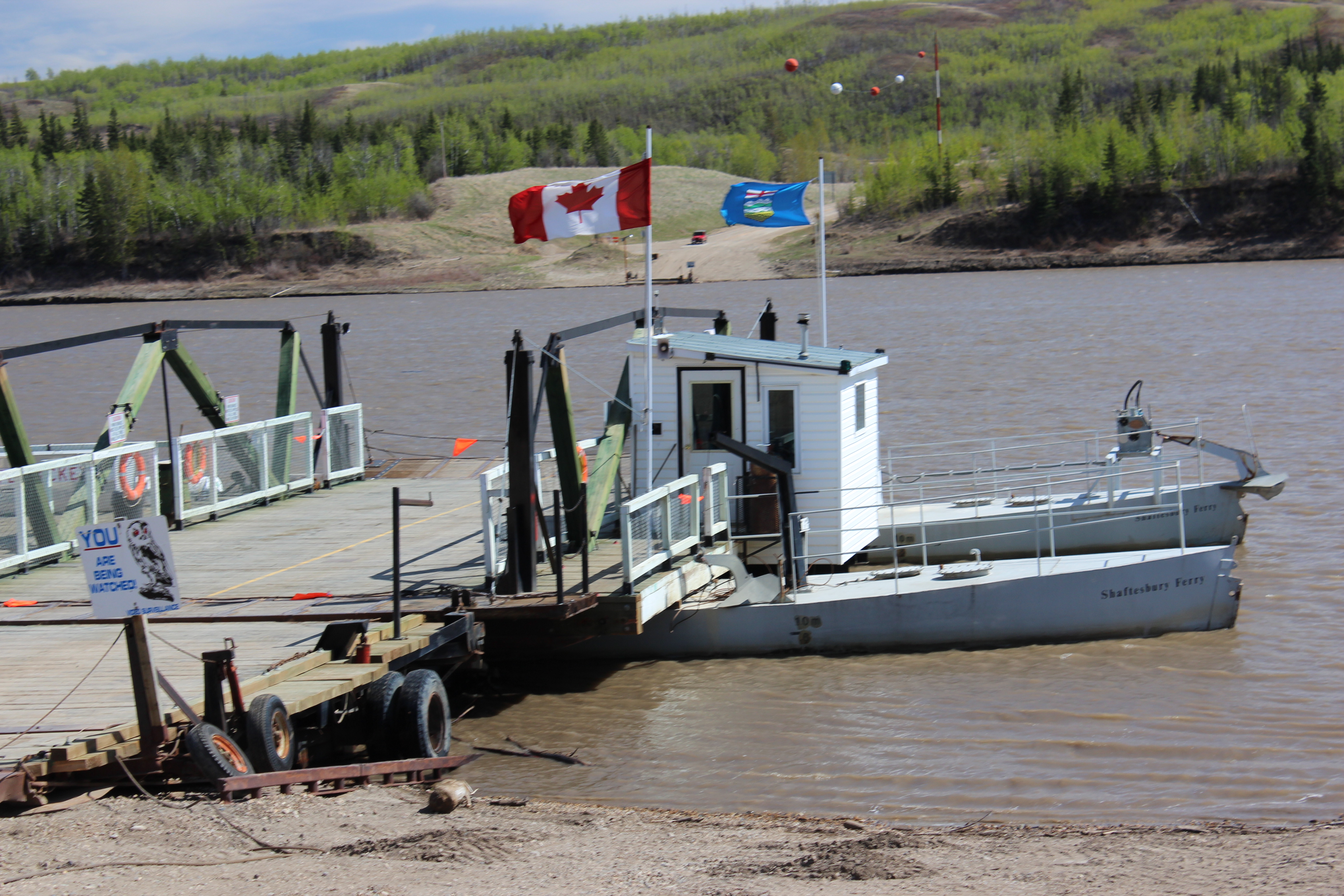
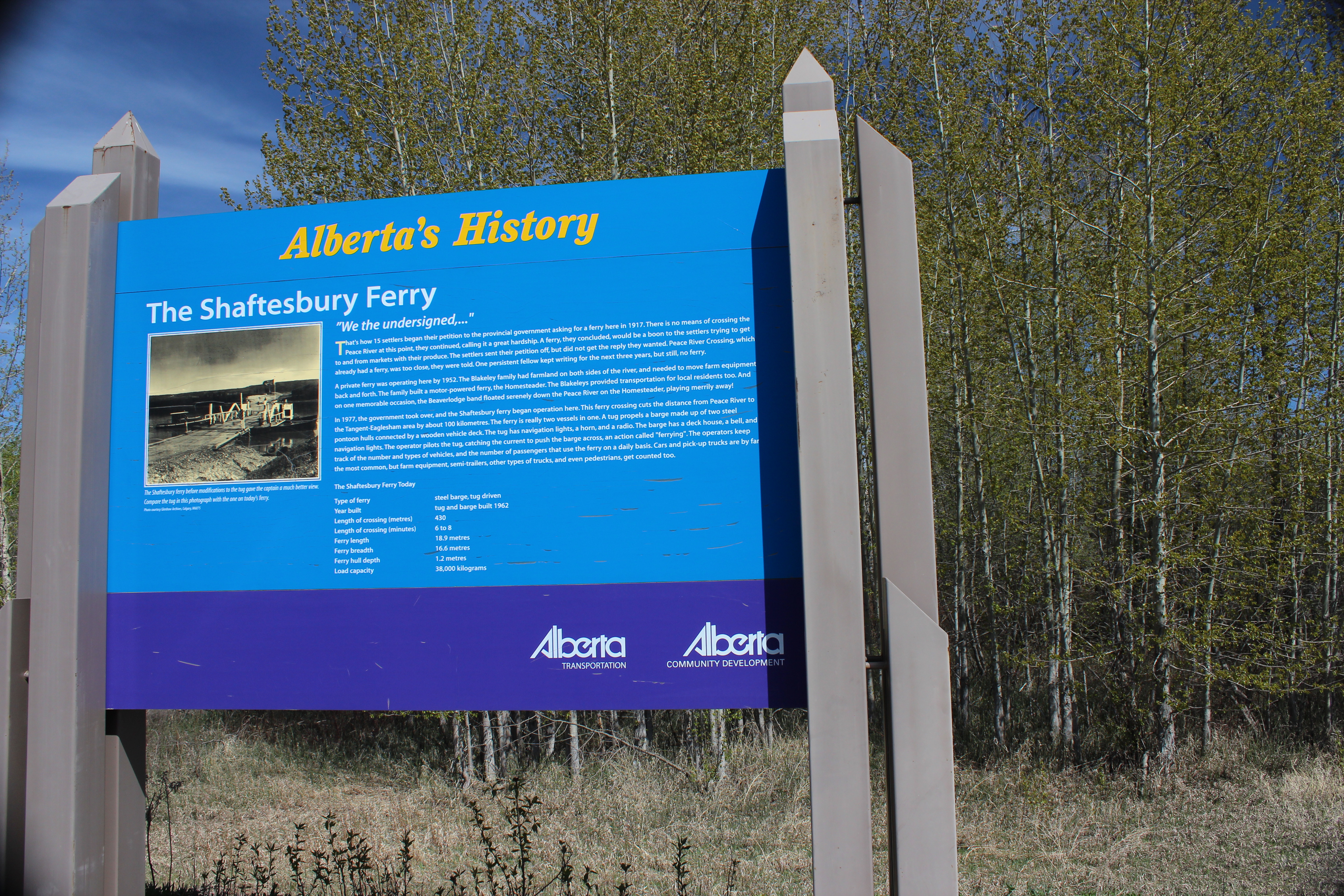
Later, we drove down the Shaftesbury Trail and arrived at the Shaftesbury Ferry. The ferry has been transporting people, vehicles and farm equipment over the Peace River for over 50 years. The confluence of the Peace and Smoky rivers is just south of the town. Without the ferry travelers arriving from south of the confluence would have needed to travel an extra 100 kilometers simply to get to Peace River. This would have been unworkable for a famer to haul grain or produce to market. Everett Blakely, a local resident, built a ferry privately in 1951. Mr. Blakely wanted to acquire farmland near the banks of the Peace south of its confluence with the Smoky and needed a ferry to access it. Mr. Blakely allowed his neighbors the use of the ferry and it quickly became indispensible. In 1977 the provincial government established a public ferry service on this location.

Seeing the ferry moored on the riverbank reminded me that Alberta transportation infrastructure is not just roads and our geography is more than just the plains. A hundred years ago, barges steamed up and down the Peace River loaded with goods and people. Both David Thompson and Sir Alexander Mackenzie both visited the area while exploring the northwest.

After visiting the ferry, we headed back towards Peace River. Stay tuned for Part II, to learn about other sites visited by the Alberta Historical Resources Foundation board.

Written by: Michael Thome, Municipal Heritage Services Officer
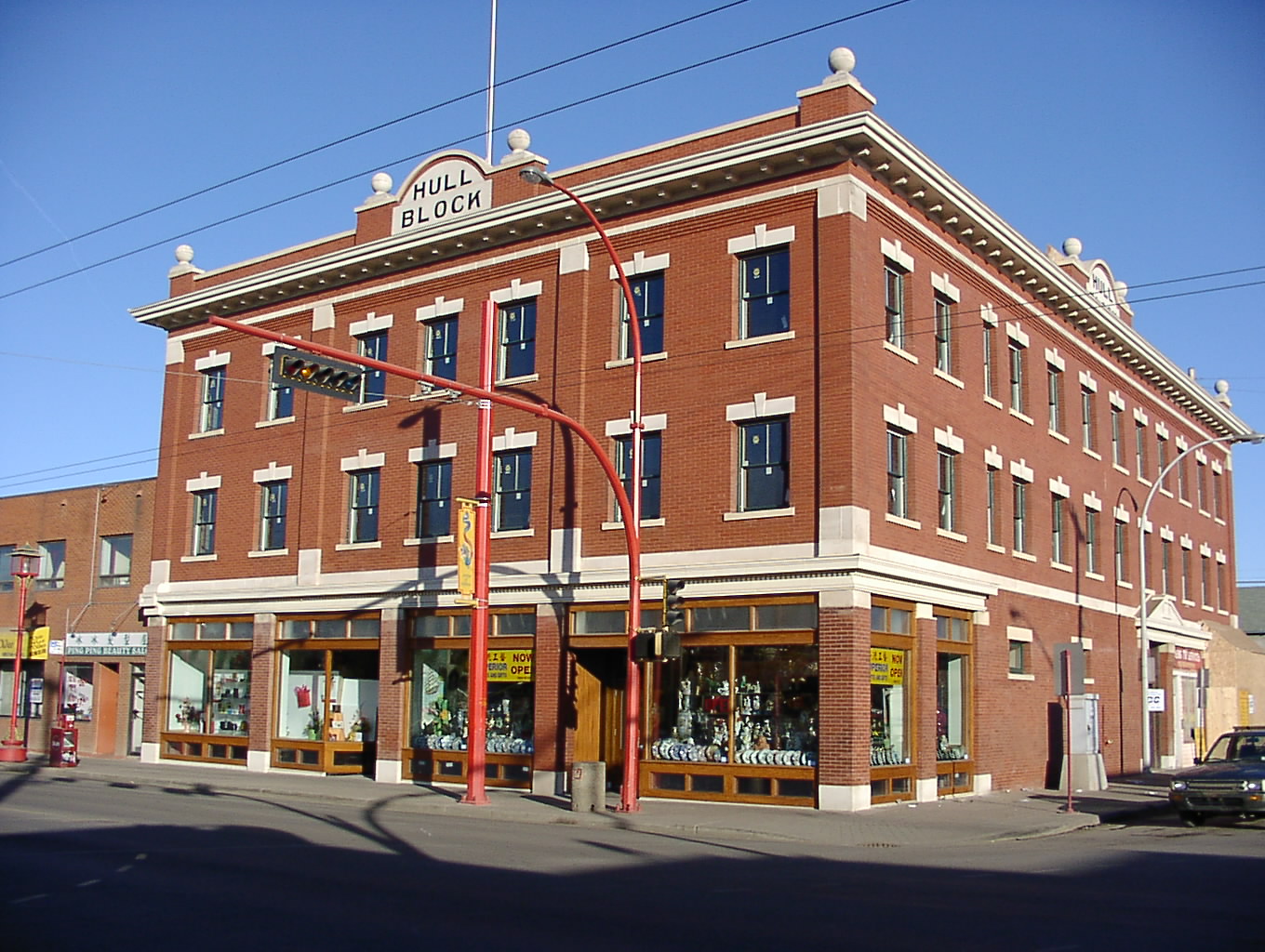
Hull Block, Edmonton

With the turn of the 20th century, Edmonton was beginning a period of rapid development, initiated mainly by its position as the commercial gateway to northwestern CanadaIn 1904, Edmonton became a city, and, in 1905, two other events occurred which would solidify its position as a metropolis. First, the city was named the capital of the new province of Alberta, and, second, just as the first Legislative Assembly was convening in September, the tracks of the Canadian Northern Railway were being laid, giving the city a direct line to Winnipeg and the markets of eastern Canada.  Four years later, the Canadian Northern was joined by the Grand Trunk Pacific, with a line through the city’s north end and a spur to the city center.

The arrival of these railways brought dramatic change to the city center where, to the west end, a large warehouse district evolved.  The north side also saw extensive development as many large industries chose to locate plants and warehouses near the tracks.  The railways and the industries they spawned brought masses of working class immigrants to Edmonton, most of who chose to live in neighborhoods near their centers of employment, such as McCauley, Norwood, Riverdale and Bellevue.  As a result, small community commercial areas sprang up to provide easy shopping for residents, and facilitate local businesses.

Being close to the city center, the McCauley district had little need for a separate shopping district, and yet there remained an inclination for many small businesses to locate as close to the people as possible.  As a result, Namayo Avenue (97th Street) was soon developed into a commercial artery, extending from Jasper Avenue all the way to 111th Avenue, with sections of the street also holding small dwellings.  North of the tracks, the street soon assumed the appearance of a small community shopping district, with grocery stores, drug stores, hardware stores, restaurants, barber shops, laundries and convenience stores. The shops were mostly modest two story structures, and often the proprietors would live in the same buildings.

In June 1914, when the commercial boom in Edmonton had actually just passed its apex, a headline in the Edmonton Bulletin read “New $35,000 Block for Namayo Avenue.”  The owner of the property on the corner of Namayo Avenue and Sutherland Street (9664-106th Avenue) was the Calgary business tycoon, William Roper Hull, who apparently saw the need for an office complex in the area.  As designed by E.C. Hopkins and opened the following year, the building was no doubt expected to facilitate small retail businesses and apartment dwellers, as well as office space.  The concept of the combined facility was not unlike the Beuna Vista Apartments and the Gibbard Block recently erected among small commercial buildings in other areas of the city that were surrounded by extensive urban development.

Among the first tenants in what became known as the Hull Block was Herb E. Thomson Drugs, which would occupy the premises until 1940.  Countless other tenants also came to occupy the building, which today appears to be serving the same purpose for which it was built 87 years ago.  Its historical significance lies in its representation of the tremendous commercial growth of downtown Edmonton during the early part of the 20th century.  It is also representative of the kind of commercial structure intended to evoke the ethos of a large office complex, but, due to its location near an urban population, was also made to facilitate small retail businesses and apartment dwellers.  It is also a significant landmark in the McCauley district of Edmonton.  In July 2003, it was designated a Provincial Historic Resource.

Written by: David Leonard, Historian

Visit the Alberta Register of Historic Places to learn more about the heritage value of the Hull Block. In order for a site to be designated a Provincial Historic Resource, it must possess province-wide significance. To properly assess the historic importance of a resource, a historian crafts a context document that situates a resource within its time and place and compares it to similar resources in other parts of the province. This allows staff to determine the importance of a resource to a particular theme, time, and place. Above, is some of the historical information used in the evaluation of the Hull Block.

Planning in the Peace

Heritage Management Planning in Peace River

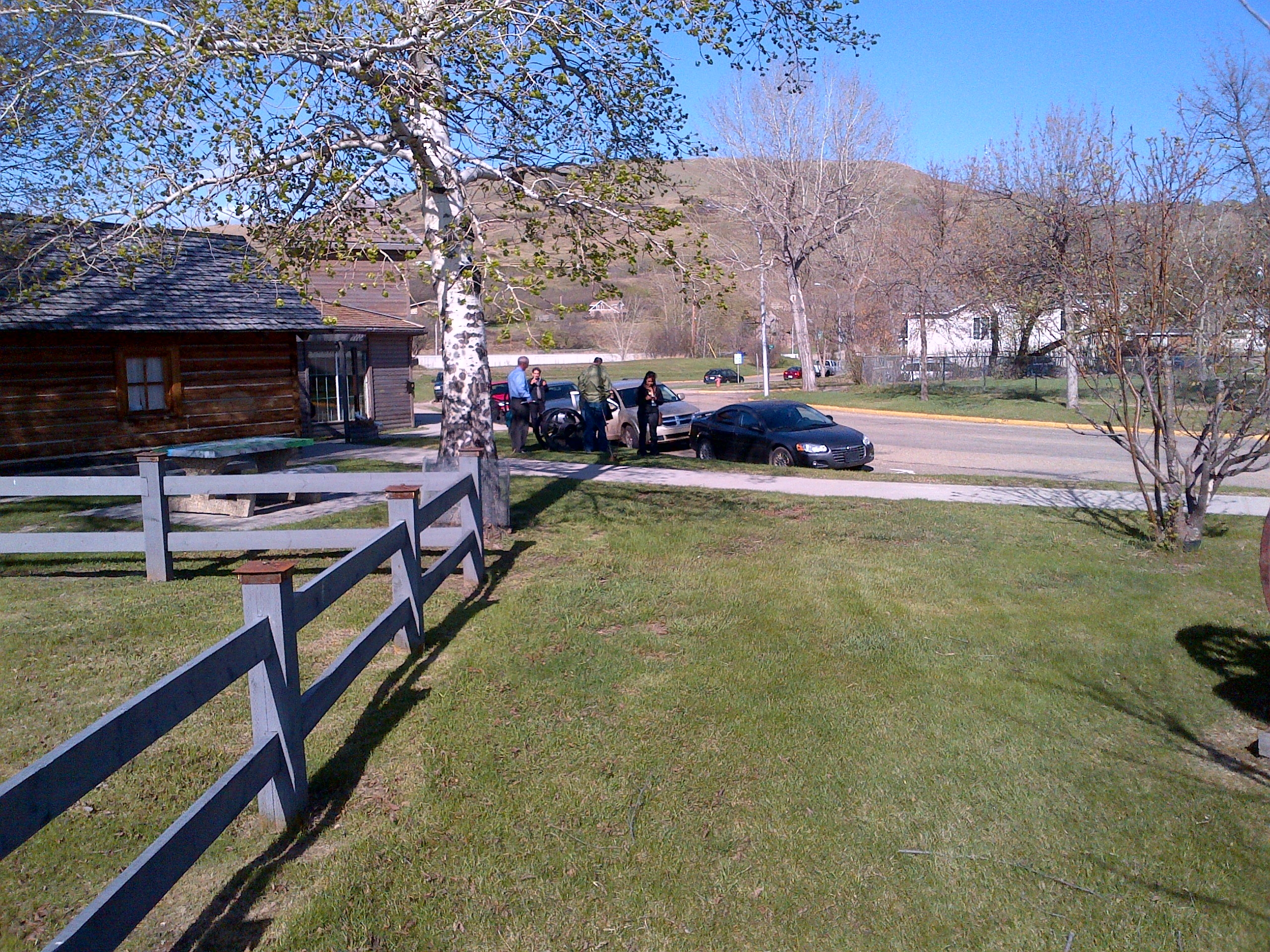
On May 10th, I had the pleasure of attending a heritage management planning open house, hosted by the Town of Peace River. The town wanted public feedback on the heritage management policies they have been working on with the Municipal Heritage Partnership Program since September. Posters describing the proposed designation and management policies where hung in various locations around the museum and staff were available to answer public questions. The open house was held near the river at the Peace River Museum and Mackenzie Centre. The plan includes two components: a Municipal Historic Resource designation policy and a plan to manage designated sites.

Open house attendees arriving at the Peace River Museum.

The Municipal Historic Resource designation policy explains how Peace River will determine if a site is historic and if it should be protected as a Municipal Historic Resource. The policy will specify who can nominate a site for designation and what the town must know about the history and condition of a place to make a recommendation to the town council. These policies will help the town decide if designating a site will protect a place that embodies an important part of Peace River’s heritage. It will help the Town determine if protection is in the public interest. The policy will also help the Town and property owners understand their obligations towards one another should a property be designated.

The second part of the management plan is the alteration permitting process. A Municipal Historic Resource cannot be altered without the municipality’s approval. The management policy will explain how an owner applies for a permit, what information they need to provide and how applications will be evaluated. For instance, it is important to be able to answer questions such as:

  • will the changes affect the heritage value of the historic place, allowing the destruction of character-defining elements?
  • will the changes impact the site as little as possible?
  • who within the municipal administration makes these decisions?

The management policy ensures that these questions are answered in a consistent and transparent way.

Staff at the Town of Peace River are putting the final touches on the management plan and will present it to Town Council in June. We will bring you more details after the plan has been approved by council.

If you have question about management planning or any other aspect of heritage conservation, check out the Municipal Heritage Partnership Program website or drop us a line.

Written by: Michael Thome, Municipal Heritage Services Officer
The Burmis Tree: The Most Photographed Tree in Alberta?

At the end of April when travelling in southern Alberta on business I had time to visit the Frank Slide Interpretive Centre (to read about my visit, click here). While driving to Frank I turned through a bend in the road to suddenly find myself in front of a snow-capped mountain framed by a beautiful rainbow! The shutter-bug in me could not resist the temptation. With camera in hand I trundled out of my vehicle to take some photos. But wait, this blog post is not about mountain views and rainbows…

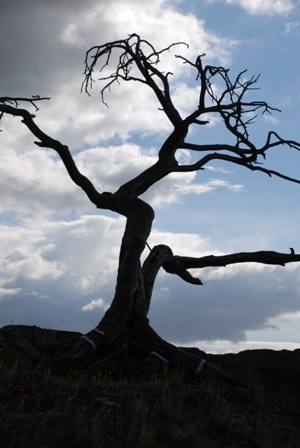
Upon turning my back on the rainbow to return to my vehicle, I discovered another beautiful site – the Burmis Tree! The Burmis Tree is a limber pine that marks the eastern edge of the Crowsnest Pass. Limber trees have one of the longest life spans of any tree in Alberta and are known for their ability to thrive in harsh conditions. As a standing testament to these facts, the Burmis Tree lived for approximately 700 years. It died in the late 1970’s but remained standing until 1998 when high winds toppled it over. The community, which regarded the tree as a significant landmark, refused to simply leave it. Rods and brackets were used to support the tree. To this day it still stands as a landmark, acting as a welcome sign to visitors of the Crowsnest Pass and as a symbol of home for area residents.

The leafless, gnarled tree simply needed to be photographed (if you are also a shutter-bug you will understand). As I explored the area photographing the tree from different angles, I next stumbled upon one of the heritage markers erected by the Government of Alberta and the Alberta Historical Resources Foundation. You have all probably seen them – large blue signs located at highway rest areas or points of interest throughout Alberta. These interpretive signs tell of Alberta’s rich heritage. This sign provides context for the Burmis Tree.

Assuming that the Burmis Tree is perhaps one of the most photographed trees in all of Alberta, I did a quick search on Flickr. Check out some of the photos. 

Do you have a photo of the Burmis Tree that you would like to share with readers of RETROactive? If so, email it to me at albertahistoricplaces@gov.ab.ca by June 10, 2012 with a completed copy of the Government of Alberta’s Photograph, Video, Name and Quotation Release Form. A future blog post will feature the submissions.

 Written by: Brenda Manweiler, Municipal Heritage Services Officer
Nomination Deadline for AHRF Heritage Awards 2012: Extended to June 30

Deadline Extended: June 30, 2012

As part of its ongoing efforts to honour local contributions in the protection, preservation and promotion of Alberta’s heritage, the Alberta Historical Resources Foundation is seeking nominations for the Heritage Awards 2012.

Deadline for nominations has been extended to June 30.  The awards ceremony will take place on November 30th.

The Heritage Awards Program provides an excellent opportunity to recognize and celebrate the outstanding accomplishments of individuals, organizations, corporations and municipalities who have demonstrated their commitment in preserving our province’s heritage.  Awards are presented as follows: to projects for the Heritage Conservation and Heritage Awareness Awards; to municipalities for the Municipal Heritage Preservation Award; and to individuals for the Outstanding Achievement Award.

Conserving Alberta’s heritage benefits all of us, but it is often the actions of individuals and communities that drive these efforts forward.  If you know of an exceptional building conservation project, a heritage awareness initiative, a municipality or individual in your community, this is your chance to have them recognized.

For a copy of the guidelines and nomination form, click here or contact me at 780-431-2305.

Written by: Carina Naranjilla, Grant Program Coordinator

Leighton House and Art Centre

Leighton House and Art Centre

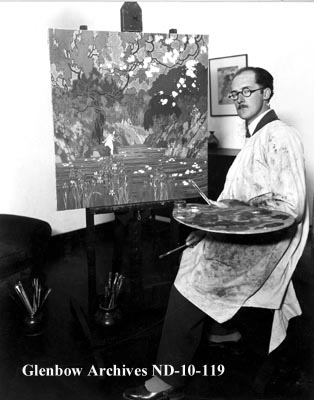
Two of the most influential individuals in the history of painting in Alberta were Barbara and Alfred Crocker Leighton.  Alfred was born in Hastings, England in October 1901.  He attended the Hastings Grammar School, and the Hastings Municipal School of Art, where he studied architecture.  He served with the Royal Flying Corps in World War I, and was severely injured after a crash.  Following the war, he began to paint landscape scenes and was encouraged to submit his work to the Royal Society of British Artists.  He became influenced by the Arts and Crafts movement, established earlier by William Morris, and his paintings in this genre began to draw attention in the early 1920s.

Alfred Leighton

In 1924, the Canadian Pacific Railway commissioned Leighton to do paintings about the western Canadian landscape in order to attract potential immigrant farmers.  In 1925, he was sent out to paint the scenic Canadian Rockies.  He produced paintings exclusively for the CPR until 1929 when he resigned and accepted the position of Director of Art for the Southern Alberta Institute of Technology and Art, a position he held until 1935 when he was forced to return to Britain due to ill health with his wife, Barbara (Harvey), an art student whom he had married in 1931.  Barbara was born in 1909 in Plymouth, and would become a direct associate in all of Alfred’s undertakings.

While at the SAIT, Alfred Leighton had been instrumental in founding the Alberta Society of Artists.  In 1933, he established a summer school in the Kananaskis which was the precursor to the Banff School of Fine Arts.  Upon returning to Canada in 1938, he resigned from SAIT and moved with Barbara to southern British Columbia.  Here he tried farming in Chilliwack, but soon moved to Crescent Beach, where he and Barbara did commercial art work.

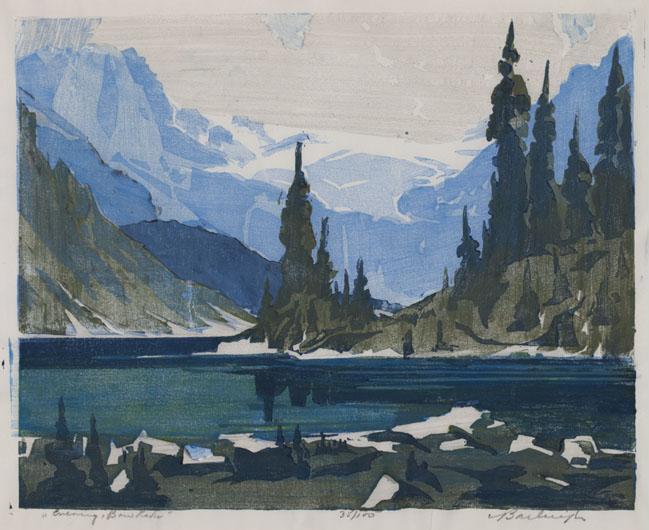
Leighton, Barbara. Evening, Bow Lake. Printmaking, woodcut. Alberta Foundation for the Arts.

In 1952, the Leightons purchased an acreage near Millarville where they designed and built a one-room dwelling with the idea of having it serve as a art studio, with adjoining rooms to be added later.  It was named Ballihamish after the school district of which it was a part.  The structure was designed in the form of a cross, which allowed painters to focus on different perspectives of the Millarville Valley and Rocky Mountains at different times of the season.  It was completed over the course of many years, with the inheritance from Arthur Leighton’s father in 1960 being a major contributing factor.

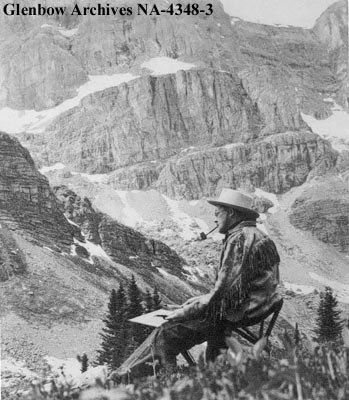
Alfred Leighton painting in mountains.

Following Alfred Leighton’s death in 1965, Barbara Leighton established the Leighton Center for Arts and Crafts, which was officially opened in November, 1970.  The 1928 Billihamish School was also brought in to become part of the complex.  In 1974, she established the Leighton Foundation for the encouragement of art, and an arts and crafts center for all people to engage in landscape painting.  The Foundation is currently housed in the Leighton Art Centre, which includes a museum, art gallery, and educational programming.

In May 2009, the Leighton House and Art Centre was designated a Provincial Historic Resource.  Its historical significance lies primarily in its direct association with Alfred and Barbara Leighton, two of the most influential people in the history of art in Alberta.

Written by: David Leonard, Historian

________

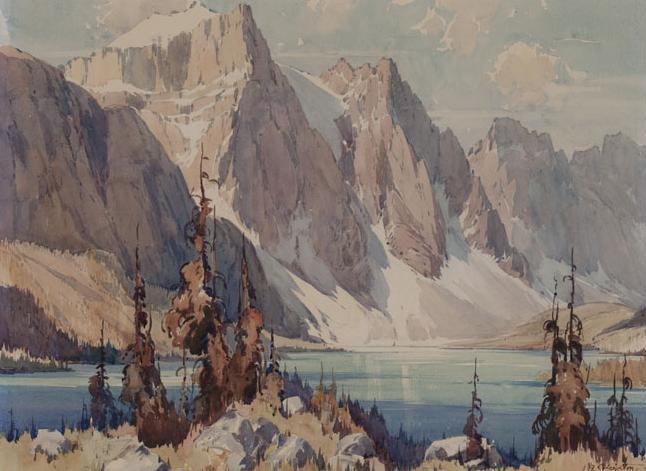
Leighton, Alfred C. Moraine Lake. Painting, watercolour. Alberta Foundation for the Arts.

In the Alberta Foundation for the Arts Collection of over 7500 works there are paintings by Alfred and Barbara Leighton. The collection represents more than 1700 Alberta artists. Like the Leightons, many of these artists have significantly contributed to the development of the visual arts throughout Alberta. You can search the Alberta Foundation for the Arts Collection, and other provincial art collections here.

To view works by Barbara Leighton, click here.

To view works by Alfred Leighton, click here.

________

Visit the Alberta Register of Historic Places to learn more about the heritage value of the Leighton House and Art Centre. In order for a site to be designated a Provincial Historic Resource, it must possess province-wide significance. To properly assess the historic importance of a resource, a historian crafts a context document that situates a resource within its time and place and compares it to similar resources in other parts of the province. This allows staff to determine the importance of a resource to a particular theme, time, and place. Above, is some of the historical information used in the evaluation of the Leighton House and Art Centre.

News from Calgary’s Heritage Scene

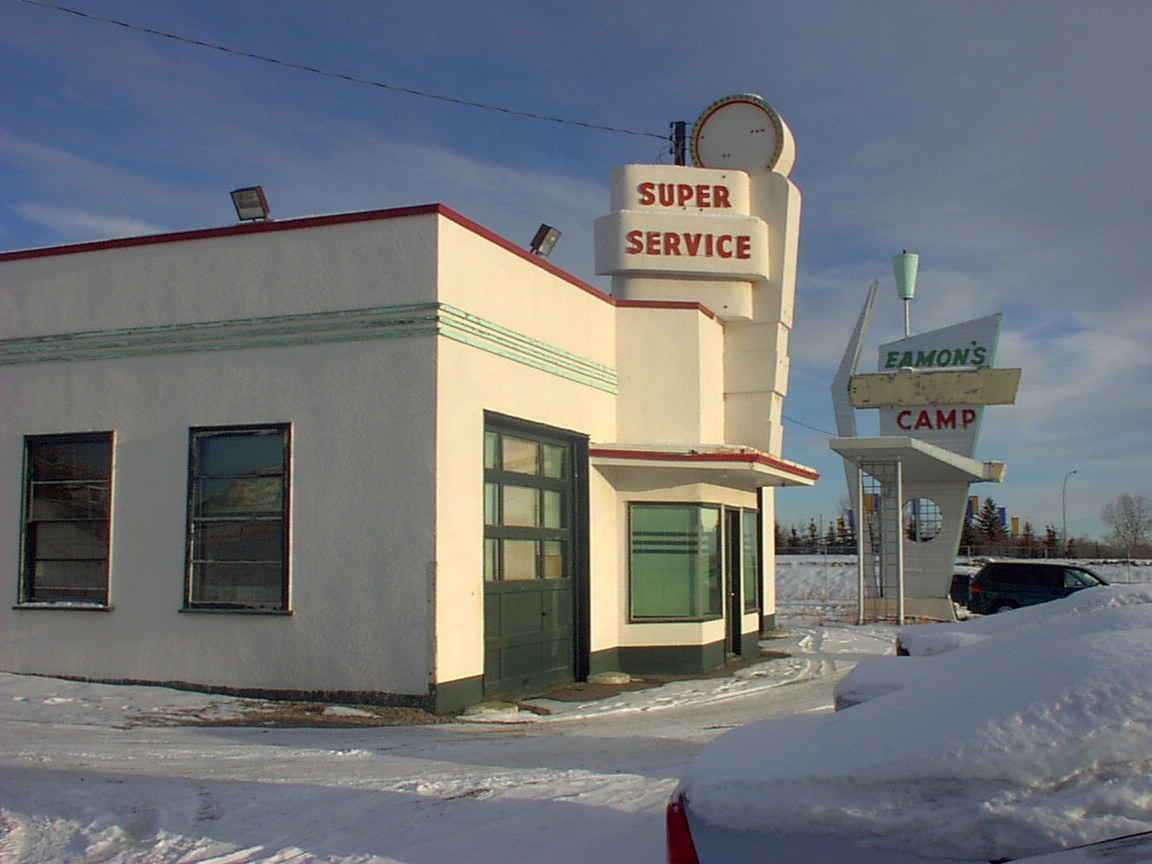
You may have read that Calgary’s city council has decided to incorporate the Eamon’s Gas Station (also known as the Eamon’s Bungalow Camp) into the planned Tuscany LRT Station. Calgary will conserve a historic resource rather than demolishing it to make room for parking. This is exciting news!

We recently talked with Christy Caswell, one of the City’s Heritage Planners, and she said that Calgarians today are enthusiastic in supporting their city’s historic places. The interest garnered by the Eamon’s project has been one of many catalysts for people to think about historic places in a new way, and how they can be creatively integrated with new development.

Alberta’s municipalities can identify and conserve historic resources without the provincial government’s permission or involvement by legally protecting these places as Municipal Historic Resources. If interested, municipalities can also offer conservation incentives. By extension, each municipality is free to determine its own criteria for deciding what to designate. Calgary is a fine example of this.

Calgary has identified a range of heritage values that a place must reflect to be considered for conservation. For example, the Calgary Heritage Authority has overseen the development of context papers for many of Calgary’s historic communities. The city’s heritage planning program regularly evaluates potential historic place for significance. The result is Calgary’s Inventory of Evaluated Historic Resources. Each place on the city’s inventory reflects a local heritage value. Indeed, the Eamon’s Bungalow Camp is one of over 600 places included on Calgary’s Inventory. Be sure to read the listing to learn about the site’s history.

The Municipal Heritage Partnership Program (MHPP) helps municipalities develop programs that will identify, evaluate and conserve locally significant historic places. For more information, visit the MHPP website.

Written by: Matthew Francis and Michael Thome, Municipal Heritage Services

Pincher Creek Municipal Heritage Survey

At the end of April I attended an open house for the Town of Pincher Creek Municipal Heritage Survey project. Over the past year, the Town, through the dedicated assistance of community volunteers and the guidance of Farley Wuth at the Kootenai Brown Pioneer Village, has been working on documenting up to 300 sites. These sites, all older than the 1940s, include residential, commercial and industrial properties. The sites are being documented through photography and by recording geographical, architectural and historical information. Once complete, all documented sites may be viewed on the Provincial Heritage Survey database.

The open house was attended by project volunteers and interested community members. Their interest in the project was inspiring. With each documented property, the volunteers uncover new facts about their community.  Who lived where, and when? Which properties contain unique architectural features? How did the properties evolve after alterations and repairs? With each discovery, a greater sense of community pride seems to emerge.

Completing a Municipal Heritage Survey is a great way for municipal staff to learn about the older building stock (and other sites) in their communities. The information gathered provides valuable information for things such as:

– public and private research

–   historic walking tours

–   school and museum programs

– municipal decision-making

–   information on historic and existing land uses

–   development patterns

–   tourism opportunities

– assistance in long-term conservation objectives

–   evaluation of potential historic places

–   photographic record to aide future conservation projects

Essentially, a Municipal Heritage Survey is an information gathering exercise, which enables future decisions and projects associated with potential historic places. Properties documented through a survey are not placed under any restrictions.

To learn more about the Pincher Creek Municipal Heritage Survey project, click here.

To learn how the Town of Pincher Creek is completing this project, please visit the Municipal Heritage Partnership Program website.

Written by: Brenda Manweiler, Municipal Heritage Services Officer