We recently asked for your feedback regarding a possible joint conference with Heritage Canada The National Trust in 2015 and received over 100 responses. Here are the results (click on the image to enlarge).
How are you involved with heritage in your community?
Have you previously attended the Municipal Heritage Forum?
For those that attended, how were your travel costs covered?
Would you be interested in attending a joint conference?
For those not interested in attending, reasons for not wanting to attend included:
The content would be too extensive and/or not applicable to local needs
Unsure of the theme of the conference and if the content would be desirable
The expense of getting there
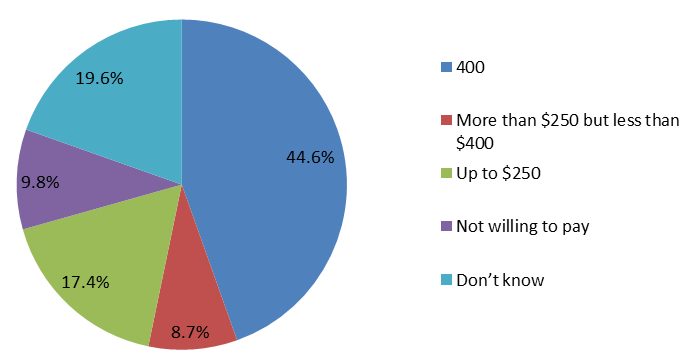
What would you/your employer/your organization be willing to pay to attend a joint conference?
Of those willing to pay $400, the majority of respondents work for municipalities (66%).
Of those willing to pay up to $400, the majority of respondents work for municipalities or are volunteers (38% each).
Of those not willing or able to pay, the majority of respondents are volunteers (63%)
Of those who don’t know what they could pay, the majority of respondents are volunteers (41%) followed closely by employees for private sector companies (35%)
When asked for additional feedback, respondents indicated that the joint conference would provide opportunities for networking and would widen the scope of knowledge in Alberta communities. There were some concerns about the content not being as applicable to Albertans and that the cost would be challenging to cover. Questions were asked about different types of rates (group rate, volunteer rate, student rate, conference grants) and whether there would be opportunities for Albertans to submit conference proposals.
Based on the feedback received we now know that there is a great deal of support and interest for a joint conference with Heritage Canada in 2015. We also have helpful information as to what different groups are willing and able to pay. We will use this information, as well as some of the suggestions brought forward, to proceed with our planning for the event.
Thanks once again for your contributions!
And last but not least, the winner of our draw for a 2014 Family Annual Pass to visit Alberta’s Provincial Historic Sites, interpretive centres and museums is Brian Vivian with Lifeways of Canada Ltd. Congratulations, Brian!
Written by: Rebecca Goodenough, Municipal Heritage Services Officer.
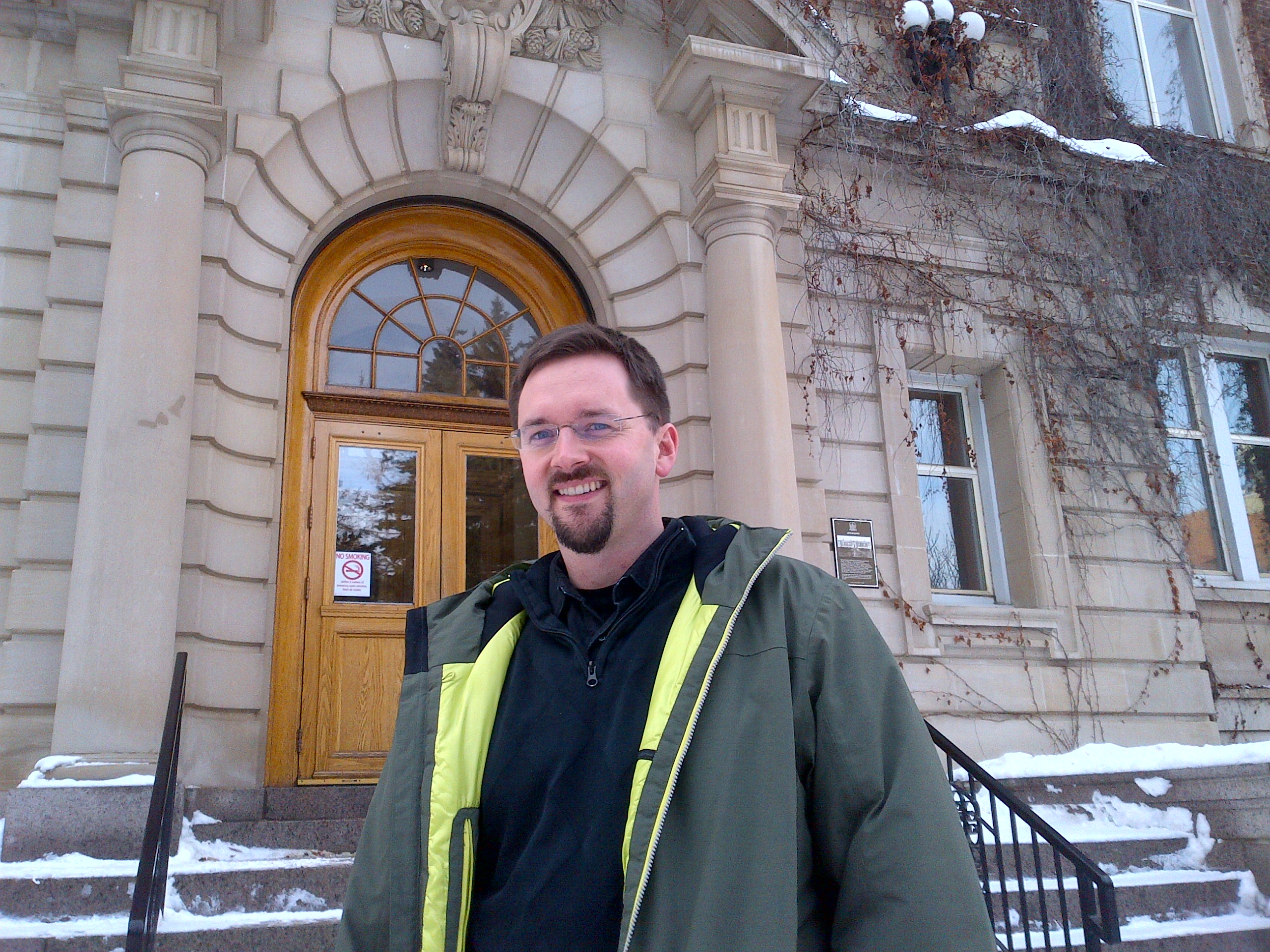
This is the first of a series of interviews with people working in different program areas of the Historic Resources Management Branch. Recently, I sat down with Matthew Francis, Manager of Municipal Heritage Services, to discuss the work of the Alberta Main Street Program.
Matthew Francis, Manager, Municipal Heritage Services.
Matthew Francis joined Alberta Culture in 2005. He was originally hired to write Statements of Significance for Alberta’s Provincial Historic Resources and later took on the leadership of the Municipal Heritage Partnership Program. In 2007, he was placed in charge of the Alberta Main Street Program. He soon realised that his first task would be to make the program more sustainable.
The Alberta Main Street Program was at a crossroads in 2007
The program was 20 years old in 2007. It had rehabilitated 23 historic commercial districts with tremendous results, but was showing its age. Due to changes in federal-provincial job training programs, the Alberta Main Street Program could no longer conserve buildings with its own workforce. At the same time, the federal and provincial governments were rethinking how to conserve historic places: a new values-based approach to historic preservation emphasised that understanding a historic building’s architectural or historical significance is necessary to conserve it properly. As a result of these changes, some of the program’s common practices no longer made sense.
Indeed one of the basic tenets of the program—that each community was in the program for three years and then continued the work on its own—wasn’t working. “Many of the original Main Street Communities were seeking readmission to the program–not realising they had already completed it a decade or more ago. I call that main street amnesia,” says Matthew.
How do you revitalize an innovative program (that was never just about heritage conservation).
As he learned more about it, Matthew quickly became fascinated by the variety of problems the Main Street Program had been used to solve. “The communities applying to the program weren’t just looking to conserve buildings, they were trying to entice businesses to move downtown, they were trying to increase the property tax base, and some were even grappling with vagrancy and petty crime.” Although ostensibly focused on conserving historic buildings, doing so successfully proved more complex than simply repairing a foundation or touching up a façade.
Downtown Lethbridge
Recently, Wainwright used the Alberta Main Street Program to cope with the disruption caused by a deep services project—the closing and tearing up of the street and sidewalks to replace disintegrating water, sewer and utility lines. While necessary to maintain municipal infrastructure, deep services projects hurt the businesses that temporarily lose the use of their main entrance.
The Main Street movement
Matthew has come to see the Alberta Main Street Program as a philosophy and a movement, not simply as another government service. The streetscapes and buildings in historic commercial areas are part of each community’s character.
“People show off places like Inglewood [in Calgary] and downtown Lacombe to visiting friends and family. It’s where they meet for lunch, shop and socialise.” Historic commercial areas have boosters that don’t see themselves has heritage conservationists, but they are. Matthew says that “conserving historic buildings is the key to preserving these areas, and most supporters of historic areas understand that intuitively.”
The Main Street Movement is showing a new way
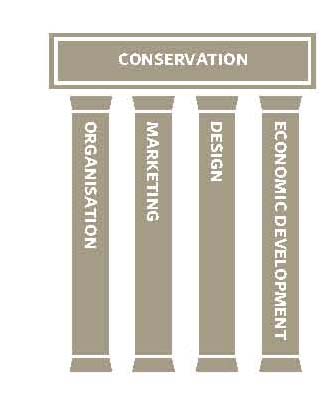
The Alberta Main Street Program’s Four Point Approach
The Main Street Program demonstrates how the interests of culture and heritage intersect with the fostering of social capital and the economic revitalization of downtown. “A properly conserved historic area is an attraction to both residents and tourists. People want to shop, work and live in these areas—and that can provide the funds to conserve the buildings.”
During the last several years, Matthew has been remodeling the Alberta Main Street Program, using the (U.S.) National Trust for Historic Preservation’s Main Street Program as a model. The U.S. Main Street Program is organised around four equally important ideas: organisation, design, marketing and economic development.
Organisation
Community members are the stewards of these areas, particularly the people who live, work or own property there. With the support of the local government, they must oversee the program and hold themselves accountable for its success. Government can’t, and shouldn’t try to run a community-based program like Main Street. Matthew and his colleagues coach and mentor, but they don’t try to run the individual programs from Edmonton: “Local people with local knowledge and energy are keys to authentic and viable main streets.”
Design
The historic places on main street are irreplaceable assets. People come to see the historic places as landmarks; the historic building set downtown apart from a mall, and often the neighbouring town as well. “New buildings are fine, so long as they are compatible with the historic streetscape and don’t falsify it. The compelling streetscape is what initially attracts visitors to the downtown,” he says.
Marketing
The businesses on successful main streets coordinate their marketing, recognizing that most visitors won’t bother coming to visit just one shop or restaurant. “New trends in social media drive traffic to businesses and historic communities are capitalising on this new way of doing business. All of our Alberta Main Street communities are using platforms like Facebook and Twitter to see and be seen,” says Matthew.
Economic Development
Over the long run, historic main streets areas pay their own way. Tenants in the historic buildings pay for much of the cost of a building’s upkeep; the business owners together pay for the marketing and design work, either directly or through their property taxes. Investment in conservation and marketing pays off as an increasingly large number of people want to live and do business on Main Street.
The renewal years
Since 2007, the Alberta Main Street Program has grown into a network of communities. Matthew is constantly impressed by the grassroots support for Main Street in each community the program works with; he’s also been amazed by the variety of problems these communities have tackled through the program. He gets excited when talking about what has been accomplished.
“The team in Olds has organised a huge number of volunteers to put on all sorts of events promoting the downtown, such as their popular Summer Oldstice Street Festival. They’re also planning for a deep services project of their own.”
“Wainwright has had tremendous success with their Taste of Wainwright culinary festival in the downtown. It has been a signature event, attracting visitors from across Alberta.”
“When Lethbridge joined the program a decade ago its downtown was down on its luck: businesses were failing, vacancy was high and the area was dealing with petty crime and social problems. Using the tools of the Alberta Main Street Program, they reduced the vacancy rate to almost nothing. Businesses are thriving downtown and many of the social problems have faded. With a vibrant coffee culture, creative restaurants, and businesses, downtown Lethbridge is the place to be.”
Looking forward to the year ahead
Matthew is already looking forward to a busy and productive year in the program. There are already four communities in the new Alberta Main Street Program: Camrose, Olds, Wainwright and Lethbridge. “We’re excited to be gathering the coordinators from all of our communities quarterly to talk about best practices and learn from each other.”
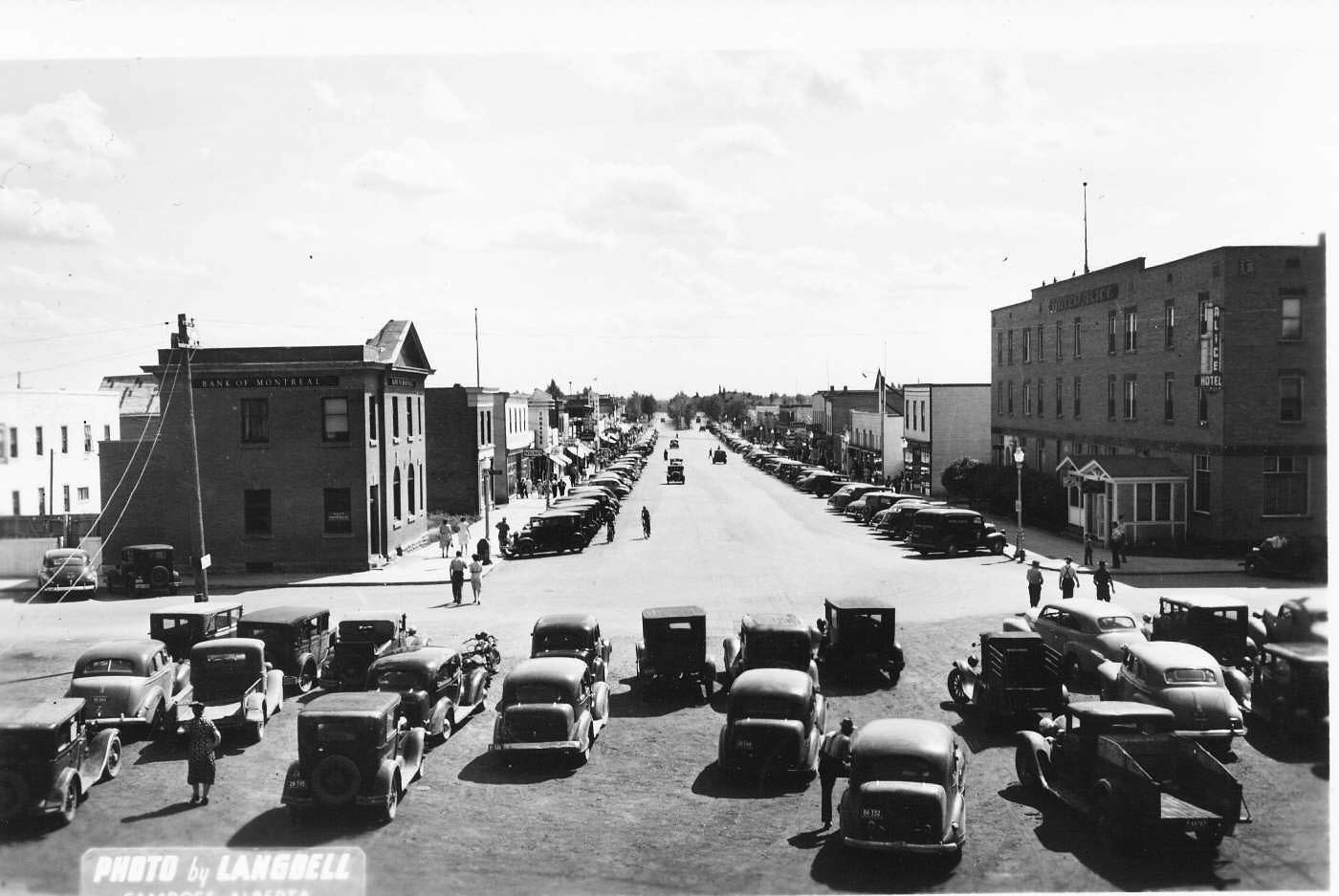
Camrose
Main Street Camrose (historic photo)
Camrose rejoined the program very recently. They will be hiring a Main Street Coordinator shortly. Like all Main Street communities, they completed an inventory of historic places on the main street before being admitted into the program. “The deeper understanding of their historical places which they gained through this heritage planning project, will inform their new work in Historic Downtown Camrose,” says Matthew.
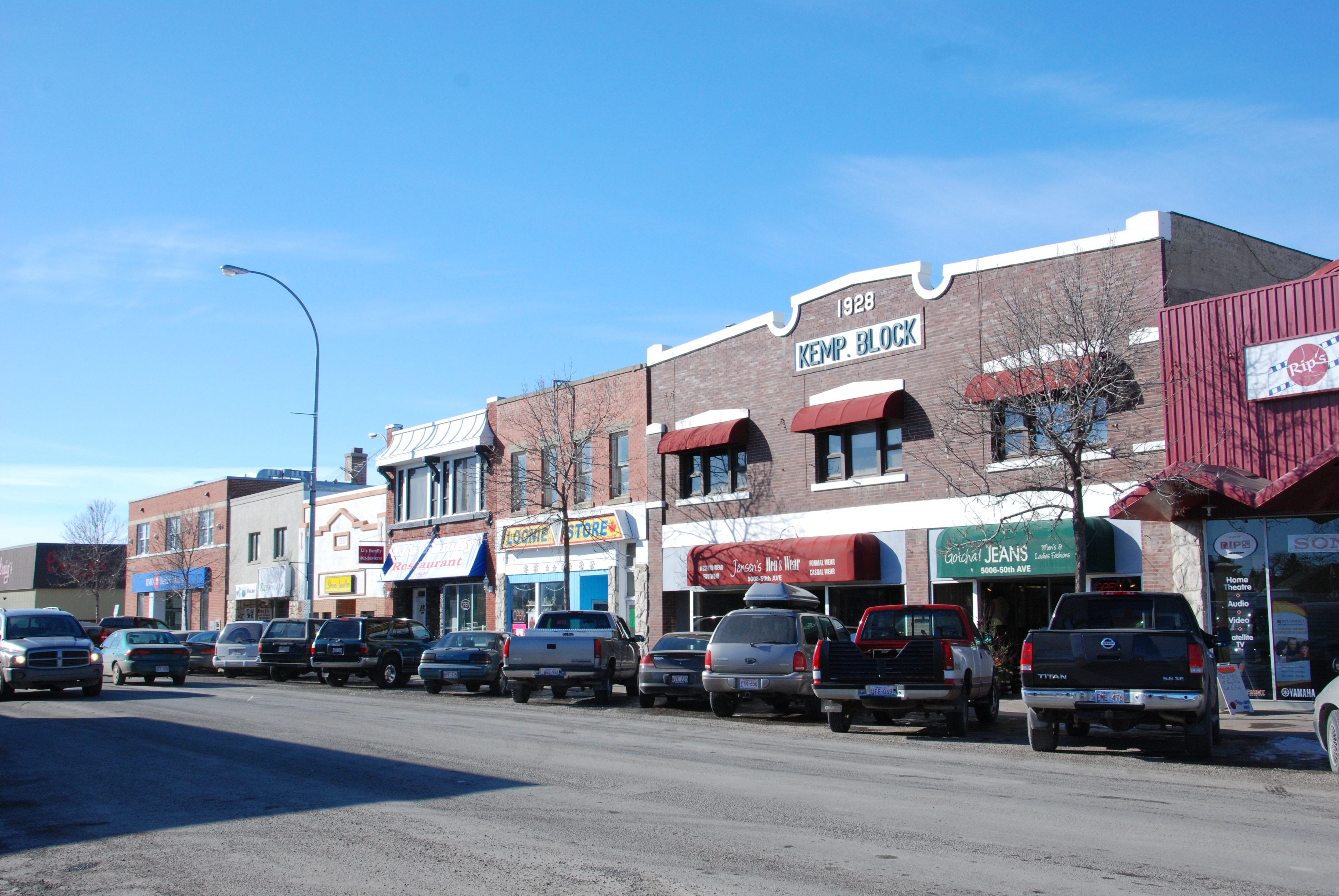
Olds
Uptowne Olds
Two Municipal Historic Resources in Uptowne Olds are undergoing multi-year conservation projects: the Maybank Drug Store and the Kemp Block and these should be done by July. Like Wainwright before it, Olds will also be undergoing a major deep services project once the ground thaws.
Olds will also be hosting the first quarterly coordinators meeting, in February 2014. “It’s going to be interesting to see the Olds’s coordinator picking the brains of the other coordinators, particularly Wainwright’s, for ideas on how to deal with the disruption deep services projects cause.”
Wainwright
Main Street, Wainwright.
Having completed their deep services project last year, Wainwright will be finishing up the redevelopment of their streetscape. “Wainwright has the classic Alberta main street, laid out as an intersection of Main Street and the historic railway line. “The Alberta Main Street Program funded the design of the new streetscape and Matthew’s looking forward to seeing the result.
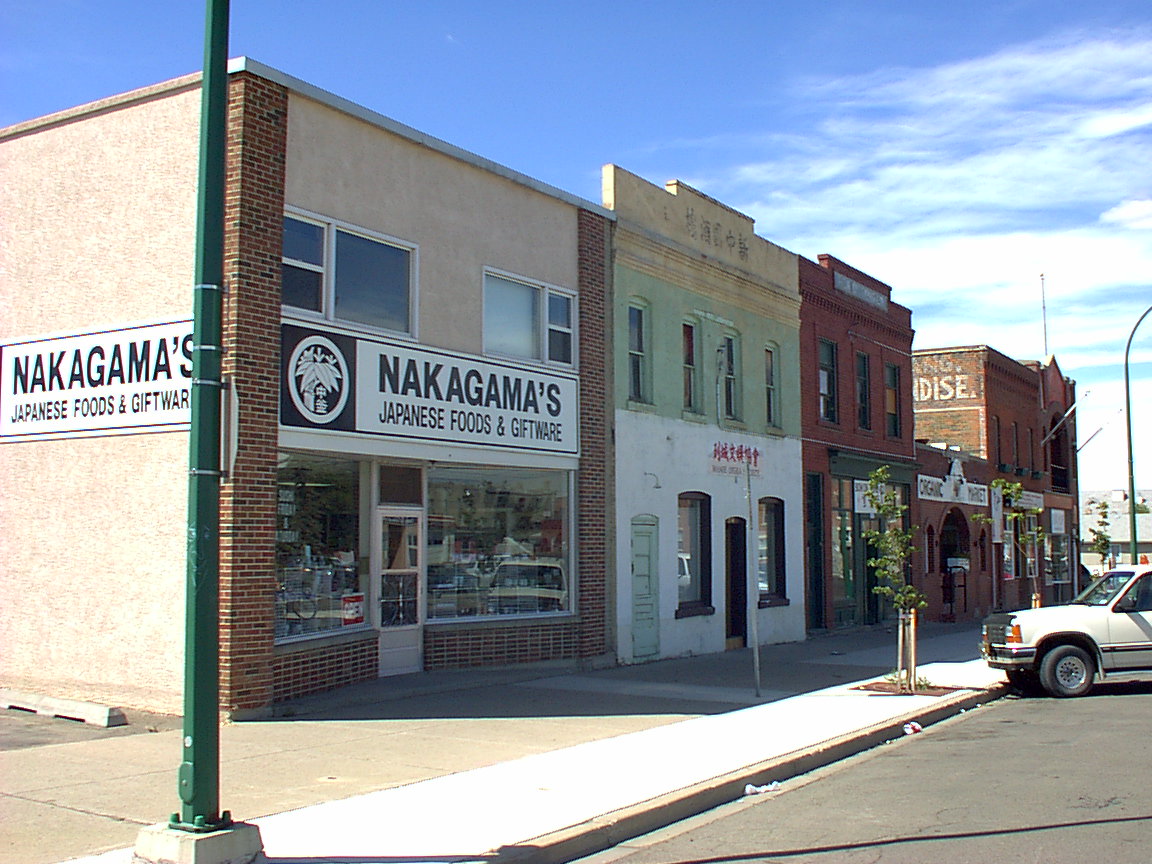
Lethbridge
Lethbridge’s Chinatown.
Lethbridge will undertake the conservation of its historic Chinatown. The city council will designate two new Municipal Historic Resources in a few weeks: the Bow on Tong Building and Manie Chinese Opera Society Building. “These buildings were in danger of collapsing, but a grassroots effort led by the Lethbridge Historical Society and the Lethbridge Main Street Program succeeded in stabilising them. The municipal historic resource designations will help to see these special places conserved over the long term,” Matthew says.
All good historians look to the future
So much has changed in the past few years, but Matthew continues to look ahead. “I expect that five years from now there will be at least 20 communities in the Alberta Main Street Program. The network of communities will be sharing ideas with each other and perhaps engaging in national marketing campaigns together. We look forward to celebrating new communities joining the Main Street network in 2014.”
If you’re interested in conserving historic commercial areas you can contact us, and consider attending the 2014 (U.S.) National Main Streets Conference, May 18-20, 2014. It’s in Detroit, Michigan. Detroit is a great American city. As most know it has been hurt badly by the restructuring in American car manufacturing. Detroit is using the U.S. Main Street Program to revitalise its commercial areas.
It’s going to be an interesting year.
Written by: Michael Thome, Municipal Heritage Services Officer.
Happy New Year everyone! With 2014 underway, I thought that it would be a good idea to provide a little update on the Heritage Conservation Advisory Services Program.
The Heritage Conservation Advisory Services Program provides technical advice and information to the owners or stewards of historic buildings on how best to maintain and conserve their historic resources. A Heritage Conservation Adviser will help you apply the Standards and Guidelines for the Conservation of Historic Places in Canada to your project, regardless of whether or not the building is designated.
In addition to providing free conservation advice, Heritage Conservation Advisers develop the recommendations to approve alterations to Provincial Historic Resources or Registered Historic Resources on behalf of the Minister of Culture. Owners of Registered or Provincial Historic Resources need ministerial permission, under the Historical Resources Act, before altering or repairing their property. Municipal Historic Resources require the permission of their municipality.
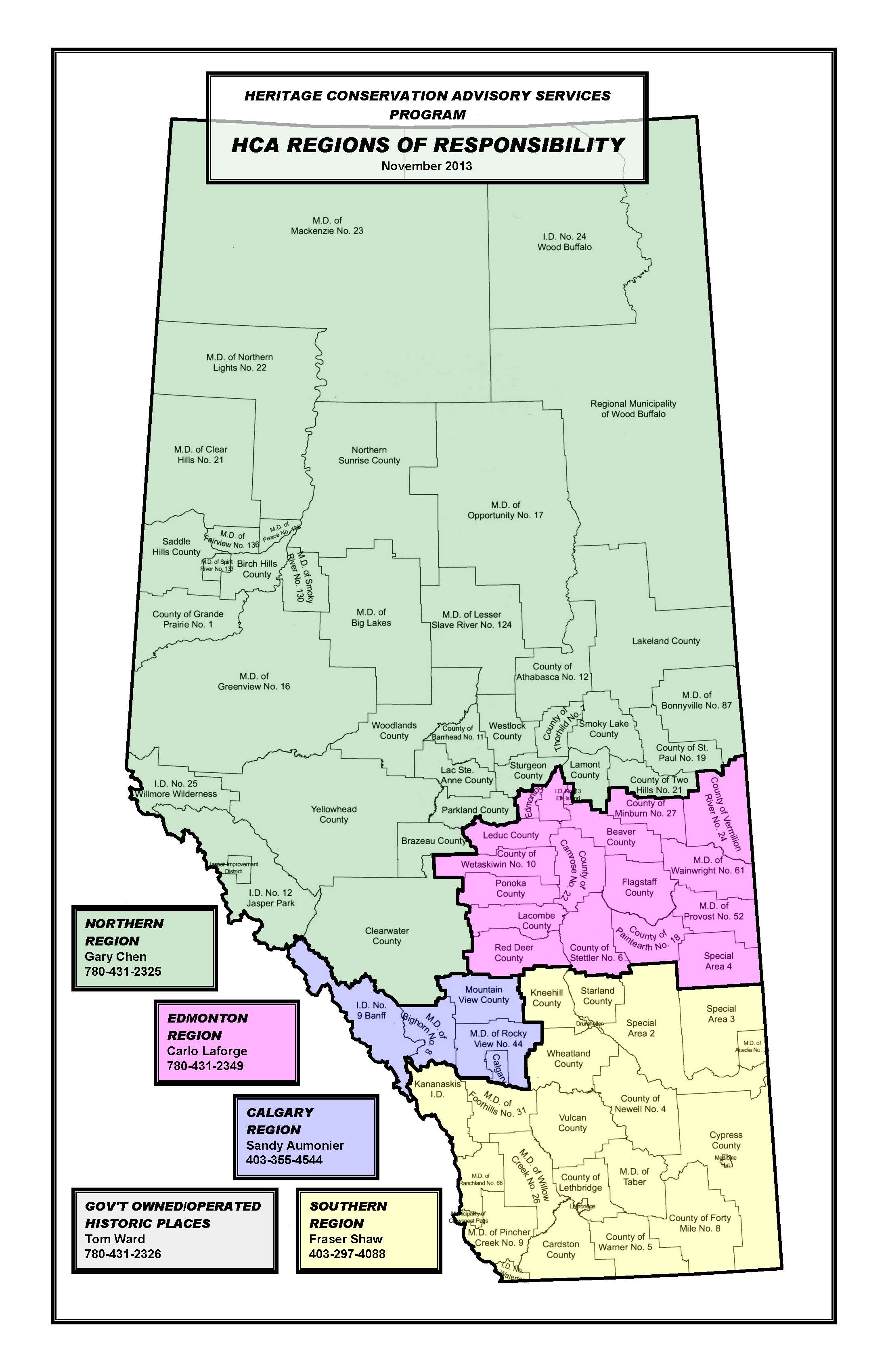
Heritage Conservation Advisory Services Program — H.C.A. Regions of Responsibility (Nov 2013)
Please take a look at the attached map. We have changed the boundaries of the areas that individual Heritage Conservation Advisers cover. We re-draw the boundaries now and again based on the location of expected or ongoing heritage conservation projects in Alberta so as to try and share our work load equally and consequently serve our clients better.
Owners or stewards of municipally or provincially designated historic resources must consult with a Heritage Conservation Adviser before undertaking any work that they intend to seek financial assistance for from the Historic Resource Conservation grant program. This is to ensure that eligibility requirements are met and to advise on the most effective way to take advantage of this program.
The Historic Resource Conservation grant program is operated by the Alberta Historical Resources Foundation’s Heritage Preservation Partnership Program. The next application deadline for eligible conservation projects is Monday February 3rd, 2014. The Foundation will award a second batch of grants this fall. The deadline for applications for the fall grant cycle is Tuesday September 2nd, 2014.
Please do not hesitate to contact the Heritage Conservation Adviser for your area with any questions. We will do everything possible to help you, the owner or steward of a piece of our built heritage, to make the most out of your historic place. It is always our pleasure to hear from you.
Written by: Carlo Laforge, Heritage Conservation Adviser.
You may recall that Municipal Heritage Services is conducting a survey. The survey closes on January 15th. We would like everyone who has attended one of our Municipal Heritage Forums to participate.
Heritage Canada The National Trust’s annual conference will be in Calgary in October, 2015. Our annual Municipal Heritage Forum takes place in the fall as well. We may be able to offer some kind of joint conference in partnership with Heritage Canada, but we need to know what our attendees think to make an informed decision. (If you’d like more information about what the Heritage Canada Conference is all about, please take a look at this post.)
The staff of the Historic Resources Management Branch wishing you a happy holiday!
The staff of the Historic Resources Management Branch wishes each and every one of you a safe and joyous holiday season. We’ve worked hard to identify, protect and conserve Alberta’s historic resources this past year. Thank you all for taking a few moments each week to read about our work.
RETROactive will be taking a break over the holidays; we will resume publishing new articles on January 8, 2014. We look forward to seeing you all in the new year!
To maximize flexibility for communities, program staff receive applications from interested municipalities on a ongoing basis throughout the year. That said, since MHPP projects are funded by the Alberta Historical Resources Foundation, it is convenient for stakeholders to coordinate their applications with meetings of the Foundation’s Board, which generally take place on a quarterly basis. This allows time for staff to review applications and prepare recommendations for the Board, and for the board members to review materials in advance.
At the Nov. 29-30th meeting of the Foundation, the Board established its meeting schedule for 2014, which in turn gives us the requested dates for submission of MHPP and AMSP grant applications.
For the February 21-22 meeting in Olds, submit by January 27th.
For the May 9-10 meeting in Fort McMurray, submit by April 14th.
For the September meeting 12-13 in Pincher Creek, submit by August 18th.
For the November 28-29 in Edmonton, submit by November 3rd.
If you have any questions about MHPP or AMSP applications, please feel free to contact us.
Written by: Matthew Francis, Manager of Municipal Heritage Services
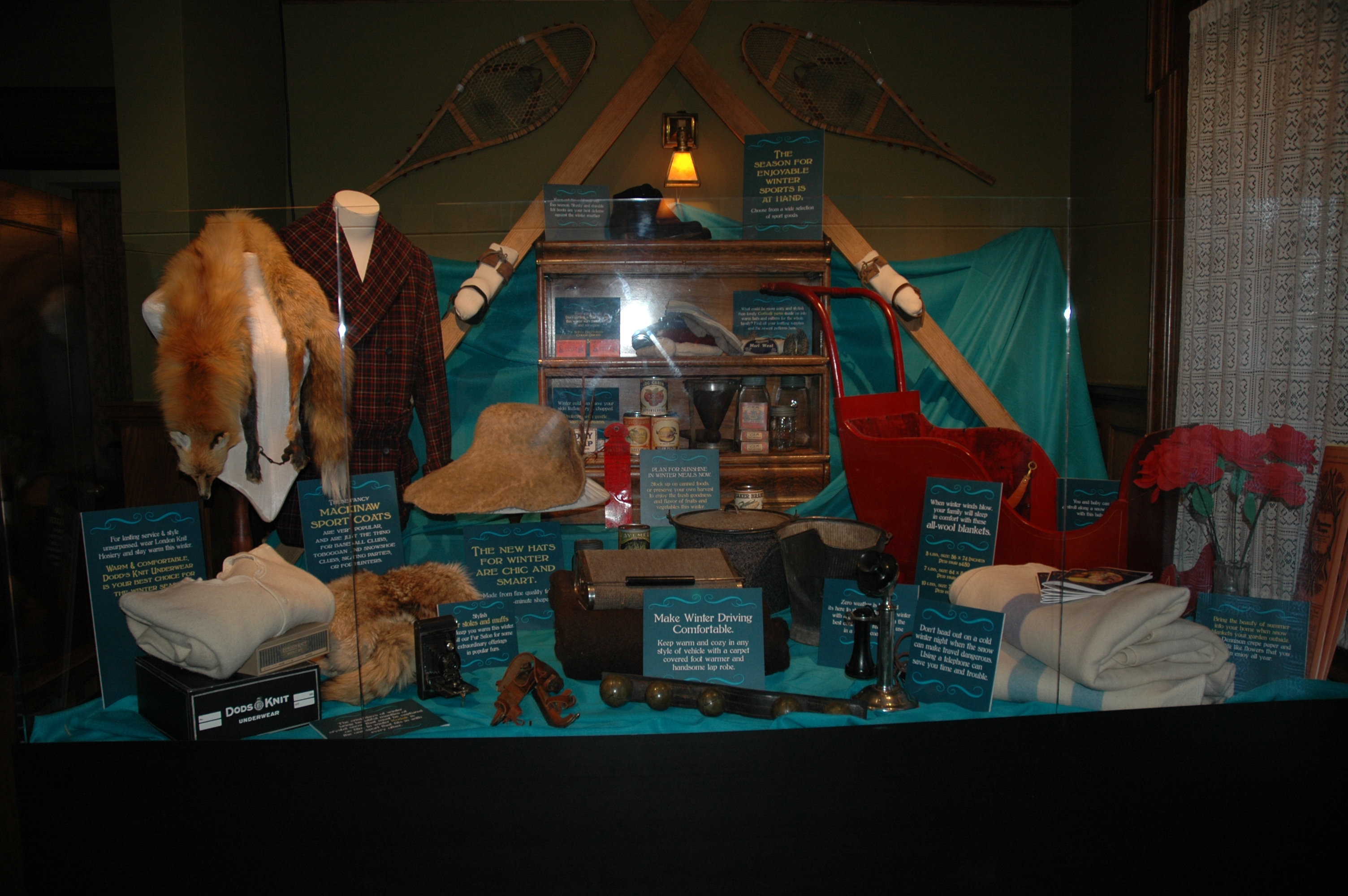
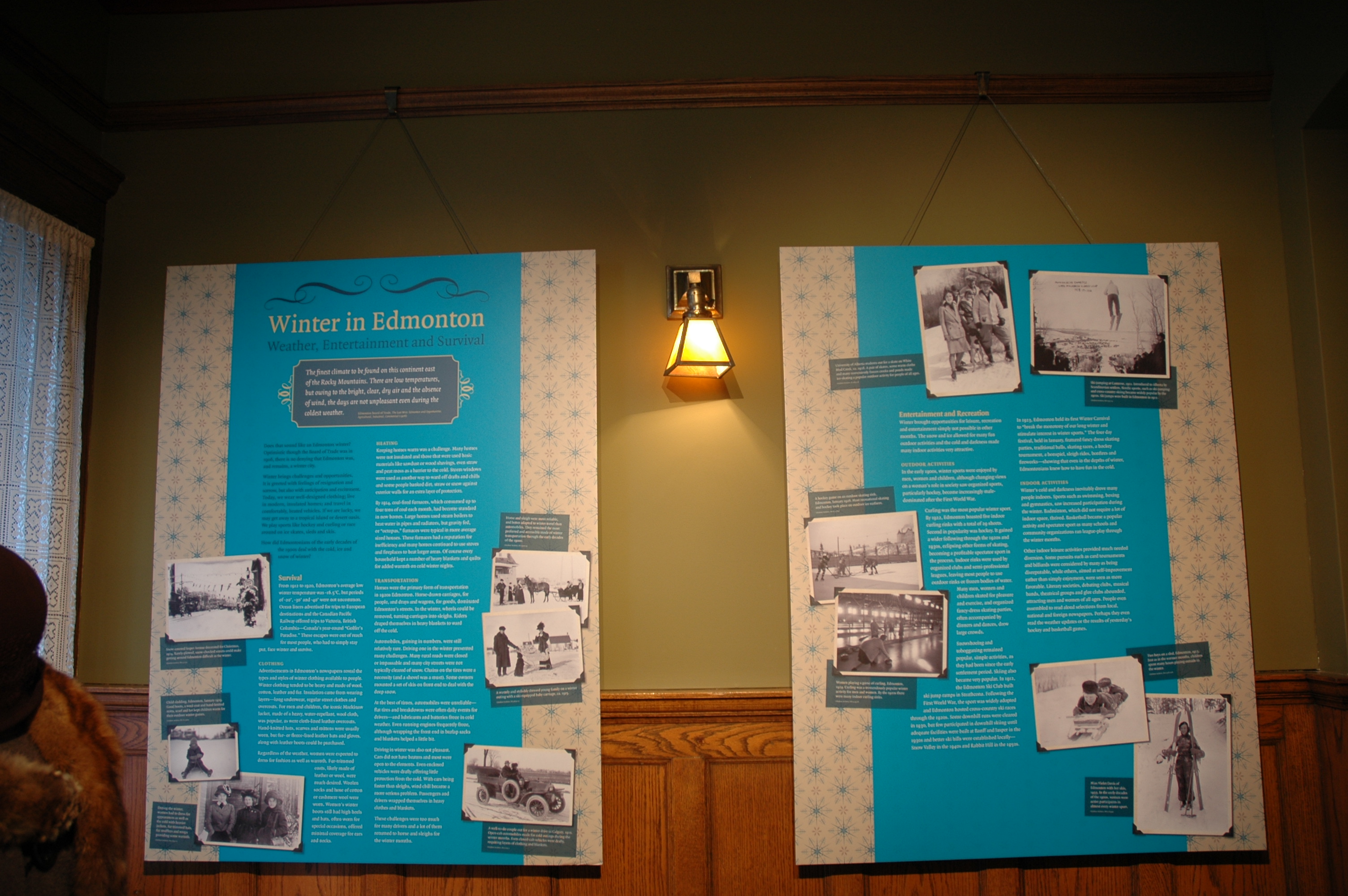
The Rutherford House Historic Site and Museum Christmas season exhibit is now on display. This year the exhibit is Winter in Edmonton – Weather, Entertainment and Survival. The exhibit runs from December 2013 until January 24, 2014.
Rutherford House Historic Site and Museum in winter (2005).
Edmonton is a winter city. That undeniable fact was clearly demonstrated a few weeks ago when the thermometer dropped to -30°C. On cold and snowy days many of us stay inside our centrally-heated homes and shudder as we look out over wind-swept, icy and snow-covered streets and sidewalks.
A selection of winter-related artifacts from the Rutherford House collection and the Royal Alberta Museum are on display at the Rutherford House Historic Site and Museum until January 24, 2014.
Winter is not all cold and dreariness, of course. Winter is a season of fun and outdoor games. It is a season of snowmen and skating parties, of shinny and skiing. It is a season of companionship amongst friends and family, of hot chocolate and large meals.
Whether you enjoy bracing walks outside or a book by a warm fire inside, have you ever wondered how did Edmontonians of the 1910s to the 1930s deal with winter? How did they keep warm outside? How did they heat their homes? How did they get around their community? What did they do for fun in the snow? What did they do when it was too cold to go outside?
Interpretive panels and archival photographs explain and illustrate how Edmontonians survived and enjoyed winter in the 1920s and 1930s.
Visit the Winter in Edmonton exhibit at the Rutherford House Historic Site and Museum for the answers to these questions and to learn about this Provincial Historic Resource – one of Edmonton’s early architectural gems and the historic family home of Alberta’s first Premier.
The Rutherford House Historic Site and Museum is located on the University of Alberta campus at 11153 Saskatchewan Drive. Winter hours are 12 (noon) until 5:00pm, Tuesday through Sunday. While you are there, stop and visit the newly re-opened gift shop for great Christmas stocking stuffers.
Written by: Ron Kelland, Historic Places Research Officer and Geographical Names Program Coordinator.
Heritage Canada The National Trust’s annual conference will be in Calgary in 2015, at the Fairmont Palliser Hotel from October 22-24. Our annual Municipal Heritage Forum takes place in the fall as well. This convergence offers a unique opportunity: we are exploring the possibility of offering the Municipal Forum in conjunction with the Heritage Canada Conference that year.
For those of you who don’t know what Heritage Canada is and what they do, I’ll provide a little background. Heritage Canada The National Trust (formerly known as the Heritage Canada Foundation) is “a national charity that inspires and leads action to save historic places, and promotes the care and wise use of our historic environment.” For the past 40 years, Heritage Canada has organised the only major annual conference for Canada’s heritage conservationists.
Heritage Canada’s annual conference provides an opportunity to network with others working to conserve historic places, and to learn what innovative things are happening in other provinces and territories. In the 1980s and early 1990s, the Government of Alberta partnered with Heritage Canada to help develop the Main Street model for revitalizing historic commercial districts in Canada. Our Alberta Main Street Program was created as part of this partnership.
I had the pleasure of attending this year’s conference in Ottawa. It was titled Regeneration: Heritage Leads the Way. Khalil Shariff delivered the opening keynote and his talk set the tone of the conference. Mr. Shariff is the C.E.O. of the Aga Khan Foundation Canada. He spoke of how historic places were an important part of the foundation’s strategy to improve economic prospects and social cohesion in cities in Asia and Africa. The individual sessions explored ideas of how heritage conservation builds community and fosters economic growth. There were sessions on how heritage enabled community development, and that provided examples of how to finance and organise conservation projects. You can see a complete list of the conference presenters (with links to their presentations) on the Heritage Canada conferences page.
Before making firm plans for our 2015 forum, we would like to know what you think. Please take a look at the programs from Heritage Canada’s 2012 and 2013 conferences to get a sense of the presentations, and then take our survey. If you complete our survey before January 15, 2014 your name will be entered in a draw to win a 2014 Family Annual Pass to visit Alberta’s Provincial Historic Sites, interpretive centres and museums.
If you have further comments or questions, feel free to email us at albertahistoricplaces [at] gov [dot] ab [dot] ca .
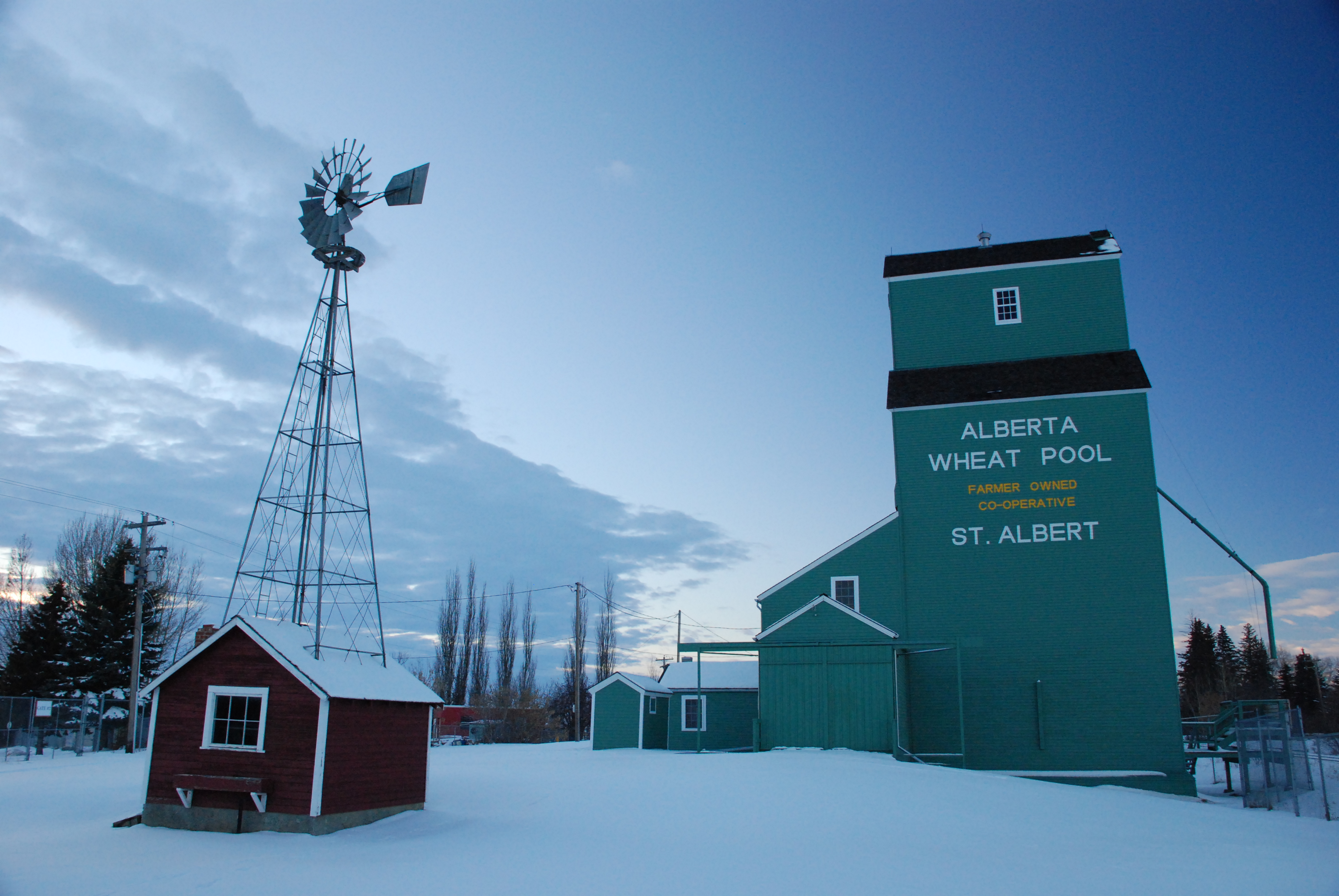
Starting on Friday afternoon at St. Albert Place, the major civic centre for the City of St. Albert, and a Douglas Cardinal-designed Municipal Historic Resource, the Board was greeted by Mayor Nolan Crouse. The mayor, a committed supporter of heritage, spoke eloquently about the City’s storied past since its founding as a Catholic mission over 150 years ago. He also brought the AHRF Board members up to date about recent heritage happenings in St. Albert.
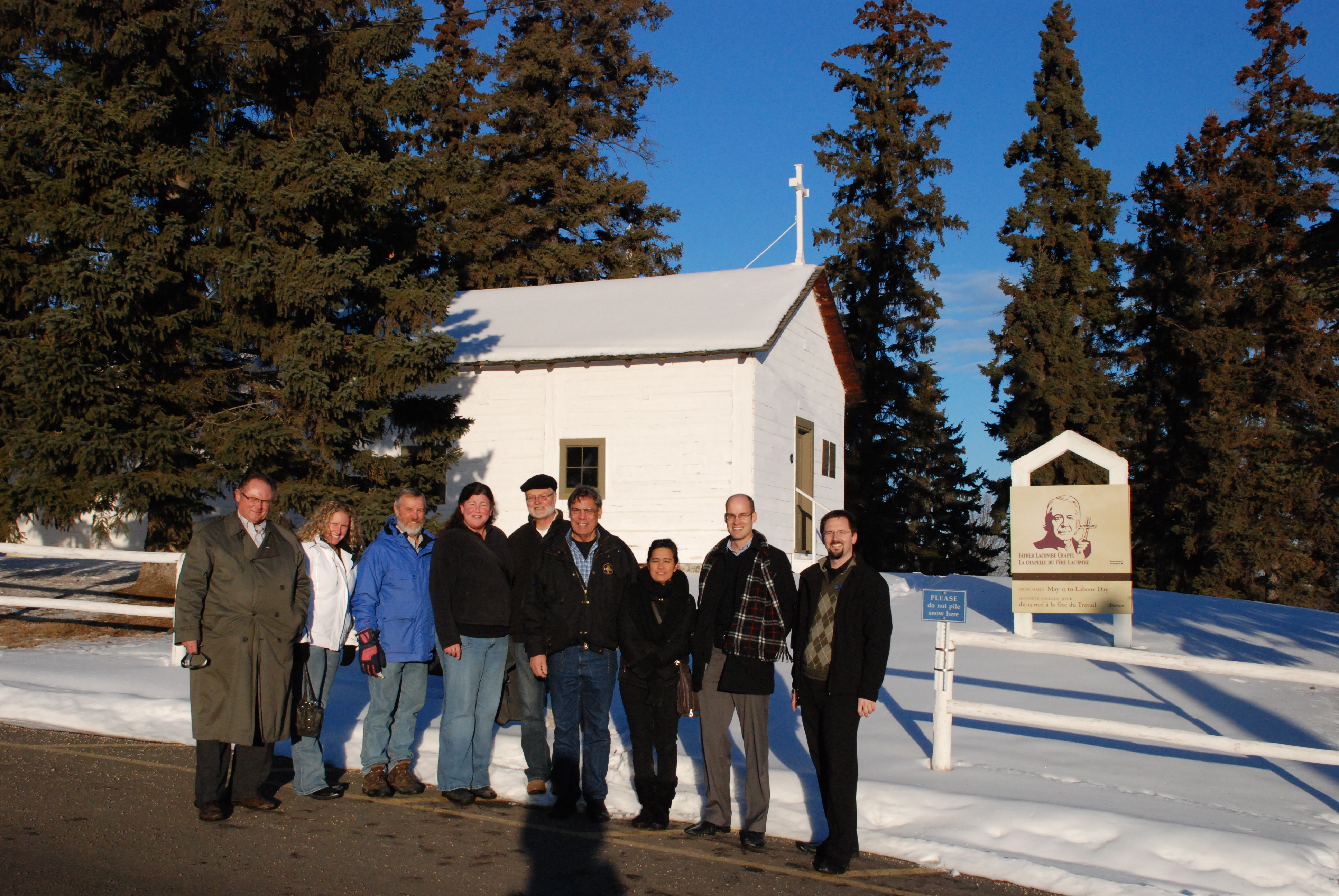
Departing from Council Chambers, Board members embarked upon a tour of the Musee Heritage Museum. They then headed out into the snow under a bright Alberta blue sky to visit the Little White School and the City’s Mission Hill area, home to multiple Provincial Historic Resources, including the Bishop’s Palace and the Father Lacombe Chapel.
AHRF Board Members and Alberta Culture staff outside of the Father Lacombe Chapel in St. Albert; (Left to Right: Bob Gaetz, Leah Millar, Don Totten, Laurel Hallliday, Board Chair Fred Bradley, Tom Clark, AHRF Grants Program Coordinator Carina Naranjilla, Executive Director Matthew Wangler, and Manager, Municipal Heritage Services, Matthew Francis)
The Board got down to business with Saturday’s meeting, where numerous grant applications were reviewed and key funding decisions made. Board Chair Fred Bradley was very pleased to welcome the Honourable Heather Klimchuk, Minister of Culture, who joined the meeting for a lunchtime discussion of key issues. Minister Klimchuk offered thanks to the Alberta Historical Resources Foundation for their dedicated work, and recognized several members who are completing their terms of service.
Stay tuned to RETROactive for further updates on funding decisions made by the Board at their November meeting!
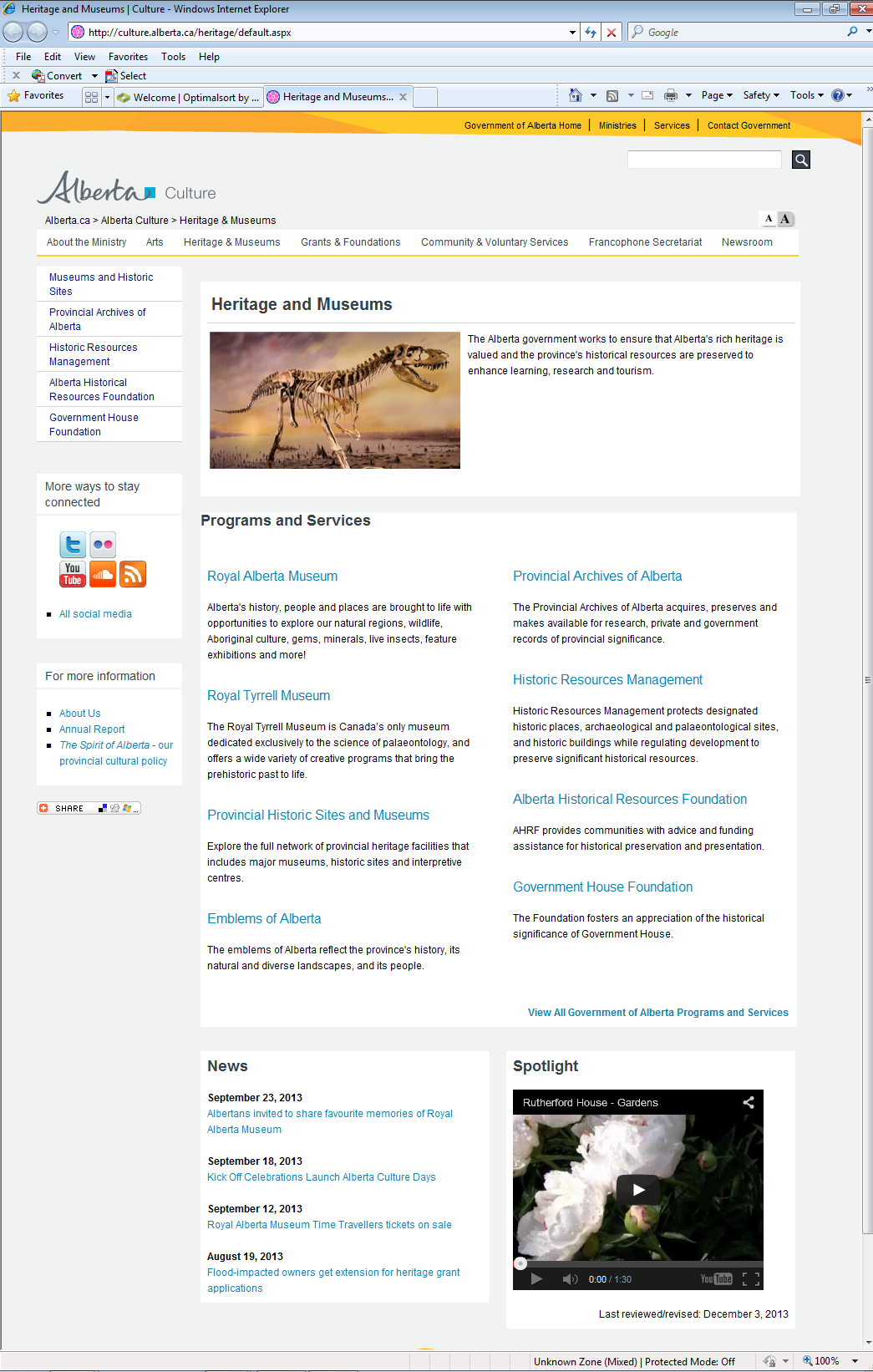
We are working to make our Alberta Culture website even better, and RETROactive readers are invited to participate! You have opportunity to leave your name to be entered to win a $100 gift card. Help us make culture.alberta.ca easier to use by completing this short online survey.






 RETROactive