Alberta Historical Resources Foundation visits Nordegg

Board tours the Nordegg/Brazeau Collieries Mine Site.

With the September meeting of the Alberta Historical Resources Foundation held in Rocky Mountain House, board members and staff took the opportunity to visit the Nordegg/Brazeau Collieries Mine Site.

We enjoyed a great walking tour of the Nordegg/Brazeau Collieries Mine Site, led by the informative staff of the Nordegg Historical Society. Designated as a Provincial Historic Resource in 1993, the site of consists of several industrial structures, support buildings and related machinery associated with the coal-mining operations of the Brazeau Collieries between 1911 and 1955.

The site is being restored through a partnership between Clearwater County and the Nordegg Historical Society, with conservation funding from the Foundation’s Heritage Preservation Partnership Program. It was exciting to see this Provincial Historic Resource–large and complex with a variety of heritage values–steadily being restored and revitalized.

Here are a few photographs from our tour of the site:

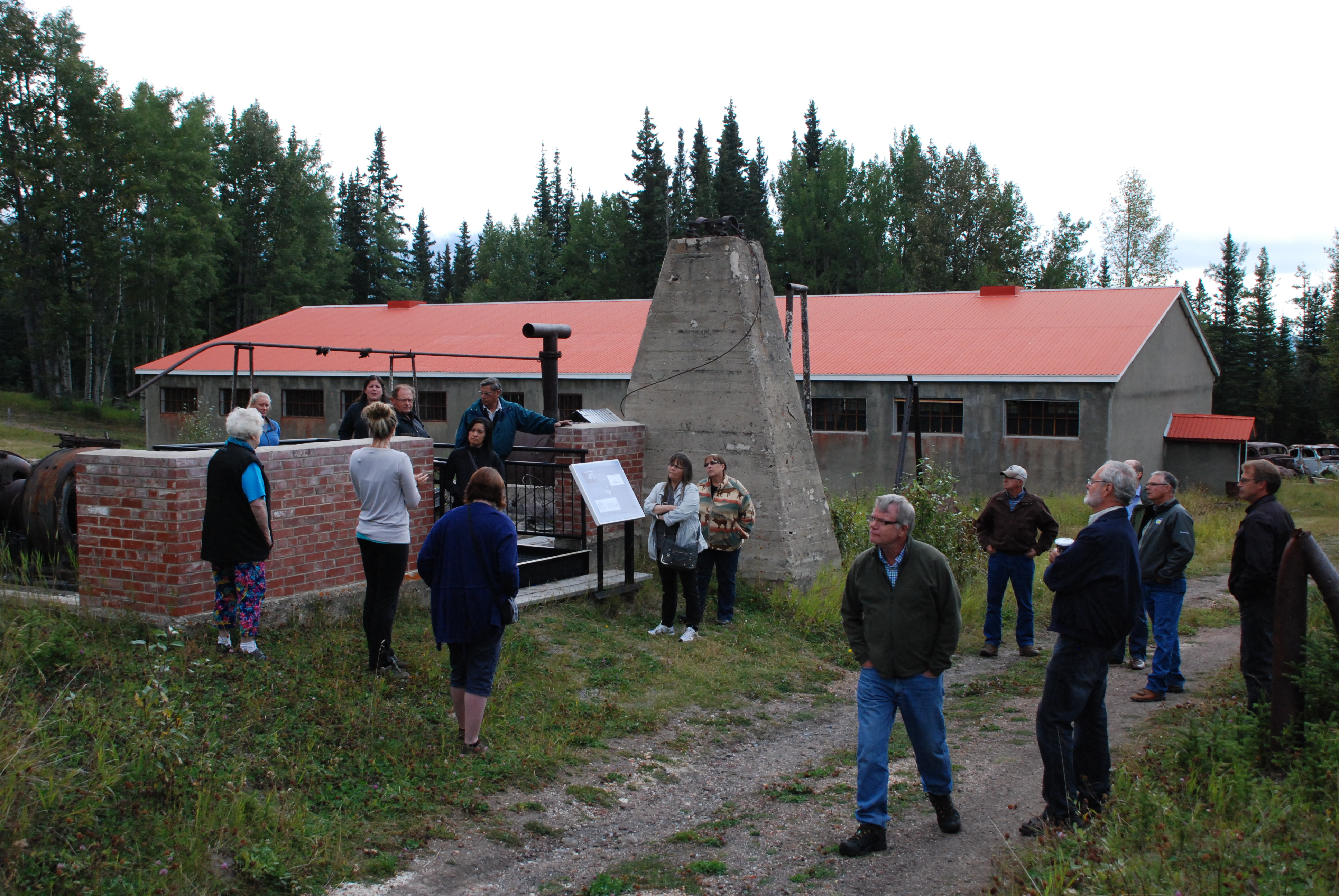
touring the Nordegg site - 1st image
AHRF board beginning it’s tour of the Nordegg Mine Site.
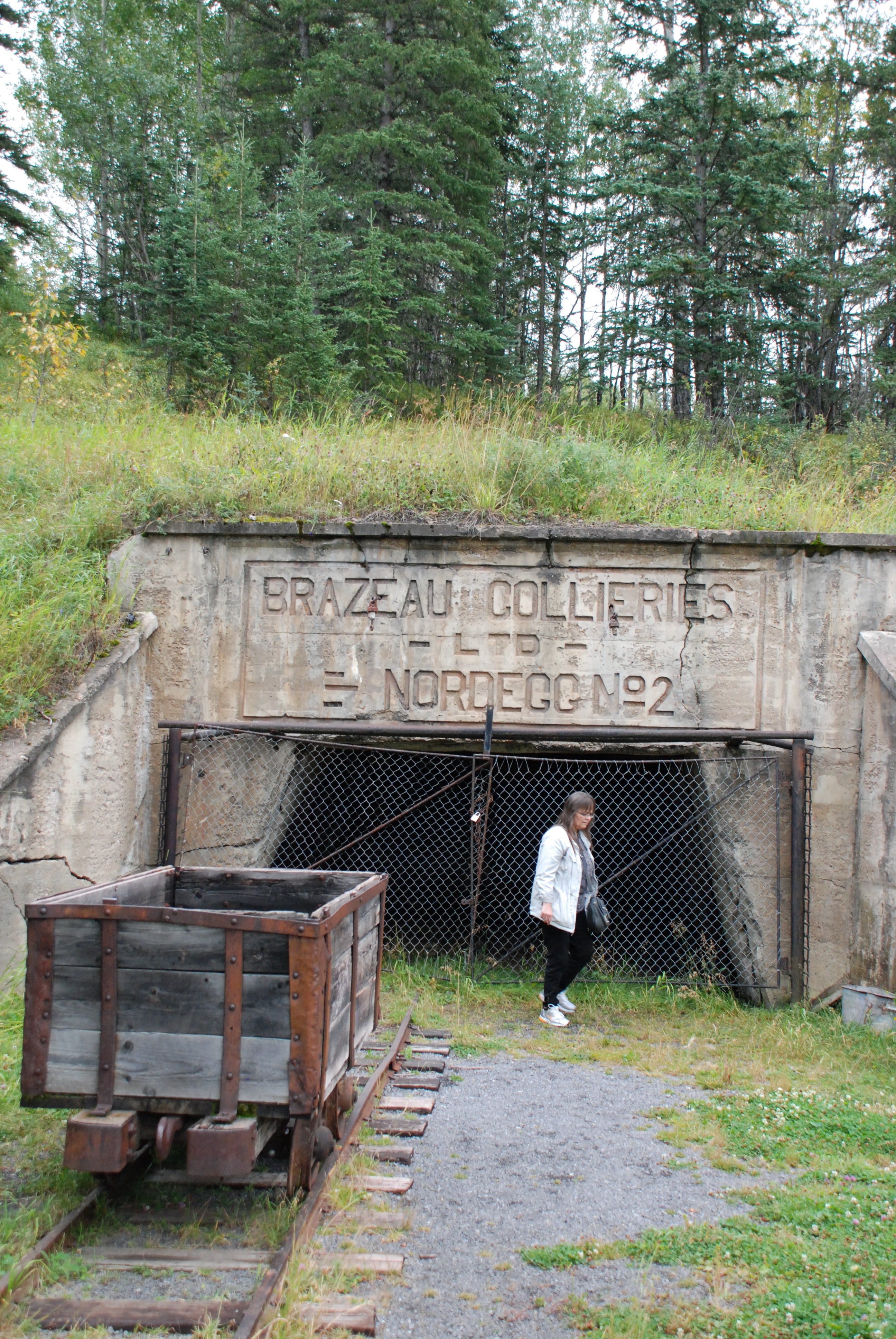
touring the Nordegg site - 2nd image
Val Clark peeking into one of the mine shafts at Nordegg.
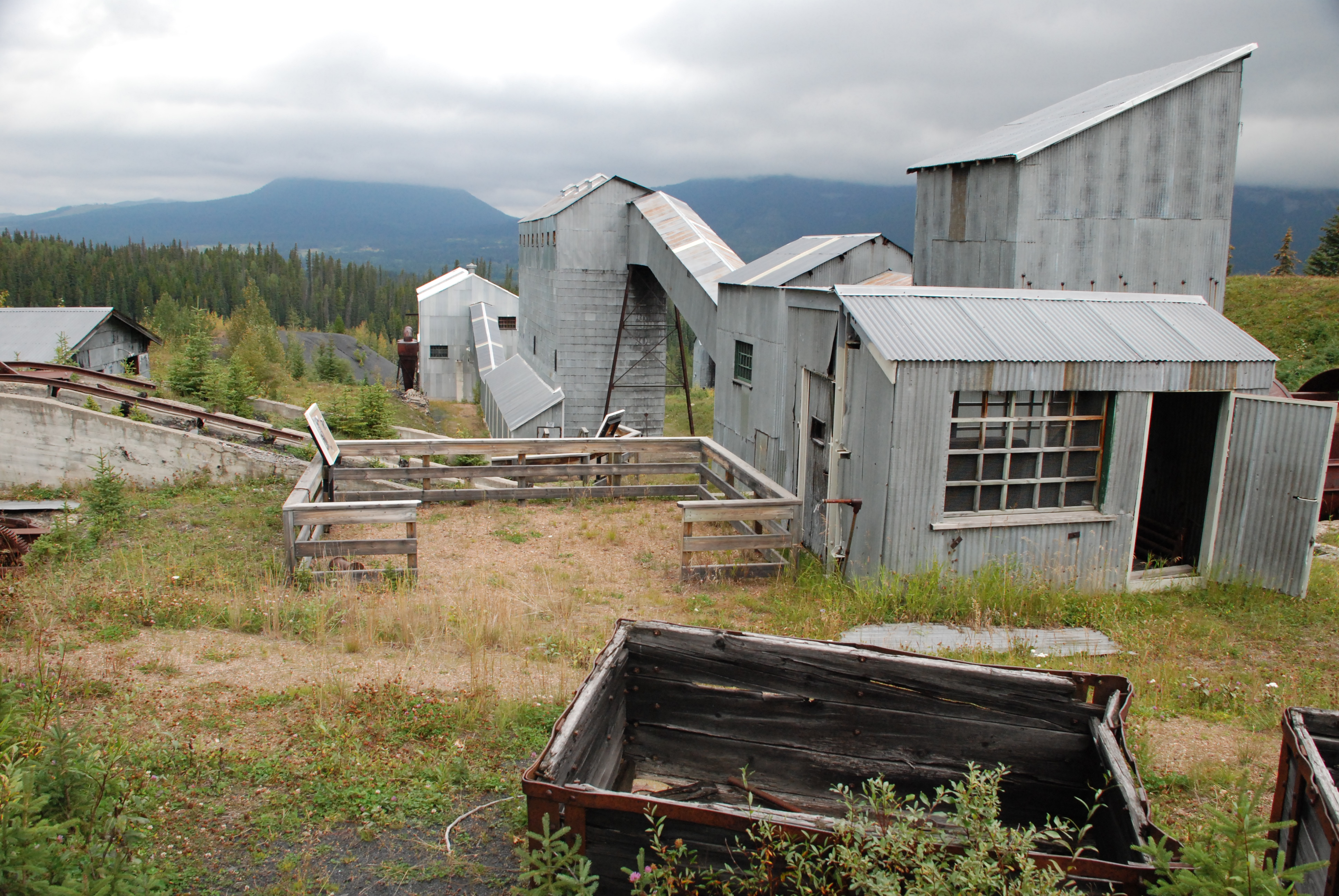
touring the Nordegg site - 3rd image
Several buildings at the Nordegg Mine Site.
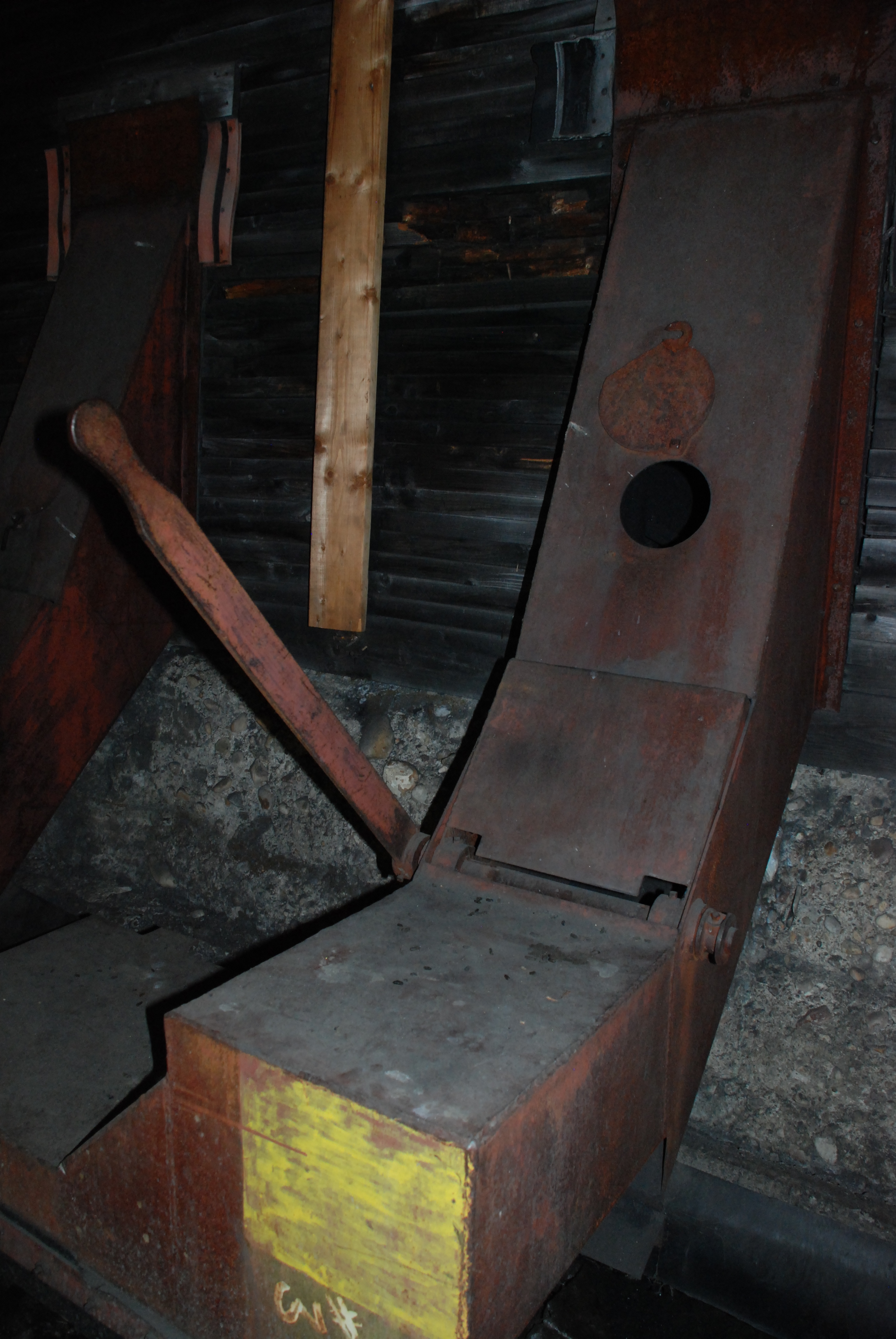
touring the Nordegg site - 4th image
A coal chute.
touring the Nordegg site - 5th image
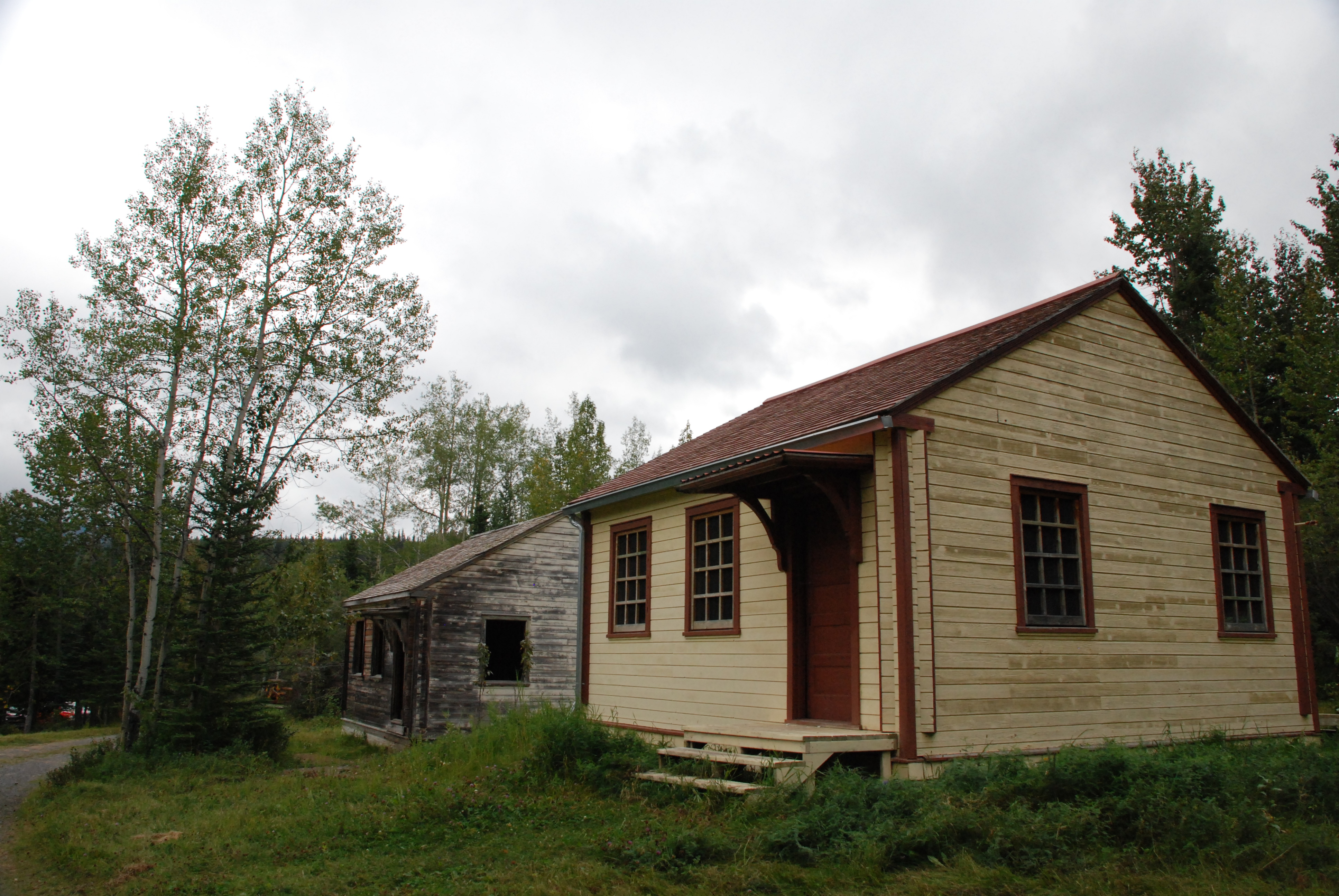
Two miner’s cabins, one of which has been restored.

Following the tour, we had an informal meeting with the society and representatives of the Clearwater County in the Nordegg Museum, where everyone learned a great deal about the restoration and interpretation of this historic mine site.

Written by: Carina Naranjilla, Grants Program Administration, Alberta Historical Resources Foundation

Forum 2013 – Thank you!

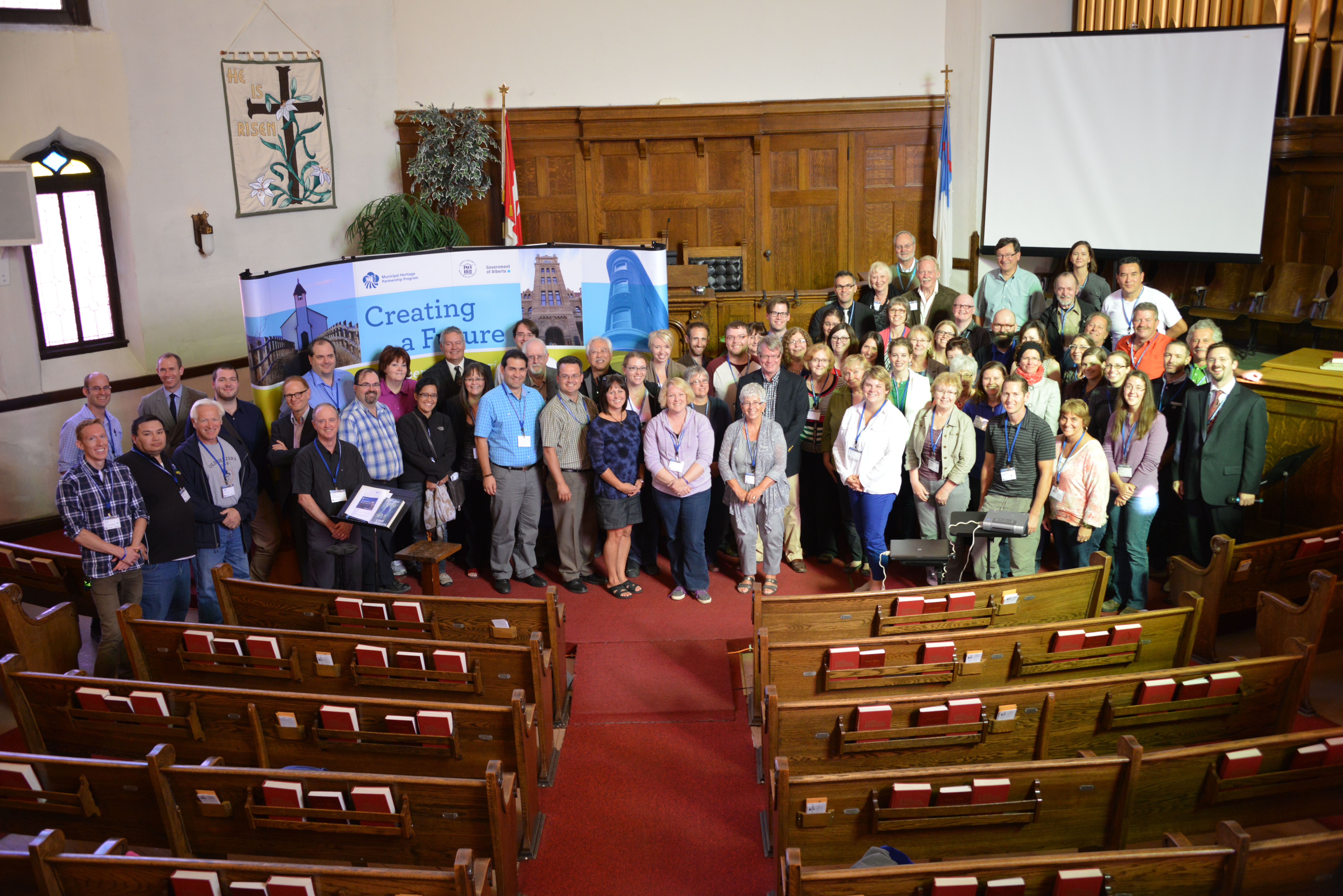
forum attendees 2013
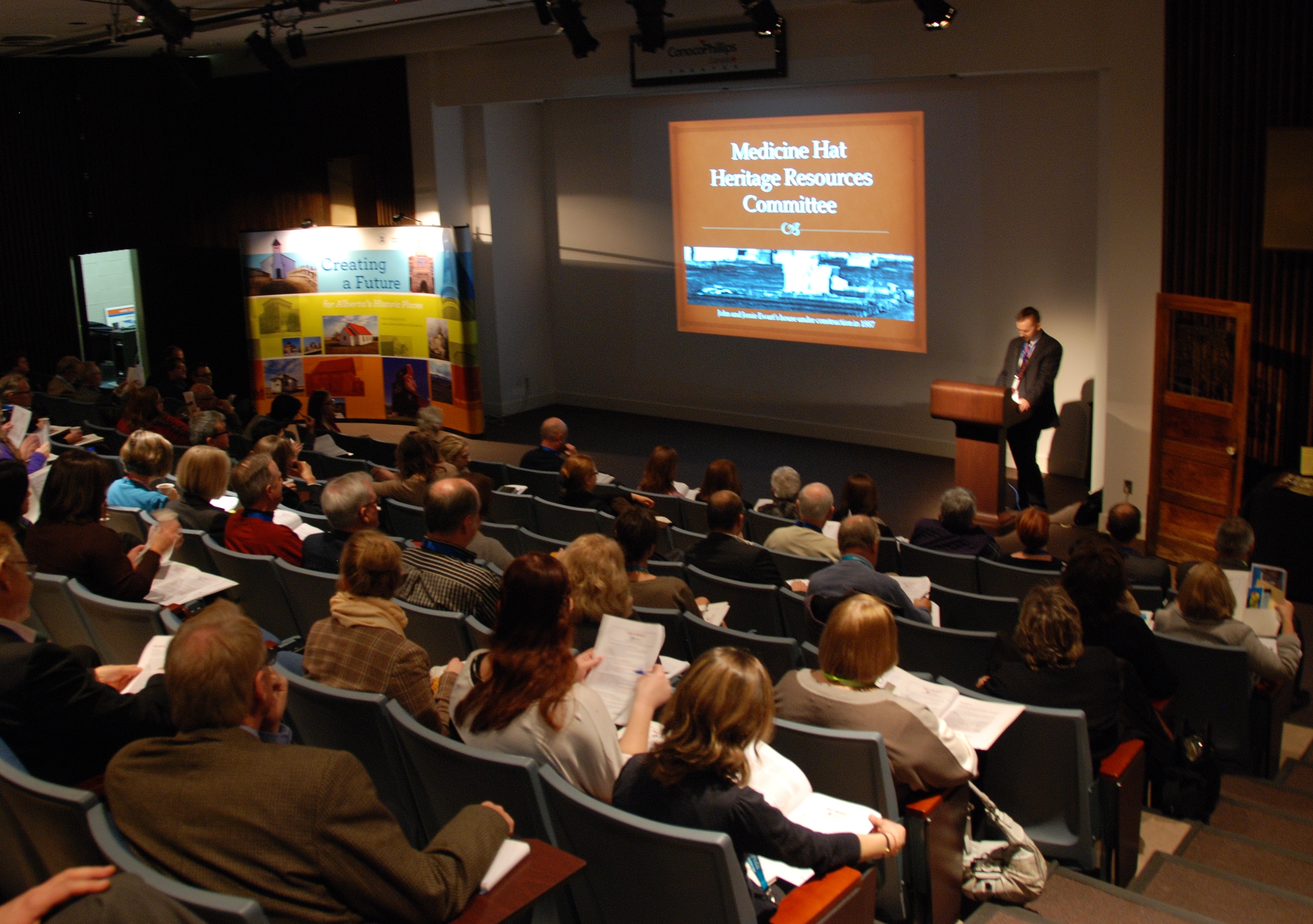
Participants in the 7th Annual Municipal Heritage Forum, gathered at Knox Church in Old Strathcona, September 20th, 2013.

On behalf of our whole Municipal Heritage Services team, we would like to express our sincere thanks to all those of you who participated in this year’s Municipal Heritage Forum at the Ukrainian Cultural Heritage Village and in the Old Strathcona Provincial Historic Area. The weather was gorgeous, we had fun together, and learned a lot about “The ABCs of Conservation.” 

Your contribution really helped to make the 7th Annual Municipal Heritage Forum a very positive event. We couldn’t have done it without you all! Whether you were presenting or just there to connect and share your local knowledge and experience, it all made a big difference.

You should see some of the great content from “The ABCs of Conservation,” including HD video of some of the Forum presentations, featured here on RETROactive over the next few weeks.

See you next year at Forum 2014! 

Help Shape the Future of Our Past

The Alberta Historical Resources Foundation board of directors has a few openings.

Alberta Historical Resources Foundation

We are accepting applications from people interested in joining the Alberta Historical Resources Foundation‘s board of directors.

Founded four decades ago, the Alberta Historical Resources Foundation has evolved into a complex agency that serves a range of stakeholders in many ways. The foundation is the primary source of Government of Alberta funding for heritage projects. The foundation focuses on a few key objectives:

  • providing financial and program support to individuals and organizations engaged in researching, preserving, and promoting greater appreciation for Alberta’s heritage;
  • naming geographical features in the province;
  • staging events that support the heritage community; and
  • acting as an appeal body for certain decisions made in Alberta Culture.

Members are appointed for terms of up to three years.  The board meets four times per year for about a day and a half per meeting at locations around the province. Board members are also occasionally asked to attend events within the heritage community.

Interested individuals can submit their applications through the Government of Alberta Careers website. The posting number is 1019525. The competition closes on October 3, 2013.

Should you have any questions about the board positions, please contact Matthew Wangler, Executive Director of the Alberta Historical Resources Foundation. Mr. Wangler can be reached at 780-438-8503 (toll-free by first dialing 310-0000) or matthew.wangler@gov.ab.ca.  We look forward to hearing from you.

Written by: Matthew Wangler, Executive Director, Alberta Historical Resources Foundation

Meet our new Historic Places Research Officer

Allan Rowe
Allan Rowe, 2013.

Greetings everyone,

My name is Allan Rowe, and I am the new Historic Places Research Officer. Following the example set by my colleagues, I’m taking a moment to introduce myself.

I am originally from British Columbia, born in White Rock and raised in the beautiful Okanagan Valley. Halfway through my grade twelve year, I made the fateful decision to change my upcoming college major from computer information systems to history, and I haven’t looked back. I completed my BA in history at the University of British Columbia in 1994, and followed up with a Public History Diploma at Simon Fraser University. It was during that time that I got my first taste of heritage work as a summer student at a small British Columbian museum. In my case, it was the Elphinstone Pioneer Museum (now the Sunshine Coast Museum and Archives) where I spent the summer of 1996 answering tourists’ questions about The Beachcombers (we were located just up the road from Molly’s Reach – apparently The Beachcombers was a huge hit in Japan).

Unable to find permanent work in the heritage sector, I spent two tedious years working in corporate cell phone distribution (ugh), until the muse of history called me back to service and I received my MA in Canadian History from SFU in 2000. I then moved to Edmonton to pursue my Ph.D. at the University of Alberta, and during my time as a graduate student, I was fortunate enough to work with Historic Places Stewardship on several occasions, mostly working on heritage markers and assisting with the Alberta Heritage Survey Program. I finished my Ph.D. in history in 2008 and taught Canadian, Irish and American history, most recently at Keyano College in Fort McMurray. Though I enjoyed my time as a history instructor, I have always been fascinated by the heritage sector, and I was thrilled when I was given the opportunity to join the Historic Places Stewardship team in Edmonton.

On the personal side of things, I am blessed with a great wife and three amazing daughters, whose own interests range from bird-watching to dog-sledding to Shakespeare. I enjoy cooking (with mixed success) and continuing to learn as much history as possible. I remain a staunch Vancouver Canucks fan, and I welcome everyone’s scorn and derision.

I’m excited to join the team and I look forward to meeting everyone in person.

Written by: Allan Rowe, Historic Places Research Officer.

Agenda for the Municipal Heritage Forum

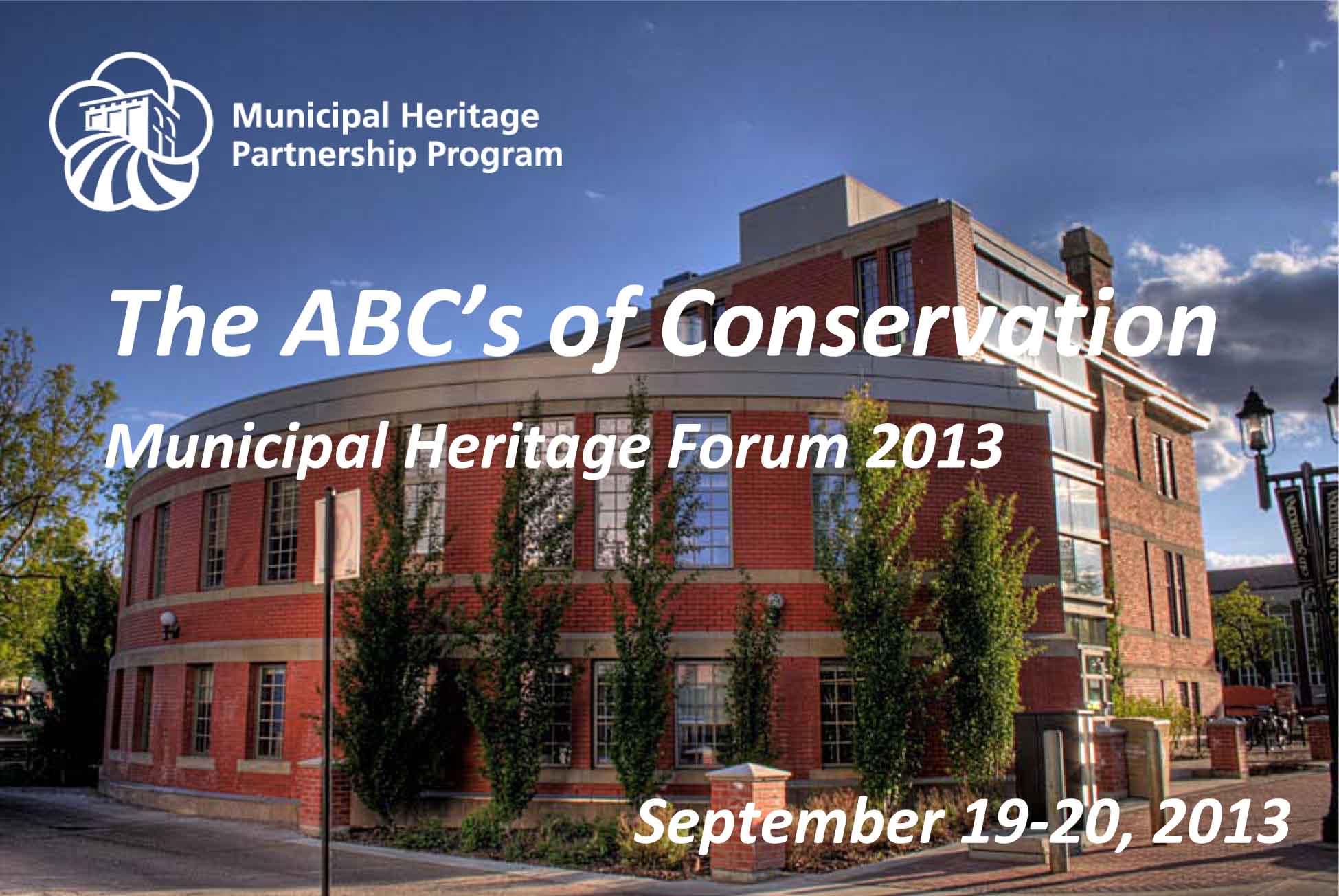
Forum 2013 - Header Image

The Municipal Heritage Forum 2013 begins in a few days!

We just finalized the agenda. Here, hot off the (electronic) press, is the event program and a list of the breakout sessions offered. Please be green and don’t print these documents if you’re attending the forum. We’ll provide you with copies of each when you register.

Matthew, Val and I look forward to seeing many of you on Thursday and Friday.

And, if you can’t attend, don’t fret, We’ll recap the highlights on the blog over the next several weeks.

Written by: Michael Thome, Municipal Heritage Services Officer

Want to attend Forum 2013? Register NOW before it’s too late!

Forum 2013 - Header Image

We are thrilled at the eager response to our upcoming Municipal Heritage Forum – the “ABC’s of Conservation,” taking place September 19-20th.  That’s two weeks away! It’s going to be a great time of learning, inspiration, and fun. Registrations have been pouring in, and there are limited spaces remaining. Be sure to register online ASAP to reserve your place! The Forum is free of charge to all attendees.

Registration will close September 12th, or before if we reach our capacity.

Forum participants are invited to attend the Alberta Museums Association’s Opening Reception, Thursday evening,September 19th. Tickets (for the reception only) are $40 each and can be purchased here.

There are also opportunities to participate in the Forum:

Show and Tell opportunities at the Forum

Municipality Show & Tell: Medicine Hat Heritage Resources Committee
Municipality Show & Tell: Medicine Hat Heritage Resources Committee at Forum 2012

Has your community been involved in some really compelling heritage work this year? Is there a conservation project you are eager to share with others?

Back by popular demand, this year will feature our community “show and tell” sessions on both Thursday September 19th at the Ukrainian Cultural Heritage Village and Friday September 20th at Knox Church in Old Strathcona. While we have already lined up some excellent updates from communities, we do have room for a few more, and would like to give you this opportunity to get involved and showcase your community’s good work.

“Show and tell” presentations should be:

  • No more than 15 minutes long
  • Fun
  • Accompanied a few slides or images – a picture’s worth a 1000 words!
  • Can be about facing community heritage challenges, not just success stories;
  • About a heritage project undertaken within the last year – it can be completed, or a work-in-progress.

If you are interested in “showing and telling,” your heritage happenings, contact Matthew Francis at matthew.francis@gov.ab.ca or (780) 438-8502, toll-free by first dialing 310-0000.

Visit a place you haven’t seen in a while: Alberta’s past

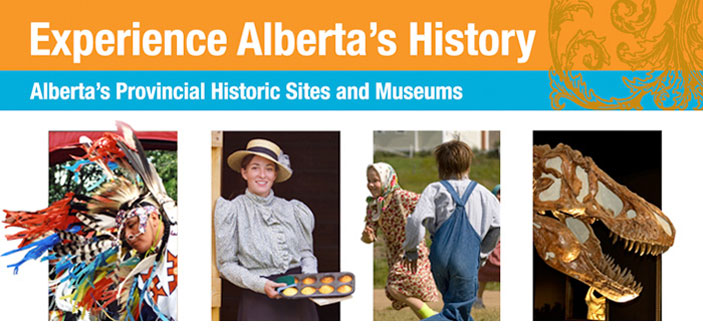
Experience Alberta's History

Where but Alberta can you experience an Icelandic homestead, a glacial erratic, a fur trade post and a buffalo jump? What other province operates a network of museums and interpretive centres, where you can see dinosaur fossils, historic automobiles, Canada’s deadliest rock-slide or a Ukrainian-Canadian settlement?

The Government of Alberta doesn’t just protect significant historic resources—we proudly interpret and display Alberta’s heritage. The Ministry of Culture operates historic sites, interpretive centres, museums and archives. To find out more, click here.

Would you like to know what’s happening at some of our historic sites and museums during the next few weeks? Here’s some information for southern Alberta and for northern Alberta.

Why Architects?

To help in planning of course!

In an earlier post, I talked about the importance of proper planning before undertaking work on a designated historic resource. Throughout my career, I have discussed, planned and observed many different types of projects involving modern and historic buildings. I have worked on simple maintenance projects, such as roof replacements or re-painting, and more elaborate ones, such as restorations and additions.

Providing advice to heritage building owners is the most enjoyable part of my work as a conservation adviser. Nevertheless, the size and scope of some projects are quite large. Buildings are made of a variety of materials, like stone, brick and wood. Skilled tradespeople, such as masons, carpenters and electricians know how to care for each material (or building system). Historic building conservation usually draws on the expertise of an exceptionally wide variety of skilled tradespeople. Making a plan to address problems with any major component requires a group of skills that only architects possess. This is why architects can be so helpful.

A project’s size or complexity should not discourage you. I recommend hiring an architect to help identify, prioritise, and cost the required conservation work on any large project. The architect’s report, often called a “conservation plan,” is invaluable. The plan will explain the problem, propose possible solutions and is a useful reference should the work need to be phased out over time.

Hiring an architect is just like hiring any other professional: just as some contractors are not familiar with the principles of heritage conservation (described in The Standards and Guidelines for the Conservation of Historic Places in Canada), some architects are not skilled in this area either. Fortunately, my fellow Heritage Conservation Advisers and I can help you plan a heritage conservation project (call us), which can include advice on how to hire the right architect.

Although hiring architects cost money, the benefits make it worthwhile. Architects know how to analyse a building for problems, they can propose creative solutions and help you select and supervise the right tradespeople. This is why architectural and engineering services have their own grant category within the Alberta Historical Resources Foundation’s Historic Resource Conservation program.

Not all projects or interventions require the services of an architect, but having the planning and scope of work established by contractors alone on large projects can lead to a bad outcome. Having a uniform and properly outlined conservation plan developed by an architect (or engineer, depending on the problem) makes it easier for conservation advisers to approve projects and for contractors to provide accurate cost estimates.

Don’t feel overwhelmed by large conservation projects. It’s true what Steve Smith said at the end of every episode of his Red Green Show.

Written by: Carlo Laforge, Heritage Conservation Adviser.

Flood impacted owners get extension for heritage grant applications

Alberta Historical Resources FoundationRegular readers of RETROactive will know that owners of designated historic resources listed on the Alberta Register of Historic Places are eligible to apply for matching grants for approved conservation work.

The regular deadlines for owners of designated properties to apply for these grants are February 1st and September 1st. That means that the next grant application deadline is fast approaching!

But this year, for many Albertans, has been very different.

We know that many historic places have been seriously affected by flooding. In addition, some municipalities which have been severely impacted have had to push back scheduled processes, which, under normal conditions, would have already seen new Municipal Historic Resources designated.

As a result, the Alberta Historical Resources Foundation has extended its upcoming deadline for applications for Historic Resource Conservation grants, for flood-impacted applicants only. Applications from owners of flood-affected, designated historic properties will be received until September 30, 2013. In addition, flood-impacted properties that have been formally evaluated and are currently in the process of being considered for Municipal Historic Resource designation, but may not have completed the process, will be deemed as eligible, and are also encouraged to apply.

So, the application deadline has been extended for properties that:

  • have been directly impacted by flooding
  • are included on a formally adopted Municipal Heritage Inventory, with a Statement of Significance
  • have been issued a Notice of Intention to designate as a Municipal Historic Resource by the applicable municipality

The regular funding deadline of September 1, 2013 still applies to all non-flood-affected properties.

“Owners of historic buildings and sites that have been impacted by the severe flooding in northern and southern Alberta are still in the midst of recovery,” said Alberta Culture Minister Heather Klimchuk. “With the many challenges they are facing, extending the application deadline will ensure they will still have the opportunity to apply for grants to assist in their conservation efforts while allowing municipalities to complete their designation processes.”

If you have any questions relating to the Alberta Historical Resources Foundation’s grant programs, and the upcoming grant deadline, please contact Carina Naranjilla, Grants Program Coordinator at (780) 431-2305 or by email: Carina.Naranjilla@gov.ab.ca.

If you have any questions relating to the Municipal Historic Resource designation process, please feel free to contact Matthew Francis, Manager of Municipal Heritage Services, at (780) 438-8502 or by email at Matthew.Francis@gov.ab.ca.

These numbers are toll-free by first dialing 310-0000.

Vulcan goes where few municipalities have gone before

Vulcan has developed a plan

Vulcan County, the Town of Vulcan and the Village of Champion are once again working together (you might even say they’ve federated) to conserve their shared heritage. With the aid of a Municipal Heritage Partnership Program grant, they will create a heritage management plan over the next year.

Dedicated readers may recall that these three communities (along with the Villages of Carmangay and Milo) surveyed and inventoried several historic resources last year. They identified several places of interest—sites that warrant further evaluation due to their probable historical or architectural significance. Vulcan’s HAB has already confirmed that many of are significance—that is, they somehow physically embody some aspect of Vulcan’s history.

Knowing that they have several sites that are significance and have integrity, the Vulcanites have turned their attention to figuring out how to protect their locally significant historic resources. That is why they have chosen to develop a heritage management plan. During the next year, they will develop a policy and process to designate locally significant historic resources. Many locally significant sites will be designated as Municipal Historic Resources.

The management plan will lay out the application process and how each municipality will decide what to designate. This will include determining what types of sites they will designate, how the consent of the owner (to designation) will be obtained how the public will be consulted. It will ensure that each proposed designation will be evaluated for historical or architectural significance. This significance will be written down as a statement of significance.

The management plan will also lay out how permits to alter a Municipal Historic Resources will be processed. This involves creating an application process. A proposal to alter a site should describe what is being proposed and why. The municipality then needs to evaluate the proposed change using the Standards and Guidelines for the Conservation of Historic Places in Canada. The plan will identify who will process these permits and propose a means of training these agents in the use of the Standards and Guidelines.

The final step will involve exploring what incentives each municipality could offer to encourage the owners of Municipal Historic Resources to conserve them. A successful municipal heritage conservation programs recognizes the need to assist the owner of historic places with the cost of their conservation. The incentive could be grants or tax credits. Any program or service that defrays the cost of operating a property work as incentives too. (You can read Managing Historic Places: Protection and Stewardship of Your Local Heritage for more on heritage management planning).

I’m looking forward to working with Vulcan on this project. When it is done, they will join a select few communities that have completed a survey, inventory and management plan with our assistance. The Vulcans will soon be well poised to protect and conserve their historic places and we’ll all be richer for it.

Written by: Michael Thome, Municipal Heritage Services Officer