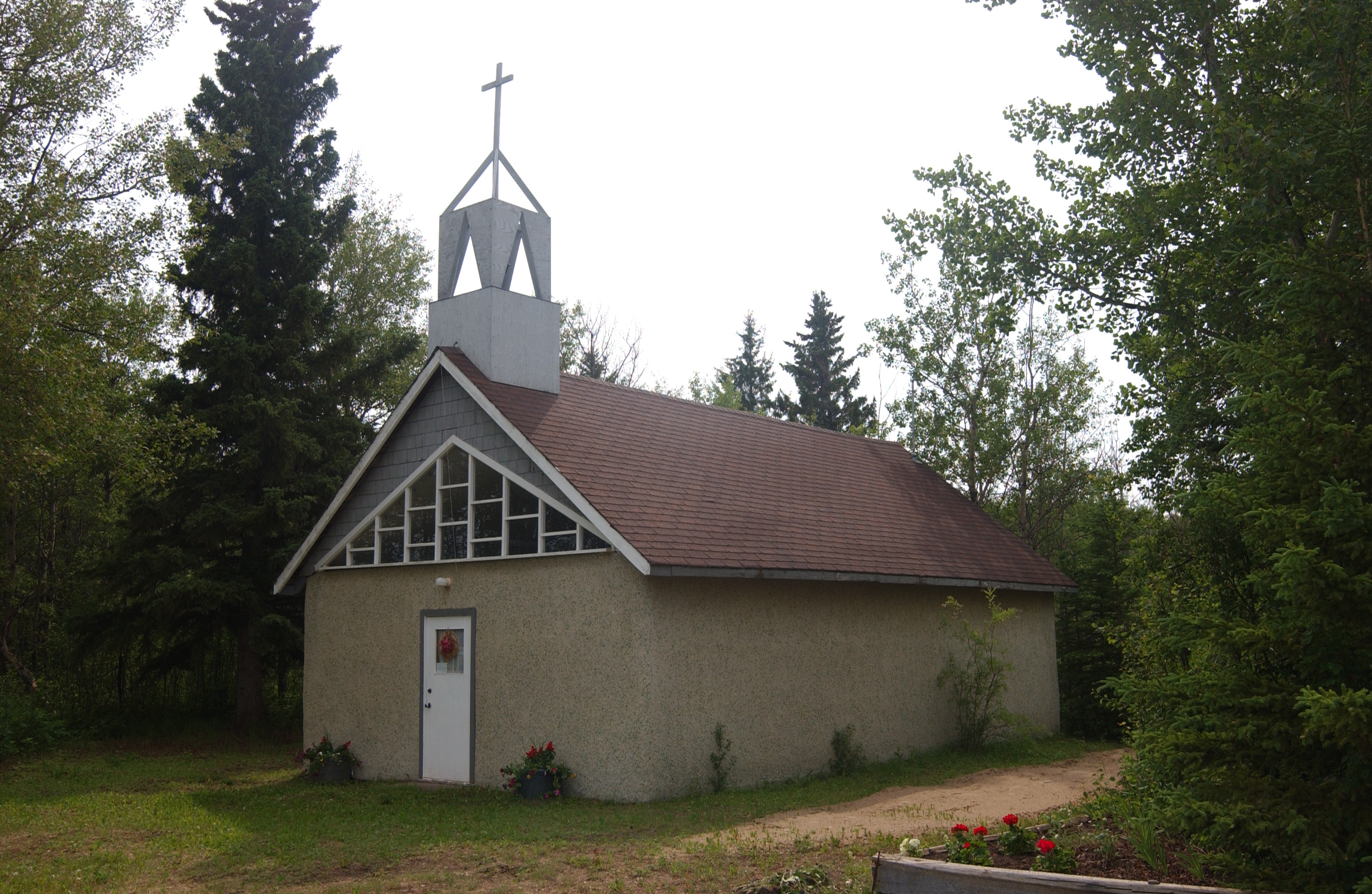
Bad Heart Straw Church

In the aftermath of World War I, the Dominion government established the Soldiers Settlement Board, which was to serve two purposes.  First, it was a mechanism whereby the government could reward men who had physically defended their country in time of need; second, it could provide an outlet for an unemployment problem that was rapidly building up.  The Board identified tracts of land in arable districts which had not hitherto been taken up by homesteaders and proceeded to have portions of them set aside for the soldiers.  One region where considerable land was reserved was the Peace River Country, the central grasslands of which had been settled much earlier.  One of the districts of this region where soldiers were encouraged to come was a small stretch of parkland off the Bad Heart River, which flows through the Burnt Hills into the Smoky River.  Here, in TPs74 & 75 R2 W6, several veterans took advantage of the government’s offer and applied for land in 1919, including the highly decorated but soon to be notorious George Frederick “Nobby” Clark.
The war veterans were soon joined by other settlers, and, gradually, the community to be known as Bad Heart evolved.  A school district was incorporated in 1928 and a store and post office was built the following year.  Bad Heart was, however, somewhat cut off from the more heavily settled areas of the Grande Prairie, and conditions were far from ideal for farming.  A number of foreclosures occurred, but the community did hang together, as cattle, hogs and poultry were raised to offset the costs of dry land farming.  Being remote however, amenities were few, and it wasn’t until the late 1950’s that electrical power and telephone services were extended there.

Until the mid-1950’s, the Bad Heart district was without a church, with local residents attending Roman Catholic, Anglican and United Churches in the Teepee Creek district just to the southwest.  At the time, one of the most energetic Roman Catholic priests in the region was resident at Sexsmith, over 50km away.  This was the Redemptorist Father Francis Dales, who, as a trained architect, had just designed a new $70,000 church in Sexsmith.  He had also constructed, and would design and construct other public buildings, the work being either volunteer or undertaken by young teenagers at a small wage.  To complete his projects, Father Dales often salvaged lumber from demolished buildings.  Scrap metal from demolished vehicles and farm equipment was also recovered and sold.  Other fundraisers of varying kinds were also undertaken.
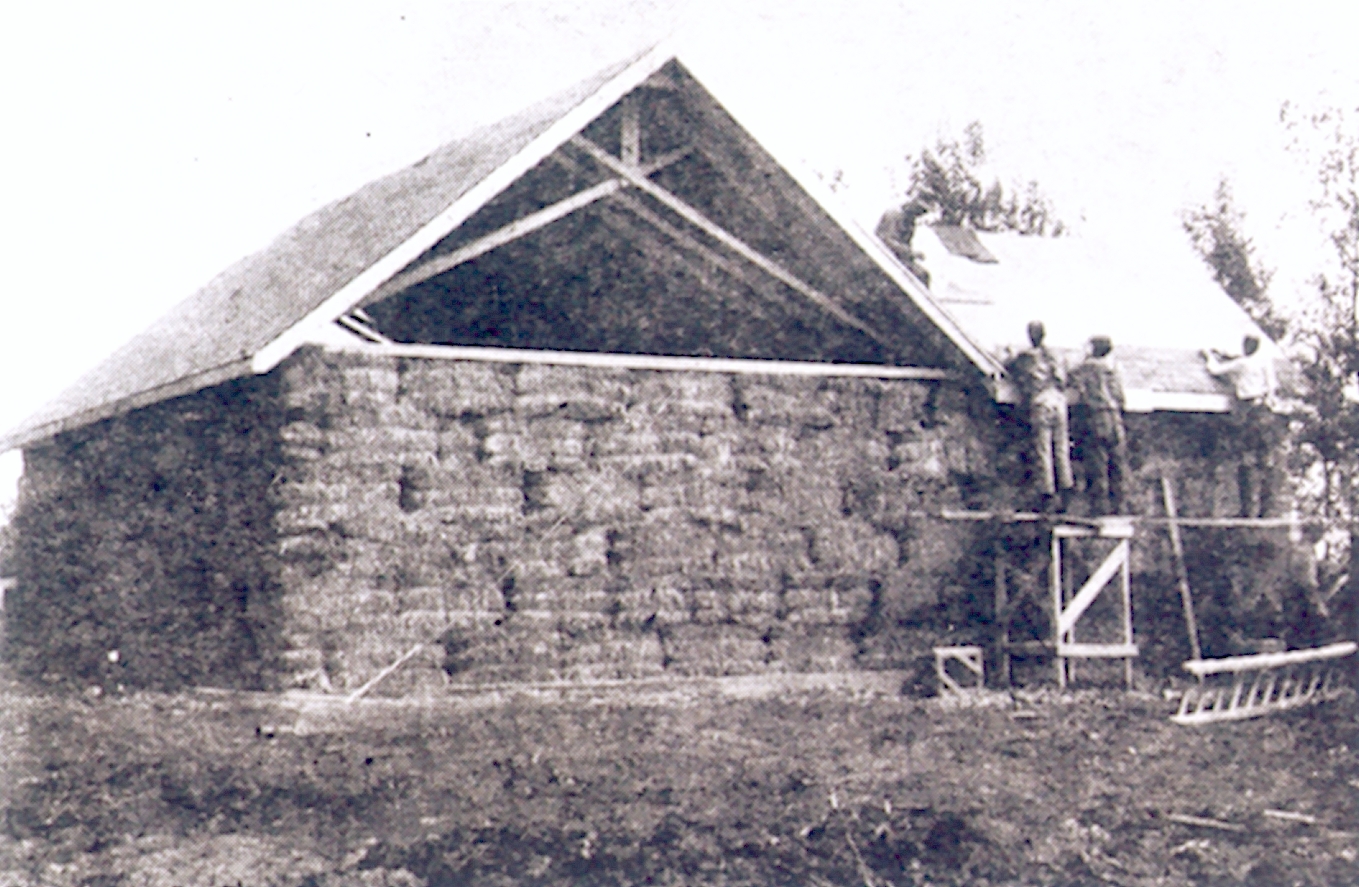
As his parish included Bad Heart, Father Dales decided, in the early 1950’s, that it was time for a church of the right persuasion to be built there.  For the district at this time, the major problem was financing, for all Roman Catholic churches relied strongly on local support, and the people of Bad Heart were hardly in a position to fund a new church structure, being relatively few in numbers and anything but wealthy.  Work bees and salvaged lumber would not be enough.  Father Dales, however, had learned that, in eastern Canada, certain farmers had built cattle sheds out of straw bales, the oil from the rye or flax serving as a preservative.  He therefore submitted a design to the Vicar Apostolic of the Archdiocese of Grouard, Bishop Henri Routhier, who approved the plan, and, apparently, personally advanced $500 towards its fulfillment.
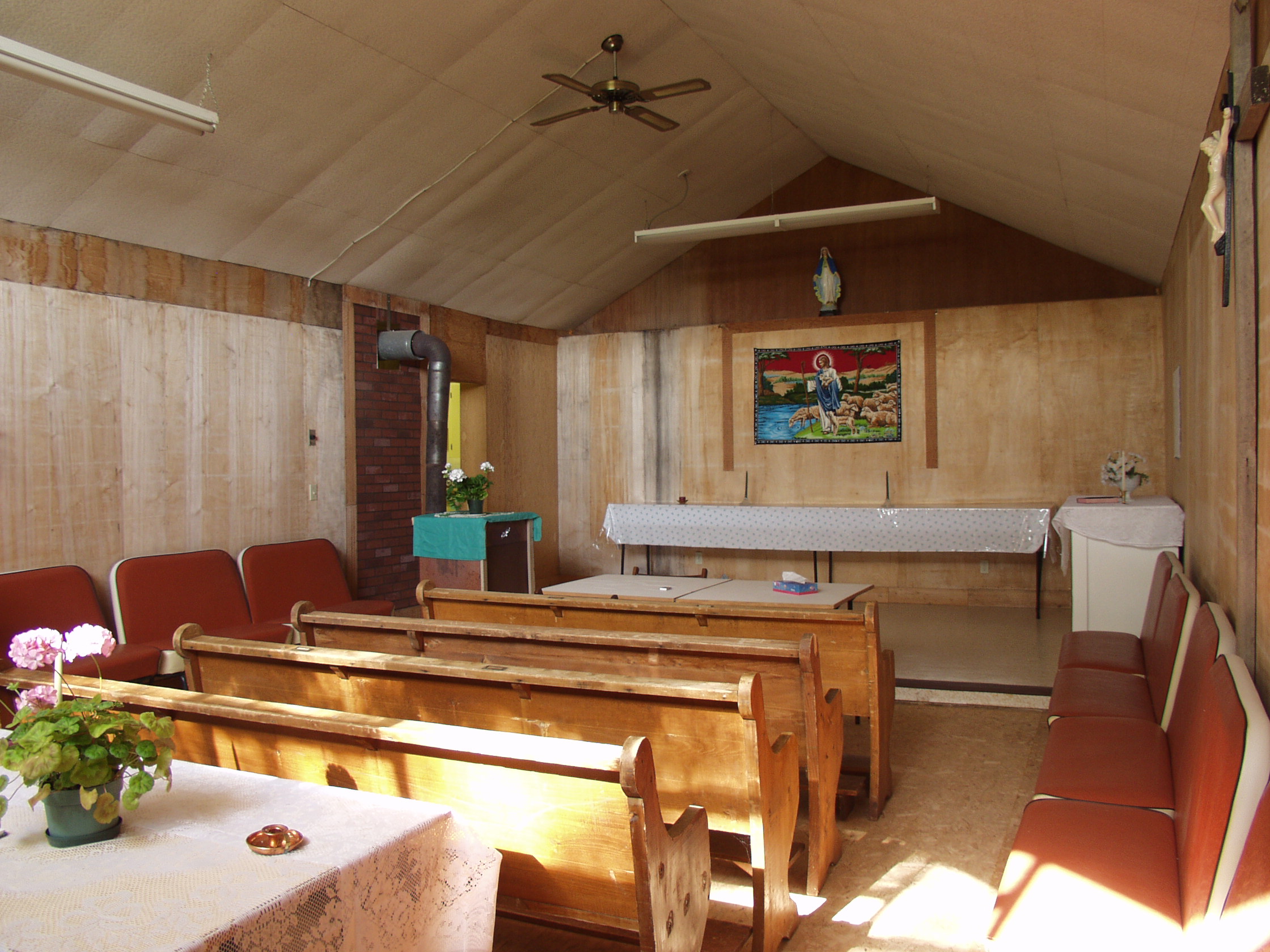
In the summer of 1954, work began on the soon to be famous rye straw church at Bad Heart.  Before long, word spread of the unique venture, which was completed in about six weeks.  Eventually, even the Toronto Star Weekly did a story on the church and its builder.  All work, of course, was volunteer, while fixtures and furnishings were salvaged from other churches in the region.  The pews, for example, were taken from the old Roman Catholic church in Sexsmith.

In March 2009, the Bad Heart Straw Church was designated a Provincial Historic Resource.  Its significance lies foremost in its representation of the ability of people in remote rural areas of the province to find ways of adapting what they have into useful purposes.  The building is also important in being directly associated with Father Francis Dales, the ebullient architecture priest who designed and built many structures in the region and elsewhere, including several churches, St. Mary’s Roman Catholic School in Sexsmith, and the Anglican Speke Hall in Grande Prairie.

Written by: David Leonard, Historian

Visit the Alberta Register of Historic Places to learn more about the heritage value of the Bad Heart Straw Church. In order for a site to be designated a Provincial Historic Resource, it must possess province-wide significance. To properly assess the historic importance of a resource, a historian crafts a context document that situates a resource within its time and place and compares it to similar resources in other parts of the province. This allows staff to determine the importance of a resource to a particular theme, time, and place. Above, is some of the historical information used in the evaluation of the Bad Heart Straw Church.

Bobbin Lace?

Rutherford House Provincial Historic Site in Edmonton is delighted to host a bobbin lace demonstration. Join Jamie Graham as she reveals the delicate and complicated nature of this historic craft.

Sunday Nov. 13, 12:30 – 4:30 pm

Bobbin lace is a lace textile made by weaving, braiding and twisting lengths of thread, which are wound on bobbins to manage them. As the work progresses, the weaving is held in place with pins set in a lace pillow. The placement of the pins is usually determined by a pattern or pricking pinned on the pillow.

Jamie will be at Rutherford House all afternoon. Feel free to drop by to see what this is all about. (Good highways permitting as Jamie is coming to Edmonton from Innisfail.)

Read about the significance of Rutherford House by visiting the Alberta Register of Historic Places.

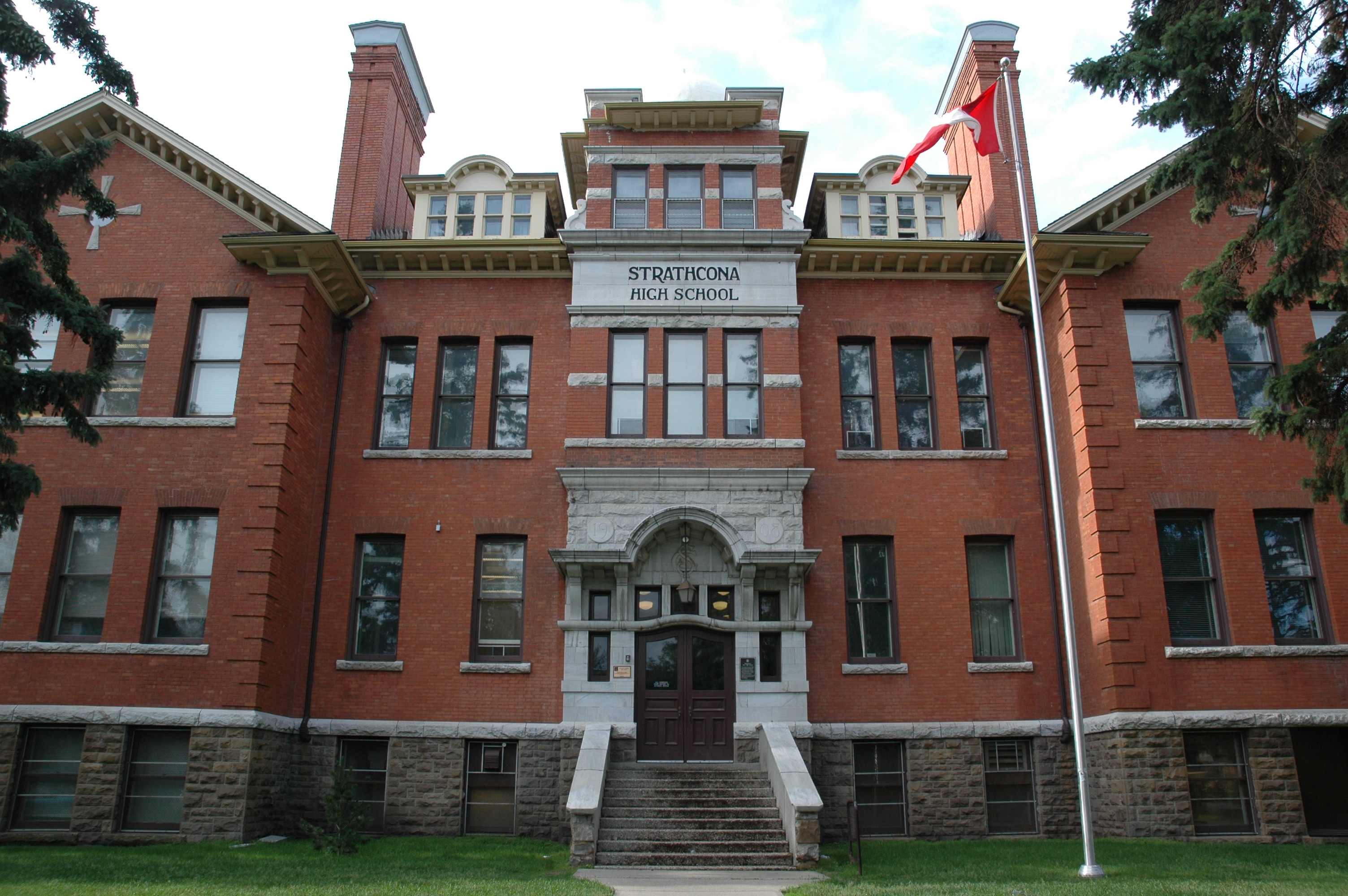
Strathcona Collegiate Institute, Edmonton

When the Calgary & Edmonton Railway arrived at the south bank of the North Saskatchewan River in 1891, the C & E immediately subdivided a townsite which it named South Edmonton.  Being at the end of steel, the community steadily grew throughout the decade until, in 1899, it was incorporated as the Town of Strathcona with a population exceeding 1,000.  As with Edmonton to the north, Strathcona grew rapidly in the wake of the Klondike gold rush, and, in 1907, it was incorporated as a city with an estimated population of 3,500.  Edmonton, however, was destined to grow at an even greater pace when the Canadian Northern and Grand Trunk Pacific Railways arrived there in 1905 and 1908 respectively, giving this city a direct rail link to eastern Canada.  With most major industries concentrating their operations in Edmonton, Strathcona became more of a residential district, a phenomenon encouraged by the decision of the provincial government, in 1908, to locate a provincial university just to the west of this city.  From this point on, Strathcona would be billed as the University City.

In the spring of 1908, the buildings of the new University of Alberta had yet to be designed let alone constructed.  There were, however, a growing number of high school graduates who wanted to attend university right away.  As a result, the University’s Board of Governors approached the Strathcona Public School Board for the use of a portion of a new high school which was then nearing completion on Lumsden (84th) Avenue and Duggan (105th) Street.  The new 125’ x 77’ school had been designed by the architectural firm of Johnson & Lines to become the largest and most sophisticated high school in Alberta.  It was being built by the firm of Thomas Richards at what would turn out to be a cost of about $100,000.  This was on the site of the earlier Duggan Street School, with additional land acquired by the School Board to the west to accommodate the larger facility.

The cornerstone of the new facility had been laid by Premier Rutherford himself on 18 October, 1907.  Rutherford, from Strathcona, was also the Minister of Education for Alberta.  When it was officially opened by Lieutenant-Governor Bulyea on 17 February 1909, at a ceremony attended by about 600 people, the institution was officially designated the Strathcona Collegiate Institute, in recognition of its initial post-secondary role.  The main floor was to house 71 high school students in four classrooms, while the 2nd floor was taken over by the University.  This included four classrooms to accommodate 47 undergraduate students, the office of President Henry M. Tory, and the University Library.  The third floor was made over into an auditorium with a stage, while the basement provided room for both a boys and a girls gymnasium. Read more

Rediscovering a Lost Art

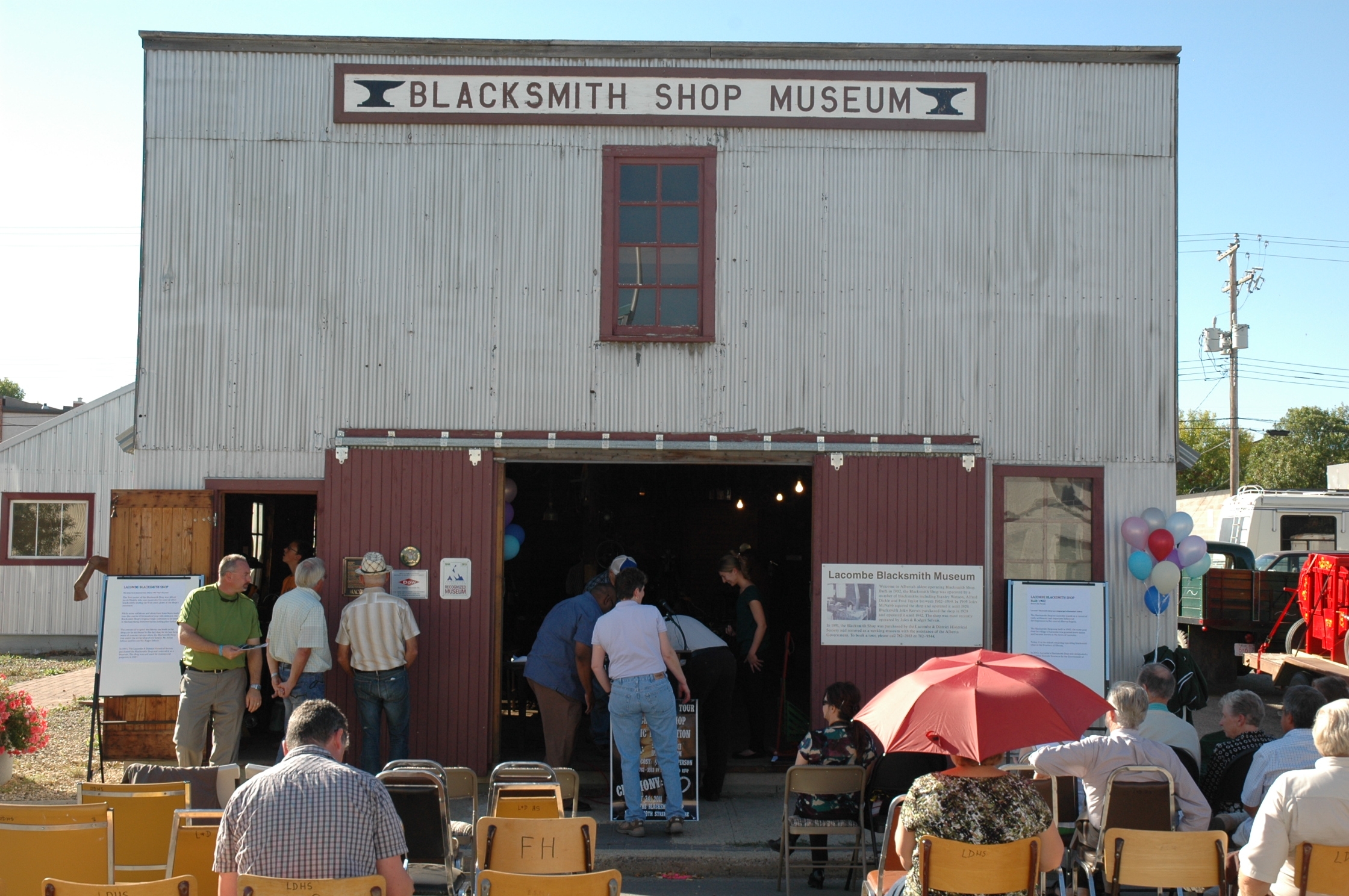
On September 24, 2011, the Lacombe and District Historical Society hosted an event celebrating the designation of the Lacombe Blacksmith Shop as a Provincial Historic Resource.  Situated just off the City of Lacombe’s historic downtown, the blacksmith shop opened more than a century ago and is a tangible reminder of an essential craft during Alberta’s early settlement period. Present at the celebration was a veteran blacksmith and his young apprentice. Using traditional tools to shape modern creations, these two men embody the remarkable continuity between the historic identity of blacksmithing as a utilitarian settlement craft and its emerging face as a specialized form of artistry serving both ornamental and functional needs.

Read more about this event and the Lacombe Blacksmith Shop Museum by clicking here.

Learn more about this Provincial Historic Resource by visiting the Alberta Register of Historic Places.

Written by: Matthew Wangler, Manager of Historic Places Research and Designation Program

Is it a historic place, resource or site? What’s the difference?

Some of the words we use to discuss heritage conservation can be confusing. The related but distinct terms historic place, historic resource and historic site are often misunderstood. Sometimes, people will talk of historic sites when they mean historic resources, and make reference to historic places when the place is not formally historic. Confused? I shall clarify:

Historic Place is the generic term used throughout Canada to reference “a structure, building, group of buildings, district, landscape, archaeological site or other place in Canada that has been formally recognized for its heritage value.” Each province and territory has separate legislation regulating the identification, evaluation and management of historic places. Therefore, each province uses a different term to describe a designated or protected historic place. For example, in Manitoba they are called Heritage Sites and in Saskatchewan, Heritage Properties. 

Brooks Aqueduct is a historic place designated as a Provincial Historic Resource and is operated as a historic site.

Alberta’s Historical Resources Act uses the term Historic Resource. A Historic Resource is defined as a historic place valued for “its palaeontological, archaeological, prehistoric, historic, cultural, natural, scientific or esthetic interest”. The Government of Alberta may designate a historic resource as a Provincial Historic Resource and a municipality may designate a historic resource as a Municipal Historic Resource. Designated historic resources may not be repaired, altered or destroyed without written approval from the designating authority.

A Historic Site is a historic resource owned or leased by the Government of Alberta and managed by the Historic Sites and Museums Branch of Culture and Community Spirit. These sites are interpreted through public programming, signage and exhibits. Stephansson House and Brooks Aqueduct are examples of historic sites.

So, if you ever find yourself talking about an old place ask: “What do I really mean? Has it been formally recognized by the Government of Alberta or a municipality?” Perhaps you are talking about a formally recognized historic resource.

Written by: Brenda Manweiler, Municipal Heritage Services Officer

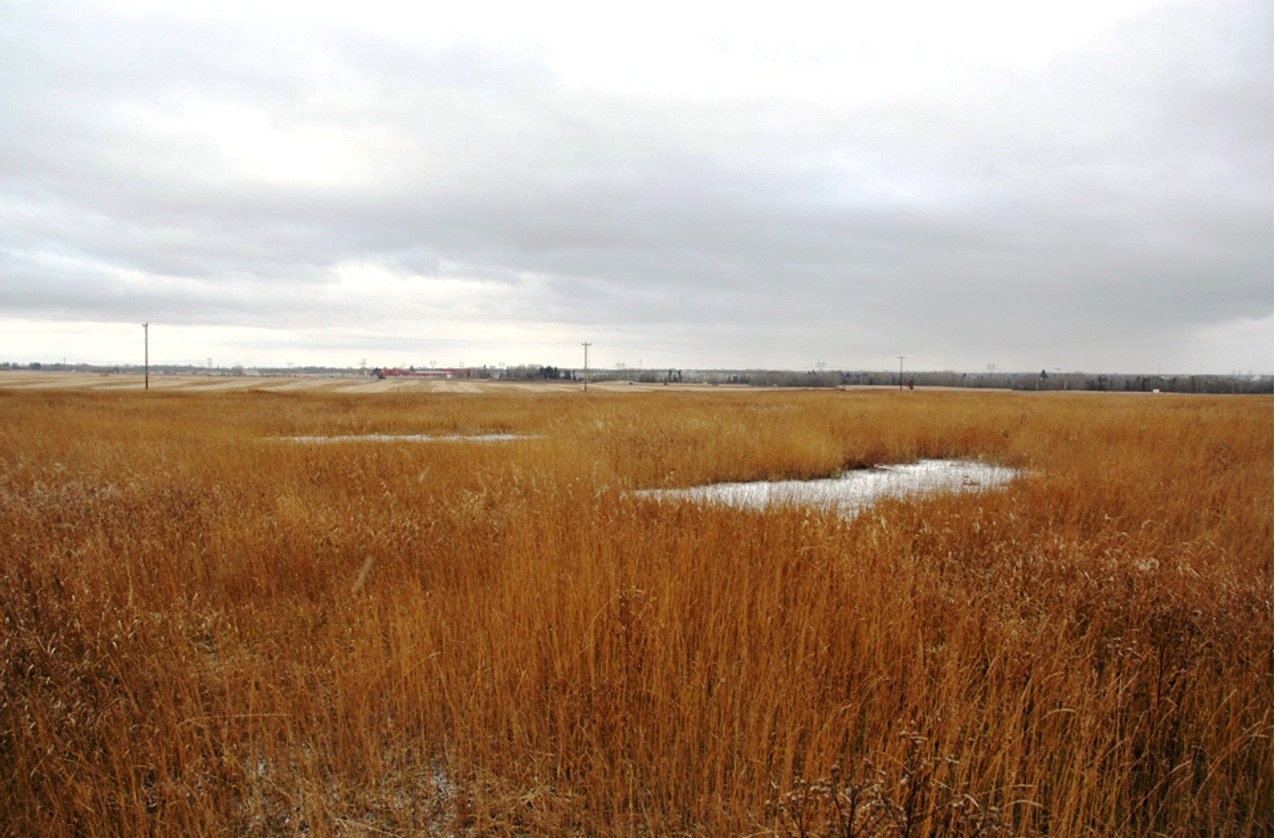
Atlantic No. 3 Wild Well Site, near Devon

When Imperial Oil Well #1 began gushing vast quantities of crude oil in February, 1947, Alberta officially entered the “oil age,” and soon became Canada’s leading producer.  In short order, other important discoveries were made at Redwater, Devon, Valleyview and Swan Hills.  In the meantime, the Leduc field was expanded, with other oil companies making significant strikes.  One of these was the Atlanta Oil Company, headed by Frank MacMahon.  On 16 August 1947, he signed a lease option for NW23 TP50 R26 W4 for $175,000.  The owners of this farm were all members of the Rebus family, with the actual title to the land then in dispute.  Also in dispute was a claim by Imperial Oil that it in fact already held a lease option for this quarter.  MacMahon was able to work a deal with Imperial, while getting the Rebus family members to agree to his option.

On 15 January 1948, drilling proved successful, as oil gushed out of the ground to a height of 150 feet.  It was pressured by an estimated 15 million cubic feet per day flow.  Such extensive pressure was not easy to control however.  On 21 March, efforts to clear a stuck pipe resulted in the fracturing of the surrounding area, and natural gas and oil began to escape over a wide radius.  Fearful of a fire, the government put up roadblocks in the district, while the construction workers worked frantically to control the surge of oil and gas.  Reportedly, redwood fibre, mud, and even feathers were used to stop the gush, without success.  As the oil and gas spread, the entire Leduc field was shut down.  On 15 May, operation of the errant well was taken over by the provincial Oil & Gas Conservation Board, which contracted Imperial Oil to try to cap the well and begin cleanup operations.  The main activity involved pumping water down a nearby well directed towards the shaft of Atlantic #3.  In the meantime, planes were warned away from the area, and there were even rumours that water supply could be affected as far away as Edmonton.

By June, most of the escaping fluid was seen to be oil.  On 7 June, this was estimated to be 11,097 barrels daily.  That which was gathering in various surface sumps then began to be piped away from the area.  By 19 July, production from the well was estimated to have dropped to 7,772 barrels per day.  Then, on 6 September, a spark from somewhere ignited a fire, and the greatest oil well disaster in Alberta’s history began.  The event caused a sensation heard around the world.  As flames licked a hundred feet into the air, smoke billows could be seen for over a hundred miles, while the atmosphere around most of Alberta was darkened.  News reporters came from all over North America, and the story was featured on television and on the Movietone News in theatres. Read more

Alberta’s Victoria Settlement: Still a Special Place after 150 Years

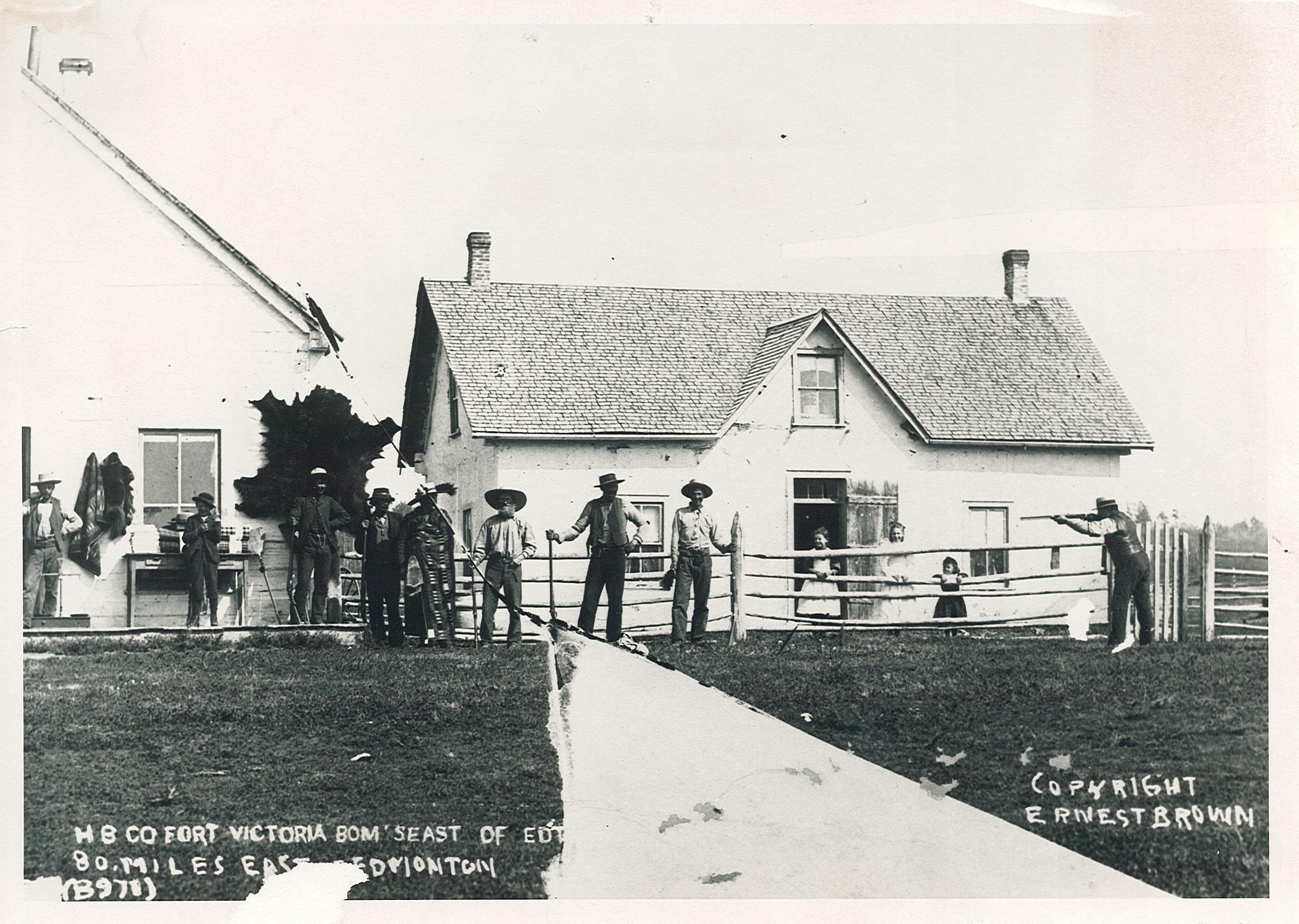
The year 2012 marks the 150thanniversary of Alberta’s Victoria Settlement. In 1862 Methodist minister George McDougall established a mission at the “Hairy Bag” a buffalo feeding ground north of the North Saskatchewan River which was a favourite meeting place and camping site for Aboriginal peoples for thousands of years. The mission was named Victoria in honour of the reigning British monarch. The Hudson’s Bay Company soon noted the activity of free traders in the vicinity and the large numbers of Aboriginals gathering at the mission and established Fort Victoria in 1864, a post which operated for more than three decades.

Clerk’s quarters and trading shop at Fort Victoria, c. 1890. Provincial Archives of Alberta B.2406.

The mission and trading post attracted several hundred English-speaking Métis (historically known as Mixed-bloods) from the Red River Settlement, in what is now Manitoba, who established a permanent river lot settlement at Victoria. The river lot system was based upon the seigneurial system of New France. It consisted of long narrow river-front lots that provided all settlers river access for transportation and agricultural needs. Combining agriculture with the traditional buffalo hunt, a prosperous community of missionaries, fur traders, settlers and Cree hunters developed. In 1887, when the community established its first post office, it was named Pakan in honour of local Cree chief, James Seenum or “Pakannuk”, in tribute to his leadership during the 1885 Rebellion. During the 1890s, settlement in the district expanded as hundreds of Ukrainian and other European settlers took up homesteads. The community thrived as a commercial and service centre until 1918 when the Canadian Northern Railway line was established north of the settlement at Smoky Lake.

Fort Victoria was designated a Provincial Historic Resource in 1976, ensuring that Victoria Settlement’s historical ties to Alberta’s First Nations, Métis and Ukrainian settlers and it’s associations with the fur trade, mission and homestead history are conserved for the benefit of all Albertans. This site is interpreted as the Victoria Settlement Provincial Historic Site. It includes the Hudson’s Bay Company Clerk’s Quarters built in 1865, Alberta’s oldest structure remaining on its original location and the 1906 Pakan Methodist Church.

In 2001, the Historic Sites and Monuments Board of Canada commemorated the area as the Victoria Settlement National Historic Site of Canada. Its highly visible and physical attributes represent an exceptional illustration in a concentrated area of major themes in Prairie settlement including the development of the fur trade, the establishment of the Métis river lot system, the arrival of missions, Prairie agricultural development and the establishment of eastern European immigrants at the beginning of the 20th century. The national designation along the old Victoria Trail includes the Lobstick Settlement to the west, the Victoria (Pakan) Settlement to the east, and a Ukrainian settlement area to the north.

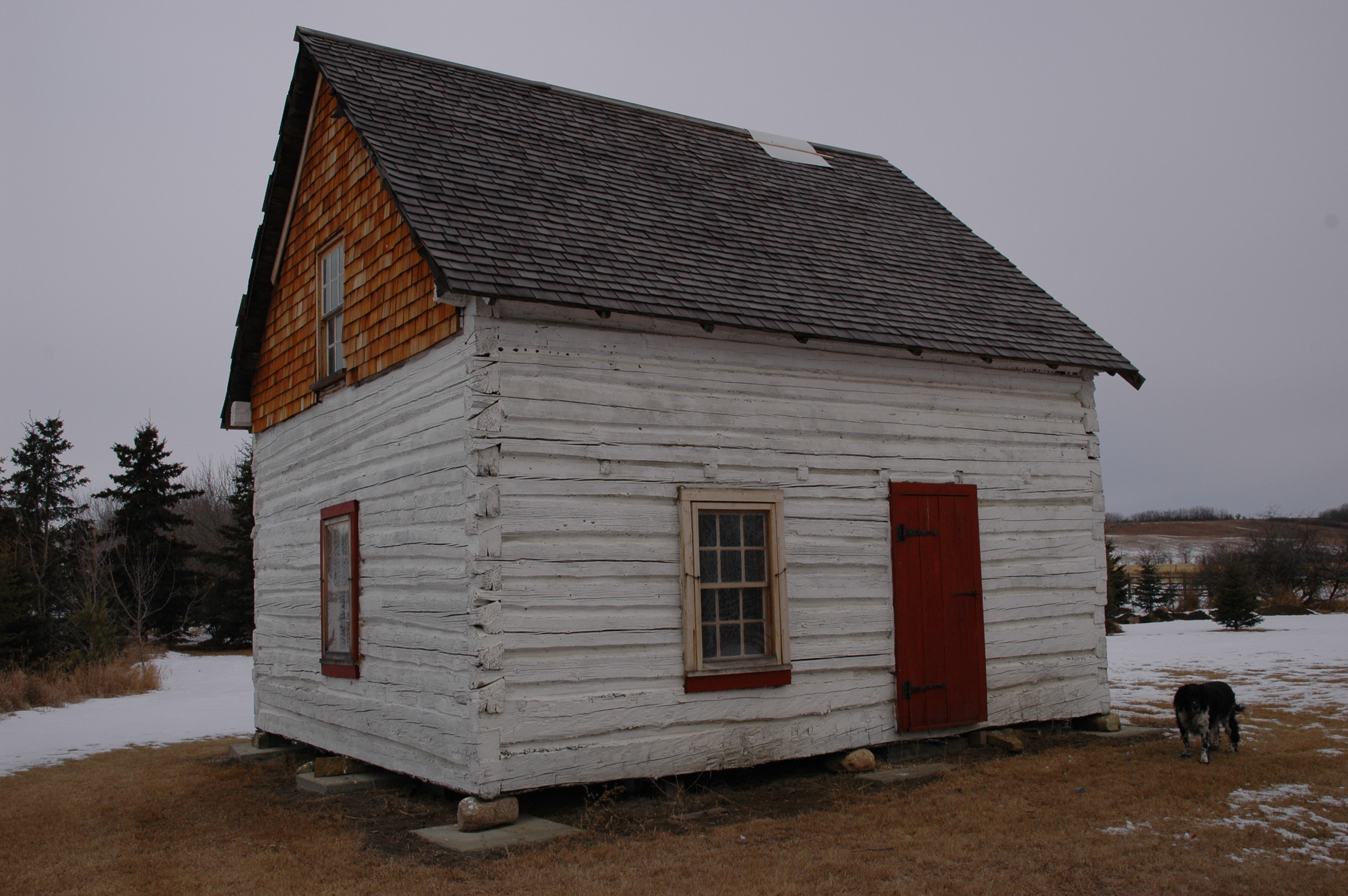
Main (Free Trader’s) House at River Lot 3, Victoria Settlement Provincial Historic Resource

Historical points of interest in the National Historic Site include the site of the McDougall Mission, the McGillivray House originally located on River Lot 7 but currently found on River Lot 3, which is also designated as a Provincial Historic Resource and the Anderson House, a Municipal Historic Resource on River Lot 14 of the Lobstick Settlement. Other resources from the Settlement have been moved: the Erasmus House is currently displayed at Fort Edmonton Park, while the Sinclair House which for many years functioned as the Pakan Museum on the Mitchell property at River Lot 7 is currently displayed at Metis Crossing along with the Cromarty House from River Lot 12.

Written by: Peter Melnycky, Historian


Victoria Settlement Gathering 2-01

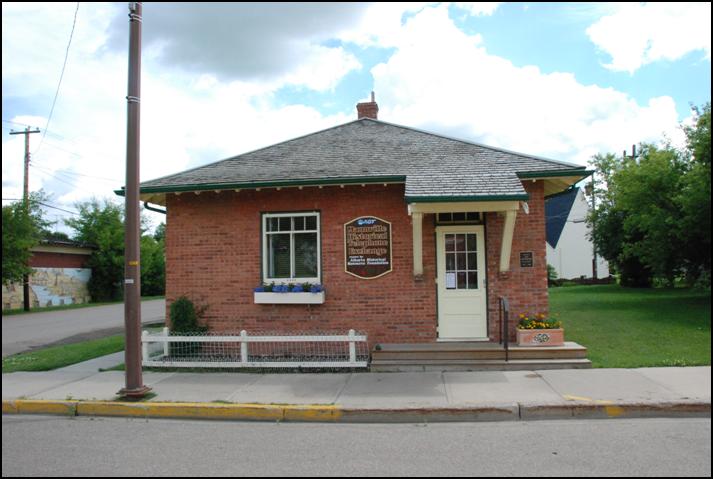
AGT Exchange Building, Mannville

In 1907, the government of Alberta purchased the Alberta interest of Bell Canada and set up the Alberta Government Telephone Company, a Crown Corporation which was the precursor to AGT. The following year, a telephone line was extended from Edmonton as far east as Mannville, Alberta.  The following year, telephone installation was begun in this small community on the Canadian Northern Railway.  A telephone office was set up in S. K. Smith’s Drug Store, with various employees of the store operating the Kellog switchboard.  In 1912, the Telephone Company extended the service to the rural areas surrounding Mannville.

In October 1915, a new telephone exchange was opened in Mannville with a northern electric switchboard.  On 1 December 1917, the exchange was moved into a newly constructed telephone office on Main Street, built by Neil MacKinnon, who became mayor one year later.  MacKinnon had also constructed the original Mannville School and the McQueen Memorial Church.  The Telephone Agent was Ellen Ewing.  She was assisted by Mrs. Alice Rutherford, who would take over as Agent in 1920 and continue in this role until 1965, while herself residing in the AGT building.

During the 1930’s, AGT found the cost of maintaining rural telephone lines increasingly expensive, as fewer and fewer people were subscribing to the system due to the Depression.  In parts of the province, including the Mannville district, the telephone system was disconnected.  Some of the rural areas formed mutual telephone companies.  Around Mannville, six separate companies were formed, but, before long, they were amalgamated into one company, centred in Mannville.  The old Telephone Exchange thus found renewed use.

Shortly after World War II, AGT returned to the area, buying out the Mannville Mutual Telephone Company, and securing direct connections with Edmonton and elsewhere.  On 1 May 1965, automatic dialing was introduced to the Village and its hinterland with the use of one of the first underground cable systems to be installed in the province.  As a result, the Mannville Telephone Exchange was closed.  The building served for a while as the community library and has continued as a prominent historical feature of Main Street Mannville ever since.

In October 2009, the Manville Telephone Exchange was designated a Provincial Historic Resource. Its historical significance lies primarily in its provision of structural evidence of telecommunications in early Alberta. It is one of the oldest telephone exchange buildings in the province, at least of those buildings dedicated exclusively to telephone service. It is also a reminder of the early development of downtown Mannville, a major farming community in east central Alberta.

Written by: David Leonard, Historian

Visit the Alberta Register of Historic Places to learn more about the heritage value of the Alberta Government Telephones Exchange Building in Mannville. In order for a site to be designated a Provincial Historic Resource, it must possess province-wide significance. To properly assess the historic importance of a resource, a historian crafts a context document that situates a resource within its time and place and compares it to similar resources in other parts of the province. This allows staff to determine the importance of a resource to a particular theme, time, and place. Above, is some of the historical information used in the evaluation of the AGT Exchange Building.

Some Changes to AHRF’s Grant Program: February 1, 2012

The Alberta Historical Resources Foundation (AHRF) continues to find strategies to strengthen its ability to meet its mandate. One strategy is to adopt some changes to the funding policies of the Heritage Preservation Partnership Program. These changes will become effective for the next application deadline: February 1, 2012.

To manage the demand for historic resource conservation grants, the maximum grant for conservation of Provincial Historic Resources will be capped at $100,000. Currently, there is no grant ceiling set for these historic resources. Other grant ceilings remain the same: $50,000 for the conservation of Municipal Historic Resources, $5,000 for Local Historic Resources, and $25,000 for architectural/engineering studies/reports/plans.

Applicants may only submit one application for conservation and one application for architectural/engineering studies/reports/plans per historic resource per calendar year. The February 1st deadline is still the primary deadline.

To support the Municipal Heritage Partnership Program’s goal of strengthening the municipality’s role in historic place management, Provincial Historic Resources and Municipal Historic Resources will have the same opportunity for funding – Provincial Historic Resources are not given priority.  The awarded level of funding will continue to be determined using criteria which include: grant ceilings, project scope, resource’s conservation priorities, grant program’s budget and applicant’s ability to complete the project.

The second deadline for the Roger Soderstrom and Heritage Trades Scholarships will be moved from September 1st to October 1st to give more time for students to prepare their applications.

New funding guidelines and application forms will be released in time for the next application deadline.  For more information, click here or contact the Grants Program Coordinator at 780-431-2305.

Written by: Carina Naranjilla, Grant Program Coordinator