Participate in the Workings of a 1900s Household!

Rutherford House Provincial Historic Site is proud to be a part of Historic Festival & DOORS OPEN Edmonton, July 3 – 8, 2012. This year’s festival theme, “Celebrate our Heritage … our Cities,” commemorates the 100th anniversary of the merger of the cities of Edmonton and Strathcona. The Rutherford family contributed greatly to the history of this community and it is fitting for us to celebrate this milestone.

Daily Events
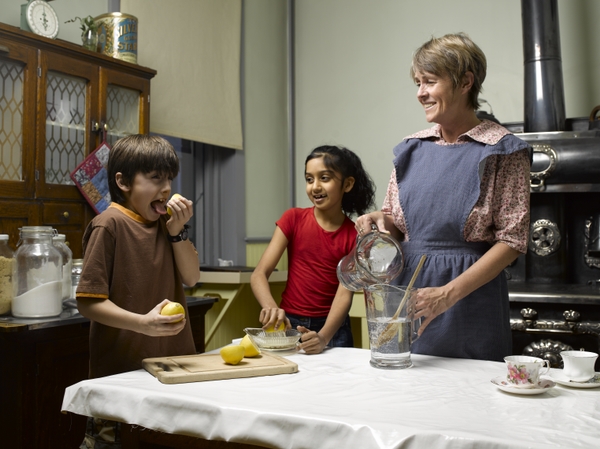
Our events depict what life was like in a large household, in Edmonton, during the early 1900s.  Follow the work week of the Rutherford family and the maid of the house. Each day of the festival will have a different activity:

  • Wash Day – Tuesday, July 3
  • Gardening, the Historic Way – Wednesday, July 4
  • Cleaning and Historic Crafts – Thursday, July 5
  • Kitchen Clean Up – Friday, July 6
  • Baking Day – Saturday, July 7
  • A Day of Rest, Music and Tea! – Sunday, July 8

To try your hand at these activities – visit the house between 10:00am – 5:00pm on the indicated day. Rutherford House is located at 11153 Saskatchewan Drive, on the University of Alberta campus.

The Rutherfords’ Contributions to Early Edmonton
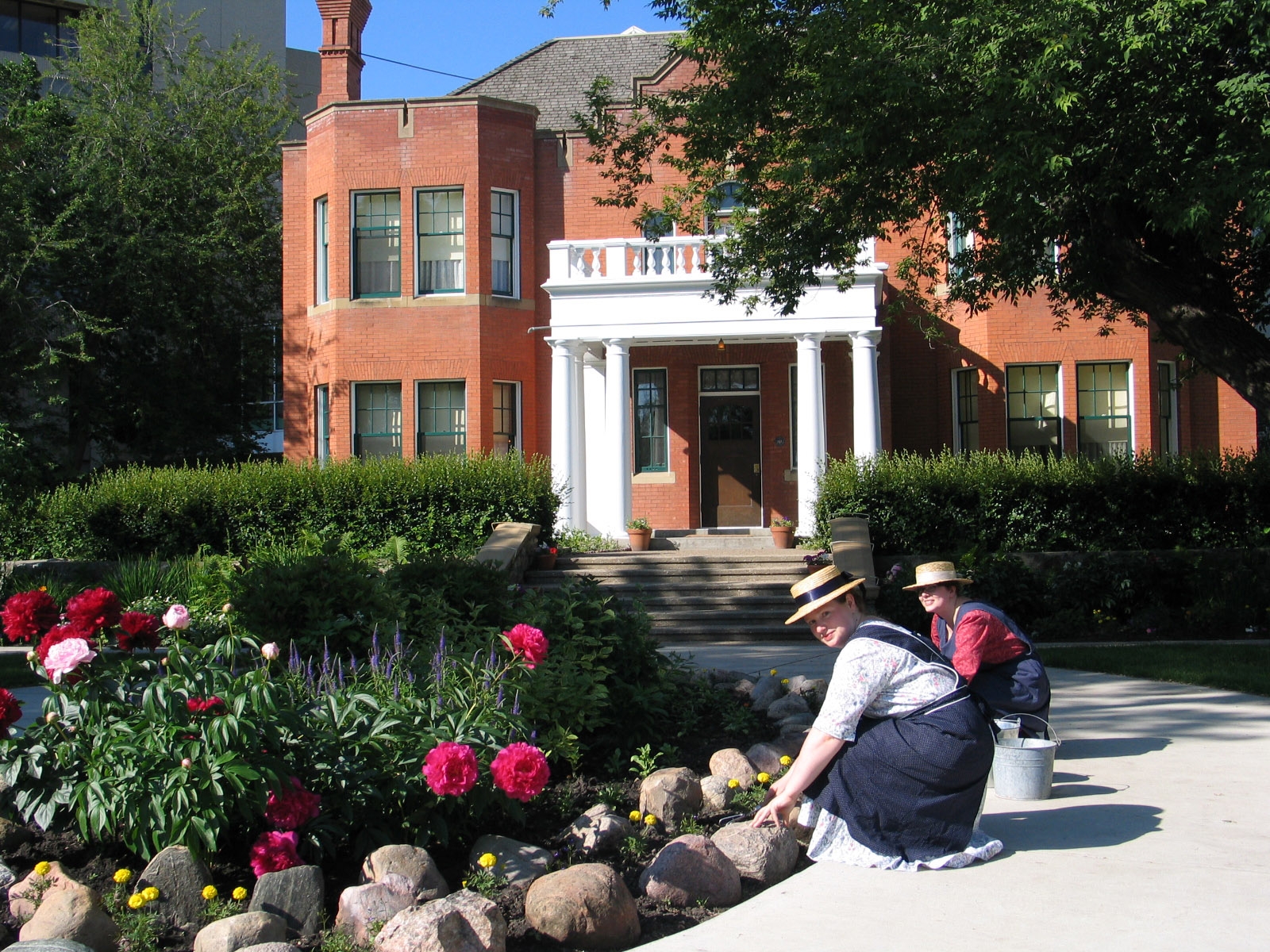
Mr. and Mrs. Rutherford with their 2 small children arrived in the community of South Edmonton in 1895. The terminal station of the C & E Railway was located on the south bank of the North Saskatchewan River, not far from the current Strathcona Farmers Market. South Edmonton was a budding establishment with growing businesses, rapidly expanding land claims and only 1 lawyer. Mr. Rutherford saw an opportunity to establish his law office and settle his family in this flourishing community.

South Edmonton later became the Town of Strathcona and in 1912 the cities of Strathcona and North Edmonton joined to form Edmonton. Mr. Rutherford not only had a thriving business in this community, but he held several noteworthy positions, including Secretary-Treasurer of South Edmonton School Board, Secretary-Treasurer of the Town of Strathcona, President of the Strathcona Liberal Association, Deputy Speaker of N.W.T. Legislative Assembly, Alberta’s first Premier and the University of Alberta Chancellor. Mr. Rutherford’s commitment and contributions to his community have left an enduring legacy.

Mrs. Rutherford’s commitment to the community was different than Mr. Rutherford’s, but similarly important. She volunteered for the Red Cross, organized charity drives to help the less fortunate and frequently opened her home to fundraising events. She hosted “At Home Teas” and extended an invitation to the community to join her for an afternoon of tea and conversation.

Read about other Historic Festival & DOORS OPEN Edmonton events.

Rutherford House is also a Provincial Historic Resource. Learn about its heritage value from the Alberta Register of Historic Places.

Written by: Alison Moir, Program Coordinator (Rutherford House Provincial Historic Site)
A Big Rock and a Colliery?

Whenever I travel Alberta for business I try to return to the office with fodder for future blog posts. As the last instalment from my April 2012 business trip, today’s blog post will feature the Big Rock Erratic, near Okotoks and the Leitch Collieries, in the Crowsnest Pass (near Burmis). Both sites are formally protected as Provincial Historic Resources and can be found on the Alberta Register of Historic Places.

Other blog posts stemming from my April travels include:

For those of you wondering if I only write about southern Alberta – don’t worry! At the end of June I will be travelling up to the MD of Opportunity. I wonder what kind of northern Alberta fodder I will discover….

Big Rock Erratic

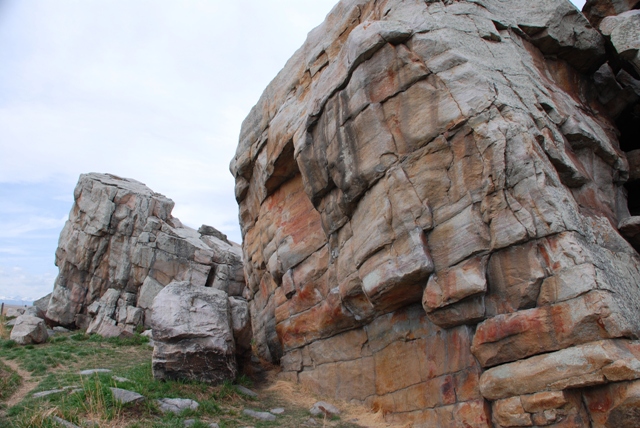
Located off Highway 7, ten kilometres southwest of Okotoks, the Big Rock Erratic is, well, BIG! Measuring 9 metres high, 41 meters long and 18 meters wide, it is the largest rock in the Foothills Erratic Train. Essentially, some 10,000 years ago when the glacier covering the area melted, this rock and others were left behind – far from their mountain origins. Despite erosion, it still serves a huge landmark on the flat prairie.

One interesting feature of Big Rock is the large split down the middle. As shared on our Alberta Culture website, a Blackfoot story describes not only how this may have happened, but why bats have squashed-looking faces:

One hot summer day, Napi, the supernatural trickster of the Blackfoot peoples, rested on the rock because the day was warm and he was tired. He spread his robe on the rock, telling the rock to keep the robe in return for letting Napi rest there. Suddenly, the weather changed and Napi became cold as the wind whistled and the rain fell. Napi asked the rock to return his robe, but the rock refused. Napi got mad and just took the clothing. As he strolled away, he heard a loud noise and turning, he saw the rock was rolling after him. Napi ran for his life. The deer, the bison and the pronghorn were Napi’s friends, and they tried to stop the rock by running in front of it. The rock rolled over them. Napi’s last chance was to call on the bats for help. Fortunately, they did better than their hoofed neighbours, and by diving at the rock and colliding with it, one of them finally hit the rock just right and it broke into two pieces.

When driving along Highway 7, this site is difficult to miss. A large parking lot accommodates travellers and interpretive signs explain the science behind the rock’s presence. To read more about this site, click here.

Note: Quartzite is slippery to climb and although it is hard, pieces can break off in climbers’ hands. Please do not climb the rock, as tempting as it looks. Also, there are aboriginal pictographs on the rock, and these could easily be damaged by climbers. Enjoy the beautiful colours, textures and feel of the rock, but stay on the ground. Please help us protect this Provincial Historical Resource for others to enjoy.

Leitch Collieries

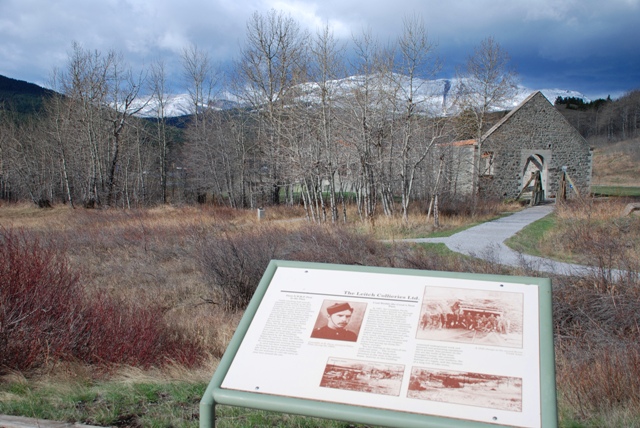
When established, in 1907, Leitch Collieries was one of the largest and most ambitious mines located in the Crowsnest Pass. Initially, a washery and tipple were erected along with railway connections to the CPR. By 1910 a total of 101 ovens were installed. A manager’s residence and a combined powerhouse/round house were also built on site. In an area immediately west of the Collieries, the town of Passburg grew. Ultimately, the coal mined at the Collieries turned out to be of poor coking quality and only five of the 101 ovens were used. Poor quality and economic hard times resulted in the company ceasing its operations in 1916. Most of the buildings in Passburg were relocated to Bellvue (another mining community in the Crowsnest Pass).

Both a Provincial Historic Resource and a Provincial Historic Site, Leitch Collieries is managed by the Government of Alberta as an interpreted historic site. At this site (located just east of the Frank Slide Interpretive Centre on Highway 3), visitors will find the remains of the tipple, powerhouse, coke ovens and manager’s house. Walking paths and interpretive signs allow visitors to explore the buildings and learn about the Collieries operations. The site is staffed from May 15 to Labour Day (10:00am to 5:00pm). After hours, and for the remainder of the year, the site is self-guided.

Unfortunately, my visit to Leitch Collieries was very brief. I quickly walked through the site and photographed some of the ruins. The next time you drive through the area consider pulling off the highway – spend some time wandering the remains and learn about an aspect of Alberta’s coal mining history. To read more about this site, click here.

Written by: Brenda Manweiler, Municipal Heritage Services Officer

Moving Mountains – My Visit to the Frank Slide Interpretive Centre

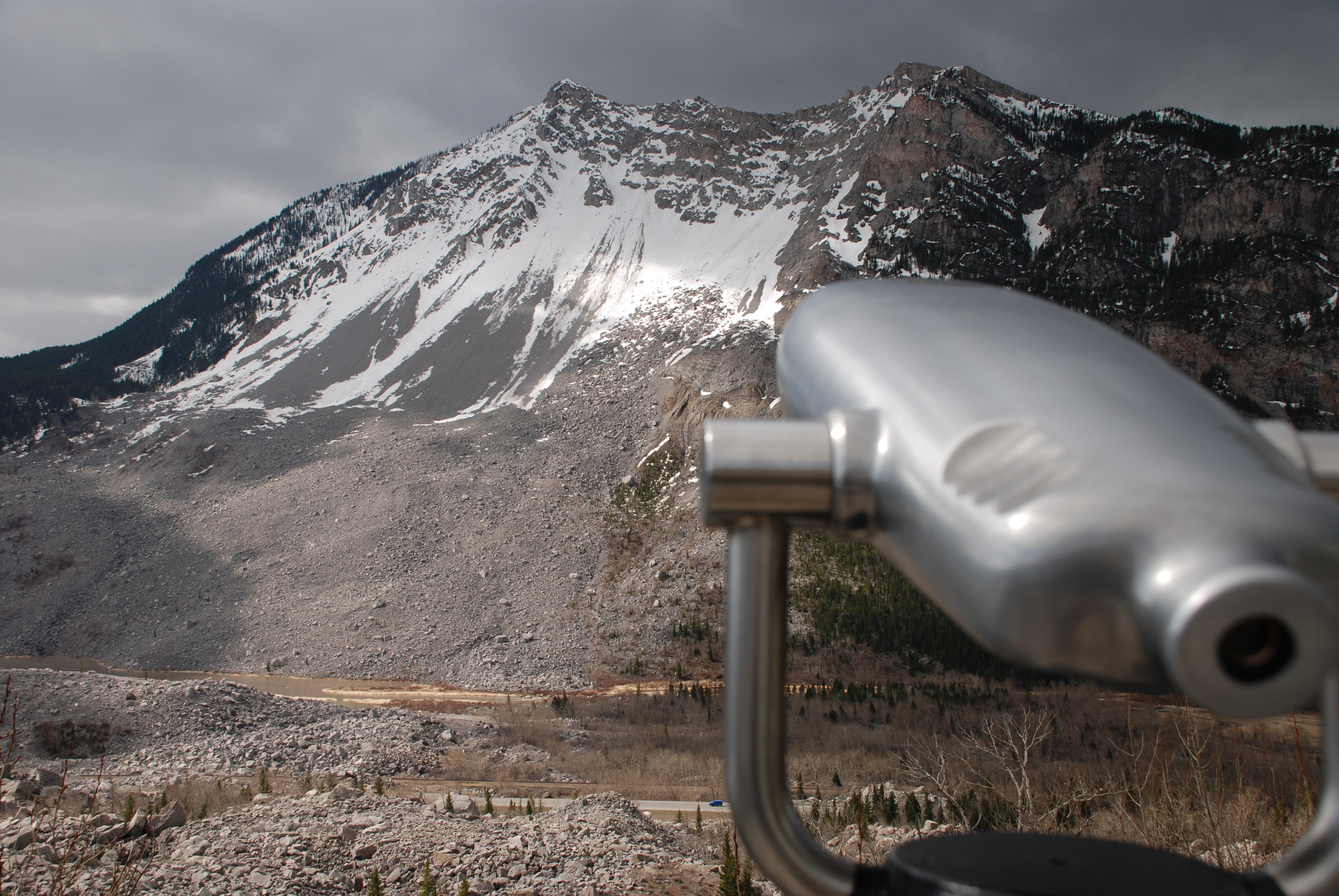
View of Turtle Mountain from the Frank Slide Interpretive Centre

Last week I was in southern Alberta for meetings with Vulcan County and the Town of Pincher Creek. To fill a meeting-free morning I decided to visit the Frank Slide Interpretive Centre (a thirty minute drive west of Pincher Creek on Highway 3). Throughout my visit grey clouds blanketed the sky, which befitted the destruction, sorrow and magnitude of the Frank Slide disaster.

On April 29, 1903 at 4:10 in the morning the east face of Turtle Mountain toppled and slid four kilometres into the Crowsnest River valley. In a mere ninety seconds, 82 million tonnes of limestone collapsed upon the southern end of the Town of Frank, a section of the Canadian Pacific Railroad (CPR) and the mine plant of the Canadian-American Coal Company. In total, at least ninety people were killed. To date, this is Canada’s deadliest rockslide.

In 1977 the Government of Alberta designated the site a Provincial Historic Resource for its significance as the site of Alberta’s worst natural disaster, for it being a geological phenomenon and for it serving as a provincial landmark (to learn more about the site’s heritage value, read the Frank Slide Statement of Significance). Visitors to the area can learn first-hand about the disaster through interactive multi-media displays at the Frank Slide Interpretive Centre, and by walking the Frank Slide Interpretive Trail.

Interpretive Centre

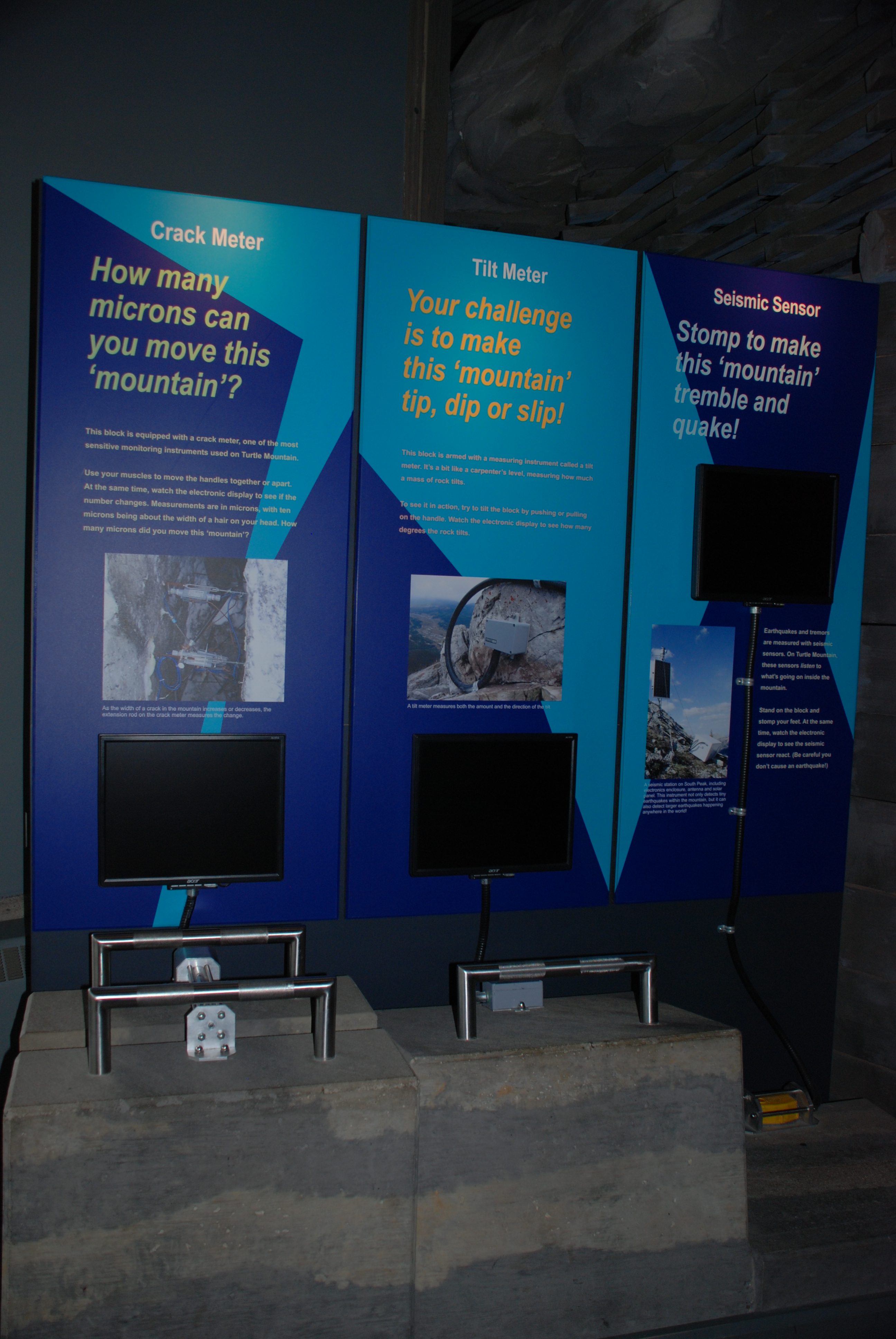
What force can you exert on a mountain by jumping, stomping, pushing, pulling, lifting ... ?

Four levels of display space recount not only the horrors and triumphs of the people that awoke one morning to find their town buried, but provide geological and seismic information about the causes of the disaster. Audio-visual components and 3-D models allow visitors to visualize how Mother Nature could wreck such havoc. My favourite display was a set of three mountain monitoring sensors that are like those currently installed on Turtle Mountain to detect movement. Visitors are encouraged to stomp, jump, push, pull and lift blocks of concrete connected to a crack meter, tilt meter and seismic sensor. Computer screens reveal how sensitive the monitors are AND how strong YOU are! Yes, I jumped, stomped, pushed and pulled … the next time someone asks I will now be able to confidently state that I really can move mountains!

Interpretive Trail

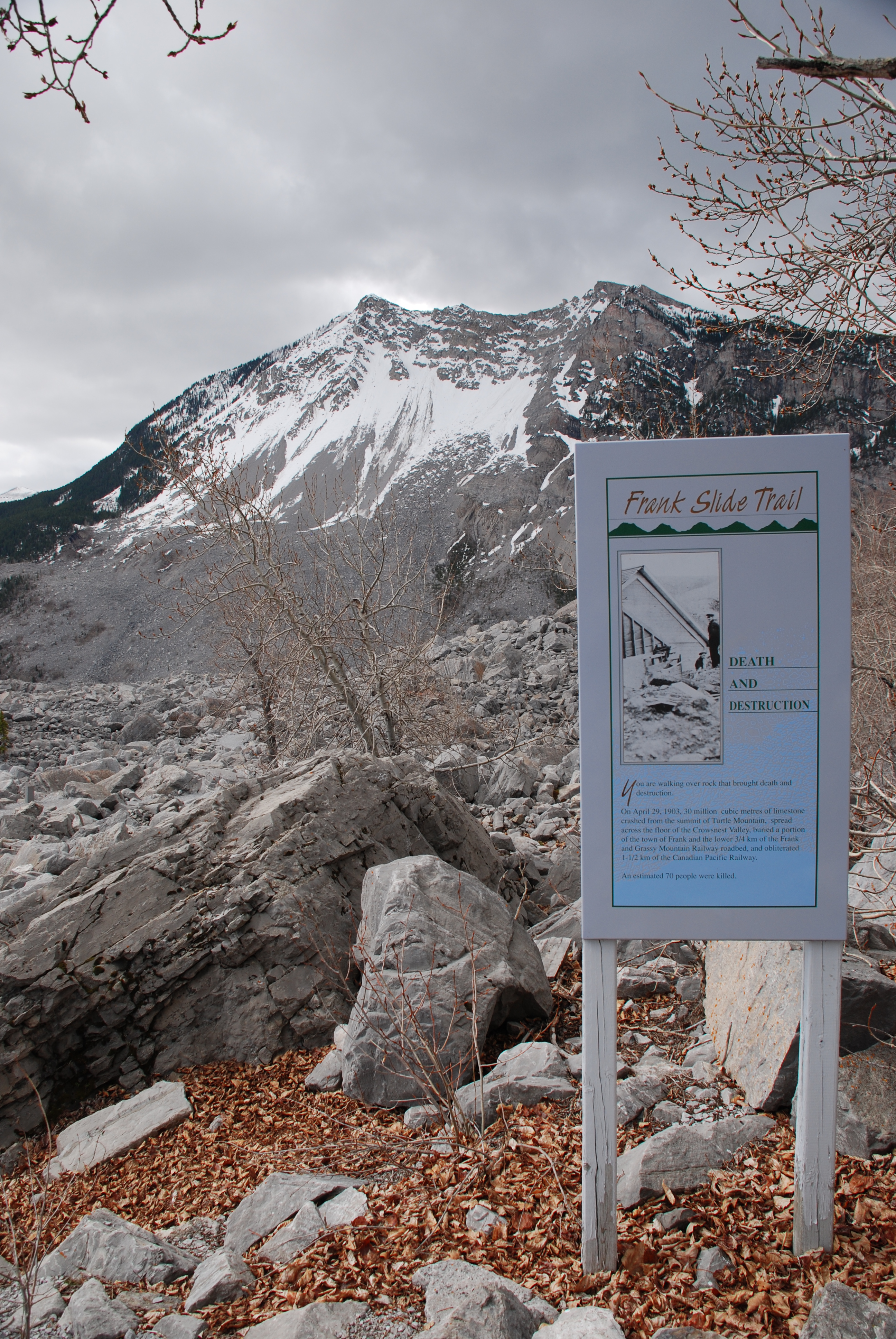
View of Turtle Mountain near the trail head.

A 1.5 kilometre trail, beginning from the Interpretive Centre parking lot, winds through mounds of limestone rubble. Looming views of Turtle Mountain offer a stark reality check when walking along the trail. Hopes, dreams and memories lay beneath.

I walked the trail with an interpretive brochure in hand. Waypoints marked along the path explained what I saw and some of the events that occurred on that fateful day. The last quarter of the trail winds along the western edge of the fallen rock and loops back up to the parking lot through a wooded area. I paused during this reconnection with nature to read that, “mammals such as bears, deer and moose use these cool, sheltered woodlands to skirt the slide’s harsh, open environment as they move through the Crowsnest River valley. Mule deer can frequently be seen along this portion of the trail, particularly early and late in the day.” Taking a step to carry on my way, I thought how great it would be to see some deer. The breaking of twigs caused me to again pause. To my amazement I looked up to discover four deer staring at me!! All five of us stared. Soon enough they returned to their feeding while I continued staring. What a joy!

Turtle Mountain Web Cameras

The Alberta Geological Survey has installed two web cameras for viewing Turtle Mountain. One is in the valley looking up at the mountain and the other is positioned on the south peak providing a view of the valley below. Click here to see a current view of Turtle Mountain.

The Frank Slide Interpretive Centre is open to the public, daily, from 10:00am to 5:00pm. July 1 through Labour Day, the Centre is open daily from 9:00am to 6:00pm. Click here for additional information.

Written by: Brenda Manweiler, Municipal Heritage Services Officer

P.S. I must extend a big thank you to Monica and Myriah for welcoming me to the Interpretive Centre and for providing a great tour! I really enjoyed my visit.

Bobbin Lace?

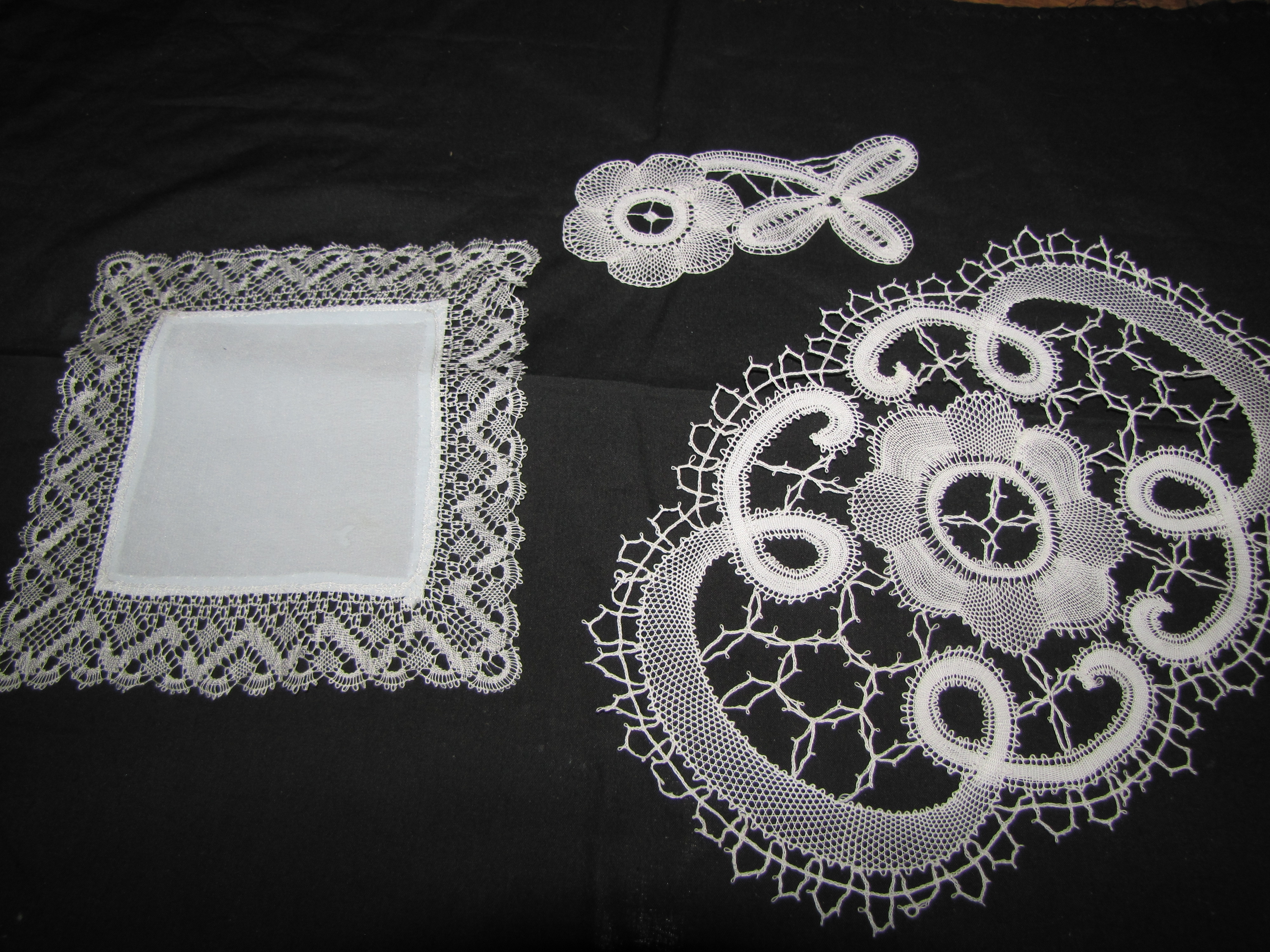
Rutherford House Provincial Historic Site in Edmonton is delighted to host a bobbin lace demonstration. Join Jamie Graham as she reveals the delicate and complicated nature of this historic craft.

Sunday Nov. 13, 12:30 – 4:30 pm

Bobbin lace is a lace textile made by weaving, braiding and twisting lengths of thread, which are wound on bobbins to manage them. As the work progresses, the weaving is held in place with pins set in a lace pillow. The placement of the pins is usually determined by a pattern or pricking pinned on the pillow.

Jamie will be at Rutherford House all afternoon. Feel free to drop by to see what this is all about. (Good highways permitting as Jamie is coming to Edmonton from Innisfail.)

Read about the significance of Rutherford House by visiting the Alberta Register of Historic Places.

Is it a historic place, resource or site? What’s the difference?

Some of the words we use to discuss heritage conservation can be confusing. The related but distinct terms historic place, historic resource and historic site are often misunderstood. Sometimes, people will talk of historic sites when they mean historic resources, and make reference to historic places when the place is not formally historic. Confused? I shall clarify:

Historic Place is the generic term used throughout Canada to reference “a structure, building, group of buildings, district, landscape, archaeological site or other place in Canada that has been formally recognized for its heritage value.” Each province and territory has separate legislation regulating the identification, evaluation and management of historic places. Therefore, each province uses a different term to describe a designated or protected historic place. For example, in Manitoba they are called Heritage Sites and in Saskatchewan, Heritage Properties. 

Brooks Aqueduct is a historic place designated as a Provincial Historic Resource and is operated as a historic site.

Alberta’s Historical Resources Act uses the term Historic Resource. A Historic Resource is defined as a historic place valued for “its palaeontological, archaeological, prehistoric, historic, cultural, natural, scientific or esthetic interest”. The Government of Alberta may designate a historic resource as a Provincial Historic Resource and a municipality may designate a historic resource as a Municipal Historic Resource. Designated historic resources may not be repaired, altered or destroyed without written approval from the designating authority.

A Historic Site is a historic resource owned or leased by the Government of Alberta and managed by the Historic Sites and Museums Branch of Culture and Community Spirit. These sites are interpreted through public programming, signage and exhibits. Stephansson House and Brooks Aqueduct are examples of historic sites.

So, if you ever find yourself talking about an old place ask: “What do I really mean? Has it been formally recognized by the Government of Alberta or a municipality?” Perhaps you are talking about a formally recognized historic resource.

Written by: Brenda Manweiler, Municipal Heritage Services Officer

Alberta’s Victoria Settlement: Still a Special Place after 150 Years

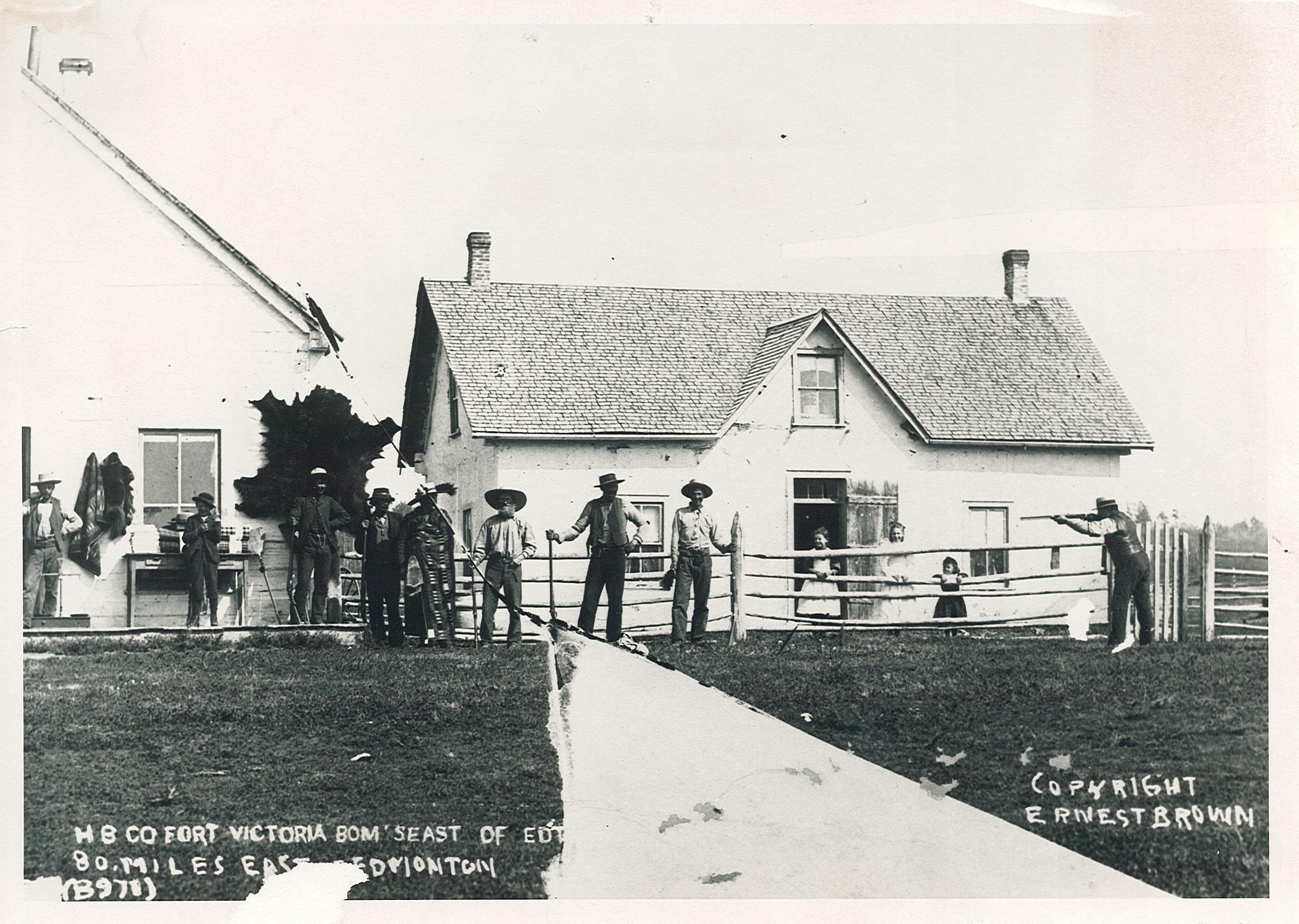
The year 2012 marks the 150thanniversary of Alberta’s Victoria Settlement. In 1862 Methodist minister George McDougall established a mission at the “Hairy Bag” a buffalo feeding ground north of the North Saskatchewan River which was a favourite meeting place and camping site for Aboriginal peoples for thousands of years. The mission was named Victoria in honour of the reigning British monarch. The Hudson’s Bay Company soon noted the activity of free traders in the vicinity and the large numbers of Aboriginals gathering at the mission and established Fort Victoria in 1864, a post which operated for more than three decades.

Clerk’s quarters and trading shop at Fort Victoria, c. 1890. Provincial Archives of Alberta B.2406.

The mission and trading post attracted several hundred English-speaking Métis (historically known as Mixed-bloods) from the Red River Settlement, in what is now Manitoba, who established a permanent river lot settlement at Victoria. The river lot system was based upon the seigneurial system of New France. It consisted of long narrow river-front lots that provided all settlers river access for transportation and agricultural needs. Combining agriculture with the traditional buffalo hunt, a prosperous community of missionaries, fur traders, settlers and Cree hunters developed. In 1887, when the community established its first post office, it was named Pakan in honour of local Cree chief, James Seenum or “Pakannuk”, in tribute to his leadership during the 1885 Rebellion. During the 1890s, settlement in the district expanded as hundreds of Ukrainian and other European settlers took up homesteads. The community thrived as a commercial and service centre until 1918 when the Canadian Northern Railway line was established north of the settlement at Smoky Lake.

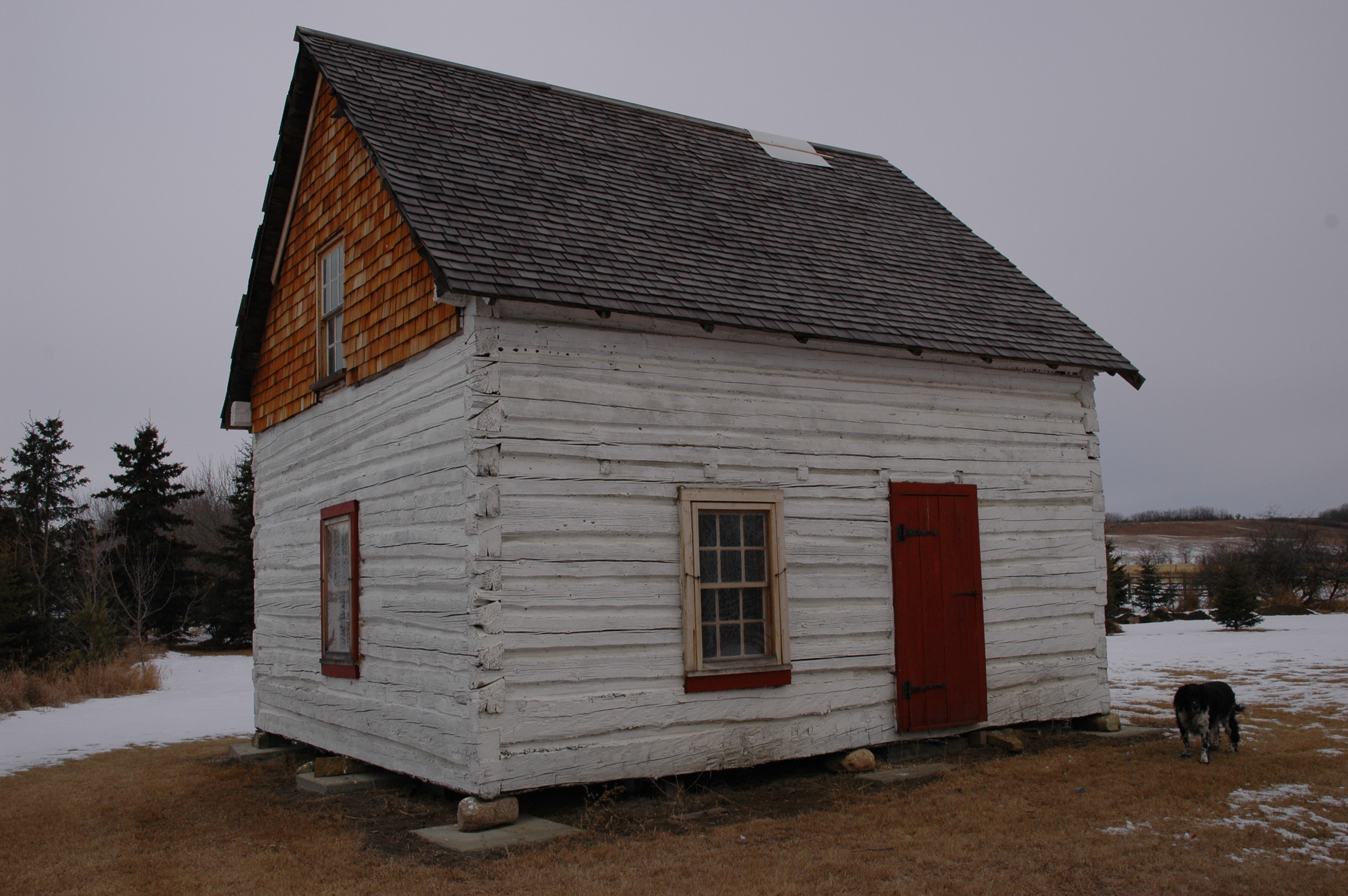
Fort Victoria was designated a Provincial Historic Resource in 1976, ensuring that Victoria Settlement’s historical ties to Alberta’s First Nations, Métis and Ukrainian settlers and it’s associations with the fur trade, mission and homestead history are conserved for the benefit of all Albertans. This site is interpreted as the Victoria Settlement Provincial Historic Site. It includes the Hudson’s Bay Company Clerk’s Quarters built in 1865, Alberta’s oldest structure remaining on its original location and the 1906 Pakan Methodist Church.

In 2001, the Historic Sites and Monuments Board of Canada commemorated the area as the Victoria Settlement National Historic Site of Canada. Its highly visible and physical attributes represent an exceptional illustration in a concentrated area of major themes in Prairie settlement including the development of the fur trade, the establishment of the Métis river lot system, the arrival of missions, Prairie agricultural development and the establishment of eastern European immigrants at the beginning of the 20th century. The national designation along the old Victoria Trail includes the Lobstick Settlement to the west, the Victoria (Pakan) Settlement to the east, and a Ukrainian settlement area to the north.

Main (Free Trader’s) House at River Lot 3, Victoria Settlement Provincial Historic Resource

Historical points of interest in the National Historic Site include the site of the McDougall Mission, the McGillivray House originally located on River Lot 7 but currently found on River Lot 3, which is also designated as a Provincial Historic Resource and the Anderson House, a Municipal Historic Resource on River Lot 14 of the Lobstick Settlement. Other resources from the Settlement have been moved: the Erasmus House is currently displayed at Fort Edmonton Park, while the Sinclair House which for many years functioned as the Pakan Museum on the Mitchell property at River Lot 7 is currently displayed at Metis Crossing along with the Cromarty House from River Lot 12.

Written by: Peter Melnycky, Historian


Victoria Settlement Gathering 2-01

Rutherford House is 100 Years Old!

…and you are invited to help celebrate!

On Sunday, June 5, 2011 (12:00pm to 4:00pm) staff of Rutherford House Provincial Historic Site will host a celebration to mark this milestone. All are welcome to attend – a traditional Founder’s Day Tea Party along with parlour music, a family craft, a history display and tours of the home will surely entertain.

For more information about this event, click here.

Rutherford House, located in Edmonton on the grounds of the University of Alberta, was built in 1911 as the home of Alberta’s first premier, Dr. Alexander Cameron Rutherford. The house was designated as a Provincial Historic Resource in 1979 by the Government of Alberta and currently operates as an interpreted Provincial Historic Site.

To learn more about Rutherford House Provincial Historic Site, click here.

To read about the heritage significance of Rutherford House and why it was designated a Provincial Historic Resource, click here.

Written by: Brenda Manweiler, Municipal Heritage Services Officer