Editor’s note:September 30 is the National Day for Truth and Reconciliation and Orange Shirt Day.Reading residential school histories can be a painful process. If reading this is causing pain or bringing back distressing memories, please call the Indian Residential Schools Crisis Line at 1-866-925-4419. The Crisis Line is available 24 hours a day and can also provide information on other health supports provided by the Health Canada Indian Residential Schools Resolution Health Support Program.
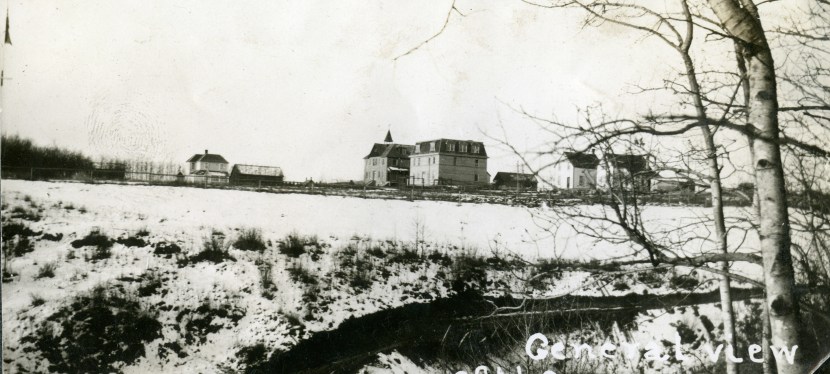
The banner image above is “General view of the I.I. School.” Date unknown. Source: City of Red Deer Archives, P10890.
Written by: Laura Golebiowski (Indigenous Consultation Adviser) in collaboration with Whitecap Dakota First Nation.
In the late 1880s, a group of Dakota Oyate led by Chief Whitecap were making their home along the northern extent of their territory. They settled near Mni Duza—the South Saskatchewan River—on a landscape known as “Moose Woods”: rich with water, wood, wildlife and plants for sustenance and ceremony.
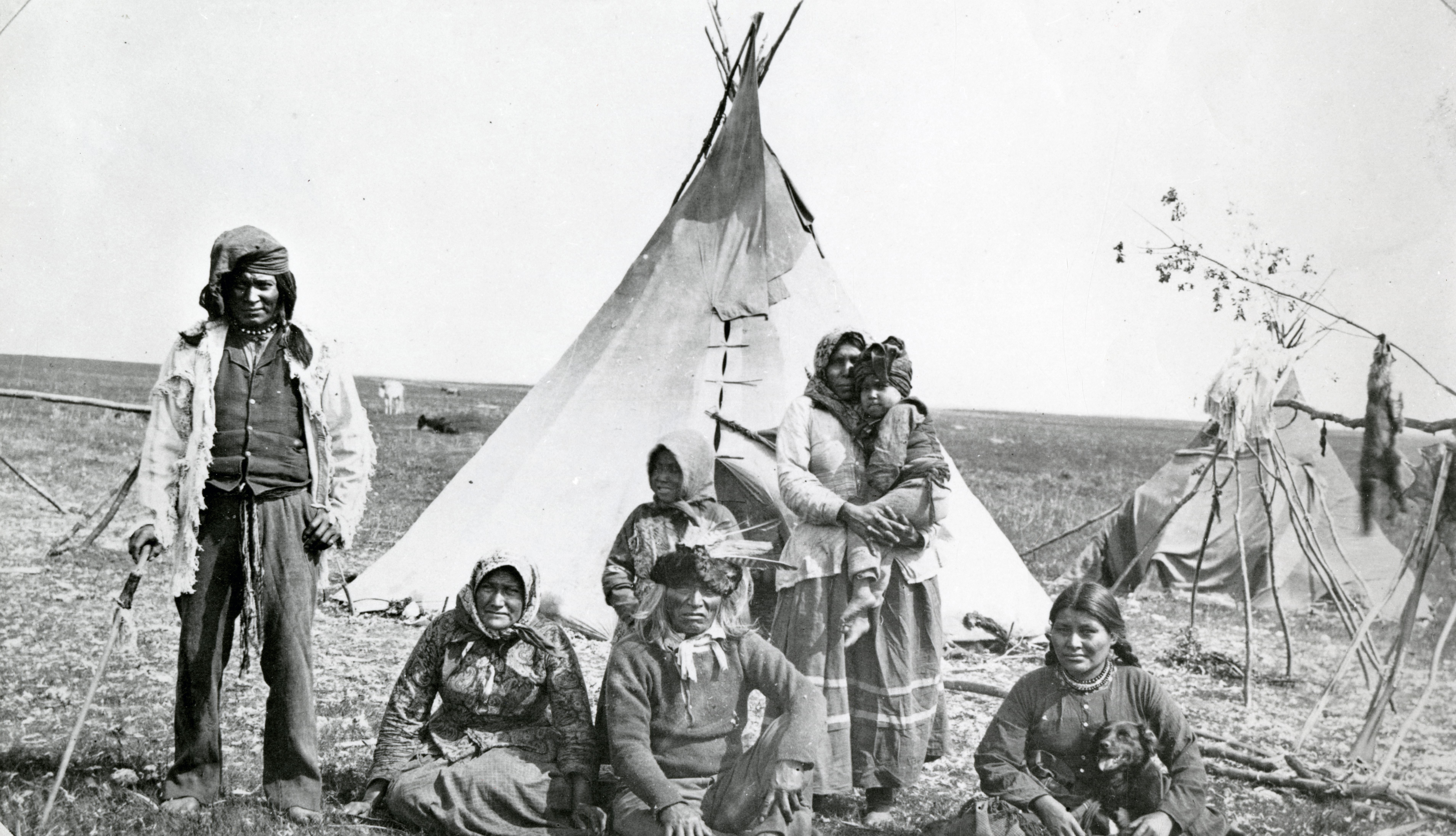
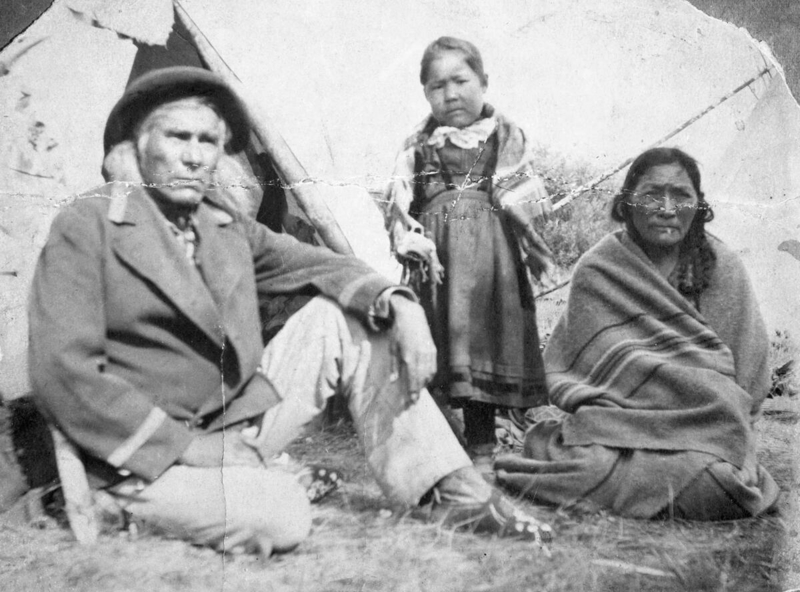
Chief White Cap (seated centre) and members of his family, ca 1885. LH-5418, Saskatoon Public Library.
Editor’s note: September 30 is National Day for Truth and Reconciliation and Orange Shirt Day. Reading residential school histories can be a painful process. If reading this is causing pain or bringing back distressing memories, please call the Indian Residential Schools Crisis Line at 1-866-925-4419. The Crisis Line is available 24 hours a day and can also provide information on other health supports provided by the Health Canada Indian Residential Schools Resolution Health Support Program.
An earlier version of this article appeared in the December/January 2024 issue of Nisichawayasi Achimowina.
Written by: Laura Golebiowski (Indigenous Consultation Adviser), in collaboration with Nisichawayasihk Cree Nation.
“Eight children, an equal number of boys and girls, were going with us to enter a Residential School… I applied, but without success, to the Principal of the Brandon Residential School, for the admittance of the Indian children. That they were “non-treaty” was the alleged objection. As, however, the Red Deer school was willing to receive them, we decided to take them there…In the course of two or three years, five of those apparently healthy children had died from Tuberculosis.”
– Samuel Gaudin, in Forty-Four Years with the Northern Crees
Nisichawayasihk Cree Nation are the Nisichawayasi Nehethowuk: the people whose ancestors lived near where the three rivers meet and who speak Nehetho, the language of the four winds. Their territory includes the rich lands of the Canadian Shield and boreal forest in what is now northern Manitoba. Their central community hub is located at Nelson House, a long-time place of Indigenous occupation where the Hudson’s Bay Company established a trading post in the late 1700s.
The rocky shoreline of Footprint Lake, Nisichawayasihk Cree Nation territory near Nelson House, Manitoba. Source: Laura Golebiowski.
Editor’s note: September 30 is National Day for Truth and Reconciliation and Orange Shirt Day. Reading residential school histories can be a painful process. If reading this is causing pain or bringing back distressing memories, please call the Indian Residential Schools Crisis Line at 1-866-925-4419. The Crisis Line is available 24 hours a day and can also provide information on other health supports provided by the Health Canada Indian Residential Schools Resolution Health Support Program.
Written by: Laura Golebiowski (Indigenous Consultation Adviser) in collaboration with Whitefish Lake First Nation #128.
Emma Stanley was born in 1886, in the area known today as Whitefish Lake in northeastern Alberta. Her mother was Eliza and her father was Cheepo-Koot, or Charles. She had at least two sisters. The last name Stanley was assigned to Indigenous families upon christening by the Methodist ministers of time. These assigned names are still known and common in the community today.
Emma and her family were members of James Seenum’s Band, contemporarily known as Whitefish Lake First Nation #128. Their leader was Chief Pakan, or James Seenum: “a very forceful and highly respected figure.” When the Nation signed Treaty Six, Cheepo-Koot was selected as one of three Councillors.
In the years and decades prior to Emma’s birth, James Seenum’s Band members lived by the Cree seasonal round, which influenced their hunting, fishing, agricultural and travel practices. “In the spring-time, after the potatoes and turnips were planted, [the people] went south on their buffalo hunt, leaving the missionary and a few of the older people at home to look after the place and anything that had to be done. They would travel till they came to the buffalo range. After a good day’s hunt there was lots to do, such as curing the meat so it would keep. The surprising thing was that there was no such thing as flies to bother the fresh meat.”
“James Seenum, Pakan, and family at Whitefish Lake reserve, Alberta,” ca early 1900s. (CU194507) by unknown photographer. Source: Glenbow Library and Archives Collection, Libraries and Cultural Resources Digital Collections, University of Calgary.
“During the past three weeks the Spanish influenza has swept through this institution. I regret to report that as a result, five of our pupils are dead: Georgina House, Jane Baptiste, Sarah Soosay, David Lightning, William Cardinal…At the time the children died practically everyone was sick so that it was impossible for us to bury the dead. I thought the best thing to do was to have the undertaker from Red Deer take charge of and bury the bodies. This was done, and they now lie buried in Red Deer.”
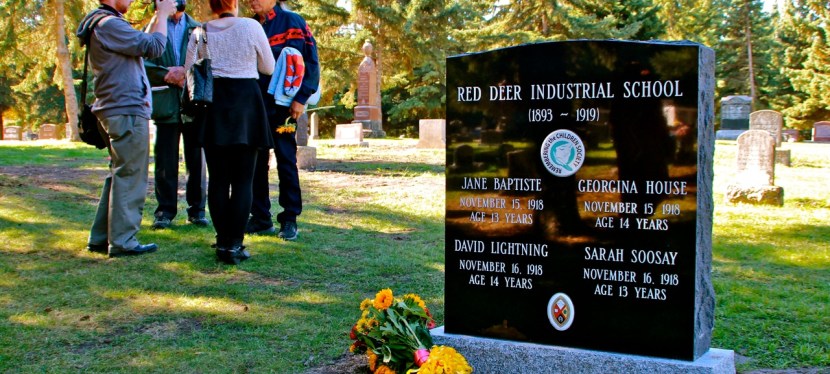
These words, written by then-Principal Joseph F. Woodsworth to the department of Indian Affairs, now also appear in the Red Deer City Cemetery, on a monument commemorating the lives of four of the five young men and women who passed away on November 15 and 16, 1918, while attending Red Deer Industrial School[1]. Until now, their names and resting places within the Red Deer City Cemetery had remained largely unmarked and their stories untold. Read more →



 RETROactive