

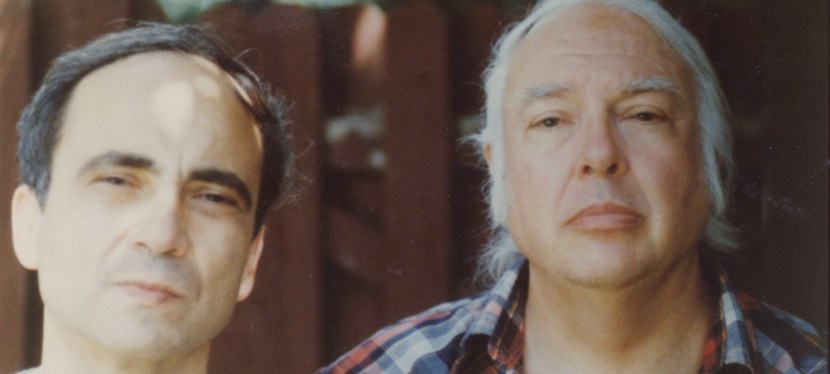
Editor’s note: The banner image above shows legendary experimental musician Bruce Haack (right) with long-time collaborator and friend Ted Pandel (left) , circa 1985. Image courtesy of the Provincial Archives of Alberta.
The Provincial Archives of Alberta also invites you to an evening devoted to electronic music pioneer Bruce Haack at the TELUS World of Science – Edmonton, Zeidler Dome for a screening of the 2004 documentary Haack: The King of Techno followed by a lightshow performance set to Haack’s landmark album The Electric Lucifer. The event takes place on Friday, September 29. Doors at 6:30 p.m., show at 7 p.m. The event is free, seating is first come, first served.
Written by: Jared Majeski (Editor, RETROactive) and Braden Cannon (Private Records Archivist, Provincial Archives of Alberta [PAA])
After creating some of the most spaced-out, light years-ahead-of-its-time experimental electronic music, the renaissance of Albertan Bruce Haack continues apace. His music has been reissued by record labels around the world (including Toronto’s own Telephone Explosion Records), he was the subject of the 2004 documentary Haack: The King of Techno and now, some of his most treasured possessions have been made available at the Provincial Archives of Alberta.

Bruce Haack, from the Rocky Mountain House area, was born in 1931 and displayed music talent from an early age. He attended the University of Alberta before being accepted into the Julliard School in New York City to study music. After a year, he dropped out to explore his own, unique ideas in music. He had an early interest in electronic music and began to design and build his own electronic instruments and voice modulators. Together with Ted Pandel, a pianist whom he met at Julliard, Haack supported himself with songwriting gigs for record labels and advertising firms. He eventually met Esther Nelson, a children’s dance instructor, and collaborated with her on a series of children’s records using Haack’s electronic instruments and his increasingly experimental arrangements. Haack gained further attention through appearances on “The Tonight Show with Johnny Carson” and “Mr. Roger’s Neighborhood” where he would demonstrate his inventions such as a synthesizer that would emit sound through touch.
Haack’s interest in experimental sounds and psychedelic rock led to the recording of his magnum opus Electric Lucifer in 1969. He would continue to record and experiment through the 1970s and 1980s, even collaborating with hip hop pioneer Russell Simmons on the 1982 track, “Party Machine.” Mainstream success eluded Haack until his death in 1988. However, his music was re-discovered in the 1990s, leading to several re-issues of his work and reassessments of his influence on the history of electronic music that continue to this day.
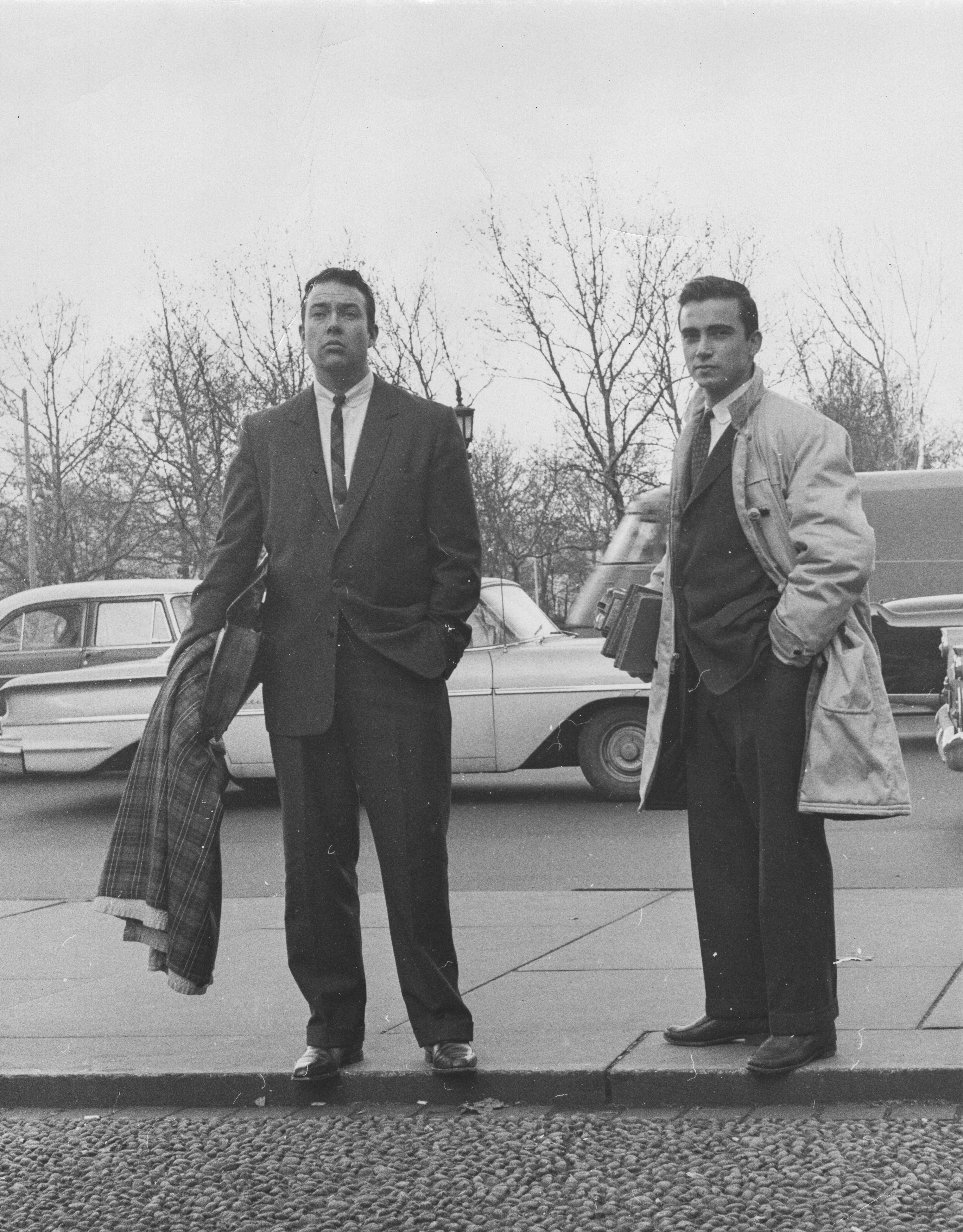
The Provincial Archives of Alberta acquired the Bruce Haack records when a representative from Telephone Explosion Records got in touch to inquire about donating said records. Telephone Explosion had been working with Ted Pandel, Bruce Haack’s friend and partner, to reissue some of Haack’s recordings and during this project Pandel asked for assistance in finding an archives in Alberta that could accept all of Haack’s records. Pandel felt that Bruce would’ve wanted his records to be preserved in Alberta, as he loved his home province and returned often for visits.
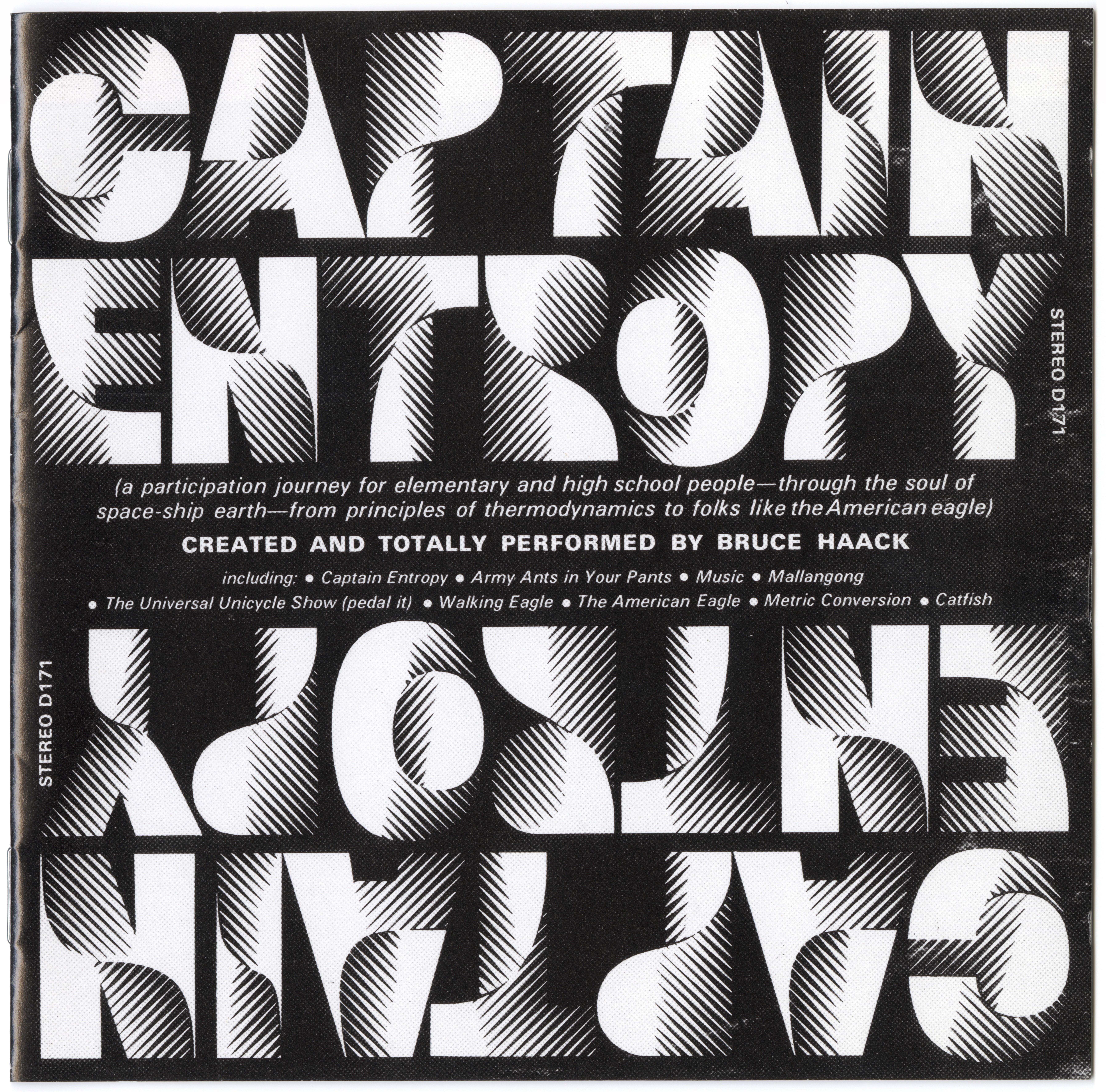
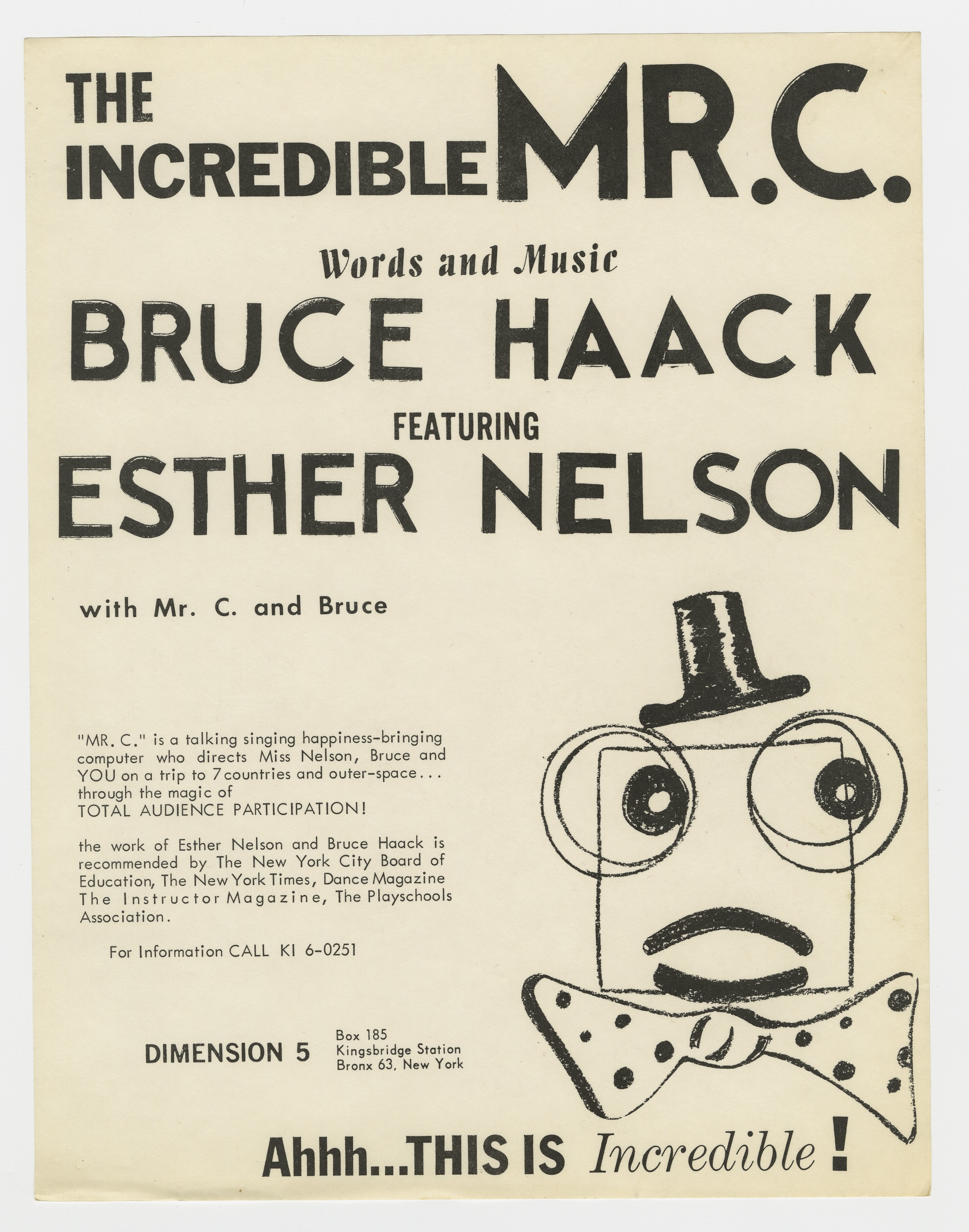
When a representative from Telephone Explosion reached out to the Provincial Archives of Alberta, they got in touch with Private Record Archivist Braden Cannon, which was very fortunate because Cannon had been a fan of Bruce Haack’s music ever since coming across some of his re-issued music in the 1990s. Braden successfully advocated for acquiring the Bruce Haack records, which would require travelling to West Chester, Pennsylvania to pack and ship the records. In late 2017, Cannon made the trek to Ted Pandel’s home in West Chester, where the Haack records had been kept in Bruce’s old studio and living space in Ted’s basement suite. The records were then packed and shipped to Edmonton.
The records include all of Haack’s recordings on reel-to-reel tape, photographs, sheet music, notebooks, correspondence and business records. It was a near-complete record of Bruce Haack’s life and career and has since been fully catalogued, described, processed, rehoused into acid-free folders and boxes and preserved in the climate-controlled vaults at the Provincial Archives of Alberta. To arrange a viewing, contact the Collections Management Section of the PAA.
 RETROactive