

Written by: Sam Judson and Lindsay Amundsen-Meyer, Department of Anthropology and Archaeology, University of Calgary.
Calgary was incorporated as a Canadian city in 1884 and, since then, has grown to be a city of more than 1.5 million people. Although the City of Calgary is less than 150 years old, people have lived in this area, called this place home, and taken care of these lands for thousands of years. This long history is told through the numerous archaeological sites within and beyond Calgary’s city limits. Examples such as the Hawkwood site, Everblue Springs site and Mona Lisa Site demonstrate that this part of Alberta has been inhabited for approximately 8,000 years.
Nose Hill is a testament to Alberta’s long-standing Indigenous history. More than 40 recorded Precontact Indigenous archaeological sites are known within this City of Calgary park space, most first recorded by archaeologists in 1978 ahead of the creation of the park. The majority of these are camp sites made up of one or many stone circles, but kill sites and lithic scatters are also present. Not only was Nose Hill utilized frequently by Indigenous groups before contact, but it was also extensively used by citizens in the early days of Calgary’s existence as a settler municipality. Animals grazed on Nose Hill, northern areas of the hill were cultivated for crops, and a gravel pit was active on Nose Hill for several years. Despite these modern activities, Nose Hill Park remains one of the largest undisturbed grasslands in the Calgary area. As a result, the archaeological sites of Nose Hill are remarkably well preserved and tell a story of thousands of years of human occupation and connection with this prominent landform.
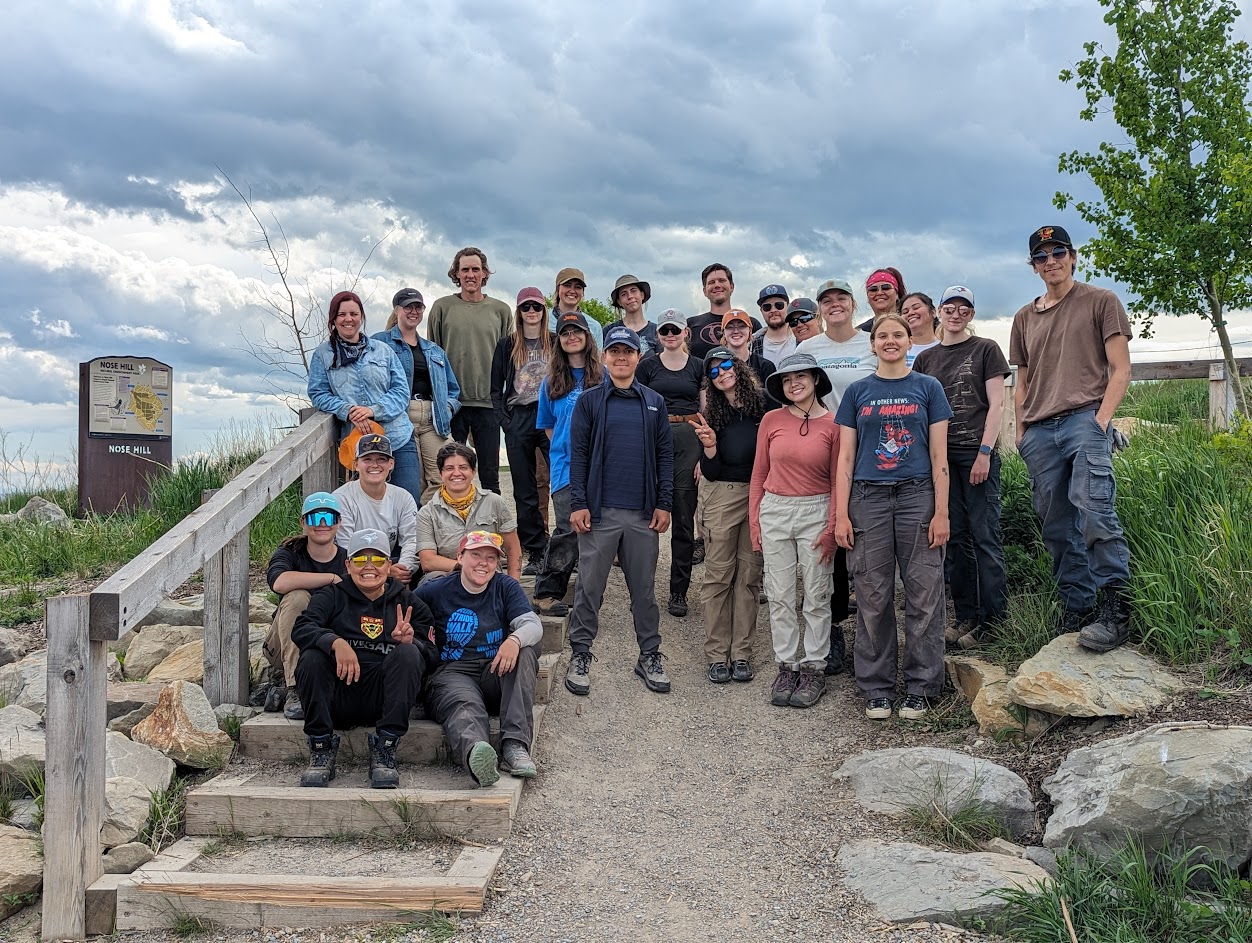
The archaeological site known as EgPm-143, located on the south side of Nose Hill with expansive views to the east, south and west, is one of the Precontact archaeological sites known in the park and is composed of at least 14 stone circles. A stone circle, also referred to as a tipi ring, is a circular formation of rocks that once held down the outer edge of a lodge cover. Stone circles thus represent the former location of a lodge or home. One stone circle at EgPm-143 became the unfortunate victim of a footpath, which has eroded away the grass and topsoil protecting the ring causing the belongings of the site’s Precontact inhabitants to become exposed. Due to this inadvertent damage to the site, EgPm-143 was chosen by the City of Calgary Parks and Open Spaces Department and the University of Calgary Department of Anthropology and Archaeology as the site for the University of Calgary’s archaeological field school in 2024. Hosting the field school at EgPm-143 allowed for research which broadens our understanding of stone circle sites while salvaging materials from a stone circle under threat. Further, the fact that the excavation occurred in a public space provided an opportunity for public engagement and education relative to Calgary’s long-term history and the need to protect, preserve and present heritage sites.
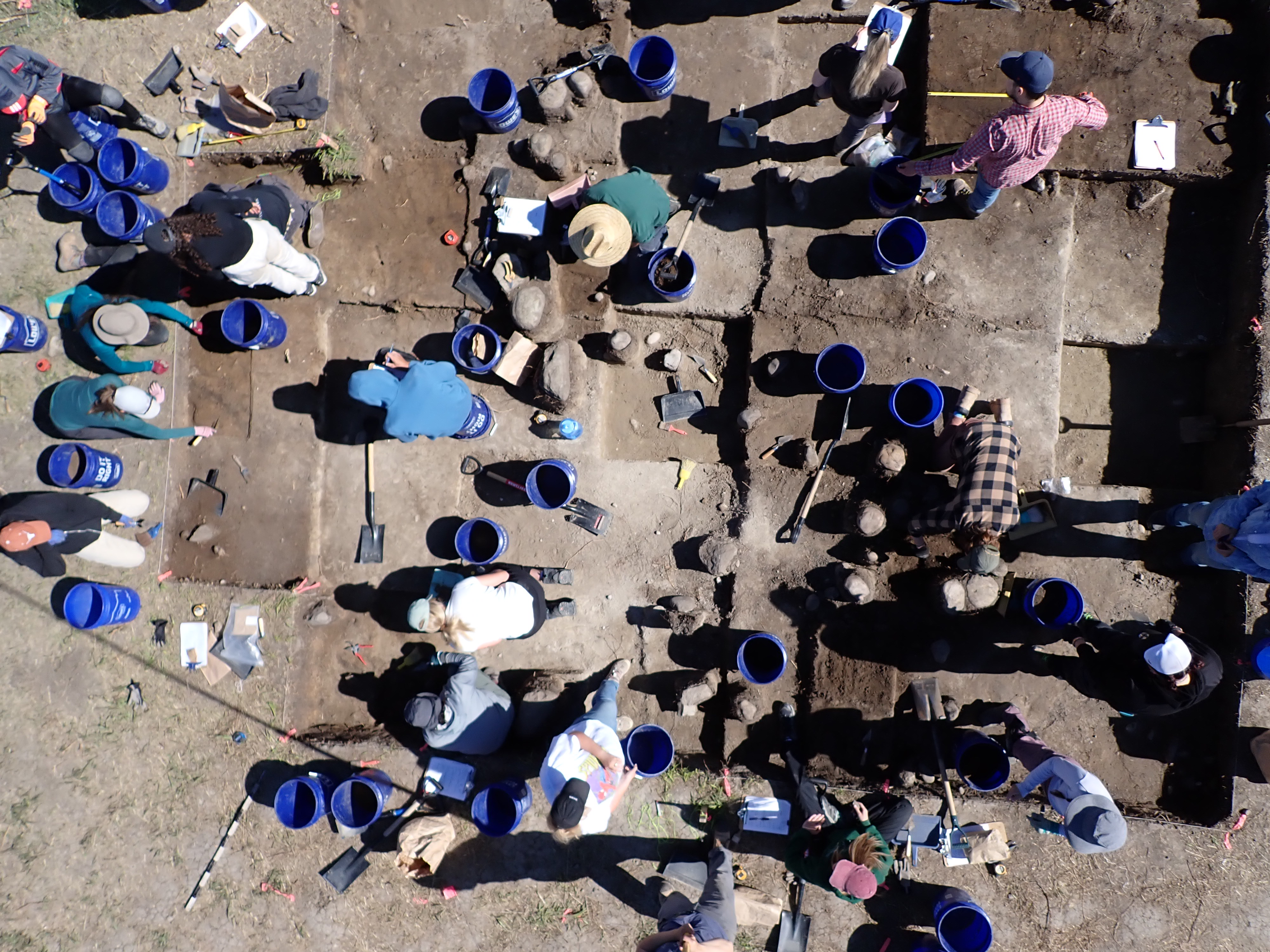
Over four weeks in spring 2024, 22 undergraduate students, five graduate students, three Indigenous research assistants and dozens of volunteers excavated more than 49 square metres within and around the stone circle. Approximately one thousand artifacts were recovered. Most of the artifacts are lithics, which are artifacts made of stone, including both stone tools and the garbage (called debitage) left behind where stone tools are made. In addition, some faunal artifacts were found, including bone and shell, as well as a number of plant remains (seeds). While a broad range of activities likely occurred within the larger camp at EgPm-143, these finds suggest that one of these activities was the procurement of tool stone. Our excavations at EgPm-143 suggest that, in the past, one of the reasons people travelled to Nose Hill was to collect, test and experiment with local tool stones and their viability for stone tool production. This is supported by the presence of many large cores (any piece of lithic material from which another piece of lithic material has been removed for the purpose of use as a tool or to manufacture into a tool, as well as numerous tested cobbles and lots of early stage and primary flakes (debris indicative of the early stages of stone tool production, such as the breaking open of cobbles and removal of large flakes) within and around the stone circle.
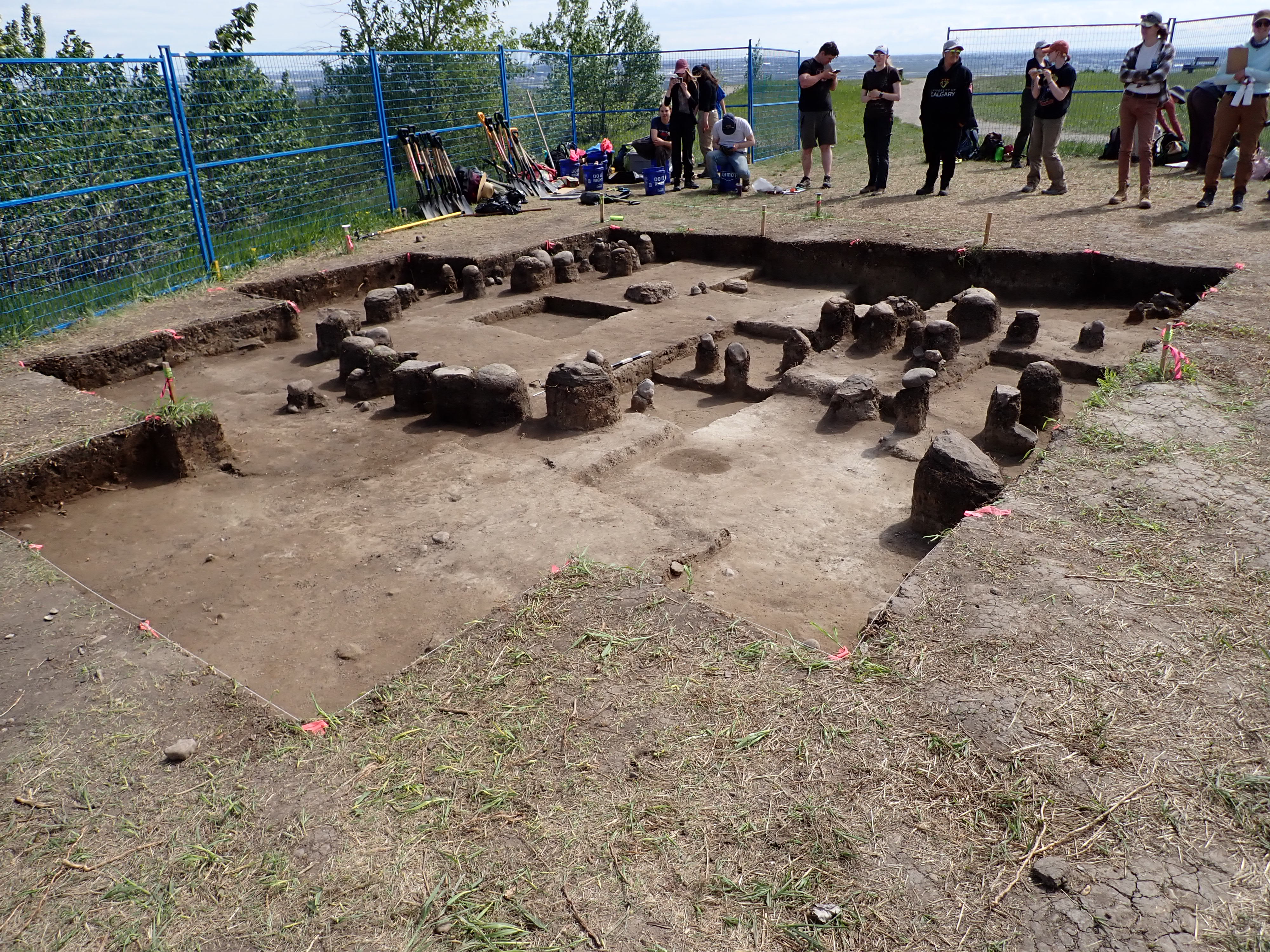
One question that remains unanswered is the age of the site. Unfortunately, there were no artifacts recovered that allowed for the site to be dated. On the other hand, this excavation distinctly lacked any European trade-goods, suggesting it was inhabited before European contact. Stone circles such as the one excavated appear in southern Alberta as early as 5,000 years ago, meaning that this lodge may have been inhabited a few hundred years ago or several thousand years ago.
The University of Calgary field program at EgPm-143 was important for several reasons. These excavations provided an opportunity for future archaeologists to learn hands-on field skills, information about this stone circle was salvaged through excavation, and the project further demonstrated the importance of excavating beyond the perimeter of stone circles to fully understand the context of a stone circle and the types of activities occurring within these campsites. In addition, it was the first archaeological excavation to be undertaken on Nose Hill, and the project filled in more of the rich archaeological and cultural record of Nose Hill, adding depth to this important history. Although this excavation did not answer every question we had, such as the age of the site, it helped add a little more context, information and data about life on the Plains before European arrival.
Sources
Bryan, Liz
2015, Stone by Stone: Exploring Ancient Sites on the Canadian Plains. Second Edition. Heritage House.
City of Calgary
2020, Uncovering Human History: Archaeology and Calgary Parks.
Kooyman, Brian P.
2000, Understanding Stone Tools and Archaeological Sites. University of Calgary Press, Calgary.
Lakevold, Courtney
2016, Back on the Horse: Recent Developments in Archaeological and Palaeontological Research in Alberta. Archaeological Survery of Alberta(36).
Van Dyke, Stan, and Sally Stewart
1985, Hawkwood Site (EgPm-179) A Multi-Component Prehistoric Campsite on Nose Hill. Archaeology of Alberta Manuscript Series (7).
 RETROactive