

Written by: Suzanna Wagner, Program Coordinator, Victoria Settlement and Fort George & Buckingham House
The Hudson’s Bay Company kept a close eye out for anywhere their business might flourish. So, in 1864, when it came to their attention that large groups of people were gathering at the McDougall Methodist Mission on the banks of the North Saskatchewan River (south of the present-day town of Smoky Lake), setting up a fur trade fort next door was an enticing prospect. Rather than reprise the “Fort White Earth” name of the HBC fort that had operated in the vicinity at the turn of the century, they chose to call the place “Victoria Post.” Victoria was the same name as the mission, and it was a “post” because it wasn’t large enough to merit being called a fort. Despite the technicalities, most people call it Fort Victoria.
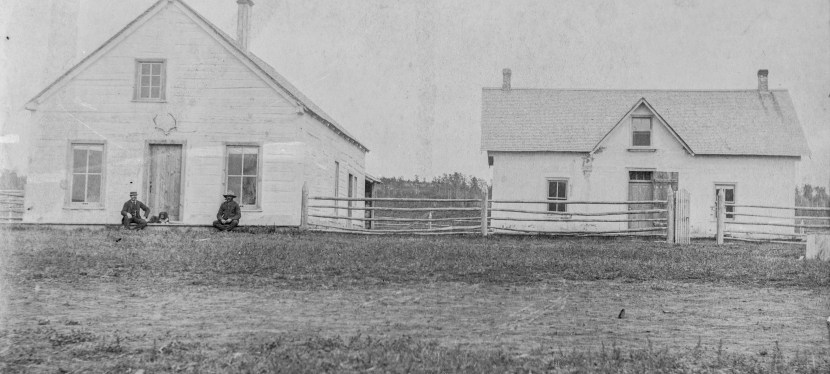
By 1874, the fort contained the Clerk’s Quarters (still at Victoria Settlement Provincial Historic Site today), a warehouse, a house for other fort employees, a blacksmith shop, a stable, a dairy, a palisade, and of particular interest, the trade store. The trade store was built by local men Sam Whitford and Joe Turner, likely between 1866 and 1867. The humble post-in-sill built trade store went through almost as many changes as did the community which surrounded it, and unique within the history of Victoria Settlement, a series of photographs have shed light on many of the changes this building underwent.
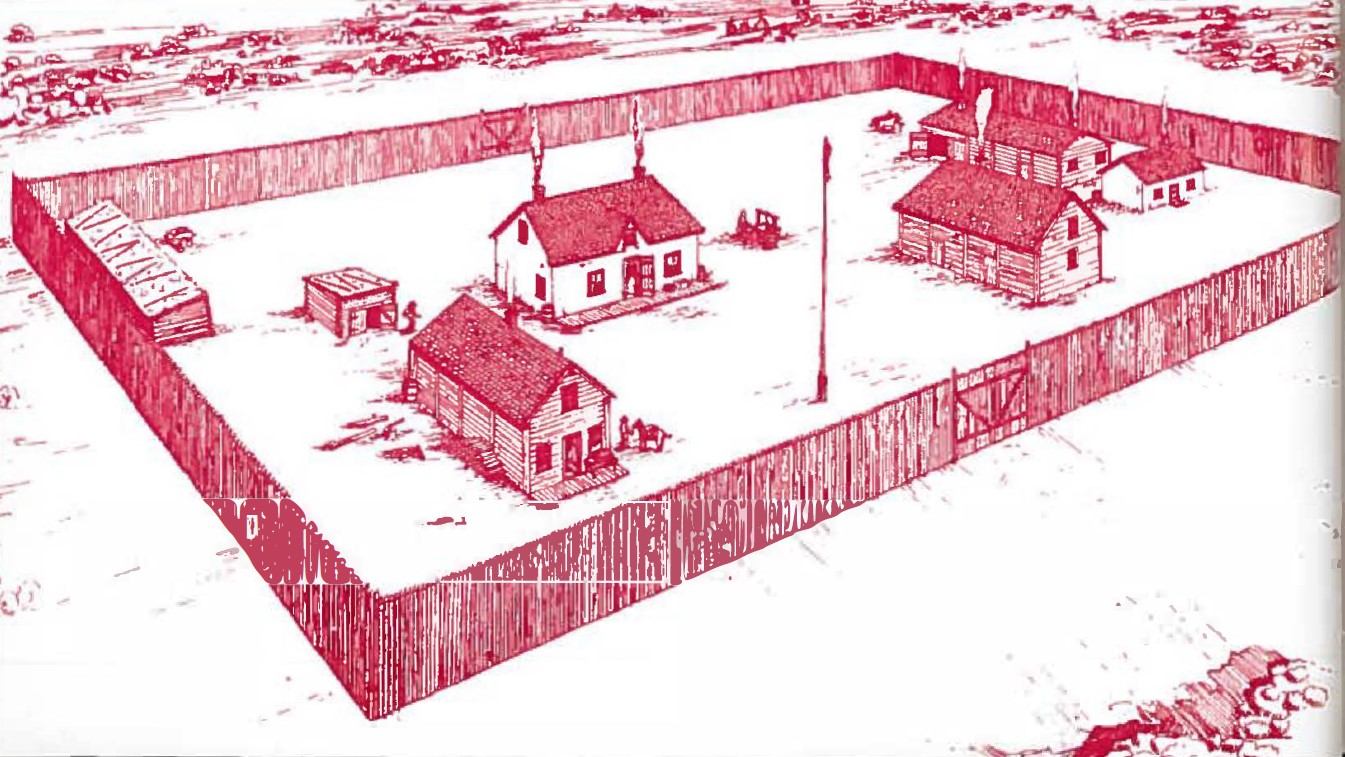
Fort Victoria did good business for the first few years, but the 1870s changed everything. After a smallpox epidemic, the disapperance of the buffalo, creation of the reserve system, and decrease in the number of fur-bearing animals, locals sought to make their living by other means. By 1883, it was clear the fur trade business had not recovered and the HBC closed Victoria Post. The Victoria community continued to change. Locals’ farms and land divisions were officially recognized by the federal government and farming operations continued to expand, becoming more successful and better able to support and feed the community. After the food scarities caused by the disappearance of the buffalo, a more stable source of food must have been a relief.
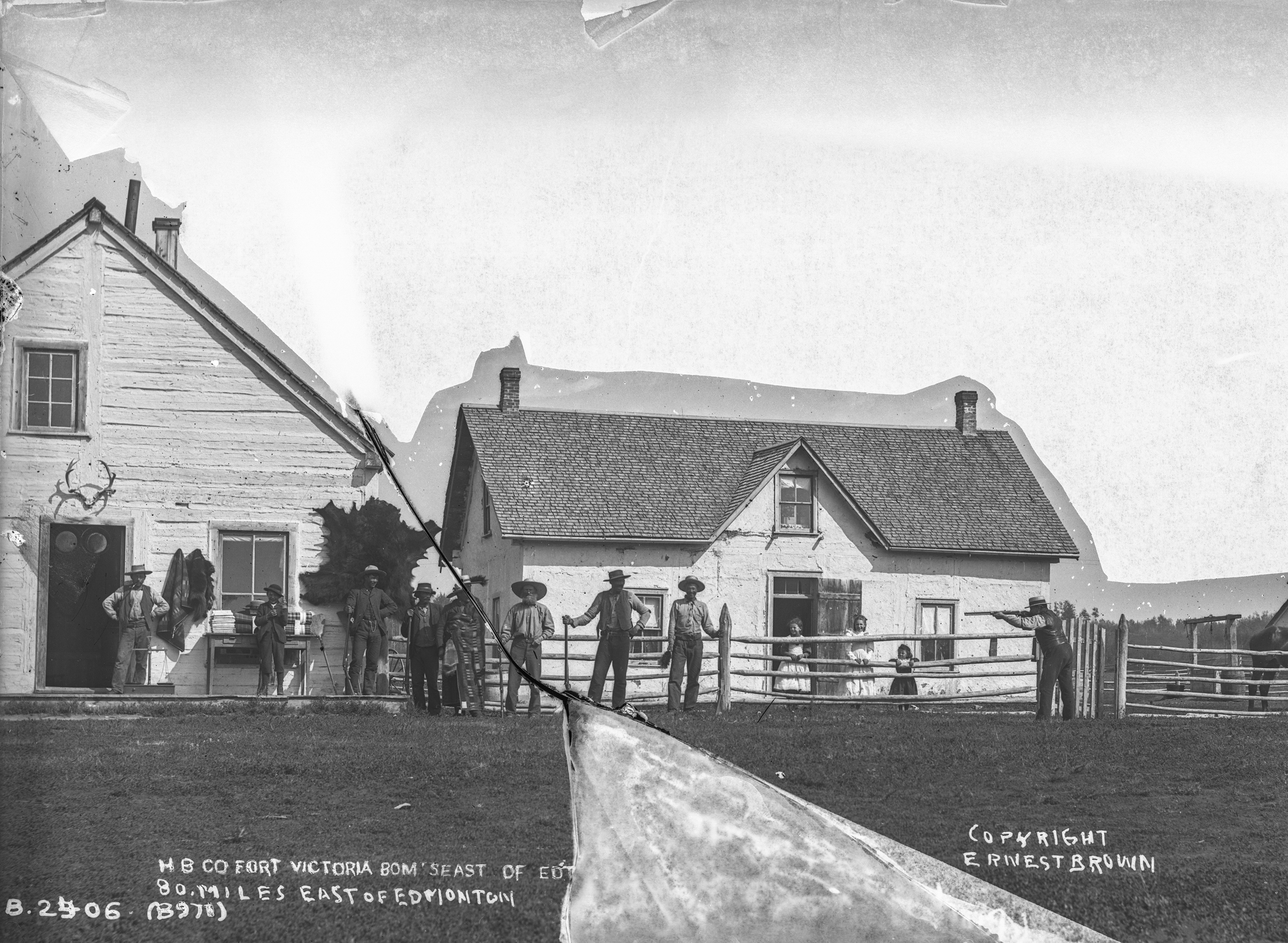
The HBC briefly resumed business in 1888. In the intervening years, the community renamed itself Pakan, and likely obtained any necessary store-bought items from various free traders or through the newly established post office. The HBC’s reopened store did not last long. After several years of meager fur trade returns, it closed permanently in 1896 or 1897.
This growing agricultural community established by families of mixed Indigenous and Scottish/English ancestry expanded once again in 1899 with the arrival of large numbers of Ukrainian immigrants. Also in 1899, the English-Canadian Mitchell family arrived in the community. John A. Mitchell purchased the building which had been the HBC’s trade store and opened his own store within.
John A. Mitchell’s son Frank recalled prices for important items at his father’s store:
Prices of articles sold in my father’s store contrast sharply with today’s prices. For example, the best grade of strong baker’s flour sold for $2.25 for one hundred pounds. A cheaper grade called Fourex sold for less. A gallon wooden pail of pure strawberry jam sold for seventy-five cents. McDonald plug-tobacco came in twenty-five pound caddies and sold for thirty-five cents, with a small plug priced at ten cents. Chewing tobacco came in the same size caddy and had to be pried loose with a butcher’s knife. Candy of all varieties came in large wooden pails, also, and sold for about twenty-five cents a pound. Leaf tobacco was packed in fifty pound bundles, selling at twenty cents per pound. Herring, in brine, came in one hundred pound kegs and salt pork could be had in burlap sacks.
Powder and shot was, of course, another important commodity sold in the store, since every homesteader had at least a single barrelled 12-guage shot gun with which to replenish his supply of meat….
I can remember enjoying the gatherings in the store when the Ukrainian settlers celebrated a holiday. They came into the settlement and stayed most of the day, bringing with them loaves of home-baked bread which, combined with their purchases of salt pork and herring, comprised their dinner. After their dinner they would fill their pipes and enjoy a good smoke while they visited. I remember, too, that the goods and utensils which hung from the ceiling of the store were soon lost from view in the gathering smoke as the day wore on.

The first photograph we have of the trade store building after it became home to Mitchell’s Pakan General Store was taken in 1918 in the midst of the influenza pandemic. The general store can be seen in the background on the left. A false front with the words “Pakan General Store” has been added to the original structure, and the building is no longer covered in whitewash. The angle of the photograph blocks the view of the Clerk’s Quarters, which is set somewhat back from the trade store. The smaller building to the right was the post office. John A. Mitchell’s son Frank delivered the mail for 36 years.
The Pakan General Store had many competitors over the years and in 1921 Mrs. Alice Lawford bought the store from John A. Mitchell. Mrs. Lawford ran the store until 1924 or 1925. How long she kept the store in the old HBC trade store building is unclear. Pakan’s entry in the Alberta-wide Henderson Directory lists the general store (under her husband’s name) as late as 1924. This confirms the business was still in Pakan, although no information is available about where it was located. The trade store building, however, remained exactly where it had always been, as we can clearly see from these photos taken in 1929.


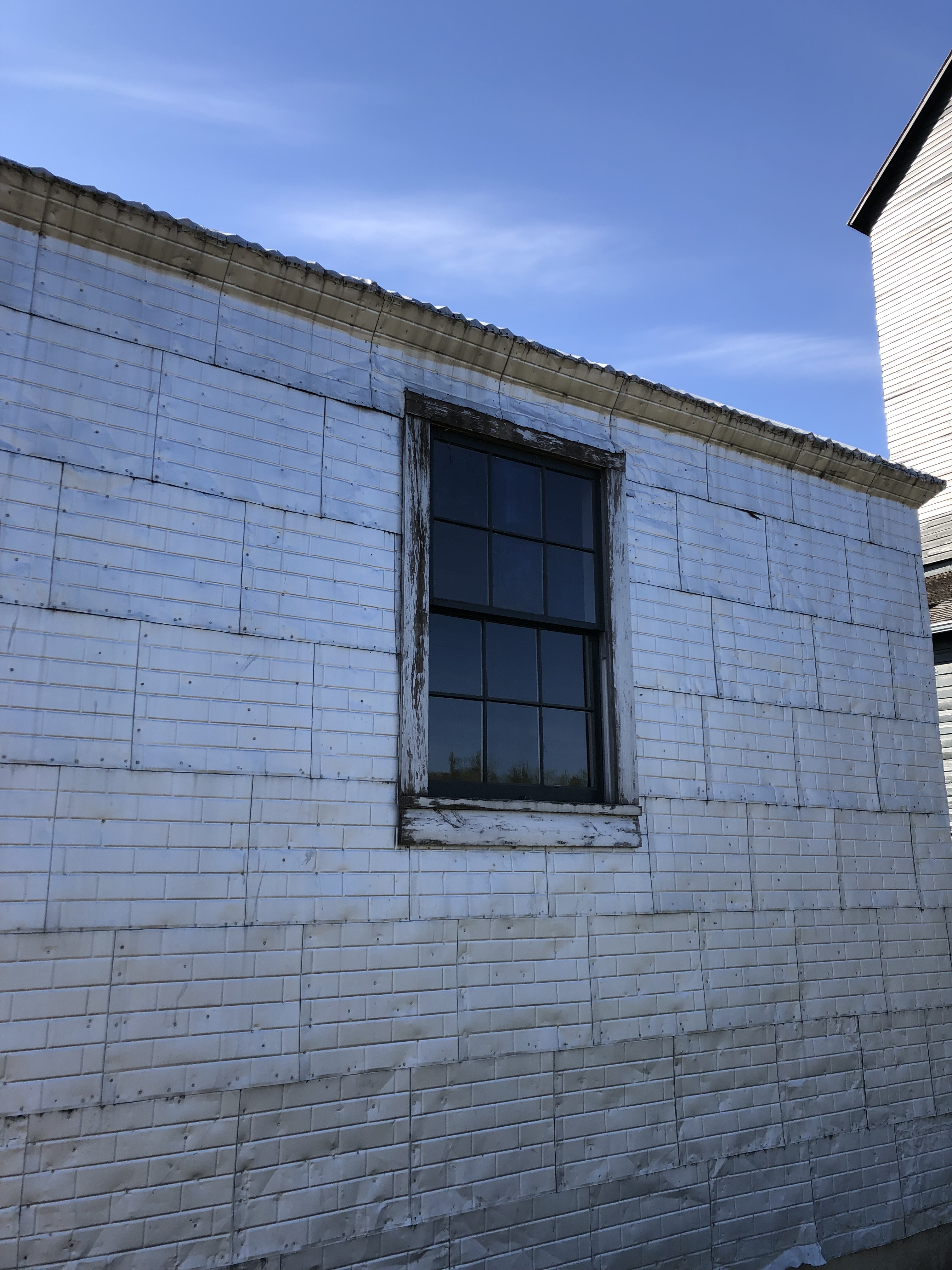

Unfortunately for today’s visitors to Victoria Settlement, the trade store is no longer on site. After it had outlived its usefulness as a store, the building was moved to a farm belonging to a Ukrainian family. There it served as a granary. The current status of the building is unknown.
Figuring out the history of the Fort Victoria trade store-Pakan general store is a testament to the strong collegial spirit of the Alberta Heritage division team, diverse members of which eagerly provided their specialized insight into building construction and conservation, photographic interpretation, contextual history and the history of objects which surrounded the lives of Pakan residents.
 RETROactive