

Editor’s note: David Murray is an architect in Edmonton and met Arni Fullerton in 1981 while working for him on an alternate, traditional plan for the development of a new town at 58˚ N as required by his contract with the province, led by Montreal architect Ray Affleck. Fullerton and his wife Merle were interviewed on Zoom in April 2024 at their home in Nanaimo.
All images courtesy of the Arni Fullerton Collection at the Provincial Archives of Alberta, unless otherwise noted.
Written by: David Murray, Architect AAA, FRAIC
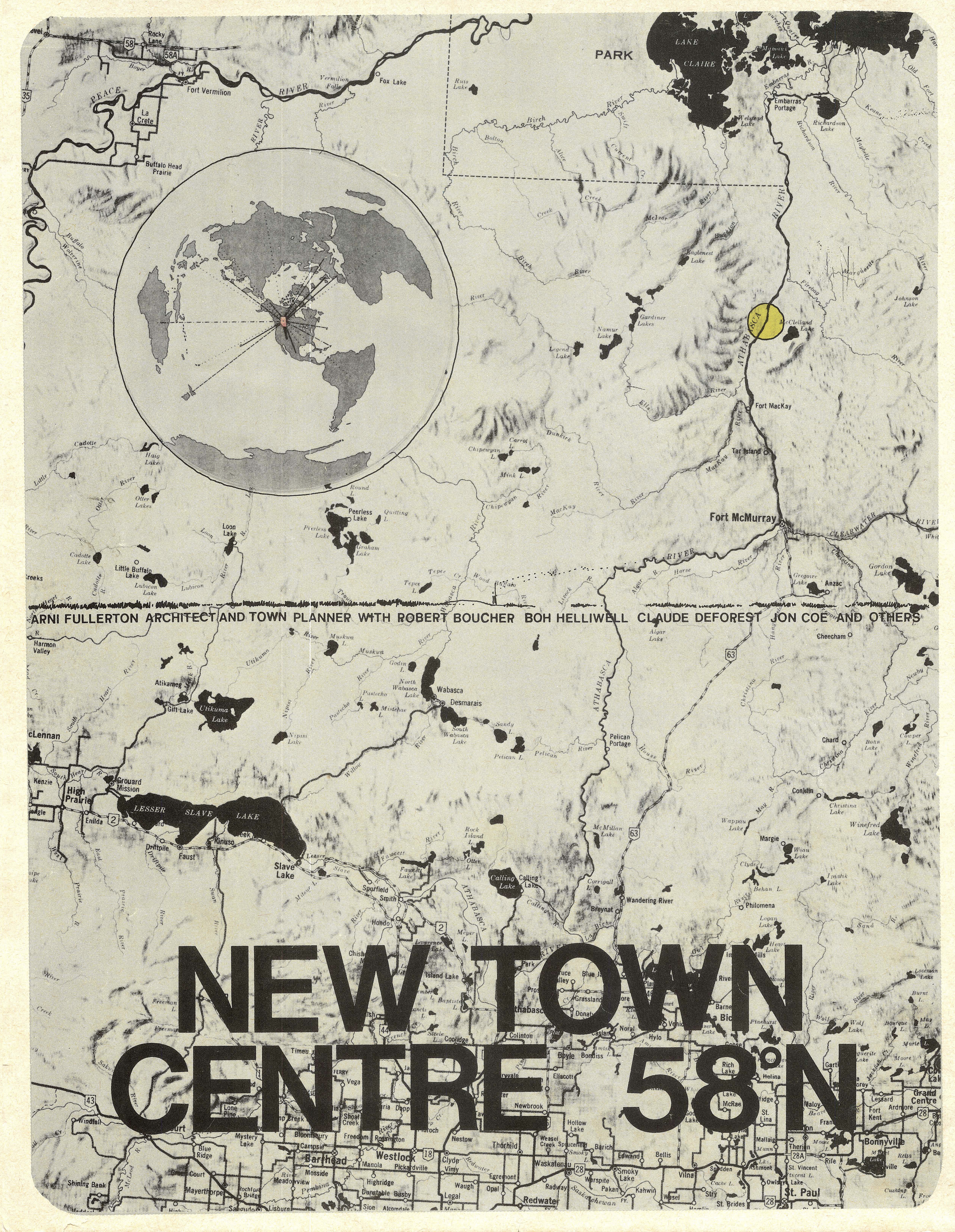
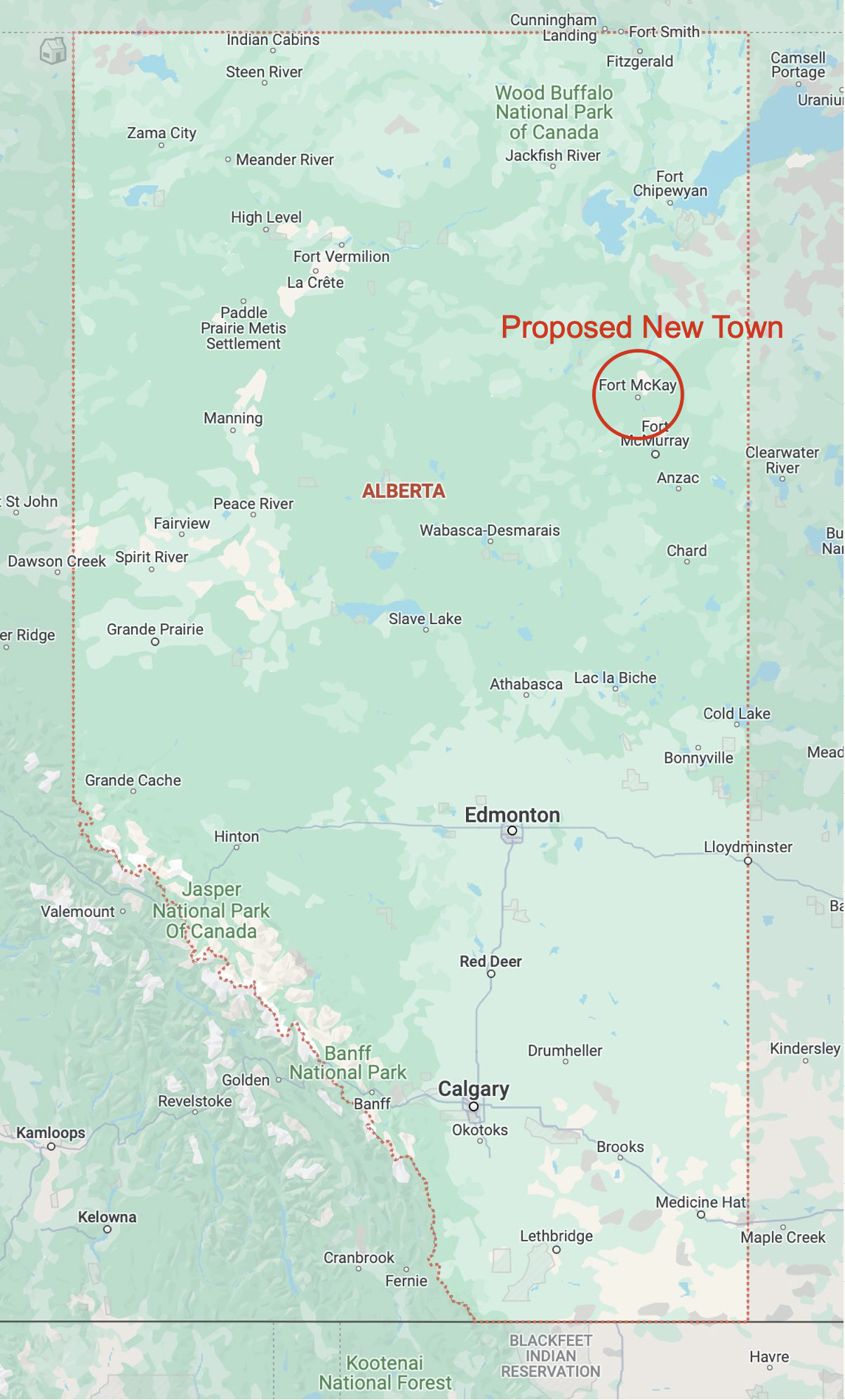
In the late 1970s, the Alberta Government’s Department of Housing and Public Works, initiated a planning process with the intent to design a new community in northern Alberta, north of Fort McMurray, specifically to house workers and their families at the expanding oil sands extraction developments. It would be a most imaginative and provocative approach to living in the north, the culmination of a lot of precedent research by a team of planning and engineering visionaries.
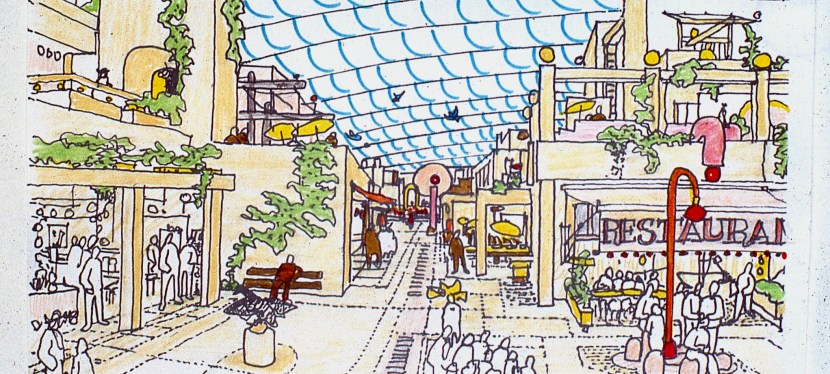
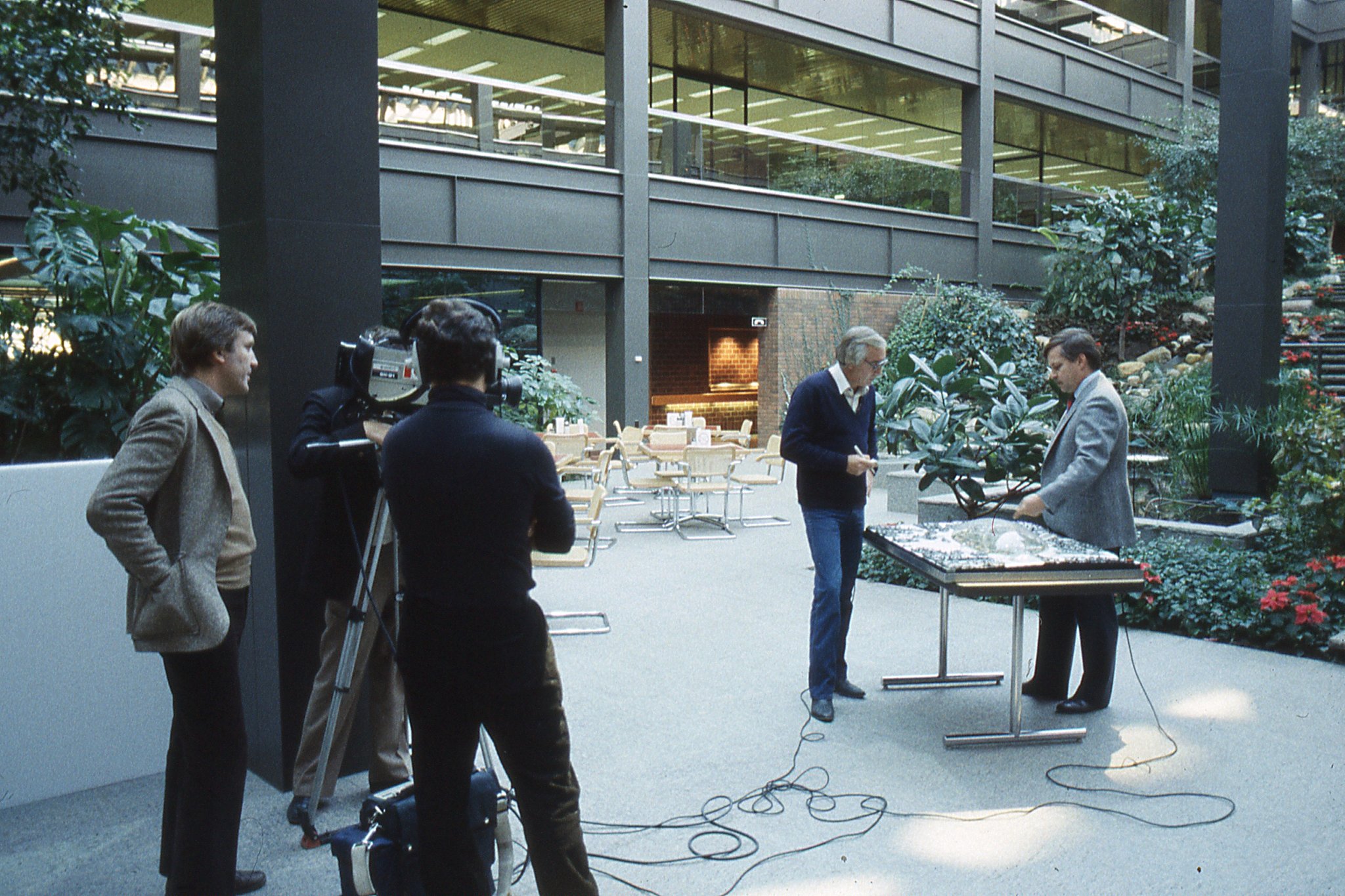
Architect Arni Fullerton was hired by the Alberta government to design the proposed new town. His vision, on which he collaborated with Britain’s Buro Happold Engineers and German structural engineer Frei Otto, was a 35 acre air-supported, weather-controlled, transparent dome, covering a town centre that incorporated housing, recreation fields, a sports complex, commercial properties, a shopping centre, schools, an amphitheatre, parks and a children’s plaza. The town was intended to grow incrementally, outside the town centre dome, over time. All parts of the town would be connected by public transit.
The design concept of a large fabric structure which would enclose a northern city did not suddenly appear. It was preceded by several decades of research and experimentation by leading world architects and engineers who were exploring how to plan comfortable communities in the harsh climates of northern Canada and Siberia, the Arctic and Antarctica.

Arni Fullerton, architect and urban planner
Fullterton was born in Saskatchewan in 1938, growing up on a farm 13 miles south of Dinsmore, not far from Saskatoon. His father rented a large piece of land from the government to raise sheep. His mother was from Finland. When Arni was 12, his older sister took him to Saskatoon where he went to Industrial school. By the age of 14 he was very good at drawing. He got to know a Saskatoon architect when he was at industrial school and was invited to work in the firm in order save money for university. It was here that he decided to study architecture. He graduated from the University of Manitoba in 1963 where he met his future wife Merle. They married later in his graduating year. The honeymoon was a tour of Europe after which Arni found work in London.
In 1965, he returned to Winnipeg to work with Sandy and Blanche van Ginkel. Sandy had been a member of the Congres International d’Architecture Moderne (CIAM) and was a member of the subsequent Team 10 group of architects, an international think tank dedicated to the teaching and study of modern architecture and urban planning after World War II. Blanche was a British-born Canadian architect who worked on the planning of Expo 67 about the time that Arni was working for the couple in Winnipeg. It was within this intellectual environment that Arni was developing his approach to architecture and urban planning.
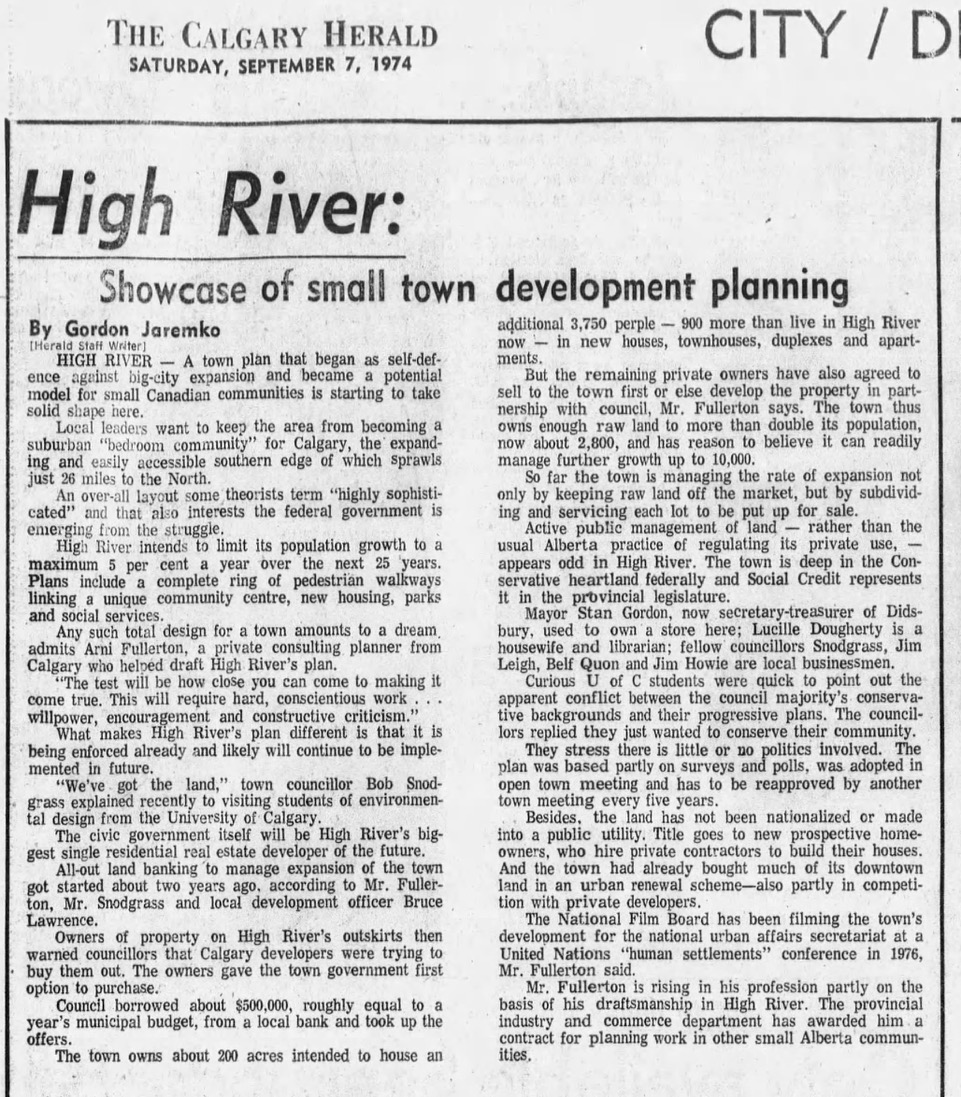
Now located in Calgary, Fullerton worked a while for architect Jack Long, a planner and community activist. Later he opened his own office and took on some important Alberta projects. In 1974, Arni worked with the community of High River on a town plan that addressed the community’s concern that it not become a suburban bedroom community for Calgary. High River intended to limit its population growth to a maximum 5 per cent a year over the following 25 years and to take control over the implementation of the plan through active public management. Arni’s planning skills were noticed by government departments. The Calgary Herald reported in September 1974, “Mr. Fullerton is rising in his profession partly on the basis of his draftsmanship in High River. The provincial industry and commerce department has awarded him a contract for planning work in other small Alberta communities”.

In 1973, Fullerton led a special interest course called “Future Shock” based on the book of the same name by futurist Alvin Toffler, at Mount Royal College. The ‘progressive’ subject matter indicates how he was a thinker who took an interest in the psychology of the social changes that were happening at the time.
It was this reputation as a visionary planner that led the Department of Housing and Public Works to hire Fullerton to design a new town north of Fort McMurray to house oil sands workers in 1979. The Department Deputy Minister was Norman Fleming, an architect himself, who got to know and befriend Arni when he was working on town planning projects in Alberta.
Why a New Town in Northern Alberta
The world-wide oil crisis of the 1970s led to wide disruptions of oil supplies. Alberta’s oil sands are one of the world’s largest deposits of oil. Construction of the Great Canadian Oil Sands extraction plant began in 1964, and production of refined crude oil began in 1967. Construction was expanded in 1973 with the Syncrude Mildred Lake facility. The Province of Alberta was expecting an economic boom and new living accommodations were needed to attract and retain the oilsands workers and their families.
From a memo in the Arni Fullerton collection:
“That continued development of the oilsands is critical to Alberta’s long term growth …(58˚ N) is a project which could put the spotlight of the world on this region, adding to investor interest, demonstrating a northern solution and as well providing a centre to motivate good workers to come and stay.”
Housing the oil sands workers and their families
Fullerton’s research on life under a dome consisted of looking at several categories of people who would interact with life in the dome – permanent residents, visitors and workers. He was concerned that, “Although the dome has significant advantages in terms of its potential to modify the climate there is a risk that it will be seen as an alien object to those who are attracted to living in a wilderness area…the enclosed city may well be seen as providing a synthetic environment…” Fullerton’s research, with the assistance of many experts, evaluated all the factors that would affect resident and visitor adaptation to a climate-controlled environment. The factors included air pressure, light, humidity, toxicity, air quality, health, pests, noise, safety etc. Working with Buro Happold Engineers in Britain and many other experts, each of the factors was analysed and the team prepared extensive engineering studies and detailed sketches to address the living environment.
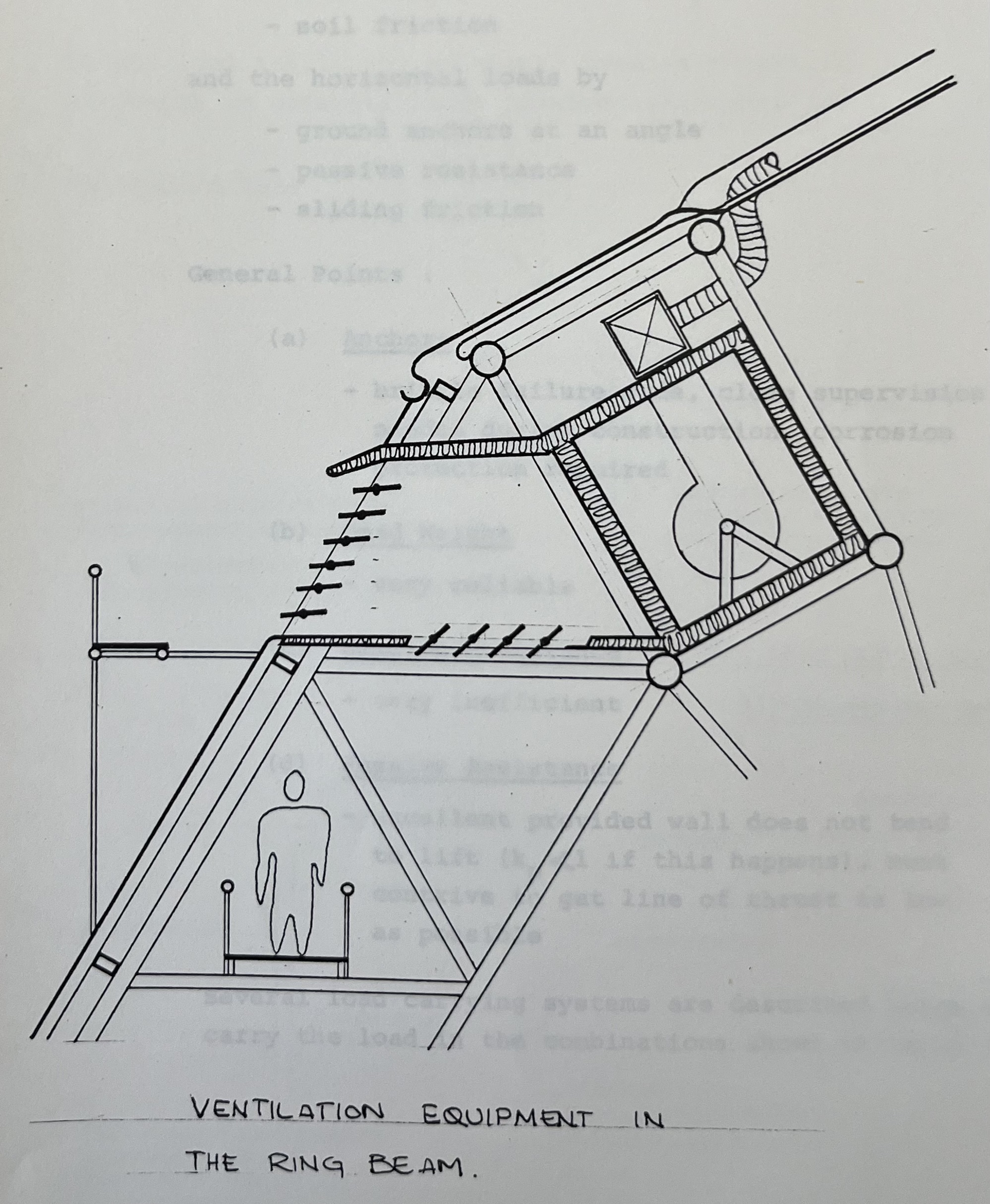

Details of the proposed dome design from the PAA Arni Fullerton collection
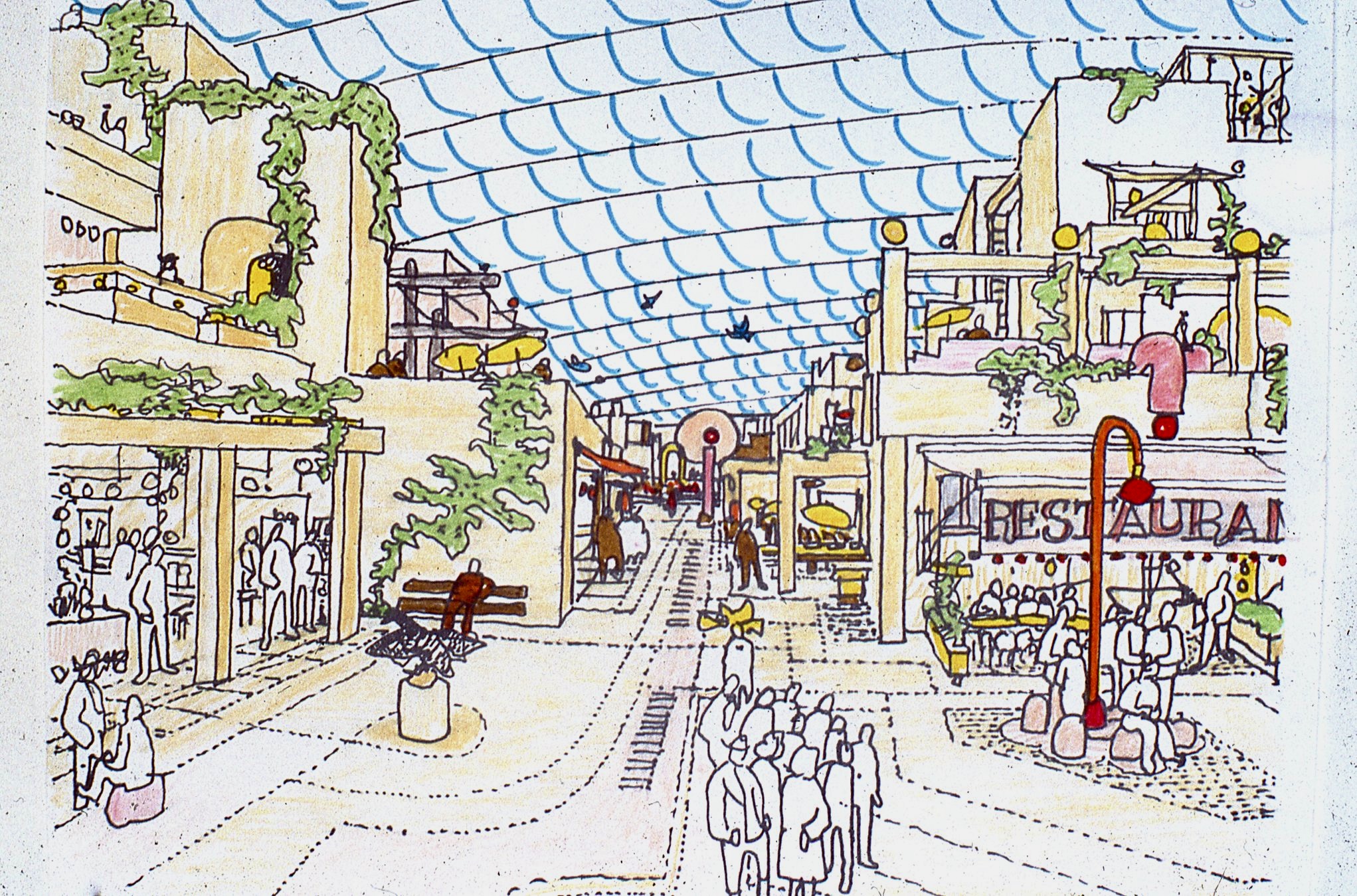
The tempered environment is designed to achieve its levels of comfort with the minimum of psychological disturbance to the inhabitants and good overall energy conservation. In this respect it can be compared with a township at a more southerly latitude. The design aim is to achieve a natural climate of contrasting seasons rather than an artificially static one. The daily fluctuations of temperatures in the dome generally follow the pattern of external temperature but are limited to the daily swings of temperature, humidity and light that the landscaping components require.
-Report from the PAA Arni Fullerton collection
Denis Wilkinson, a Landscape Architect at the University of Manitoba, and Arni’s professor in the early 1960s, prepared many sketches which were intended to invoke the idealized domestic atmosphere of life under the 58˚ N dome.

Historical examples of lightweight structures
The Fullerton team conducted an extensive survey on the history of designing new towns for cold climates and the lightweight structures that would enclose them for the purpose of climate control. One such project was “A City in the Arctic”, Project Study in 1971, which Fullerton specifically mentions in his report to the government. The two kilometer diameter pneumatic cable net supported dome structure with two layers of transparent membranes was proposed by architect and engineers, Frei Otto and Ewald Bubner, Kenzo Tange & Urtec, Ove Arup & Partners. The proposed new city for 40,000 people in the Arctic, only a study, was never realized, but obviously was very influential to the Fullerton Team and featured in their reports.
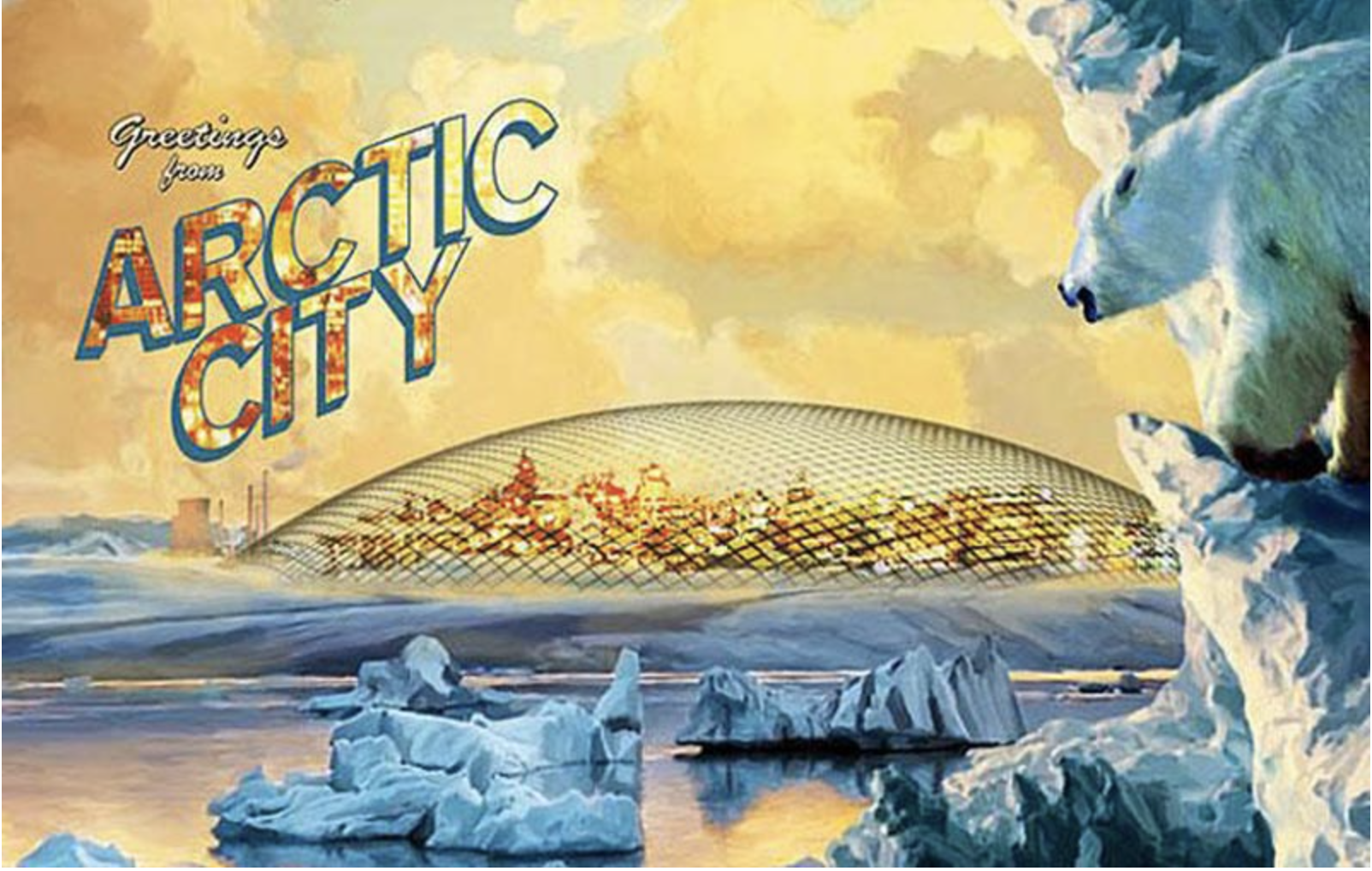
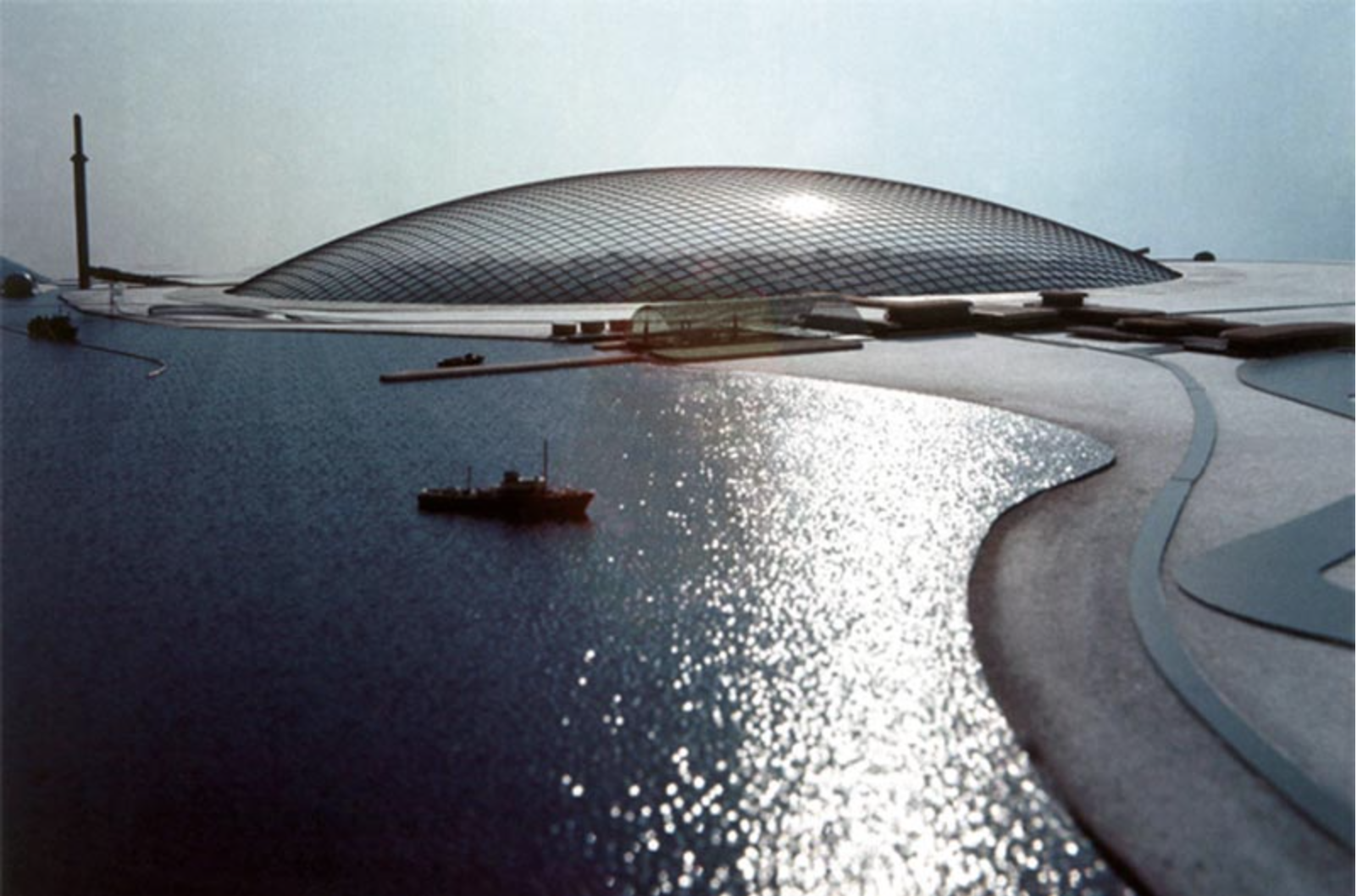
There were many other light-weight structure studies that the Fullerton team researched and documented in their 1979 report to the Alberta government. In 1959, Frei Otto had proposed a City in the Antarctic. Also in 1959, Buckminster Fuller proposed a dome over part of New York City. Frei Otto was one of the great light-weight structure innovators in this era with numerous studies that led to the German Pavilion at Expo 67. He was engaged by Fullerton to work with his team on proposed structures to enclose the New Town Centre 58˚ N.

British/Swedish architect Ralph Erskine worked on plans for two northern Canada communities in the early 1970s and would have been known to Fullerton (he references one of the projects in his 58˚ N report). In his 1968 article “Ralph Erskine – Architecture and Town Planning in the North”, Erskine writes:
“One of the most exciting ideas which comes to mind when first presented with these problems is that of the township which is a single enormous building complex, or a township covered by domes or suspended membranes…The physical convenience of such a township would be very great, and it would tend to be economical to run and to heat. The greatest difficulties would probably be of social and psychological nature since such a town could be institutional and introvert, and although openable parts of the structure could give certain contact with the outer world, this would tend to be indirect and tenuous.”
Arni Fullerton was thinking about domes over cities as weather-protection when he proposed a dome over Calgary in 1972 and over Edmonton in 1987.
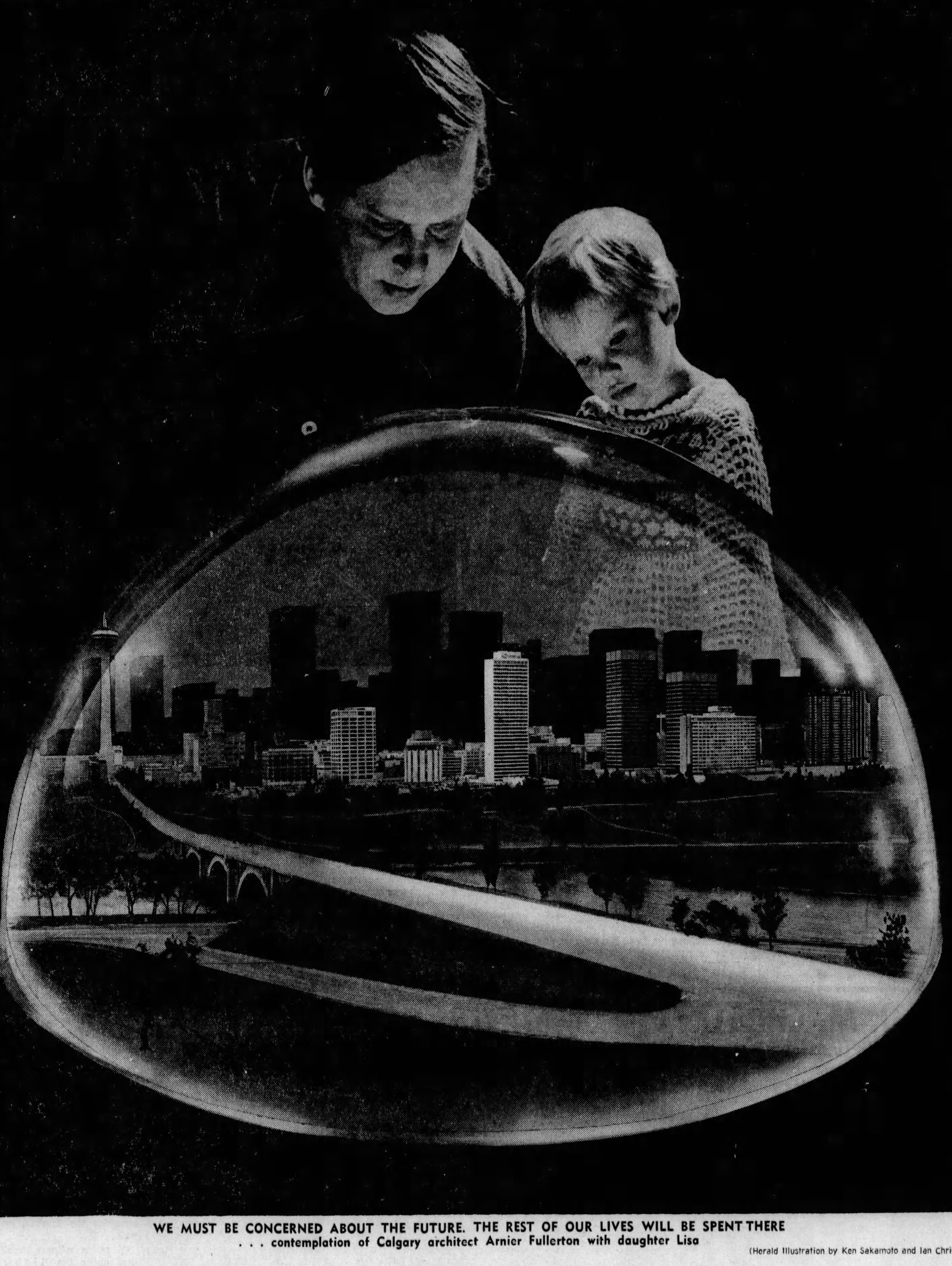

In 1987, the Edmonton Journal reported:
“Fullerton…was commissioned in 1981…to come up with a plan to make northern towns more liveable. At that time, workers were leaving Fort McMurray after an average of three months because of intolerable living conditions….A project like this would put us on the world map….It would be a unique demonstration of what you can do in the future – and it is feasible now.”
An Alberta precedent for northern living and recreation: West Edmonton Mall
In the late 1970s, in Edmonton, the largest indoor shopping and recreation mall in the world at the time was being planned. Phase I opened in 1981 with 106,000 m2 of retail and entertainment, closely followed by a substantial increase to incorporate major indoor recreation facilities including an NHL-sized skating rink, a huge waterpark and an amusement park, all intended to provide a year-round family-oriented destination. From the beginning, it proved to be very popular. The environmental enclosure of these facilities generated impressive yet conventional structural solutions, providing vast amounts of natural light. Albertans took to this place without hesitation.

An air-supported dome or an additive tent structure
The Fullerton team researched two types of structures to enclose the 35-acre Alberta town. The additive tent structure options were explored in detail under the direction of Frei Otto. A single central mast system was not practical since the mast would have to be too high and the sun exposures were not ideal. The ideal form of this structure would be “Free-Form, Free-Field Tents”. These additive structures appeared to be a viable solution but would require numerous central masts that would limit the organizational layout of the town.


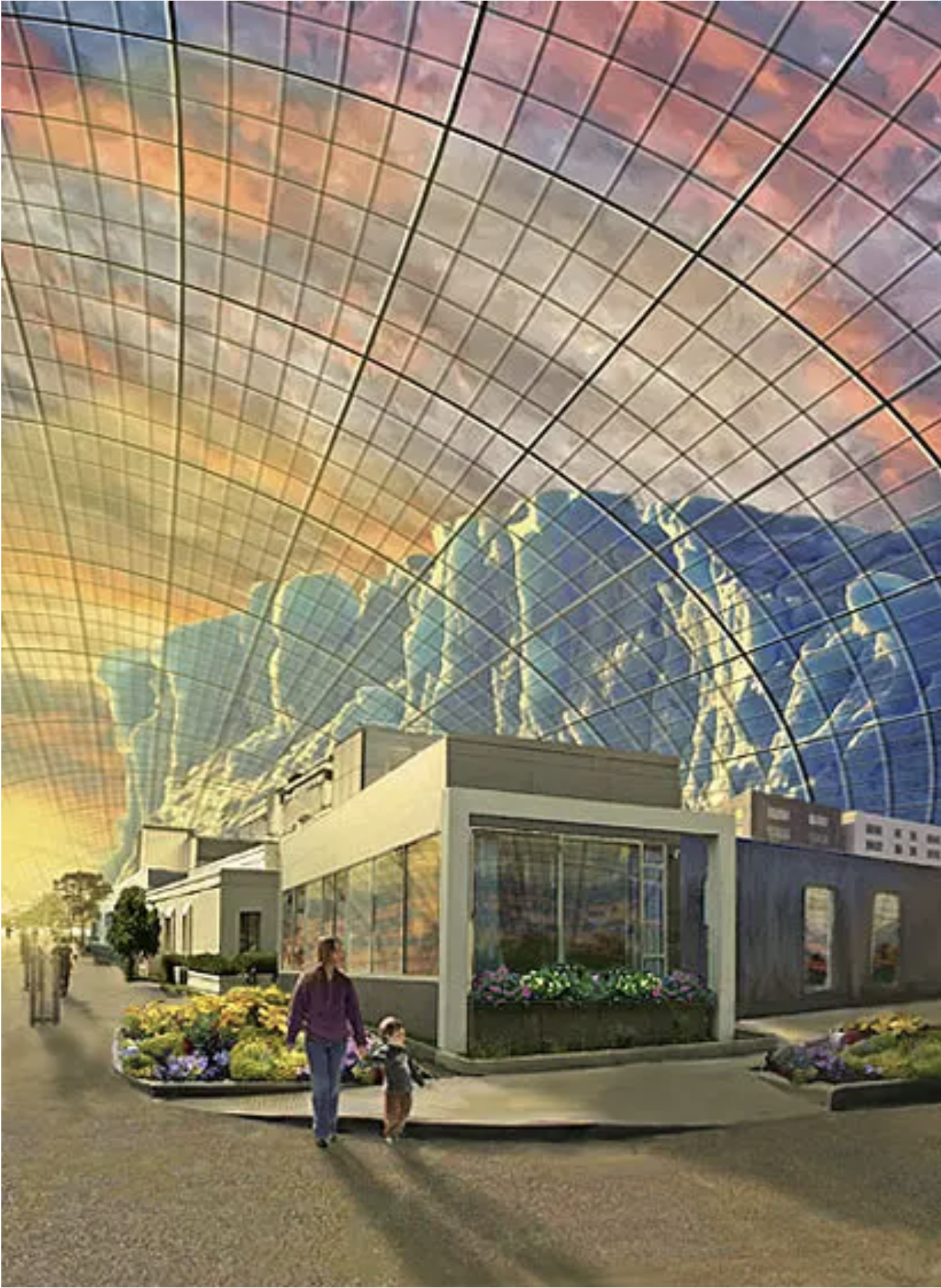
Arni Fullerton’s design for the air-supported dome was based on the current technology of air supported stadium roofs and incorporated a concrete ring beam which carried the horizontal forces, the enclosing membrane, in compression and supported it above the ground during installation and in the event of a collapse. The 35 acre area of the new town could be covered without any interior supports that would impede the planning of the new town and its variety of interior structures. The roof would be nearly transparent and could be oriented for the best solar exposure. The vertical perimeter, glazed structure would offer views to the horizon. The dome was visualized as being inconspicuous in normal life but should give a feeling of protection from the potentially harsh external environment.

Choosing an option
The air-supported dome had planning advantages over the additive tent structure option and it also had the advantage of being the less expensive of the two options to construct. It was estimated to cost $92M or $60 per square foot. The additive tent structure was estimated to cost $140M or $92.20 per square foot. This was only for the cost of the environmental enclosure. The residences, recreation centre, stores etc were estimated to cost an additional $145M and site services would bring the overall cost to $287M. A cost estimate of $221M was also prepared for the option of a conventional high density open street plan new town concept.
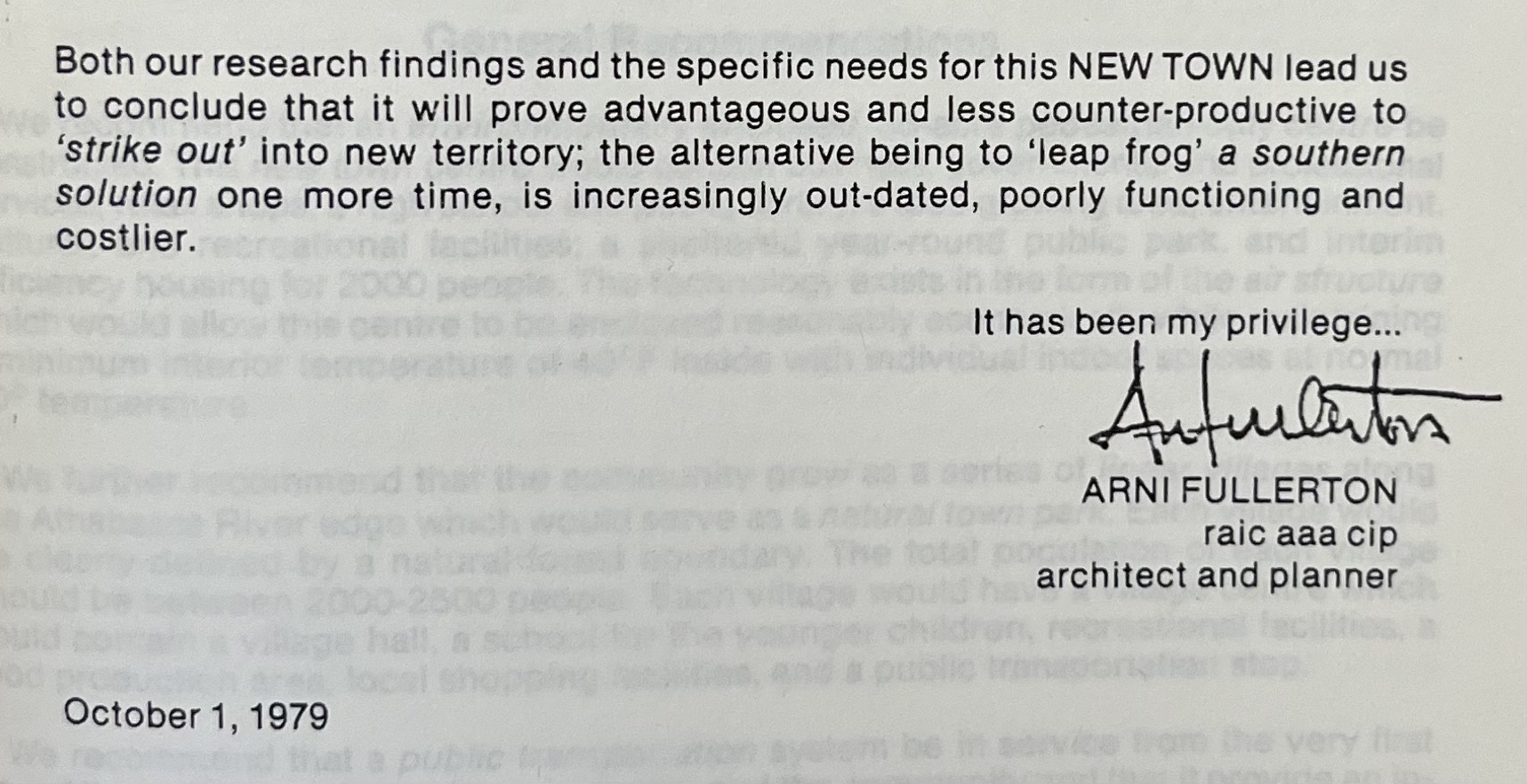
In his General Recommendations report, Fullerton states:
“This NEW TOWN, with its rather rapid growth potential, allows a one-in-a-long-time opportunity to try a relatively new combination of ingredients. The dividends will come in the longer term: to the industries directly involved, in attracting a more caring commitment from its workers and potentially less downtime; to the province, both savings in social costs and experience of benefit to other growth centres; to the service and manufacturing industry, a new technology for building in the North; to the local citizens, a feeling of being at the centre in this vast undefined territory – that they matter!”
In 1981, the Christian Science Monitor published an article, “Slapping a Lid on Winter. In Proposed ‘Bubble’ City, Crocuses Peek Through in January”:
“…Arni Fullerton envisions towns in the Canadian far north that will almost be subtropical in nature…Does this sound as if the concept has come straight from the pages of a Buck Rogers comic strip? It has indeed. But man’s footsteps on the moon originated there as well. We have the technology to build such a town right now, insists Fullerton. We don’t merely have the technology, says David H. Geiger of Geiger Berber Structures Inc. in New York City, we have been proving it in practice for the past decade.”
What happened to the dome project?
The Edmonton Journal wrote on Thursday March 10, 1983, “Slump leaves gov’t renting empty offices.” It was the start of a deep economic recession in Alberta. Norman Fleming, Deputy Minister of Housing and Public Works, Arni Fullerton’s friend and client, said “You have to remember we planned for boom times and the requirements suddenly aren’t there anymore.” I wonder what might have become of the project had the economy flourished into the next decade.
The New Town Center 58˚ N project faded from public attention without even a trace in the Provincial Archives of Alberta. Fortunately in 2024 we were able to locate Arnie Fullerton, at 86, and his wife Merle, where he is retired in Nanaimo, British Columbia. Arni, Merle and family have provided invaluable assistance in the writing of this article. There are so many more stories to tell about Arni’s career. All of his collection of reports, drawings and photographs will fortunately now reside in the Provincial Archives of Alberta.
 RETROactive