

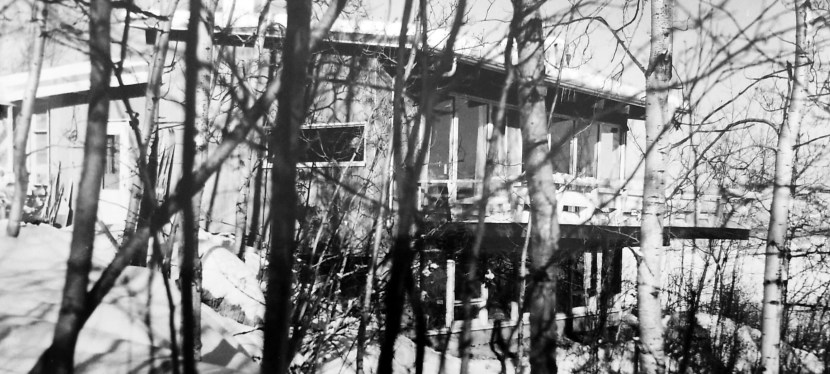
Editor’s note: The dwelling Wallbridge and Imrie created remains standing today, bequeathed to the Province of Alberta upon Mary’s death along with several other parcels of land. It is still owned, managed and maintained by the province, with its current tenants being the Land Stewardship Centre. However, its name has since shifted to “Imrie House.”
The author, Devon Moar, recently completed his Master’s thesis on this very topic.
Written by: Devon Owen Moar
First, I want to open with a quote from the poet Muriel Rukeyser:
“The universe is made of stories, not of atoms.”
The hope is that this line sets the tone for how I believe this dwelling exists, shaped both by structure and story. This place is not only a physical, humble shelter but holds a profound account of its inhabitants.
Welcome to Six Acres
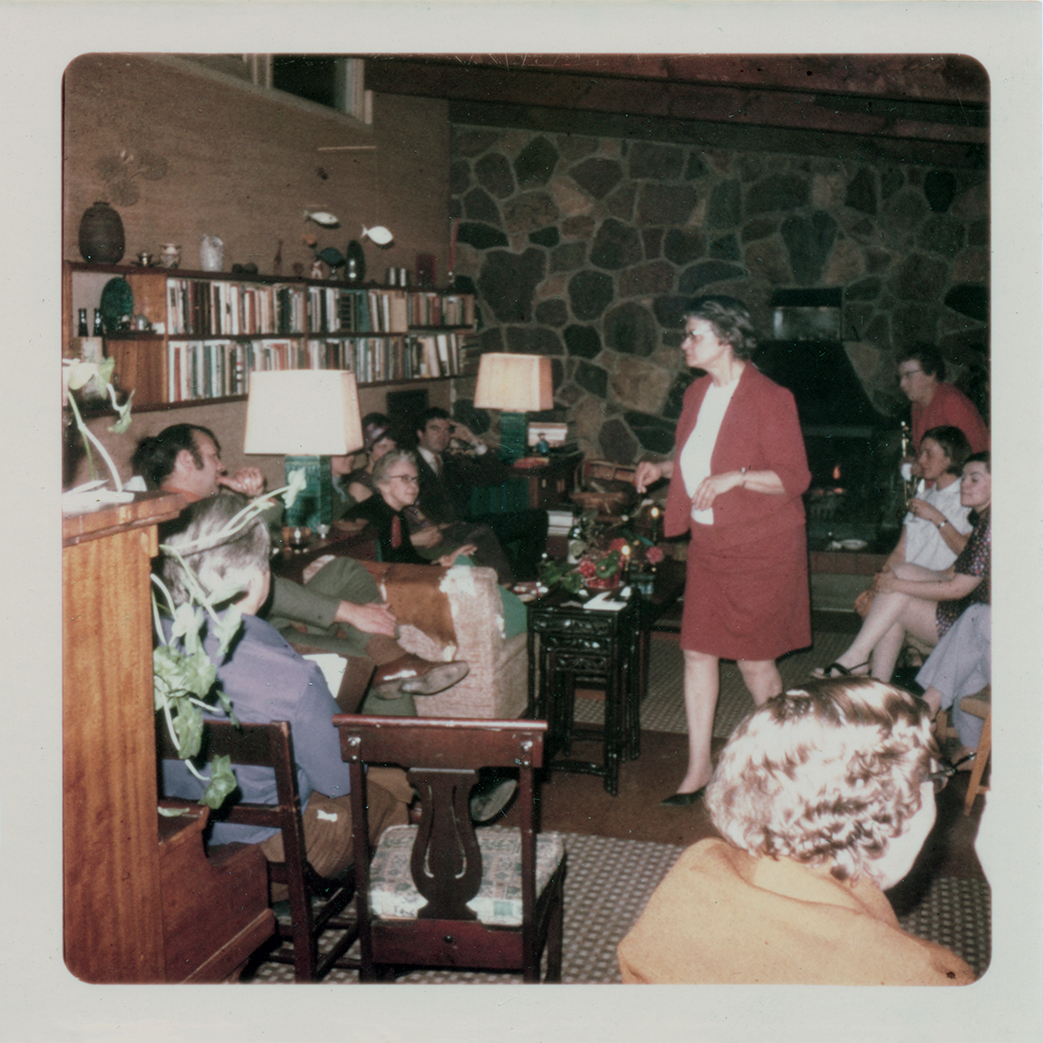
Six Acres is a place where architecture, nature, and personal stories blend into one remarkable narrative. The following isn’t just a tour of a building; it’s an adventure through the living history of a place that served as both an everyday sanctuary and a bustling office for two groundbreaking Albertan women, Jean Wallbridge and Mary Imrie. Now, I’m going to share some anecdotes, quirks, and standout moments that make Six Acres far more than just a simple structure.
The women behind the walls
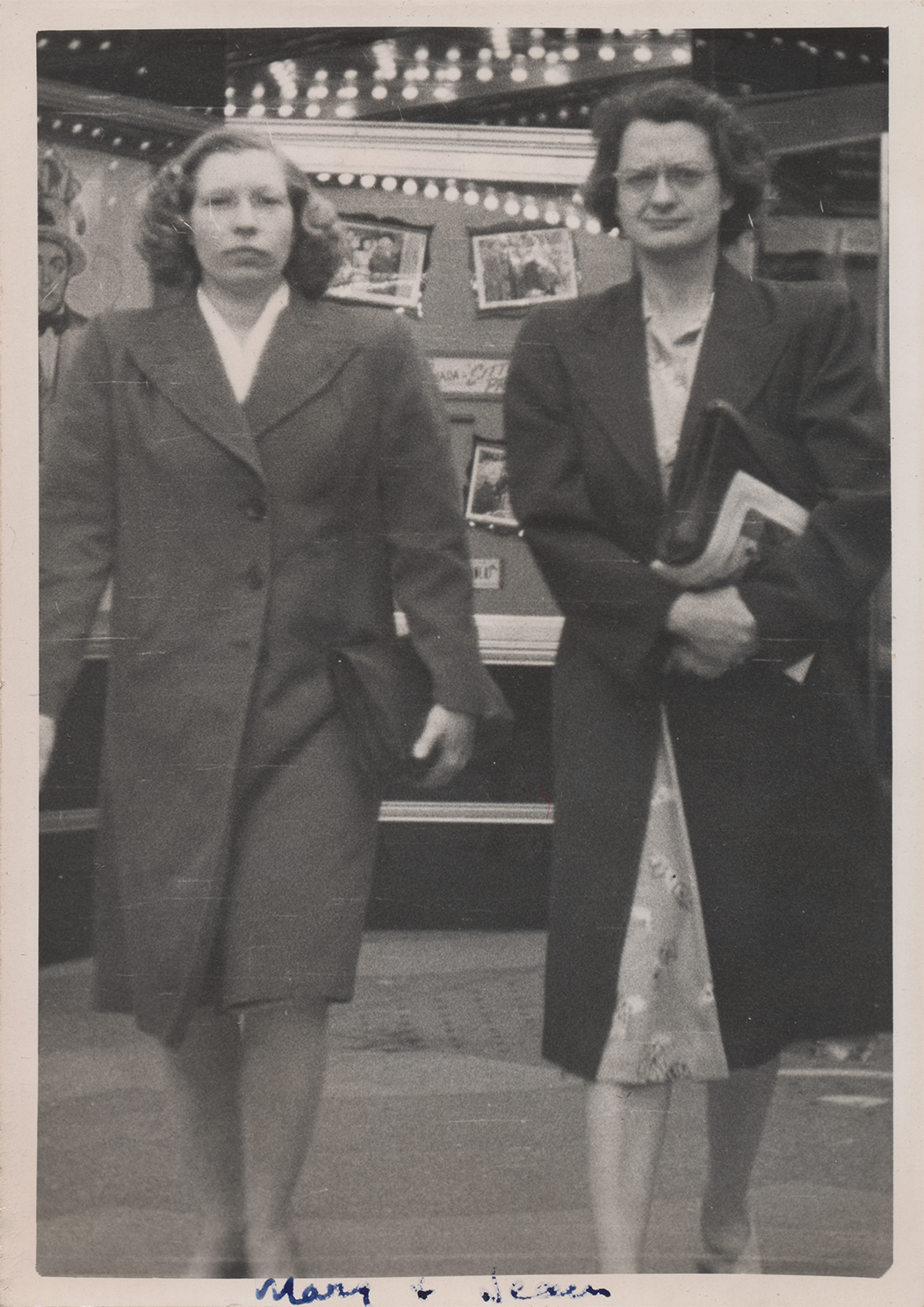
To start, I’m going to introduce the architects and owners, Jean Wallbridge and Mary Imrie. They were among the first female architects to graduate with degrees and obtain architectural licenses in Alberta, breaking significant ground in a male-dominated field. In 1950, they formed the pioneering partnership of Wallbridge & Imrie, Architects, Canada’s first entirely female-run architectural firm. Their partnership lasted nearly 30 years, until Jean’s passing in 1979.
Between 1947 and 1959, they would embark on multiple long architectural adventures, traveling across Europe, South America (in their car, Hector) and Asia. It was in the midst of these travels that they founded their architectural firm. Shortly afterwards, between 1953 and 1957, they constructed their own primary residence and office, Six Acres, on the northern bank of the North Saskatchewan River.

Over nearly three decades, Wallbridge & Imrie, Architects completed a staggering amount of projects for such a small office, which were predominantly residential. As women architects in the mid-20th century, Wallbridge & Imrie faced unique challenges in a male-dominated field. Despite their obvious expertise, the societal expectations placed on them as women often blurred the line between architecture and domesticity. In response to assumptions about female architects, Mary Imrie wittily remarked, “It makes you mad when people expect because you’re a woman, you should know of a better place to put the frying pan.” This remark not only highlights the gendered expectations they faced but also underscores their desire and determination to be seen as architects not, ‘women architects.’ Mary’s comment brings a touch of humor while reinforcing their fortitude through this adversity they faced as pioneering architects.
It also speaks to their focus on delivering exceptional work, regardless of how it was perceived. They approached every design with a practical, client-centred mindset, and always seeking the best possible architectural solutions, often on a budget. Their ability to listen, plan and deliver efficient and thoughtful designs made them more than capable architects. This approach helped them maintain a steady workload, build strong client relationships and leave a lasting impact on Alberta’s architectural landscape, particularly in Edmonton.
Wooded riverside refuge

Six Acres is a six-acre plot perched on the northern edge of the North Saskatchewan River Valley, only a couple of miles southwest of Edmonton at the time. When Jean and Mary purchased the property in 1953, it was largely untouched, with natural river valley vegetation and a sense of seclusion that likely drew them to this place. The property offers direct access to the river, scenic views of the valley and remained heavily wooded for a significant amount of privacy. These are all qualities that likely made it the ideal place to establish both their home and office.
Access to the main building is subtle yet striking, thanks to a gentle bend in the approaching road. This carefully designed curve allows the structure—initially shrouded in woodland—to gradually emerge, offering a magical reveal that enhances its privacy and charm. The landscaping, the house and other structures on the property are always thoughtfully planned and placed.
One of the most charming aspects of the property was the trail leading from the house to the river’s edge. Imagine a subtle trail, down the steep incline of a wooded embankment, lovingly maintained over the years, which Mary supposedly fondly referred to as, “Old Lady Walkable.” This isn’t just a path; it’s an important connection between the house and the river – a link they lovingly maintained and used frequently for all kinds of outdoor activities in every season, such as canoeing and figure skating.
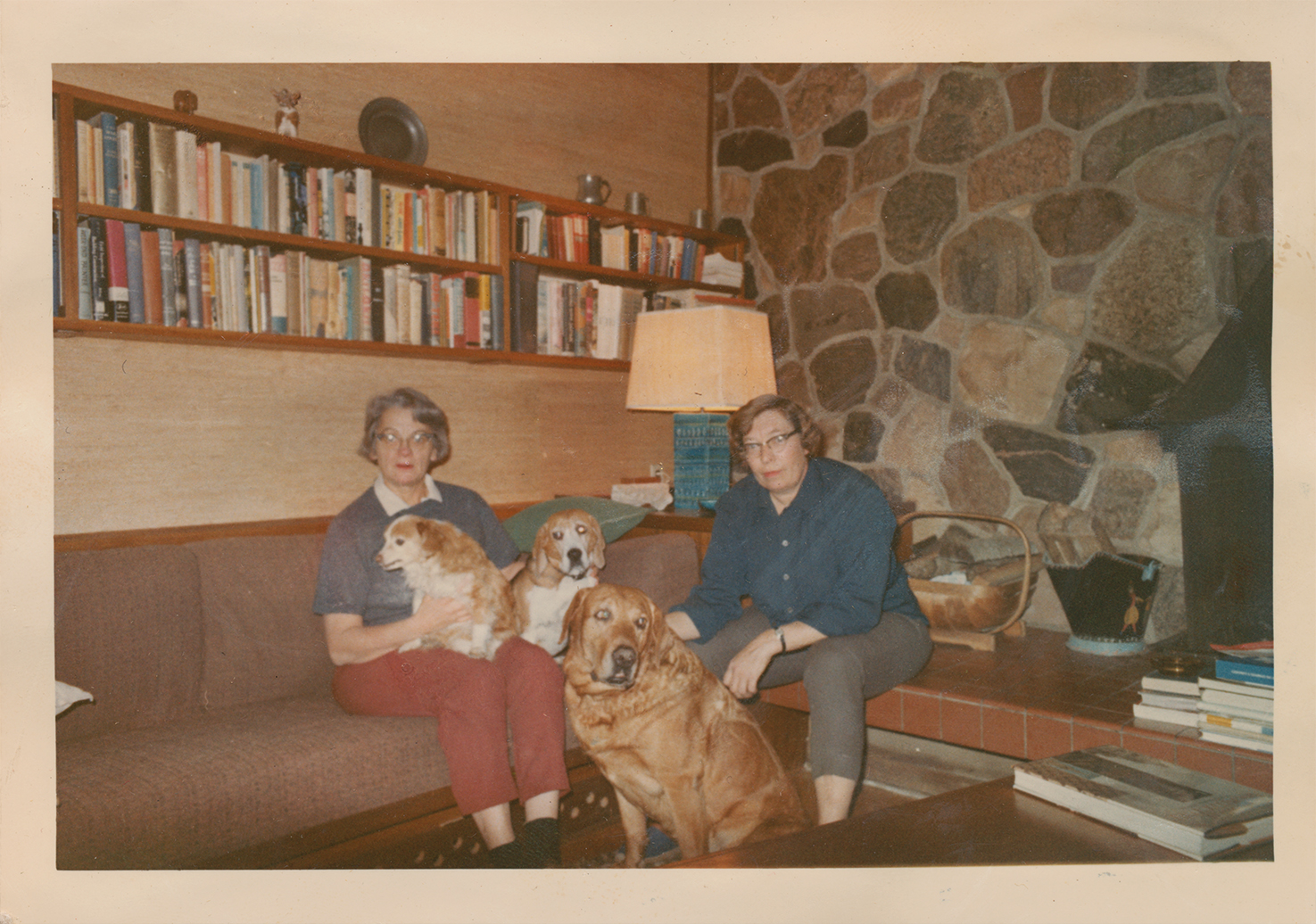
Throughout their time at Six Acres, Jean and Mary kept numerous pets, mainly cats and dogs, some of which they adopted from family and friends. They also had quite an extensive garden and had aspirations of attempting to create a small farm right here on the property. At one point, they even cleared a section of woodland to house horses. This endeavor was short-lived but they did have a large number of turkeys and chickens. To aid in this aspiration, they leased a section of the unused Government Allowance Road to the north of their owned property for a mere $1.20 per year. These things speak volumes about their resourcefulness and the ‘hands-on way’ they approached life and work at Six Acres, making it a place that met both their personal and professional needs.
Wallbridge & Imrie’s deep connection to Six Acres and the North Saskatchewan River even extended beyond their lives. Both requested that their ashes be scattered in the river near their home, a poignant reflection of this place’s significance to them. In their wills, they also bequeathed the property to the Province of Alberta with the stipulation that it be preserved forever and accessible to the public. These final gestures underscore their commitment to this place they cherished, making the ‘six acres’ they helped shape have an enduring legacy.
Inside a vibrant home and office
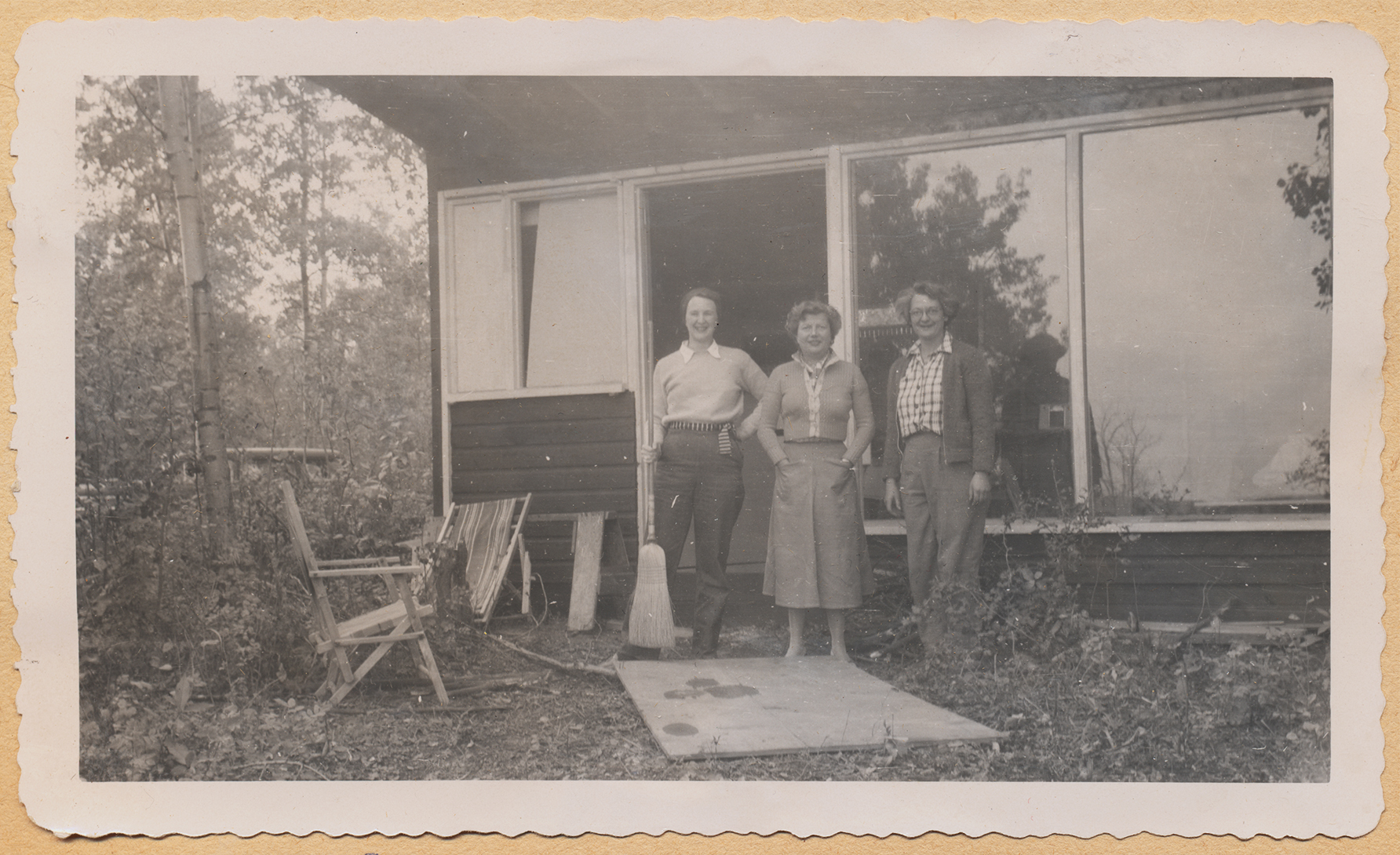
What began in 1953 as a modest weekend cabin was moved to the embankment to sit atop concrete foundations and expanded into a permanent residence and office. The exterior is clad in vertical cedar siding stained a muted green, which helps the building to blend into its surrounding woodland. The original cabin was repurposed to serve as the main floor bedroom, bathroom and coat area.


At first glance, the front elevation presents the modest appearance of a single-storey home. Cleverly, the design takes advantage of the natural embankment, creating a lower-level office that also accommodates functional elements such as the furnace, laundry, hot water tank, cistern and ample storage. These spaces, where natural light is non-essential, are in the portion embedded into the riverbank. In contrast, the riverside elevations capitalize on extensive glazing, providing stunning valley views and an abundance of natural light. The expansive balcony, featuring a railing with built-in bench seating, becomes an inviting space for lively gatherings to spill out onto during warmer weather. This thoughtful design strikes a perfect balance between indoor and outdoor comfort, all set against the backdrop of the river valley’s breathtaking natural landscape.

Finally stepping inside, first we will descend to the lower level, where the office space once welcomed clients and consultants, served as their drafting room, and even contained a space in the storage area to make their own blueprints. Here in the office space, a generous array of windows fills the room with natural light, while a minimalist modern ‘Acorn’ fireplace offers a quiet focal point to the space’s utilitarian finishes.

Traveling back upstairs, we come to the dining space and kitchen, which is defined by flexibility, simplicity and thoughtful design. The standout feature is the ‘dining end,’ which is a window nestled between the kitchen’s upper and lower cabinets, a signature feature often seen in other Wallbridge & Imrie projects. It demonstrates their knack for clever functional solutions. The compact, simple bent-metal dining furniture, likely of their own design, exemplifies the understated elegance of their modernist aesthetics and their desire for clean, open, light and simple designs.
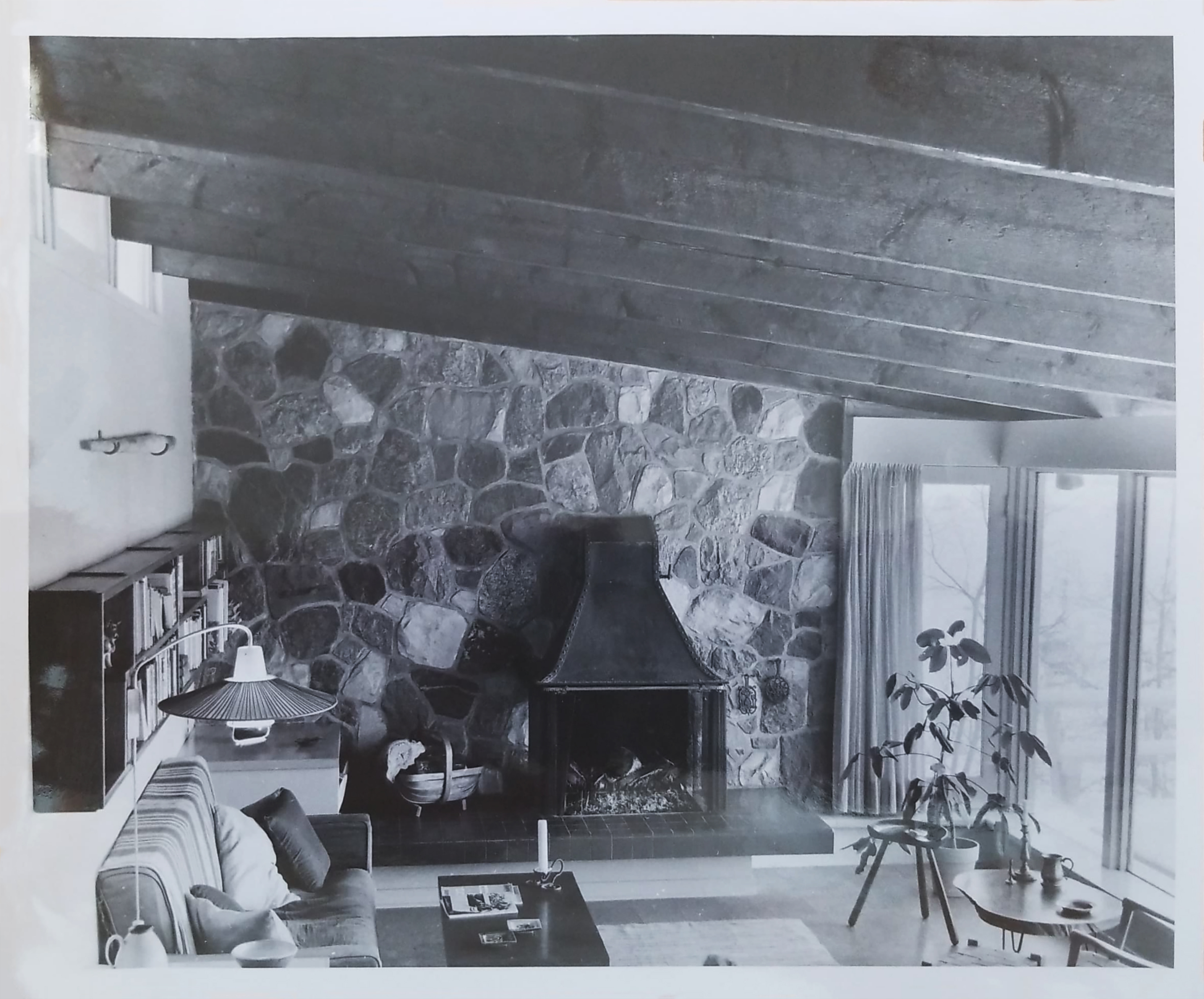
Finally, we get to the living area, which draws you in with its striking prominent wall, with its impressive stonework and a fireplace salvaged from the nearby 1913 Edmonton Country Clubhouse that was demolished in the 1950s. This focal feature, together with built-in seating, side tables, exposed rough timber beams and expansive glazing, creates a warm, inviting environment that connects the home to both its architectural roots and the surrounding landscape.
Throughout its evolution, Six Acres adapted to meet the shifting needs of its occupants. Wallbridge and Imrie designed the space with ingenuity, often taking on multiple roles during construction, managing the sub-trades on site themselves and even enlisting friends and family to keep projects affordable and personalized. Their approach is evident in every detail, from the exposed structural elements to the abundant glazing that maximizes natural light and facilitates passive heating and ventilation. In every element, Six Acres tells the story of its creators, both a space as much about lived-in character and practicality as it is about modernist ideals. It remains a testament to their commitment to crafting environments that nurture both personal and professional life.
The last stop for now

Six Acres stands as a living testament to the architectural philosophy of Wallbridge and Imrie, embodying their approach to life and design—deeply rooted in function, simplicity and modernist aesthetics. It is ‘honest’ architecture, embedded within its local historic and natural surroundings. The compact yet open plan, careful material choices and abundant natural light reflect their commitment to creating spaces that supported both work and daily life in a seamless yet purposeful way. The building is not just a reflection of their architectural ideals but of their personal values, the way they lived, and how they shaped spaces for themselves.
I’d like to conclude with a passage from former Edmonton Poet Laureate Alice Major’s Envision the Outline, which I think captures something essential about Six Acres:
From this viewpoint, looking south
the valley sinks its verdant basin
of aspen and evergreen.A glimpse of river gazes back at sunset,
accepting its colours, as the cursive stroke
of a character takes the shade of ink.
Six Acres, much like this passage, captures something fleeting yet deeply meaningful; an interplay between place, memory and identity. In this way, it is a true embodiment of Jean and Mary, not just as architects, but as Albertans and individuals. In the end, Six Acres is not just about architecture. It’s about dwelling. About how we dwell, how we shape the places we inhabit, and how, in turn, they shape us. Dwellers and dwelling, intrinsically intertwined; each a reflection of the other.
Thank you so much for joining me on this ‘quick’ tour of Six Acres. I hope you caught a glimpse of the magic of this place. There are still so many stories to tell about Wallbridge and Imrie (and even Six Acres), and I know important research and discoveries will continue to emerge.
Sources
Adams, Annmarie. “Building Barriers: Images of Women in Canada’s Architectural Press, 1924-73 (Journal of the Royal Architectural Institute of Canada).” Resources for Feminist Research 23, no. 3 (Fall 1994): p.11–23.
Aloi, Roberto. Camini d’oggi. Esempi di Architettura Moderna di Tutto il Mondo 15. Milan, Italy: Ulrico Hoepli, 1957.
Architectural Record. “III. Architects And Prefabrication, Example: History of The Acorn House; Deductions from the Experience of the Protagonists, Carl Koch, John Bemis and Their Associates.” May 1950. USModernist® Library.
Bonnemaison, Sarah. “Queer Architecture.” In The Routledge Handbook of LGBTQ Identity in Organizations and Society, by Julie A. Gedro and Tonette S. Rocco, 278–303, 1st ed. New York: Routledge, 2024. https://doi.org/10.4324/9781003128151-23.
———. “Wallbridge & Imrie Architects, Alberta, (Exhibition Boards Produced for Media Architecture Design Edmonton’s (M.A.D.E.) Event ‘IN SITU: Six Acres’),” 8 September 2022. https://livingarchitecturesystems.com/wp-content/uploads/Bonnemaison-Small-Exhibition-on-Wallbridge-and-Imrie_Sep-8_-2022.pdf.
Boxwell, Josephine. “Imrie House: Home of Canada’s First Female Architectural Firm.” Story Collection. Edmonton City as Museum Project (ECAMP), 22 July 2022. https://citymuseumedmonton.ca/2022/07/22/imrie-house-home-of-canadas-first-female-architectural-firm/.
Clark, Mary and Ontario Women Graduates in Architecture 1920-1960 Project. ‘For the Record, Ontario Women Graduates in Architecture 1920-1960 Exhibition Scrapbook: Mary Imrie Pages’, December 1988. B1989-0011/003, Ontario Women Graduates in Architecture 1920-1960 Project fonds. University of Toronto Archives, Toronto, Ontario, Canada.
Contreras, Monica, Luigi Ferrara, and Daniel Karpinski. “Breaking in: Four Early Female Architects.” The Canadian Architect 38, no. 11 (November 1993): p.18–23.
Dalhousie University Libraries, “Dalspace” (Online Repository). “Royal Architectural Institute of Canada Journals.” Accessed 13 February 2025. https://dalspace.library.dal.ca/communities/ce4408d1-a1c8-48da-a50a-5f3bddbbddf8.
Dominey, Erna. “‘Les Girls’.” In Edmonton: The Life of a City, by Bob Hesketh and Frances Swyripa, p.226–233 & p.354–355. Edmonton, AB: NeWest, 1995.
———. “Wallbridge and Imrie: The Architectural Practice of Two Edmonton Women, 1950-1979.” Society for the Study of Architecture in Canada Bulletin 17, no. 1 (March 1992): p.12–18.
Imrie, Mary and Field & Field (Solicitor of Will). “The Last Will of Mary Louise Imrie,” December 1985. Collection of Parks and Wildlife Ventures Program (Government of Alberta).
Joynes, Jennifer R. “Women in the Architectural Profession.” Habitat II, no. 4 (1959): p.2–6.
Lemco van Ginkel, Blanche. “Slowly and Surely (and Somewhat Painfully): More or Less the History of Women in Architecture in Canada.” Society for the Study of Architecture in Canada Bulletin 17, no. 1 (March 1992): p.5–11.
Mahaffy, Cheryl. “Jean Louise Emberly Wallbridge & Mary Louise Imrie.” Women Building Alberta (blog), 30 March 2016. https://womenbuildingalberta.wordpress.com/jean-louise-emberly-wallbridge-mary-louise-imrie/.
Major, Alice. The Occupied World. cuRRents. Edmonton, Alta.: The University of Alberta Press, 2006.
McClung, Nellie. “Country Club Has Third Building.” Edmonton Journal, 24 August 1956. ProQuest Historical Newspapers: Edmonton Journal, Access provided by Edmonton Public Library.
Mehmetoğlu, Ipek. “‘Les Girls En Voyage:’ Gender and Architecture in the Travels of Mary Imrie and Jean Wallbridge.” Journal of the Society for the Study of Architecture in Canada 44, no. 1 (2019): p.7-20. https://doi.org/10.7202/1066279ar.
Moar, Devon Owen. “Six Acres: The Residence & Office of Edmonton Architectural Partnership, Wallbridge & Imrie.” Master of Architectural Studies, Carleton University, 2024. https://doi.org/10.22215/etd/2024-16163.
Moir, Nikki. “Two Women Architects Hold Unique Job—Head Own Firm.” The Province, 1 June 1962, 65th Year—No. 55 edition, sec. Women, p.22. ProQuest Historical Newspapers: The Province: 06/12/1956 to 12/31/2010, Access provided by Vancouver Public Library.
Historic Land Titles Collection (Edmonton), Government of the Province of Alberta, 16 March 1953. Land Titles Office, John E. Brownlee Building, 10365 97 Street, Edmonton, Alberta, T5J 3W7.. Author obtained legal land documents (e.g. land certificates, titles, and plans).
Private collection of Erna Dominey.
Private collection of David Murray / David Murray Architect.
Private collection of Mary S.E. Wallbridge-Lillis.
Provincial Archives of Alberta (PAA). Erna Dominey Fonds (12 Audio Recordings of Interviews Conducted in 1991), PR1995.0016/1-12. Edmonton, Alberta, Canada.
———. Wallbridge & Imrie, Architects Fonds, PR1988.0290/1-1021. Edmonton, Alberta, Canada.
Recreation, Parks and Wildlife Foundation, Park Ventures Fund. “Notes from Interviews for Event & Tribute at Devon, AB for Mary Imrie,” 1 September 1989. Government of Alberta Records, Oxbridge Place, Edmonton, AB. Land Holdings Case Files. This along with other (redacted) documents were obtained by the author via a FOIP request placed with the Government of Alberta.
Rukeyser, Muriel. “The Speed of Darkness.” Text/html. Poetry Foundation. Poetry Foundation, original 1968 2006. https://www.poetryfoundation.org/poems/56287/the-speed-of-darkness.
Wallbridge, Jean and Field, Owen (Solicitor of Will). “The Last Will of Jean Louise Emberly Wallbridge,” 20 July 1979. Private Collection of Erna Dominey.
 RETROactive
One thought on “Where Wallbridge and Imrie lived and worked: a quick guided tour of Six Acres”