

Written by: Timothy Allan and Todd Kristensen
The Archaeological Survey of Alberta is proud to kick-off Occasional Paper Series No. 43 with its first three articles, which are available to download for free:
Alberta Obsidian Project chronicles: Obsidian research within Alberta’s Eastern Slopes (Timothy E. Allan)
Snare, Snake and Iroquois: An upper Athabaska ethnohistory (Jack Elliot)
Obsidian from Idaho’s Big Southern Butte in Alberta’s archaeological record (Todd Kristensen, Timothy E. Allan, and Emily Moffat)
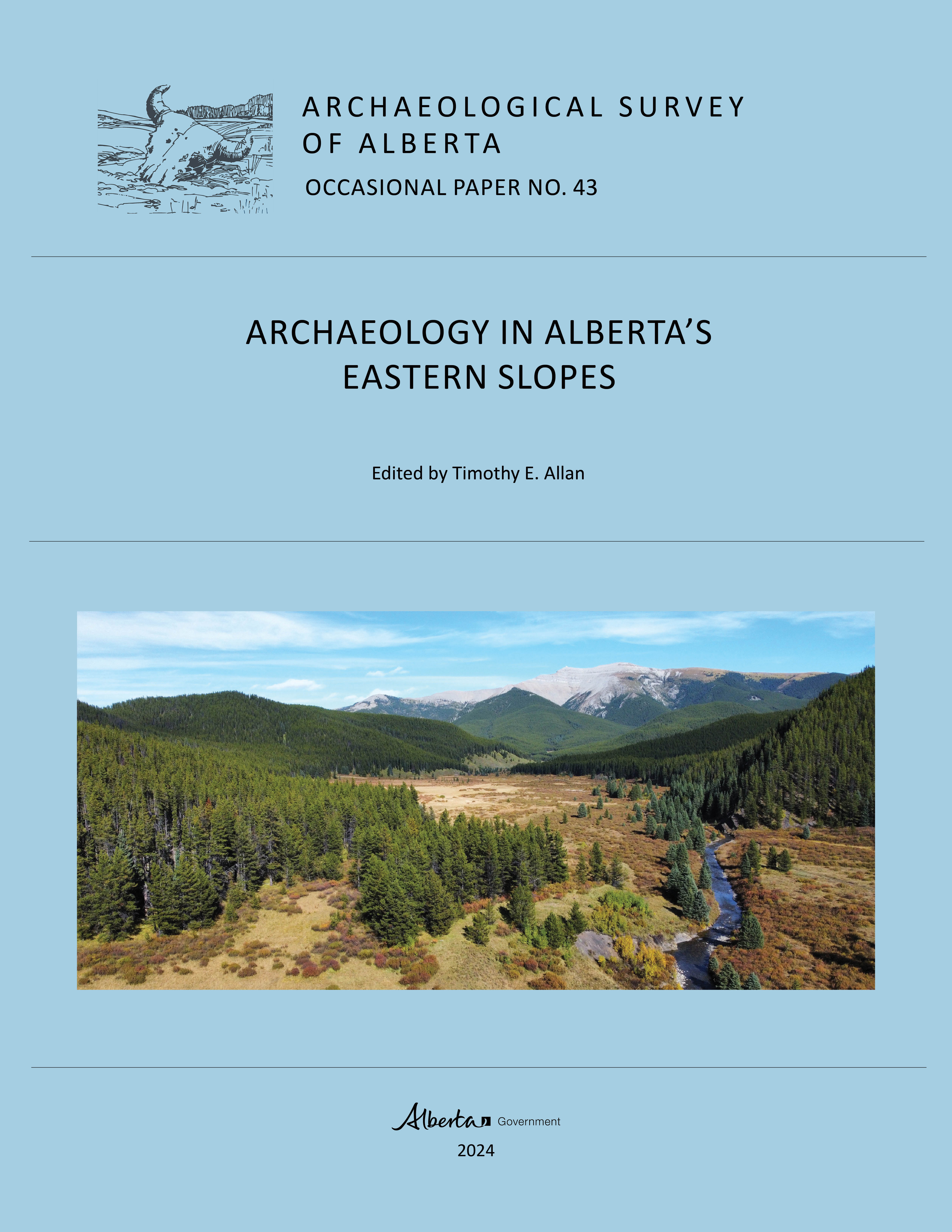
The Occasional Paper Series is an annual volume of published articles that explore heritage in Alberta and surrounding areas. The current volume, No. 43, focuses on the Eastern Slopes of the province: a loose geographic term that includes the Rocky Mountains east of the continental divide and the neighbouring Foothills to the margins of Alberta’s Plains and Boreal Forest regions. The last volume dedicated to this area appeared almost 40 years ago: Eastern Slopes Prehistory: Selected Papers. Current papers feature updates on archaeological resources, techniques, unique pre-contact and historic sites and archival records of human adaptation in the western part of the province. Here’s what you can find in the first three articles:
Obsidian
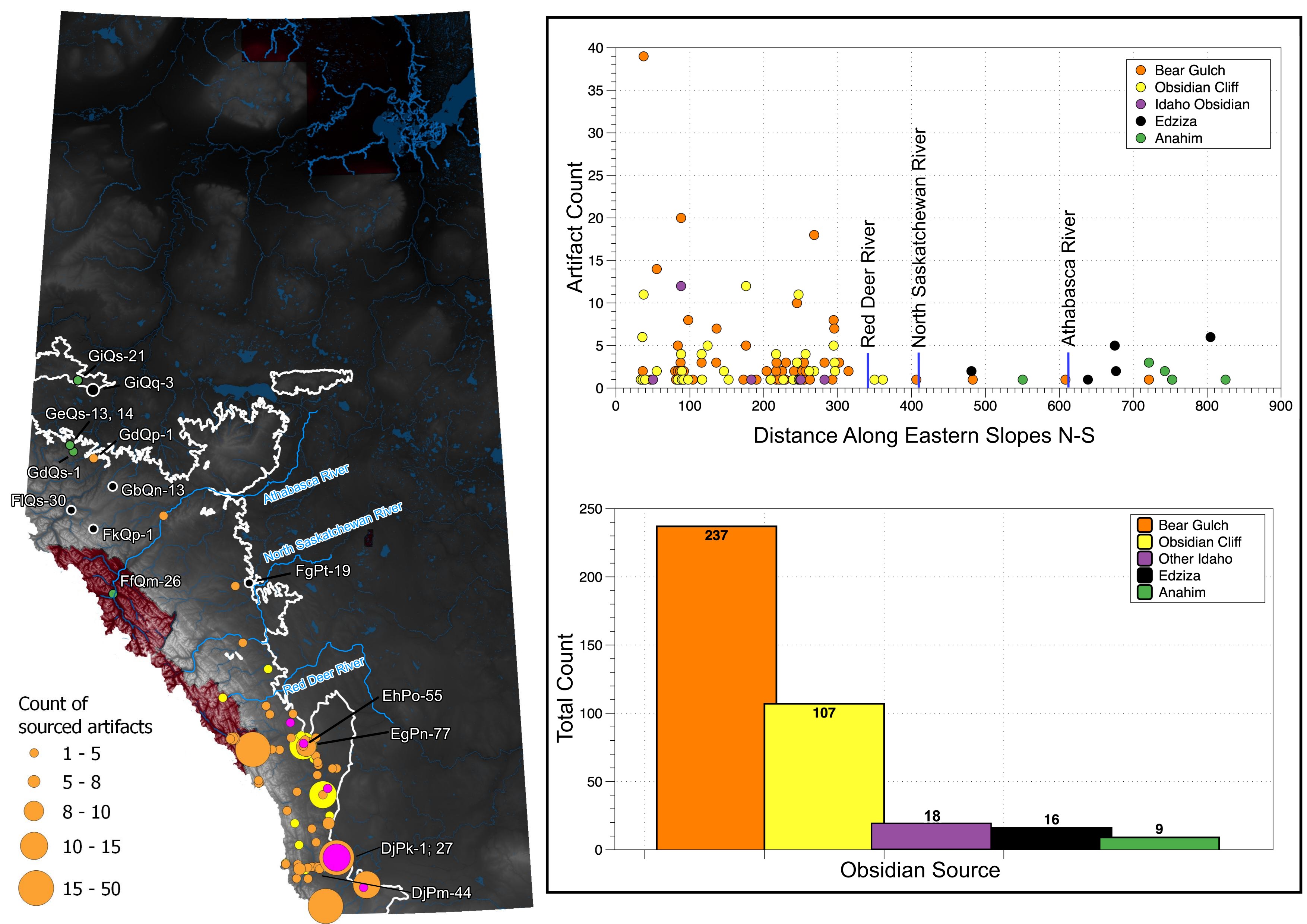
A synopsis of obsidian from archaeological sites found in Alberta’s Rocky Mountains and Foothills. Obsidian is a glassy volcanic rock used by ancient people to make hunting weapons and tools. No natural obsidian is found in the province, so archaeologists analyze obsidian to determine which outcrop it came from and then reconstruct the cultural patterns of exchange or mobility that brought this material to Alberta’s Eastern Slopes.
Jack Elliot
The second paper of the volume is a posthumous publication by the late Jack Elliott who spent much of his career as a manager, archivist and curator at the Galt Museum & Archives in Lethbridge. The paper compiles documents from the fur trade era that help explain the history of Indigenous occupation in the northern portion of Alberta’s Rocky Mountains.

Big Southern Butte
In the third article, Kristensen et al. look at the geochemistry of an obsidian outcrop called Big Southern Butte in southern Idaho to confirm the occurrence of a handful of artifacts made of this material at two archaeological sites in southern Alberta. They tell a story of deep geological landscape changes in the Rocky Mountains of Idaho that may have helped pave the way for early human access to the Northern Plains.

The remaining five articles in volume 43 will be released in the coming month. Previous volumes can be downloaded for free here. If you are an archaeologist or historian interested in contributing to the 2025 issue, dedicated to digital heritage preservation in Western Canada, please contact the Archaeological Survey of Alberta.
 RETROactive
One thought on “Archaeology in Alberta’s Eastern Slopes: The Occasional Paper Series in 2024 (Part 1)”