
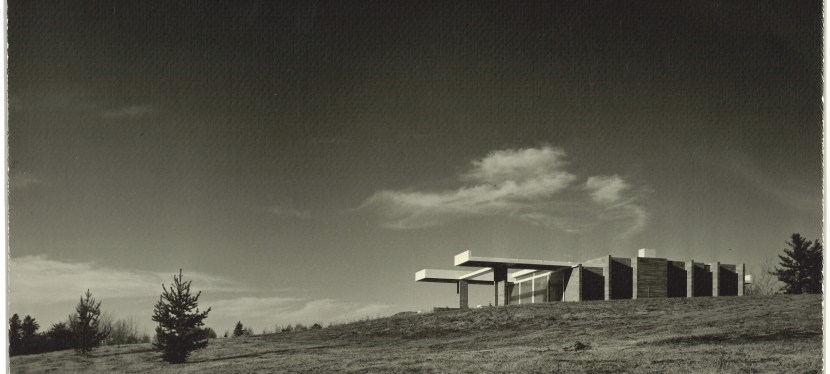
Editor’s note: The banner image of Dyde House above was taken by an unknown photographer, Edmonton, 1961-1962. Source: University of Calgary, Canadian Architectural Archives, Arthur Erickson fonds, CA ACU CAA F0002.
Written by: Robb Gilbert, Archivist, Canadian Architectural Archives
Dyde House, located a short distance outside Edmonton, is one of Canadian architect Arthur Erickson’s first notable projects in residential design. The house is located southwest of Edmonton, in Parkland County, on the grounds of the beautiful University of Alberta Botanic Gardens. The project was designed by Erickson in the Spring of 1960 and completed in late 1961 after returning from travels in Japan and Southeast Asia on a Canada Council for the Arts fellowship.
2024 marked the centenary of the birth of Erickson so I wanted to highlight one of his most important works from his early years as an architect: a rare Erickson project located in Alberta and a work that has recently been the subject of a documentary and an ongoing preservation campaign. The Canadian Architectural Archives at the University of Calgary houses the work of Erickson from 1953 to 1973 in the Arthur Erickson fonds. His archive includes thousands of original drawings and dozens of boxes of files documenting the design process behind his revered works of architecture.
Erickson was born in Vancouver in 1924. He studied at the University of British Columbia and served overseas during World War II in India and Malaysia. Pursuing a career as an architect, he studied at McGill University and established his practice in Vancouver in the mid-1950s. In the span of the next 40 years, Erickson became Canada’s most renowned architect, nationally known but also the one of the few Canadian architects with an international reputation. His work includes icons of Canadian architecture such as Simon Fraser University, the University of Lethbridge, Robson Square and the Museum of Anthropology at UBC.
Dyde House was completed two years before Erickson’s first major commission, Simon Fraser University, which brought him national attention. The design of Dyde House was a small project that allowed the architect to experiment with the conventions of open plan domestic architecture. Located outside Edmonton in central Alberta, the project was also far from his native West Coast landscape, which likely spurred new ideas for Erickson to explore in landscape and architectural design.
Erickson was afforded a wide latitude of vision for the project by the clients Sandy and Bobby Dyde, who were art collectors and important patrons of the local Edmonton art community as well as the wider Canadian art world. The Canadian Architectural Archives holds a collection of correspondence, sketches and research materials from the Dyde family that document the process of commissioning the project. The collection includes letters Erickson wrote to Sandy Dyde that reveal the evolution of the design and its progression through the vision of Erickson and the Dydes.
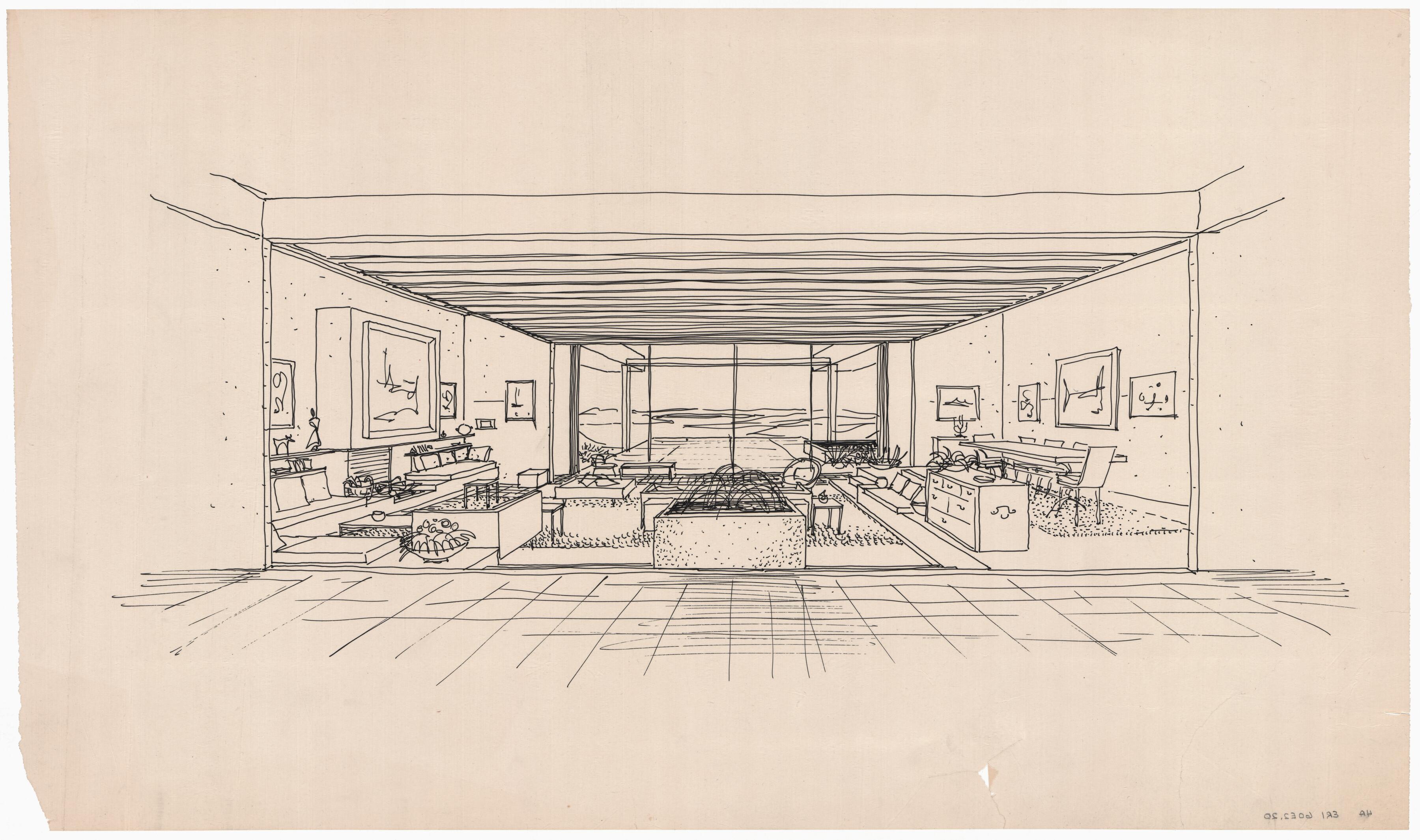

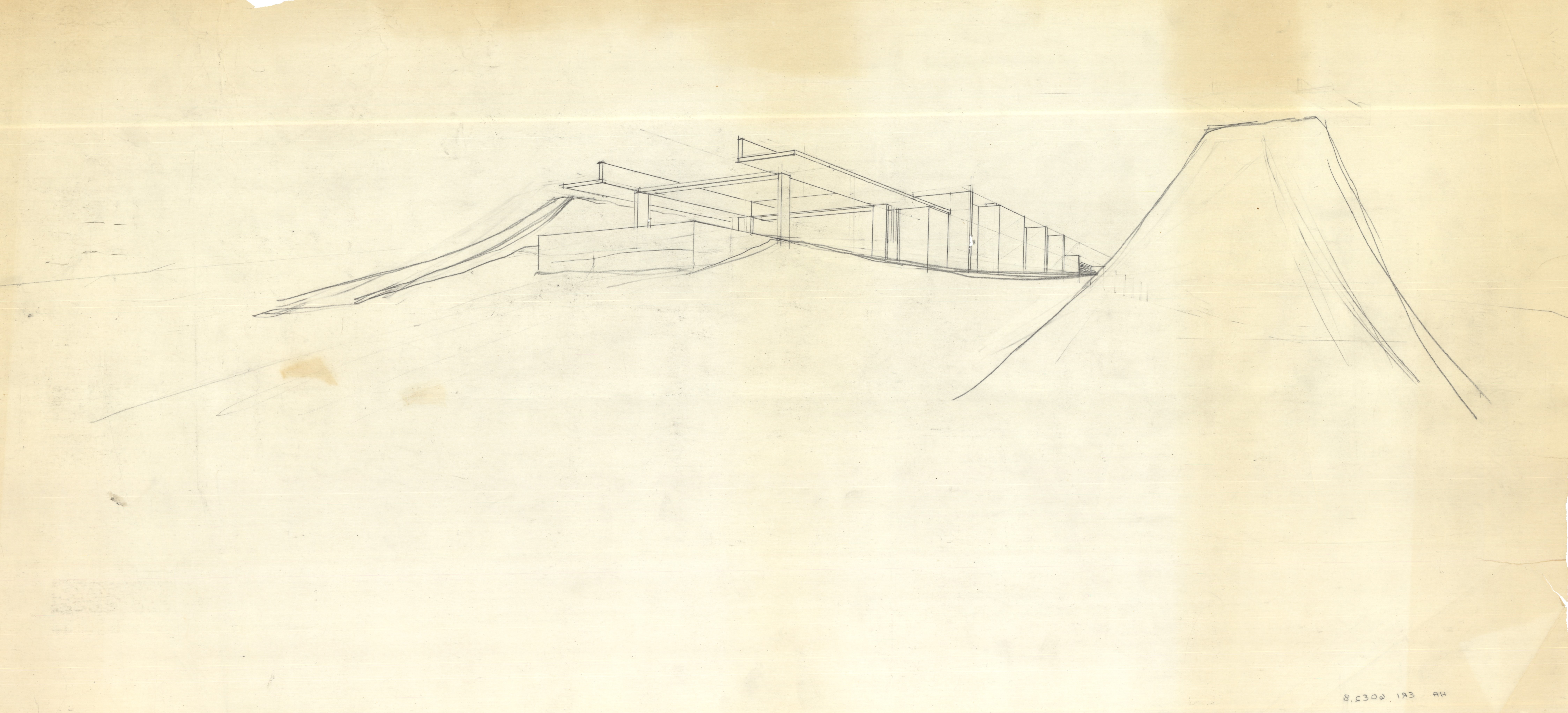
Within the Erickson archive at the CAA there are over 100 drawings that document the project. Among the drawings are dozens of sketches that trace the origins of the design from Erickson’s mind onto the paper. An early floor plan design reveals the project to have at an early stage included an extension at the back of the house that would have had three bedrooms, a den and an enclosed garden with a pool beside the entrance. Over time the project evolved into a single main room without separate quarters for sleeping.
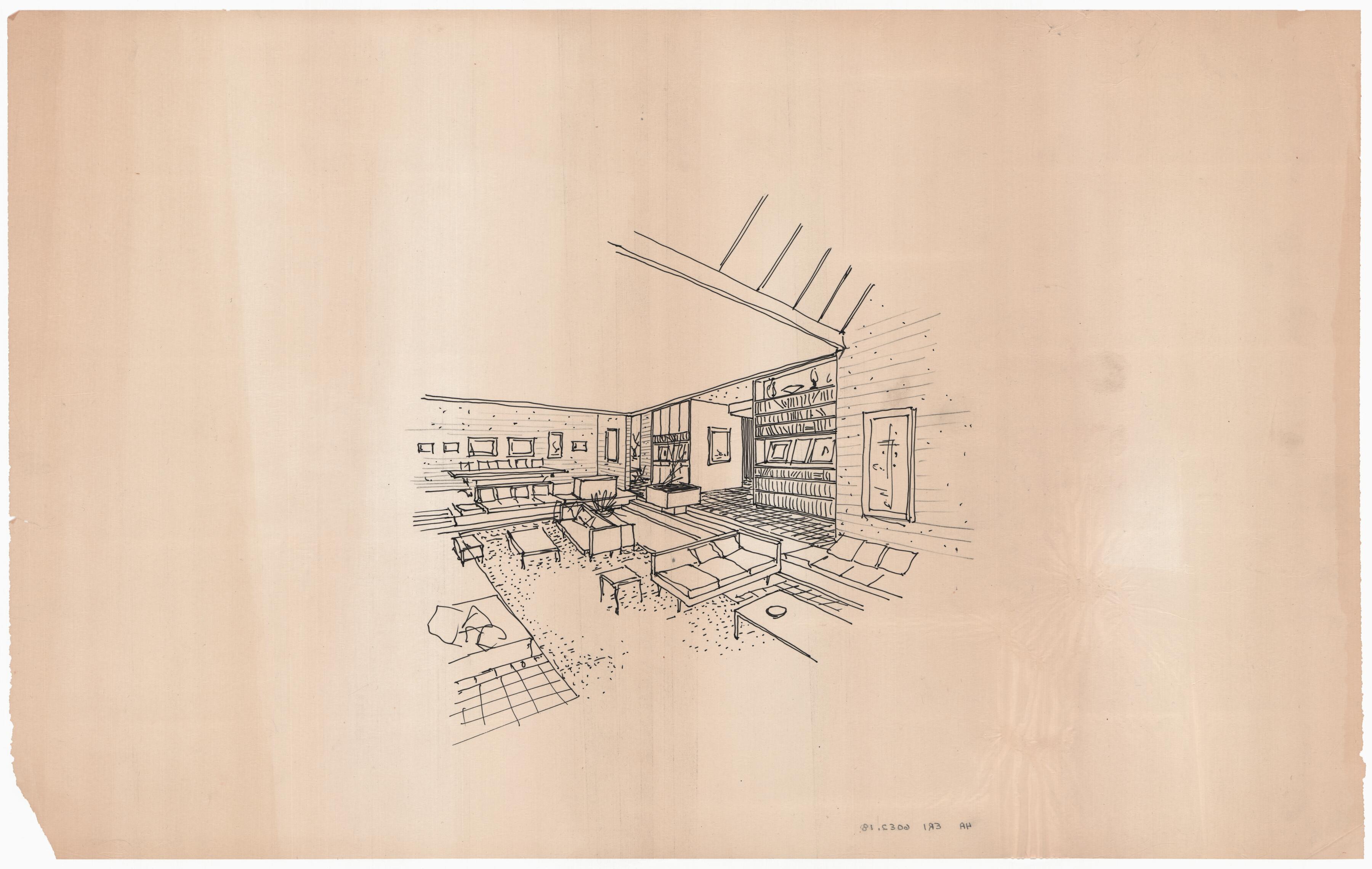
There are incredible sketches in the archive that document the interior design layout from Erickson, which paid special attention to the residence as a site for the display of the Dydes’ art collection. I’m particularly drawn to the idea of the house as a site for viewing not only art, but also the sculpted landscape that rolls out into the distance beyond the sliding glass doors facing onto the large terrace at the front of the house. Perhaps the incredible view from the living room was part of the decision to remove the rear garden and pool from the original plans.
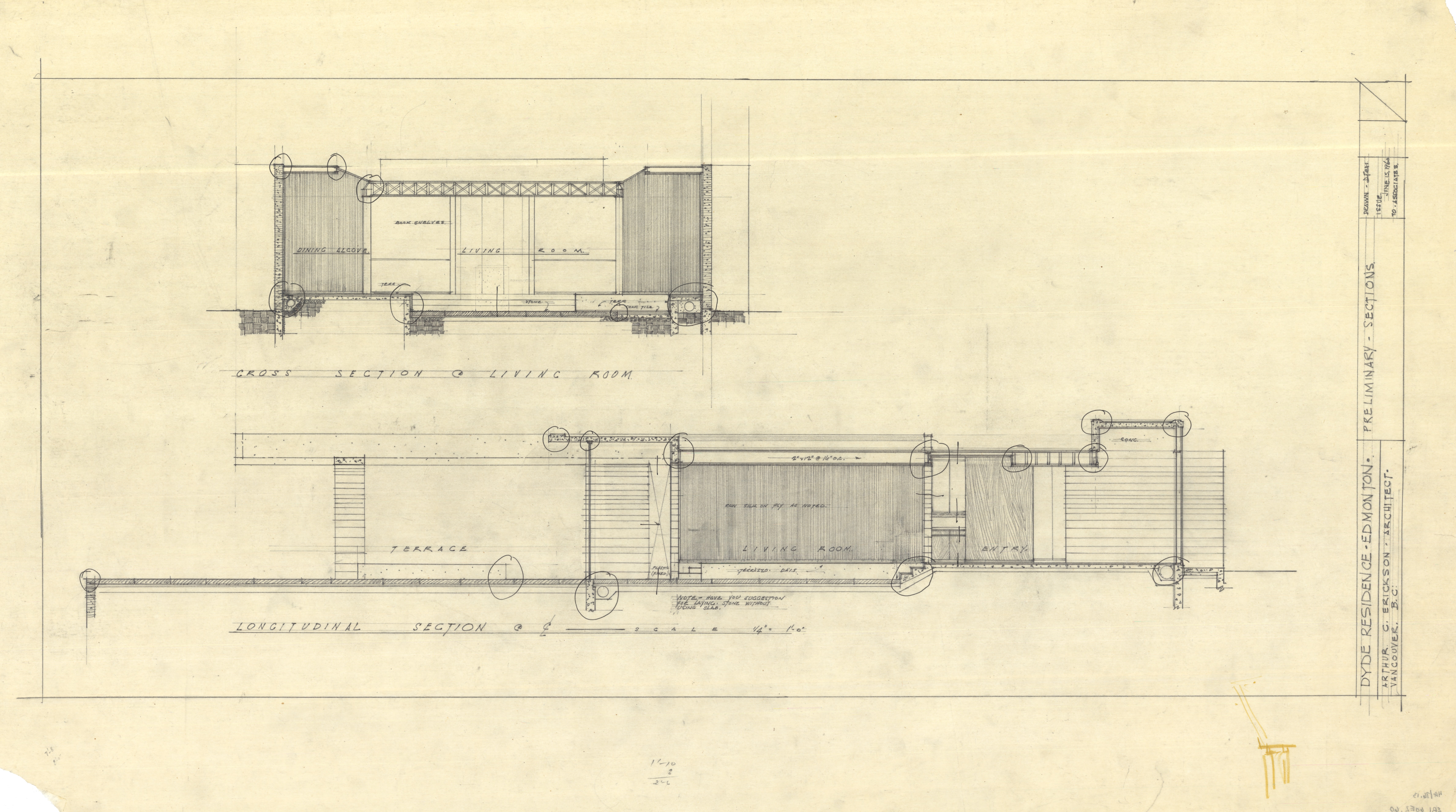
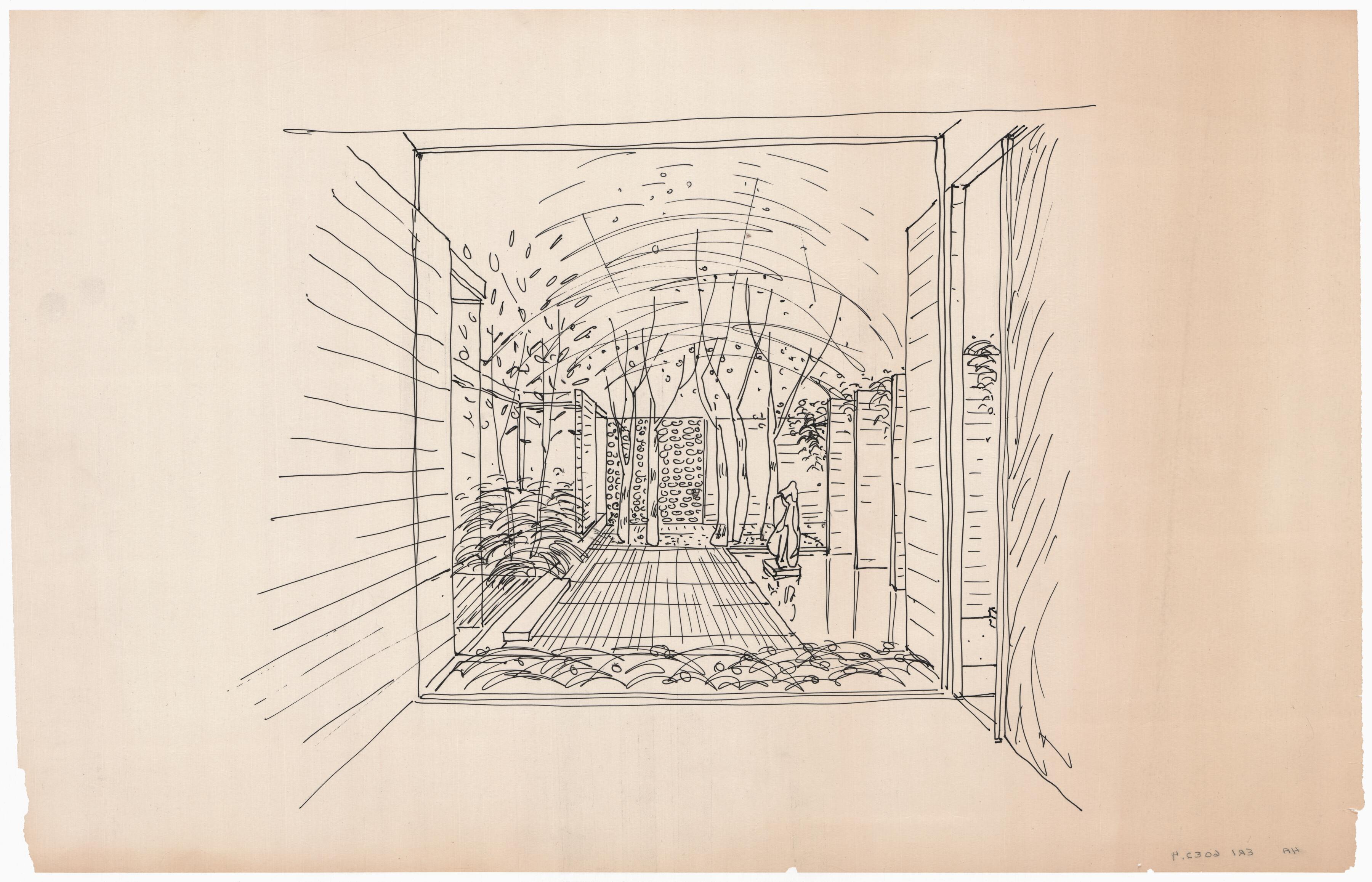
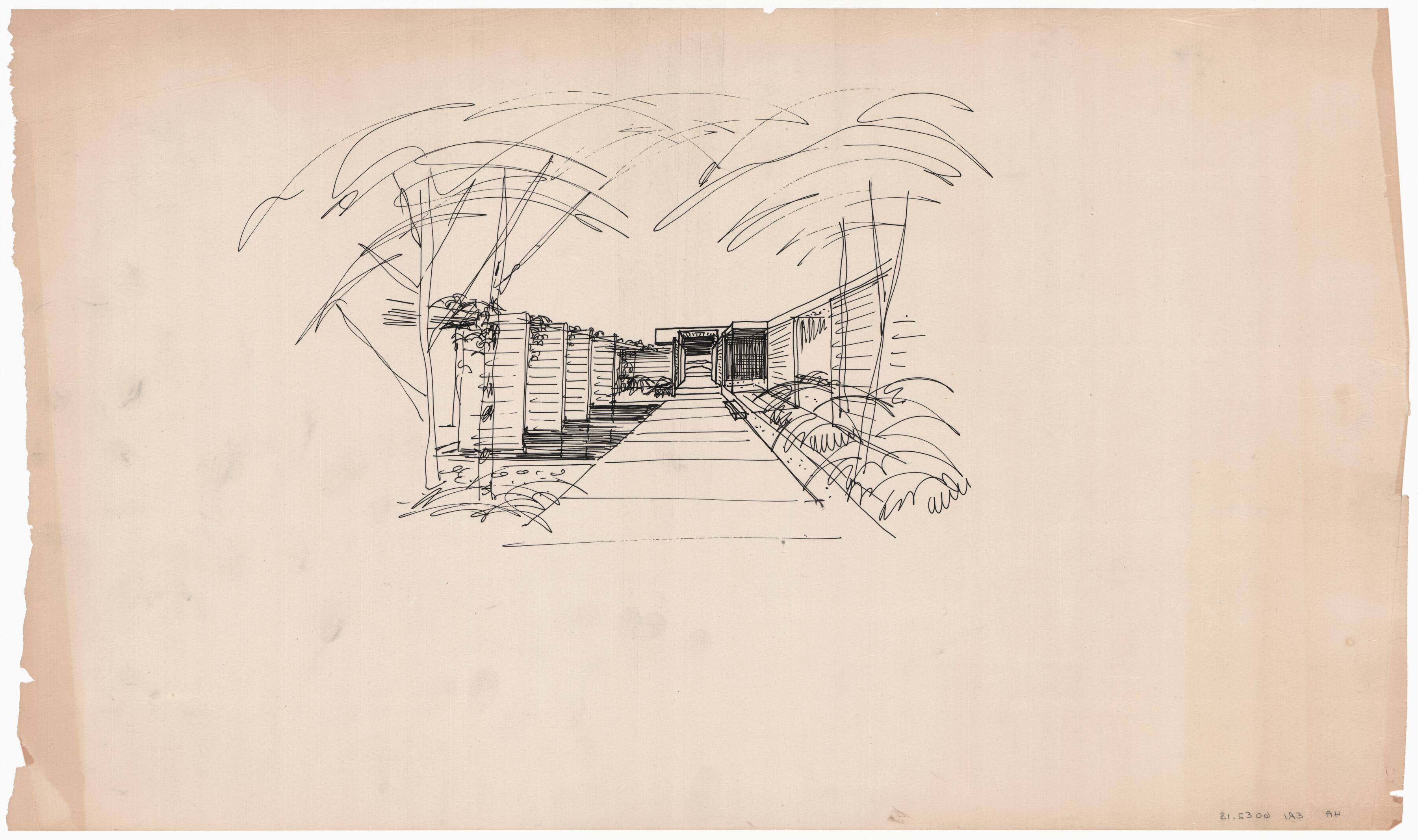
Over the past year, as archivist at the CAA, I reprocessed the Erickson archive, focusing on the extensive collection of drawings. I helped improved access to the collection through a more detailed description that was made live online in March. The original drawings were also rehoused in folders and stored in new flat file cabinets at the CAA. For researchers interested in learning more about Erickson they are welcome to visit the CAA and explore the wealth of materials that are available to the public to review in the reading room.
Two new films provide important insight into the Dyde House and the life and career of Erickson. In 2023, Dyde House was the subject of an award-winning documentary film, Arthur Erickon’s Dyde House, directed by Colin Waugh, and this fall (2024) saw the release of the feature-length documentary film Arthur Erickson: Beauty Between the Lines, directed by Danny Berish and Ryan Mah.
The University of Alberta is embarking upon a project to restore Dyde House and safeguard its “design and historical narratives” and is inviting the public to participate.
 RETROactive