
Written by: Timothy Allan and Todd Kristensen
Archaeology in Alberta’s Eastern Slopes
The volume is dedicated to archaeology in Alberta’s Rocky Mountains, Foothills and their margins. The initial three articles were released in Spring; below are summaries for the remaining six articles. They explore projectile points, caches, plant residues and more.
The fourth paper in the volume explores Oxbow and McKean stone tool assemblages at a site northeast of Hinton, Alberta. Taylor Graham applies statistical analyses to tease apart reduction events among the 6,000 artifacts recovered.
The fifth paper of the volume, by Sean Pickering, documents five decades of archaeological work at the oldest commercial ranch in Alberta. The site at the edge of Cochrane has yielded artifacts spanning centuries of use. Diverse assemblages offer glimpses at the province’s early economy and the lives of women, children and men in the 19th and early 20th centuries.

In the sixth article, Joshua Read looks at microbotanical residues (starch grains) on stone tools from a site southwest of Rocky Mountain House. Laboratory techniques can reveal otherwise hidden dimensions of pre-contact diet. In this case, people from the Oxbow Complex appear to have processed water lily, broadleaf arrowhead, Canada lily and prairie turnip.

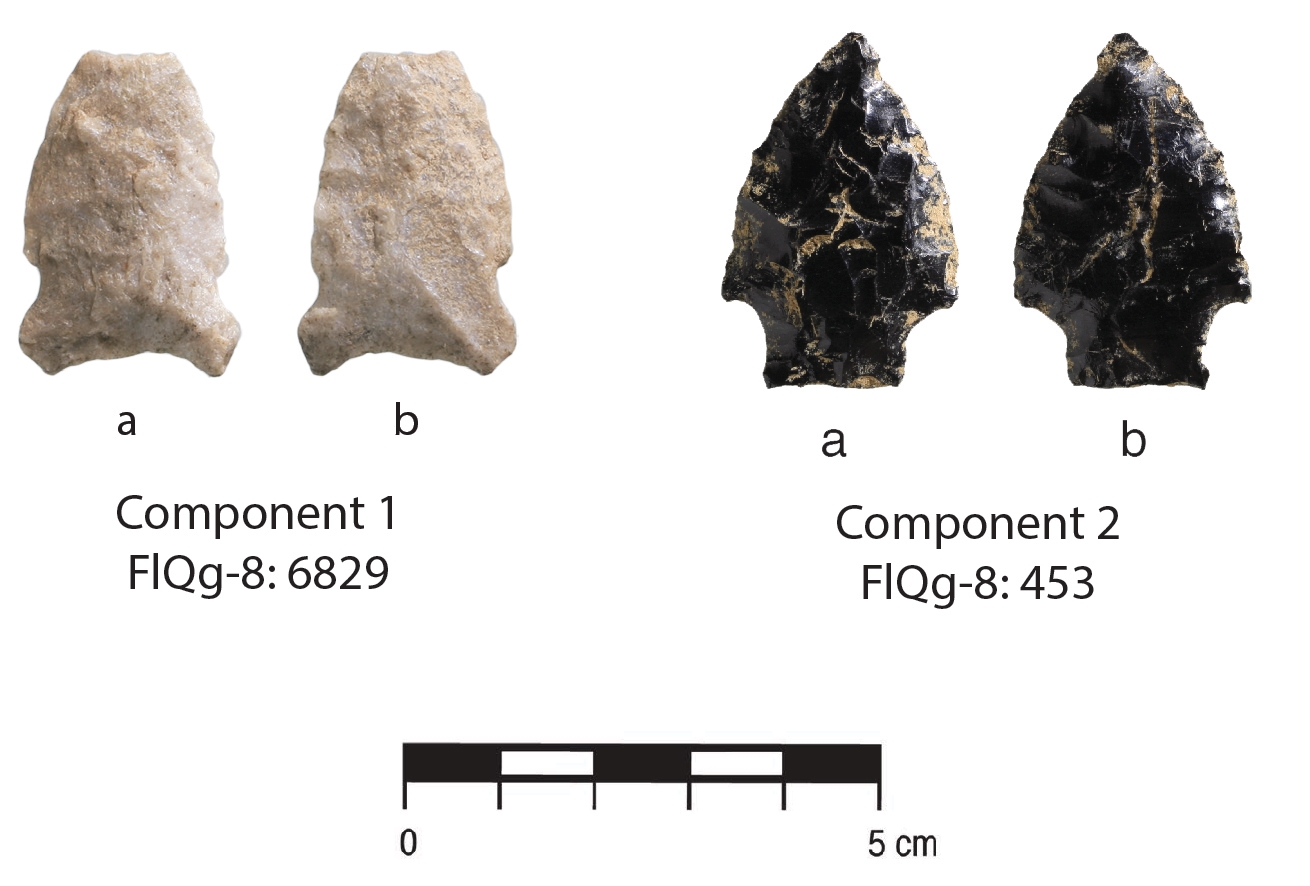
The seventh article explores projectile points and radiocarbon dates in a pocket of the Eastern Slopes surrounding Limestone Mountain (west of Sundre). Timothy Allan and Hailey Kennedy compare artifacts to those from interior British Columbia and the Plains of Alberta to help understand cultural influences in the Eastern Slopes.

The eighth article is by a research team led by Jack Ives. The paper presents a collection of blades and blade cores from one of the oldest archaeological sites in the province: Ni’taiitsskaa (Lone Fighters site), formerly referred to as Wally’s Beach.

The ninth and final article is a refinement of chronology at an important archaeological site in the Front Ranges of the Rocky Mountains. Bob Dawe and Brian Ronaghan present recent radiocarbon dates and stratigraphic details at the Twin Pines Locality of James Pass to shed light on early human adaptations to Montane ecosystems.

Thank you to all the authors for their commitment to furthering knowledge and protecting archaeological resources in the Eastern Slopes. Previous volumes can be downloaded for free here. If you are an archaeologist or historian interested in contributing to a volume of the Occasional Paper Series, please contact the Archaeological Survey of Alberta.
 RETROactive
Why does the paper on the Cochrane Ranche claim that it is outside the town of Cochrane. I administered the site for years believing it to be in the town, and all I can find online also claims that it is inside the town’s boundaries. can you clarify?
Ian Clarke
Hello Ian,
Thank you catching the error, the site is in fact within the limits of Cochrane and the blog has been edited accordingly. Apologies for the mistake.
-Todd
Thanks for fixing it up Todd. Much appreciated.
I