“I Myself Consider it a Crime”: Whitecap Dakota First Nation Experiences at Red Deer Industrial School

Editor’s note: September 30 is the National Day for Truth and Reconciliation and Orange Shirt Day. Reading residential school histories can be a painful process. If reading this is causing pain or bringing back distressing memories, please call the Indian Residential Schools Crisis Line at 1-866-925-4419. The Crisis Line is available 24 hours a day and can also provide information on other health supports provided by the Health Canada Indian Residential Schools Resolution Health Support Program.

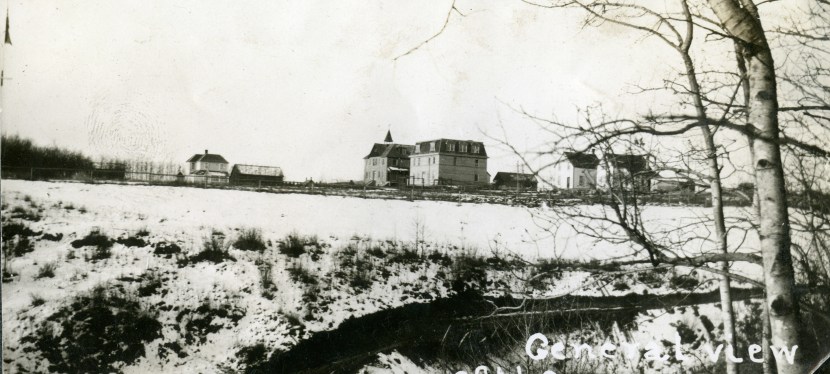
The banner image above is “General view of the I.I. School.” Date unknown. Source: City of Red Deer Archives, P10890.

Written by: Laura Golebiowski (Indigenous Consultation Adviser) in collaboration with Whitecap Dakota First Nation.

In the late 1880s, a group of Dakota Oyate led by Chief Whitecap were making their home along the northern extent of their territory. They settled near Mni Duza—the South Saskatchewan River—on a landscape known as “Moose Woods”:  rich with water, wood, wildlife and plants for sustenance and ceremony.
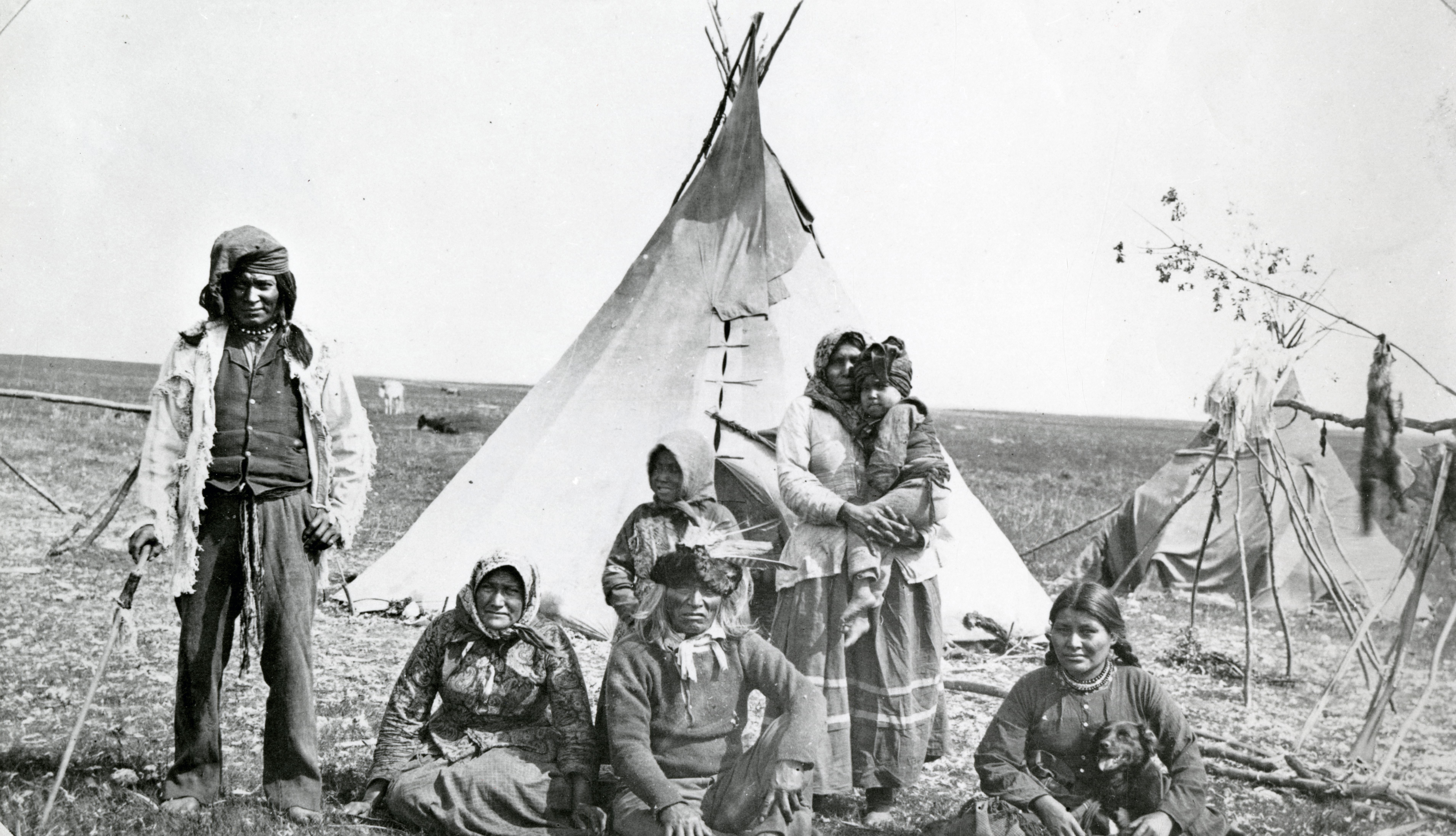
Chief White Cap (seated centre) and members of his family, ca 1885. LH-5418, Saskatoon Public Library.
Read more

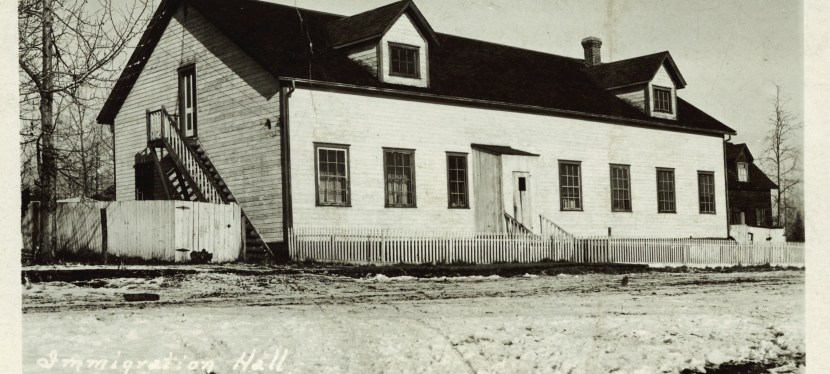
Immigration halls of Alberta

Written by: David Monteyne, Professor, School of Architecture, Planning and Landscape, University of Calgary

Between 1885 and 1930, the Dominion government built and operated about a dozen immigration halls in Alberta (and rented space for this purpose in a dozen more towns), from Lethbridge and Medicine Hat in the south to Grande Prairie and Peace River in the north. But what, exactly was an “immigration hall”?

An immigration hall was a place where the federal immigration branch provided free accommodations as well as advice to new arrivals from Europe, the United States and even eastern Canada. These prairie immigration halls were part of a nationwide building program, described in my recent book, for which the federal Department of Public Works designed and built: pier buildings in ports like Quebec City and Halifax (Pier 21, now the Canadian Museum of Immigration); immigrant detention hospitals; and quarantine stations on both coasts. Of all of these, the immigration halls were the most numerically significant, with more than 50 buildings erected across the three prairie provinces. The immigration hall was a newly invented building type, unique to Canada.

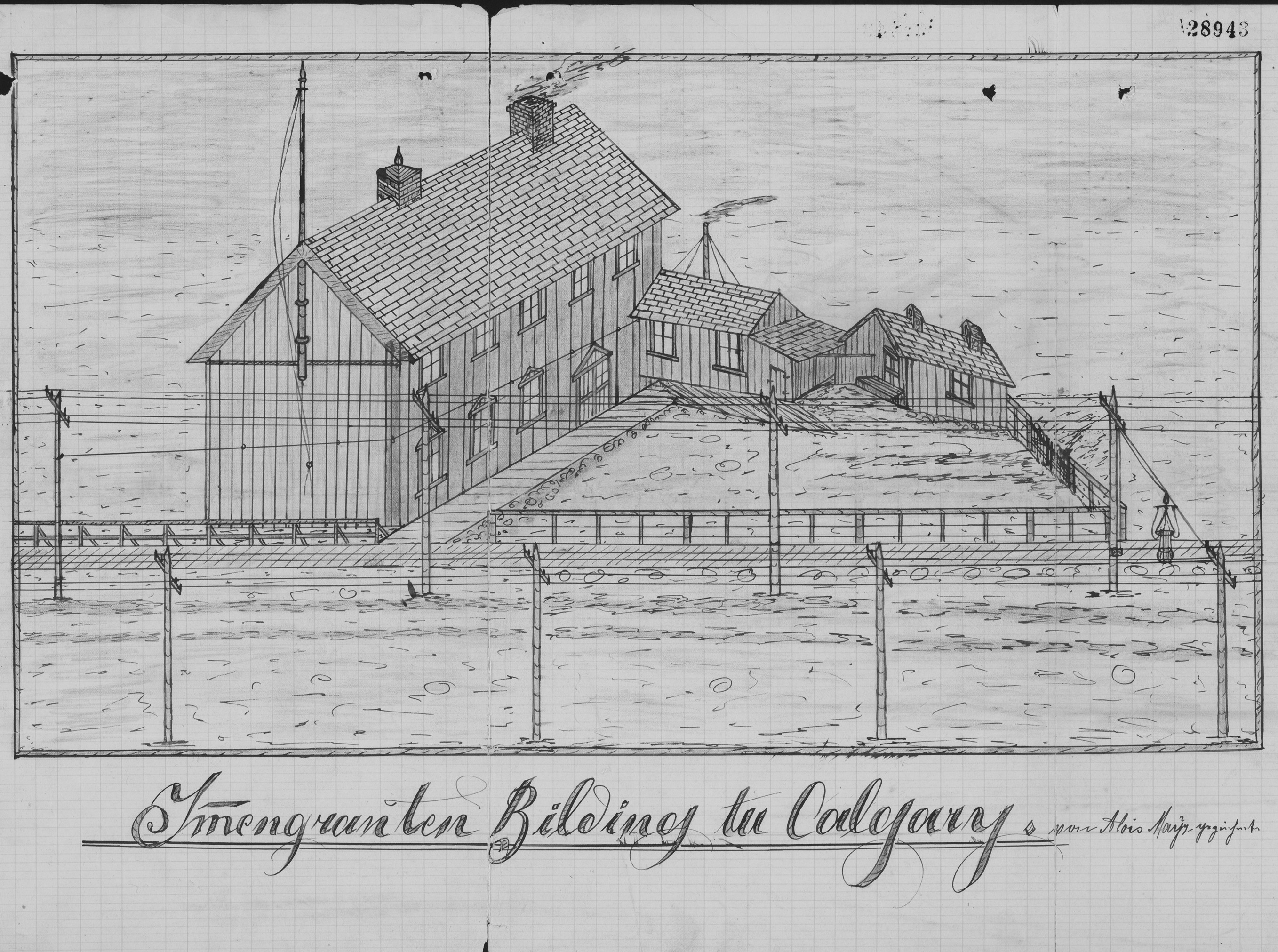
An immigrant’s late-1890s sketch of the immigration hall at Calgary, which was built in 1885 and used until 1913. Source: Library and Archives Canada, Department of the Interior fonds, Immigration Branch, RG 76, volume 20, file 180, part 1.
Read more

Last call for heritage scholarship applications

Written by: RETROactive staff

The deadline for applications for the Roger Soderstrom scholarship is fast approaching!

The Roger Soderstrom Scholarship honours the late Roger Soderstrom’s work and career with the Government of Alberta in encouraging preservation and interpretation of Alberta’s heritage.

The applicant must be a permanent Alberta resident enrolled in a graduate or extended study program with a proposed research project at that level, in the following fields, but not limited to:

  • architectural preservation
  • urban or area planning and conservation
  • historic resource management
  • archaeology
  • history
  • palaeontology

The research project must have significant Alberta content and will help with the preservation or understanding of Alberta’s heritage.

Guidelines for the scholarship, along with instructions on how to apply, are available on Alberta.ca.