2026 Heritage Awards

Written by: RETROactive staff

Do you know a person or group in your community helping to support Alberta’s history and heritage? It could be a local historical society helping preserve a physical piece of local history; a researcher publishing a book or article; or a member of the community who’s shown long-term leadership and contribution to the preservation and presentation of Alberta’s history. If so, consider nominating them for a 2026 Heritage Award.

Presented by the Government of Alberta, the Heritage Awards recognize individuals, non-profit organizations, corporations, municipalities and First Nations and Metis settlements for their significant contributions to the protection, preservation and promotion of Alberta’s heritage. Heritage awards are presented every two years.

The Heritage Awards are divided into three categories:

Heritage Awareness
Recognizes research, publications or public engagement projects that have deepened our understanding and promoted greater awareness of Alberta’s heritage.

Heritage Conservation
Recognizes projects that demonstrate excellence in the protection and management of palaeontological and archaeological resources; conservation of a Provincial Historic Resource, Municipal Historic Resource or Indigenous Historic Place; or identification, protection and management of historic places

Outstanding Achievement
Recognizes an individual’s or organization’s exemplary long-term leadership and contribution to the preservation and presentation of Alberta’s history.

Take a look at the information and fill out a nomination form. And to get a sense of the scope and range of nominations across the province, check out past winners of the Heritage Awards.

The nomination period begins March 1 and closes June 1.
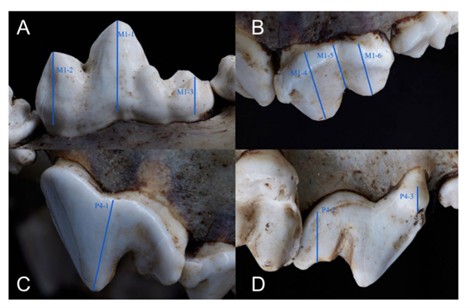
Long in the Tooth: Using Crown Height Measurements to Age Dogs and Wolves

Written by: Megan Bieraugle

People, dogs and wolves have had long and complex relationships, ranging from cooperation to competition. Alberta’s rich archaeological record includes many canids (mammals including dogs, wolves, coyotes and foxes), and understanding canid age at death can provide insights into their relationships with Indigenous people and how they vary geographically, temporally, and by species.

For example, assessments of dog age at death could be informative about how past people cared for their working animals as they aged beyond their prime years. In cases where dogs appear to have been kept primarily for use as food resources, ageing data could reveal how such populations were being managed, with individuals perhaps being slaughtered around 1–2 years of life once they reached full adult body size. Relationships with wolves also might be more fully understood with age-at-death information, particularly in North America, where they are often found in mass bison kill assemblages. Ageing data might reveal if whole packs were killed while scavenging human prey or if primarily young and inexperienced individuals met their fates in such settings. Finally, age-at-death information can be important for assessing aspects of canid life histories, including animals’ rates of tooth loss and fracture and their relationship to diet, but also experiences of degenerative joint disease and trauma. Despite their importance, methods for ageing archaeological dog and wolf remains are relatively limited.

Crown height measurements for each of M1, P4, and M1. A (lingual view of M1) shows measurements M1-1, M1-2, and M1-3. B (buccal view of M1) shows measurements M1-4, M1-5, and M1-6. C (buccal view of P4) shows measurement P4-1. D (lingual view of P4) shows measurements P4-2 and P4-3. Source: Megan Bieraugle.
Read more

Curiosity, Craft and Conviction: Frank L. Beebe and the Art of Seeing Nature

Editor’s note: The banner image above is courtesy of the Royal Alberta Museum.

Written by: Devon Owen Moar

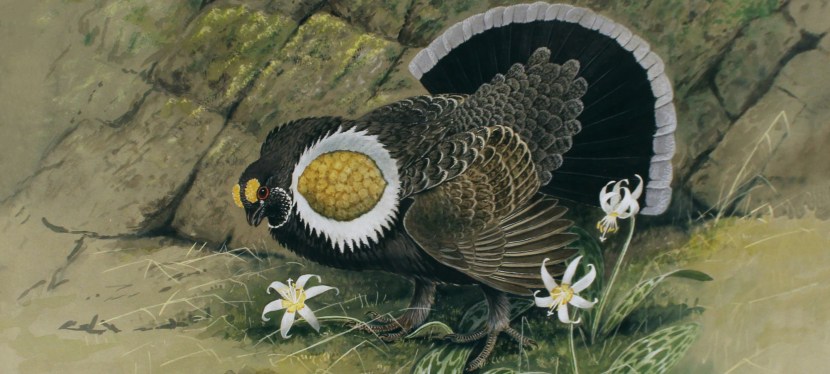
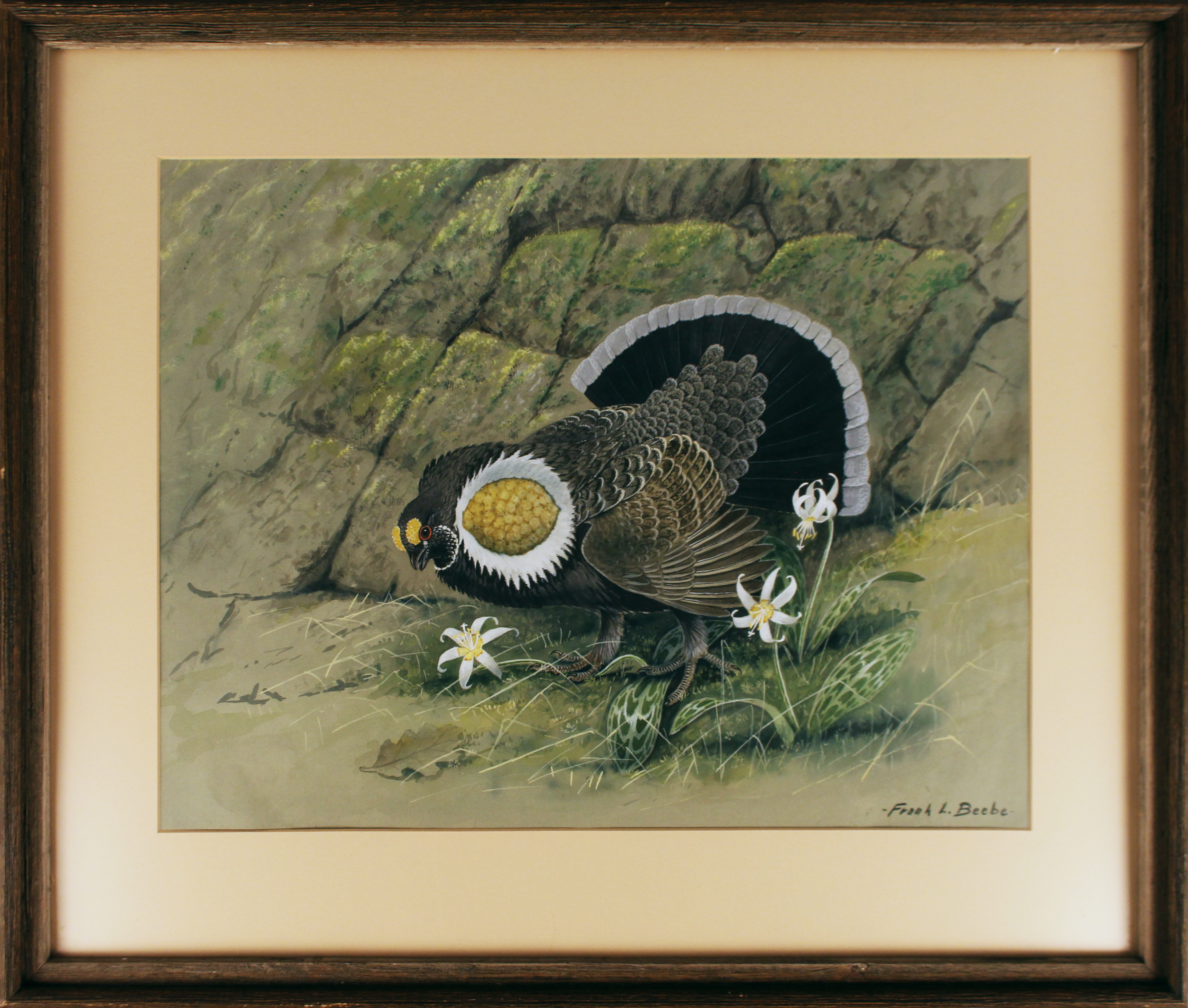
At first glance, the illustration appears simple: a bird, carefully rendered, set within its landscape. There is no dramatic gesture or overt narrative—there is only close attention. Feather by feather, stroke by stroke, the image invites the viewer to slow down and really look.  It is both an artwork and a record, capturing not just the likeness of its subject, but a way of seeing that is central to the natural sciences and natural history museums.

This work, now part of the Royal Alberta Museum’s collection, was created by Frank L. Beebe, a self-taught naturalist, illustrator and falconer whose career bridged art and science. Beebe’s illustrations were never meant to be decorative alone; they were tools for understanding, shaped by careful observation and extensive field experience.

Before photography became the dominant way of documenting the natural world, scientific illustrators played a vital role in how knowledge was recorded and shared. People like Beebe translated hours of study into images that could educate, inform and endure. This kind of work helped shape how museums studied and presented the natural world.

This single illustration offers a point of entry into Beebe’s broader world, rooted in western Canadian landscapes and museum and illustrative practices, and reminds us of the important, and often unsung, role illustrators play in connecting science, art and public understanding.

Framed painting of a male Sooty Grouse by Frank L. Beebe. Source: Royal Alberta Museum, H25.28.1.

The work that prompted this research is a framed painting depicting a male Sooty Grouse.  It is signed in the bottom right corner by the artist, Frank L. Beebe. The grouse is shown mid-display, its body fully puffed with its yellow throat air sacs inflated and tail held upright—a striking posture associated with courtship. Beebe situates the bird within a carefully rendered landscape: a moss-covered rock forms the backdrop, while long grasses, white and yellow flowers (likely avalanche lilies) and a fallen leaf help situate the foreground.

Read more

From the Famous to the Forgotten: Preserving Black History at the Provincial Archives of Alberta

Editor’s note: Learn more about the history and heritage of Black Albertans from the Royal Alberta Museum.

Written by: Michael Gourlie, Government Records Archivist, Provincial Archives of Alberta

Since the 1960s, the Provincial Archives of Alberta (PAA) has acquired kilometres of records, millions of photographs and thousands of hours of audiovisual recordings about the lives and activities of Albertans. While Alberta’s Black community is underrepresented among these archival holdings, it faces a similar challenge to other groups.  For every famous individual whose life is documented in detail in numerous sources, there are dozens of other individuals who remain nameless and forgotten until someone researches their stories.

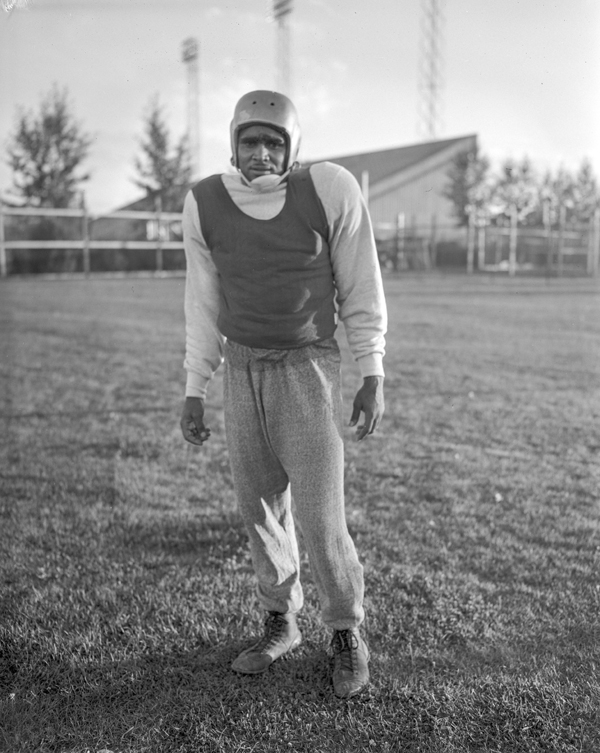
Among the famous individuals found in the PAA’s holdings is John Dee (Johnny) Bright. Born in Indiana in 1930, he attended Drake University on a track and field scholarship, which led to a remarkable collegiate football career marked by several National Collegiate Athletic Association (NCAA) records as well as a national profile.  His senior year in 1951 was also notable when he was the target of a racially motivated assault on the playing field during a game with Oklahoma A&M University (now Oklahoma State University), an incident documented in a Pulitzer Prize winning series of photographs. While some on-field rules changed because of the incident, the opposing team and its university administration denied any wrongdoing for decades and only apologized for the incident in 2005.

File OS.1843: Johnny Bright, 1954. (Frank Oliver Studios fonds, PR1992.0261/1096, OS.1843). Source: Provincial Archives of Alberta.

He graduated from Drake University in 1952 with a Bachelor of Science in Education, specializing in physical education. He was the first pick chosen by the Philadelphia Eagles in the 1952 draft, but fearing his treatment in the National Football League, he chose to emigrate to Canada and play for the Calgary Stampeders. He was traded to Edmonton in 1954, where he primarily played offense. Bright set several Canadian Football League (CFL) records, helped the team win the Grey Cup in 1954, 1955 and 1956, and was named Edmonton Athlete of the Year in 1959.

Read more