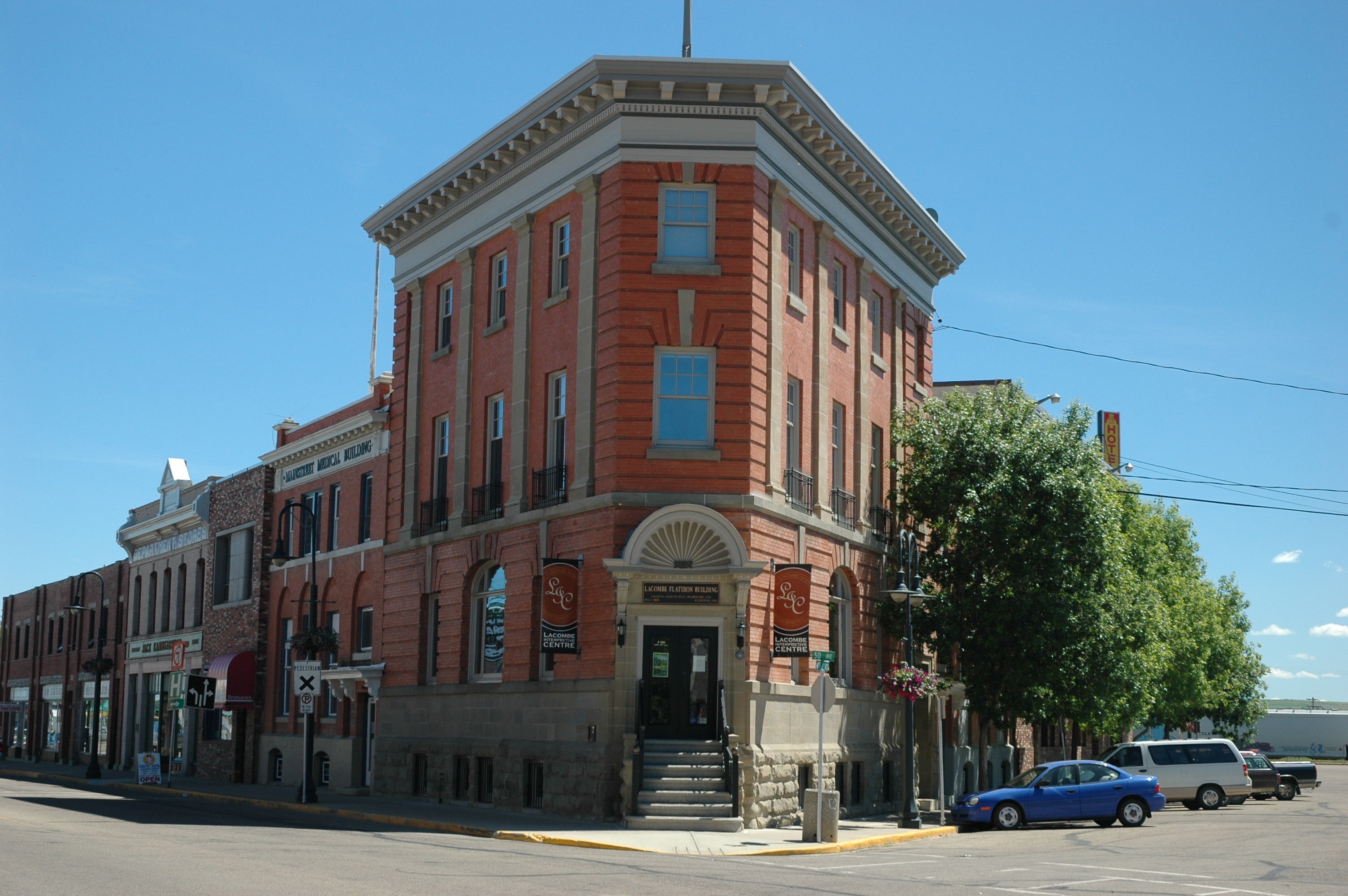
I attended the City of Lacombe’s Heritage Inventory Open House a few weeks ago. Over the past year, Lacombe has been busily evaluating several properties in its historic residential areas for significance and integrity. Thirty properties were selected for evaluation and at the open house draft statements of significance were presented to the community for review. The event was a smashing success. I’d tell you more, but I think you might prefer to head over to the City of Lacombe’s blog and hear about it in their own words.
The Municipal Heritage Partnership Program has worked with the City of Lacombe for three years now, helping them identify and evaluate locally significant historic places. You can also learn more about the City of Lacombe’s Heritage Preservation Program from Lacombe’s website.
Written by: Michael Thome, Municipal Heritage Services Officer
On February 9th, I had the opportunity to lead a workshop for the Smoky Lake Heritage Board as part of a Municipal Heritage Management Plan. The project is a unique collaboration between Smoky Lake County, the Town of Smoky Lake, the Village of Vilna and the Village of Waskatenau. The management plan is the culmination of a multi-year project that has surveyed and inventoried hundreds of sites.
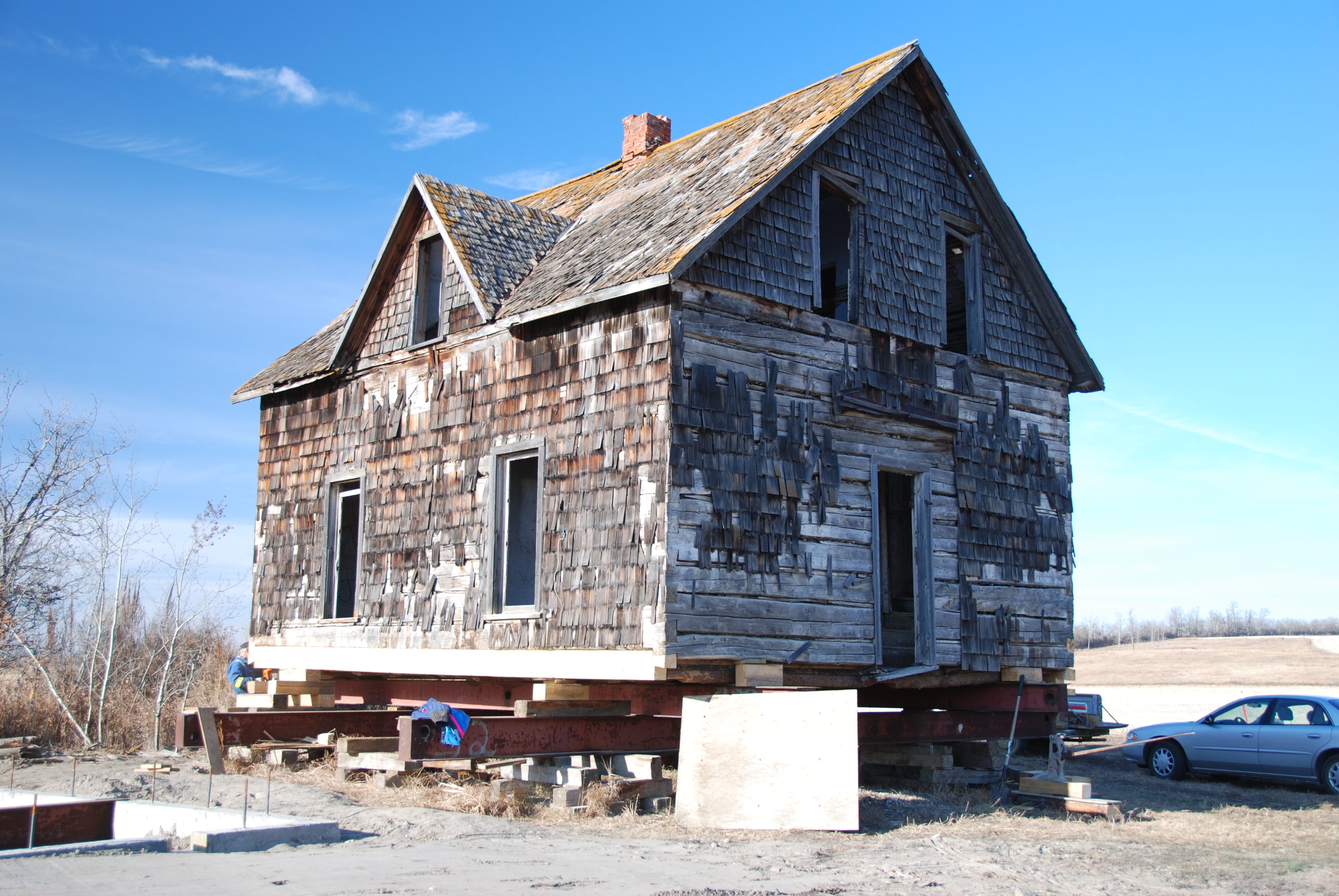
Conservation work being completed on the Anderson House, a Municipal Historic Resource located in the Victoria District of Smoky Lake County (November 2011).
Smoky Lake is starting to think about how to protect and conserve their historic places. I spoke to board members about how to review Statements of Significance (SoS) to ensure they accurately reflect the values their community ascribes to a site. We then took a few hours to review some of the statements that they’re developing.
Although municipalities can (and do) hire consultants to do historical research into historic places and draft Statements of Significance based on their opinions, it’s up to a community to decide if they value a historic place and why. Heritage value is subjective: what one community may value another community may not; what one resident may value, another may not. Neither position is right or wrong. A properly trained board, whose membership is interested in local history and that represents the community’s residents is crucial to ensuring that the community’s heritage values are accurately identified and explained in the Statements of Significance for any designated historic resource. We used a SoS checklist developed by Municipal Heritage Services staff to help committees decide if a Statement of Significance properly reflects a community’s heritage values.
Municipal Heritage Services is available to give workshops for municipally appointed Heritage Advisory Bodies and municipal staff on a range of topics related to identification, evaluation and conservation of historic resources. Our Municipal Heritage Partnership Program (MHPP) can help your municipality plan a survey, to identify potential historic resources; an inventory, to evaluate potential historic resources for their significance and integrity; and then develop a management plan, to protect and conserve locally significant historic resources. If you would like further information about the services we offer, take a look at our website or contact Municipal Heritage Services staff.
Written by: Michael Thome, Municipal Heritage Services Officer
On Thursday January 26th Matthew Francis and I were privileged to attend the Top Hat Ceremony in the Town of Olds. Hosted by Uptowne Olds, the Top Hat Ceremony honored the nine Municipal Historic Resources designated by the Town of Olds, to date. Search the Alberta Register of Historic Places to learn more about these sites. (Four of the sites are listed so far and the Town is working on the documentation to list the rest).
The crowd in Olds was buzzing with excitement and the ceremony was great fun. I can honestly say it was the only event I’ve attended (so far) that began with a proclamation read by a town crier. Each property owner was given a plaque in recognition of their stewardship of one of the town’s historic resources.
Matthew Francis had the pleasure of announcing that Olds has been accredited as an Alberta Main Street Community for 2011. Olds is only the third municipality to be accredited since the Alberta Main Street Program was re-launched in 2008. Accredited means that Olds has met the ten standards of performance needed to fully participate in and benefit from the Alberta Main Street Program.
The Alberta Main Street Program helps municipalities conserve and market their historic commercial districts. Expect to hear more about this exciting aspect of our work over the next year.
Written by: Michael Thome, Municipal Heritage Services Officer
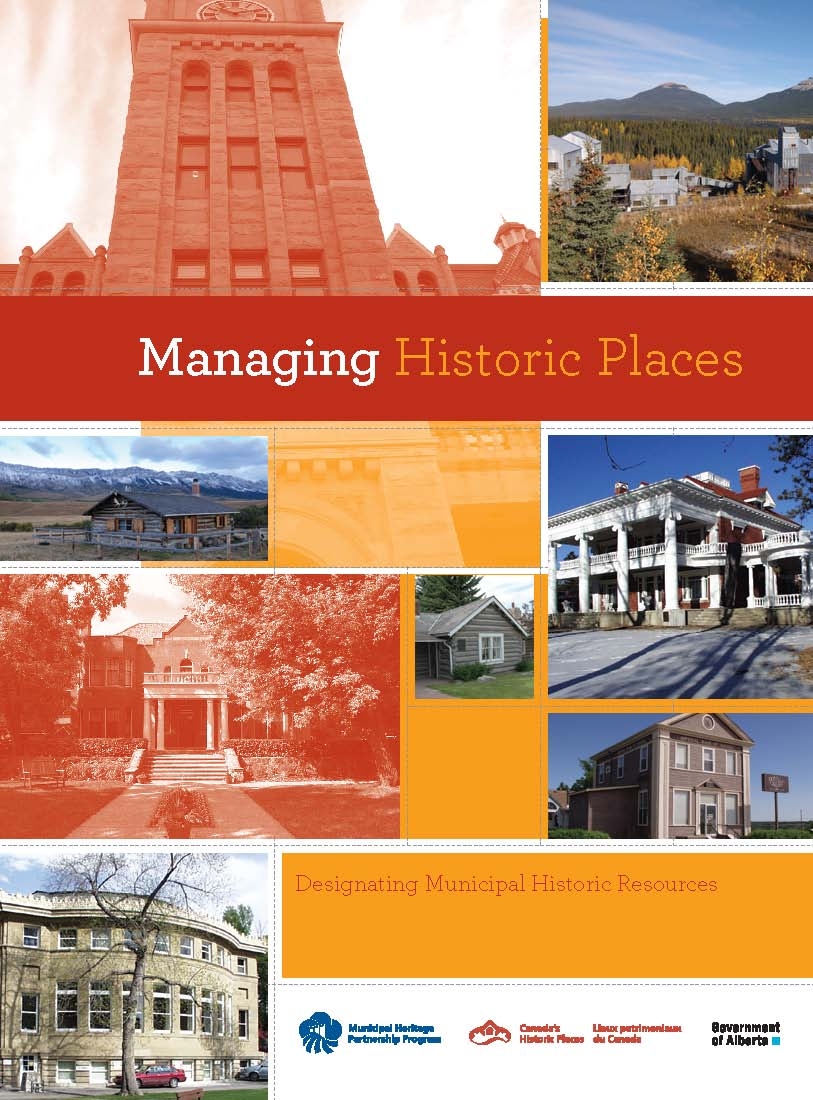
Many municipalities will designate a Municipal Historic Resource without first developing a designation policy. The Historical Resources Act does not specify how municipalities must evaluate places for Municipal Historic Resource designation. Municipal Historic Resource designation bylaws are passed in a slightly different way than a bylaw is normally considered, but otherwise each municipality is allowed to define how it will protect its historic resources. (To learn more about designating Municipal Historic Resources read Managing Historic Places: Designation Guide, which can be downloaded from the publications section of the MHPP website).
How should your municipality respond to a request from a member of the public to protect a historic resource? By developing a policy that describes how the municipality will use its power to designate Municipal Historic Resources. A place should not be designated unless it is in the public interest to do so, and a good designation policy will help determine when that is the case. A good designation policy will explain:
What the purpose of the Municipal Historic Resource designation program is, specifically explaining what types of places the municipality is willing to protect and why.
Who is allowed to nominate places for designation.
What information a nominator needs to provide.
How the municipality will evaluate a proposed designation, including who is responsible for evacuating the proposal (like a Heritage Advisory Board) and what information council needs to make a decision.
A written policy that answers these questions will help protect significant sites while reducing the time and effort needed to evaluate designation proposals. A good policy lets nominators know what types of sites the council is willing to evaluate, what they are willing to protect and what information they need to provide. A good policy will make for a transparent and fair nomination process.
For more information on creating a designation policy or other heritage management planning activities, please consult the publications section of the MHPP website, or contact Municipal Heritage Services staff.
Written by: Michael Thome, Municipal Heritage Services Officer
A few days ago we introduced our newest colleague, Carlo Laforge. Doing so, our editor realized that many regular contributors to RETROactive were never introduced to our readers. So, without further ado, allow me to introduce … myself.
I started working for the Government of Alberta’s Historic Resources Management Branch in the spring of 2008. I was assigned to the Municipal Heritage Partnership Program and have been busily helping Alberta’s municipalities identify, protect and conserve locally significant historic resources. My work has given me the privilege of traveling all over Alberta to visit municipalities large and small, urban and rural. I’ve talked with municipal councils, facilitated workshops for council-appointed Heritage Advisory Bodies and discussed Municipal Historic Resources designation with municipal staff and property owners.
Back at the office, I have managed the Municipal Heritage Partnership Program’s grant agreements with municipalities. I am also responsible for processing nominations to list Municipal Historic Resources on the Alberta Register of Historic Places. I also prepare training material for municipal staffers on how to evaluate and protect historic resources (like the Managing Historic Places Designation Guide).
I hold a Bachelor of Arts degree with a combined major of English and History from the University of Calgary and a Master of Arts degree (history) from the University of Saskatchewan. In my spare time … I have hobbies.
If I haven’t met you in person yet, I look forward to doing so.
What makes a community memorable? How can a community encourage tourists to return? Shelia Campbell spoke about these issues at the 2011 Municipal Heritage Forum. Promoting a community’s historic resources is one way a community can distinguish itself.
Shelia Campbell, a Tourism Product Development Coordinator with Alberta Tourism, Parks and Recreation, challenged us to think about what makes a trip memorable. Is your community visually appealing? Can visitors find their way easily? Are services offered of good quality? Can visitors find good information about your community? How can historic resources contribute to these goals?
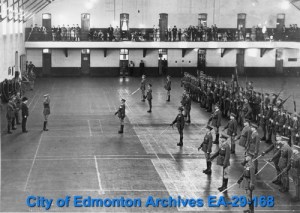
Several buildings constructed for Canada’s military are designated historic resources. These places can help us understand how soldiers preparing for service lived and worked. Tomorrow being Remembrance Day, we thought it appropriate to feature a piece of Alberta’s military history – the historic resource that Municipal Heritage Forum attendees experienced firsthand at the end of October.
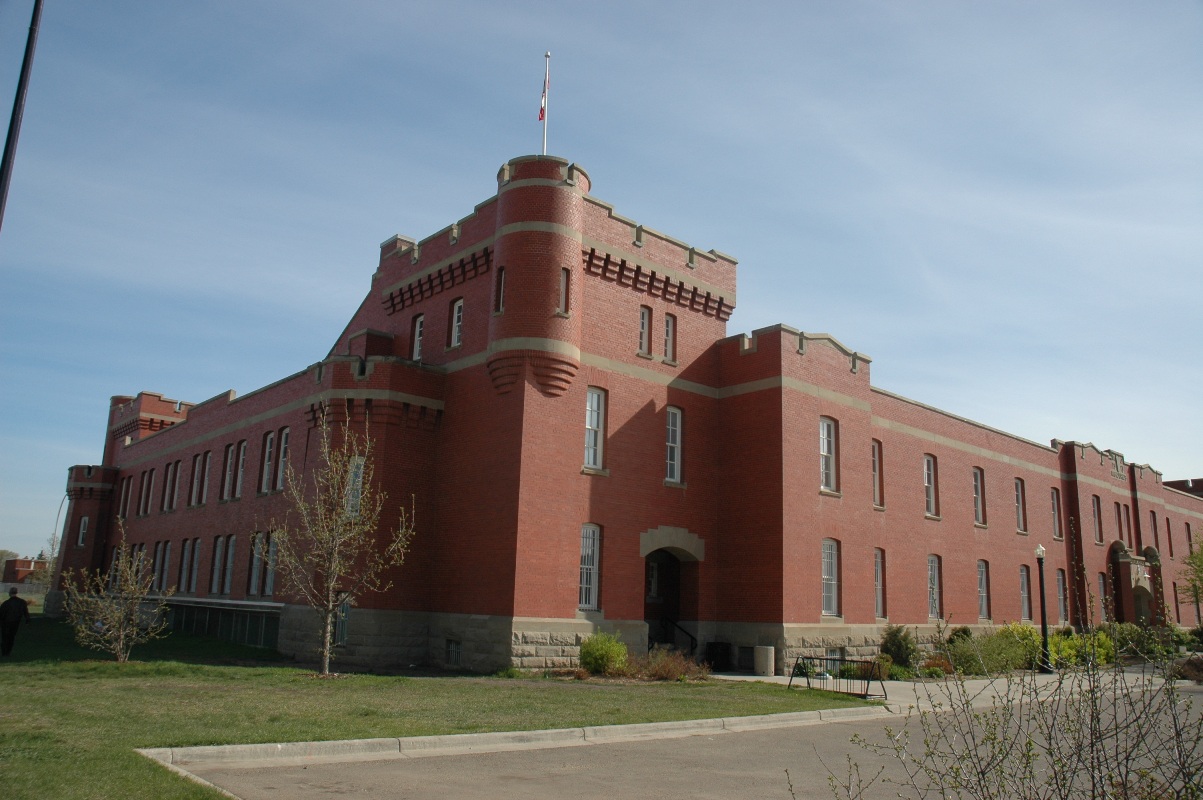
The Municipal Heritage Forum was held at the Prince of Wales Armouries in Edmonton. Most participants enjoyed meeting in this historic place. The Prince of Wales Armouries is a great example of how to adaptively repurpose a historic place.
Several City of Edmonton staff members provided an excellent behind the scenes tour of the facility. We learned how the building was rehabilitated to meet its new role as an archive, museum and meeting facility. As part of the tour, we had the opportunity to hear Timothy O’Grady (Archivist, City of Edmonton Archives) speak about the history of the building. Click here to view Timothy O’Grady’s photo essay.
The Prince of Wales Armouries was built in 1915 to give the Department of National Defence a place in Edmonton to train men for service in the militia. Essentially a huge drill hall, the soldiers who trained here served Canada in both world wars and in many other operations. In recognition of the building’s historic use and its distinctive architecture, the armouries was designated a Provincial Historic Resource in 1979 and then a Municipal Historic Resource by the City of Edmonton in 2004.
Back L-R: Donald Luxton, Peter Bouwsema (Councillor), Jason Haggkvist. Front L-R: Kelsey Van Grinsven, Laura Pasacreta, Marie Péron, Andrea Becker, Sean Stroud, Kirstin Bouwsema
It’s been a busy few weeks for friends of heritage in the City of Lacombe. On Friday October 14th, I led a workshop on values-based management for members of the city’s Heritage Steering Committee. The City of Lacombe, with the advice of the committee, will soon begin evaluating several historic places for heritage value.
Then, on Thursday October 20th, the City of Lacombe hosted an “Evening of Heritage”. About 80 residents listened to several presentations and afterwards had many great questions. Over the course of the evening:
Laura Pasacreta, of Donald Luxton and Associates, updated the community on the progress of the ongoing heritage inventory;
Donald Luxton, Principal of Donald Luxton and Associates, showed the audience how to maintain and repair a historic wood-frame window; and
David Holdsworth, a Heritage Planner with the City of Edmonton, spoke about Edmonton’s municipal heritage conservation program.
The City of Lacombe began working with MHPP in 2008. Since that time, the entire community has been surveyed and the heritage steering committee has identified well over 100 places that deserve further study. Since 2009, Lacombe has been steadily evaluating these sites to determine which have sufficient value to the community to warrant Municipal Historic Resource designation.
Not content to simply evaluate historic places, the “Evening of Heritage” marks the first step in Lacombe’s efforts to develop municipal polices to protect and conserve locally significant historic places. The event was a great way to introduce the community to the idea of heritage conservation.
We congratulate Lacombe’s ongoing efforts to conserve locally significant historic places, or at least we plan to just as soon as we catch our breath …
Written by: Michael Thome, Municipal Heritage Services Officer
Do you own a Municipal Historic Resource? Would you like to learn how to obtain funding to conserve your historic resource? The Alberta Historical Resources Foundation operates several grant programs to help underwrite the conservation of Alberta’s heritage. The Historic Resource Conservation category of the Foundation’s Heritage Preservation Partnership Program offers grants to defray the cost of conservation work on Provincial and Municipal Historic Resources.
The proposed work must preserve, rehabilitate or restore the historic resource’s character-defining elements. The Foundation will also consider funding architectural or engineering studies that help develop a long-term conservation plan. The Board of the Foundation will only consider an application from an owner of a Municipal Historic Resource if:
The proposed work complies with the Standards and Guidelines for the Conservation of Historic Places in Canada; and
The municipality has reviewed the proposed work, certified that it meets the Standards and Guidelines and issued written approval to undertake the project (pursuant to section 26 of the Historical Resources Act).
Although a provincial Heritage Conservation Adviser can help your municipality complete the approval-documentation, municipalities are responsible for reviewing the proposed work themselves. Municipalities have the legal authority to prohibit any changes that, in their opinion, detract from the heritage value of the site. Municipalities are best situated to evaluate how proposed work impacts the heritage value of the sites they themselves designate.
You can find a Historic Resource Conservation grant application package here. Because of the documentation needed, it is best to begin working on an application as soon as possible. The next application deadline is September 1st, but it is never too early to start thinking about the conservation work you would like to do next summer. Applications submitted for the February 1st deadline should be adjudicated before the snow melts.
For more information on the grant programs of the Alberta Historical Resources Foundation, contact Carina Naranjilla at carina.naranjilla@gov.ab.ca or 780-431-2305.
Written by: Michael Thome, Municipal Heritage Services Officer
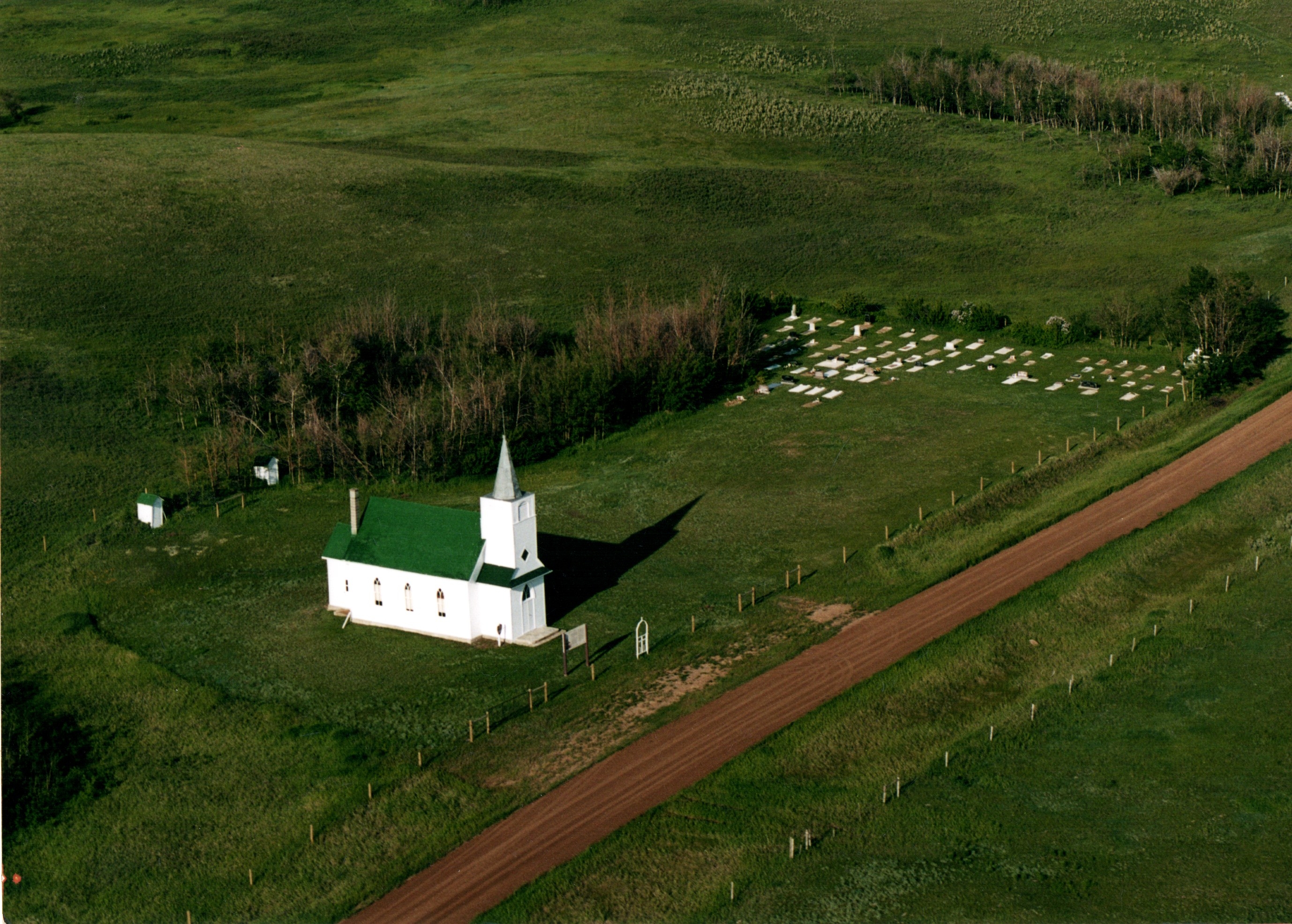
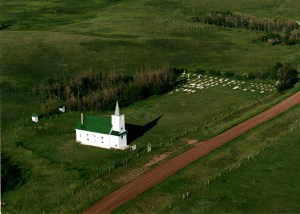
St. Peter’s Lutheran Church and Cemetery is the newest Municipal Historic Resource listed on the Alberta Register of Historic Places. It is located in Special Area 2, in the former Hamlet of Scapa. On Saturday, August 13th, the parishioners are celebrating the 100th anniversary of the church’s construction. If you are in the area, stop by for a visit.
The church was constructed in 1911 and moved to its present location in 1921. The residents of Special Area 2 value this place for its historic use as a Lutheran parish church, particularly by the settlers who homesteaded the Hamlet of Scapa. The Church was designated as a Municipal Historic Resource by the Special Areas Board in 2009.
Written by: Michael Thome, Municipal Heritage Services Officer







 RETROactive