Three sites from Alberta’s past – one that precedes the railway, one that was made possible by the railway and one that made the railway run – were recently designated as Provincial Historic Resources for their historical and architectural significance.
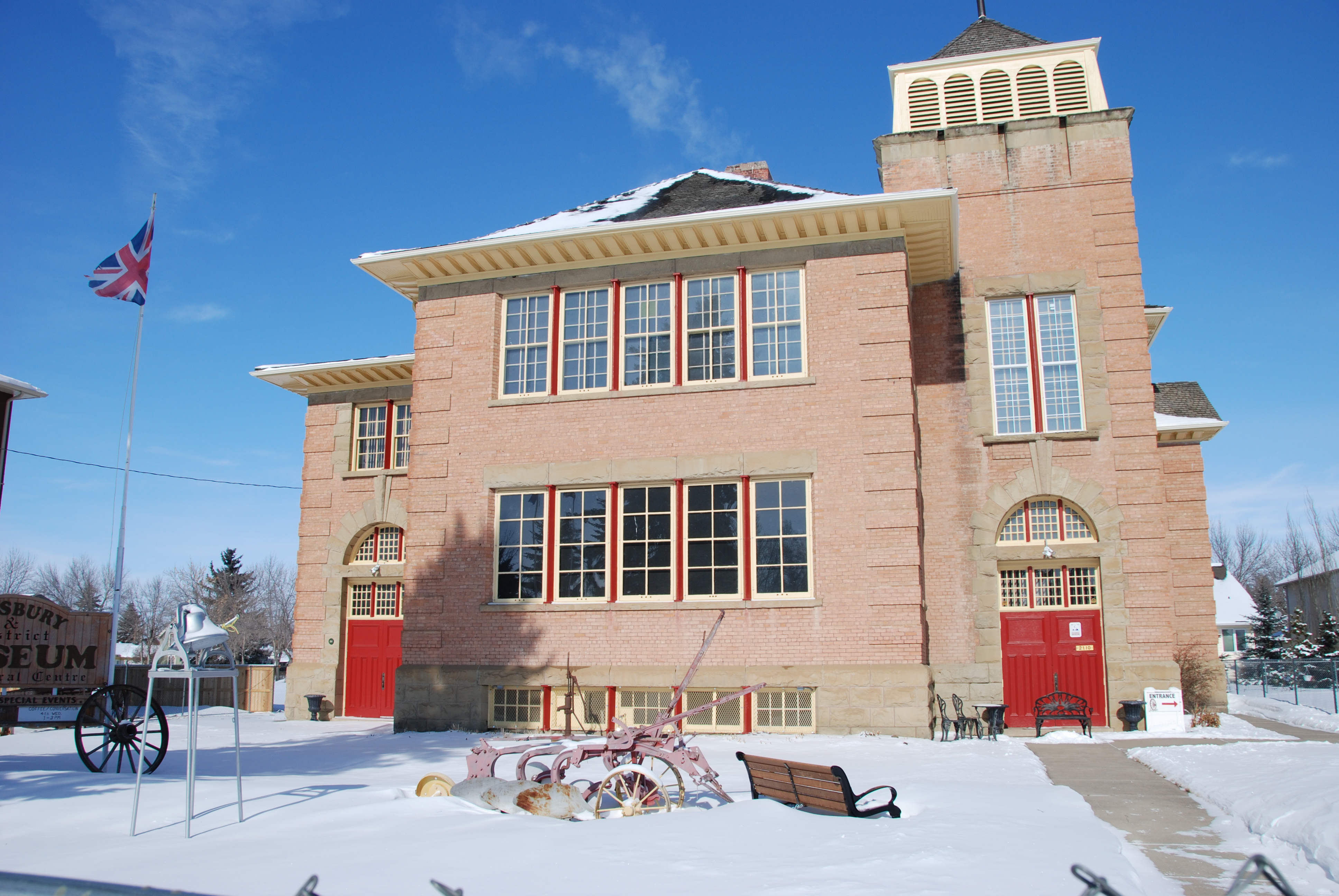
The Red Brick School, an imposing structure in Didsbury, built to accommodate the railway-fuelled population boom before World War One.
The West Canadian Collieries Mine Sitein the Municipality of Crowsnest Pass, which sold virtually all of its 13 million tonnes of coal to the Canadian Pacific Railway.
Click on the above links to read the sites’ Statements of Significance on the Alberta Register of Historic Places. Alberta currently has over 330 Provincial Historic Resources. These sites embody the richness and variety of our province’s history and include medicine wheels, tipi rings, fur trading and mounted police posts, coal mines, farmsteads, ranches, railway stations, grain elevators, churches, schools, government offices, commercial blocks and private residences.
For more information on Alberta’s Provincial Historic Resource Designation Program, click here.
Written by: Matthew Wangler, Manager of Historic Places Research and Designation Program
Most people interested in historic places enjoy learning about site history. For instance, the public may like to learn about detailed historical information, heritage values and information pertaining to site location. Throughout Alberta (and listed on the Alberta Register of Historic Places), there are 339 Provincial Historic Resources, two Provincial Historic Areas, 211 Registered Historic Resources and approximately 157 Municipal Historic Resources. How could information about these sites be shared with the public?
What are QR Codes?
The emergence of small adaptable square bar codes called QR codes could be an option. QR (Quick Response) codes are funny looking square bar codes that can be scanned from your cell phone’s camera, provided your phone is enabled with decoding software. Each code can be embedded with all kinds of information including text, URLs or other data.
QR Code (bottom right-hand corner) featured on a Government of Alberta advertisement.
My first experience with QR codes was three years ago when I participated in an urban race in Edmonton. The race was part scavenger hunt and part puzzle solving, which largely involved finding particular locations by solving riddles about Edmonton and completing certain tasks. A portion of the race involved using your cell phone to find QR Codes. Since the race, I have noticed a gradual increase in the use of QR codes. They are in advertisements and located on the packaging of various consumer products.
The Japanese, creators of the QR code, wanted a way to embed content that could be quickly decoded. Created in 1994, the Japanese have integrated the QR code into their everyday life. In a place so densely populated, where lack of space is an issue, the QR code allows for much more information to be available to those who want it. Although QR codes are most commonly used for reading a URL and accessing a website, QR codes in Japan are also being used in unique ways. QR codes can be used to allow people to purchase items from cashless vending machines by scanning QR codes with their cell phones.
Check out the QR Code for Ophelia Liew's email address.
QR Codes and Historic Places:
Could QR codes be used to provide information on individual historic places, and also for walking tours, historic districts and areas? The compact size, the ease in generating new codes and the popularity of camera enabled cell phones are all factors that suggest the ease of using QR codes. It would be interesting to investigate if QR codes could be used as a new and effective medium for displaying and accessing information about Alberta’s historic places.
Heritage Conservation Advisors would find this technology useful as we refer to two main conservation management tools on a daily basis: the Statement of Significance (SoS) and the Standards and Guidelines for the Conservation of Historic Places in Canada. Each designated historic resource in the province has a Statement of Significance, a one or two page document that outlines the site’s heritage values and character-defining elements. Anyone with an appropriate type of cell phone would have the ability to retrieve the Statement of Significance by being directed to the Alberta Register of Historic Places.
Written by: Ophelia Liew, Heritage Conservation Advisor
Read about where we work! Check out the QR Code for Old St. Stephen's College's Statement of Significance.
We’ve changed the clocks, it’s warming up, and the annual crop of potholes is appearing. Spring must be just around the corner. If you’re itching to get out and enjoy the fresh air, why not add some heritage to your outing? Check out the PDFs of walking and driving tours on the Heritage Survey Programwebsite – from Coleman to Grande Prairie and places in between, there’s a whole bunch to choose from!
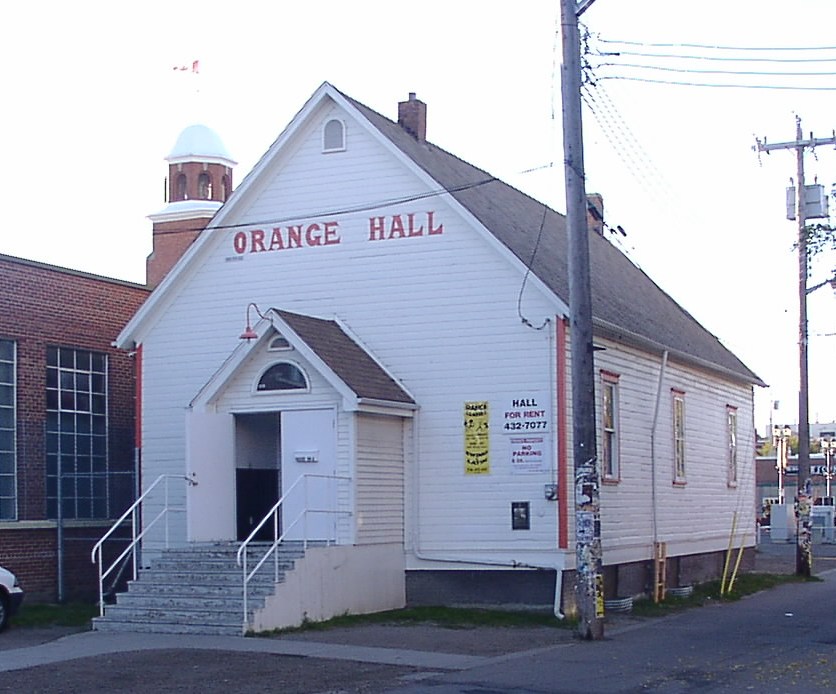
The Orange Hall in Edmonton was designated a Provincial Historic Resource in 2007. In order for a site to be designated a Provincial Historic Resource, it must possess province-wide significance for either its history or architecture. To properly assess the historic importance of a resource, a historian crafts a context document that situates a resource within its time and place and compares it to similar resources in other parts of the province. This allows staff to determine the importance of a resource to a particular theme, time, and place. Below is some of the historical information used in the evaluation of the Orange Hall.
The Orange Order was founded in Ireland in 1795 as a fraternal social organization devoted to upholding the cause of the (Anglican) Church of Ireland and exposing and denouncing the purported evils of Catholicism. It was named for William of Orange, who, with Queen Mary, was King of England from 1688 to 1696. The Order began as a grass-roots organization, but made inroads into upper-class British Society in the 1820’s, when the King’s brother, the Duke of Cumberland, became a member and was elected Grand Master. On the whole, with its rituals and penchant for secrecy, it appears to have served as an Anglican counterpart to the Presbyterian oriented Masons. In time, however, it attracted people from all areas of British society who had strong anti-Catholic feelings. Read more →
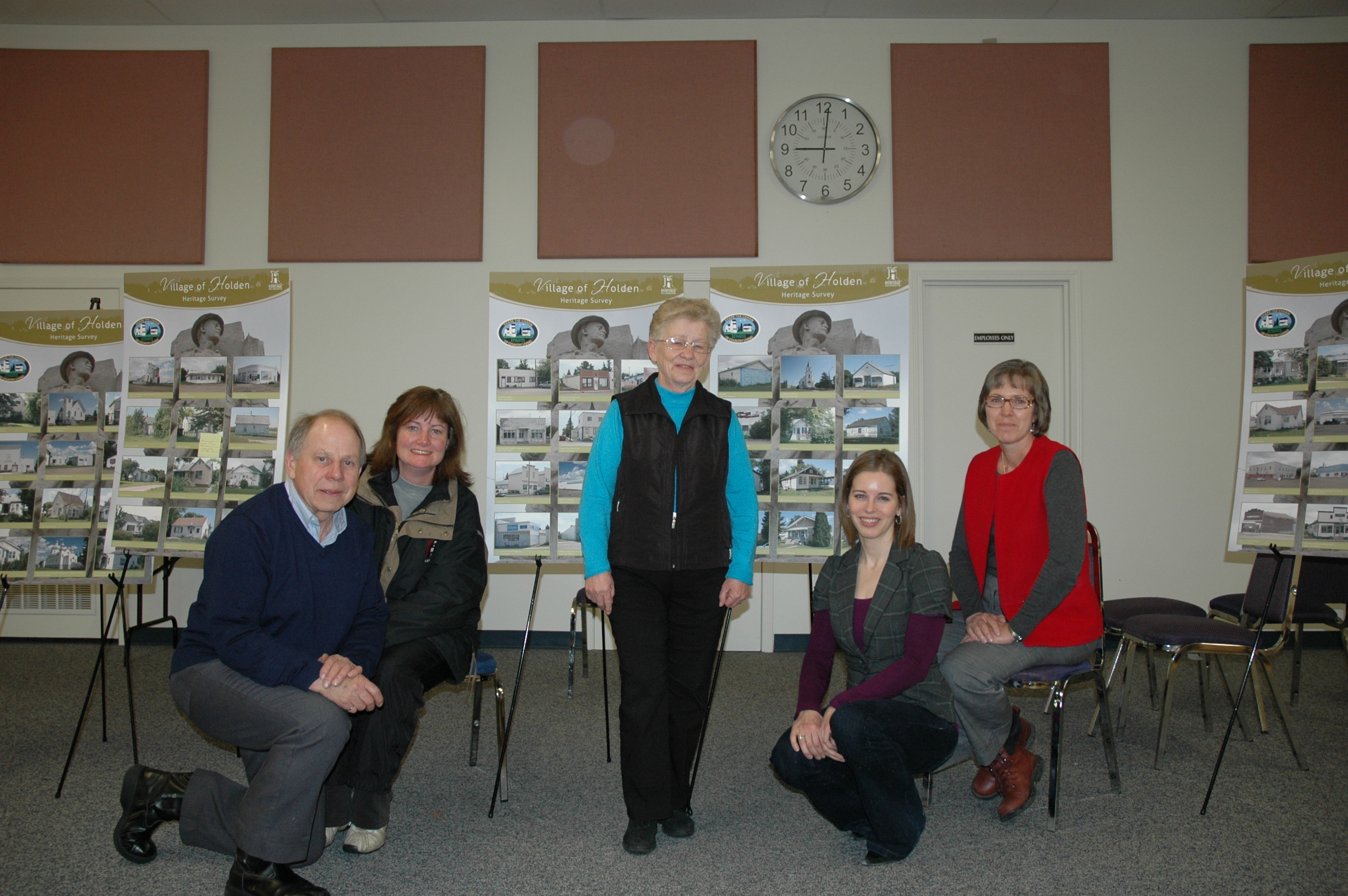
The Village of Holden, a community of 398 residents in east-central Alberta, is currently completing a Municipal Heritage Survey and Inventory project with funding assistance from the Municipal Heritage Partnership Program (Alberta Historical Resources Foundation). Approximately 60 sites within Holden have been documented through the survey phase of the project and 24 sites have been evaluated for historical significance as part of the inventory. Completing this project has allowed the Village to get a better hold on their heritage.
At an information session held in January 2011 owners of evaluated properties were able to learn more about the project and discuss the possibility of Municipal Historic Resource designation.
Written by: Brenda Manweiler, Municipal Heritage Services Officer
Village of Holden, Heritage Committee (Left to Right: D. Maruszeczka, K. Stokowski, P. Nahirniak, B. Manweiler (MHPP), K. Whiteside)
Windows are an integral part of a building system. They transmit light, control heat flow, are a means of egress, frame exterior views, and are significant elements that contribute to the design of the building. Windows are complex units and are made up of many different components that can be decorative, functional or both.
Why are historic windows important?
Historic windows are often character-defining elements. Character-defining elements are the materials, form, location, spatial configurations, uses and cultural associations or meanings that contribute to the heritage value of a historic place and must be retained in order to preserve its heritage value. Furthermore, historic windows are elements that directly reflect a site’s craftsmanship and design and are usually constructed out of particular materials. They are usually quite detailed and in some instances retain original glazing units.
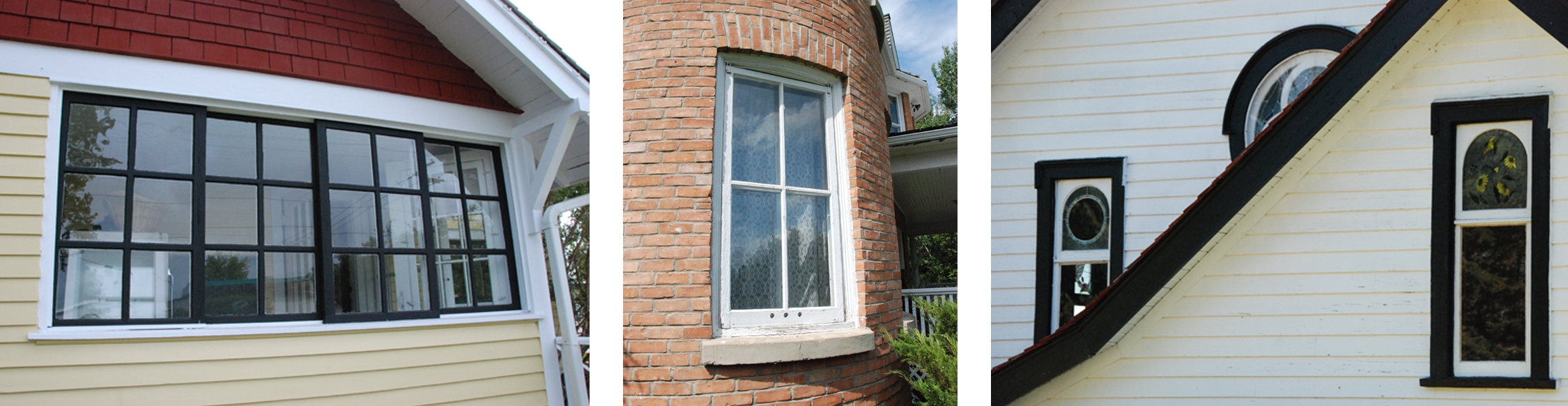
Left to Right: Beatty House, Rimbey; Cronquist House, Red Deer; Pine Lake Holy Trinity Church, Pine Lake
Common misconceptions about historic wood windows
On a daily basis I field questions about the replacement of historic wood windows. A typical case is a historic site with historic windows that have not been looked at in some time and have deteriorated to some extent due to weathering. A common misconception is that replacement of these historic windows with a modern unit is cheaper and will increase the thermal efficiency of the building through higher R values.
Research in performance standards for timber sash and case windows in Scotland has taught us that estimated costs including painting of window components, repairing damaged putty and re-caulking where necessary within a regular maintenance program eliminated the cost of a major restoration project every five years. Another thing to consider is that modern sealed units, when they fail are not maintainable and must be replaced outright.
It is also interesting to learn that a single glazed window in conjunction with an exterior or interior storm window is comparable to a modern sealed unit. A single glazed window has an R value of 0.6 while a single glazed window with wood storm has an R value of 2.0. The top of the line triple glazed window with low E coating and argon has an R value of 3.5. Overall windows in general are thermally inefficient in comparison to a typical wall with 4” batt insulation that has an R value of 12.
Planning for historic wood window conservation work
When planning for any conservation work we always take the approach of minimal intervention. Preserving historic material and maintaining historic material is the first step and outright replacement, if necessary, is the last option.
In most cases simple epoxy repairs to wood, adequate prepping of the wood surface (manual scraping), the application of an appropriate primer and brushed on layers of exterior paint is all that is needed to repair historic windows and to prevent deterioration.
For more severe cases, putty replacement, replacement of broken or damaged glazing, and dutchman (splicing in of new wood) may be required.
Conclusion
Historic windows have heritage value.
Historic windows have demonstrated good durability and maintainability.
Always assess and document each window before proceeding with conservation work.
Compile historic photographs and refer to the Statement of Significance in your planning process.
Minimal intervention should be the first approach.
Remember, you can save on costs and achieve the same thermal efficiency through conservation.
Written by: Ophelia Liew, Heritage Conservation Advisor
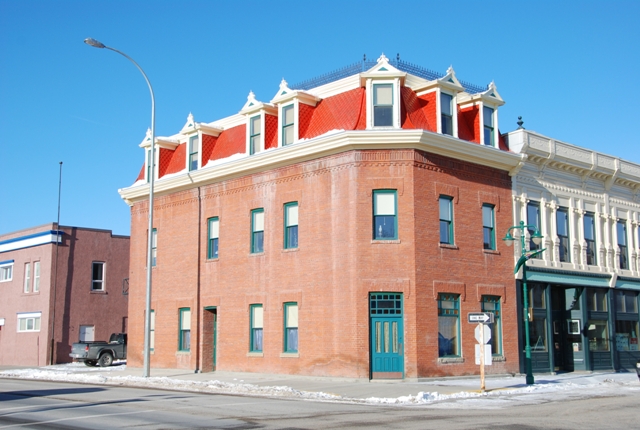
Alberta’s Historic Places Research and Designation Program is pleased to announce two new members of the Provincial Historic Resource family – the Union Bank Building and the R.T. Barker Building, both in Fort Macleod. These two buildings are vital contributors to the heritage character of the Fort Macleod Provincial Historic Area. This area includes a wealth of pre-World War One brick and sandstone buildings that embody the architecture of early twentieth century Alberta towns. This distinctive identity has established Fort Macleod as a tourist attraction and a shooting locale for major motion pictures. Learn more about the Union Bank Building and the R.T. Barker Building on the Alberta Register of Historic Places. For more information on Fort Macleod, click here.
Written by: Matthew Wangler, Manager of Alberta’s Historic Places Research and Designation Program
If you happen to be in a small town or a big city in Alberta and come across a well-preserved heritage home, church or grain elevator; stumble upon a community history book; experience a driving tour or pass by an interpretive plaque, chances are the Alberta Historical Resources Foundation’s (AHRF) grant program had something to do with it.
AHRF’s (pronounced as “arf”) Heritage Preservation Partnership Program, is the only provincial grant program dedicated to funding heritage-based projects. With an annual allocation from the Alberta Lottery Fund, dedicated board members and a committed technical and administrative team from the Historic Places Stewardship Section (Culture and Community Spirit), the AHRF has supported the preservation and interpretation of Alberta’s rich heritage for many, many years. Since its establishment in 1973 under the Historical Resources Act, the Foundation has awarded matching grants to individuals, corporations, municipalities and non-profit organizations in support of conservation, heritage awareness, publications and research projects. It has also been offering a research scholarship called the Roger Soderstrom Scholarship and not too long ago, introduced the Bob Etherington Heritage Trades Scholarship.
While the technical and administrative team is now in the midst of the February 1, 2011 grant run, project proponents are already gearing up for the next deadline of September 1, 2011.
If you want to know more about what AHRF offers, call the Grant Program Coordinator at 780-431-2305 (toll-free by dialing 310-0000) or visit our website: Heritage Preservation Partnership Program.
Written by: Carina Naranjilla, Grant Program Coordinator
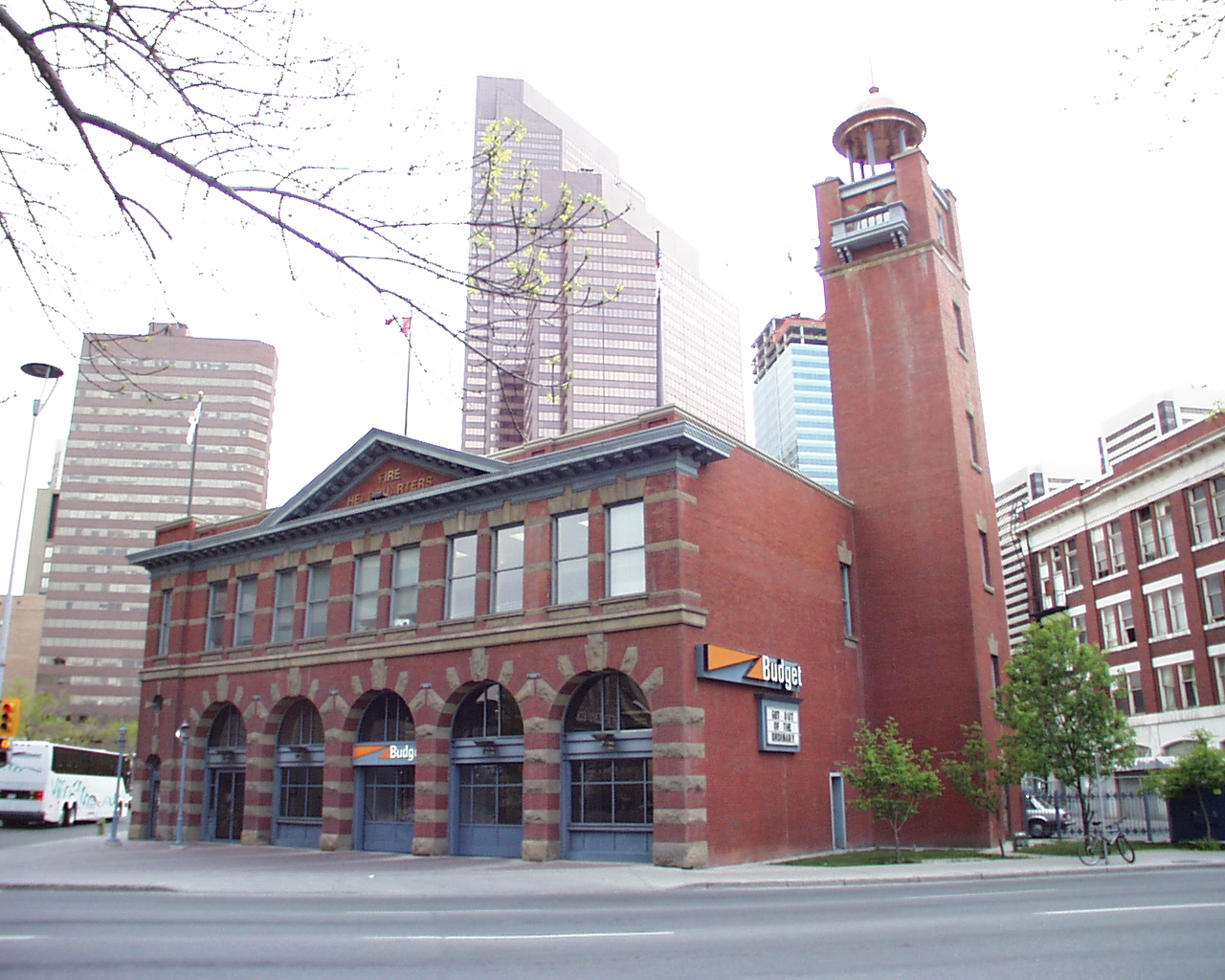
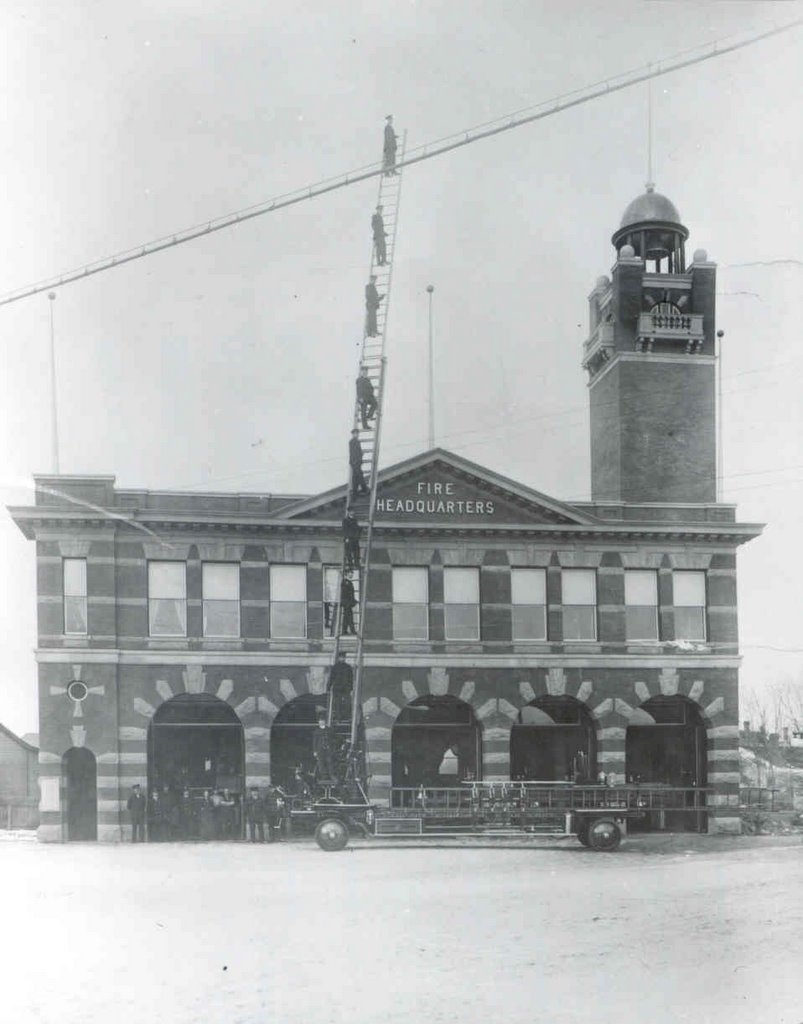
CalgaryFire Hall No. 1 was designated a Provincial Historic Resource in 2009. In order for a site to be designated a Provincial Historic Resource, it must possess province-wide significance for either its history or architecture. To properly assess the historic importance of a resource, a historian crafts a context document that situates a resource within its time and place and compares it to similar resources in other parts of the province. This allows staff to determine the importance of a resource to a particular theme, time, and place. Below is some of the historical information used in the evaluation of the Calgary Fire Hall No. 1.
The first attempt to provide an orderly method of firefighting in the frontier community of Calgary came with its incorporation in 1884 when a volunteer fire committee was established. One of its first acts was to acquire a horse drawn wagon for a volunteer bucket brigade. In 1886, a major fire devastated the downtown and, as a result, most new commercial buildings were made of brick or stone, but these were still vulnerable to internal fires. A serviceable fire hall was obviously required.
In 1887, a wood frame fire hall was erected on 122 – 7th Avenue East. This served the town well at first, but Calgary continued to grow rapidly, and the need for another facility was soon apparent. It was not until 1905, however, that another fire hall was erected, this being another wood frame structure on 1801 Macleod Trail to serve the south side of the city. Even this was hardly adequate, for Calgary continued to grow at a frantic pace, its population rising to over 43,000 in 1911.
In 1911, both Calgary fire halls were replaced with modern brick facilities. Other fire halls were also soon built in other parts of the city. By this time, a Fire Department was a part of the civic administration, and paid fire fighters were stationed right at the halls. Reports on fires were sent in through the newly installed telephone system, and responses were handled by motorized fire trucks with pressurized pumps.
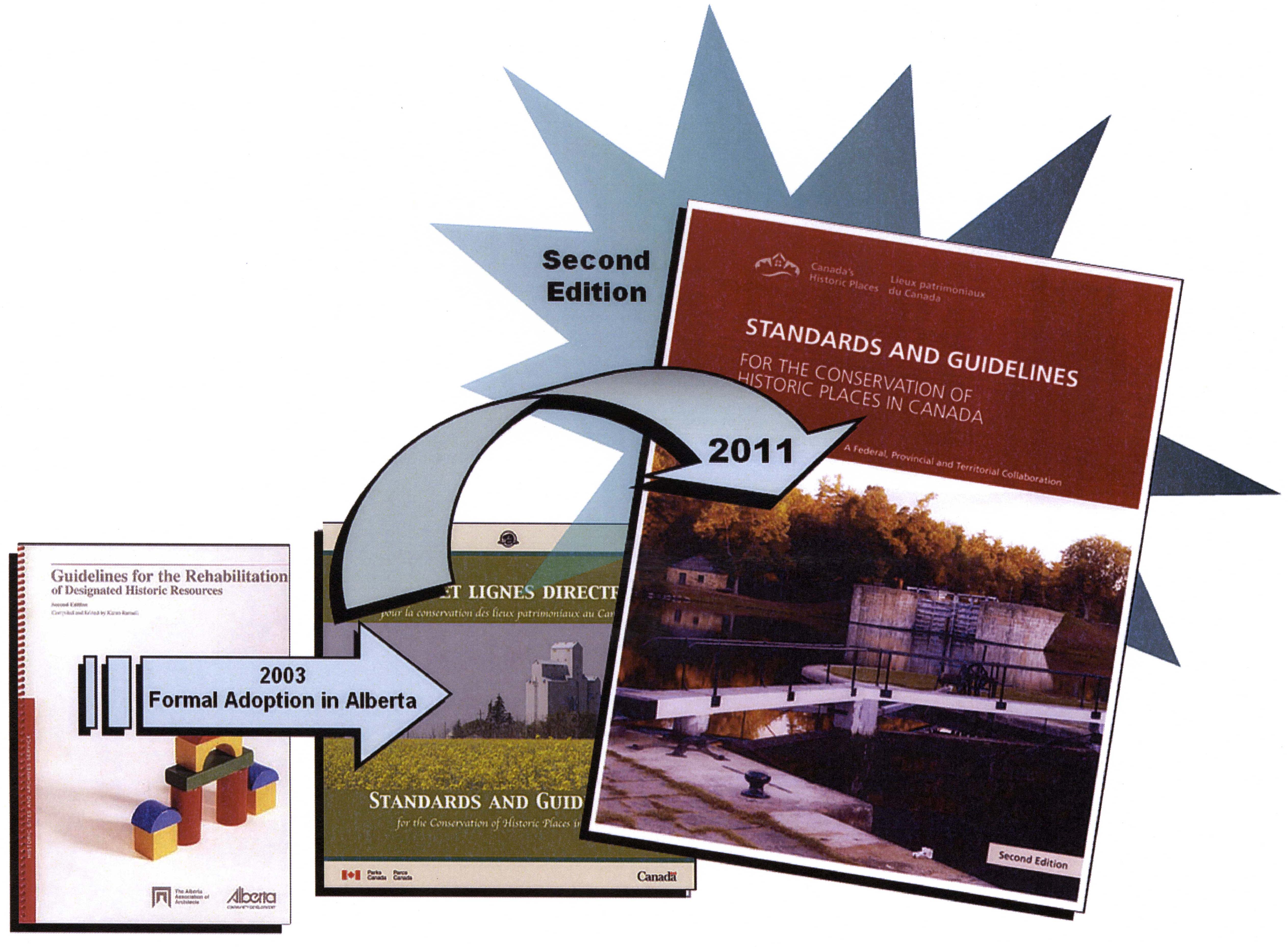
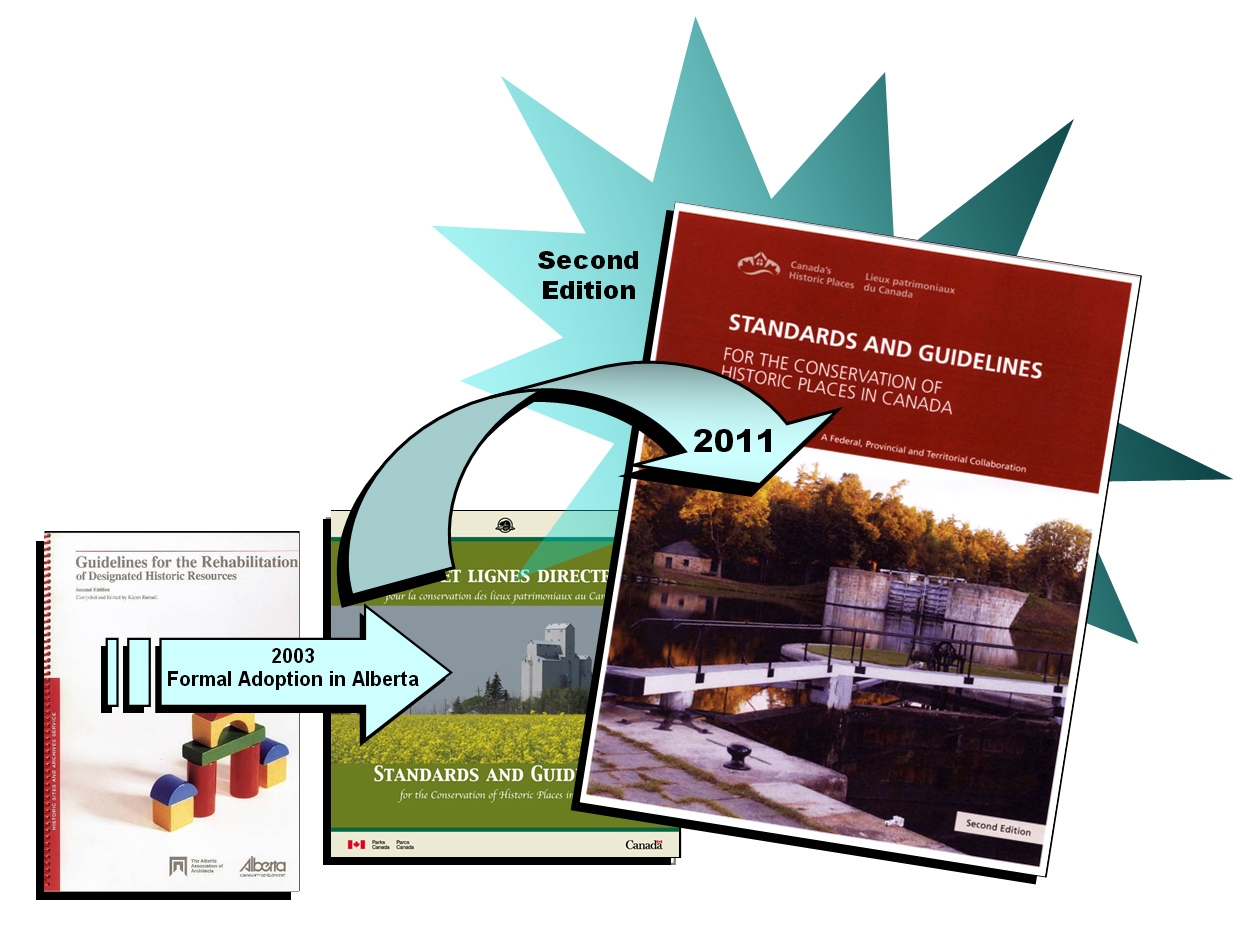
The Standards and Guidelines for the Conservation of Historic Places in Canada is a pan-Canadian guide for understanding and planning interventions to historic places. The document is based on decades of evolved heritage conservation principles and practices and inspired by international heritage charters.
Staff members from the Historic Resources Management Branch of Alberta Culture and Community Spirit have actively participated in the development of the first and second editions, in cooperation with heritage professionals from all provincial, territorial and federal agencies. It is truly a pan-Canadian guide.
How are Standards and Guidelines used?
In Alberta, the Standards and Guidelines can be used by anyone needing guidance on how to approach interventions to a historic place. In 2003, the Standards and Guidelines for the Conservation of Historic Placesin Canada became the official standard for evaluating interventions to Provincial Historic Resources designated under the Historical Resources Act and for heritage conservation projects eligible for cost-shared funding through the Alberta Historical Resources Foundation.
What’s New for the Second Edition?
The second edition has not changed the basic guiding principles found in the original document. The Standards and Guidelines have been expanded to now fully explain each of the fourteen standards and to elaborate on guidelines for archaeological resources and cultural landscapes.
For a printed copy of the Standards and Guidelines for the Conservation of Historic Places in Canada, contact:








 RETROactive