How do you determine whether or not a proposed change (what we call an intervention) is appropriate for a historic place? Would a fresh coat of paint preserve the heritage value of an old house? Does painting the brick affect its heritage value as a Municipal Historic Resource? How do I choose the colour of paint?
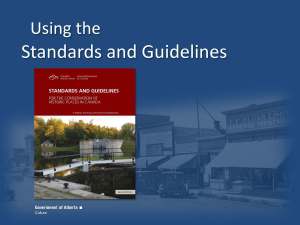
Answers to these questions and more are found in the Standards and Guidelines for the Conservation of Historic Places in Canada (or the S&Gs for short). Introduced in 2003 and revised extensively in 2010, the S&Gs are the definitive framework for heritage conservation in Canada, having been widely adopted by municipal, provincial, and federal authorities as a tool for determining how to conserve and manage change to historic places.
The S&Gs provide a foundation of conservation principles organized around fourteen standards, a standardized vocabulary of conservation terms, a straightforward decision-making process, and practical conservation guidelines for a wide range of resource types. Used in conjunction with Statements of Significance, the S&Gs also play a role in determining if work is eligible for conservation grants from the Alberta Historical Resources Foundation.
The presentation below, from the 2012 Municipal Heritage Forum, offers an overview of the S&Gs as a tool for municipalities to manage the historic places identified through surveys and inventories and subsequently protected as Municipal Historic Resources.
A recent Government of Albertainformation bulletinannounced a new Provincial Historic Resource. Check it out:
A treasured monument honouring the service and sacrifice of the soldiers of Central Alberta has been designated a provincial historic resource.
The Red Deer Cenotaph is located on 50th Avenue, the city’s historic main street, near the CPR Railway Station that was the embarkation point for those on their way to the European front.
Unveiled on September 15, 1922, by Lord Byng of Vimy, Governor General of Canada, the cenotaph is one of the earliest and best known works of Major Frank H. Norbury. A native of Liverpool, Norbury was a skilled carver, decorated veteran and a major contributor to artistic culture in Alberta. The depiction of the Unknown Soldier in full World War I dress kit that stands atop the limestone base evokes the weariness and resolute purpose of those who served far from home.
“The Red Deer Cenotaph honours the selfless service of Alberta’s military men and women and serves as a reminder of how these Albertans helped to shape the history of our province, this nation and the world,” said Alberta Culture Minister Heather Klimchuk. “The designation of the Red Deer Cenotaph will help to ensure future generations learn the stories of their sacrifice and to share in the pride those stories evoke.”
Alberta currently has more than 350 provincial historic resources. These sites embody the diversity of our province’s history and include medicine wheels, tipi rings, fur trading and mounted police posts, coal mines, farmsteads, ranches, railway stations, grain elevators, churches, schools, government offices, commercial blocks and private residences. Along with helping to provide economic, social and cultural benefits, designation of provincial historic resources helps to ensure that local landmarks will continue to help connect Albertans with their rich heritage.
For more information on the Provincial Historic Resource Designation program, click here.
Visit the Alberta CultureNewsroomto read additional releases.
Heritage Advisory Bodies aren’t pep squads but they do need P.E.P!
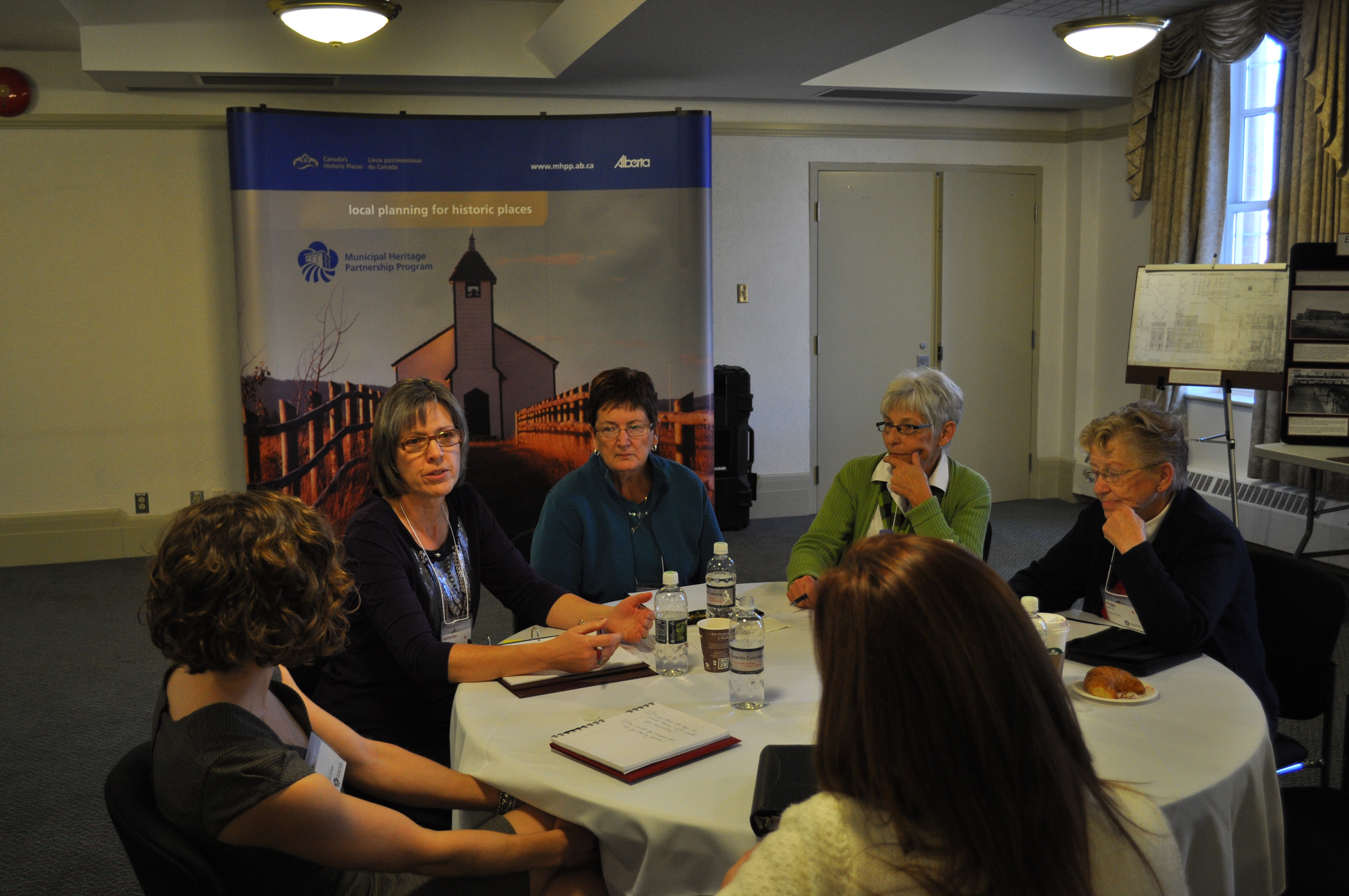
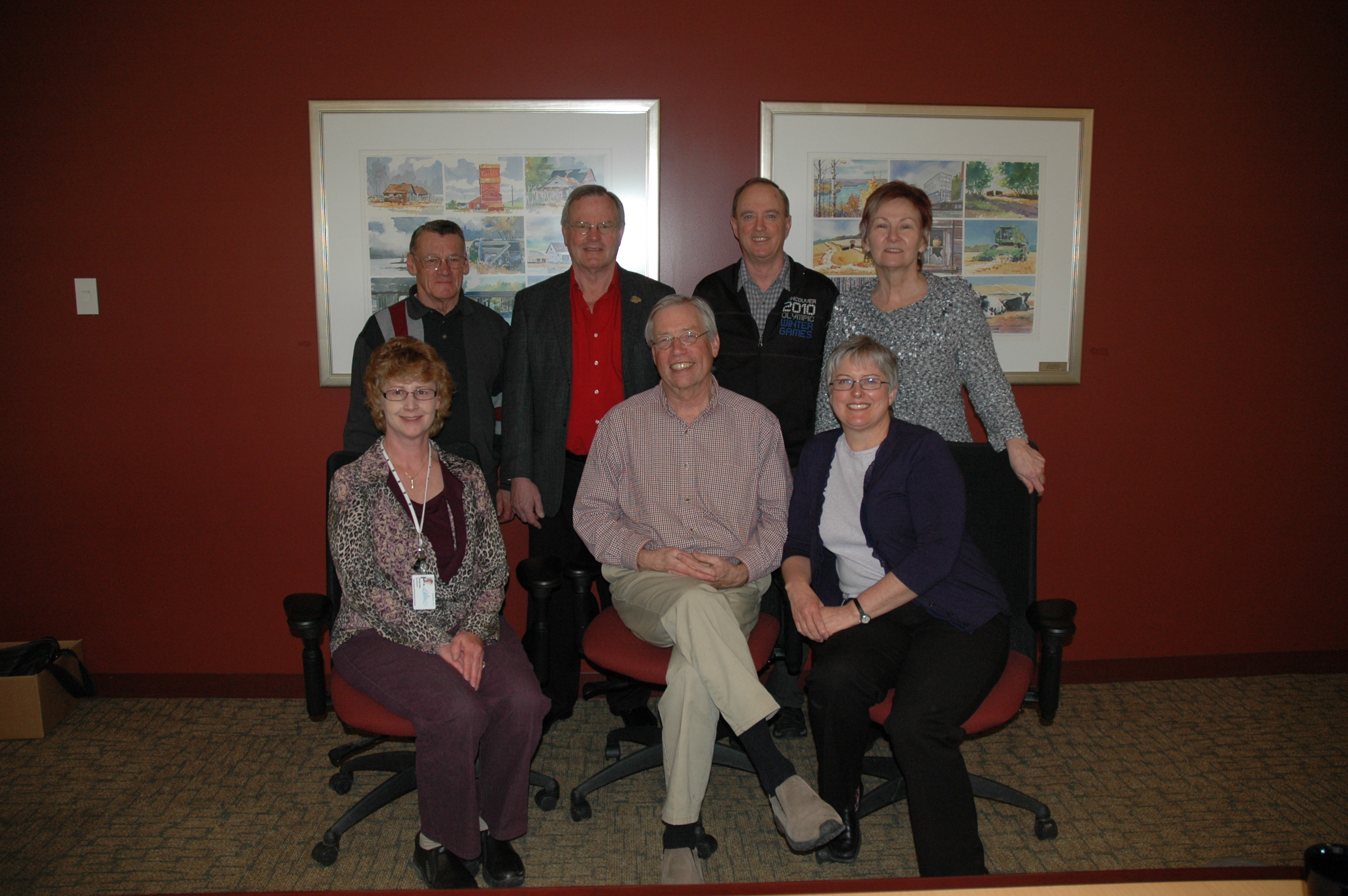
Members of the Holden Heritage Resources Committee (Municipal Heritage Forum 2011).
As a best practice, the Municipal Heritage Services Unit of Alberta Culture encourages municipalities that are developing local heritage conservation programs to establish a heritage advisory body. A heritage advisory body could be a board, commission or committee that advises Council on matters pertinent to the development and management of a local heritage program. Essentially, a heritage advisory body has the important job of providing public input and expertise to Council so that informed decisions about the municipality’s heritage will benefit current residents and future generations. Heritage advisory bodies can also play a key role in fostering community interest and support.
So what does pep have to do with heritage advisory bodies? Well, a quick search on Dictionary.com defines “pep” as being indicative of high spirits, energy, or vitality. While these are great traits for a municipal heritage advisory body, these groups should also possess another type of pep: Planning, Engagement and Partnerships.
Yellowhead County Heritage Advisory Board and municipal staff (2011).
Planning – A wise man once taught me: “Prior preparation and planning prevents poor performance.” This holds true for the development of local heritage conservation programs. For a municipality (and its heritage advisory body) to effectively manage historic resources it should learn about, understand and plan for the successful protection and conservation of significant places. A heritage advisory body, representing the broader community, plays a key role in planning projects that identify potential historic places, evaluating sites for heritage value and determining appropriate procedures and policies for managing an effective heritage program. The Municipal Heritage Partnership Program has a suite of cost-shared grants designed to assist with the completion of these projects.
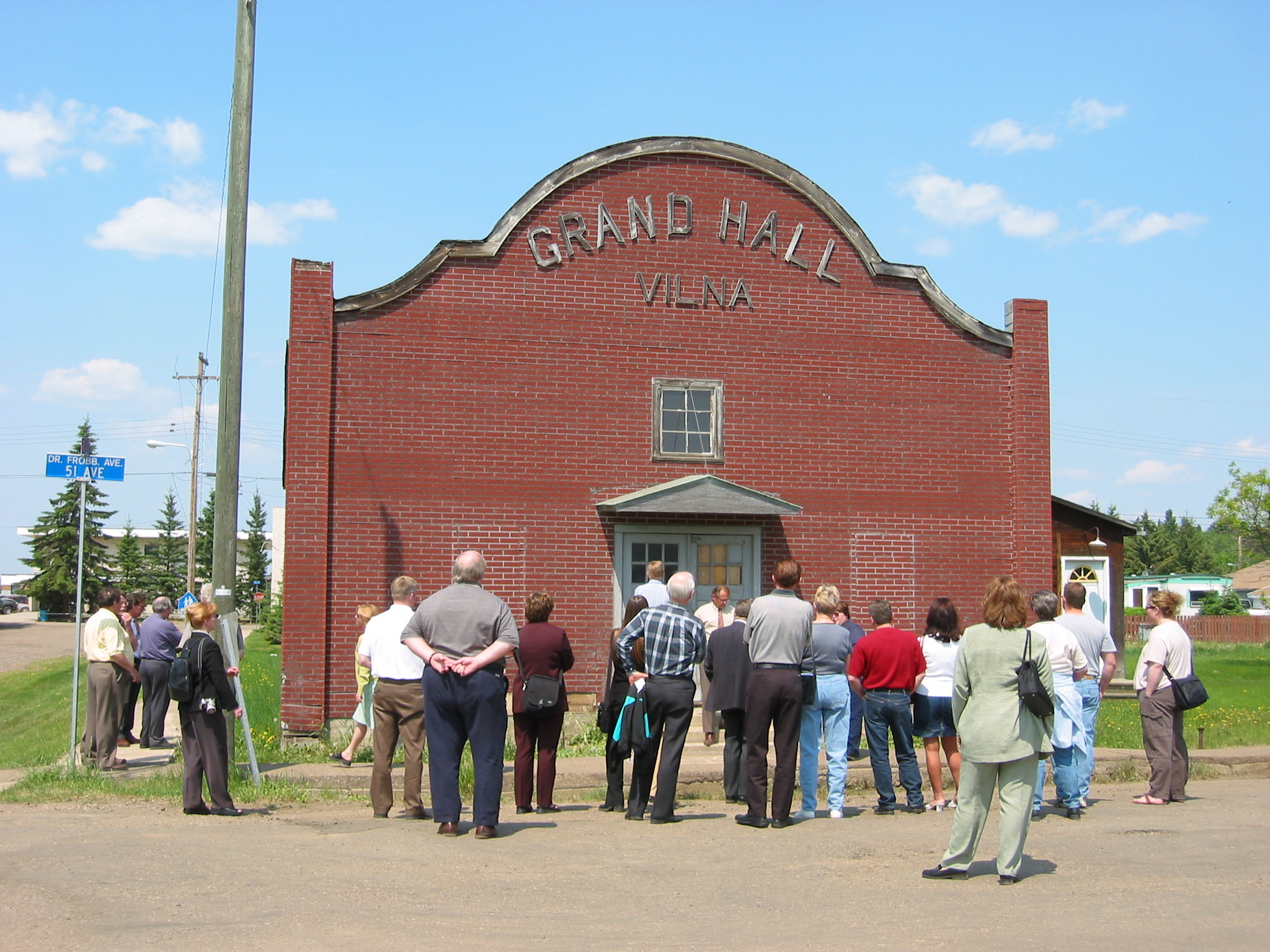
Tour of historic places in the Village of Vilna (2002).
Engagement – Why do we conserve heritage? Many answers come to mind but the most commonly referenced speaks of how present and future generations will benefit from improved community identity and a stronger sense of place. Ultimately, this reason transforms heritage conservation into something that is very people focused, as opposed to place specific. So, when planning don’t forget to engage the community benefiting from heritage conservation! Find ways for residents to participate and experience their heritage: organize heritage awareness special events; develop educational material so that people may learn about and take pride in their community’s unique heritage. Be creative in your approach and have fun! Heritage awareness or research grants offered through the Heritage Preservation Partnership Program may assist with these types of initiatives.
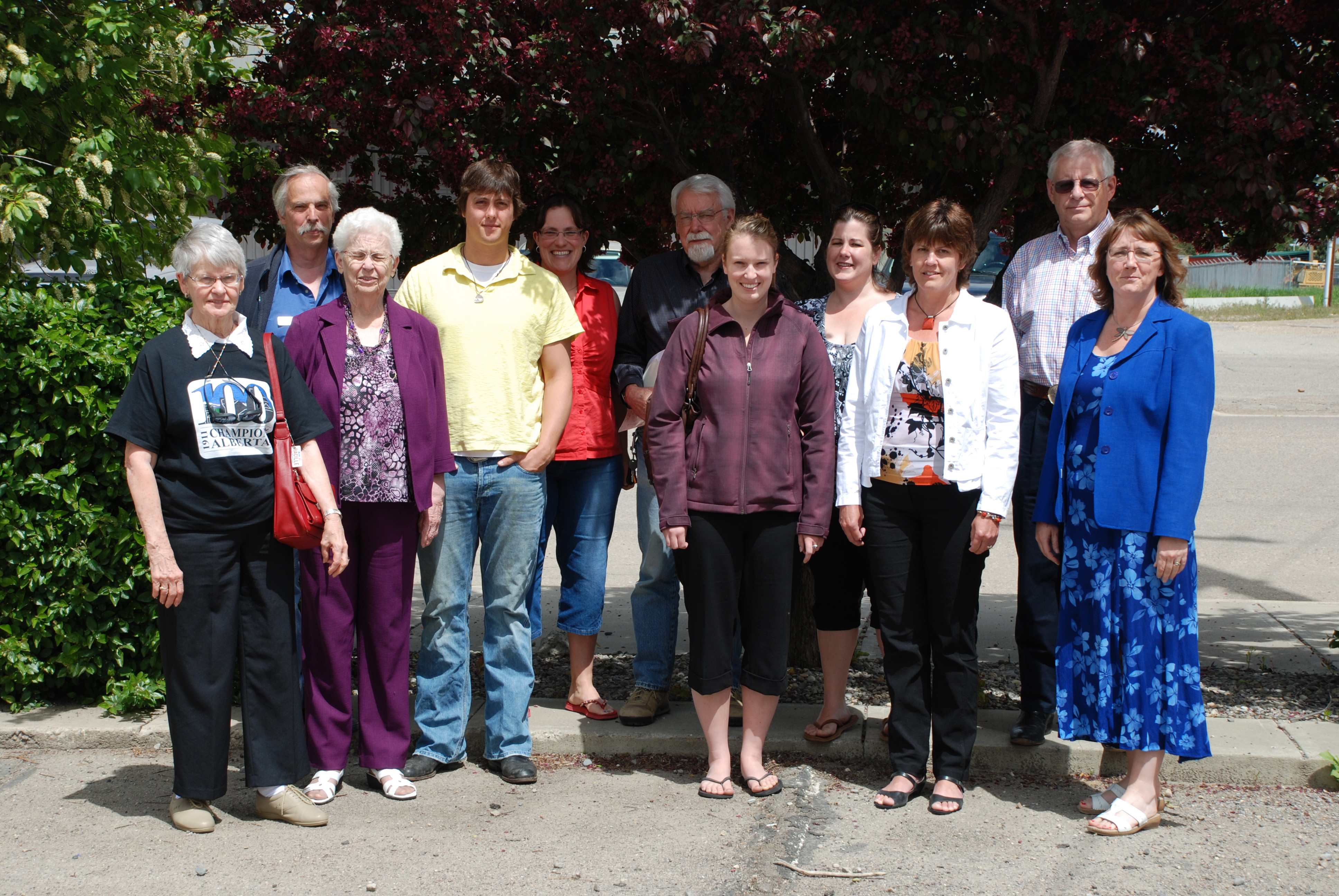
Vulcan Regional Heritage Project Steeering Committee – a collaboration between Vulcan County, Town of Vulcan and the villages of Carmangay, Champion and Milo (2011).
Partnerships – Heritage is holistic and so its conservation and celebration can’t be completed in isolation. As a result, heritage advisory bodies should engage and partner with other organizations – especially community organizations that are atypical. That local hockey association, tennis club, wilderness organization or theatrical society might very well be planning the perfect event that could support some heritage engagement objectives. The members of those same organizations might also provide a new perspective or highlight additional opportunities related to heritage conservation. I challenge you: find a listing of community organizations, select the one that seems least likely to have an interest in heritage conservation and try to collaborate on a mutually beneficial project. Through partnerships and collaborations, awareness and appreciation of heritage will surely increase.
This P.E.P. approach to heritage management will help ensure a collective community-driven attitude; a method that will strengthen and increase support and contribute to a community culture of conservation.
Written by: Brenda Manweiler, Municipal Heritage Services Officer
A recent Government of Alberta information bulletin announced one of the latest Provincial Historic Resource designations. Check it out:
The Alberta government has designated the Taber Courthouse, one of Alberta’s early seats of justice, as a Provincial Historic Resource.
Built in 1918, the Taber Courthouse became the model for Alberta courthouses built prior to the Second World War. After being declared a judicial sub-district in 1917, the Town of Taber donated land for the construction of the courthouse building that would also house the local detachment of the newly-formed Alberta Provincial Police. The Taber Courthouse was also the site for meetings of local community organizations and the Taber Town Council. Following the dissolution of the judicial sub-district, the courthouse continued to be used for a variety of provincial government activities and in 1953 became the official Town Hall.
The courthouse currently serves as home to the Centre Court for the Arts, a multi-use arts facility operated by the Arts Council of Taber that showcases the work of local and provincial artists.
“The partnership between the Town of Taber and the Arts Council of Taber in breathing new life into this community landmark is a wonderful example of how our historic resources can continue to provide economic, social and cultural benefits to the community,” said Culture Minister Heather Klimchuk, who joined with representatives from the Town of Taber and the Arts Council of Taber in marking the designation. “Identifying the Taber Court House as a Provincial Historic Resource will help to ensure that future generations will continue to share in those benefits while preserving the story of Taber’s rich heritage.”
“Taber takes great pride in our local history and the contributions our community has made in the development of Alberta,” said Taber Mayor Ray Bryant. “The designation of the Taber Courthouse as a Provincial Historic Resource is an important part of our ongoing efforts to honour our past as we look to grow into the future.”
Alberta currently has more than 350 provincial historic resources. These sites embody the diversity of our province’s history and include medicine wheels, tipi rings, fur trading and mounted police posts, coal mines, farmsteads, ranches, railway stations, grain elevators, churches, schools, government offices, commercial blocks and private residences. Along with helping to provide economic, social and cultural benefits, designation of Provincial Historic Resources helps to ensure that local landmarks will continue to help connect Albertans with their rich heritage. For more information on the Provincial Historic Resource Designation program, click here.
Visit the Alberta Culture Newsroom to read additional releases.
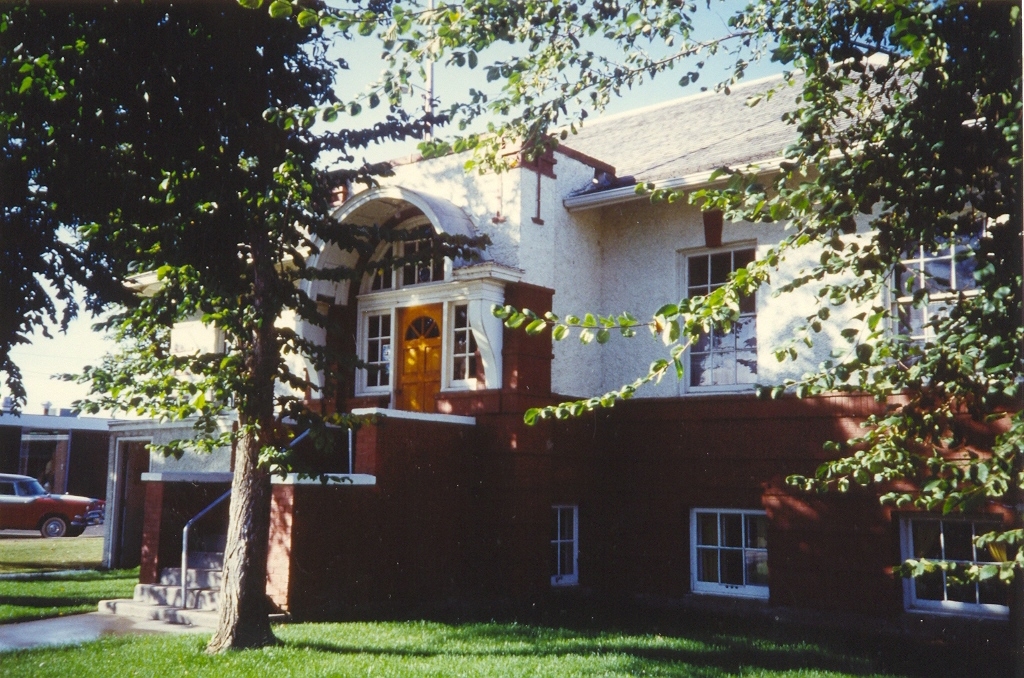
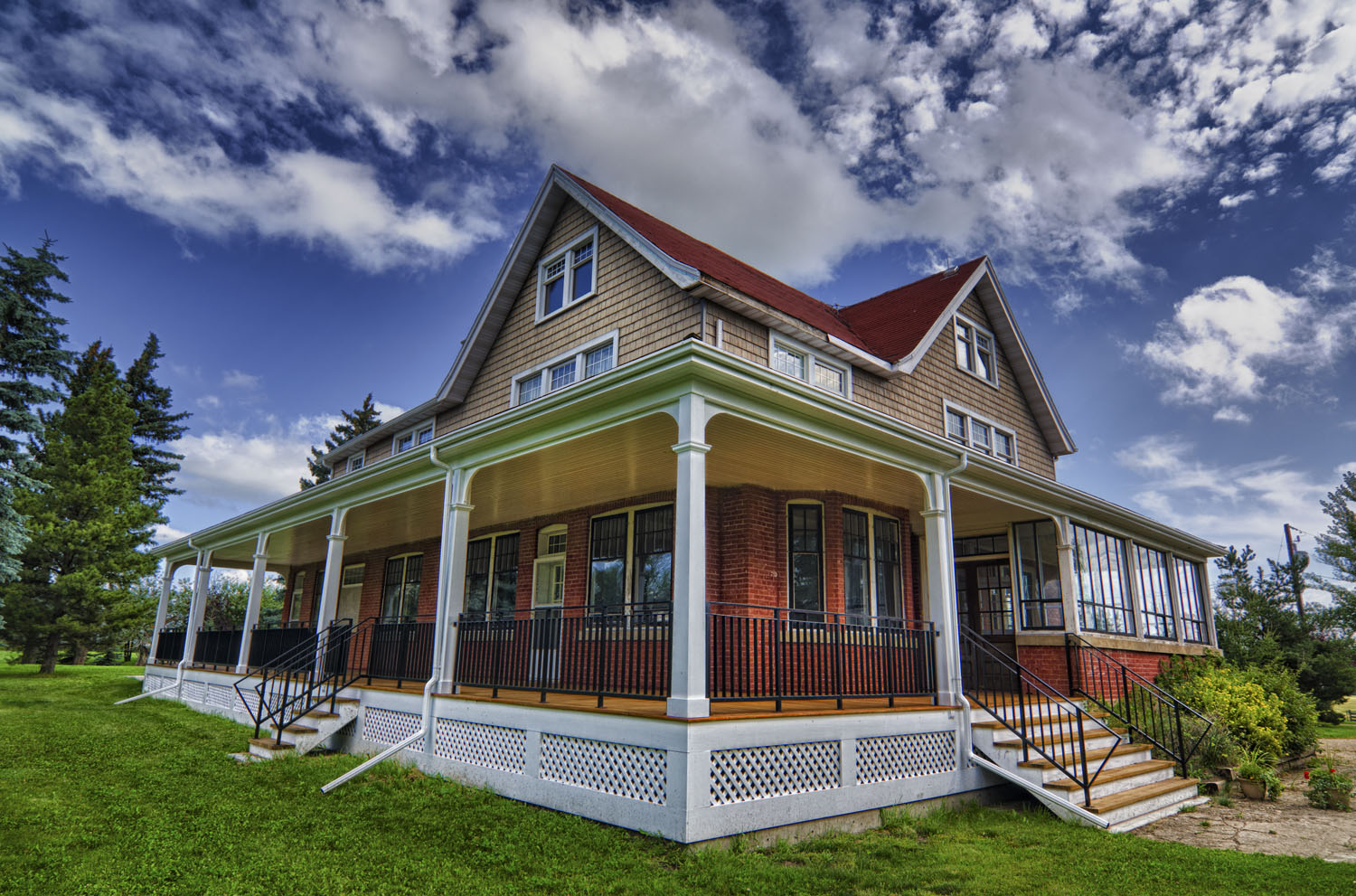
A recent Municipal Historic Resource listed on the Alberta Register of Historic Places is Bremner House, located in rural Strathcona County. It is a large two and one half storey residence constructed in the early 1900’s. Heritage values associated with Bremner House include the aesthetic significance of the scale, style and location of the building as well as its representation of the cultural growth and development of Strathcona County during the first half of the 20th Century.
To read more about the significance of Bremner House, and to view additional photos, check out the listing on the Alberta Register of Historic Places.
Are you curious if places in your community are listed on the Alberta Register of Historic Places? Complete an Advanced Search by “municipality” and see what is found. Only sites formally designated as either Municipal Historic Resources, Provincial Historic Resources or Registered Historic Resources are listed on the Alberta Register of Historic Places.
Written by: Brenda Manweiler, Municipal Heritage Services Officer
As many of you may already know, on January 9, 2013, Minister of Culture Heather Klimchuk launched a recruitment process for members of the Premier’s Council on Culture. Members will represent the range of sectors responsible for cultural activities and experiences – the arts, heritage, multicultural and nonprofit/voluntary organizations, as well as creative and cultural industries, youth and corporate partners.
The Government of Alberta will be recruiting up to 20 new council members, who may serve terms of up to three years. The application period ends February 28, 2013. If you are interested in being a cultural leader for both your community and Alberta, apply on the Government of Alberta Jobs Website (Job ID# 1015041).
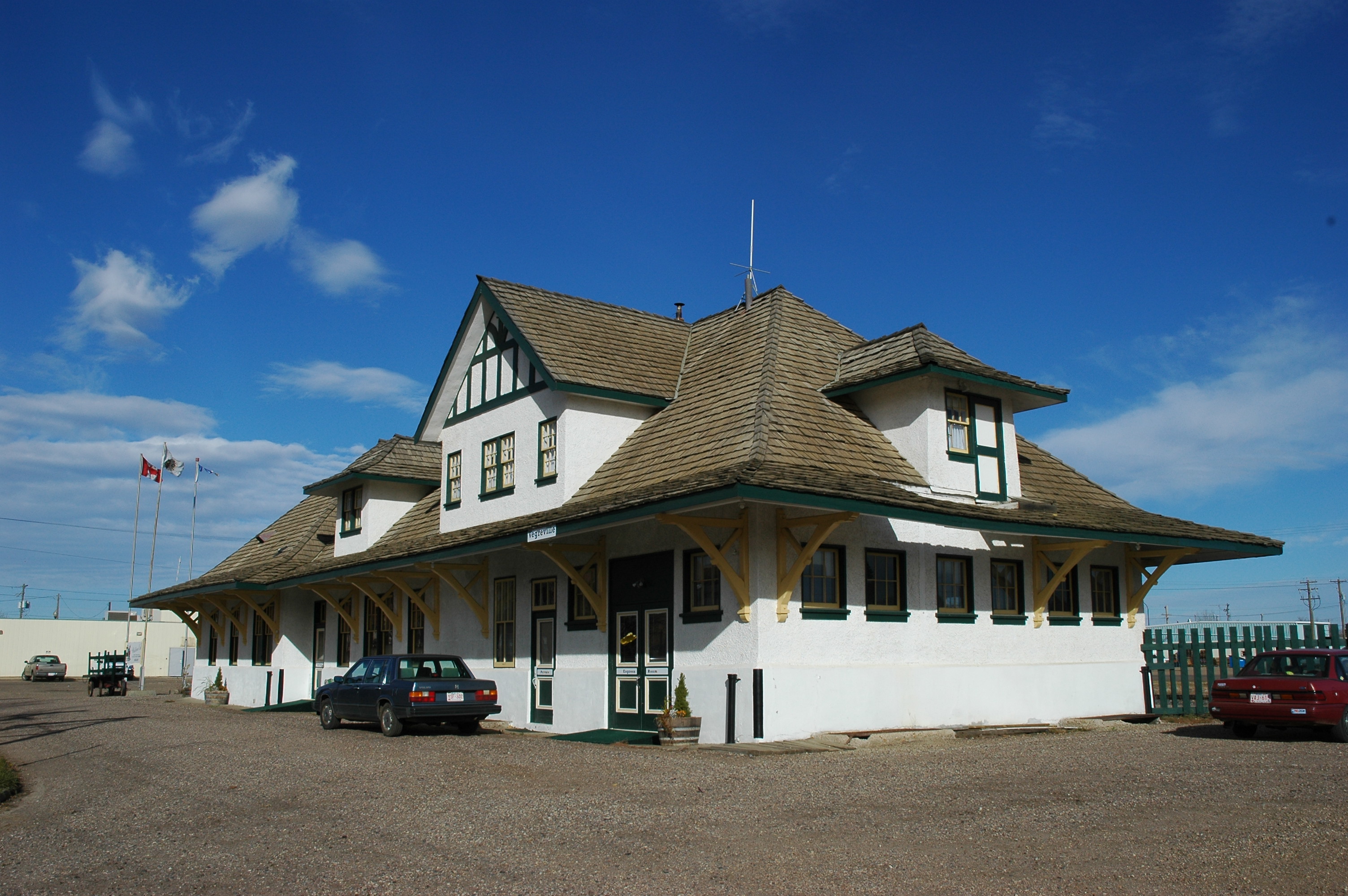
Canadian National Railway Station, Vegreville (DSC_3053 Historic Resources Management Branch).
When the Canadian Northern Railway strung its line through east central Alberta during 1904-05, a number of sidings were put up. At a few locations, stations were erected and townsites subdivided. One of the townsites was near the tiny community of Vegreville, named after the Oblate priest, Father Valentin Vegreville, in 1895 when a post office was opened. The name was probably suggested by Father Morin, who was trying to establish a Roman Catholic Francophone colony in the area. A few French settlers did come in, and, by the turn of the 20th century, a few English settlers were around as well. A number of Ukrainians were also beginning to arrive, some spilling over from Ukrainian settlements further to the east. In time, Vegreville became known as, primarily, a Ukrainian district, exhibiting many trappings of Ukrainian culture.
With the coming of the railway, many more settlers arrived, and the earlier community was soon replaced by the railway center. With the railway, farmers in the district could at last ship their produce directly to markets in the East. As the hinterland was so large, a building boom occurred in Vegreville. In August 1906, the community was incorporated, first as a village and then as a town, with over 400 people.
The district experienced much prosperity during World War I, but, like the rest of rural Alberta, it suffered from reduced grain prices following the War. The Canadian Northern was also suffering, and, in 1919, it was taken over by the Dominion government and made part of the Canadian National system of railways.
The late 1920’s was a period of high grain prices and high crop yields in Alberta. The farming population around Vegreville prospered accordingly, and also grew. By this time, CN was well aware that the old train station, built in 1906, was hardly adequate for the needs of the district. It had been built to a third class 100-3 design, as had most stations between Lloydminster and Edmonton. According to railway historian Les Kozma, most of these stations were then recognized to be inadequate. On 10 April 1929, the local Board of Trade wrote to CN Superintendent Devenish to complain that:
… the present CNR station is an eyesore and a blemish on the fair face of the town, and the facilities provided the travelling public at this station were ridiculously inadequate for the size of the town the station intended to serve.
By this time, the Canadian Pacific Railway had begun building a branch line south from Willingdon. Possibly in recognition of the coming competition, CN decided to build a new station in Vegreville. This was a two-story wood frame structure, measuring 107’ x 37’, with a stucco exterior. It was divided into four separate functional areas on the ground floor (waiting room, ticket and express office, express room, and two washrooms). The second floor was made into living quarters for the station manager and his family. A storage room and a boiler room occupied the basement. The waiting room itself was subdivided into compartments, one serving as a ladies waiting room, and another as a smoking room. The Vegreville Observer was evidently satisfied, for it observed that:
… The CN, as our pioneer railway, has always been generous to Vegreville, not unduly so, but sufficiently for our present needs.
The station’s historical significance lies in its service as a station for the entire Vegreville district from 1930 to 1975. As such, it was the nerve centre for the export of agricultural produce, and the import of finished products. It also provided a passenger service for people travelling east or west, and contained the district telegraph office.
This 1930 CN Station in Vegreville served the community as a station until 1975, at which time it was sold to the town and converted into other uses, including a seniors drop-in centre. Currently, the station houses a restaurant and provides meeting space upon request.
Visit the Alberta Register of Historic Places to learn more about the heritage value of theCanadian National Railway Station in Vegreville. In order for a site to be designated a Provincial Historic Resource, it must possess province-wide significance for either its history or architecture. To properly assess the historic importance of a resource, a historian crafts a context document that situates a resource within its time and place and compares it to similar resources in other parts of the province. This allows staff to determine the importance of a resource to a particular theme, time, and place. Above, is some of the historical information used in the evaluation of the Canadian National Railway Station.
Over a hundred sites later, Strathcona County has completed a Municipal Heritage Survey. From residential and commercial buildings to churches, schools, agricultural buildings and cultural landscapes, the County has documented a wide range of potential historic places located in all its urban and rural corners.
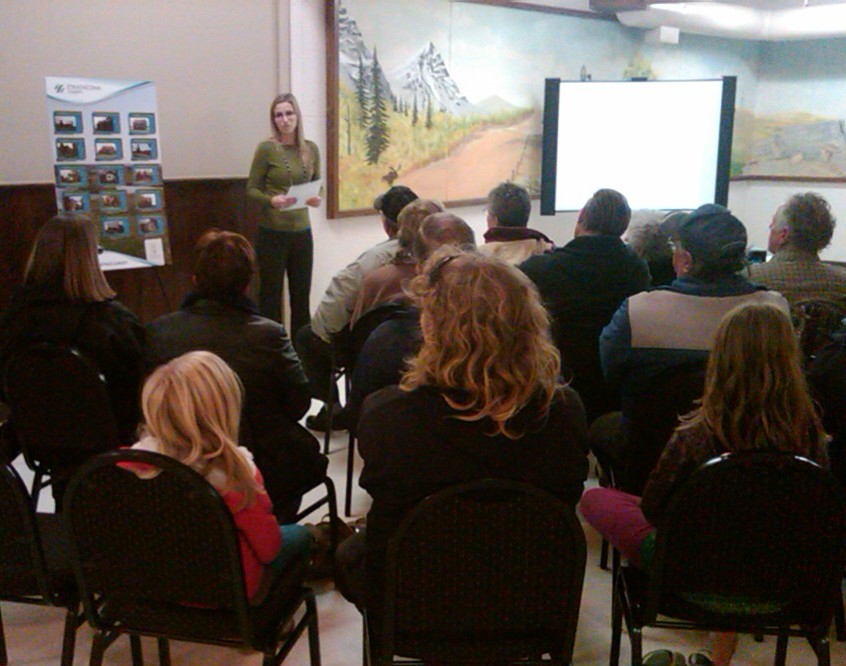
(IMG00387-20121017-1934.jpg) Attendees at the Brookville Community Hall open house. Historic Resources Management Branch, 2012.
Strathcona County is located directly east of the City of Edmonton and to the west of Elk Island National Park. With 126,620 hectares and a population of 92,490, Strathcona County is one of the more populous municipalities in the Edmonton area. It is also one of the few specialized municipalities in Alberta. This classification is designed to accommodate the unique needs of a municipality that contains both an urban centre and a large rural area. Approximately seventy percent of Strathcona County’s population lives in Sherwood Park (an urban service area) while the remaining thirty percent of the population is divided between eight hamlets (Antler Lake, Ardrossan, Collingwood Cove, Half Moon Lake, Hastings Lake, Josephburg, North Cooking Lake and South Cooking Lake).
This mix of urban and rural places and spaces provided a diverse array of potential historic places. The one hundred and sixteen sites documented were photographed and geographical, historical and architectural details were recorded. Over the coming months, the gathered information will be placed on the Alberta Heritage Survey database.
Throughout the project, area residents were invited to learn about the initiative and to provide additional information on the documented sites. Special open house events were hosted by the County and input was encouraged during various community events (i.e. Senior’s Week Celebrations, Josephburg Chicken Supper, Wilderness Centre Fall Open House). I attended an open house at the Brookville Community Hall on October 17, 2012. At this event I witnessed a high level of community interest; a large number of area residents attended and they were all very keen to ask questions.
Interested in learning more about this project? Read these articles from the Sherwood Park News:
If your municipality would like to complete a municipal heritage survey or a different municipal heritage planning project, please visit our Municipal Heritage Partnership Program website or contact MHPP Staff.
Written by: Brenda Manweiler, Municipal Heritage Services Officer
Winter is once again upon us, and ‘tis the season to shovel and de-ice snowy, slippery stairs and sidewalks.
But before you do, think twice about using salt and de-icing chemicals around historic buildings.
De-icing salts applied to a ramp likely contribute to this sandstone masonry failure.
Common rock salt and chloride-based de-icers such as calcium chloride and magnesium chloride are damaging in varying degrees to historic fabric, and especially to concrete and masonry. Salts (chlorides) dissolved in melt water are easily wicked into porous materials such as brick or stone. As the water evaporates, the remaining salts crystallize, exerting powerful expansive pressures within historic masonry and concrete. Over time, these microscopic but destructive expansive forces tear historic fabric apart from within, resulting in spalling concrete, disintegrating sandstone, and often leaving unsightly stains or “efflorescence” (see photograph).
To add insult to injury, salts have a natural affinity for water that enables them to attract and retain moisture within building materials. High moisture levels contribute to freeze-thaw damage during the winter and promote persistent dampness even in otherwise relatively dry summer conditions. Salts also enable the corrosion of steel reinforcement, anchors and ties within concrete and masonry.
(As a side note, these issues aren’t limited to de-icing salts: chemical lawn and garden fertilizers and even naturally occurring salts in the soil can cause similar problems.)
There’s a broad and bewildering variety of other, non-chloride de-icers. Among these are urea-based products and acetates, such as sodium acetate, calcium magnesium acetate and potassium acetate, as well as amide/glycol-based products, which are summarized here. The absence of chlorides, however, is no guarantee that building materials will be unaffected, and there are also potential effects on plants, pets, and the environment to take into consideration, along with costs and overall effectiveness.
From a building conservation perspective, it’s best to avoid or minimize the use of even apparently benign de-icers where possible, for several reasons:
– Any chemical applied to a surface that is subsequently absorbed into building materials becomes a relatively irreversible intervention – not unlike applying a stain to wood. Salts are very difficult to extract once they’ve contaminated historic fabric.
– Encouraging test results from modern concrete structures such as bridges and runways may not apply to historic masonry and concrete where different porosity and other properties may affect durability.
– Keep in mind that even “gentle” de-icing methods can aggravate freeze-thaw damage simply as a result of melting and subsequent saturation of building materials, along with potential shifting of the freezing point into a range where temperature fluctuations may be more frequent (depending on your location and climate) and conducive to frost damage.
The friendliest solution for a historic place is a combination of prompt snow removal to minimize ice buildup along with an application of grit such as sand, kitty litter, or other granular products that are intended to provide traction. (Clumping kitty litter containing bentonite clay may create a bit of a mushy mess once saturated.) Grit itself has no de-icing properties beyond the tendency for less reflective materials to absorb solar radiation and contribute indirectly to melting, although this warming may be significant on some south exposures. Be sure to lay floor mats at entrances to minimize the tracking of grit, snow and meltwater into building interiors.
Written by: Fraser Shaw, Heritage Conservation Adviser.
Funding proposals from municipalities are accepted on an on-going basis. These proposals are then reviewed by the board of the Alberta Historical Resources Foundation.
2013 MHPP funding deadlines:
January 25, 2013
April 12, 2013
August 9, 2013
November 1, 2013
If you would like to learn more about MHPP funding opportunities, or discuss project ideas please contact MHPP staff.
The Alberta Historical Resources Foundation also supports a range of community and individual heritage initiatives through the Heritage Preservation Partnership Program.
Written by: Brenda Manweiler, Municipal Heritage Services Officer
To read a festive blog post, check out: St. Nicholas Peak, written by Ron Kelland.


 Answers to these questions and more are found in the Standards and Guidelines for the Conservation of Historic Places in Canada (or the S&Gs for short). Introduced in 2003 and revised extensively in 2010, the S&Gs are the definitive framework for heritage conservation in Canada, having been widely adopted by municipal, provincial, and federal authorities as a tool for determining how to conserve and manage change to historic places.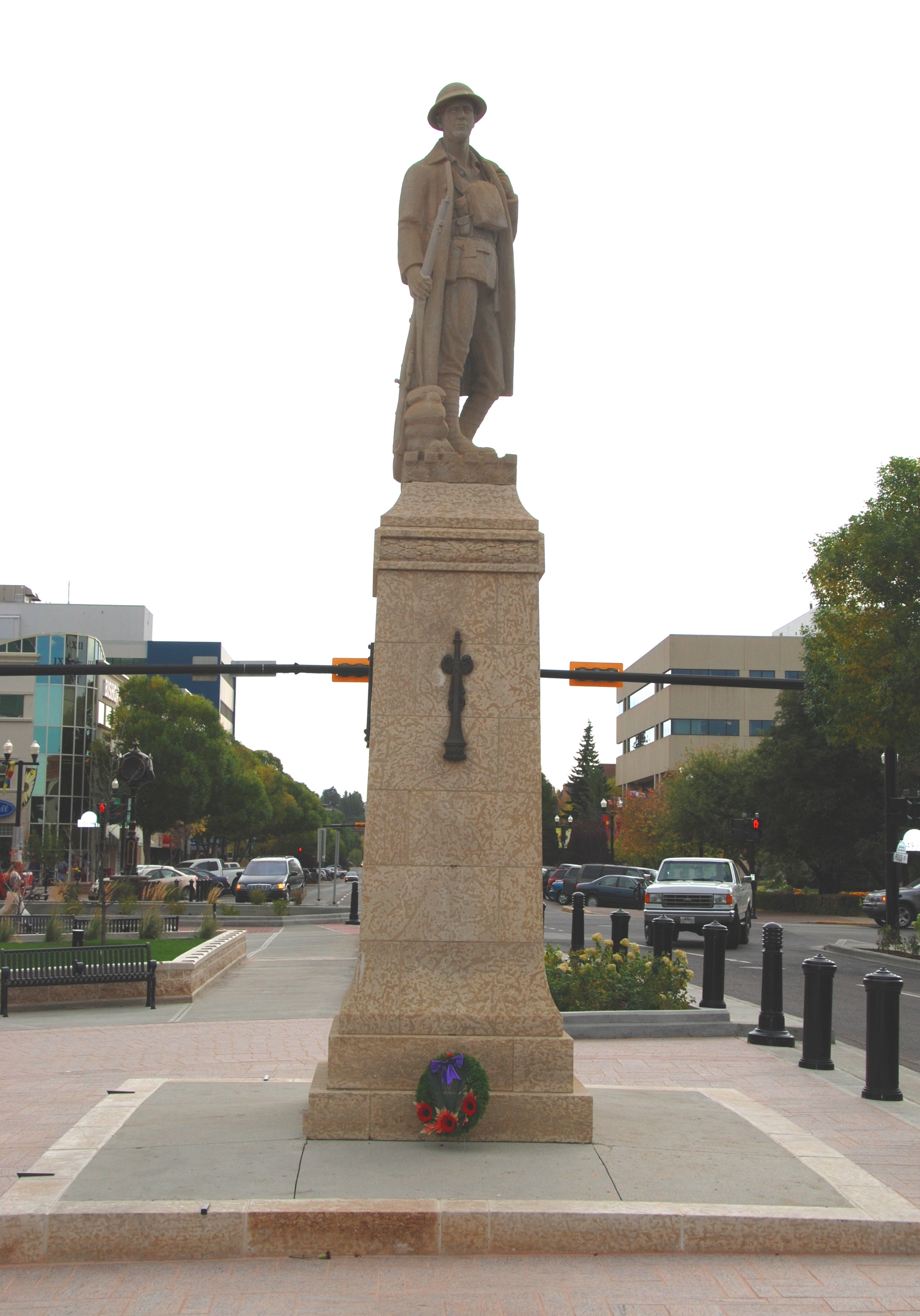


 RETROactive