For the next few days, RETROactive (well, me, Matthew Francis) will be down in New Orleans representing Alberta at the U.S. National Trust Main Street Conference. This annual gathering brings together leaders from hundreds of historic communities from across North America, as well as representatives from State and Provincial coordinating programs. In addition to Alberta, Canadians from Ontario, Quebec and Saskatchewan will also be in attendance. This is an incredible opportunity to learn from the stories of revitalization through heritage conservation. In particular, we’ll be seeing first-hand how New Orleans’ cultural economy has contributed to the city’s post-Katrina recovery. In between sessions, I’ll try to provide some real-time highlights from this excellent learning event. This knowledge will then be brought back to Alberta, to benefit the communities in our Alberta Main Street Program. Current members of the program’s network are:
Last fall (2012), I had meetings with the Municipal District of Spirit River and also had the opportunity to visit Historic Dunvegan Provincial Park. What a beautiful place to explore! Located approximately one hour north of Grande Prairie and fifteen minutes south of Fairview, this park offers camping, a walking trail that meanders along the Peace River, a Provincial Historic Site and stunning views of the Dunvegan Bridge. With a Visitor Centre acting as a gateway to the Provincial Historic Site portion of the park (of which, portions are also designated as a Provincial Historic Resource) interpretive staff provide guided tours of the historic buildings. If you time your visit carefully, you might even get to experience one of their special events. See below for more information.
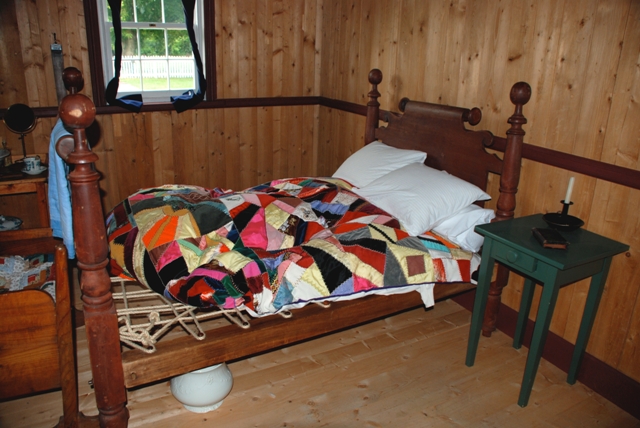
Factor’s House, Historic Dunvegan (Interior) Do you remember hearing the saying “sleep tight” when you were a child? While it’s not known for sure, many believe that the saying originated with the use of rope beds such as this. A person would have to tighten the ropes of the bed every so often, otherwise the ropes might loosen and cause the person to fall through to the floor in the middle of the night. Possibly as a reminder to tighten the ropes, the saying: “Good night, sleep tight” came into being.
Historic Dunvegan is a significant part of Alberta’s heritage because of its connection to the operations of the North West Company and Hudson’s Bay Company in the Peace River District, for being an example of early architecture in Alberta and for the archaeological resources located at the site. To learn more about the significance of Historic Dunvegan and its history, read its listing on the Alberta Register of Historic Places.
Historic buildings that you could tour when at Historic Dunvegan Provincial Park, include:
St. Charles Mission – The Rectory
St. Charles Mission – St. Charles Church
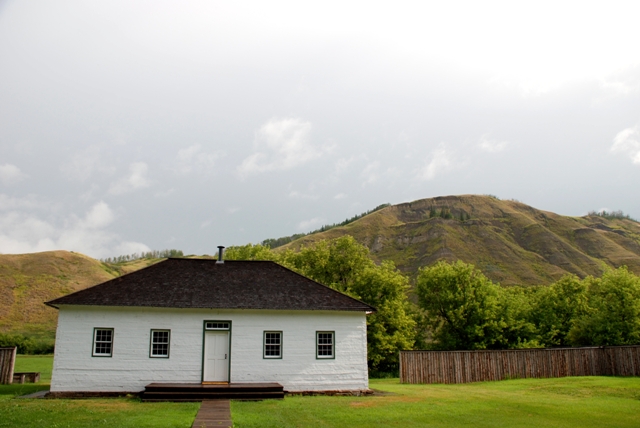
Factor’s House
Revillon Frères Store (opening July 1st)
Tours of these fully restored buildings are offered daily.
Open Hours: May 15-September 2, 2013 from 10am-5pm.
Regular admission prices: $3.00 for Adults; $2.00 for Seniors; $1.50 for Youth; Free for children 6 and under.
Attention educators and youth group leaders! Educational programs or tours can be booked anytime during the summer.
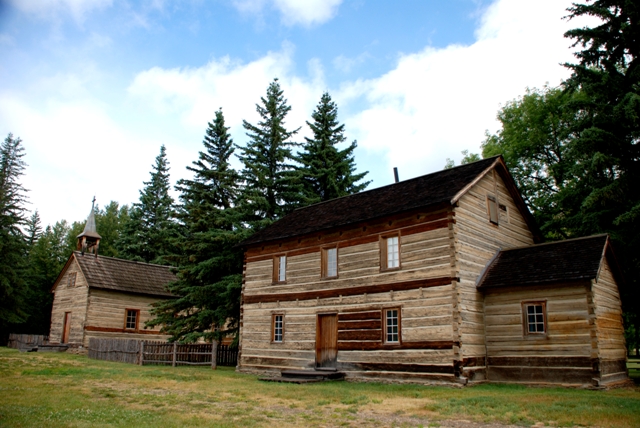
St. Charles Mission, Church and Rectory
SPECIAL EVENTS
Canada Day – Monday, July 1st, 11am-4pm. Celebrate a historical milestone at Historic Dunvegan by being part of the grand opening of a building originally constructed by the Revillon Frères free traders in 1909. Discover this significant chapter of Dunvegan’s story by exploring the building and hearing from many of the people who have helped bring it to life. The day’s festivities will also include a performance by Juno-nominated family entertainer Mary Lambert, tours of all historic buildings, games, cake and crafts.
Admission is half price!
Annual Fresh Air Market – Sunday, August 4th, 11am-5pm. Experience the time-honoured tradition of trading and gathering at Historic Dunvegan’s Fresh Air Market. Shop for jewellery, gifts, and other treats – all handcrafted by artisans from the Peace Country. Costumed interpreters will be offering tours of Historic Dunvegan’s three fully restored historic buildings. Activities for the kids will be provided. Regular fees apply.
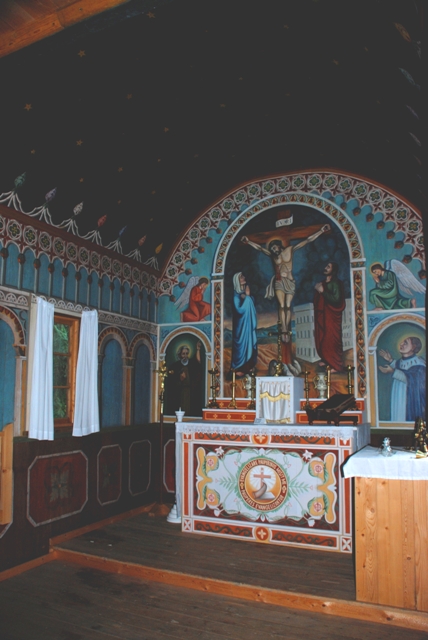
St. Charles Mission, Church (Interior)
LONG WEEKENDS
Amphitheatre Entertainment –Saturdays (May 18, June 29, August 3) at 2:00pm. Join the staff of Historic Dunvegan for a humorous and often interactive dramatic presentation. Participation by donation.
Sunday Funday – Sundays (May 19, June 30, September 1) at 2:00pm. Have some fun with our historical interpreters as they host games and activities. Participation by donation.
JULY AND AUGUST
Day Camps – Most Wednesdays in July and August, 11am-4pm. For kids aged 4-10. Have some fun in the sun, learn a new craft, play a fun game, watch movies and more! Fee: $10/child. Bring a bag lunch.
Tea Leaves & Bannock Sticks – Most Saturdays in July and August, 2pm-4pm. Learn to bake bannock (traditional Scottish/Aboriginal bread) and enjoy a cup of tea while visiting with friends, family and historic staff. Participation by donation.
Written by: Brenda Manweiler, Municipal Heritage Services Officer
(Special thanks goes out to Stephanie McLachlan, Program Coordinator at Historic Dunvegan Provincial Park, who supplied all the summer event information.)
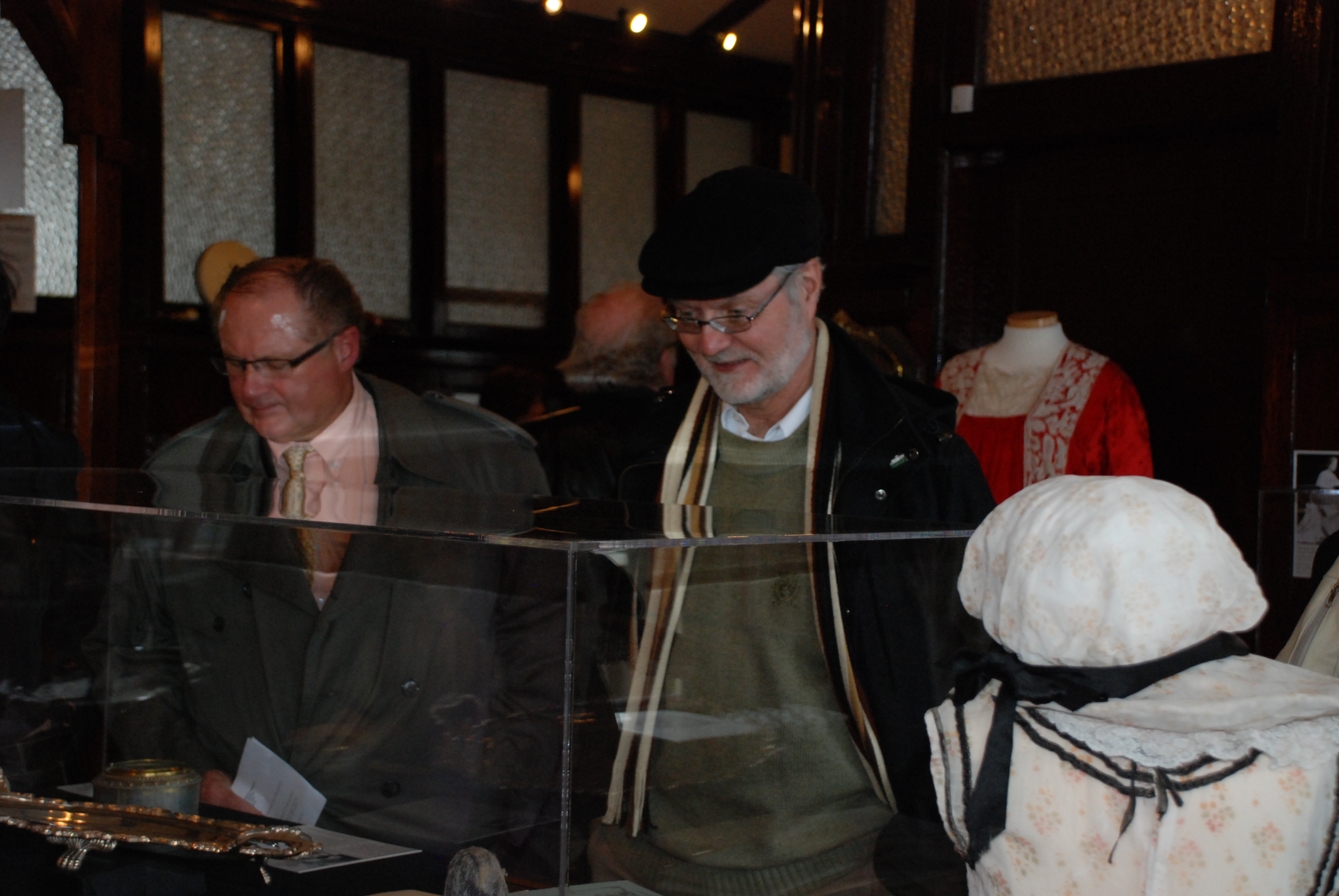
L-R: Bob Gaetz (AHRF board member) and Fred Bradley (AHRF Chair) check out a display at the Museum of the Highwood.
Four times a year the Alberta Historical Resources Foundation (AHRF) board meets in different municipalities throughout Alberta and takes the opportunity to experience aspects of that community’s history and heritage. On February 22nd and 23rd the board had its first 2013 meeting in the Town of High River. Visits to two different museums highlighted different aspects of High River’s local heritage.
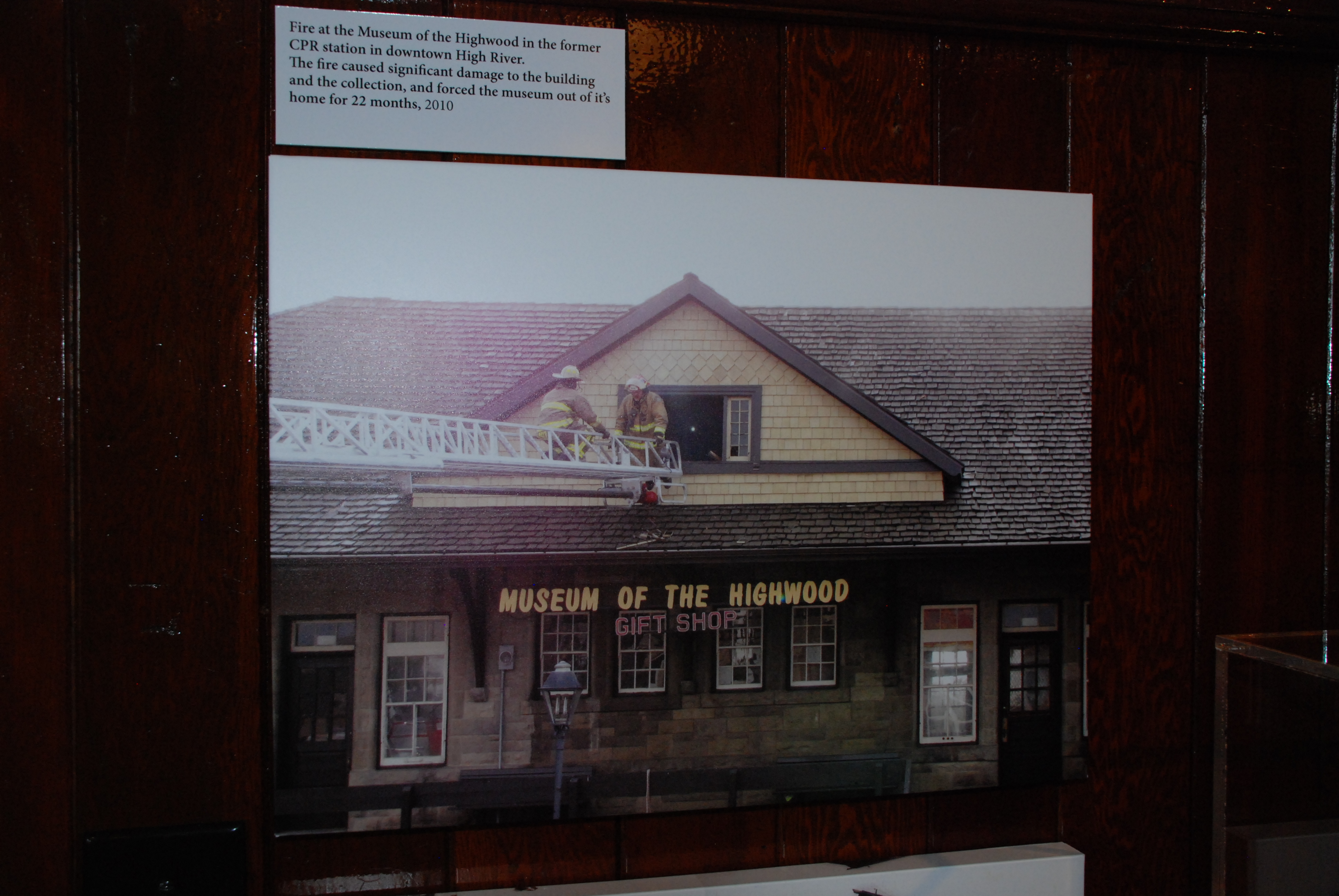
A display at the Museum of the Highwood showcases the fire that caused significant damage.
At the Canadian Pacific Railway Station, a Provincial Historic Resource and home of the Museum of the Highwood, board members received a tour by Pat Markley and visited with members of the Museum’s board and also Town of High River staff and Heritage Advisory Board members. In 2010 a fire caused significant damage to the building. With Historic Resource Conservation funding assistance from the Heritage Preservation Partnership Program the railway station is now better than ever! At the 2012 AHRF Heritage Awards the Town of High River was celebrated for its successful conservation of the fire ravaged building.
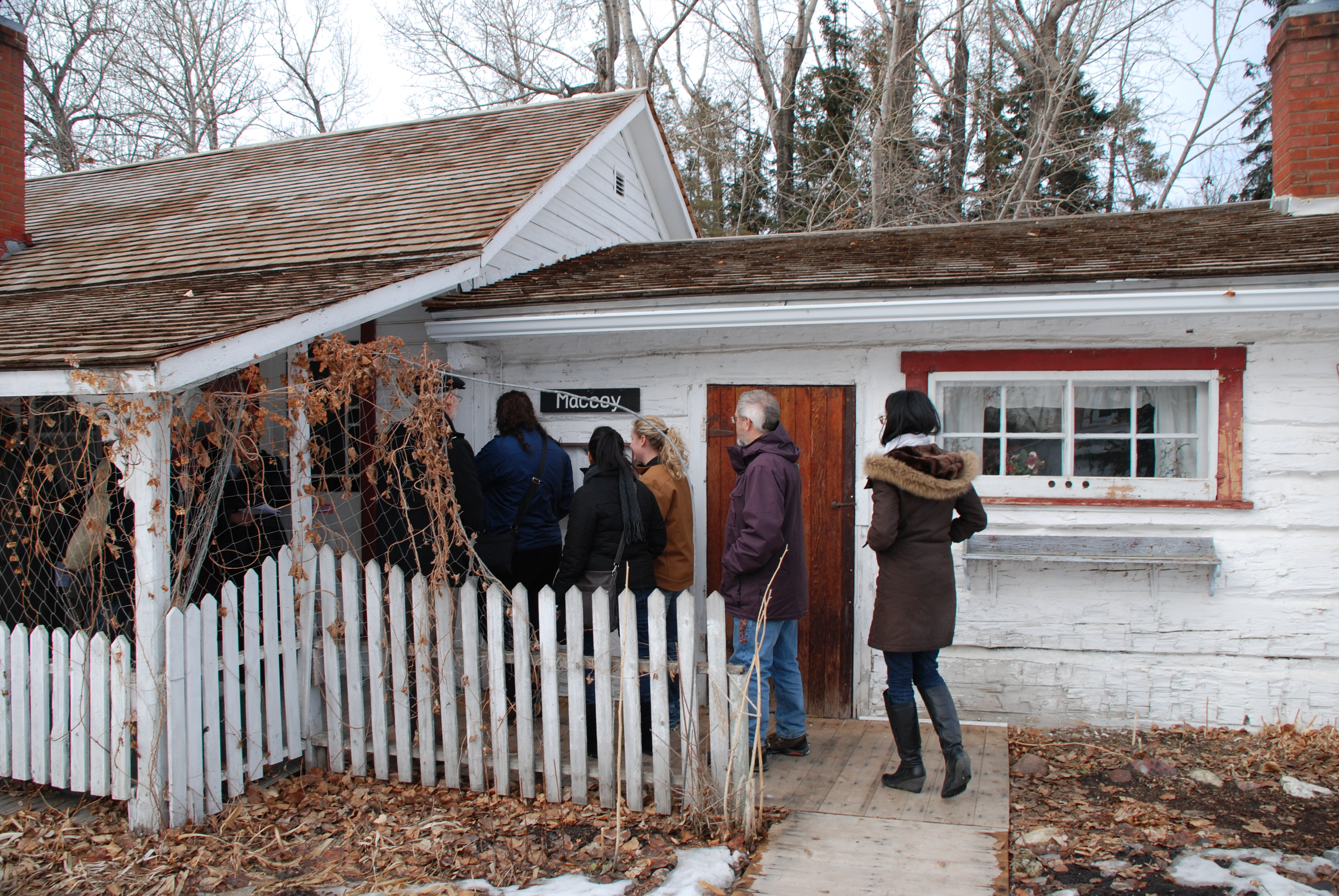
AHRF board members and Town staff entering the Sheppard/Maccoy House
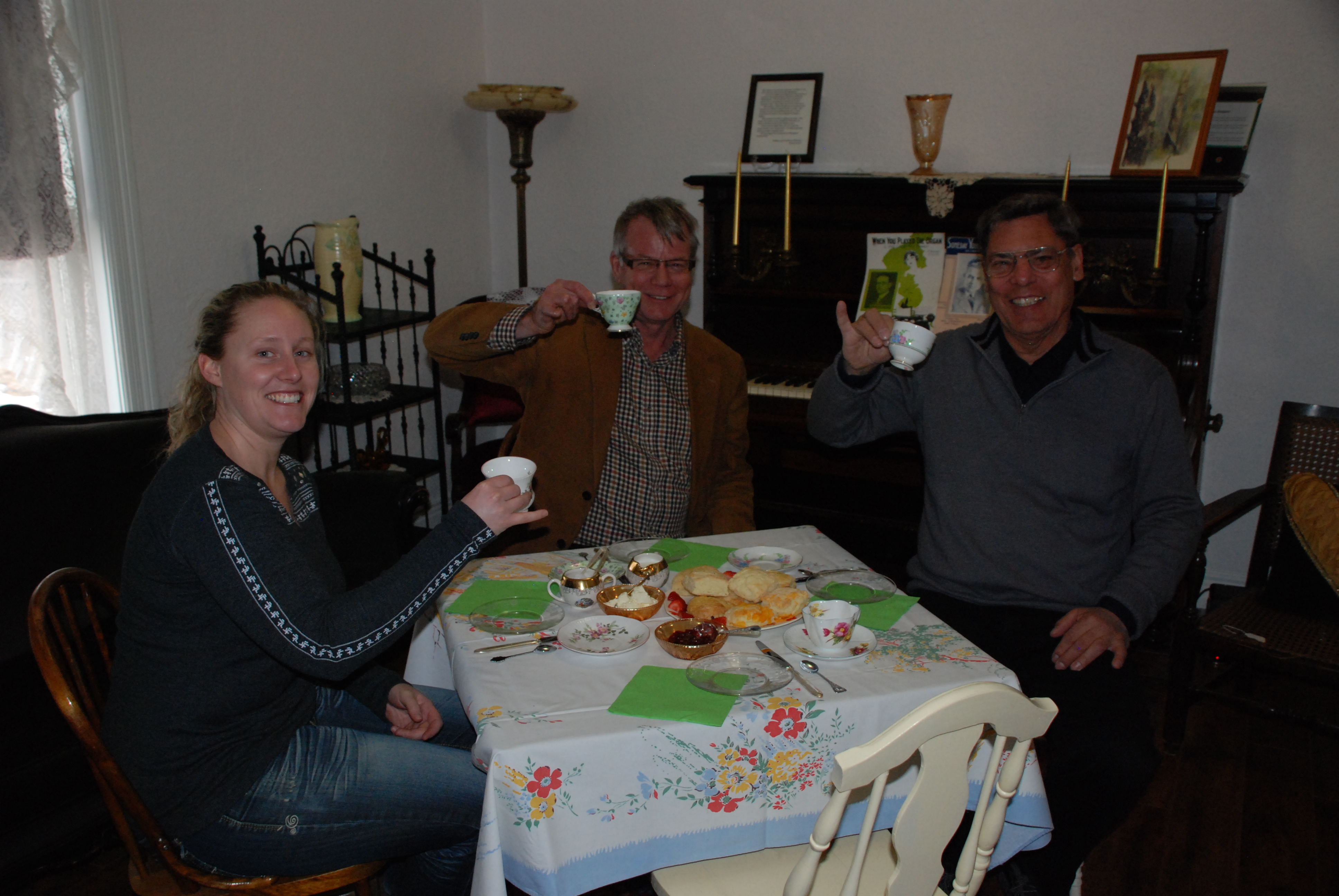
AHRF board members also visited the Sheppard/Maccoy House, a one-storey, white-washed log house that was formally protected as a Municipal Historic Resource by the Town of High River in 2009, and is a central component of the Sheppard Family Park. The house is valued for its association with early settlement in the area and for its association with Ruth Maccoy, a resident of the house for seventy years whose, “baking and hospitality were renowned – the front steps of the cabin [are] worn with the footprints of the countless people who entered.” While at the Sheppard Family Park AHRF board members were treated to tea and scones at the MacDougall House – a tasty treat enjoyed by all!
Enjoying tea and scones! (L-R: Leah Millar, AHRF board member; Larry Pearson, Director of Historic Places Stewardship Section; and Tom Clark, AHRF board member)
A big thank you to both sites for hosting the board and for sharing aspects of High River’s heritage; the board appreciated the opportunity.
Future 2013 AHRF meetings will include visits to the City of Lacombe, the hamlet of Nordegg (in Clearwater County), and the City of St. Albert.
Written by: Brenda Manweiler, Municipal Heritage Services Officer
Since the Fall, I’ve been talking with some folks from Mountain View County about Alberta’s historic places programs. The Municipal Heritage Partnership Program has worked with many of Mountain View’s neighbours – Red Deer County, the M.D. of Bighorn, and Clearwater County – and now they too are exploring opportunities to conserve their historic places. They’re also looking for innovative ways to connect the unique places their communities have to offer with cultural tourism.
Greg Campkin, a member of the County’s Economic Development Committee, invited me (Matthew Francis) down to Mountain View to speak at a great event on Tuesday evening, March 19th. County Council chambers served as the venue, and were filled with a capacity crowd.
At the meeting, I shared a little bit about the basics of heritage conservation, our Alberta approach, and also described some of the ways community can both showcase their historic places, and become more “visitor friendly.” I got to meet some great people from Water Valley, Sundre, and others from around the County. I’m looking forward to keeping the conversation going and seeing how we can work together to create a bright future for Mountain View’s historic places.
Things are happening in Mountain View County!
Written by: Matthew Francis, Manager of Municipal Heritage Services
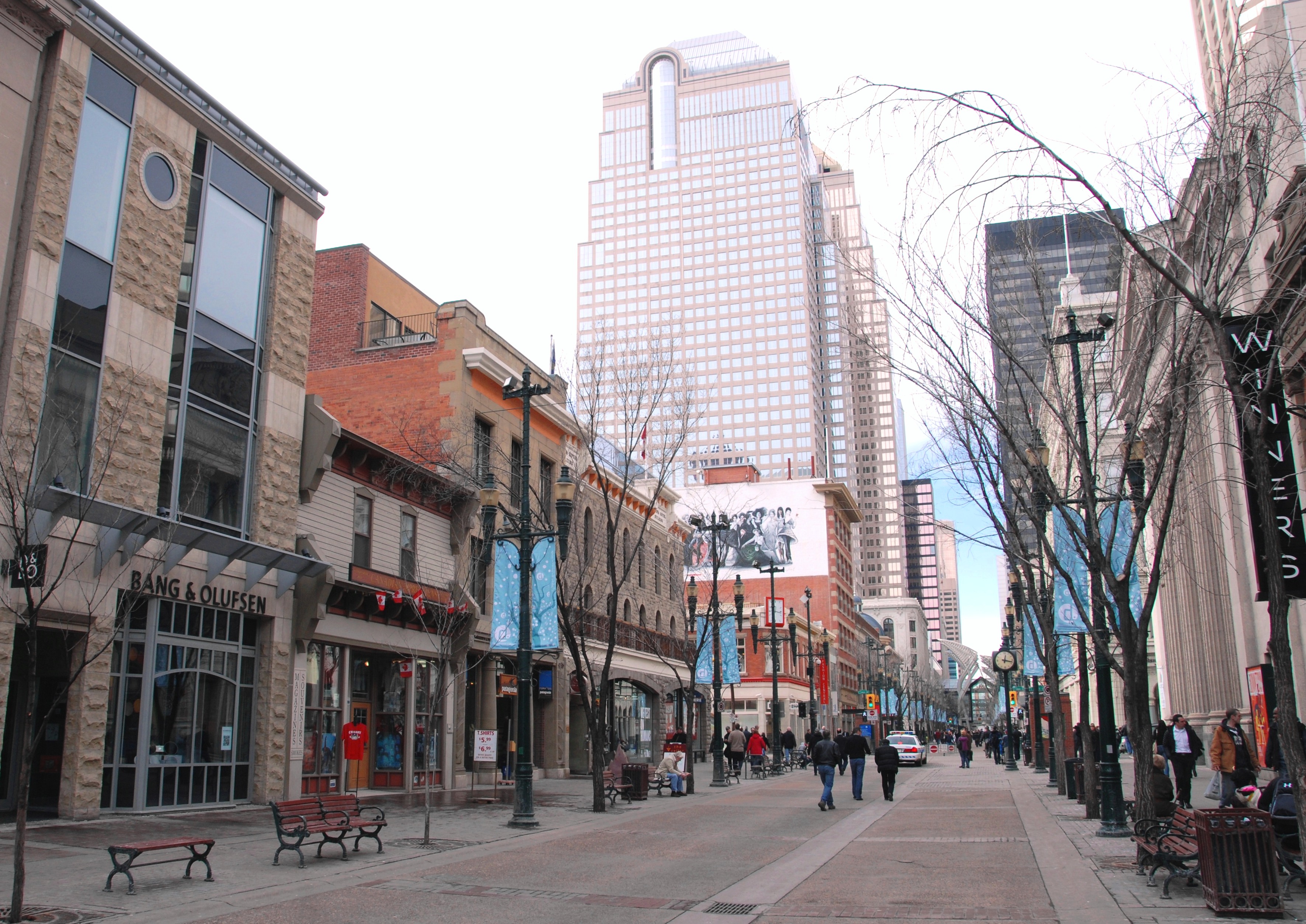
Back at our Place Matters! Municipal Heritage Forum in November 2012, we heard a dynamic presentation from City of Calgary Senior Heritage Planner, Darryl Cariou, about Stephen Avenue. He described – with his usual wit – the history of the Avenue from its early days through the various “pedestrian mall” concepts popular from the 1960s through the 90s. One of the most compelling aspects of the presentation was the juxtaposition of images and photographs of the Avenue over the decades.
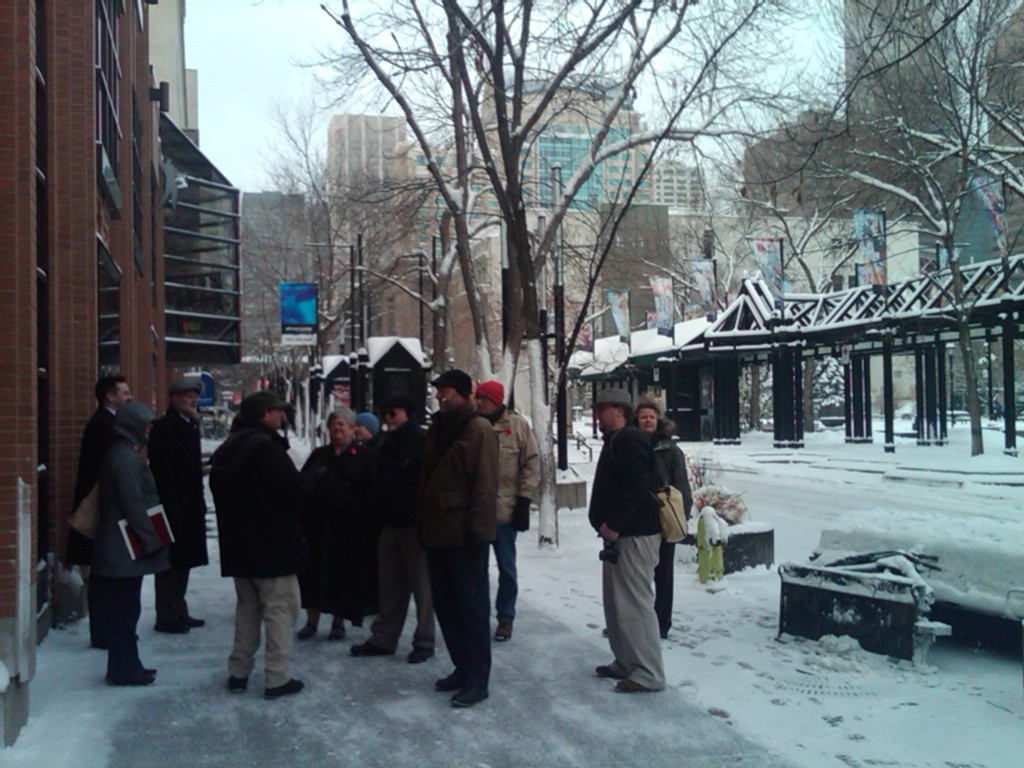
Stephen Avenue Walking Tour (Municipal Heritage Forum 2012)
Calgary’s Stephen Avenue provides a direct link to the unique circumstances that shaped the character of urban development on the Canadian Prairies between the 1880s and 1930.
The typical prairie city was a distinct entity from the beginning: built according to a gridiron plan oriented to the convenience of the railway and its station, with a spatial organization that placed retail and financial businesses close to the station, industry on the outskirts of the core, and residential areas in outlying suburbs that were serviced by streetcar systems. The combination of rapid growth, gridiron plan and distinct commercial, industrial and residential zones distinguished western cities from their older eastern counterparts.
During Calgary’s “sandstone era,” entrepreneurs converged on Stephen Avenue, building rows of commercial blocks in brick and stone that reflected the dramatic growth in the retail sector of the Canadian economy at that time. This street became the hub of Calgary’s retail district, strategically situated near the station and rail yards, and at the convergence point for streetcar lines leading to the city’s outskirts.
The remarkable thing about Stephen Avenue is that it continues to perform its original function as Calgary’s main street, despite the dramatic changes that have transformed retailing and urban cores across the country. Today, the rows of two to six storey commercial buildings that line both sides of the street continue to house a broad range of retail services, while their designs reflect the architectural revival styles of a bygone era, in sharp contrast to the office towers that now encircle the area.
Saved from redevelopment through the efforts of far-sighted Calgarians in the 1970s, the buildings along Stephen Avenue serve as reminders of the central role that retail streets have played, and continue to play, in sustaining the vitality of Canada’s cities.
Whether you stroll Stephen Avenue this summer as a tourist, rush along the street during your lunch break or dine in one of the many restaurants along the Avenue, perhaps the next time you experience Stephen Avenue you will take a moment to breath in the history and heritage of this significant cultural landscape!
Written by: Matthew Francis, Manager of Municipal Heritage Services
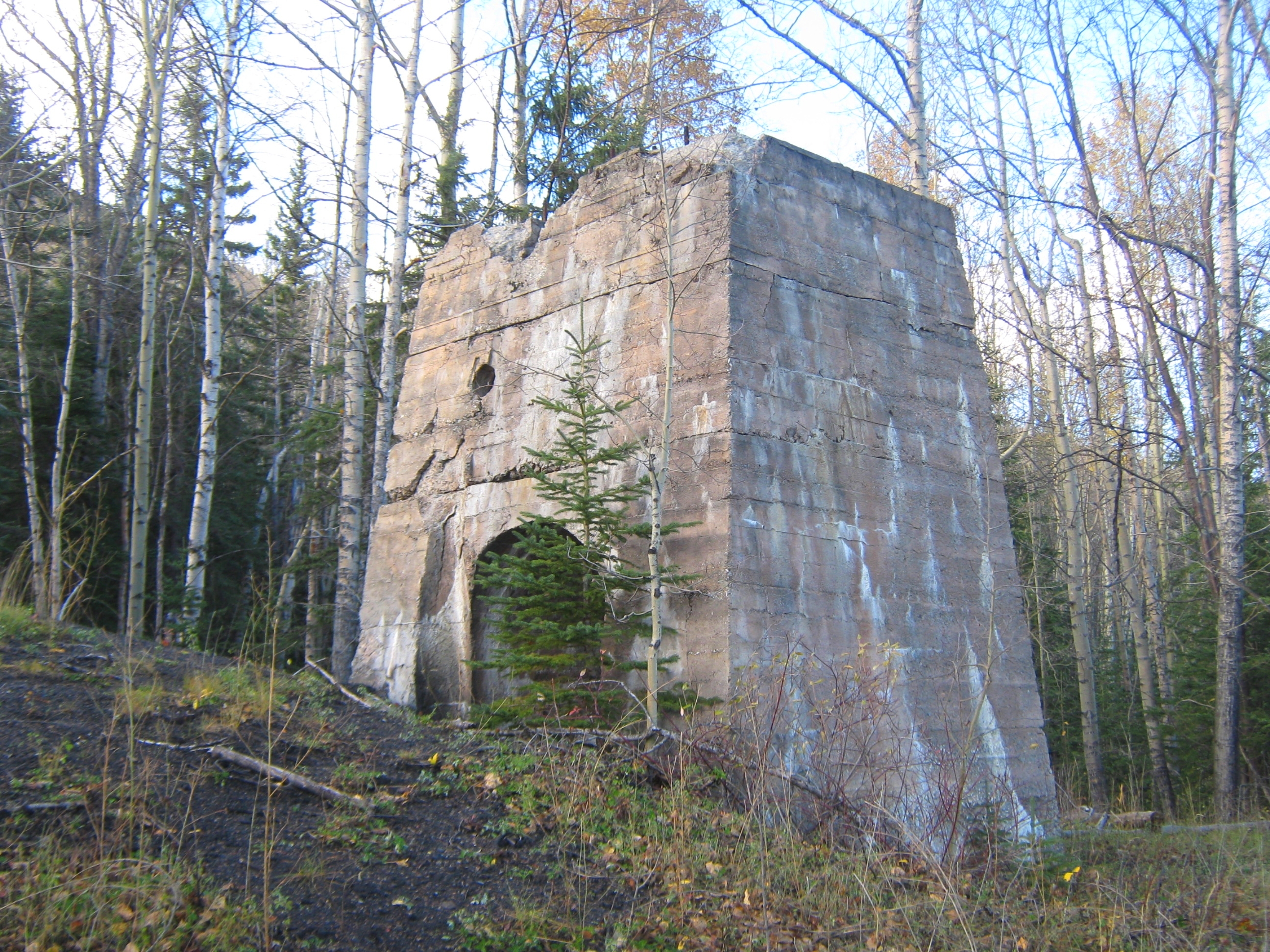
Marlboro Plant, Marlboro (evaluated as part of the the Yellowhead County Municipal Heritage inventory project).
Marlboro? Wildwood?
Earlier this week I travelled to both Marlboro and Wildwood to attend municipal heritage inventory open houses. You might be scratching your head in confusion asking, “Where in Alberta are those communities located?” Both are located west of Edmonton along the Yellowhead Highway, in Yellowhead County. Marlboro is 26 kilometres west of Edson and Wildwood is approximately an hour’s drive west of Edmonton. Still not feeling overly familiar with Yellowhead County? A previous RETROactive blog post described the County and aspects of its history:
West of Edmonton, Yellowhead County is located along Yellowhead Highway 16. It encompasses 7,012,000 acres stretching from the Pembina River in the east to the Jasper National Park gates in the west. Travellers that frequent this section of the Yellowhead Highway are likely familiar with the Towns of Edson and Hinton and, of course, the iconic Rocky Mountains. What might be less familiar is that alongside these Highway 16 destinations and nestled off into the north and south of this transportation corridor are reminders of a long and varied history. Trapping, logging, farming, coal mining and more recently oil, gas and tourism have all impacted the development of what is now Yellowhead County. Various structures, cultural landscapes and buildings located in the hamlets of Evansburg, Wildwood, Robb, Cadomin and Brule (amongst others) retain glimpses of this diverse history. Miners cabins, ranches, hotels, industrial remains, barns, schools, churches, a pool hall and a water tower exemplify the range of potential historic places.
Brule Mine Landscape, Brule (evaluated as part of the the Yellowhead County Municipal Heritage inventory project).
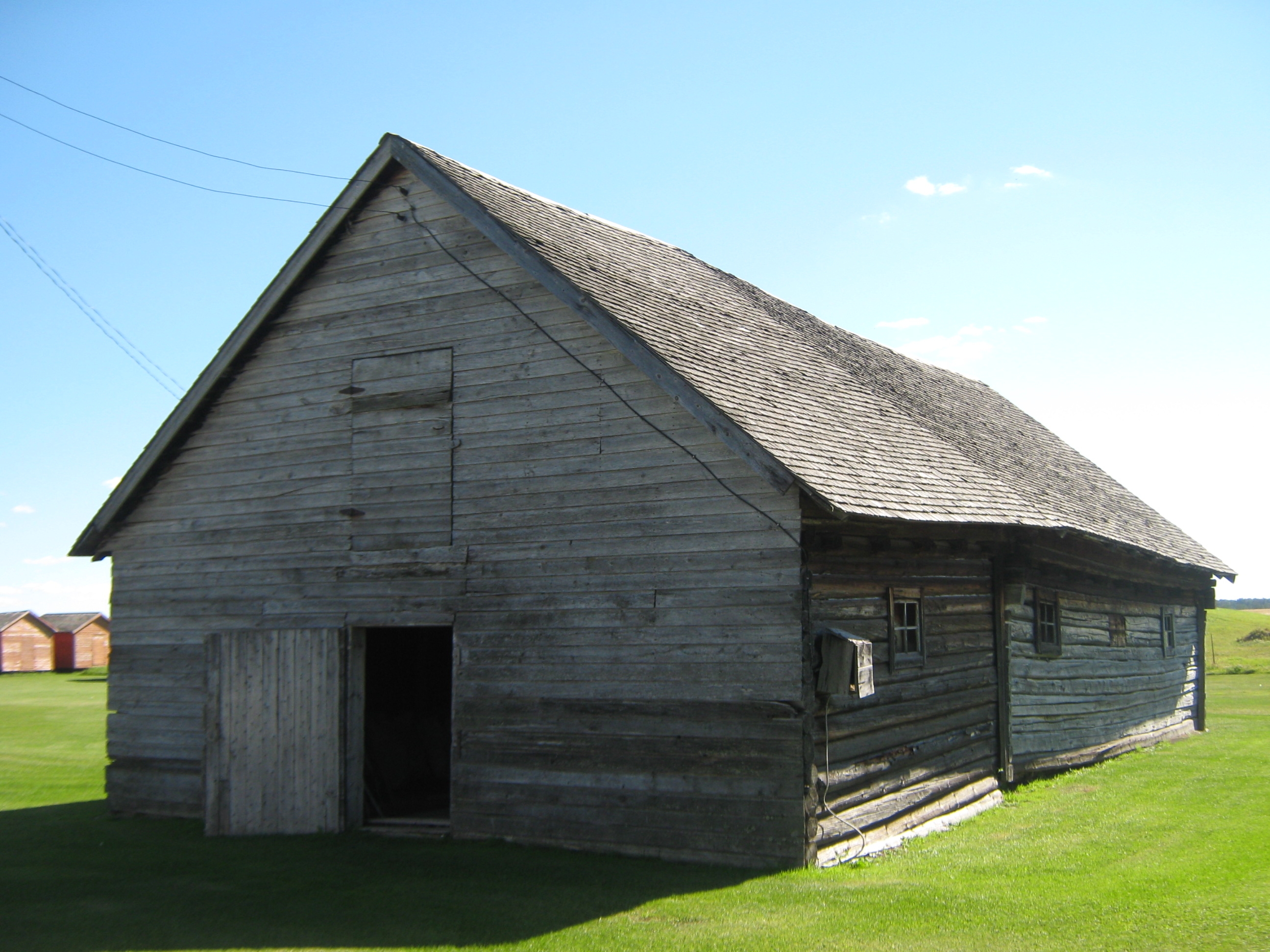
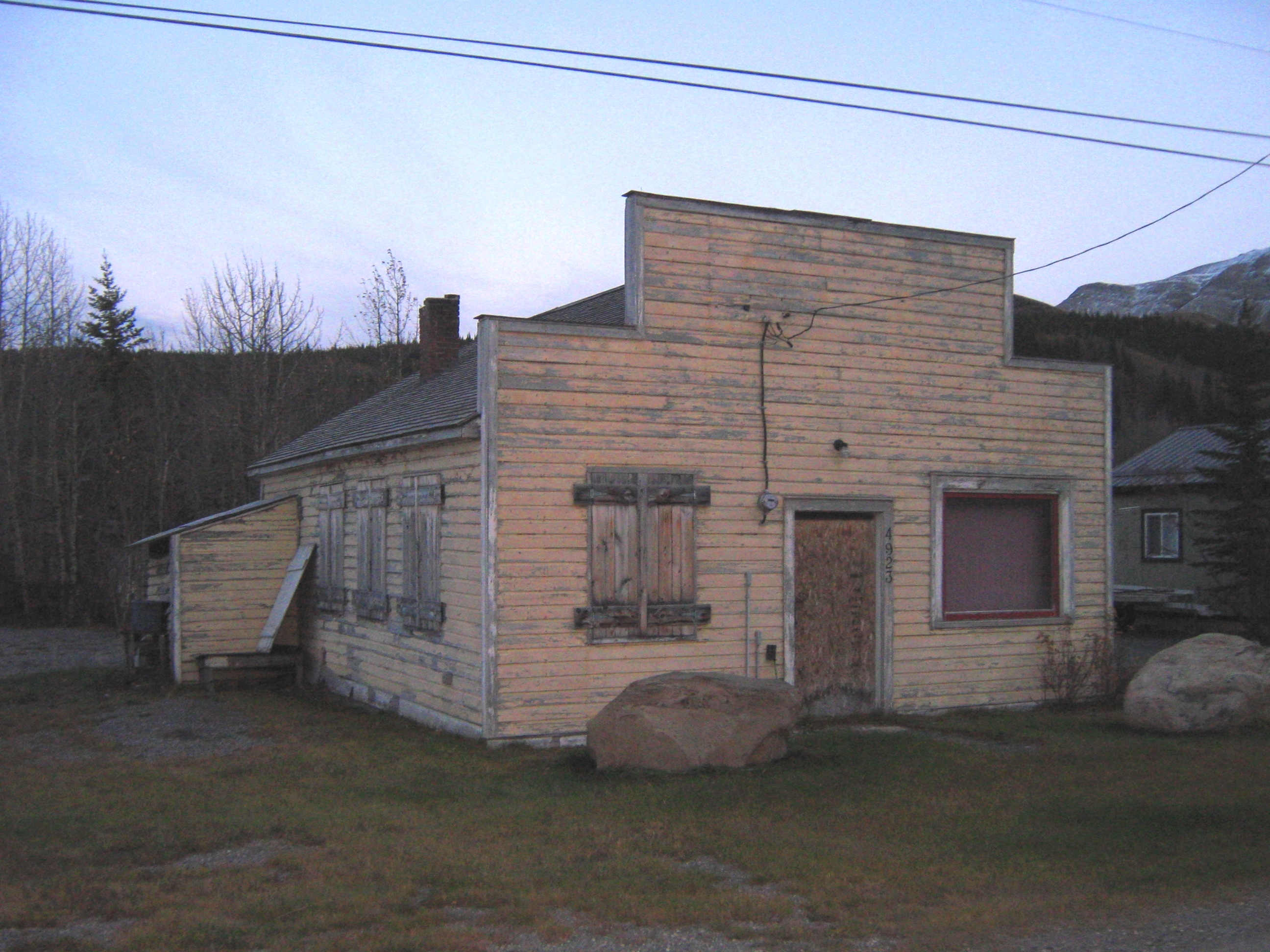
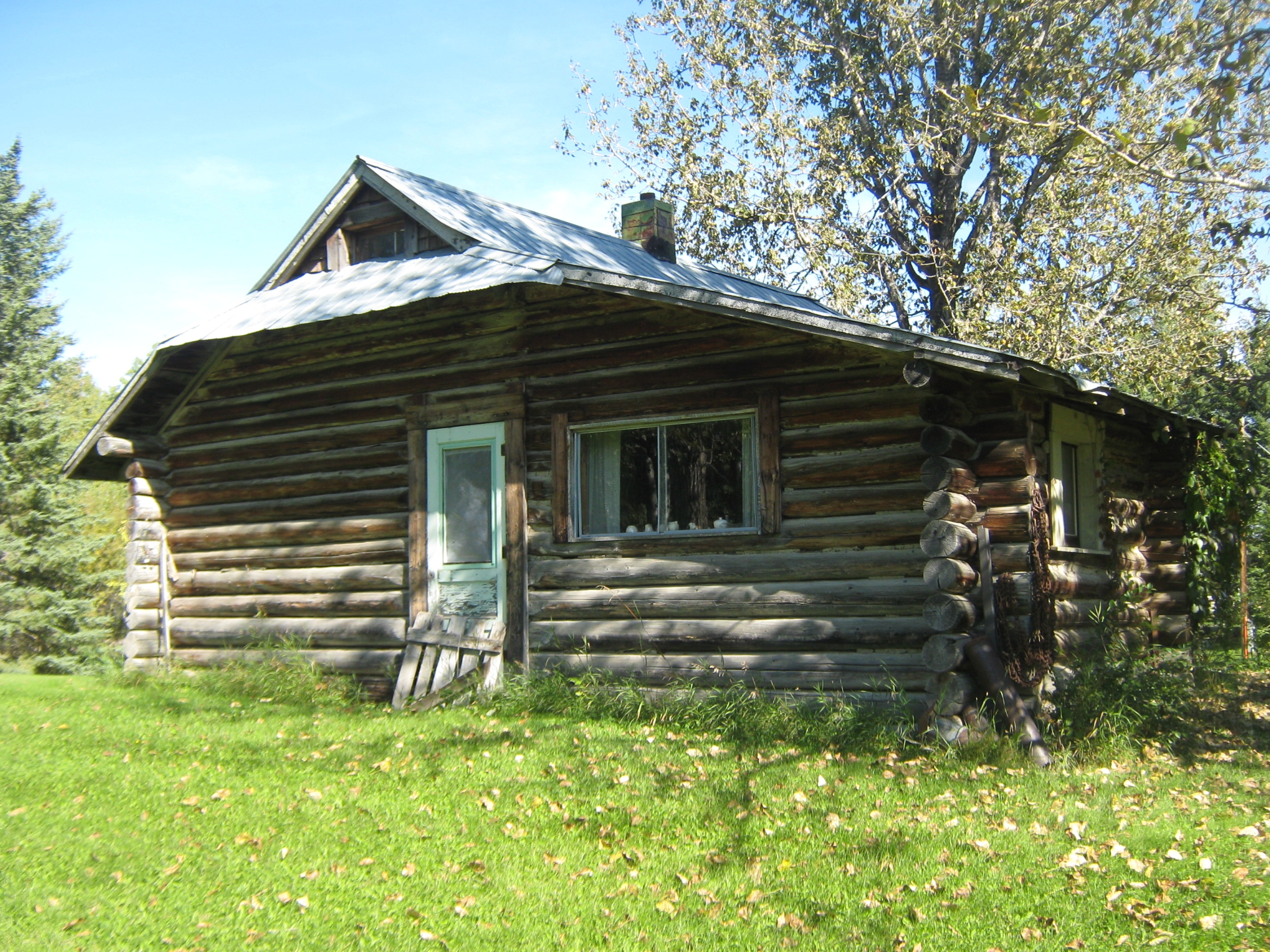
The Marlboro and Wildwood open houses were opportunities for community residents to learn about the County’s inventory project. Twenty three different sites were featured (some of the sites are shown in this blog post). Their architectural, social, cultural, historical and/or landmark value was discussed. Attendees responded with enthusiasm and were full of questions about possible Municipal Historic Resource designation, the implications of designation and opportunities for conservation funding assistance. I responded to many of these questions by discussing “designation myths”. (Hmmm … perhaps a great topic for a future blog post?)
Over the coming months, this project will be concluded. To learn more about Yellowhead County’s heritage program, click here.
Written by: Brenda Manweiler, Municipal Heritage Services Officer
Myschuk Barn, near Wildwood (evaluated as part of the the Yellowhead County Municipal Heritage inventory project).Cadomin Photo Studio, Cadomin (evaluated as part of the the Yellowhead County Municipal Heritage inventory project).Shinning Bank Farm (evaluated as part of the the Yellowhead County Municipal Heritage inventory project).
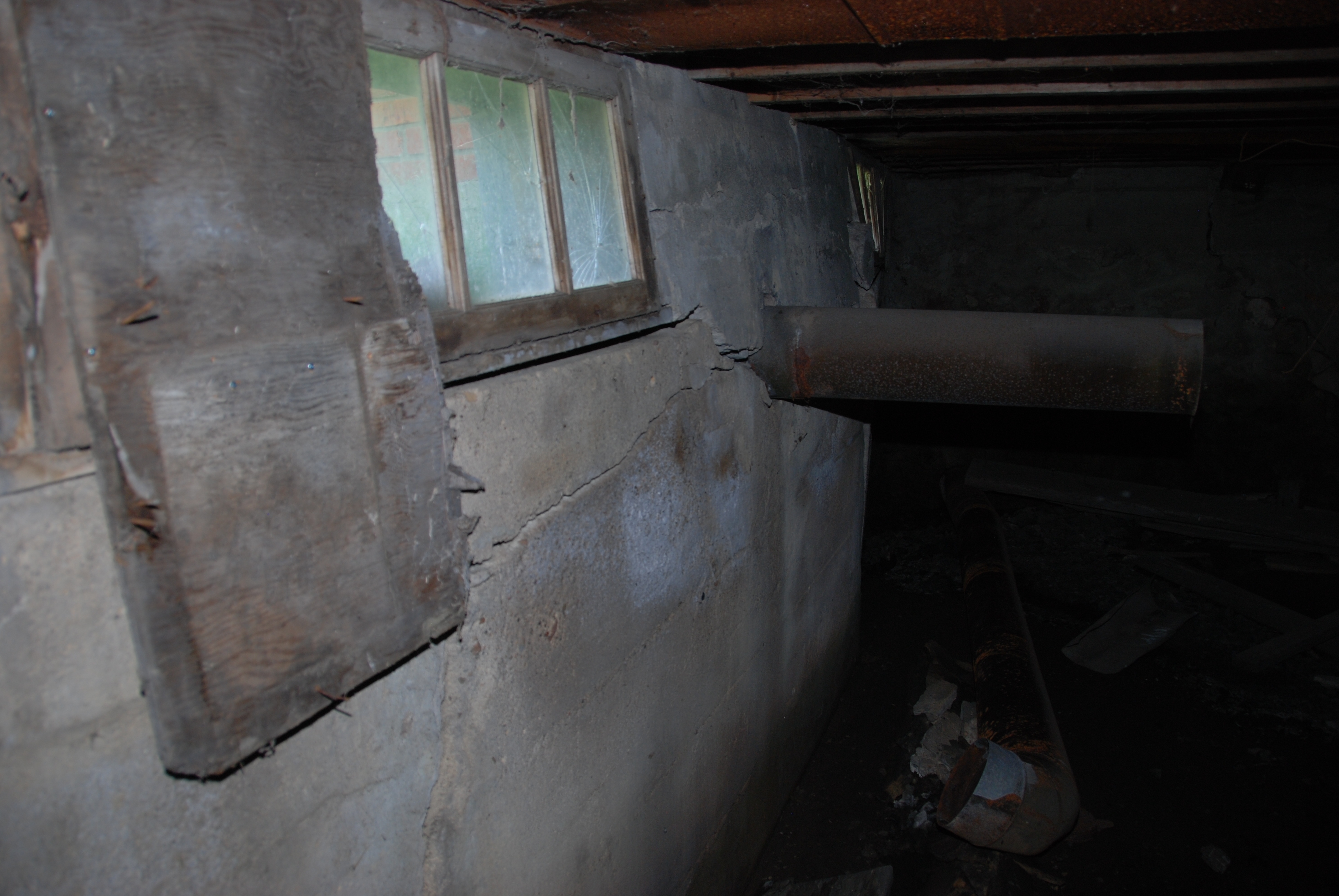
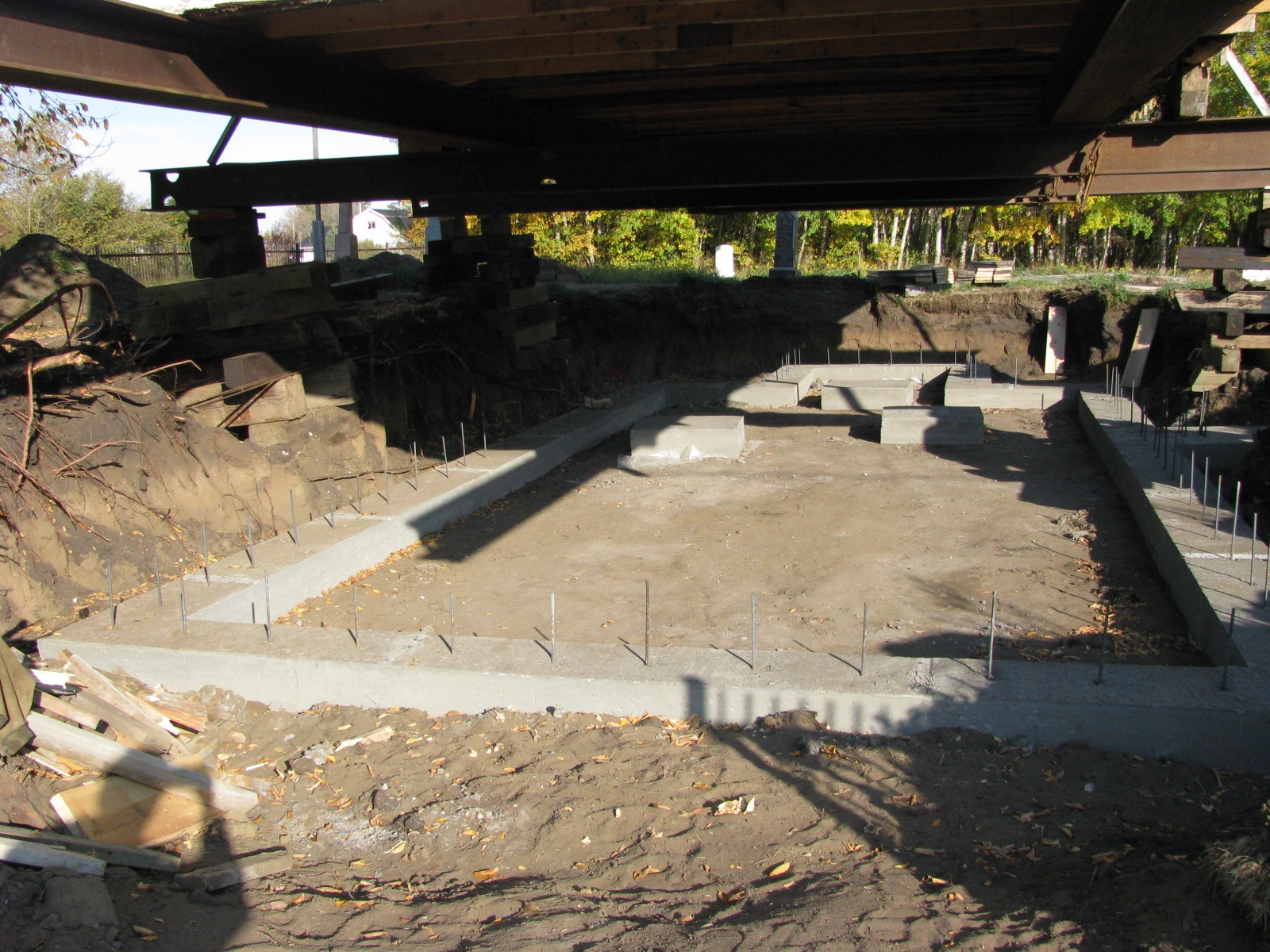
Every building has a foundation, whether it’s above ground or below ground, concrete or wood. A foundation is the first building element constructed and therefore it is very important to get it right. Any errors or flaws will manifest, either relatively quickly for a major mistake or over time for a subtle error.
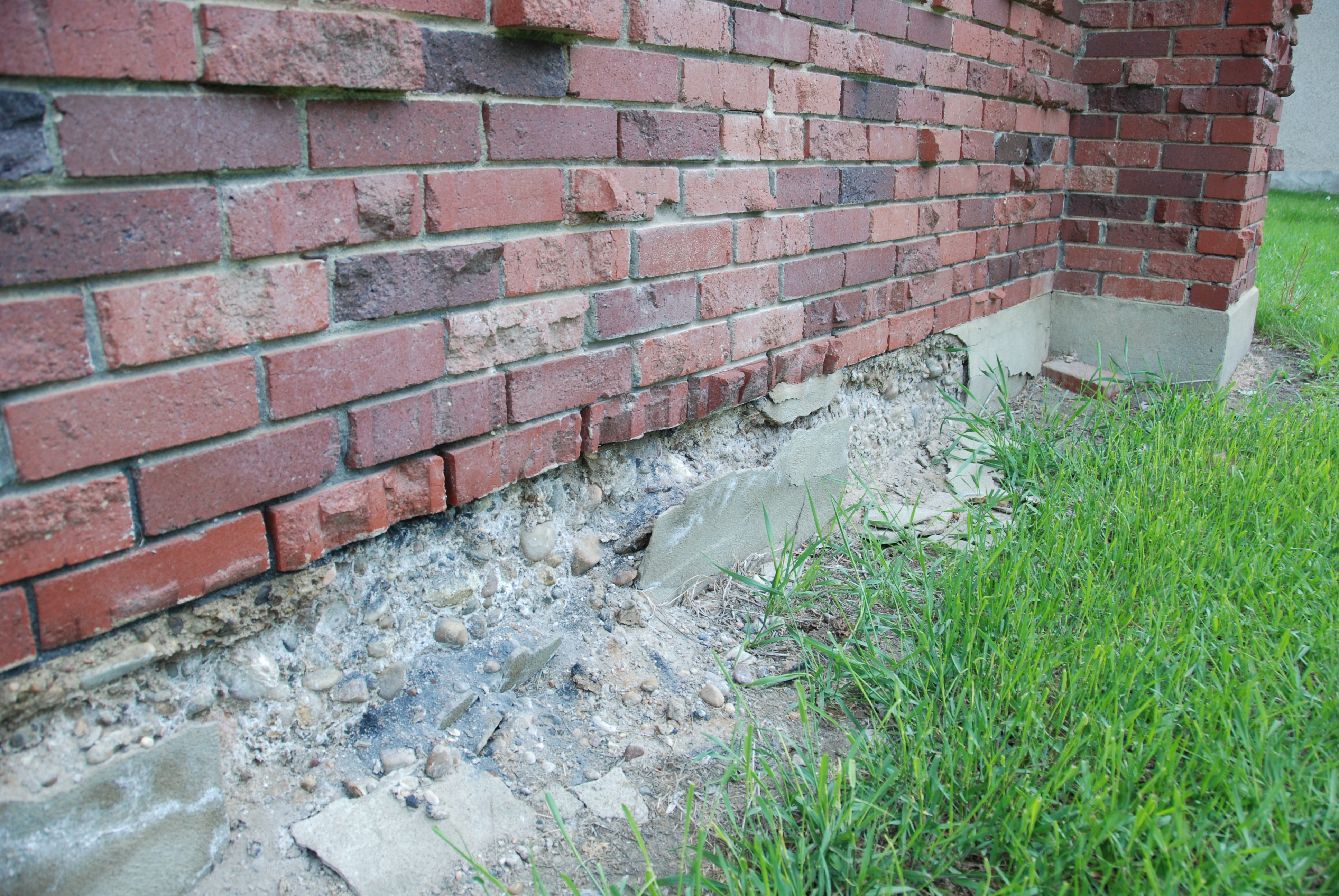
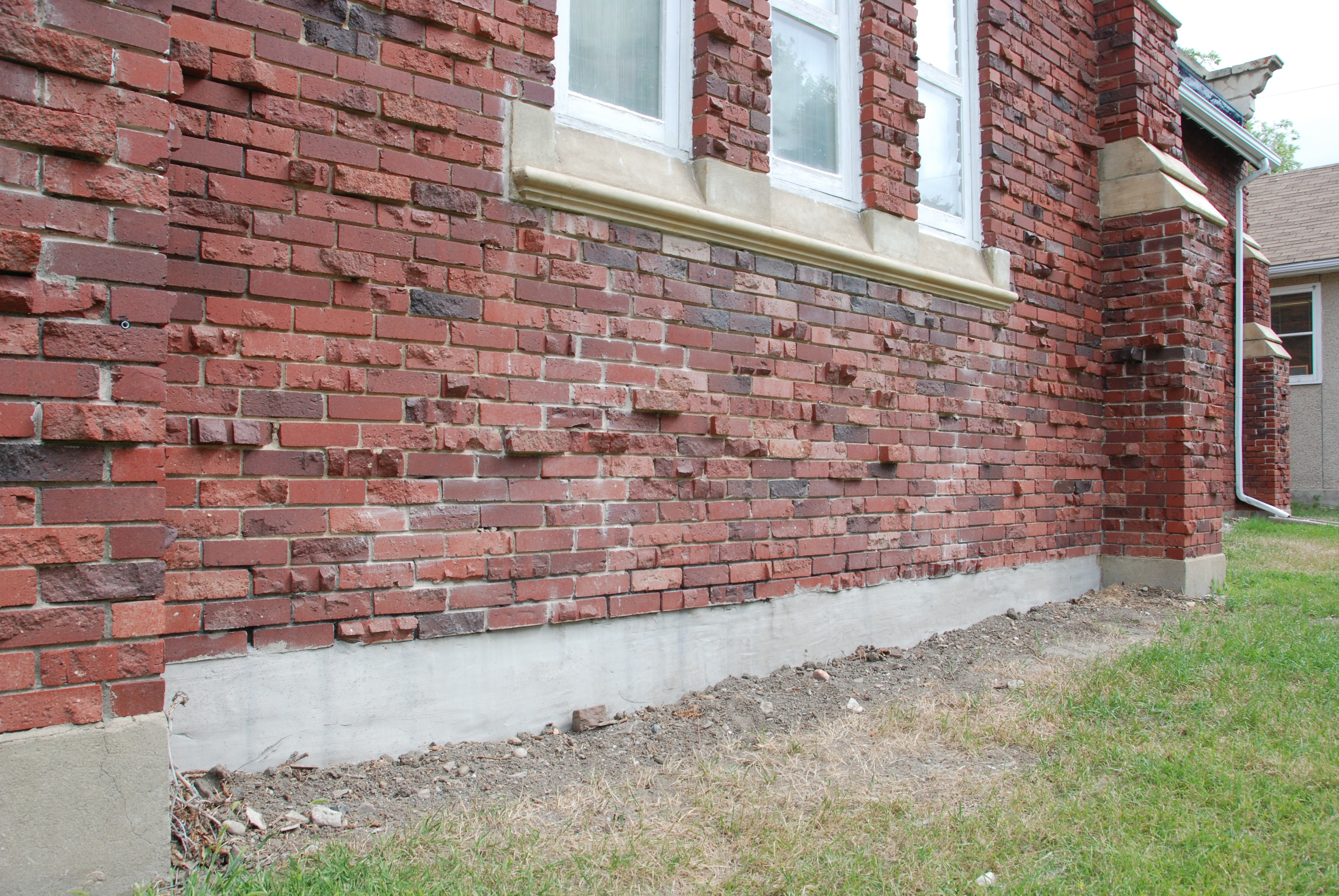
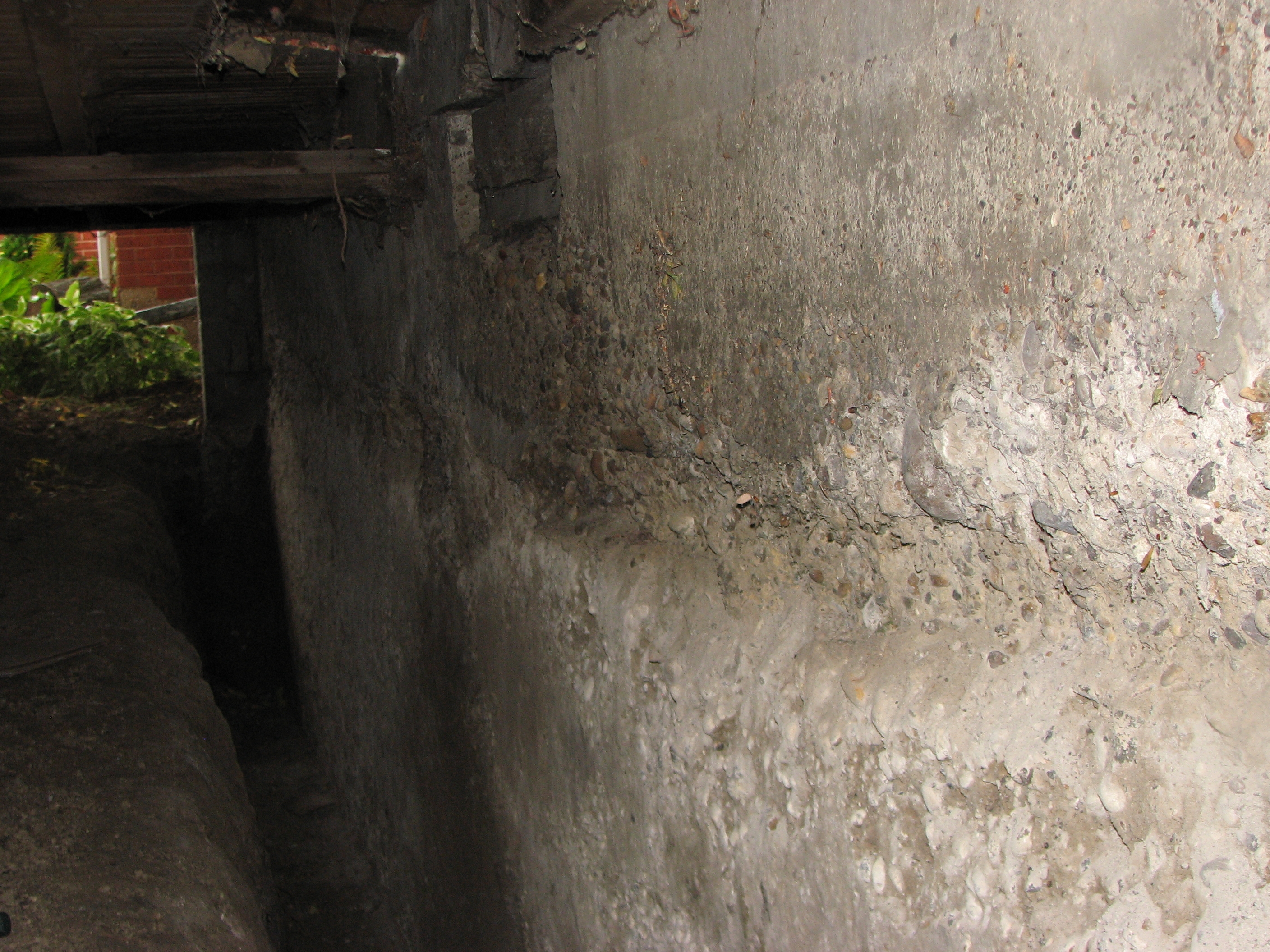
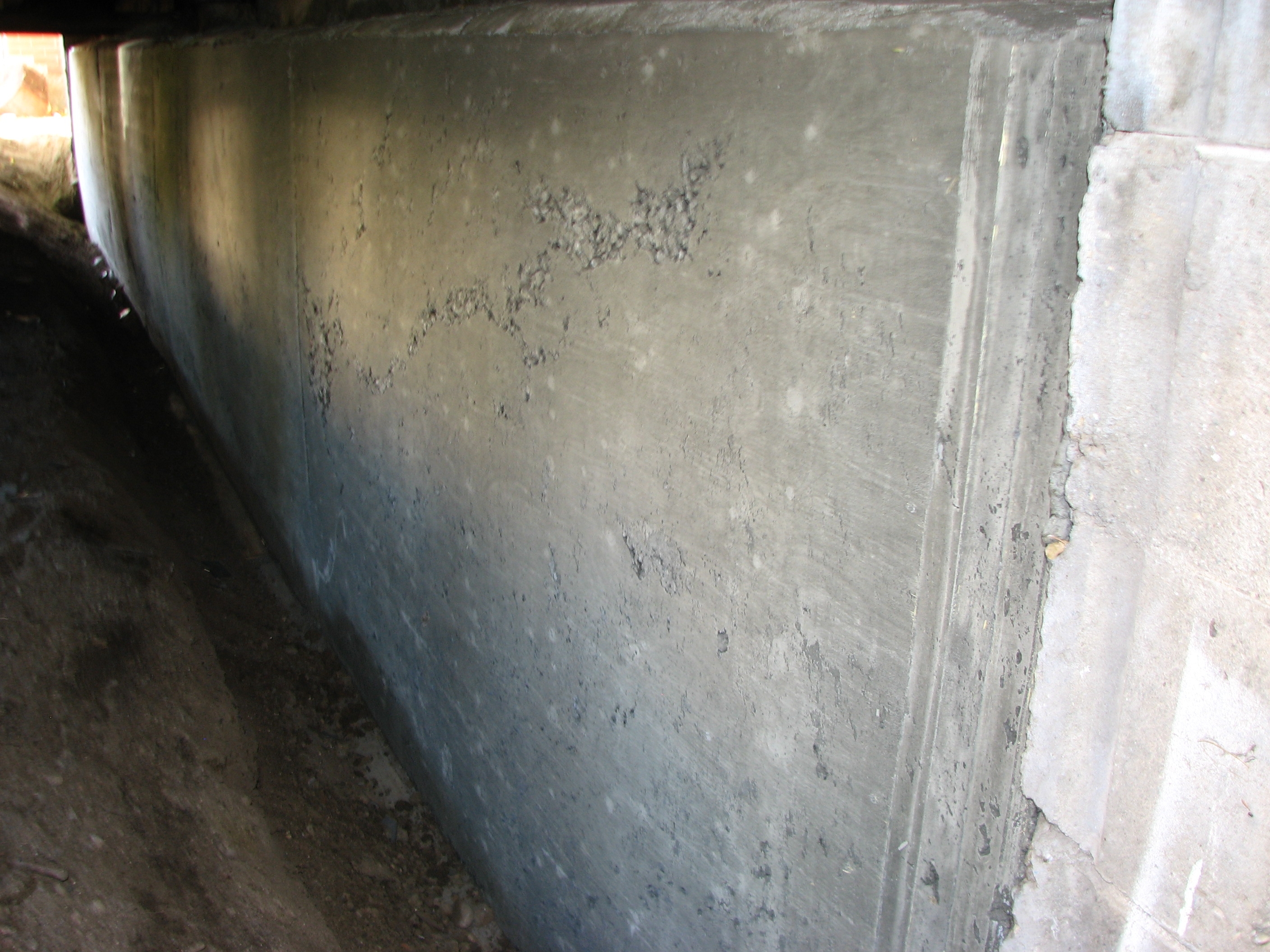
In Alberta, most heritage building foundations are poured-in-place concrete. Some foundations are comprised of concrete blocks while others are comprised of a mixture of masonry units (i.e. fieldstones, cut stones and brick). Now and again flaws such as cracks and spalling (the breaking or splitting of surface layers) manifest themselves. It is not recommended to ignore these deficiencies as, depending on their severity, they can be repaired fairly easily. If left unrepaired, the severity will increase.
Some foundation flaws/cracks are inevitable and often show up early once the building is finished and the full weight of the structure is at rest. Others appear once the structure above and the ground beneath have fully settled. Depending on the ground composition and the depth of the foundation (foundation depths vary, such as a full basement vs. a crawlspace), these settlement cracks will vary in size. And finally, some cracks will suggest that something is wrong with the foundation but if addressed in a timely manner may still allow a reasonable/affordable correction to be implemented.
Foundations can also be damaged by water and seasonal frost heaving. To minimise this damage, ensure that the grade slopes away from the building with sufficient drainage to move the water away. Frost protection can be achieved by embedding the ground with high-density foam insulation to prevent the frost line from going under the foundation if it is less than four or six feet (1.2 metres or 1.8 metres) or by underpinning the foundation to a depth greater than the frost level in the area (this is usually at least 1.8 metres in Canada, which is one of the reasons why we tend to have basements). If one has to dig that far down to protect the foundation against frost then one might as well as make it a usable space.
The Standards and Guidelines for the Conservation of Historic Places in Canada contains a number of sections related to the conservation and repair of foundations: check out the general recommendations of “Structural Systems” (4.3.8) under “Guidelines for Buildings” and for material specific information read about “Masonry” (4.5.3) and “Concrete” (4.5.4) under “Guidelines for Materials.” Depending on the type of structure and level of intervention, other sections of the Standards and Guidelines might also need to be reviewed.
The following images summarize some of the types of foundation cracks and the potential solutions that might be proposed:
Type of crack (minor): surface only, usually located at higher stress points.Proposed solution (minor): concrete patching, parging or an injected filler product.Type of crack (medium): showing signs of structural failure and weakness such as spalling.Proposed solution (medium): containment – pour new foundation wall against the old to stop the structural failure.Type of crack (significant): structural failure has occurred and structure becoming increasingly unstable.Proposed solution (significant): full foundation replacement.
Notes:
Minor and some medium types of cracks can usually be repaired by foundation specialists.
Some medium and all significant level cracks will require the services of a structural engineer.
Due to the specialty of the mixes and structural nature of foundations it is best to seek certified and experienced masonry/concrete professionals to help resolve the situation.
Ultimately, foundations perform a crucial function for our buildings. Whatever problems occur they will begin to transfer to the rest of the structure if they are not addressed. For designated provincial and municipal historic resources the costs incurred to address these issues, whether they be minor, medium or significant (including any engineering costs), would be eligible for grant funding through the Alberta Historical Resources Foundation’s Historic Resource Conservation program.
Written by: Carlo Laforge, Heritage Conservation Adviser.
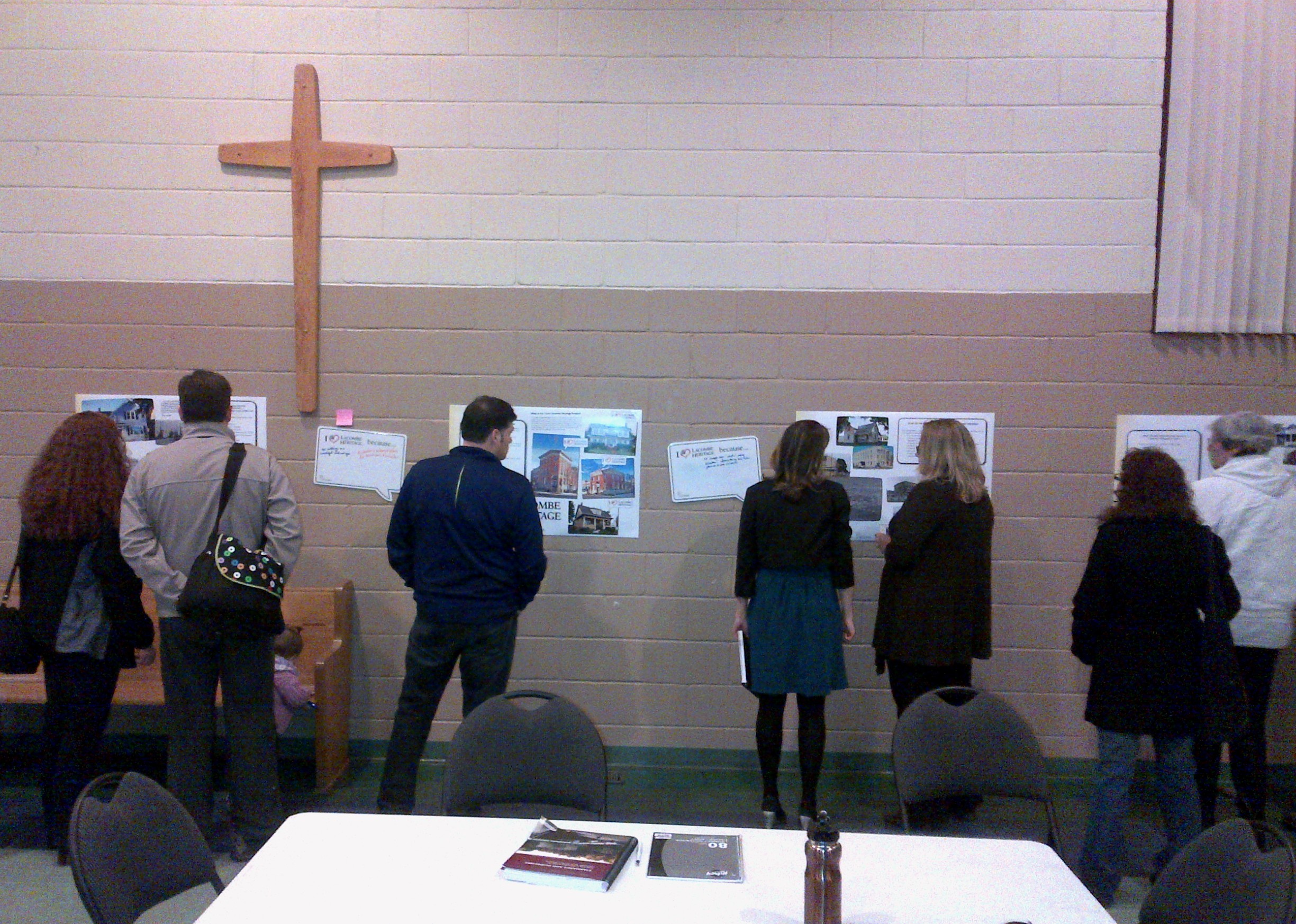
I had the pleasure of attending the City of Lacombe’s Heritage Open House on February 28th. The city presented a draft of their heritage management plan for community perusal and input. The event was hosted by Lacombe’s Heritage Preservation Program at the beautiful St. Andrew’s United Church hall. People started arriving from the moment the doors opened and kept coming until the end, asking great questions about Lacombe’s Heritage Preservation Program. The turnout was wonderful. You can read a bit more about the event itself at the City of Lacombe’s blog.
Lacombe’s Heritage Management Plan will ensure that locally significant historic resources are identified, protected and systematically conserved. Under the plan, the Lacombe Heritage Steering Committee will continue to revise and update the municipal heritage inventory begun in spring of 2011. The city will soon be able to protect locally significant historic places using new policies governing the designation of Municipal Historic Resources. The final elements will be the plan to evaluate changes to designated resources to insure they retain their heritage value.
The plan will be complete and finalized in the coming months. We’ll bring you more information on the plan when it’s complete. The City of Lacombe can soon begin designating its first Municipal Historic Resources. Stay tuned.
For those who are interested in Lacombe’s heritage, you may wish to check out their facebook page: I ♥ Lacombe Heritage.
Written by: Michael Thome, Municipal Heritage Services Officer
Over the past year, Municipal Heritage Services staff collaborated with City of St. Albert staff and the St. Albert Arts and Heritage Foundation on developing a municipal heritage management plan. A grant from the Alberta Historical Resources Foundation, through the Municipal Heritage Partnership Program, partially funded the planning process.
a list of strategies and objectives for sustaining a successful heritage program in St. Albert, including the appointment of a heritage advisory board for community members to advise the council;
provides a process to add new qualifying places to the St. Albert Heritage Inventory; and
includes a process for nominating sites on the inventory for designation as Municipal Historic Resources, among other protective strategies.
The plan also includes a provision to establish a reserve fund that can be used to help finance conservation work on Municipal Historic Resources and for raising public awareness of St. Albert’s heritage.
We are excited to see St. Albert implement the plan over the next decade. If you’d like to discuss the possibility of developing a heritage management plan for your community feel free to contact MHPP staff.
Written by: Michael Thome, Municipal Heritage Services Officer
At the 2012 Municipal Heritage Forum Ann Ramsden, Director of Heritage at the Musée Héritage Museum, provided a presentation on the conservation work completed at the Little White School. Specifically, she spoke about ensuring barrier free access. Thank you, Ann, for sharing this case study.
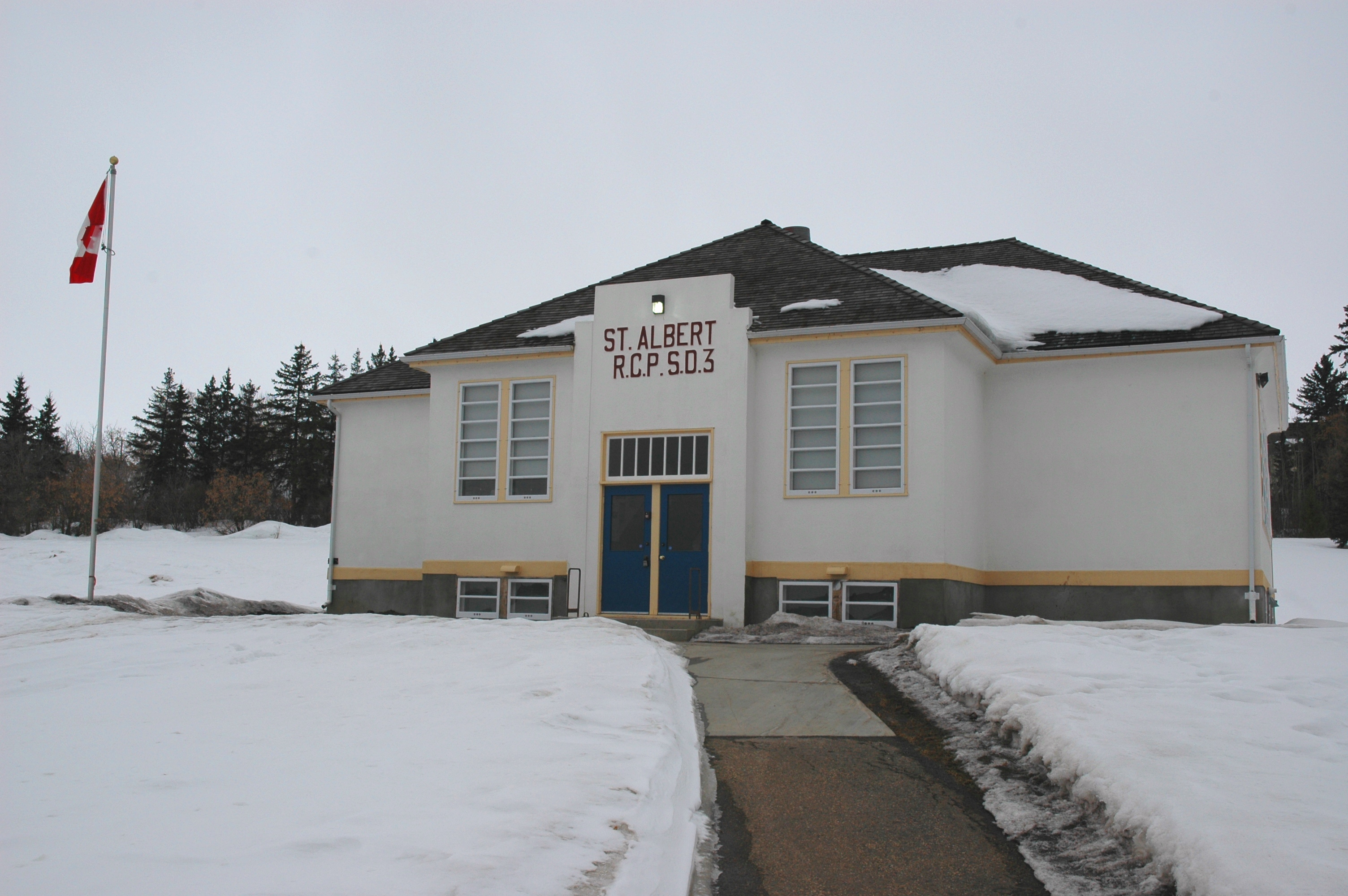
Little White School, St. Albert
The Little White School is a two-room schoolhouse in the City of St. Albert. It was constructed by the St. Albert Roman Catholic School District #3 in 1946 and used as a school until 1987. It was designated as a Municipal Historic Resource in 2009 because it is valued for what it can tell us about Roman Catholic public education in St. Albert. The school is now owned by the City of St. Albert and managed by the Arts and Heritage Foundation.
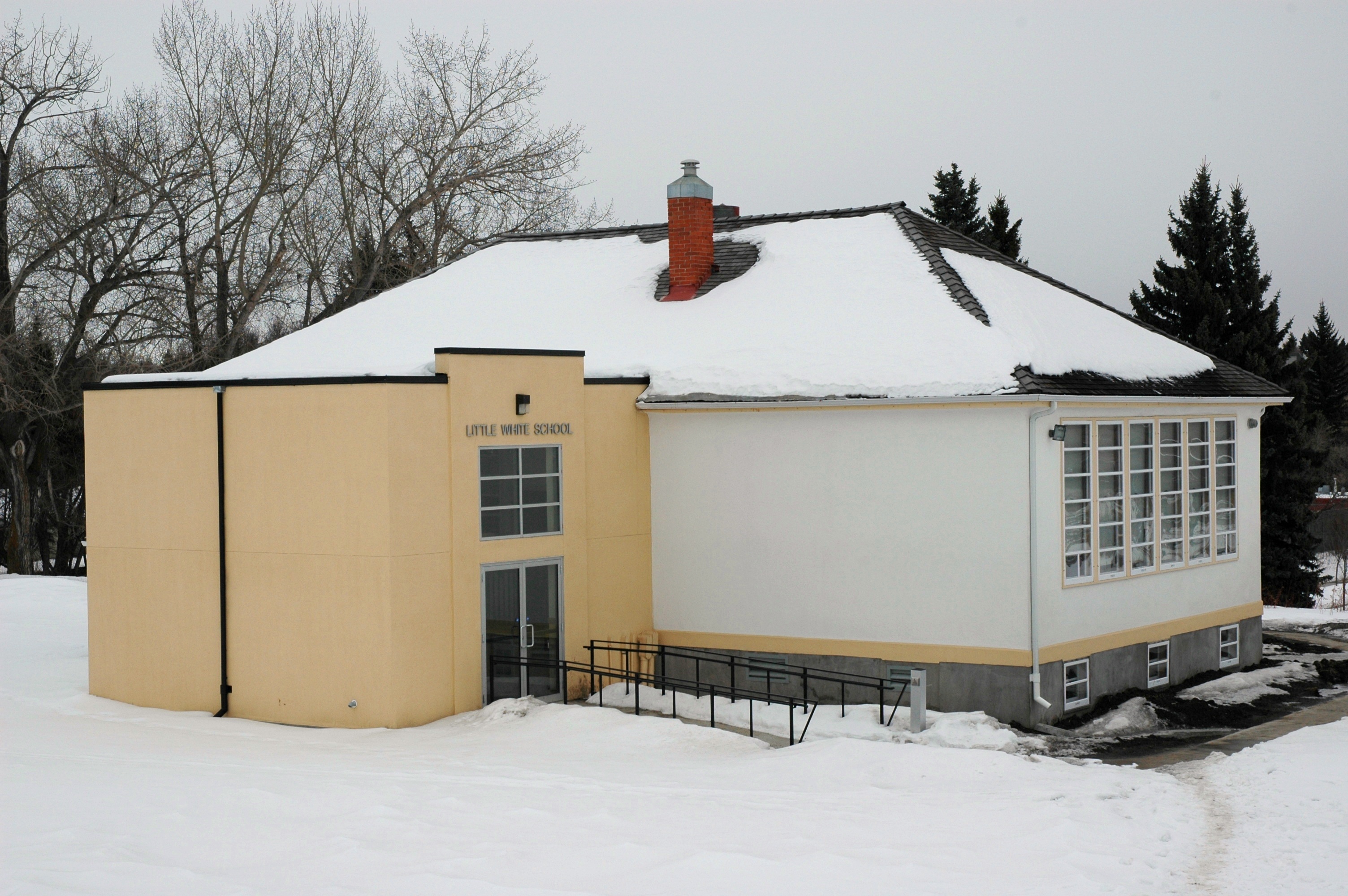
When the museum acquired the building, it needed some conservation work. The stucco, doors and windows needed to be rehabilitated. The shingles were replaced and a ventilation system was incorporated into the roof to prevent condensation. Water was also leaking into the basement through the foundation. The biggest challenge, however, was ensuring barrier free access to the building.
Rear view of the Little White School, St. Albert
The Standards and Guidelines for the Conservation of Historic Places in Canada not only provides advice on how to rehabilitate building elements like stucco, windows or a roof, it also provides advice on planning additions (or other alterations) needed to accommodate changing uses of a historic place. Historic places certainly do not lose their integrity by adding a means of barrier free access. Additions that are compatible with the historic place, yet visually distinguishable from and subordinate to it are welcome, especially if they help ensure the continued use of the place.
Classroom, Little White School, St. Albert
The Little White School gained an addition that contains a wheel-chair accessible entrance and elevator. This is now the main entrance and provides room for students who visit the school to store their coats and boots. The classrooms received a preservation treatment; one of the classrooms is now being interpreted as a 1940s era classroom. The Musée Héritage Museum invites primary school classes to the school to learn more about St. Albert’s history. Students can come and spend a day at the historic school and learn how students from the 1930s thru to the 1950s experienced school. (The Musée Héritage staff has developed several lesson plans around various themes in St. Albert history.)




 RETROactive