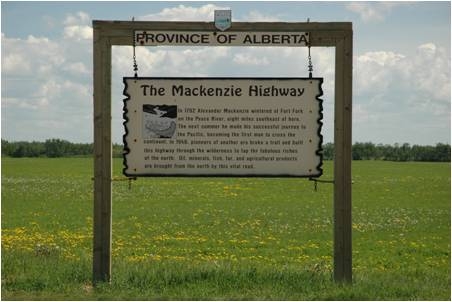
The Joy of Plaques

A tried and true way to recognize your locally significant historic places is with a lasting physical acknowledgement of some kind or another. So it is not surprising that for at least 140 years, communities around the world have used plaques, such as English Heritage’s renowned “Blue Plaques, to celebrate the heritage of a place.

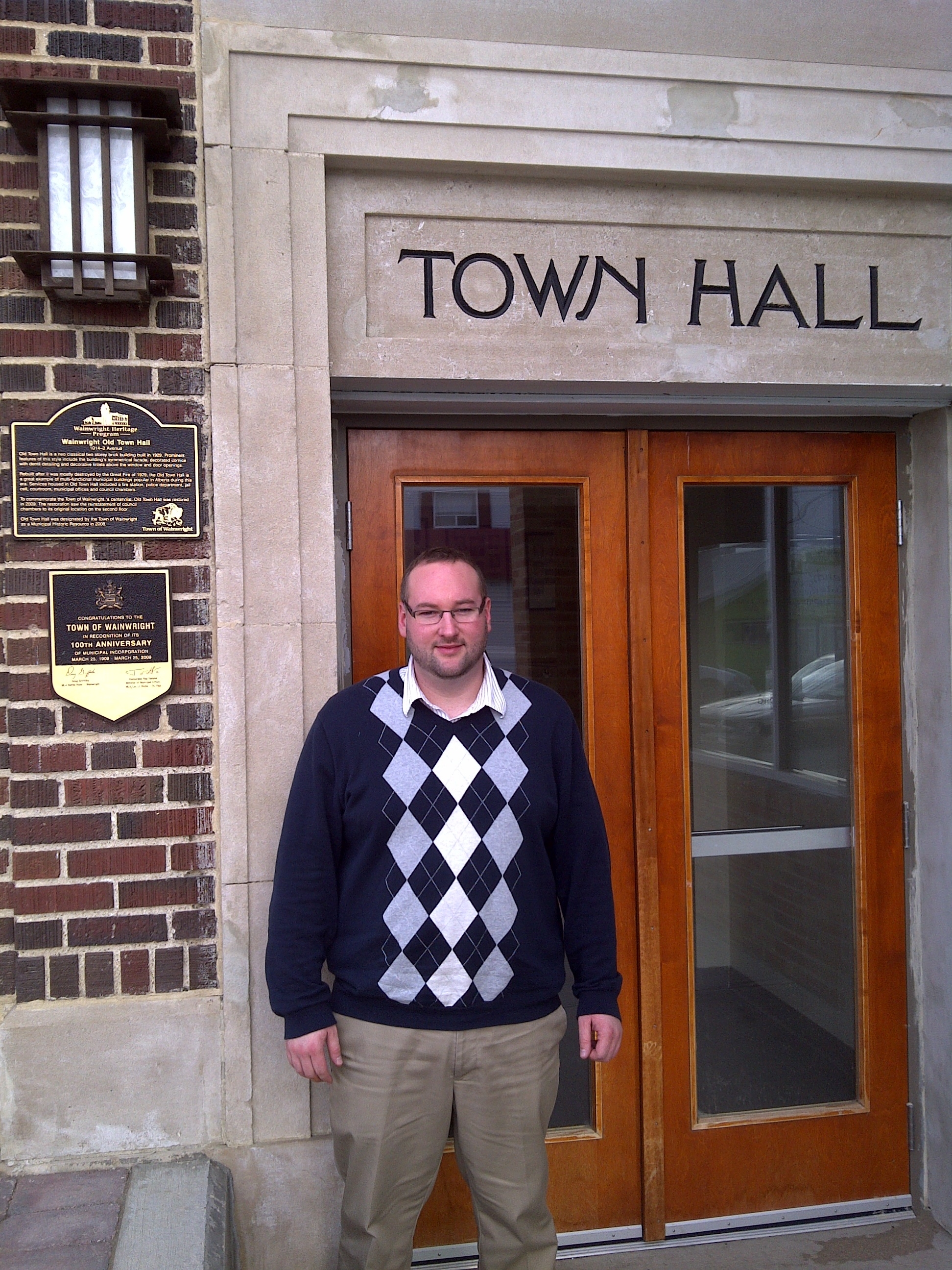
Town of Wainwright plaques with Heritage Program Coordinator Scott Flett

Here in Alberta, we have had our own “blue plaques” to mark Provincial Historic Resources.

In addition, a number of municipalities have gotten into the act. Since 1978, the Historical Resources Acthas given local governments in Alberta the power to legally protect significant properties at the local level, through a bylaw of council. These Municipal Historic Resources carry the same level of legal protection as provincially designated properties, but with local heritage values in mind.

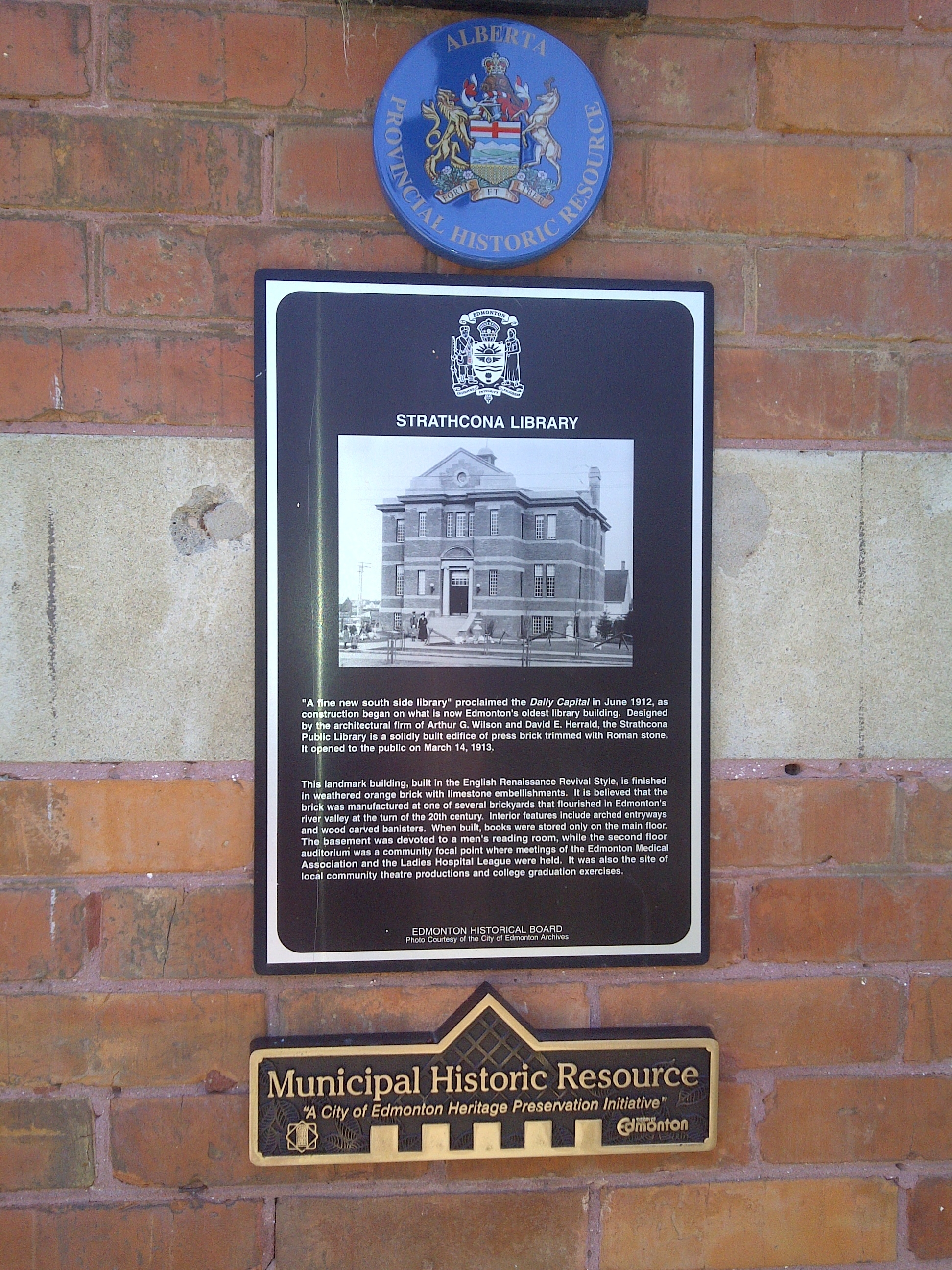
City of Edmonton, Strathcona Library Municipal Historic Resource Plaque

Here on RETROactive, we would like to begin to showcase some of the plaques and plaque programs that have been developed by municipalities around the province. To start with, I’ll just post a few pictures of locally-developed plaques that I have seen on my travels around Alberta. Perhaps these might inspire your community to designate and recognize some of your own locally significant historic places.

If you have pictures of plaques for other Municipal Historic Resources in your community, please feel free to email them to me at Matthew.Francis@gov.ab.ca. We will regularly feature some of these plaques and the meaningful historic places they recognize here on RETROactive, your blog for Alberta’s historic places.

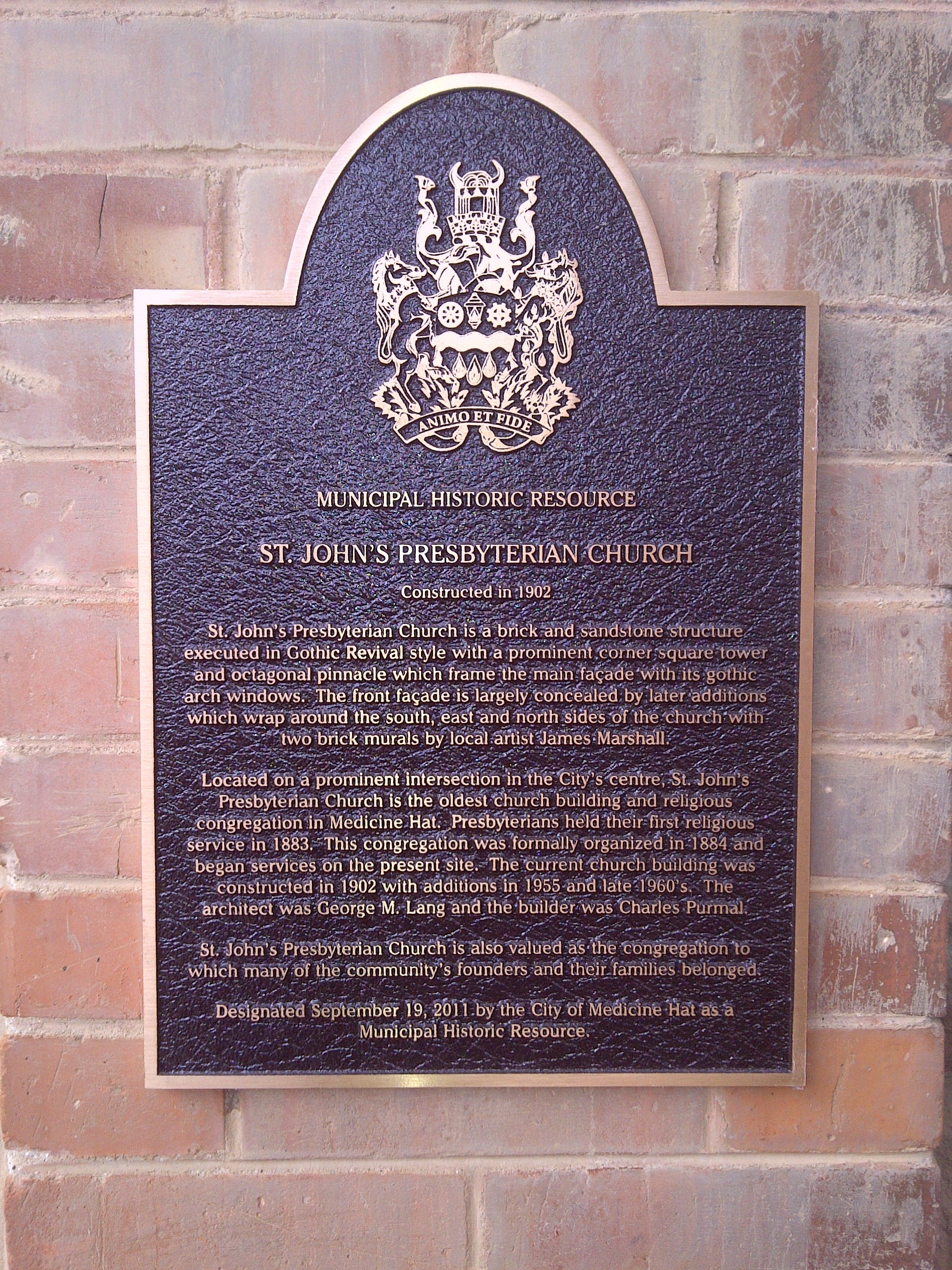
City of Medicine Hat, St. John’s Presbyterian Church -Municipal Historic Resource Plaque

A Vibrant Culture Summit – Arts, Heritage and Redevelopment

Regional Municipality of Wood Buffalo 

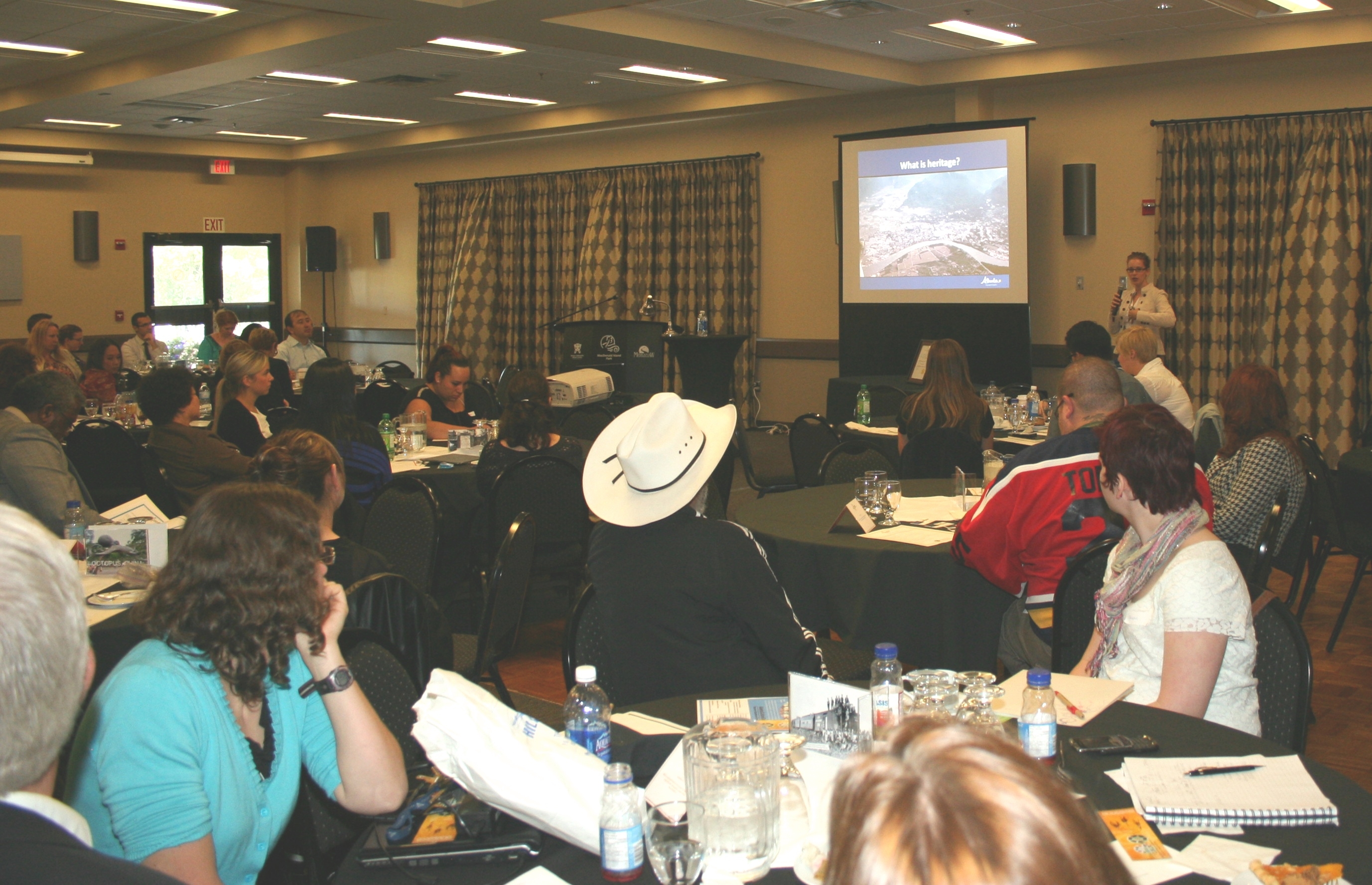
On Thursday, September 20th I was invited to participate in the Regional Municipality of Wood Buffalo’s Vibrant Culture Summit up in Fort McMurray. Attended by approximately 85 area residents and culture enthusiasts, the event sparked conversation about how to enhance local culture.

The day began with a keynote presentation by Gord Hume. As a former municipal councillor and author, he spoke about cultural planning, creative cities and how culture – when combined with economic, social and environmental factors – can produce dynamic, sustainable communities. Three panel discussions and various roundtable questions completed the day.

Attendees listening to my presentation on heritage conservation.

Panel One featured the City Centre Area Redevelopment Plan. Attendees were able to glimpse the sights and sounds intended for a revitalized City Centre. The arts and other cultural pursuits are central components in the plan.

Panel Two served as an update on the creation of Arts Council Wood Buffalo. Established in February 2012, the Arts Council will work with regional arts organizations to strengthen and promote arts in the area.

Panel Three was all about HERITAGE! Jack Peden, Vice President of the Fort McMurray Historical Society, spoke about early river travel in the region, which is a significant aspect of Fort McMurray’s history as the confluence of the Athabasca River and the Clearwater River is located in town. He also featured some of the restored vessels that now call the Fort McMurray Marine Park Museum home.

As the Municipal Heritage Services Officer responsible for working with the Regional Municipality of Wood Buffalo, I was also asked to be part of the panel. I provided a brief introductory presentation on heritage conservation and engaged the attendees in a game of “Is this a historic place?” Through discussion and laughter, it was determined:

  • yes, a historic place can be a 1960, 45 unit apartment building (i.e. Valleyview Manor in the City of Edmonton);
  • yes, a historic place can be a 1966 Safeway Store (formally recognized as a historic place by the City of Vancouver); and
  • yes, a historic place can also be a 160’ steel hangar built in 1953 and located at CFB Cold Lake.

These and other places, despite being relatively “new” and void of boomtown facades, ornate columns or other elements of traditional architecture can still be historic places. Historic places can be pretty or gritty, modern or traditional, modest or ornate, representative or symbolic…. Historic places reflect a community’s evolution – they help to tell the story of how a community has evolved into its present form. It is through the conservation of these varied places that a community’s unique identity is celebrated, enabling the community to be some place, somewhere as opposed to any place, anywhere.

I was very pleased to speak at the Vibrant Culture Summit. I appreciated the opportunity to learn about the cultural successes and challenges occurring in the Regional Municipality of Wood Buffalo thereby allowing me to better understand the region’s varied heritage.  As a Municipal Heritage Services Officer I spend much of my time travelling Alberta meeting with municipal heritage stakeholders. Typically, these meetings are specific to heritage conservation as I advise municipal administration in their development of local heritage conservation programs, present information to councils on our Municipal Heritage Partnership Program, or provide specialized training on municipal heritage surveys, inventories and management plans to Heritage Advisory Bodies. Occasionally – and quite happily – I get the opportunity to speak to a wider range of community stakeholders, and be reminded that heritage conservation is but one aspect responsible for enabling vibrant and sustainable communities. Thank you, Regional Municipality of Wood Buffalo, for offering me one of these opportunities!

Written by: Brenda Manweiler, Municipal Heritage Services Officer

Concurrent Breakout Sessions at Municipal Heritage Forum 2012

Municipal Heritage Forum 2012 (November 8th and 9th) will feature a broad range of concurrent breakout sessions designed to inform and inspire. 

DOWNLOAD: Municipal Heritage Forum 2012_Agenda and Registration Form

CONCURRENT BREAKOUT SESSIONS:

Julian’s Top Ten (Thursday and Friday)

Keynote speaker Julian Smith will describe his “Top Ten Favourite Places in Canada,” and why they are significant and meaningful. Come gain a new sense of perspective on spaces and places from our resident expert, and enter into a conversation about heritage values – both local and global. 

Building a Heritage Community (Thursday only)

Calgary’s heritage community gathers at the “Community Heritage Roundtable” to socialize, hear snappy presentations, and share information on heritage issues.  Run on no budget by a volunteer committee from a spectrum of heritage-related groups, quarterly events routinely attract more than 100 people, and the Roundtable has developed a contact list of more than 700 emails. Learn how this forum, now in its sixth year, is a gateway for people to connect with heritage, an incubator of heritage initiatives and a “force multiplier” for heritage advocates. Get inspired to start a heritage forum in your community! 

Connecting Homeowners and Heritage: Century Homes Calgary (Friday only)

Century Homes Calgary is an incredibly successful grassroots project that engages people to celebrate houses constructed during Calgary’s first big building boom, which peaked 100 years ago.  Inspired by If This House Could Talk”, a similar project first created by residents of Cambridge, Massachusetts, it attracted over 500 participating households in its inaugural summer of 2012. Owners and residents of century-old houses sign up to display a specially designed garden flag, research the history of their homes, and create and display home‐made signs telling their part of Calgary’s story during Historic Calgary Week. Legacy projects are planned that will leverage the huge network of heritage home owners and advocates.  Find out how this participatory heritage project can be replicated in your community!

Using the Standards and Guidelines (Thursday and Friday)

The Standards and Guidelines for the Conservation of Historic Places in Canada are a key tool used in making conservation decisions and alteration approvals for historic places. This classic presentation by Tom Ward, Manager of Heritage Conservation Advisory services is packed with examples and practical know-how. If you have not had training in the “S&G’s” before, this is your chance! If you have, you may just learn something new by attending.

Q & A with Municipal Heritage Services Staff (Thursday only)

Municipal Heritage Services staff – Michael Thome and Brenda Manweiler – will be available to talk with you about whatever municipal heritage issues are on your mind. Want to find out how to conduct a Municipal Heritage Survey? Ever wondered why your community should have a Municipal Heritage Management Plan? Come with your questions! 

Place Names Matter (Thursday and Friday)

Geographical names, or toponyms, serve an integral role in our society. On a practical level they provide reference points, allowing us to easily orient ourselves within our surroundings. However, geographical names are more than just labels on maps; they are a cultural legacy. They can tell us about our history and the values of previous generations. They can reveal trends in exploration and land settlement, resource use and cultural development. They provide us with a sense of both place and time. How we name places and what names we choose for them offer a glimpse of the values held by previous generations and they are a sacred trust that will inform future generations about our values. Join Ron Kelland, coordinator of the Alberta Geographical Names Program as he explains why place names are important, how names are adopted and what can be done to preserve our geographical naming heritage. 

What all municipalities should know about Aboriginal Heritage in Alberta (Thursday and Friday)

Did you know that Alberta Culture, through the Historic Resources Management Branch has a specific program area that works with Aboriginal communities to help preserve and protect their cultural heritage sites? Aboriginal Consultation Advisor Valerie Knaga will be available to give you all the information needed to increase your awareness of how this program area may be able to assist communities. 

Heritage District Learning Lab – It Happened on “Church Street” (Thursday and Friday)

Are you interested in heritage districts or areas? The City of Edmonton is working on creating and defining a unique heritage district in the inner-city. Come hear Heritage Planner David Holdsworth showcase the unfolding process behind the “Church Street” project. 

“Money, Money, Money!” – AHRF Grants 101 (Friday only)

Let’s face it, it takes resources to properly steward historic places. The Alberta Historical Resources Foundation has a number of funding programs and categories, which can help support heritage work. Grants Program Coordinator, Carina Naranjilla, will walk you through the Foundation’s grants and answer your questions.

A World Class Heritage Experience – The Historic Clay District (Thursday and Friday)

Medalta, Medicine Hat’s Historic Clay District is a National Historic Site of Canada and a Provincial Historic Resource. It is also a museum and increasingly a world-class destination in its own right. Hear from Executive Director Barry Finkelman about how Medalta is leading the way in cultural tourism for historic places.

Interested in attending Municipal Heritage Forum 2012?

DOWNLOAD: Municipal Heritage Forum 2012_Agenda and Registration Form

Prepared by: Brenda Manweiler, Municipal Heritage Services Officer

Registration for Municipal Heritage Forum 2012 is now open!

Place Matters!

Municipal Heritage Forum 2012

November 8th and 9th, 2012

Glenbow Museum (Phillips-Conoco Theatre), Calgary, AB

Municipal Heritage Forum 2012 is the annual opportunity for municipal leaders interested in the conservation of locally significant historic places to network with peers and learn about heritage conservation. If you are a municipal heritage planner, heritage advisory board member or councillor we urge you to sign up today!

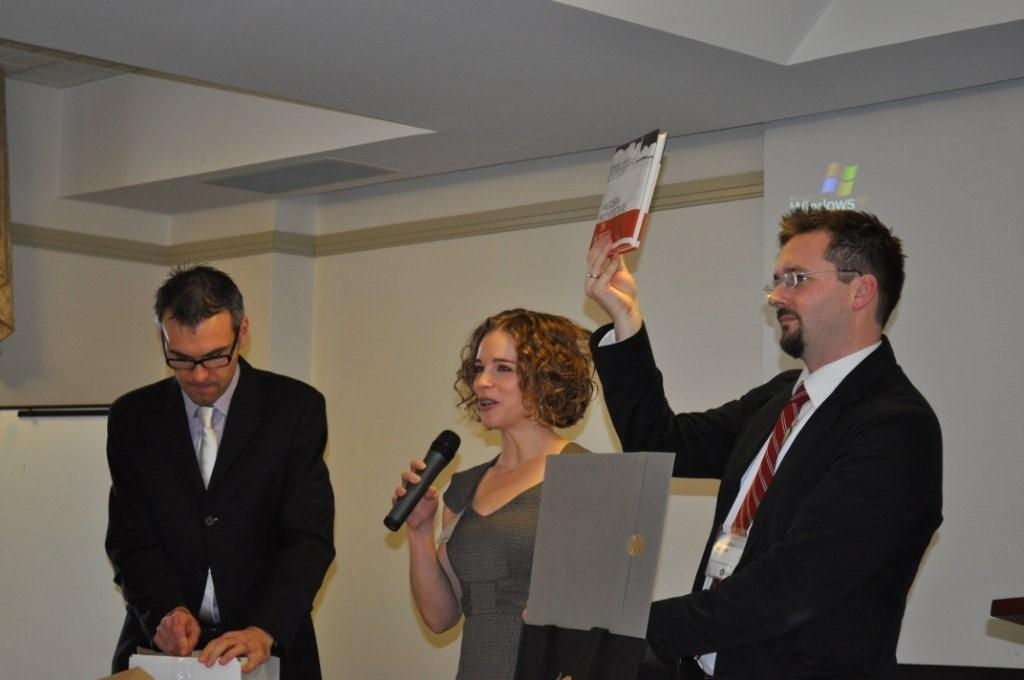
Municipal Heritage Services staff at Municipal Heritage Forum 2011 in Edmonton.

Our keynote speaker, Julian Smith, Executive Director of the Willowbank School of Restoration Arts, will draw upon his heritage conservation work in Canada, France, India and the United States to help us understand why Place Matters! Several of Alberta’s municipalities will present aspects of their heritage conservation programs for discussion and several heritage professionals will provide breakout sessions on various topics.

DOWNLOAD: Municipal Heritage Forum 2012_Agenda and Registration Form

We look forward to seeing you in Calgary!

Written by: Brenda Manweiler, Municipal Heritage Services Officer

Town of Raymond Develops its Context

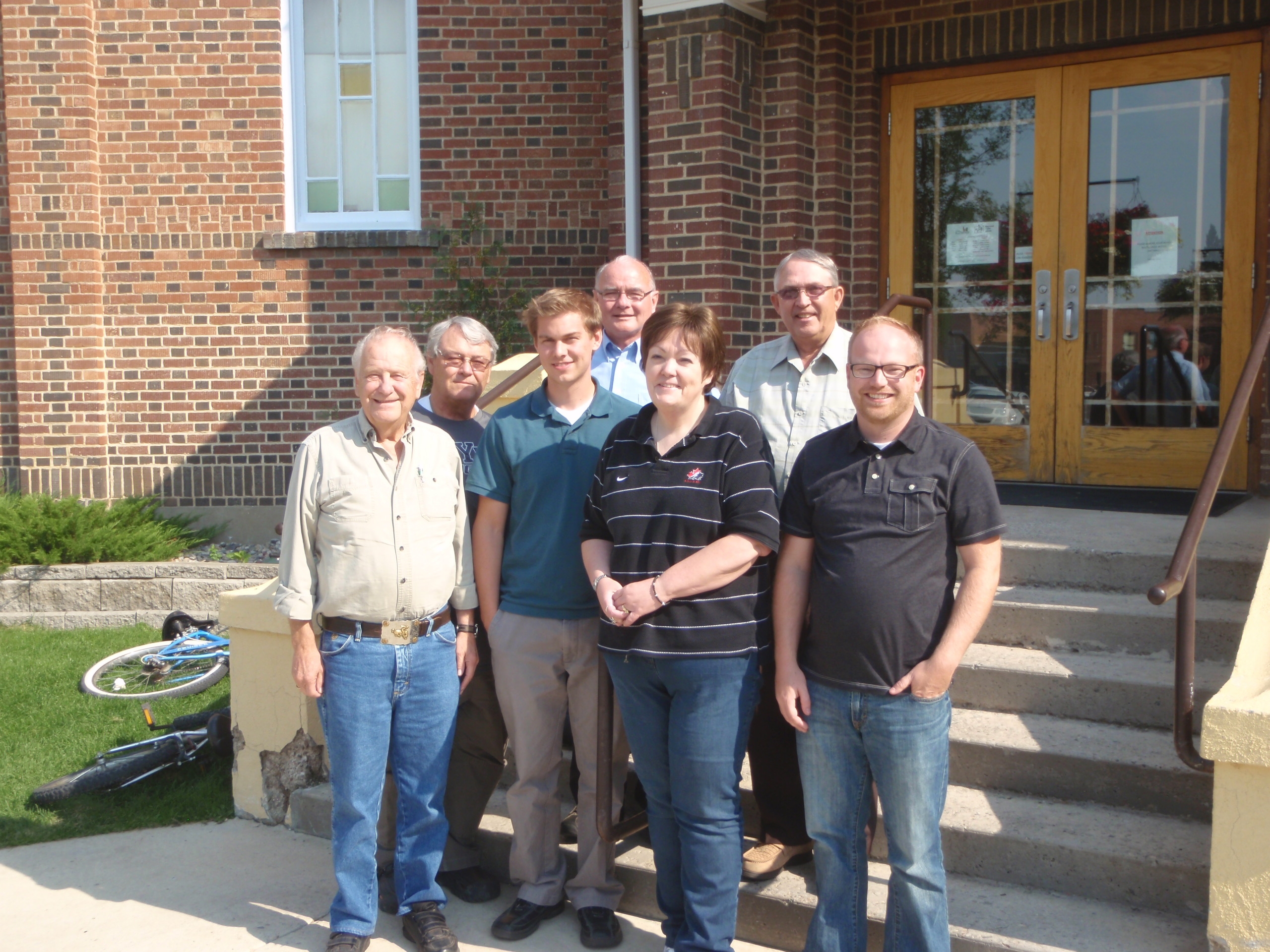
Raymond Historical Inventory Committee Members (L to R): Keith Hancock, Ross Jensen, Kyle Bullock (Municipal Intern), Jack Stone, Cathy Needham (Town Councillor), Richard Kiddle (Raymond Historical Society President).

I had the privilege of leading a workshop for the Town of Raymond’s Historical Inventory Committee on August 27, 2012. The committee has been appointed by town council to explore ways to identify and protect Raymond’s historic resources.

Writing a context paper for the community is an excellent first step. A community cannot evaluate places for significance without a well thought out context paper. A context paper explains how a community’s past shaped its streetscapes and landscape. Writing a context paper helps community members understand their heritage values.

The context paper describes key people, events and groups and explains what their impact was on the community’s development. A well written context paper can be used to distinguish places that the community feels have heritage value, from places that are just old.

After a morning spent listening to me talk, we spent the afternoon drafting an outline for what could be a context paper. We talked at length about the town’s history. Raymond was founded in 1901 by a group of Mormon settlers from Utah. Jessie Knight, a wealthy industrialist from Utah, purchased over 20 000 hectares of land in and around where Raymond is situated. Knight financed the farming of sugar beet  and built a sugar factory to provide the economic basis for the settlement. Raymond was incorporated as a village in 1902 and a town in 1903, and named for Jessie’s son Raymond. Raymond Knight was himself a community leader who, among other things, founded the Raymond Stampede, Alberta’s oldest annual rodeo.

We worked through a list of several themes:

  • Culture
  • Economy
  • Politics and Government
  • Religion and Spirituality

Each theme was a starting point to talk about individuals, groups and events that shaped Raymond. It was interesting to hear the stories. Raymond was founded and deeply influenced by members of the Church of Jesus Christ of Latter Day Saints, but has never been exclusively Mormon. Japanese Buddhists began arriving in the area in 1904. (Indeed they established a Buddhist temple in a former Latter Day Saints church acquired from the Mormons in 1929, which is designated as a Provincial Historic Resource). The people of Raymond are passionate about sports—when they built a new high school several years ago they raised extra funds to build a gymnasium large enough to accommodate all the fans. Raymond’s citizens also love the performing arts and Raymond has several amateur choirs and theatrical companies to prove it. I was particularly fascinated to learn about how the Raymond Stampede has grown from a rodeo to a homecoming event. Every year on July 1st, the community members open their homes to friends and relatives who return to take in the parade, rodeo and other homecoming festivities. It sounds like the population of Raymond probably doubles or triples that weekend.

Over the next few months, Raymond’s committee will begin exploring its heritage values. The result will be written up and presented to community members for their input. When it’s finalized, the context paper will give Raymond a means to evaluate individual sites for heritage value. This is turning out to be a really interesting project. I look forward to working with Raymond in the future as this project ramps up.

Written By: Michael Thome, Municipal Heritage Services Officer
Clearwater County creates a future for historic Nordegg townsite

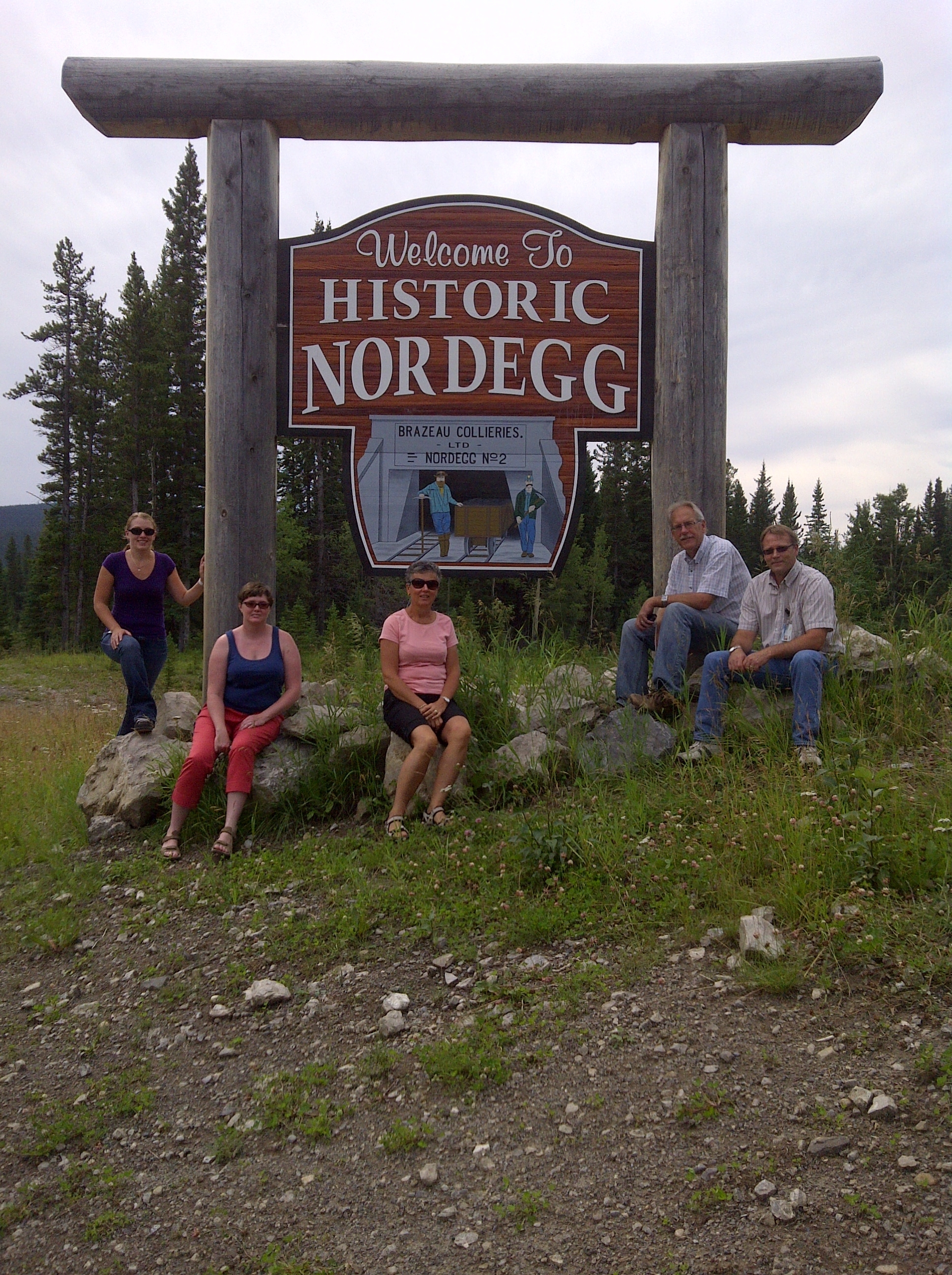
Clearwater County staff, (L-R): Kim Jakowski, Amanda Wilson, Marilyn Sanders, Joe Baker, Rick Eamons

On August 8th I joined five members of Clearwater County’s staff for a visit to the Nordegg townsite, where the County has for many years been laying the foundation for a dynamic rejuvenation of this historic Alberta community. 

In particular, the municipality has recently partnered with the Municipal Heritage Partnership Program to evaluate ten properties of historic interest, five within Nordegg, and five in the surrounding rural areas. Clearwater County was awarded a grant of $12, 500 for this Municipal Heritage Inventory project. 

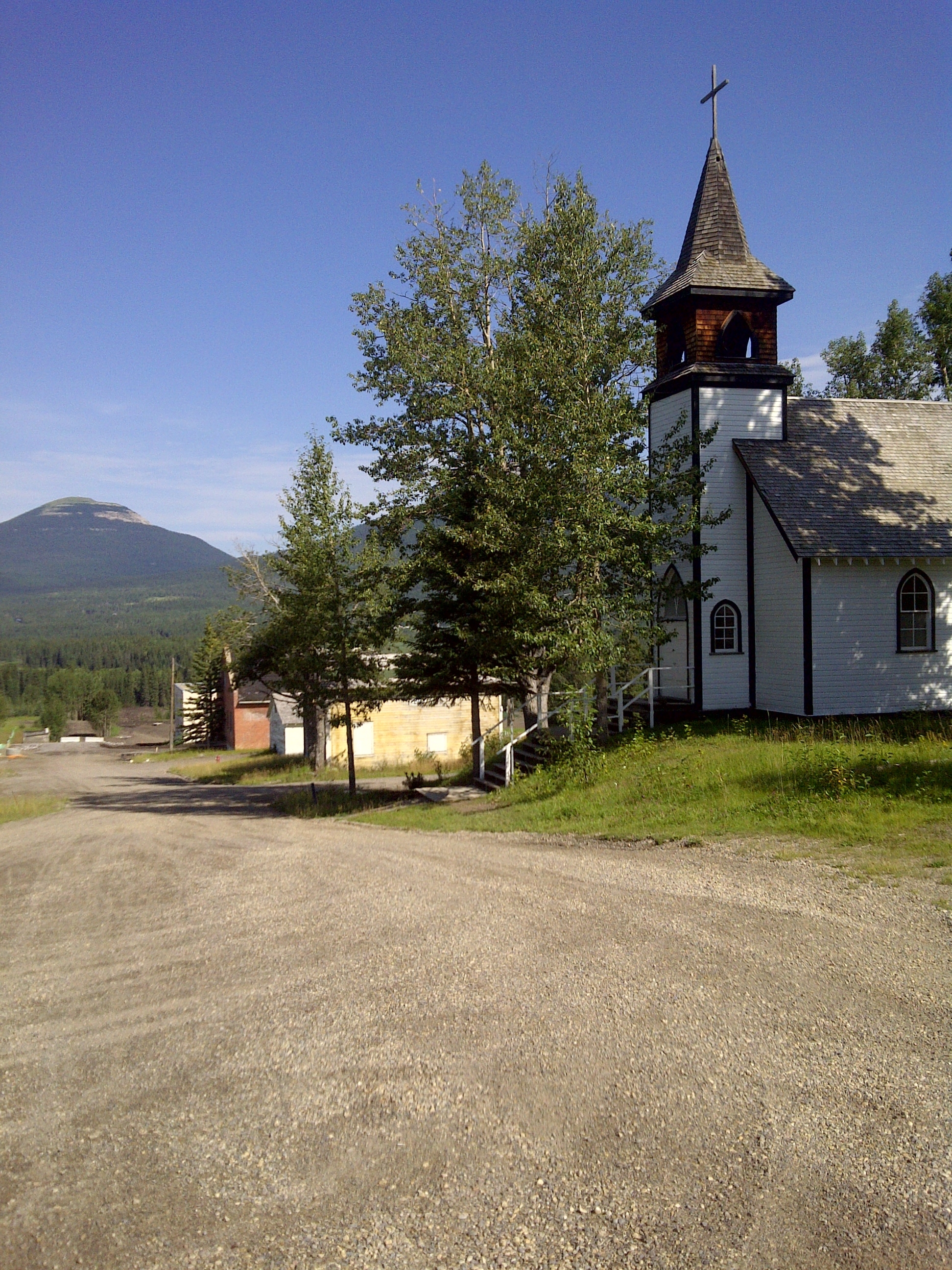
Nordegg streetscape

More than ten years ago, Joe Baker, the County’s Director for the West Country and Planning Development, got the ball rolling for a future for this once bustling mining community by creating the Nordegg Development Plan. This plan envisioned that new life could emerge within the historic environment which once housed more than 2, 500 people, many of them employed by the Brazeau Colliers mine, which built the townsite.

Now, after considerable planning and infrastructure development at Nordegg, the Townsite is becoming more and more ready

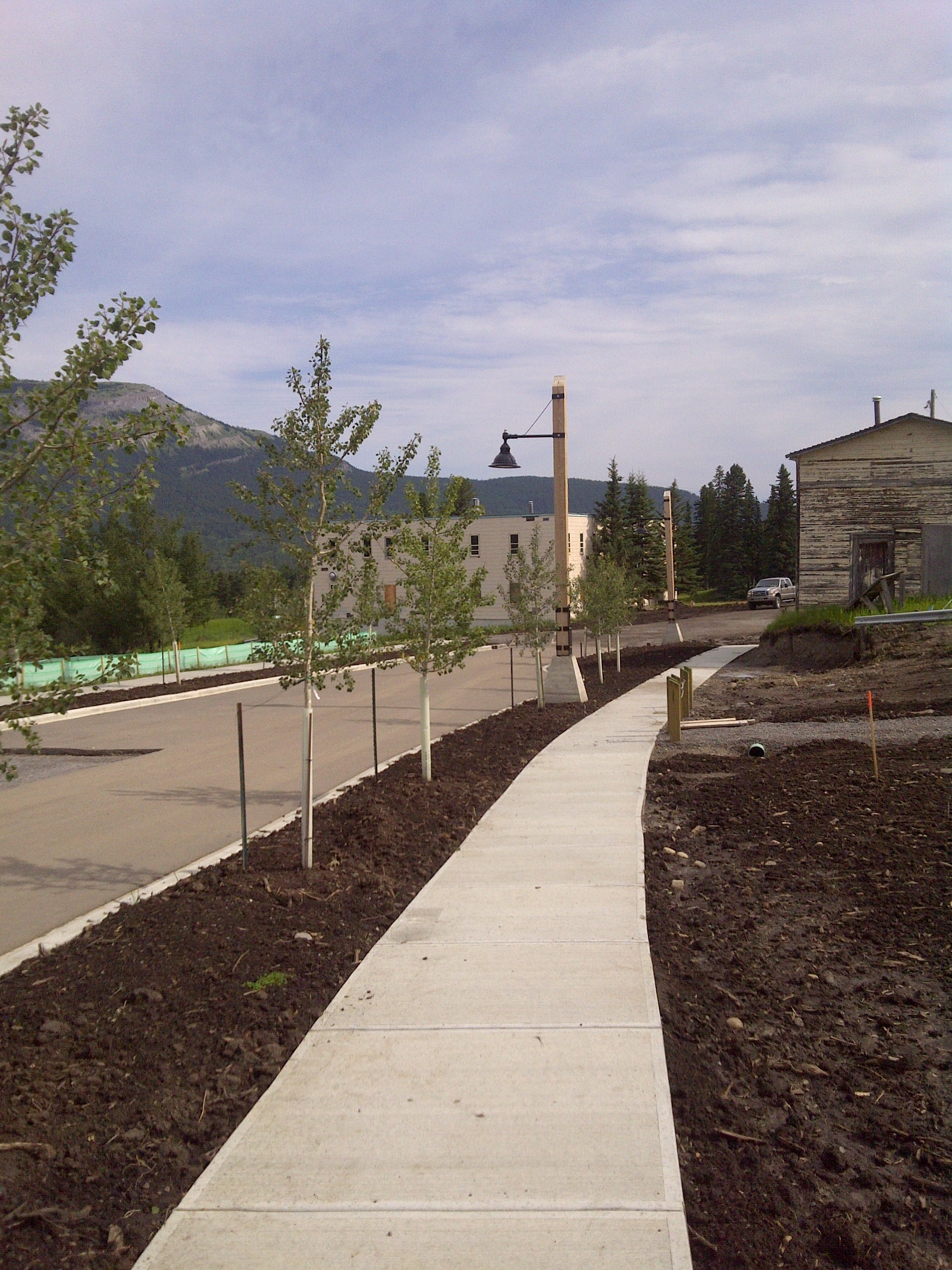
Nordegg sidewalks and light standards

to accommodate new life, both in terms of commercial and residential development. New residential streets have been built, along with sidewalks and light standards.

The historic resources evaluated on Main Street, including the former bank, church, general store and garage, which will anchor and inspire new construction informed by sound principles for new construction in historic districts.

This is an exciting time as historic places can become a value-added catalyst for sustainable growth in rural Alberta.

Written by:Matthew Francis, Manager of Municipal Heritage Services

Keynote Speaker Announced!

We are pleased to announce that the 2012 Municipal Heritage Forum keynote speaker will be Julian Smith, Executive Director of the Willowbank School of Restoration Arts in Queenston, Ontario. Julian has many years of experience as an architect and scholar focused on heritage conservation. He recently advised the United Nations Education Scientific and Cultural Organisation (UNESCO) on the development of recommendations for Historic Urban Landscapes. Julian’s wide-ranging experience makes him the pre-eminent person to speak about our theme, “Place Matters!”

To learn more about Julian and some of the innovative and significant projects that he may speak about at our Forum, check out the brief biography that is posted on the Willowbank website: 

About Julian Smith:

Julian is an architect, conservator, scholar and educator. He is internationally recognized for his contributions to the field of heritage conservation in general, and to cultural landscape theory and practice in particular. After a childhood in Montreal, Quebec; Delhi, India; and Cambridge, Massachusetts, he did undergraduate work at Oberlin, graduate studies with Kevin Lynch and others at MIT, and a certificate in preservation planning at Cornell. He worked in the contemporary design field with Peter Eisenman at the Institute for Architecture and Urban Studies in New York City, and later returned to India to do research on cognitive mapping of historic town centres in South India. He moved to Canada and eventually became Chief Restoration Architect for the National Historic Sites program, a position he held for six years. He then established his own architectural and planning practice, and also founded and directed the graduate program in Heritage Conservation at Carleton University. He became Executive Director of Willowbank in 2008. Julian has been responsible for design and development work involving significant cultural sites in Canada, the U.S., France, Italy, India, Sri Lanka, and Japan. Among his projects are the restoration of the Vimy Monument in France, the Aberdeen Pavilion in Ottawa, and the Lister Block in Hamilton, and master plans for the Parliament Buildings in Toronto, the Central Experimental Farm in Ottawa, and a new campus for a historic college in south India. He has also developed policy documents for a variety of federal and provincial agencies in Canada, and has been Canadian delegate to UNESCO for the drafting of the new international recommendation on Historic Urban Landscapes. His use of a cultural landscape framework allows him to move across the boundaries between architecture, landscape and urban design. Julian is architectural advisor to the Trustees of Queen’s University, a past member of the Advisory Committee to the Minister of Canadian Heritage, and a frequent contributor to international forums. He is a recipient of Heritage Canada’s Gabrielle Léger Award and the Architectural Conservancy of Ontario’s Eric Arthur Award, both recognizing lifetime achievement in the heritage conservation field.

Interested in hearing Julian speak? If you are a municipal heritage stakeholder (i.e. municipal staff member, heritage advisory board member, councillor) look into attending our Municipal Heritage Forum on November 8-9, 2012 in Calgary. Detailed information about the Forum will follow shortly.

Written by: Brenda Manweiler, Municipal Heritage Services Officer
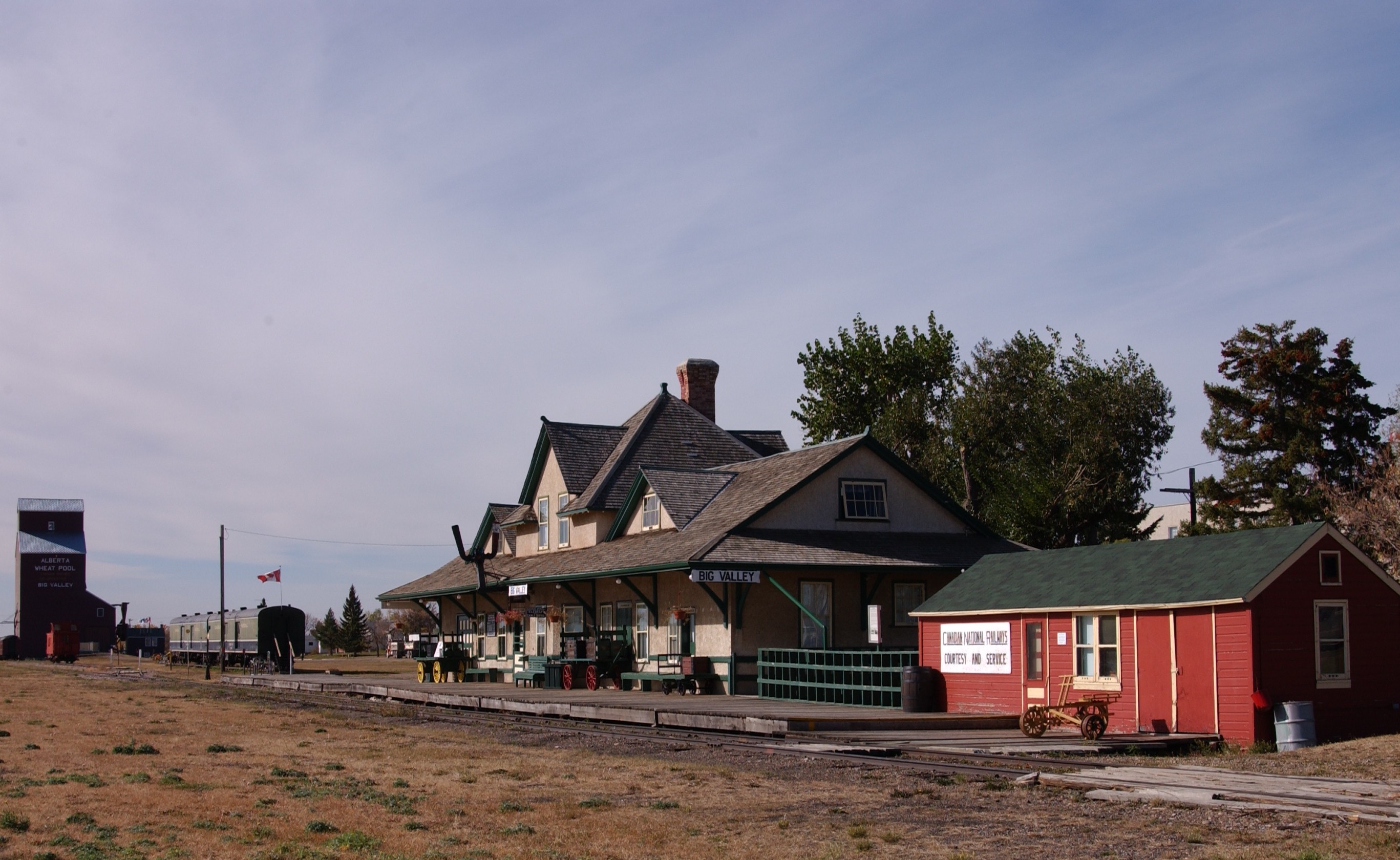
All Aboard! Big Valley Canadian Northern Railway Station Celebrates 100 Years

Canadian Northern Railway Station, Big Valley

At one time, more than 800 communities in Alberta had a train station. This is no longer the case. Fewer than 10% of Alberta’s train stations remain today, and even fewer continue to serve their original purpose. The Canadian Northern Railway Station at Big Valley – designated a Provincial Historic Resource in 2005 – is one of those few. Train excursions run regularly from Stettler to Big Valley, often with the mighty 6060 Steam Locomotive (also a Provincial Historic Resource) in the lead.

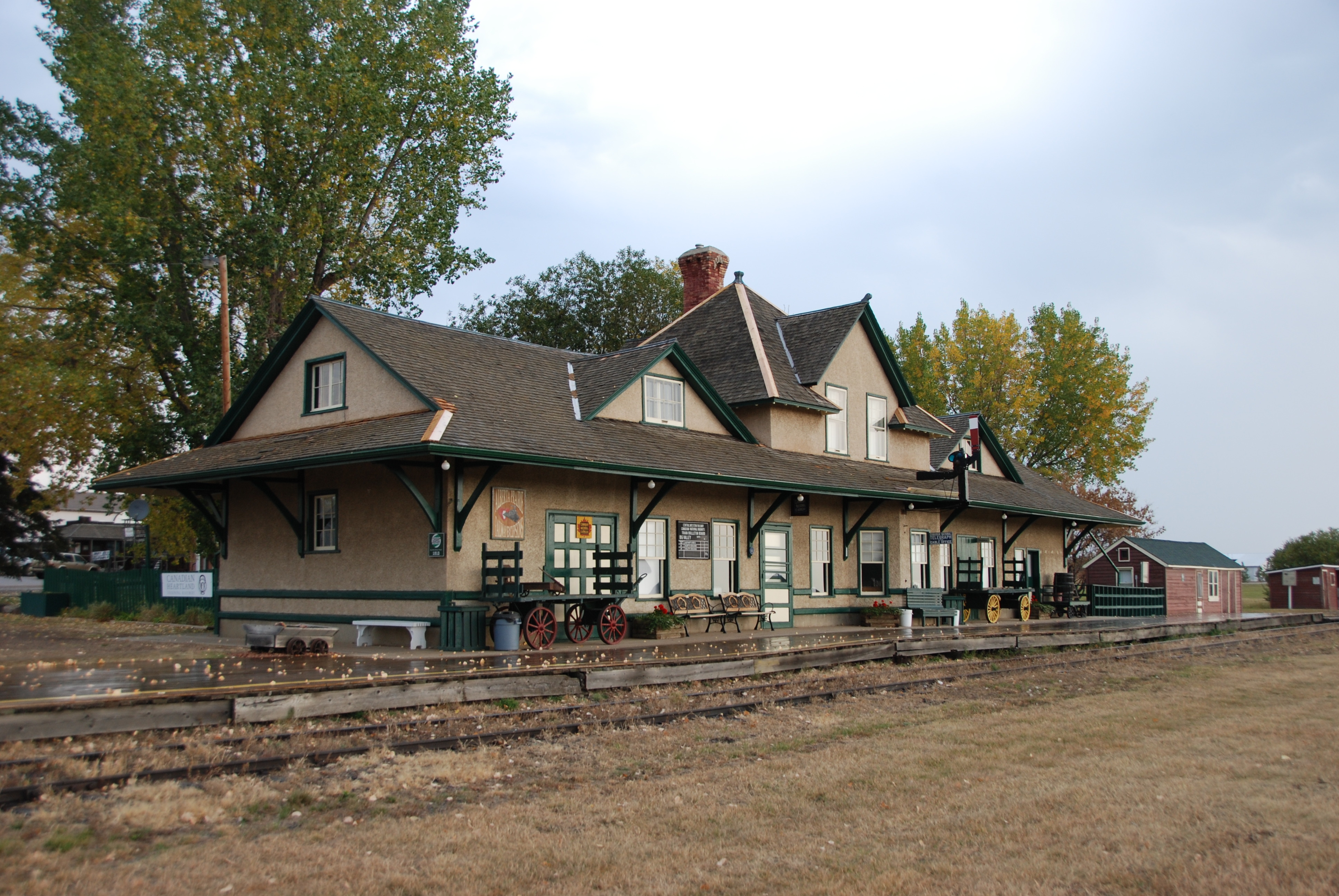
The Big Valley CNoR station in 2011

The Big Valley CNoR station received a restoration grant from the Alberta Historical Resources Foundation this year, just in time for its 100th birthday. The Canadian Northern Society is planning a big party in honour of the centenary on Saturday, September 29. Check out the poster! Make sure your visit includes the roundhouse, which was designated along with the railway station. Another site worthy of note in Big Valley is St. Edmund’s Anglican Church – the Blue Church at the top of the hill – which was designated a Provincial Historic Resource in 2002.

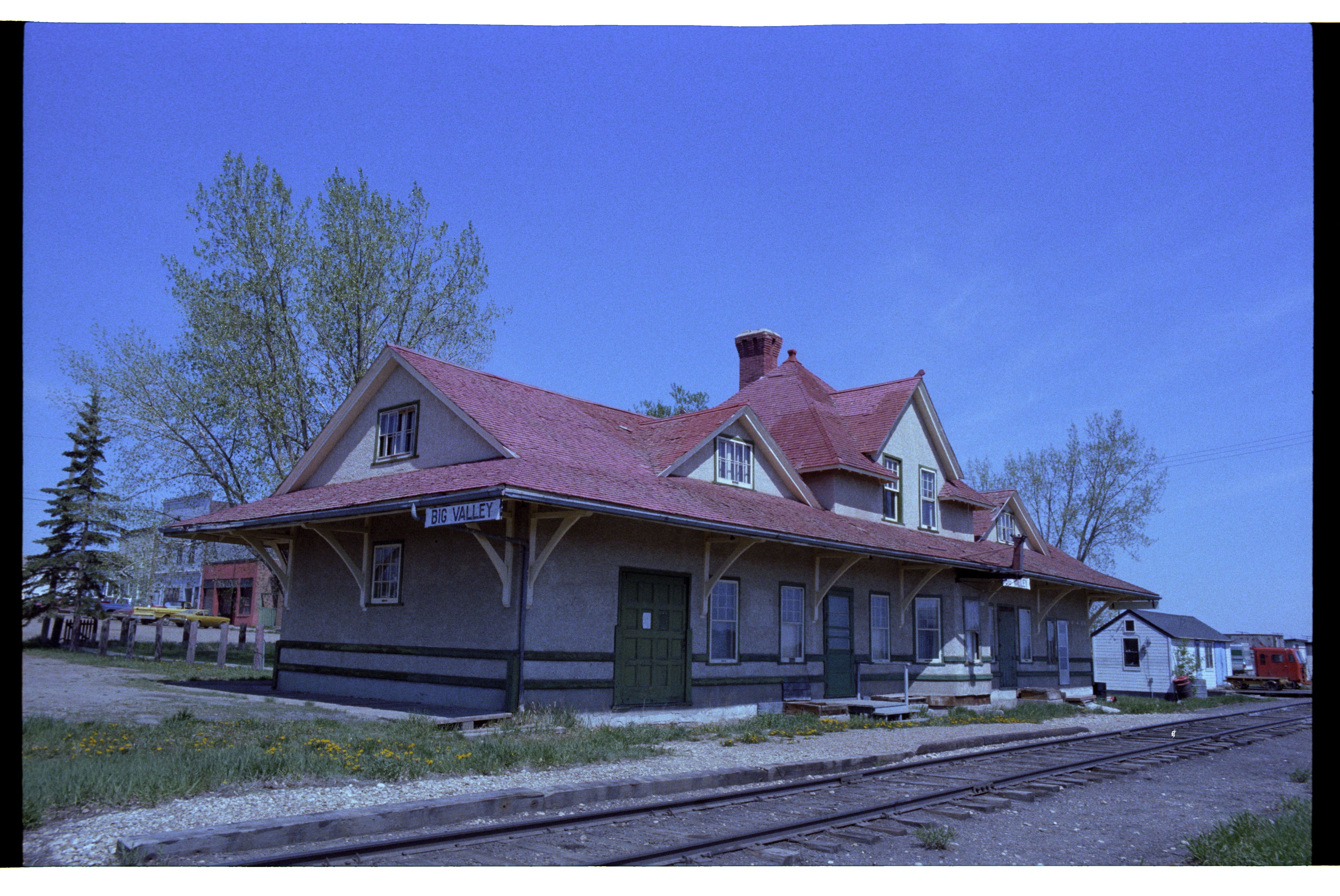
The Big Valley CNoR station in 1979 (79-R0375-27)

Sixteen other train stations have been designated Provincial Historic Resources. They are at Camrose, Claresholm, Didsbury, Empress, Fort Saskatchewan, Heinsburg, High River, Lethbridge, Meeting Creek, Paradise Valley, Peace River, Red Deer, Sexsmith, Smoky Lake, Strathcona (in Edmonton), and Vegreville. The stations at Beiseker, High River, Red Deer and Strathcona have also been designated by their respective municipalities. Additional recognition for Alberta train stations has come from the federal government, which has declared those at Banff, Empress, Hanna, Jasper, Lake Louise, Medicine Hat, Red Deer and Strathcona to be Heritage Railway Stations.

Written by: Dorothy Field, Heritage Survey Program Coordinator

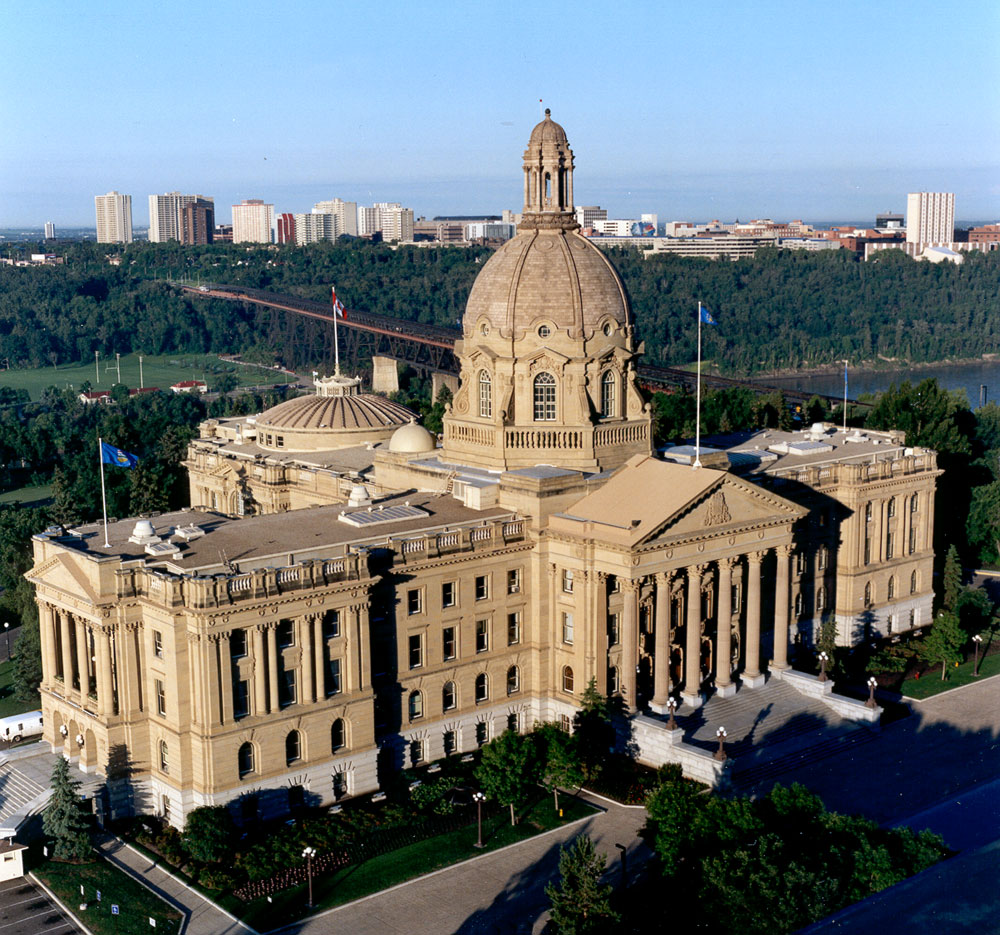
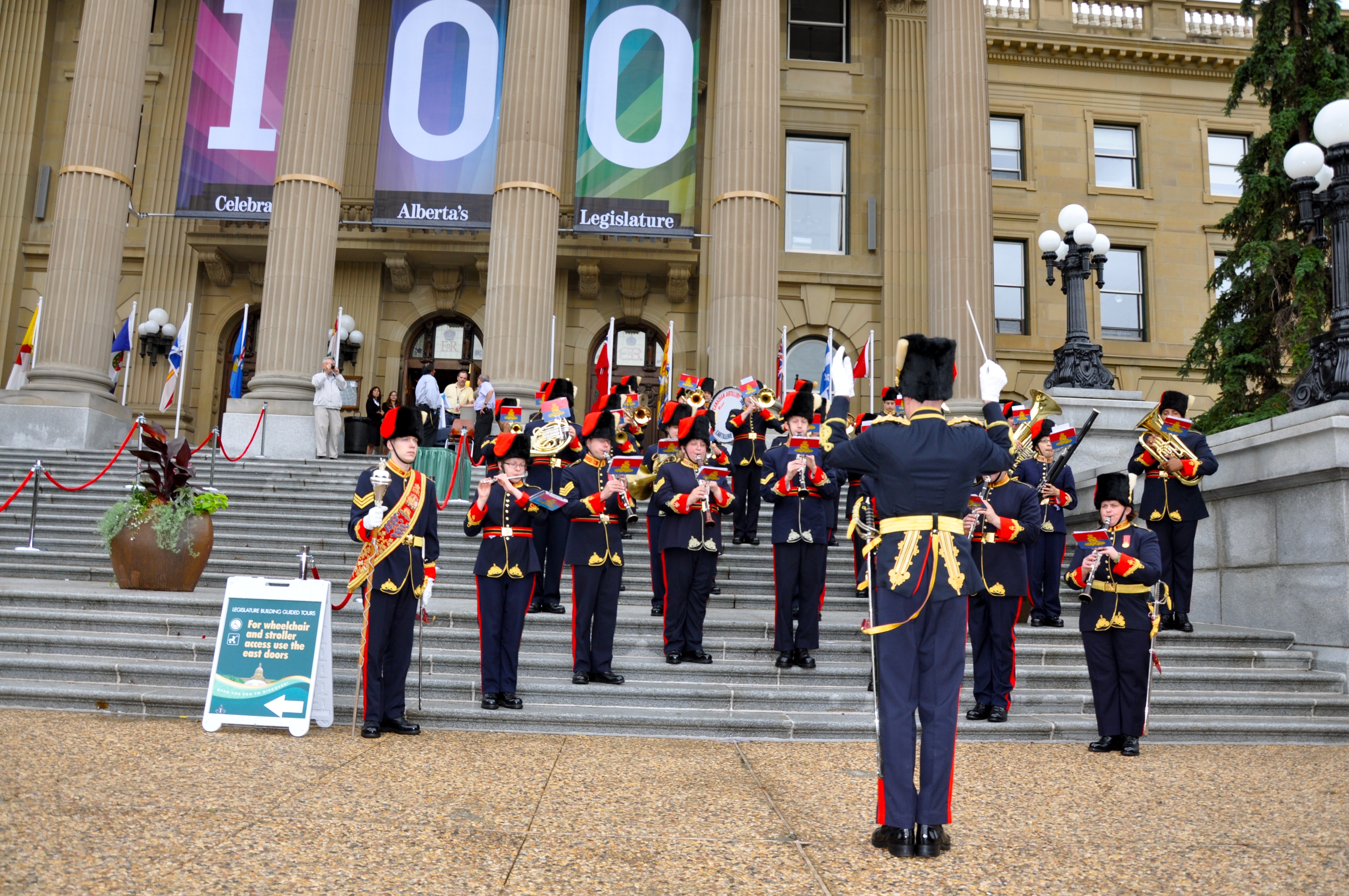
Alberta Legislature Building and South Grounds Designated a Provincial Historic Resource

Photo: Courtesy of the Legislative Assembly of Alberta

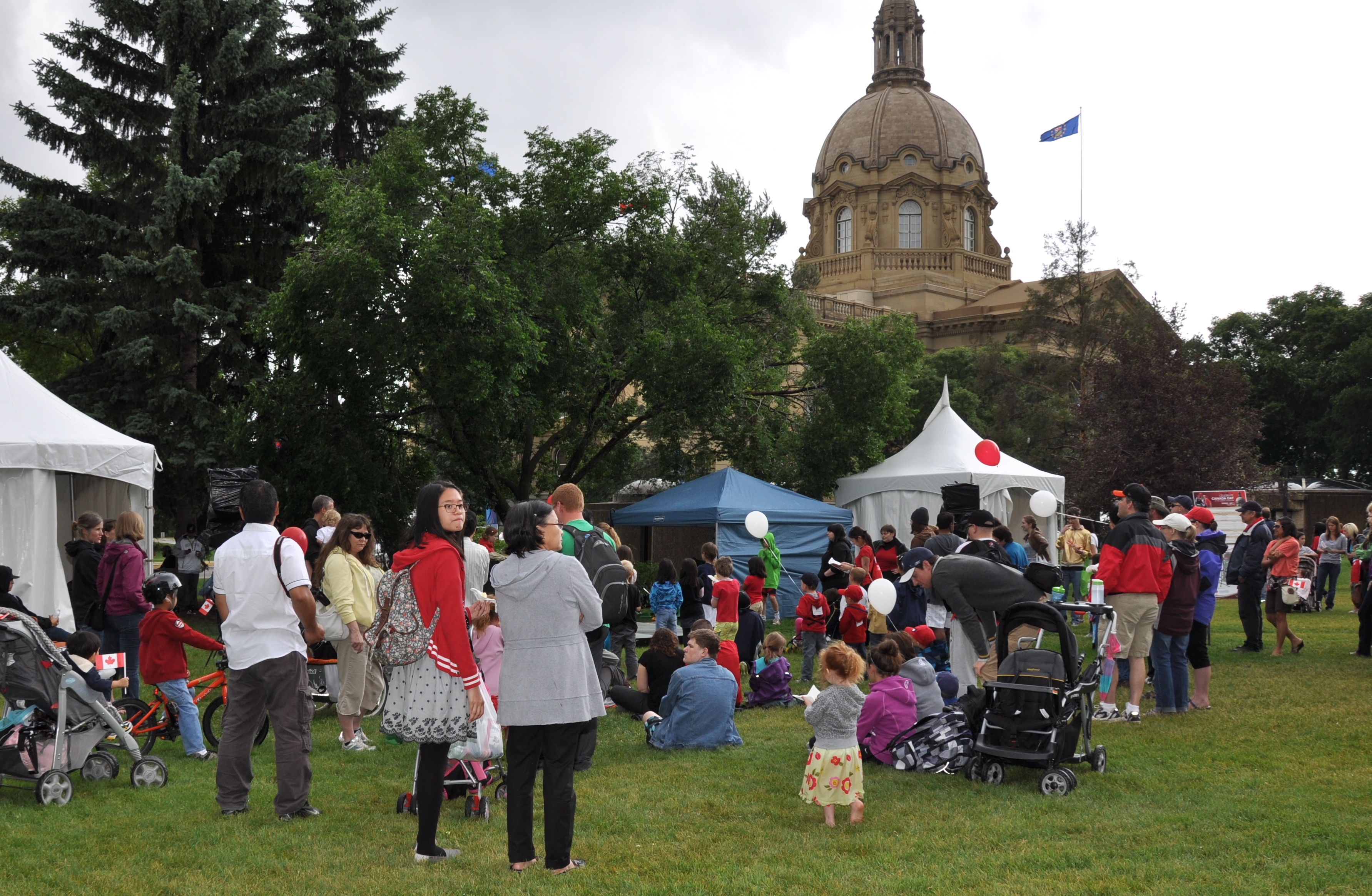
On Sunday, September 2, 2012, during the Legislature Building’s centennial celebrations, Premier Alison Redford announced that the Legislature Building and portions of its south grounds have been designated a Provincial Historic Resource.

As explained in the Government of Alberta’s official news release, “the Alberta Legislature Building is an example of Beaux-Arts architecture popular in North America between 1895 and 1920. The south grounds that have historically served as a recreation area also contain archaeological resources associated with the Hudson’s Bay Company’s Fort Edmonton.” To read the complete news release, click here.

Check out the following photographs from the centennial celebrations:

Photo: Courtesy of the Legislative Assembly of Alberta

Written by: Brenda Manweiler, Municipal Heritage Services Officer
Accepting Applications: Renewed Heritage Markers Program

Deadline: October 1, 2012

The newest addition to Alberta’s heritage markers family.

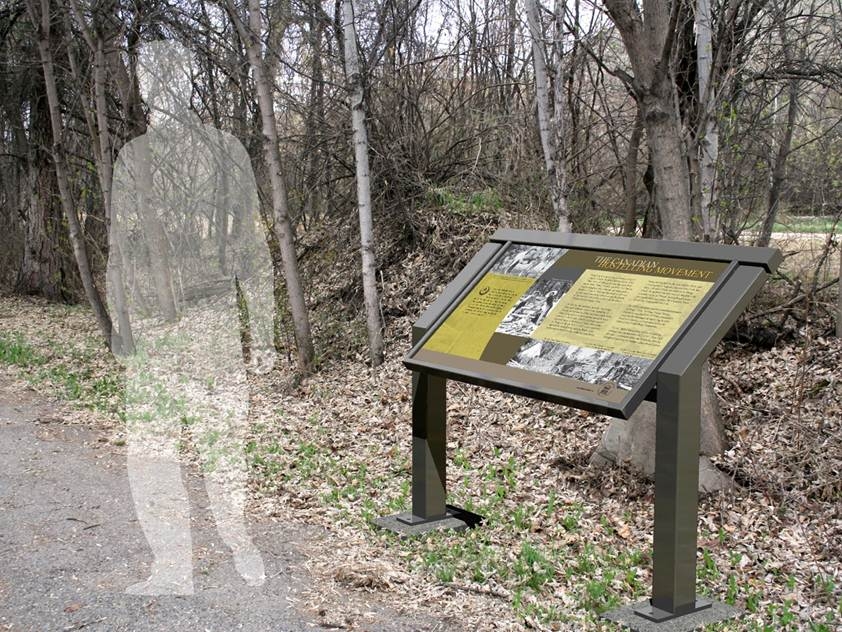
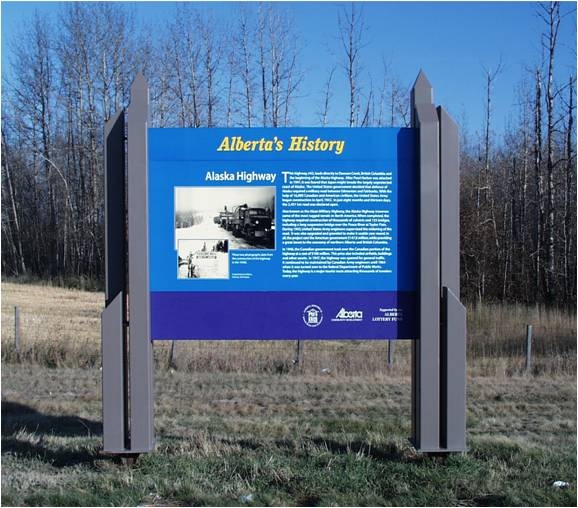
Alberta Culture is very pleased to announce the launch of its renewed Heritage Markers program.  Albertans are familiar with the many roadside signs erected over the years by Alberta Culture to promote greater awareness of our province’s heritage.  From the frontier-style signs of long ago to the robust “Big Blue” signs of more recent years, the Heritage Markers program has engaged travellers along Alberta’s highways and byways on a range of eclectic and compelling heritage topics.

One of the “Big Blue” signs.

The program is now taking a bold step forward and introducing dynamic new designs, greater flexibility of location, and more rigorous public engagement. The Heritage Markers program has designed more modestly-sized markers that incorporate lively, more colourful interpretive panels.  The markers are perfect for placement along trails, within parks, and in other public spaces.

An early roadside sign in Alberta.

Albertans are encouraged to submit applications to the Heritage Markers program to recognize the people, places, and events that have shaped our province’s unique character.  If an application is accepted, Alberta Culture will assume all the labour and costs of creating and installing a new heritage marker.  If you think you have a heritage topic that Albertans should know about, please visit the Heritage Markers program website, where you can review the project guidelines and consider submitting an application.  Please note that the next application deadline is October 1, 2012.

If you have any questions about the program, please contact me, Matthew Wangler.

Written by: Matthew Wangler, Manager of Historic Places Research and Designation Program