Alberta’s Culture – What do you think?

On February 24 and 25, 2012 Culture and Community Services hosted Culture Forum 2012. Nearly 400 delegates from all corners of Alberta (representing a cross-section of heritage, arts, creative industry, multicultural, non-profit/voluntary, and corporate organizations) converged on Red Deer College and discussed Alberta’s cultural future. The event featured a dynamic opening ceremony of performances and Pecha Kucha presentations, along with 18 concurrent workshops. For discussion highlights, please click here.

Missed the event? Have opinions on the development of Alberta’s culture? Share your thoughts – the Government of Alberta is seeking input from the public through an online survey. Help the Government enhance Albertans’ quality of life – your quality of life! Provide feedback on your desired priorities. Share your ideas for the heritage, arts, creative industry, multicultural and nonprofit/voluntary sectors. Illustrate which ingredients are necessary for a healthy and sustainable culture. Note: The online survey is only available until March 28, 2012.

Please, forward this invitation to all individuals and organizations that may want to participate in determining Alberta’s cultural future.

Written by: Brenda Manweiler, Municipal Heritage Services Officer

Alberta’s Wooden Country Grain Elevators

In February one of our Facebook fans asked how many grain elevators still stand on the Alberta horizon. Dorothy Field, our Heritage Survey Program Coordinator has compiled some statistics.

The twentieth century saw the rise and fall – literally – of the wooden country grain elevator in Alberta. As rail lines spread across the province, grain elevators sprouted like mushrooms after a spring rain. The high water mark for wooden country grain elevators was in 1934. New elevators were added in every decade, but this has been exceeded by the rate of demolition or closure ever since. Check out the following “index” of Alberta’s wooden country elevators, called “elevators” for short in this list.

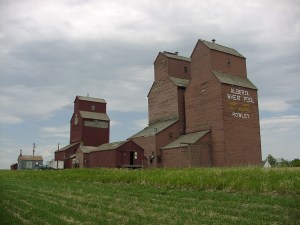
Rowley Grain Elevator Row, Provincial Historic Resource

Number of elevators in Alberta:

  • in 1934:  1,781
  • in 1951:  1,651
  • in 1982:  979
  • in 1997: 327
  • in 2005: 156
  • in 2012 on railway rights-of-way:  130

Number of communities with:

  • at least one elevator:  95
  • 2 or more elevators:  26
  • 3 or more elevators:  7
  • 4 or more elevators:  1 (Warner)
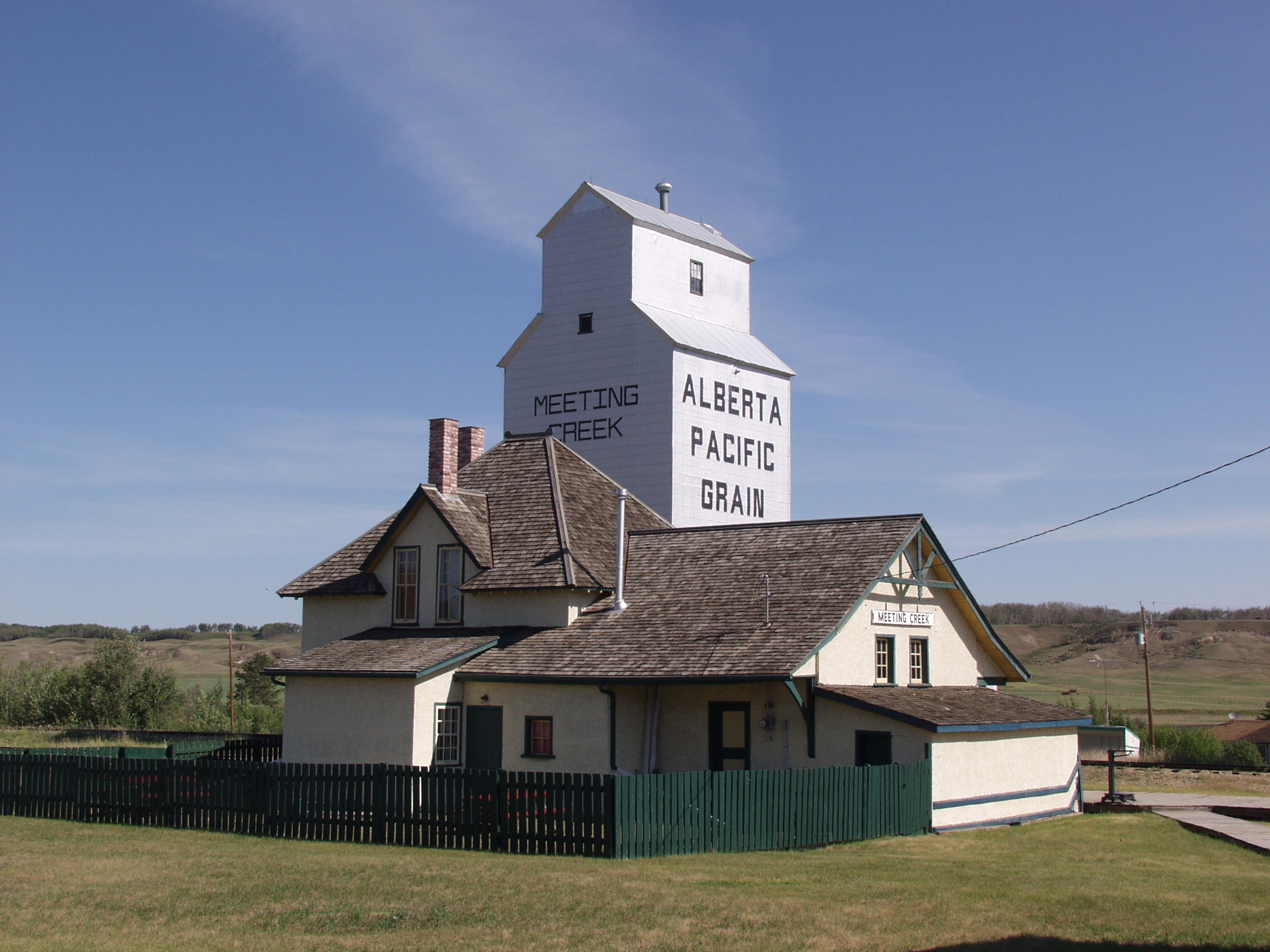
Alberta Pacific Grain Elevator Site Complex, Meeting Creek, Provincial Historic Resource

Additional statistics:

  • Number of elevators in Alberta’s longest row:  6
  • Oldest remaining elevator: 1905 (Raley)
  • Number of remaining elevators that pre-date 1910:  3 (Raley, St. Albert, De Winton)
  • Newest remaining elevator: 1988 (Woodgrove)
  • Decade with the largest number of surviving elevators:  1920s (33)
  • Decade with the second largest number of surviving elevators:  1980s (26)
  • Decade with the fewest (after pre-1910) number of surviving elevators:  1940s (5)
  • Number of elevators that have been designated a Provincial Historic Resource (PHR):  13
  • Number of communities with at least one elevator designated as a PHR:  10
  • Oldest designated elevator: 1906 (St. Albert)
  • Newest designated elevator:  Leduc (1978)
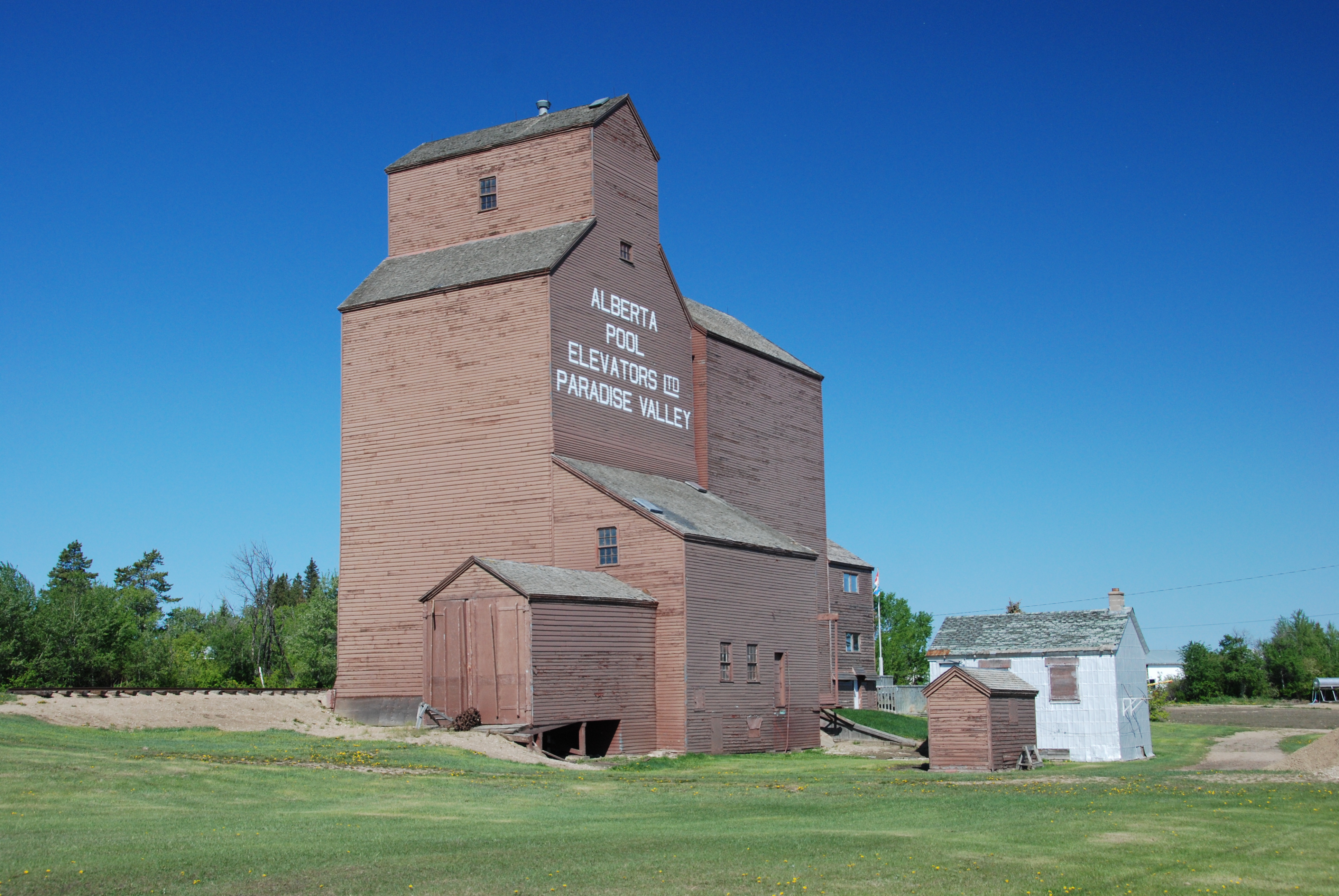
Alberta Wheat Pool Grain Elevator, Paradise Valley, Provincial Historic Resource

For a list of communities in Alberta with designated and non-designated elevators, please click here.

Please Note:

  • Grain elevators that have been moved off railway rights-of-way – to a farmyard or a museum, for instance – are not included in these statistics.
  • Grain elevators located on railway rights-of-way where the rails have been torn up are included in these statistics.
  • Concrete or steel elevators are not included.
  • Elevators used for other purposes, such as seed cleaning or fertilizer storage, are not included.
  • Most of these elevators were last documented by the Heritage Survey in 2005. It is possible that some of the elevators on the list are now gone.

Additional Information:

Written by: Dorothy Field, Heritage Survey Program Coordinator

Heritage Open House in Lacombe

I attended the City of Lacombe’s Heritage Inventory Open House a few weeks ago. Over the past year, Lacombe has been busily evaluating several properties in its historic residential areas for significance and integrity. Thirty properties were selected for evaluation and at the open house draft statements of significance were presented to the community for review. The event was a smashing success. I’d tell you more, but I think you might prefer to head over to the City of Lacombe’s blog and hear about it in their own words.

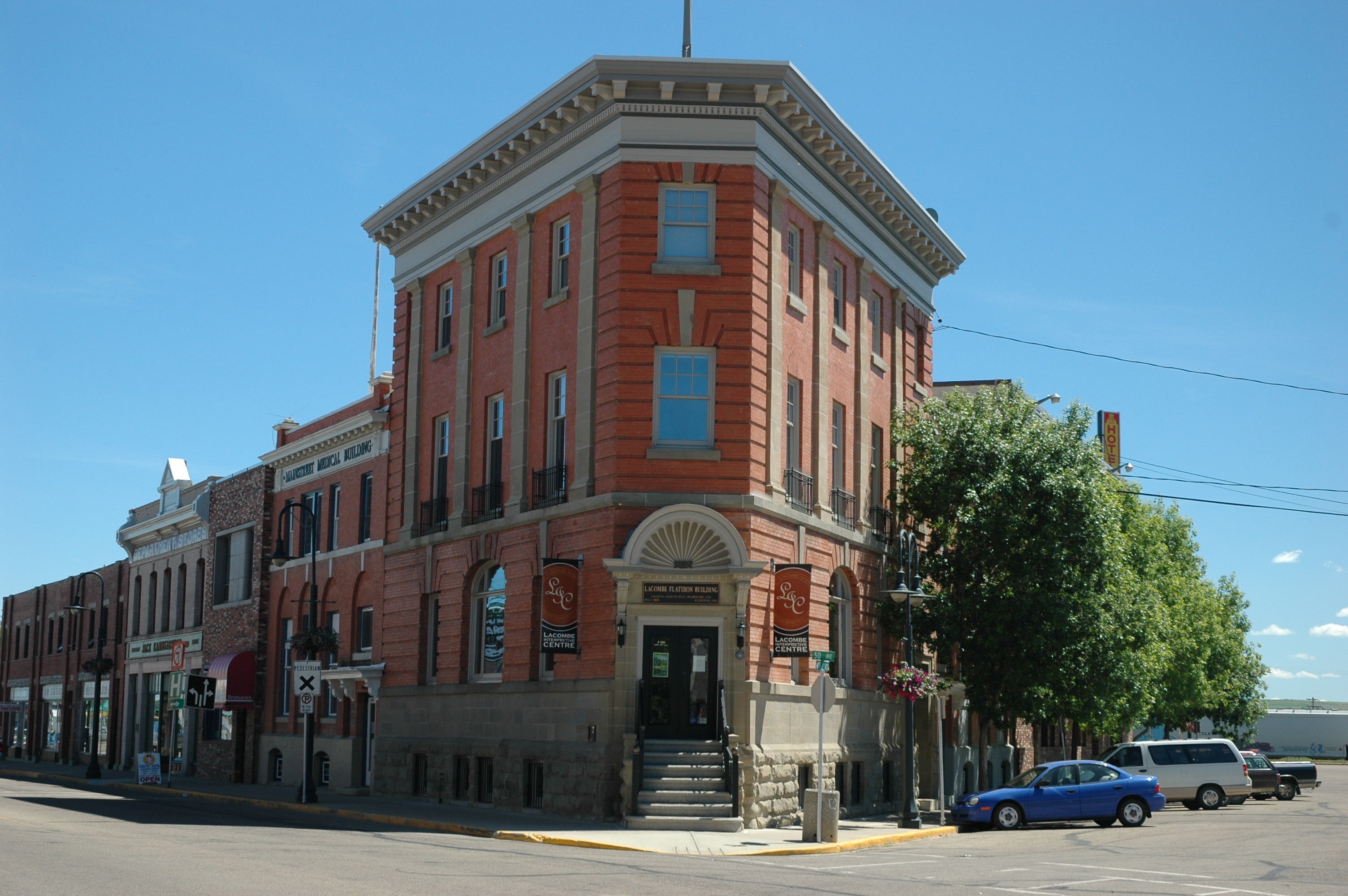
Flatiron Building, Provincial Historic Resource, City of Lacombe

The Municipal Heritage Partnership Program has worked with the City of Lacombe for three years now, helping them identify and evaluate locally significant historic places. You can also learn more about the City of Lacombe’s Heritage Preservation Program from Lacombe’s website.

Written by: Michael Thome, Municipal Heritage Services Officer

I Defend Heritage. Literally! …Who am I?

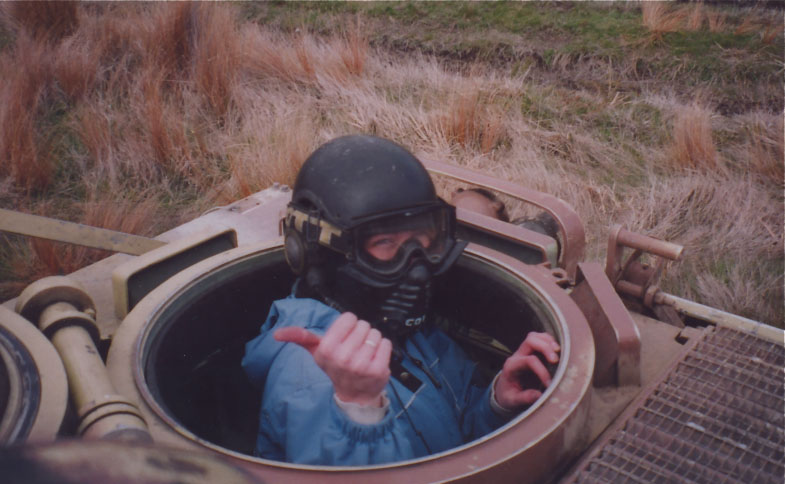
Well, not literally! Though I have driven an armoured personnel carrier while employed by a museum, I do not make a habit of using military force to ensure heritage is protected. Who am I? My name is Brenda Manweiler and like my colleagues (Carlo Laforge, Michael Thome and Ron Kelland) who have posted brief biographies, this post will introduce ME!

For those of you who do not know me, I work as a Municipal Heritage Services Officer for the Historic Places Stewardship Section of Alberta Culture and Community Services. I provide guidance, support and training to municipalities in all corners of Alberta so that successful local heritage conservation programs may contribute to the liveability and vitality of Alberta’s communities (check out our website: Municipal Heritage Partnership Program). As well, I administer this blog and coordinate content for our Facebook page and Twitter feed. Between blog posts and business trips I revel in how fortunate I am to be employed in a field that I am passionate about and how great it is that I get to travel throughout this beautiful province.

But what did I do before I landed this gig? The short of it is that I worked in heritage for the federal government, another province, an international museum, and also for municipalities and non-for-profit organizations – but the long of it? Well… for fifteen years I have been working to protect heritage (in one form or another). In 1997 I accepted my very first heritage job as a summer student at the Maple Ridge Museum – I was hooked! As a born and raised Maple Ridge, British Columbia resident (Maple Ridgian?), who was fascinated by history and “old things” since childhood, working at the Maple Ridge Museum was like a dream come true. During summers off from completing a Bachelor of Arts degree in Art History from the University of Victoria, I worked at a number of Vancouver-area museums (i.e. Pitt Meadows Museum, New Westminster Museum and Archives). After completing my BA I was fortunate to find continued employment in the heritage field. I worked at the Langley Centennial Museum, the BC Farm Machinery and Agricultural Museum and the Surrey Museum and Archives. At these community museums I completed a range of collections management projects or administered education programs for young children.  …Yes, I know how to churn butter, do laundry with a scrub board and complete “heritage” crafts. (Hmmm…I can also drive tractors! You never know what you will learn while working at a museum!!)

When presented with an internship opportunity at the National Army Museum in Waiouru, New Zealand, I could not say no. For six months I worked as the Assistant Curator of their Social History Collection. As a civilian within a military environment I was able to take advantage of many unique opportunities – yes, I really did drive an armoured personnel carrier, and yes, I also successfully completed a civilian version of a firearms qualification exam. Despite all this training, and “Officer” being part of my current job title, let me repeat myself – I do not use (or condone) military force to ensure heritage is protected!  🙂

Upon returning to civilian life, I decided it was time for another return – I went back to school! I completed a master’s degree in Canadian Studies (with a specialization in Heritage Conservation) from Carleton University. While studying in Ottawa I also worked part-time for the City of Ottawa as a Commemorations Coordinator – have you ever tried to complete an inventory of ALL the commemorations in a city of nearly one million people, and the nation’s capital at that? After graduating did I then settle down and obtain my current job? Nope. I spent some time working for the Province of British Columbia’s Heritage Branch as a Community Heritage Officer (very similar to my current job) and then returned to Ottawa for a couple years and worked for the Parks Canada Agency with their Historic Places Program Unit (a.k.a. Canadian Register of Historic Places).

Bouncing back and forth across the country confirmed for me that home is in western Canada. I have been living in Alberta (Edmonton) for the past two and half years (ever since starting my current job as Municipal Heritage Services Officer) and am very pleased to be here. Alberta is beautiful, diverse and rich in heritage!

My career path, thus far, has taken me from conserving a community’s artefacts to helping conserve communities and their significant places. The focus of these approaches may be quite different, but the common threads of community identity, connection to place and community passion is what makes it so pleasurable to work within the heritage field. When not working I train to be a life-long athlete. My sport? Living a healthy and active life. I run, bike, do yoga and enjoy most all other athletic pursuits that involve spending time outside (when it is not -30). Photography is also an interest of mine so a camera bag is often slung over my shoulder. Driving home to BC each summer and photographing mountains has proven to be one of my annual highlights.

But enough about me! Regularly scheduled programming (a post about historic places) will resume shortly. If you have any questions about the Municipal Heritage Partnership Program or other programs offered through the Historic Places Stewardship Section please post a comment below and I will ensure that the appropriate colleague responds.

Cheers,

Brenda

Campbell Block, Lacombe

With the completion of the Calgary & Edmonton Railway in 1891, a number of stations were erected along the rail line to accommodate the expanding agricultural population of the region. Next to several of these stations, the C & E subdivided townsites, several of which grew to some size.  One of these was Lacombe, which was named after the venerated Oblate priest. In 1896, Lacombe was incorporated as a village, and, in 1902, it became a town with over 500 people, possessing most of the amenities required of a northern farming community.
As years passed, Lacombe remained a farming town, its major industries being the grain elevators and the various stores, garages and equipment dealerships which served the farmers. One of leading merchants during the early 20th century was A.M. (Sandy) Campbell, who, like Gordon Puffer, was perpetually on Town Council and the executive of the Board of Trade.  He was also a leading member of the local lodge of Masons. In his memoir, Puffer wrote, “Sandy Campbell was a very popular and successful business man in Lacombe for many years. He was active in civic affairs and he and Mrs. Campbell were social leaders in the community.”

Campbell had run a general store in Lacombe since 1903, and, on 17 March 1920, the Lacombe newspaper, the Western Globe, wrote about the pending erection of a new store on 50th Avenue:

Mr. A.M. Campbell has completed arrangements for the erection of a modern building on the site of his present store…. The plan shows a well designed front, which will add greatly to the appearance of our main street.   

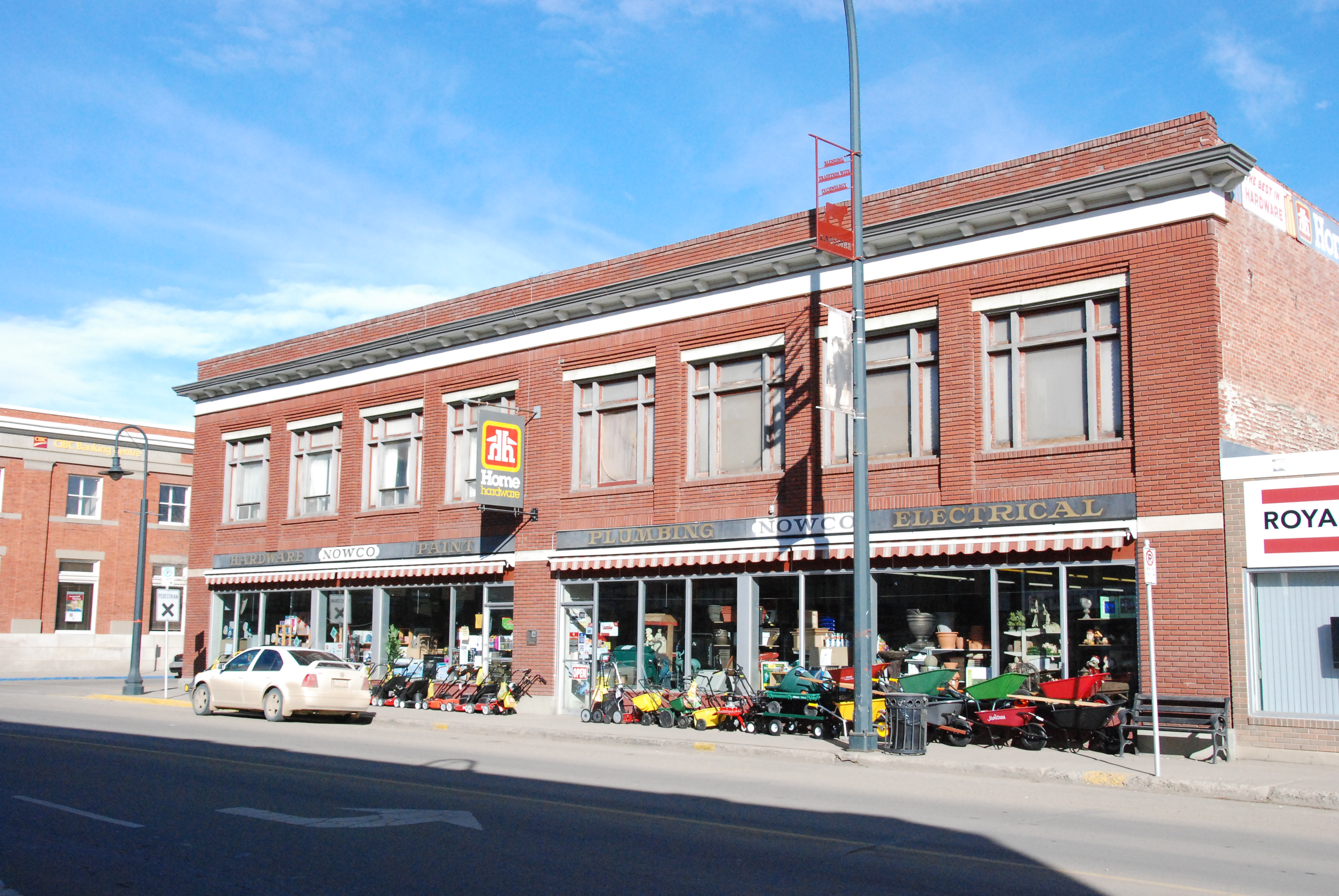
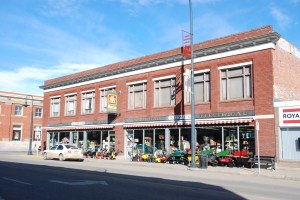
The new two-story brick store was almost a miniature department store, as it was anticipated to include hardware, clothing, dry goods and grocery departments, and also a millinery. It was a two-storey, red-brick building which featured a wide front facade accommodating two storefronts, eight large wood-framed windows on the second floor, and a bracketed cornice surmounted by a simple brick parapet prominently situated on two and a half lots.

The Campbell Block still maintains strong integrity and retains most of its original features, in particular, design, location and environment that are sufficient to communicate its significance in a local context and as a contributing resource to the Town of Lacombe’s distinctive historic commercial downtown area.  Its historical significance lies in its service as a general store, and hardware and furniture store since 1920.  It has served the town and district of Lacombe ever since, concentrating in recent years on hardware and furniture. It ties in well with other main street structures nearby, providing a glimpse of life in large-town Alberta throughout most of the 20th century.  In 2009, it was designated a Provincial Historic Resource.

Written by: David Leonard, Historian

Visit the Alberta Register of Historic Places to learn more about the heritage value of the Campbell Block. In order for a site to be designated a Provincial Historic Resource, it must possess province-wide significance. To properly assess the historic importance of a resource, a historian crafts a context document that situates a resource within its time and place and compares it to similar resources in other parts of the province. This allows staff to determine the importance of a resource to a particular theme, time, and place. Above, is some of the historical information used in the evaluation of the Campbell Block.


We have a Winner!

Last week we announced a contest to win an Annual Pass for Alberta’s Historic Sites, Interpretive Centres and Museum. Followers and new fans enthusiastically responded! Thank you to everyone – we were so pleased to read your feedback and very happy that many of you discovered RETROactive. Please, if you like what you read on this blog, spread the word!

We received feedback from 38 individuals. All names were entered to win the Annual Pass. I am pleased to announce that Janice MacDonald was randomly selected as the winner. Congratulations, Janice! Please email me at: albertahistoricplaces@gov.ab.ca so that we can arrange for you to receive the annual pass.

Thank you, again, to everyone that entered the draw. If you ever have a question about one of our blog posts, about heritage conservation in general or have a suggestion for a blog post, please do not hesitate to post a comment or email us at the above address. We would love to hear from you.

SoS Review in Smoky Lake County

On February 9th, I had the opportunity to lead a workshop for the Smoky Lake Heritage Board as part of a Municipal Heritage Management Plan. The project is a unique collaboration between Smoky Lake County, the Town of Smoky Lake, the Village of Vilna and the Village of Waskatenau. The management plan is the culmination of a multi-year project that has surveyed and inventoried hundreds of sites.

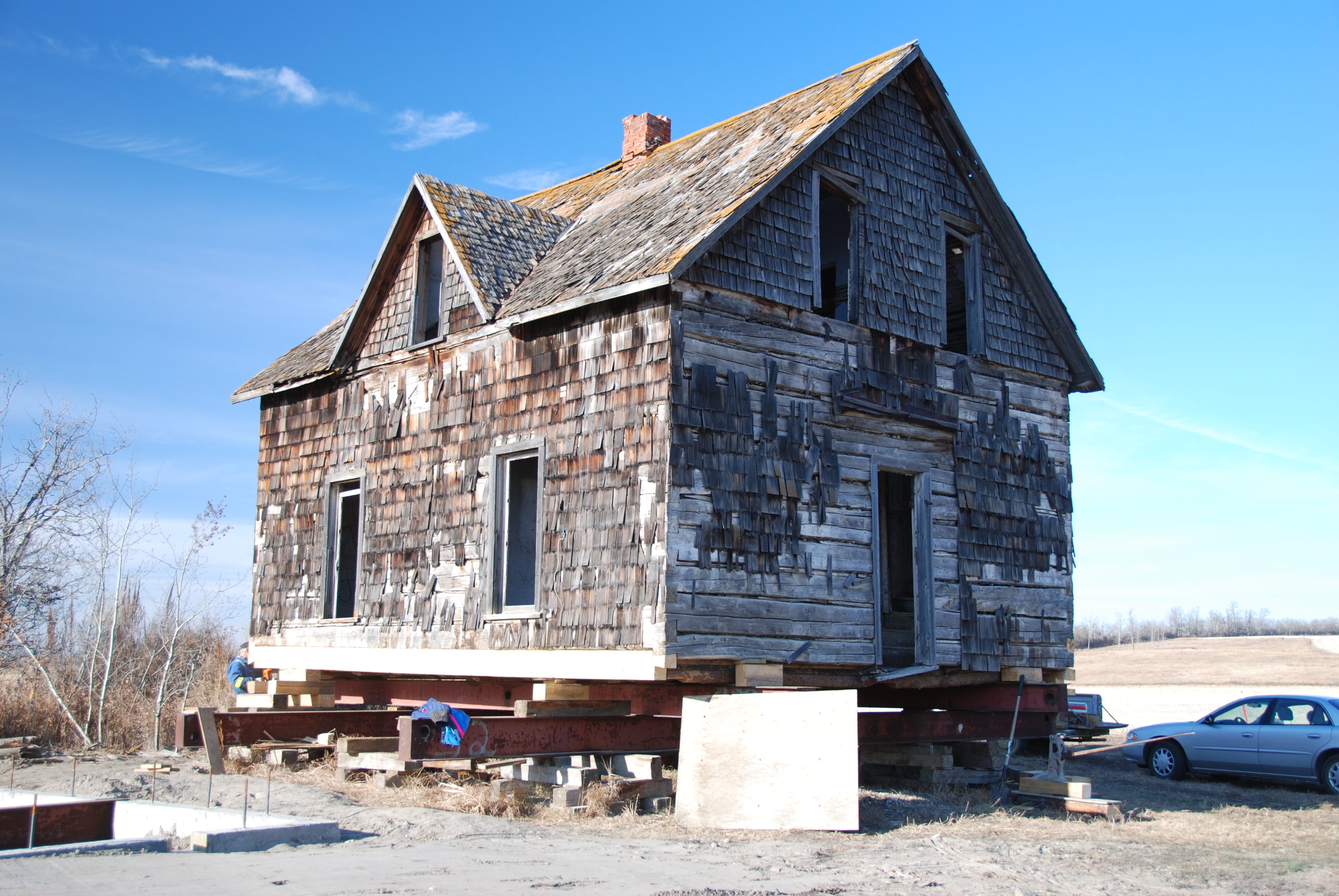
Conservation work being completed on the Anderson House, a Municipal Historic Resource located in the Victoria District of Smoky Lake County (November 2011).

Smoky Lake is starting to think about how to protect and conserve their historic places. I spoke to board members about how to review Statements of Significance (SoS) to ensure they accurately reflect the values their community ascribes to a site. We then took a few hours to review some of the statements that they’re developing.

Although municipalities can (and do) hire consultants to do historical research into historic places and draft Statements of Significance based on their opinions, it’s up to a community to decide if they value a historic place and why. Heritage value is subjective: what one community may value another community may not; what one resident may value, another may not. Neither position is right or wrong. A properly trained board, whose membership is interested in local history and that represents the community’s residents is crucial to ensuring that the community’s heritage values are accurately identified and explained in the Statements of Significance for any designated historic resource. We used a SoS checklist developed by Municipal Heritage Services staff to help committees decide if a Statement of Significance properly reflects a community’s heritage values.

Municipal Heritage Services is available to give workshops for municipally appointed Heritage Advisory Bodies and municipal staff on a range of topics related to identification, evaluation and conservation of historic resources. Our Municipal Heritage Partnership Program (MHPP) can help your municipality plan a survey, to identify potential historic resources; an inventory, to evaluate potential historic resources for their significance and integrity; and then develop a management plan, to protect and conserve locally significant historic resources. If you would like further information about the services we offer, take a look at our website or contact Municipal Heritage Services staff.

Written by: Michael Thome, Municipal Heritage Services Officer

Win an Annual Pass to Alberta’s Provincial Historic Sites, Interpretive Centres and Museums

Today is RETROactive’s 1st birthday!

We want YOU to help us celebrate!

Please, no birthday cakes or flowers … but presents of the “feedback” variety are greatly appreciated. We want you, our dedicated followers, to tell us what you think about RETROactive/Alberta’s historic places. This is your opportunity to:

  • suggest ideas for a blog post;
  • ask a question about heritage conservation;
  • tell us about a memorable visit to a historic place in Alberta;
  • share a photo of your favourite historic place in Alberta; and/or
  • tell us what you think about RETROactive.

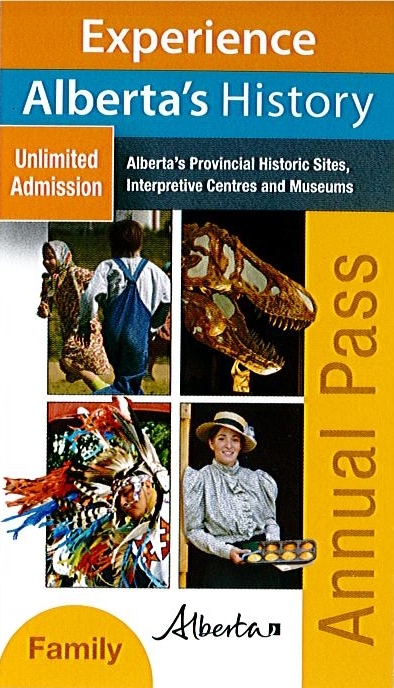
Everyone who submits feedback will have their names entered to win a 2012 Family Annual Pass (with unlimited admission) to visit all of Alberta’s Provincial Historic Sites, interpretive centres and museums.

How can I share my feedback?

Submit a comment at the end of this post, write on our Facebook page, Tweet something to @ABhistoricplace or send an email to: albertahistoricplaces@gov.ab.ca.

When will the winner be selected? 

All names associated with feedback received by 08:30MT, February 27, 2012 will be entered to win the Annual Pass. The winner will then be contacted to arrange for delivery of the Pass.

On behalf of staff of the Historic Places Stewardship Section (a.k.a. RETROactive Authors), we would like to thank you for your support and continued interest in the conservation of heritage AND in creating a future for Alberta’s historic places!

Written by: Brenda Manweiler, Municipal Heritage Services Officer

Sharman House, near Onoway

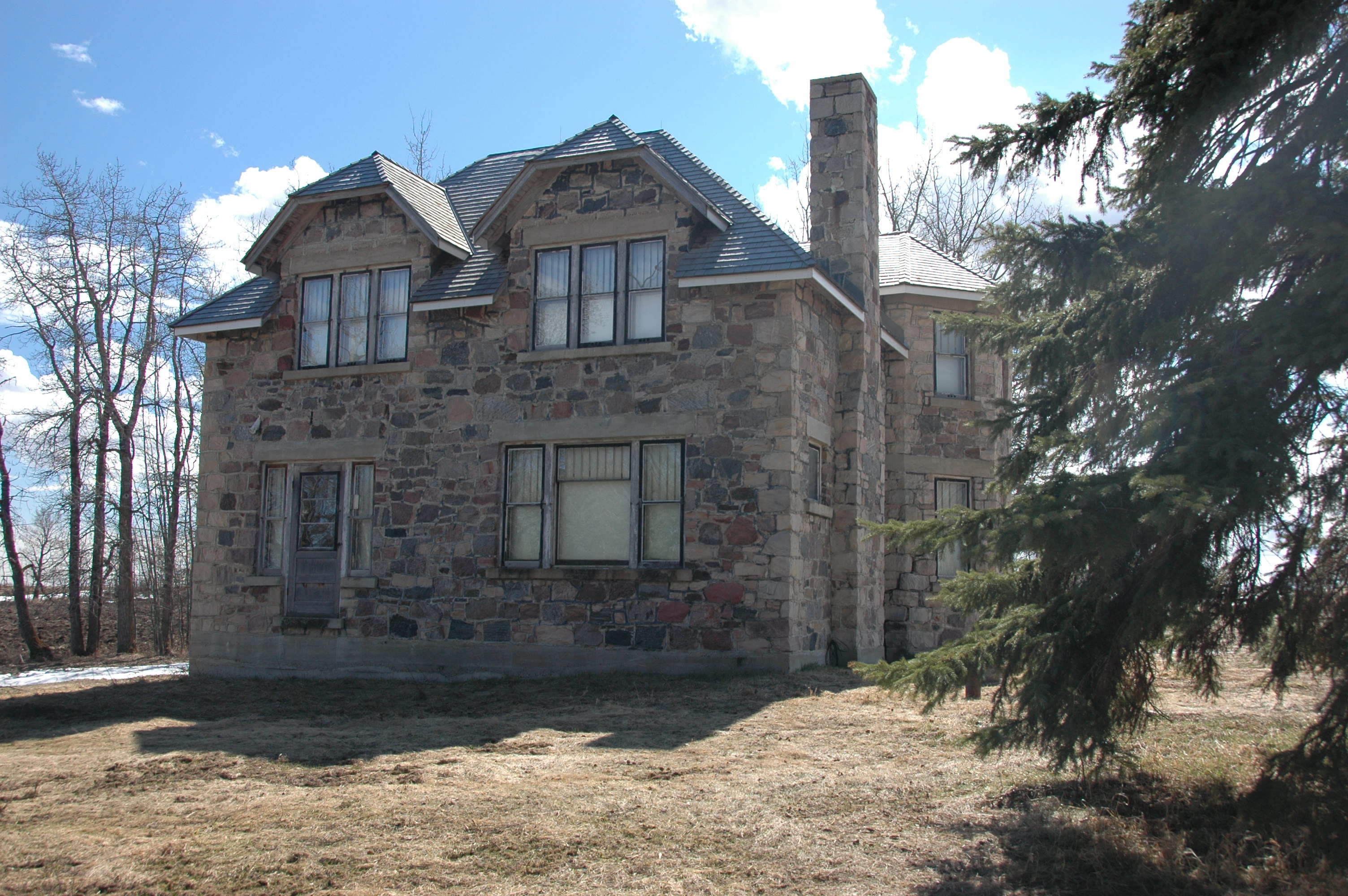
When the Canadian Northern Railway extended a line through Onoway in 1909, en route to Jasper and Vancouver, much of the rich agricultural land east of Lac Ste Anne was made immediately viable for homesteading.  Even before the railway arrived however, and indeed even before the Dominion Land Surveys of 1904-05, a number of settlers had taken up land in the Onoway area.  One of these was Thomas Sharman, who settled on NW34 TP52 R3 W5 in 1903, in a district soon to be known as Heatherdown.  Sharman was born in Ireland and had come to western Canada from North Dakota, where he had been a stonemason as well as a farmer.  He first attempted to homestead near Camrose, but was unsuccessful.  Near Heatherdown however, he and his wife succeeded in proving up, and eventually they acquired five quarters.

As he cleared and broke his land, Sharman made a point of salvaging pristine stones that inundated his fields.  Being a stonemason, he had an idea that one day these would prove useful.  By the mid 1920s, he decided to use these stones for a new house.  With the help of his youngest son, Lawrence, and local neighbors, he designed and built a large dwelling utilizing the material he had salvaged.  He moved into his new home in about 1927, and lived there with his wife until passing away a few years later.  The house and the farm were then taken over by Lawrence Sharman and his wife, Florence, who died tragically in a fire on the farm in 1936.  The Sharman House then continued to be occupied by Lawrence on his own until he moved to British Columbia in 1947.  It was then acquired by Gordon Stewart, his wife Lenabelle, and their son, Lowell.  With Lenabelle’s death, Gordon and Lowell continued to farm the land and occupy the house as bachelors.

The historical significance of the Sharman House  lies in its representation of the settlement of the Onoway area, and of the richness of the farmland in the district.  It is also significant in demonstrating the inventiveness and craftsmanship of one of Onoway’s early settlers.  Its heritage value lies in the excellent craftsmanship evident in its split fieldstone construction and the home’s picturesque aesthetic appeal.  It is distinguished by its picturesque exterior, which is composed of different shapes and sizes of split fieldstone.  Other prominent features of the home include a hipped roof with intersecting roof ridges, hipped wall dormers, three tall stone chimneys, and a two-storey bay projecting from the southwest corner of the building.  The yard of the home includes a garden and mature evergreen trees north of the house dating from the period of construction. The Sharman House was designated a Provincial Historic Resource in 2007.

Written by: David Leonard, Historian

Visit the Alberta Register of Historic Places to learn more about the heritage value of the Sharman House. In order for a site to be designated a Provincial Historic Resource, it must possess province-wide significance. To properly assess the historic importance of a resource, a historian crafts a context document that situates a resource within its time and place and compares it to similar resources in other parts of the province. This allows staff to determine the importance of a resource to a particular theme, time, and place. Above, is some of the historical information used in the evaluation of the Sharman House.

New Historic Places listed for the City of Lethbridge!

Three of the City of Lethbridge’s Municipal Historic Resources were recently posted on the Alberta Register of Historic Places:

The City has been collaborating with the Municipal Heritage Partnership Program for several years to identify, evaluate, and protect Lethbridge’s significant historic places. They have developed a Heritage Management Plan, established a Heritage Advisory Committee, and Downtown Lethbridge is an Accredited Alberta Main Street community.

These three new listings complement the properties already designated by the City. Congratulations Lethbridge!

Written by: Matthew Francis, Manager of Municipal Heritage Services