Alberta’s Historic Places in the Space Age

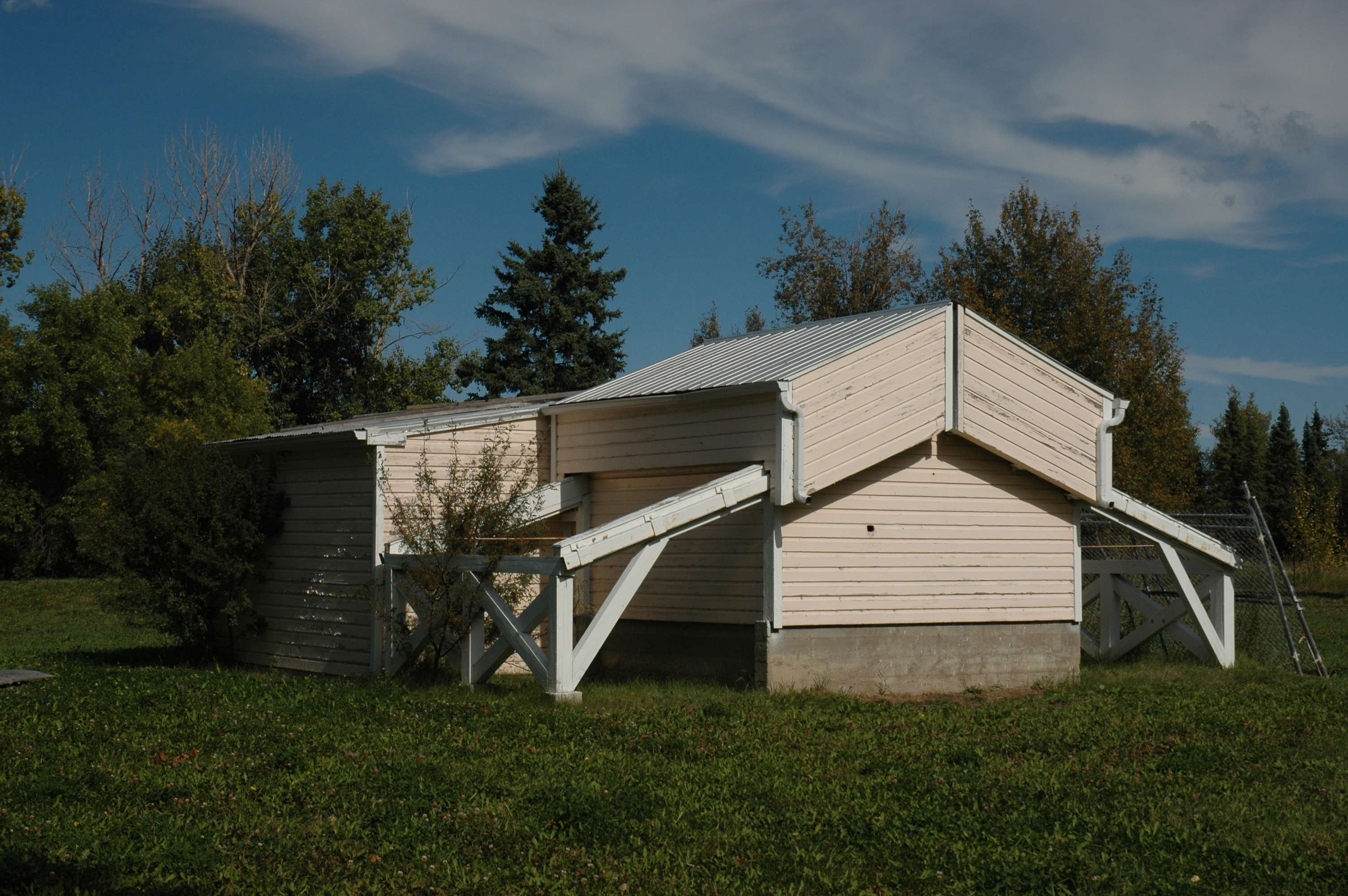
While it may not look like much from this 2006 photo, Alberta’s Newbrook Observatory played a key role in the “space race” of the twentieth century.

The field station’s listing on the Alberta Register of Historic Places recounts how on “October 4, 1957, the Union of Soviet Socialist Republics (U.S.S.R.) astounded the world by announcing the successful launch of Sputnik I, the first artificial satellite to be sent into space. Less than a week later, Art Griffen, resident scientist at the Newbrook Observatory, took the first North American photograph of Sputnik, confirming the Russians’ claim. The news of the launch sent shockwaves around the world.”

The Newbrook Observatory was designated in 1995 as a Provincial Historic Resource.

Written by: Matthew Francis, Manager of Municipal Heritage Services

Did you know… ?

Did you know that the discovery of oil near Turner Valley, in 1914, resulted in the first major oil boom in western Canada? When returning from a business trip in southern Alberta I stopped at the Turner Valley Oil Field heritage marker and learned about the birth of Alberta’s oil industry.

To learn more, check out the video below or scroll down to read the heritage marker text.


Heritage marker location: on the west side of Highway 22, north of the Town of Turner Valley.

Learn about other aspects of Alberta’s heritage in the Turner Valley area – explore the Alberta Register of Historic Places and read about various Provincial Historic Resources:

Written by: Brenda Manweiler, Municipal Heritage Services Officer


Heritage marker text:

Alberta’s History: Turner Valley Oil Field 

In the nearby town of Turner Valley is the discovery well of the first major oil and gas field in Alberta, drilled by Calgary Petroleum Products. Dingman No. 1, named after a major stockholder, blew in on May 14, 1914. The well produced large quantities of gas and light oil and began Alberta’s first oil boom. With the boom came a flood of stock speculation, but by late that summer the boom had collapsed. Many new oil companies had proven fraudulent, other wells were disappointing, and soon the investment capital that was needed for more development was focused on the war effort instead. 

The second boom began in 1924 with the Royalite No. 4 well owned by Imperial Oil. Royalite No. 4 produced even more of the light-gravity oil called naptha than the discovery well, but was not deep enough to reach the crude oil below. In June 1936, a new well discovered extensive oil deposits at 2,081 metres. This well, called Royalties No. 1, produced almost 1,000 barrels of oil a day, reviving interest in oil exploration in the field. By late 1936 the whole Turner Valley field was producing about 10,000 barrels per day. 

From 1914 to 1947, Turner Valley produced nearly all of Alberta’s petroleum, and it remained Canada’s most important oil field from 1925 until the discovery of oil south of Edmonton, near Leduc, in 1947.

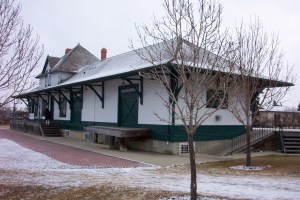
Canadian Northern Railway Station, Fort Saskatchwan

When the Canadian Pacific Railway was planning for its continental line to the pacific coast during the 1870s, a favoured route saw the track proceeding northwest from Brandon, Manitoba through the Yellowhead Pass, crossing the North Saskatchewan River near the small Northwest Mounted Police community of Fort Saskatchewan.  In the end, the CPR chose the Kicking Horse Pass, and the line was extended past Fort Calgary in 1883.  Eight years later, a subsidiary of the CPR, the Calgary & Edmonton Railway, brought rail service directly to South Edmonton, and Edmonton soon emerged as a district metropolis.

In 1904, Edmonton became a city, and the following year it was named the capital of Alberta.  As this was taking place, the city was making preparations for the arrival of the Canadian Northern Railway, which would give it a direct rail connection with eastern Canada.

Somewhat ironically, the route chosen for the Canadian Northern was roughly that selected for the CPR in 1877, except that, after passing by Fort Saskatchewan, it was made to swing southwest to include Edmonton. Fort Saskatchewan thus received a railway as early as the fall of 1905.

Canadian Northern Railway Station Provincial Historic Resource

In anticipation of the arrival of the railway, Fort Saskatchewan began to grow rapidly.  In July 1904, it became a town with over 500 people.  It was, therefore, appropriate that the Canadian Northern construct a station befitting the largest community on its line between Edmonton and North Battleford.  While rail construction proceeded, work WAS begun on a wood frame station according to a newly devised 100-19 plan, which called for a long, vertical building, with an upper floor to accommodate the station agents and their families.  It was located just west of the town center and was completed in October, 1905.  In its immediate vicinity, a large water tower and a Brackman-Kerr elevator were erected at the same time.

Being in the center of a rich farming district, Fort Saskatchewan continued to grow after the arrival of the CNoR.  The railway bridge across the North Saskatchewan also served as a traffic bridge, giving the town direct automobile access to Edmonton some 20km away.  Several other elevators soon dotted the skyline near the station, and a stockyard was located nearby. Read more

5th Annual Municipal Heritage Forum – Save the Date!

The dates and location for this year’s annual Municipal Heritage Forum have been set! It’s hard to believe that this year marks five years since our intial “Summit for Stakeholders” back in 2007.  It’s going to be a tremendous event, and you will not want to miss it – so save the date on your calendars now. Registration materials will be available soon!

Questions? Contact Matthew Francis, Manager, Municipal Heritage Services: (780) 438-8502 or via email matthew.francis@gov.ab.ca

Need help understanding your historic place? Develop a SoS

Many municipalities are busily writing Statements of Significance (SoS) for their historic places. Listing Municipal Historic Resources and Provincial Historic Resources on the Alberta Register of Historic Places requires a SoS, but that’s hardly the best reason to write one. Statements of Significance are not online plaques, histories or even calls for help.

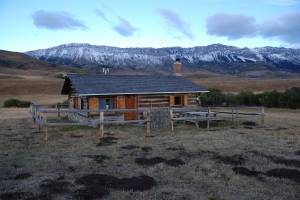
A properly written SoS explains why we value a particular historic place, linking these values to physical, character-defining elements that manifest those values. If you would like to see an example of a SoS just look at the entry for any Municipal Historic Resource or Provincial Historic Resource listed on the Alberta Register of Historic Places, such as the SoS for the D.U. Ranchlands Cabin.

A Statement of Significance explains where a historic place is located (a quarter section in the M.D. of Pincher Creek), what you will find at the site (a one-room log cabin) and the reasons why the community feels the place is significant. A SoS does not describe a place’s history (such as who built it), it explains why the community values the place (as an example of an early 1900 homesteader’s cabin). A SoS relates these values to physical elements that must be conserved (wood log construction). Removing these character-defining elements would undermine the place’s significance; without these elements, the site would no longer be a historic place.

Without understanding historic places–why each is valued and how each exhibits its values–nobody can objectively determine how proposed alterations will affect a historic place. Many historic places have been scarred by well intentioned “repairs” that didn’t take into account why it was significant. A Statement of Significance may not be a call for help, but these documents do help in planning for and managing the effective conservation of historic places. 

Written by: Michael Thome, Municipal Heritage Services Officer

Video Debut!

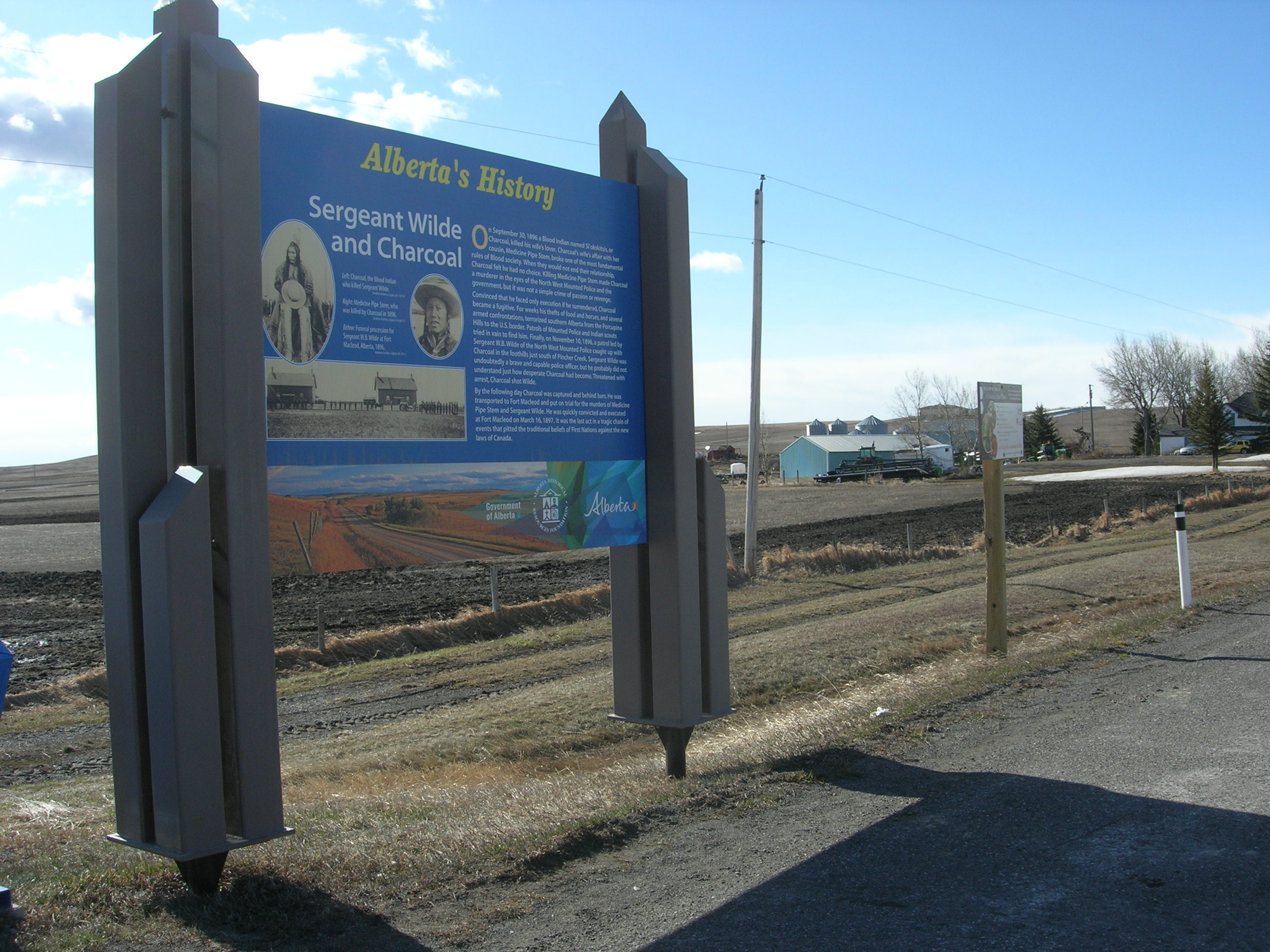
You have all probably seen them – large blue heritage markers located at highway rest areas or points of interest throughout Alberta. These interpretive signs tell of Alberta’s rich heritage. Have you ever stopped to read one? At the end of April I was attending meetings in the Town of Pincher Creek and came across a heritage marker telling the story of Sergeant Wilde and Charcoal. I stopped, curious to learn about an aspect of Alberta’s history. With camera in hand, I decided to also produce an impromptu video blog post. Please watch and enjoy (but bare in mind that my videography skills require some fine tuning).


Heritage marker location: east side of Highway 6, four kilometers south of the Town of Pincher Creek.

Learn more about Alberta’s heritage in the Pincher Creek area: explore the Alberta Register of Historic Places

Written by: Brenda Manweiler, Municipal Heritage Services Officer Click here to read the Sergeant Wilde and Charcoal heritage marker text

Alberta Wheat Pool Grain Elevator and Bow Slope Stockyard

After the Canadian Pacific Railway extended its track from Medicine Hat to Calgary in 1883, land along the rail line became viable for homesteading.  The CPR also acquired 3 ½ million acres of land between Brooks and Calgary as part of its agreement with the Dominion government to build its line.  Here, the CPR subdivided 80 acre plots and proceeded to advertise this land for sale to immigrant farmers.  Because much of the land was bereft of adequate water supplies, a vast irrigation scheme was undertaken off the Bow River to make the land more attractive.

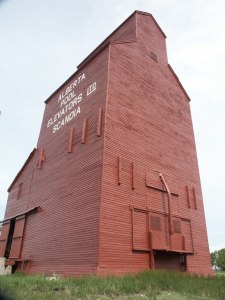
Alberta Wheat Pool Grain Elevator, Scandia

The irrigation project was completed in 1914, but, due to the war in Europe, settlers did not arrive in the area in large numbers until after the armistice.  Many more arrived after the CPR pushed through branch lines to parts of the district in the late 1920’s.  One of these lines extended south of Brooks to the hamlet of Scandia, where a post office had been opened in 1924. In 1928, the hamlet was graced with an Alberta Wheat Pool elevator.

The Wheat Pool elevators were a part of the farmers’ co-operative movement in Alberta.  They had been promoted from within the United Farmers of Alberta by Henry Wise Wood.  A major complaint of the province’s farmers had been the control exercised by independent grain companies which could fix prices at will.  As a result, and given the extreme fluctuations in the international demand for grain, farmers had often gone from prosperity to bust within short periods of time.  According to Wood, the answer lay in a co-operative through which farmers could pool their grain and have it sold at opportune times with the profits shared.  He managed to convince the UFA of this, and, when the Alberta Wheat Pool was formed in 1923, Wood became its first president.  Before long, Alberta Wheat Pool elevators were to be found in most farming communities which had rail access.  They eventually became the largest grain company in the province.

That the first elevator in Scandia should have been a Wheat Pool one was appropriate, for the farmers in this district had been coming together for some time over their collective bitterness against the CPR for having sold them their land.  Though the yields of grain were high, 80 acres was simply not enough land on which to establish a profitable farm.  The farmers formed associations to deal with the CPR, which argued that its irrigation projects were not turning a profit, despite what the farmers were paying for water.  Finally, in 1934, a number of them at the eastern end of the area, led by one Carl Anderson, formed what they called the Eastern Irrigation District, which took over the management of the water supply from the CPR.  Despite its cost, the irrigated water proved its worth in dry years, when other parts of southeastern Alberta were succumbing to drought conditions.

The productivity of the land in the Scandia district was such that, in 1937, the Federal Grain Company also built an elevator there.  With World War II, the demand for western Canadian grain rose, and the train service to Scandia became thrice weekly.  Following the war, the Pool bought out the Federal elevator and soon shut it down.  Eventually, improved roads were making it convenient for farmers in the northern parts of the district to take their grain to Brooks, and, so, the elevator at Scandia was closed in 1977, as was the train service to the community.  The elevator, however, was acquired by the Eastern Irrigation District Historical Park and Museum, and is now the centerpiece of an agricultural museum.  In 2008, it was designated a Provincial Historic Resource.

Written by: David Leonard, Historian

Visit the Alberta Register of Historic Places to learn more about the heritage value of the Alberta Wheat Pool Grain Elevator and Bow Slope Stockyard. In order for a site to be designated a Provincial Historic Resource, it must possess province-wide significance for either its history or architecture. To properly assess the historic importance of a resource, a historian crafts a context document that situates a resource within its time and place and compares it to similar resources in other parts of the province. This allows staff to determine the importance of a resource to a particular theme, time, and place. Above, is some of the historical information used in the evaluation of the site.

Camaraderie and Commitment:

Volunteers are key to the Town of Pincher Creek’s Municipal Heritage Survey Project

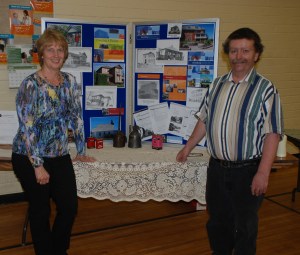
Throughout the next twelve months the Town of Pincher Creek will be completing a Municipal Heritage Survey. Approximately 300 sites (older than the 1940s) ranging from houses, commercial buildings and industrial sites will be documented through photography and by recording geographical, architectural and historical information. Diane Burt Stuckey, Director of Community Services, will serve as the Municipal Coordinator and Farley Wuth, Curator of the Kootenai Brown Pioneer Village, will be the Heritage Consultant.

Diane Burt Stuckey and Farley Wuth

Working together, Diane and Farley will coordinate the volunteer efforts of community residents interested in contributing to this project. These volunteers will photograph each site, conduct historical research, upload information to the Alberta Heritage Survey Program database and most importantly, gain a greater understanding and appreciation for the unique history that provides Pincher Creek with its strong community identity and sense of place.

On April 27, 2011, a public information meeting was held for area residents interested in learning about the project. Attendees exhibited an interest in the project and a passion for their community. On May 14, 2011, Brenda Manweiler, Municipal Heritage Services Officer, and Dorothy Field, Heritage Survey Program Coordinator, provided a detailed training session so that volunteers would understand their roles and responsibilities. With camaraderie and commitment, the attendees were excited to begin work.

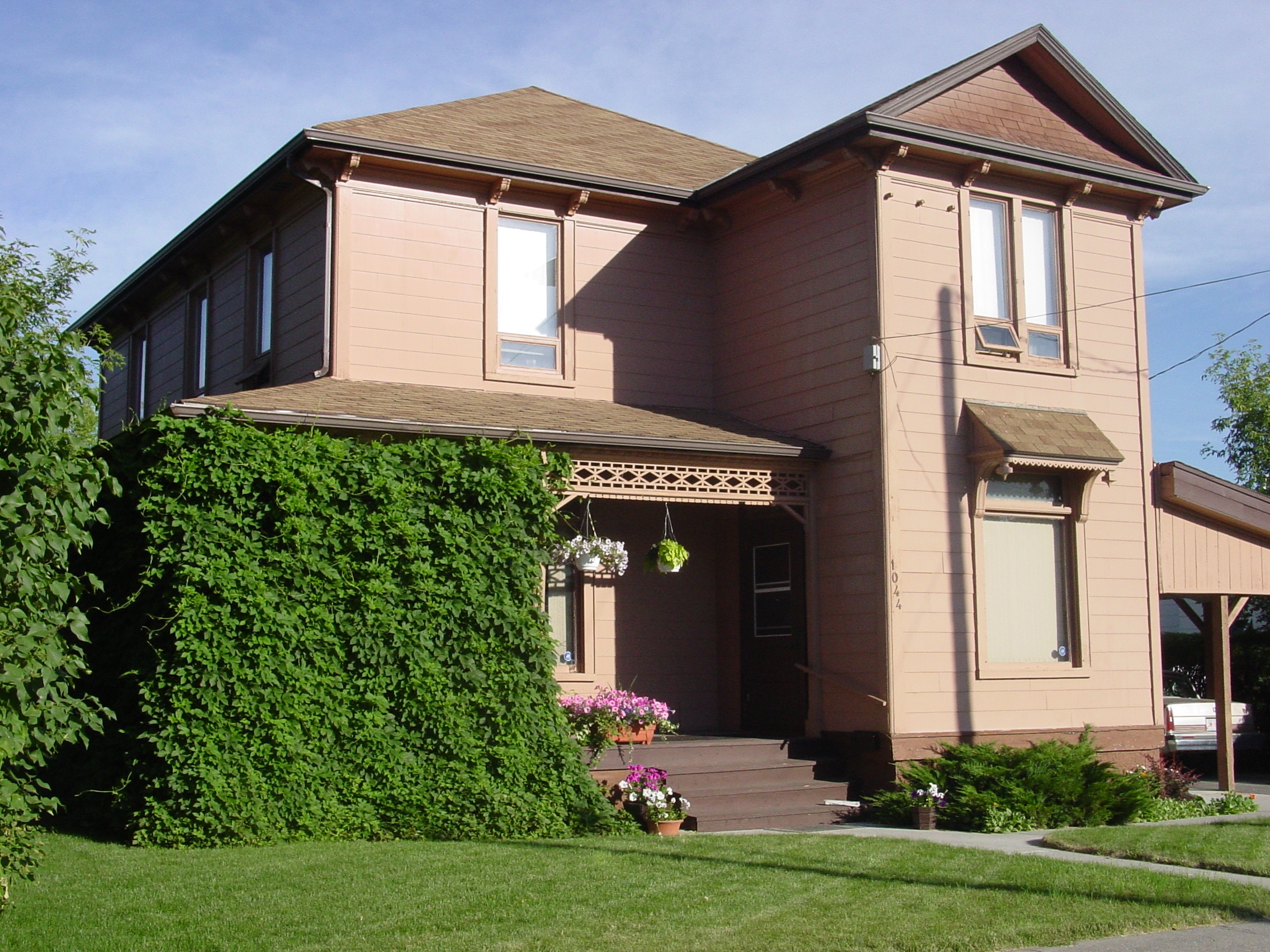
The Philips House will likely be documented in the Town of Pincher Creek Municipal Heritage Survey.

To offset costs associated with the Municipal Heritage Survey, cost-shared funding assistance was provided by the Alberta Historical Resources Foundation via the Municipal Heritage Partnership Program.

Written by: Brenda Manweiler, Municipal Heritage Services Officer

Canadian Northern Railway Station, Meeting Creek

In 1909, Premier Rutherford of Alberta announced a program of vast railway expansion in the province, offering bond guarantees to major railway companies to build branch lines in districts where they seemed warranted.  The railway company to undertake the greatest extent of track as a result of this was the Canadian Northern, which had arrived in Edmonton directly from the east in 1908, and was soon to extend its track north to Sangudo and Athabasca and west into British Columbia.

Other Canadian Northern lines were built in the southern part of the province.  One of the more significant of these was between Stettler and Camrose, and was completed in 1911, opening up new farmland for settlement.  As was its practice, the Canadian Northern erected stations at key points along the line, and, in some cases, townsites were subdivided.  This was the case with Meeting Creek, which was located in a district that had already been settled, largely by farmers from the United States.  When the railway came through, the tiny community, established in 1905, was moved five miles to be included in the new townsite.

Being less than 18km from the larger farming centers of Donalda and Bashaw, and 30km away from Camrose, Meeting Creek never grew to sufficient size to be incorporated.  It did, however, possess most of the amenities of a prairie farming community, including stores, garages, livery stables, a blacksmith shop, a bank, a hotel, and, eventually, three grain elevators.  It also had a small, but busy, railway station, constructed in 1913.  This was a two-story structure with a warehouse attached.  It was subdivided into an office, waiting room, freight house, and living quarters for the station agent and his family.

Life in the community of Meeting Creek evolved around the businesses along Main Street, which ran perpendicular to the station, and the station itself.  All passengers and incoming and outgoing freight were handled by the station agent, including the export of grain.  The agent was also the district telegrapher.

When the Canadian Northern was merged with the Grand Trunk Pacific Railway in 1919 to form Canadian National, many small branch lines were closed down in Alberta, but the Camrose – Stettler line remained open, as sufficient agricultural products were being shipped out from the district in between to warrant this.  By the 1960’s, however, improved highway traffic saw the closure of train service in Meeting Creek, although the Camrose – Stettler branch line would remain operating until 1997.

Being that there was little development in Meeting Creek in the years after the railway station was closed, the structure managed to survive, along with the Alberta Pacific Grain Elevator, and, in 2008, it was designated a Provincial Historic Resource.  Today it is an integral part of the Canadian Northern Society’s tour of significant rail sites.

Written by: David Leonard, Historian

Visit the Alberta Register of Historic Places to learn more about the heritage value of the Canadian Northern Railway Station in Meeting Creek. In order for a site to be designated a Provincial Historic Resource, it must possess province-wide significance for either its history or architecture. To properly assess the historic importance of a resource, a historian crafts a context document that situates a resource within its time and place and compares it to similar resources in other parts of the province. This allows staff to determine the importance of a resource to a particular theme, time, and place. Above, is some of the historical information used in the evaluation of the Meeting Creek railway station.

“How is Yellowhead County going to accomplish this?”

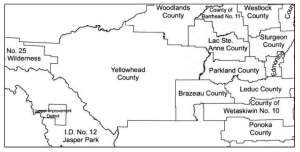
Yellowhead County, a large rural municipality west of Edmonton that stretches between the Pembina River in the east all the way to the Jasper National Park gates in the west, is currently embarking upon a Municipal Heritage Survey.

Over the coming months the County will identify and document a broad range of potential historic places within the County’s boundaries. With Yellowhead County spanning an area of 7,012,000 acres you might be asking, “How is the County going to accomplish this?”

1) Under the Municipal Heritage Partnership Program (MHPP) Yellowhead County has received cost-shared funding. All municipalities in Alberta are eligible to apply for cost-shared funding to assist in the completion of a Municipal Heritage Survey, Municipal Heritage Inventory and/or a Municipal Heritage Management Plan. These projects are designed to assist with the identification, evaluation and management of historic places. Municipalities throughout Alberta have participated in MHPP and learned about the rich historic resources that make their communities unique and livable.

2) Yellowhead County staff, combined with the services of a heritage consultant and the participation of area residents, will complete the Municipal Heritage Survey. The survey will systematically document resources through photographs and record geographical information, design features and construction and historical information.

3) Perhaps most importantly, the County’s Heritage Advisory Board will provide advisory assistance to staff and the consultant throughout the completion of the survey. In September 2010, Yellowhead County Council passed a bylaw establishing a Heritage Advisory Board. This Board, comprised of area residents, has been tasked with the job of advising Council on matters pertaining to the development and maintenance of a heritage program. For instance, the Board will be able to:

  • assist in the implementation of heritage initiatives (i.e. the Municipal Heritage Survey);
  • facilitate community heritage awareness through partnerships and educational initiatives; and
  • advise Council on proposed Municipal Historic Resource designations.

This committed group of volunteers has the important job of providing public input and expertise to Council so that informed decisions about Yellowhead County’s heritage can impact current residents and future generations.

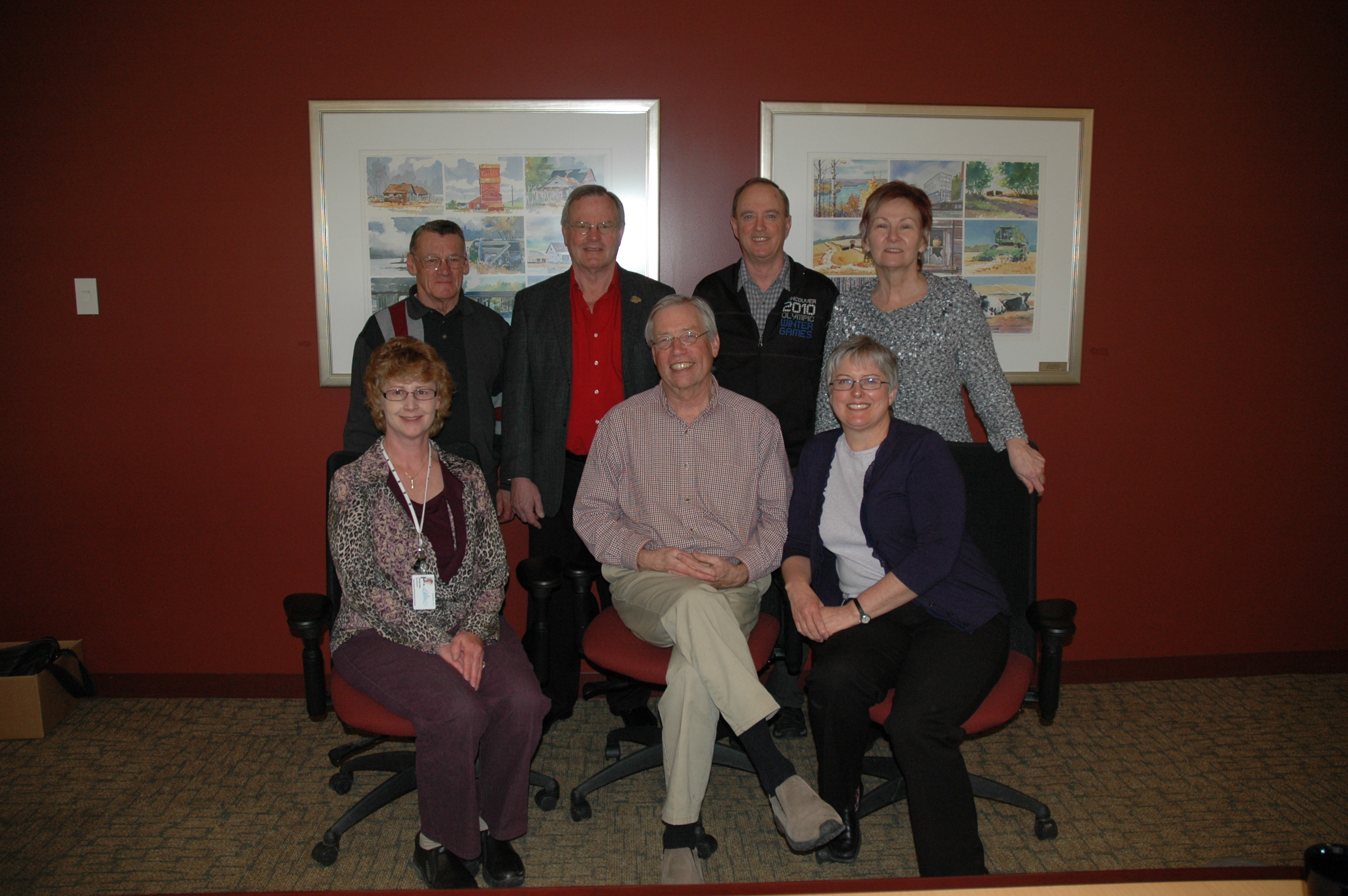
Back L-R: Gary Conger, Shawn Berry, Brian Broughton, Pat DiMarcello. Front L-R: Cheryl May (Heritage Coordinator), Marshall Hoke (Chair), Debbie Charest (Director of Community and Protective Services).

Do you have questions about how your municipality can participate in the Municipal Heritage Partnership Program? Contact program staff to learn more.

Written by: Brenda Manweiler, Municipal Heritage Services Officer