Ever Wonder How a Grain Elevator Worked?

We’ve published articles on Alberta’s historic grain elevators in the past and they’ve struck a cord. We’re preparing a few more articles about Alberta elevator’s, so stay tuned. In the meantime, we though you may wish to know how a grain elevator worked.

A diagram illustrating how a standard grain elevator operated.
A diagram of a standard grain elevator.

The interior of a traditional elevator contained two open areas: an attached covered driveway and an open space under the suspended bins, known as the work floor, in the centre of the elevator. A fully-loaded vehicle was parked on the large receiving scale, which took up most of the driveway floor. The agent weighed a farmer’s fully-loaded truck, wagon or sleigh using a balance beam to the side of the scale. The farmer then dumped his load through a grate on the scale floor and the now empty vehicle was re-weighed. The agent took a sample of the grain, which he analysed for type and quality.

The grain flowed through the grate into the pit below. This pit was an open triangular shaped steel pan. The agent then used the leg to elevate the grain from the pan or pit. The leg stretched from the pit to the top of the elevator. The leg — originally powered by a 15 horsepower, one-cylinder gasoline engine mounted under the office, and later by an electric motor—was an endless belt with cups attached running inside a wooden chute up the elevator,. As the leg turned, it elevated grain to the head distribution spout or gerber. The gerber was moved from one bin spout to another to direct the grain to the desired bin. The gerber was controlled from the work floor with a wooden pedal and a large hand wheel attached to the front of the leg chute.

Most spouts in the cupola fed into a storage bins (there were at least 18 but often more). The load was stored in a bin holding the same type and grade of grain. One spout led directly outside the elevator on the track side; it could be positioned over the track for loading grain into grain cars. Another spout returned grain from within the elevator to the driveway where it could be dumped into a waiting wagon or truck.

When the agent wanted to ship a quantity of grain he drew grain from the selected bin into the shipping scale bellow the scale hopper. After it was weighed the grain was dropped into the pit, the leg re-elevated itand directed it through the gerber and into the rail car loading spout and down into a grain car waiting on the siding beside the elevator.

Written By: Judy Larmour.

A “Team Effort”, High River continues Heritage Inventory

For good reason, the Town of High River has been featured several times on the pages of RETROactive – for its heritage work – over the past few years: 

On Wednesday March 26th, at the aptly named Heritage Inn, a community Open House was held for the second phase of the Town’s Heritage Inventory. While the first phase focused primarily on evaluating historic commercial buildings in the downtown area, this second round concentrates more on residential properties that have heritage value to High River.  Hosted by the Town, the Open House featured attendance from both the professional heritage consultants engaged by the Town, as well as Historic Resources Management Branch staff.

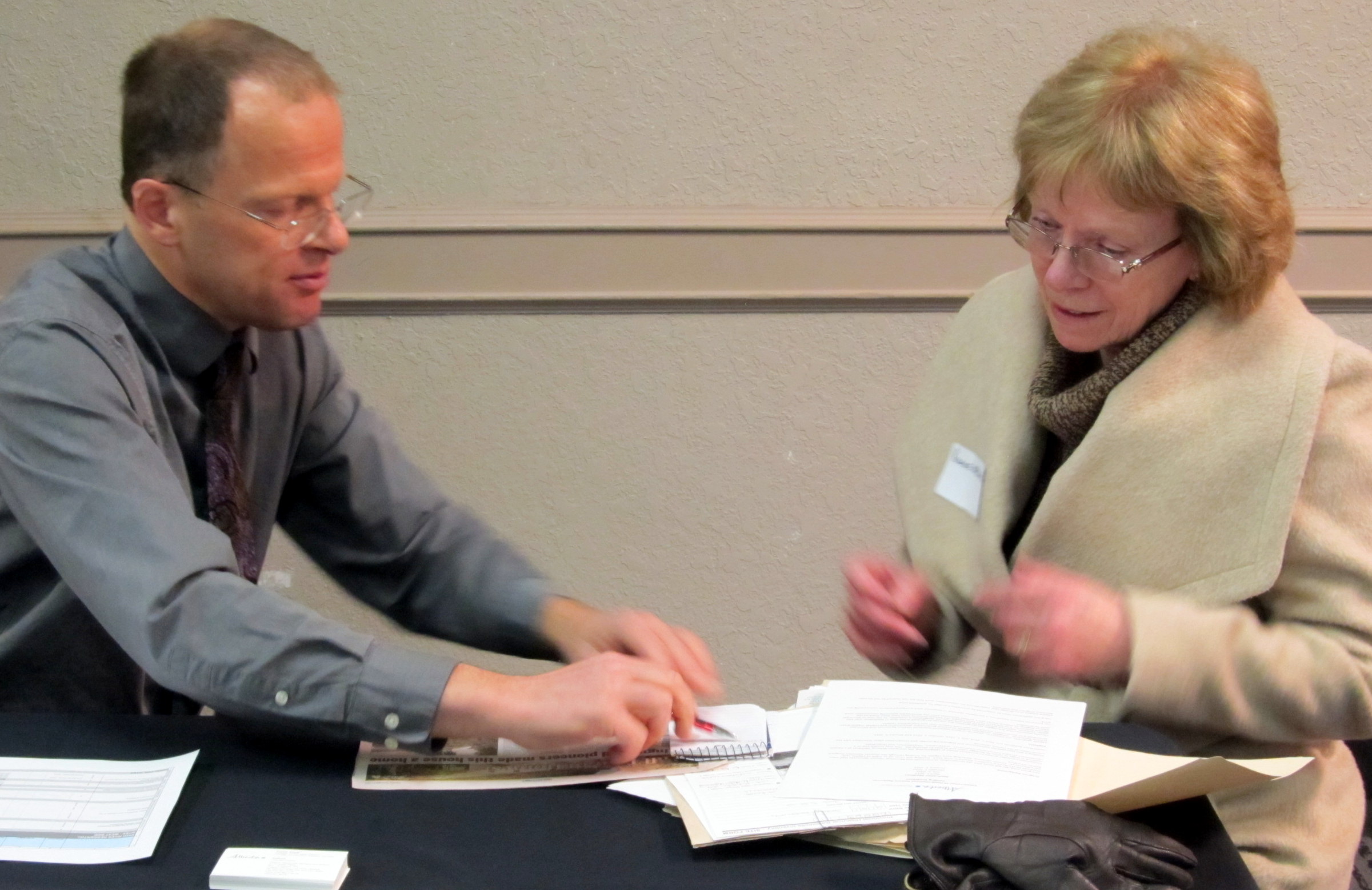
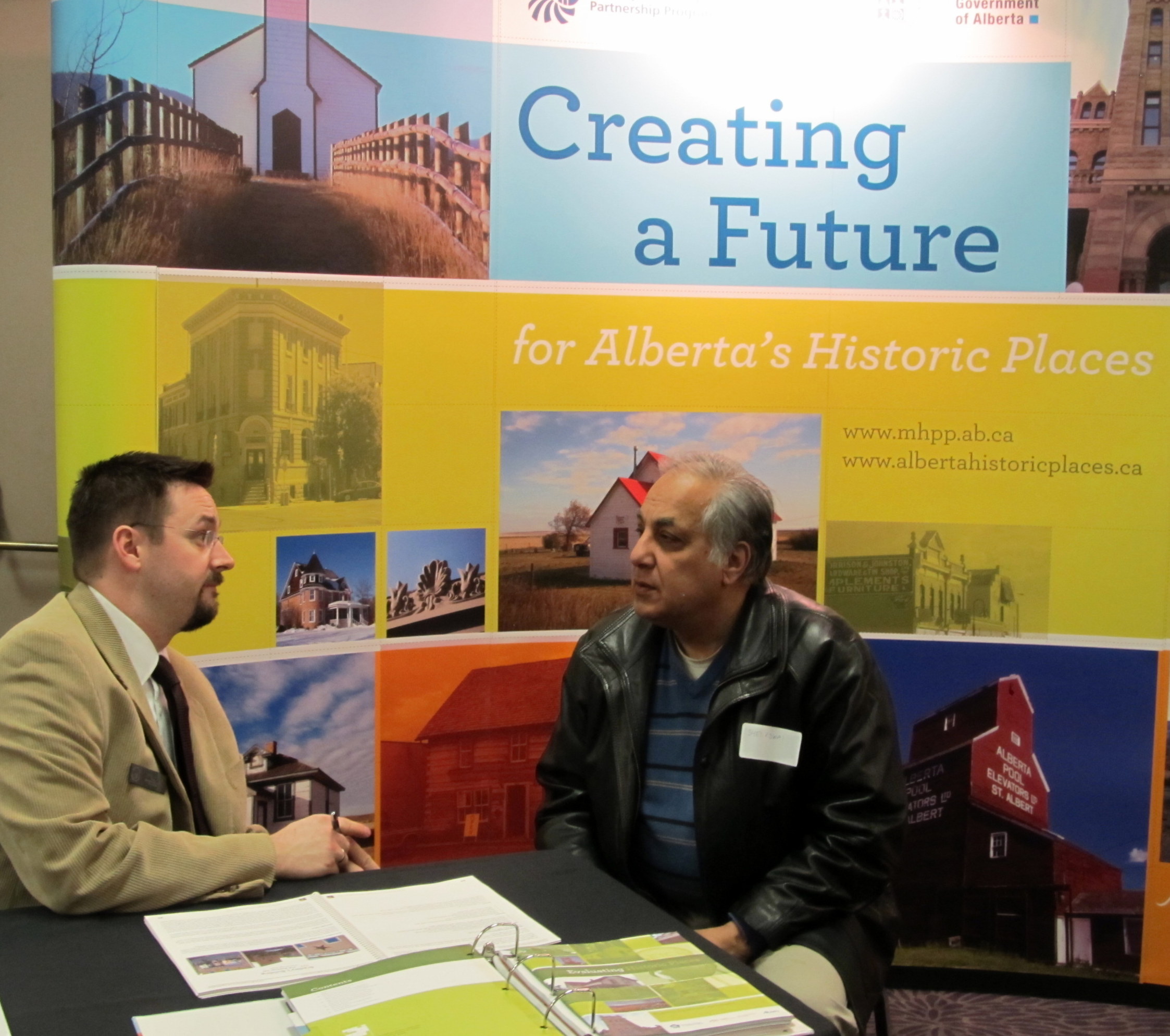
Matthew Francis, Manager of Municipal Heritage Services talks with an owner of a Municipal Historic Resource.

Over 40 members of the community came out to participate in the Open House. Guided by Town staff, the consultant team, and members of the Heritage Advisory Board, attendees busily engaged themselves in providing local knowledge, writing comments about each of the properties identified for evaluation. Attendees from the community also had the opportunity to speak with Alberta Culture staff, to get answers about the Municipal Historic Resource designation process, or about tecnical conservation issues.

Alberta Culture Heritage Conservation Advisor Fraser Shaw provides information to a property owner at the High River Heritage Inventory Open House.

Open House events like these, which are integrated into each Heritage Inventory project, yield tremendous results – increasing knowledge of our historic places, and helping to create a meaningful future for them. As the Town’s Planning Coordinator, Jill Henheffer, shared, “It was totally a team effort.”

Good job, High River!

New Uses for Old Places – Building Additions

New Uses for Old Places is a RETROactive series in which we are looking at examples from around Alberta of historic places that have found interesting new uses for spaces that were originally designed for other purposes. This week we will be looking at two examples of adaptive reuse projects that have involved the construction of additions to the historic fabric.

As previously discussed in this series, the Standards and Guidelines for the Conservation of Historic Places in Canada offer guidelines for rehabilitating and adaptively reusing historic places. The “S&Gs” include specific provisions for how decisions can be made that will allow for the modification of buildings over time. A tenant may require additional square footage to continue operations or to start a new business in a historic place. When these situations arise and building additions are required, the Standards & Guidelines provide guidance on how to proceed.

Standard Conserve the heritage value and character-defining elements when creating any new additions to an historic place or any related new construction. Make the new work physically and visually compatible with, subordinate to and distinguishable from the historic place.
Standard Create any new additions or related new construction so that the essential form and integrity of an historic place will not be impaired if the new work is removed in the future.
Guideline Design an addition that is compatible in terms of materials and massing with the exterior form of the historic building and its setting.
Guideline Design a new addition in a manner that draws a clear distinction between what is historic and what is new.
Guideline Select the location for a new addition that ensures that the heritage value of the place is maintained.

Our first example, the Wetaskiwin Court House, was constructed as a three-storey, red brick building between 1907 and 1909 and served as a legal institution of regional importance for over 70 years. The court house was designated a Provincial Historic Resource in 1977 and the last court sitting was held in 1983.

A major rehabilitation project was undertaken in 2006 to convert the building to accommodate the offices and Council Chambers of the City of Wetaskiwin. As part of the rehabilitation, two new additions were added to either wing of the building. The project involved integration of older materials with new technologies, such as the tie in of the original cast iron radiators with the new geothermal heating and cooling system.

This slideshow requires JavaScript.

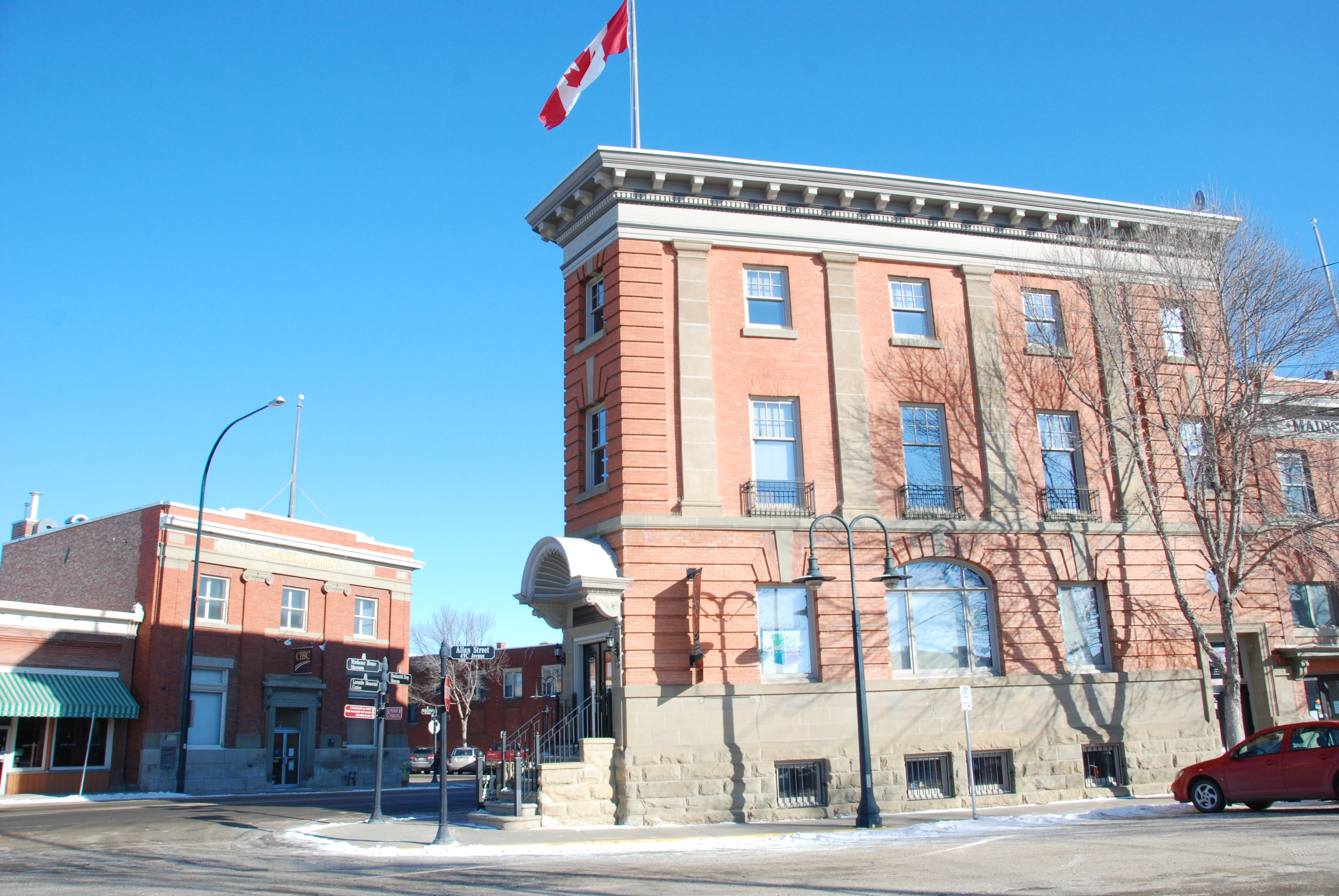
Our second example, the Strathcona Public Library in the Strathcona neighbourhood of Edmonton, is a two-storey brick structure that was constructed in 1913 and remains the oldest surviving public library in Edmonton. The Strathcona Public Library was designated a Municipal Historic Resource in 2004 and a Provincial Historic Resource in 2008.

Strathcona Public Library

Over the years the use had not changed but the needs of the institution grew and additional space and services became a requirement. A major rehabilitation project was undertaken to construct an addition at the rear of the building (the left portion as shown on the image to the right). The rehabilitated library was re-opened in 2007.

Click on the following link to access a copy of a presentation on this project given by Tom Ward, Manager of Heritage Conservation Advisory Services, at the 2013 Municipal Heritage Forum: Strathcona Library PowerPoint – 2013 Forum.

These projects exemplify that heritage need not be frozen in place. There are means by which to respect and care for the original fabric while allowing for the transformation of uses over time.

Written by: Rebecca Goodenough, Municipal Heritage Services Officer.

New Uses for Old Places – Historic Bank Buildings

In this edition of New Uses for Old Places we are going to look at two Provincial Historic Resources on Calgary’s historic Stephen Avenue that are currently undergoing rehabilitation. The Bank of Nova Scotia  and the Bank of Montreal Building are both slated to reopen with new uses this year.

In the early days of Alberta, banks were designed as statements of wealth, progress and confidence in a growing province. The buildings included lofty banker’s halls, adorned with fancy ornamentation — the ‘suits’ could look down on the tellers from the mezzanine above. The design was intended to impress investors and was conducive to the hushed conversation of financial matters.

But, what do you do with grand halls when the money managers move to a modern building? Historic banks can be difficult spaces to re-purpose due to challenges with acoustics, heating and the unconventional layout of the main floor. Nevertheless, for two former banks on Calgary’s Stephen Avenue, the commitment of the property owners and the selection of suitable tenants has resulted in the revitalisation of two very significant buildings on one of Calgary’s most active streets.

The Bank of Montreal building was constructed on Stephen Avenue in 1930-32 as a three-storey, steel-frame building clad in Tyndall limestone. The building replaced an earlier (1889) version of the building in an effort to modernize its image. The bank operated in this location until 1988. The most recent tenant, A&B Sound, left the building over a decade ago and it has since sat empty. Renovations are now under way to re-purpose the building to accommodate a restaurant/pub on the main floor, with 25,000 square feet of office space on the upper floors. The building was designated a Provincial Historic Resource in 2003.

This slideshow requires JavaScript.

Just across the street sits, the Bank of Nova Scotia. It was constructed in 1930 as a one-storey steel frame, brick and sandstone structure and operated as a bank until 1976. Since that time the building has been home to a range of restaurants and clubs and is now being renovated to contain a public house. The renovation will involve re-plastering of the walls and restoration of the marble flooring in the entranceway. The building was designated a Provincial Historic Resource in 1981.

This slideshow requires JavaScript.

Heritage Conservation Advisory Services has been working closely with the owners of both properties to ensure that renovation activities are following the Standards and Guidelines for the Conservation of Historic Places in Canada.

Written by: Rebecca Goodenough, Municipal Heritage Services Officer.

Alberta Historical Resources Foundation visits Olds

The Alberta Historical Resource Foundation held its first quarterly board meeting of 2014 in the town of Olds on February 21st and 22nd.
Alberta Historical Resources FoundationThe Foundation’s board members and staff look forward to the quarterly meetings, each held in a different Alberta community. This allows us to meet the Albertans who work so hard to conserve and promote our heritage; seeing and experiencing the fruits of their labour is both informative and a pleasure.

Friday afternoon began with a bus tour led by Donna Erdman, chair of the Olds Historical Society. Before we boarded the bus, Mitch Thompson of the Olds Institute surprised us by asking us to turn on our smartphones. Mitch showed us the new EverythingOlds.ca website—the Heritage Sites section contains video vignettes showcasing locally significant historic resources. (There’s much more community information on the website too.)

Once the bus got underway, Donna showed us some of the historic places the Town of Olds evaluated in 2009 (with the assistance of a Foundation grant and the Municipal Heritage Partnership Program staff). Many of these places have since been designated as Municipal Historic Resources.

Our bus first stopped at the Mountain View Museum and Archives. There were several interesting displays that used locally significant historical artefacts to highlight the region’s history. We also learned a bit about their archival holdings and viewed some of the contemporary art displayed in the adjoining art gallery.

Our next stop was the former Canadian Bank of Commerce, now home to [sic] Pandora’s Boox and Tea. The beautiful, classically-detailed bank building has been adapted for its new use as a book store and coffee shop. Pandora’s is in the heart of Uptowne Olds, the town’s historic commercial district.

Upon re-boarding the bus, we were slowly driven up and down the several blocks that make up the Uptowne area. We admired the many historic resources in the Uptowne. Olds is one of four communities that the Foundation has accredited through its Alberta Main Street Program. We were impressed by the conservation projects currently being undertaken on several buildings in the Uptowne area (some with the Foundation’s support).

We briefly visited the grounds of the Olds Agricultural Society. Olds’s large Ag society is one of the olds-est (pun not intended) Agricultural Societies in Alberta, having been incorporated in 1899. Our next stop was the Olds College.

Olds College celebrated its centenary in 2013. Founded in 1913, the college is Alberta’s largest and olds-est (there I go again) rural agricultural college. The campus has evolved with the college it houses, but amidst all the modern classrooms, laboratories, libraries and dorms are at least two buildings older that the college they’ve become an integral part of: a calf barn (now home to a herd of goats) and a horse barn. Both buildings were constructed in 1911, when what is now a campus was part of a provincial demonstration farm.

We ended our visit to Olds College by visiting to their state of the art brewery: an example of how the college contributing to Alberta’s future by being true to our agricultural past. The first class of brewers will graduate shortly.

The tour was followed by a meet and greet at the Pomeroy Inn. Thanks to Michelle Jorgensen (Heritage Advisor, Town of Olds) for organising an informative and fun event. It was a pleasure to meet and speak with Mayor Judy Dahl, and with  members of the town staff, the Mountain View Museum and Archives, the Olds Institute for Community and Regional Development, Olds College and many citizens of the area who build the partnerships that protect and promote Old’s wealth of historic resources.

Everyone agreed that it was an afternoon well spent that reminded us of how important our work is; it was the best way for the board to get inspired before spending their Saturday immersed in paperwork.

This slideshow requires JavaScript.

The Alberta Historical Resources Foundation has been collaborating with the citizens of Olds through its grant programs for over two decades. The Town of Olds has completed a full range of heritage planning projects with the assistance of the Municipal Heritage Partnership Program, including a heritage survey, inventory and management plan. As an Accredited Main Street Community, the Olds Institute for Community and Regional Development (Olds Main Street sponsoring organization) was recently awarded a coordinator salary subsidy along with marketing, economic development, organization and design grants. The Heritage Preservation Partnership Program has also provided technical advice and conservation grants to a number of Olds’s Municipal Historic Resources.

Written by: Carina Naranjilla, Grant Program Coordinator, Alberta Historical Resources Foundation; and Michael Thome, Municipal Heritage Services Officer.


Main Street Coordinators Meet to Learn and Strategize

Local leaders from Alberta Main Street Program communities met recently in Olds for information sharing, learning best practices, and ongoing conversations about the Four-Point Approach®.  

The program, established in 1987 and now renewed with a fresh format, revitalizes historic commercial areas through heritage conservation. The bar for participation is high: communities desiring to participate must complete a Heritage Inventory  of their historic commercial area and commit to meet detailed standards of performance. Those in the Alberta Main Street Program network have met these high criteria and are committed to achieving excellence.

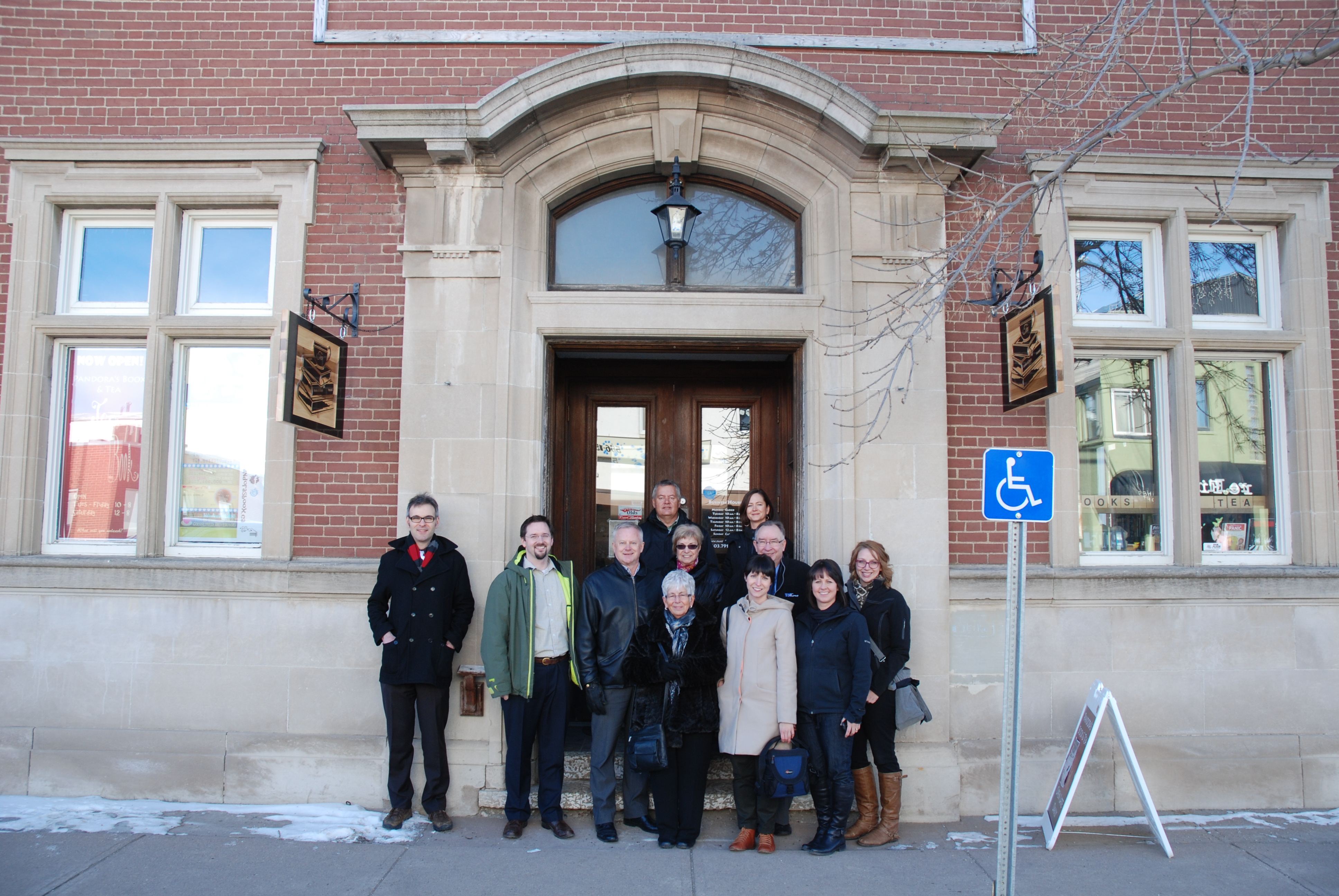
Alberta Main Street Program staff and Coordinators outside the historic Bank of Commerce Building in Olds.
Alberta Main Street Program staff and Coordinators outside the Bank of Commerce Municipal Historic Resource in Olds. Back row, left to right: (Leon Durand, Chair, Uptowne Olds; Michelle Jorgensen, Town of Olds Heritage Advisor) Middle row, left to right: (Michael Thome, Municipal Heritage Services Officer; Matthew Francis, Manager, Municipal Heritage Services; Ted Stilson, Executive Director, Downtown Lethbridge BRZ; Carol-May Coty, Manager, City Centre Camrose; Ray Telford, City of Camrose Economic Development Officer; Ashley Stone, Program Director, Wainwright Buffalo Park Foundation. Front row, left to right: (Rita Thompson, Uptowne Olds; Rebecca Goodenough, Municipal Heritage Services Officer; and Debra Aitken, Uptowne Olds Coordinator).

Alberta Main Street Program network members including Uptowne Olds, Downtown Lethbridge, City Centre Camrose, and Wainwright were represented at the coordinator’s meeting, the first in 2014.

Fraser Shaw, Heritage Conservation Adviser with Alberta Culture, who served as the Main Street Coordinator in Ponoka and Black Diamond, delivered an informative presentation on quality design for historic Main Street communities. A key aspect of this is the area of historic signage: what is, and what is not, appropriate. While in the late 19th and early 20th centuries a “wild West” ethic probably prevailed, with “my sign is bigger than your sign” approach usually winning out, commercial areas today are governed by sign bylaws and other regulations. Can these bylaws take into account historic significance and character? The answer is  a definite yes!  – but implementation requires careful planning.

The group learned that determining heritage values and understanding the historic area as a whole provides the basis to answering these kinds of questions. The afternoon learning session sparked many interesting questions and discussions among the Coordinators. Everyone left Olds energized and looking forward to the next quarterly Alberta Main Street Network meeting, which will take place in May.

Written by: Matthew Francis, Manager of Municipal Heritage Services.

Municipal Heritage Forum 2014—Save the Date!

Every year, the Historic Resources Management Branch organises a conference for Albertans involved in identifying, protecting or conserving historic places at the municipal level. We’re please to announce that the 2014 Municipal Heritage Forum will be held on October 16th and 17th.

Photographed on February 7, 2014
Where is this? (Photographed on February 7, 2014.)

The Municipal Heritage Forum is open to both municipal staff, elected officials and volunteers. It’s a great opportunity to see what your peers in other municipalities are working on and learn about the cutting edge of heritage conservation. If you are working with your municipality in some way to conserve historic places, please save those dates. (Check out some of our posts about past forums if you’d like to learn what the Municipal Heritage Forum is all about.)

Photographed on February 7, 2014
here are we? (Photographed on February 7, 2014)

We are excited to host this year’s forum in a municipality we haven’t held it in yet. Many of you haven’t been here (yet) and will be delighted by their conservation ethic. I’ve posted some pictures of their historic downtown.

Can you guess where the forum will be this year? Post your guess in the comment section, on our Facebook page or tweet us.

UPDATE:  I guess the cat’s out of the bag: we plan to hold the 2014 Municipal Heritage Forum in the City of Lacombe.

Written by: Michael Thome, Municipal Heritage Services Officer.

New Uses for Old Places – The Warehouse Conversion

This is the first installment of a new series of blog posts on RETROactive entitled New Uses for Old Places. We will be highlighting examples from around Alberta of historic resources that have found interesting, new uses for spaces that were originally designed for different purposes. To start us off we are going to talk about the ubiquitous warehouse conversion.

This slideshow requires JavaScript.

One of the best ways to ensure a long and prosperous future for a historic place is to make sure that it is in use. Making certain that people are frequenting a site ensures that a historic resource stays relevant and in the forefront of public consciousness. This can be a challenge given that the purposes for which many of our historic places were originally designed for are now defunct. The conversion of a building to allow for a new use is known as adaptive reuse and it is a process that can require some creative thinking.

The values-based approach to heritage conservation recognizes the importance of activating our historic places and recognizes that alterations may be required to ensure the long-term sustainability of a site. The Standards and Guidelines for the Conservation of Historic Places in Canada consider adaptive reuse to be a rehabilitation conservation treatment. Rehabilitation is understood to be “the sensitive adaptation of an historic place or individual component for a continuing or compatible contemporary use, while protecting its heritage value” (Standards & Guidelines, page 16).

A popular form of adaptive reuse/rehabilitation is that of the warehouse conversion. More common in larger cities that once were home to warehousing and manufacturing sectors, warehouse districts are now often surrounded by non-industrial, higher density development and attract investors who see the potential in the character that the former industrial spaces have to offer. Warehouses make good candidates for adaptive reuse because they have large, relatively open floor plates, generous ceiling heights and numerous large windows. These features allow for the flexibility to subdivide the interior space for a variety of purposes without compromising the unique elements that make warehouses so charming (think freight elevators, bank vaults, exposed beams, etc.).

Edmonton and Calgary were home to the majority of manufacturing and shipping in Alberta. As such the majority of extant warehouse structures are located in these two cities, though there are others scattered in other communities across the province. A number of these structures have received historical designation at the municipal and/or provincial level and have been rehabilitated to accommodate a variety of new uses.

Written by: Rebecca Goodenough, Municipal Heritage Services Officer.
Click on the following links to find the listing on the Alberta Register of Historic Places for warehouse buildings featured in the slideshow:

Camrose Feed Mill (Designated a Provincial Historic Resource in 1985)

Canadian Consolidated Rubber Company (Designated a Municipal Historic Resource in 2001)

Customs House (MHR) / Customs Examining Warehouse (PHR) (Designated a Provincial Historic Resource in 1979 and a Municipal Historic Resource in 2009)

H.V. Shaw Building (Designated a Municipal Historic Resource in 2001)

A. MacDonald Building (Designated a Municipal Historic Resource in 2000 and a Provincial Historic Resource in 2003)

Metals Building (Designated a Municipal Historic Resource in 2002)

Phillips Building (Designated a Municipal Historic Resource in 2001)

Simmons Factory Warehouse (Designated a Municipal Historic Resource in 2009)

Heritage by Numbers

header_ARHP

Research and evaluation are important tools for managing Alberta’s historic resources. They help us to set our strategic plans and policies for the future, understand how our grants and programs are working and measure the impact we have made – both on historic places and the people who enjoy them.

So here are a few fun facts that you might not have known about heritage in Alberta:

  • The oldest known building in Alberta still on its original foundation is the Clerk’s Quarters at Fort Victoria near Pakan, which dates from 1865.
  • The first building recognized as a historic resource was the Bitumount Site at Fort McMurray on 4th December 1974.

    A recent photograph of the McLaughlin-Nelson Home.
    The McLaughlin-Nelson Home is the most recent addition to the Alberta Register of Historic Places.
  • Since 2000 the number of places recognized with a designation has increased: 41 percent of all Provincial Historic Resources designations and 84 percent of all Municipal Historic Resources designations occurred during this period. 2001 and 2009 were important years for Provincial Historic Resource designation: 17 buildings were listed both years. For Municipal Historic Resources 2009 was an important year: 45 buildings were listed.
  • With 58 Provincial Historic Resources in Calgary and 48 Provincial Historic Resources in Edmonton these two cities have the most in the province. This is followed by Lethbridge (12), Fort MacLeod (9), and Medicine Hat (8).
  • Edmonton has the most Municipal Historic Resources with 91 in total, where Calgary has 35. This is followed by Red Deer (11), Banff (8) and Wainwright (8).
  • Approximately 20 percent of all Provincial Historic Resource and Municipal Historic Resources in Alberta are used as residences. 67 percent of these buildings are single family dwellings. 66 percent of all designated single family dwellings are located in Edmonton, where the property value of residential buildings designated as Municipal Historic Resources ranges from about $215 000 to $1.3 million.
  • Approximately 19 percent of all buildings designated as Provincial Historic Resources or Municipal Historic Resources are used for commercial purposes. 35 percent of these are used as offices and 32 percent are used for retail or wholesale. Historic buildings are also used for other purposes such as: agriculture, community use, education, government, health care, industry, leisure, spirituality, or transportation.
  • As of December 2012, there are 606 buildings which have been identified as places of interest by municipalities across Alberta. Each requires further research and evaluation to determine if it should be designated as a Municipal Historic Resource.
  • With a collection of over 750 historic resources, it is important that funding is available to help their owners look after these precious places. In 2012-2013, grants of $4.9 million were given by the Ministry through the Alberta Historical Resource Foundation to conserve the province’s heritage landmarks.

Get to know Alberta’s historic resource a bit better by visiting a Provincial Historic Site, Interpretative Centre of Museum or having a walk around your city or town. Historic resources are often easy to spot as many have been recognized with a plaque or interpretation panel. You can also search online for buildings recognized in your community by visiting the Alberta Register of Historic Places. If you think there is a building or site in your community that should be recognized but isn’t, talk to your municipality about how it can be protected for the future.

Written by: Sarah Hill.

Major Funding Announced for Flood-Impacted Historic Places

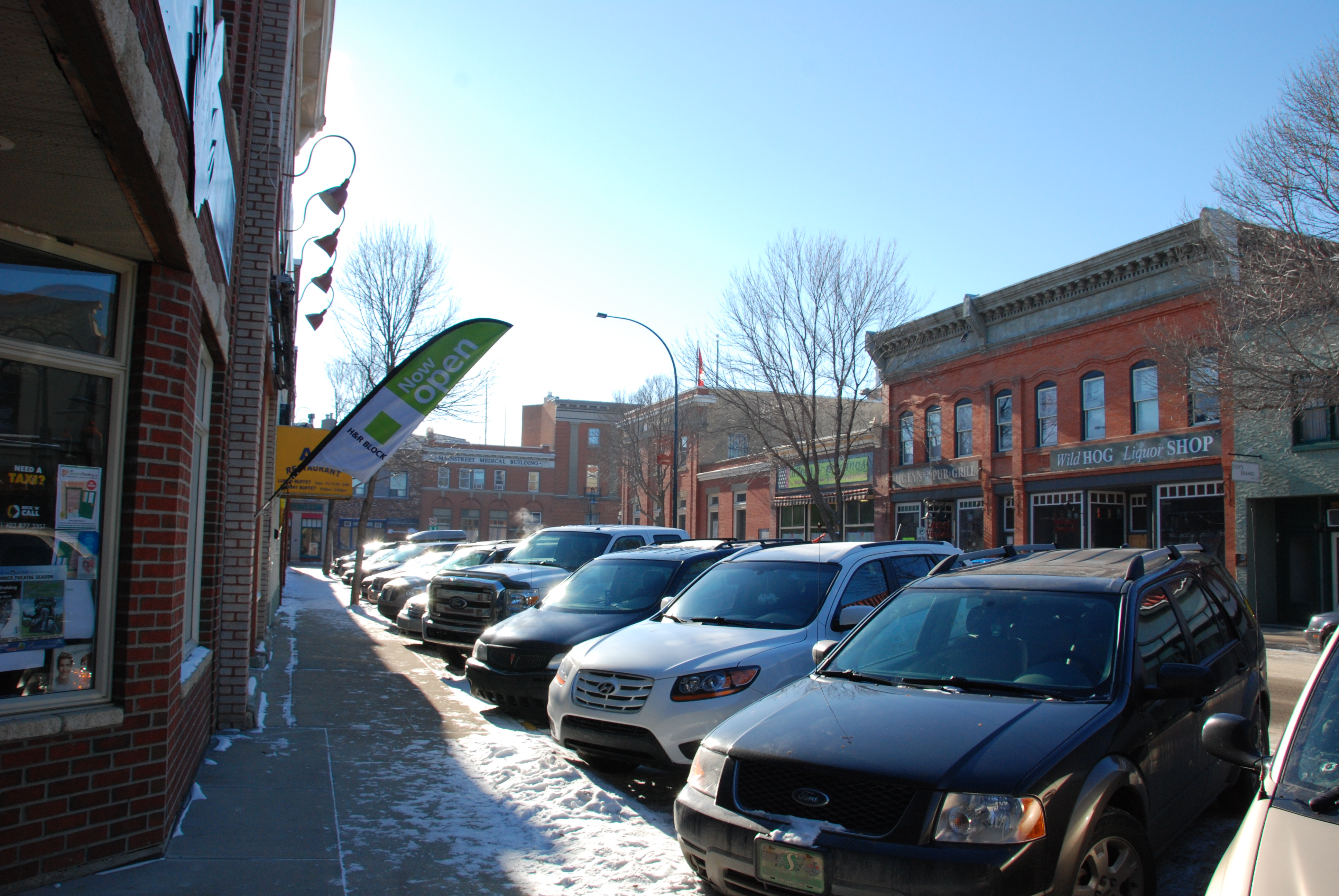
This morning in High River the Honourable Heather Klimchuk, Minister of Culture, announced significant new funding to assist owners of historic properties affected by 2013’s catastrophic floods.

Minister of Culture, Heather Klimchuk, announces funding for flood-impacted historic resources.

The announcement took place at the Museum of the Highwood, a Provincial Historic Resource, which suffered damages to its historic fabric as well to the artifacts and archival collections stored within.

A total of $12 million in funding has been approved to assist in efforts to conserve, and protect historic resources in communities affected by the flooding of 2013. Funding will be allocated to three primary areas:

Historic Buildings

$4.5 million will be invested to provide needed support on conservation projects, for floodrelated work not covered by Disaster Recovery Program or insurance. This support is for designated Provincial and Municipal Historic Resources affected by last year’s flooding. In addition to the Town of High River, communities such as Calgary, Medicine Hat, Canmore, as well as several others, were hit hard, with historic properties adjacent to major waterways significantly impacted.

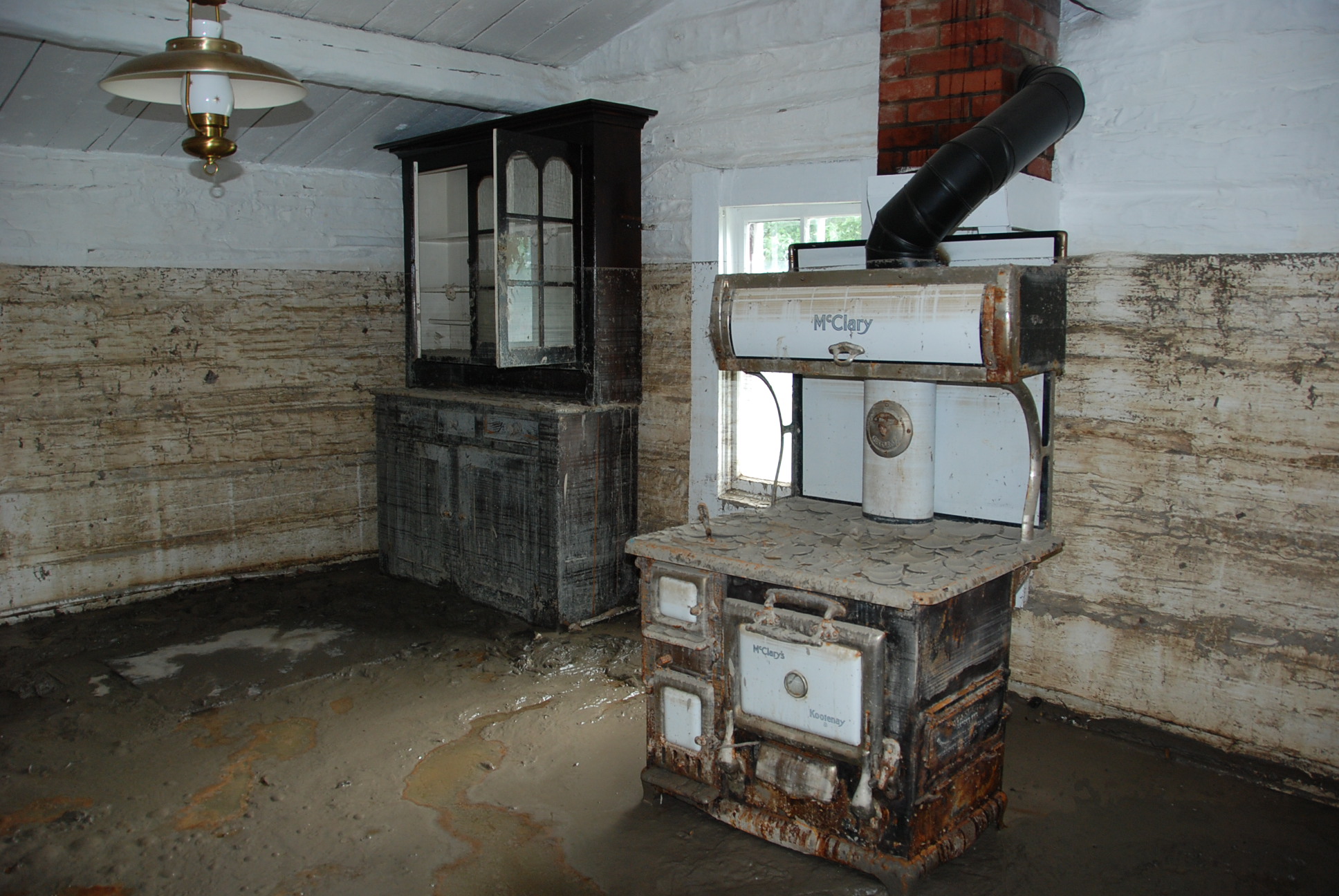
Flood impacts to the Maccoy House in High River.
Flood impacts to the Maccoy House, a Municipal Historic Resource, in High River.

This new support program will aid in the critical work needed to ensure that flood-impacted historic places are appropriately rehabilitated according to the Standards and Guidelines for the Conservation of Historic Places in Canada.

For more information on this funding program, please contact Carina Naranjilla, Grants Program Coordinator, at 780-431-2305 (toll-free by first dialing 310-000) or via email at Carina.Naranjilla@gov.ab.ca

Museum and Archives Conservation Assistance

 $6 million will go to support the conservation of artifacts and archival materials at museums and archives affected by flooding. Funding will be administered through the Alberta Museums Association and the Archives Society of Alberta.

For more details on the funding available to flood-impacted archives, please visit the Archives Society of Alberta webpage or contact Rene Georgopalis, Executive Director and Archives Advisor, at 780-424-2697 or reneg@archivesalberta.org. More details on the funding available to flood-impacted museums can be found on the Alberta Museums Association webpage or by contacting Alexandra Hatcher, Executive Director and CEO, at 780-424-2626 (ext. 224) or ahatcher@museums.ab.ca.  

Archaeological and Palaeontological

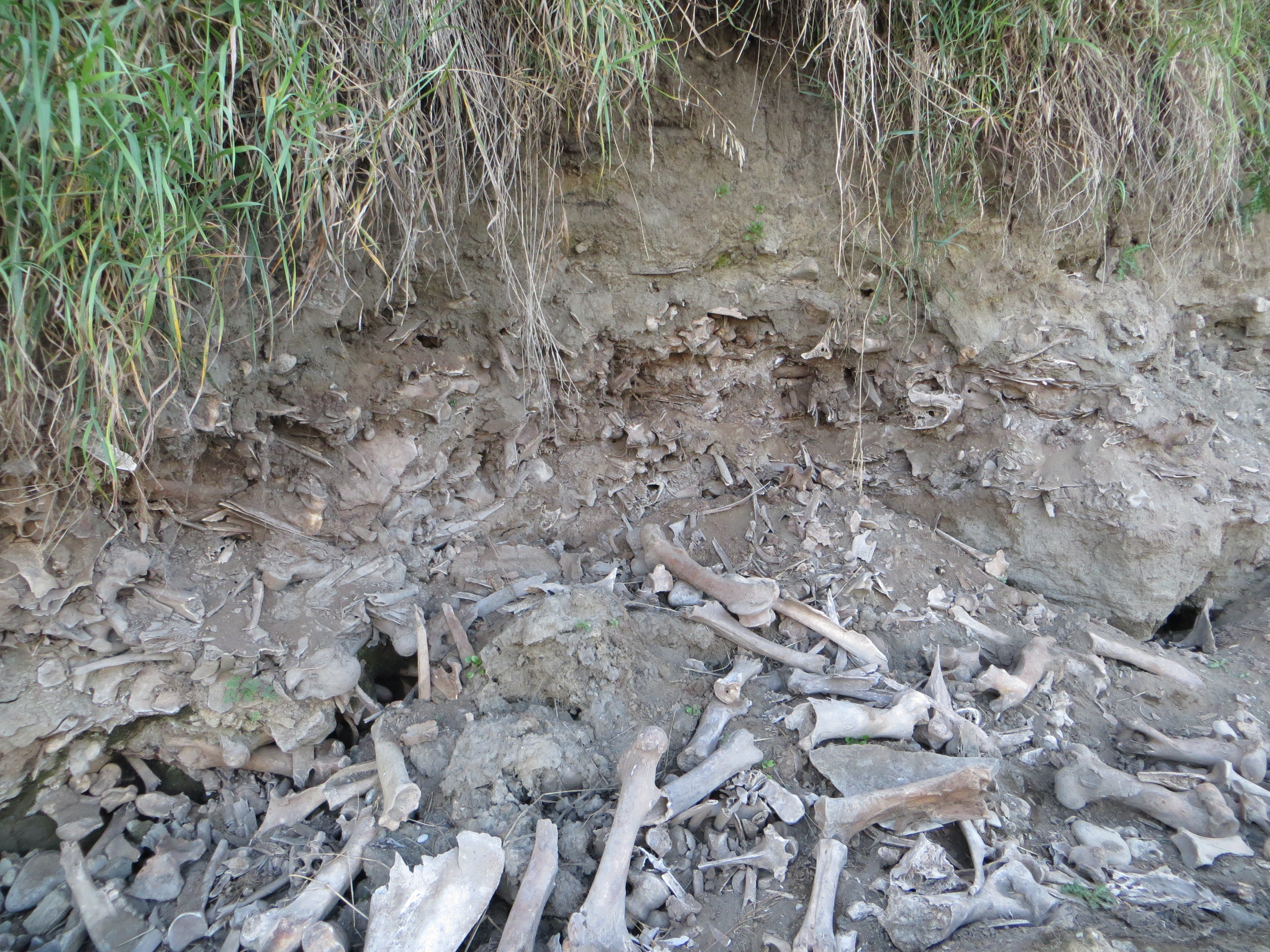
Flood impacts to a highly significant archeological site in southern Alberta.

A number of significant palaeontological sites were exposed as a result of the floods. $1.5 million will support existing Alberta Culture programs to collect fossils and artifacts as well as establish protective measures for archaeological and palaeontological sites affected by flooding.

This funding will ensure that these heritage treasures and the remarkable history they represent will be preserved and passed on to future generations.