Written by: David Monteyne, Professor, School of Architecture, Planning and Landscape, University of Calgary
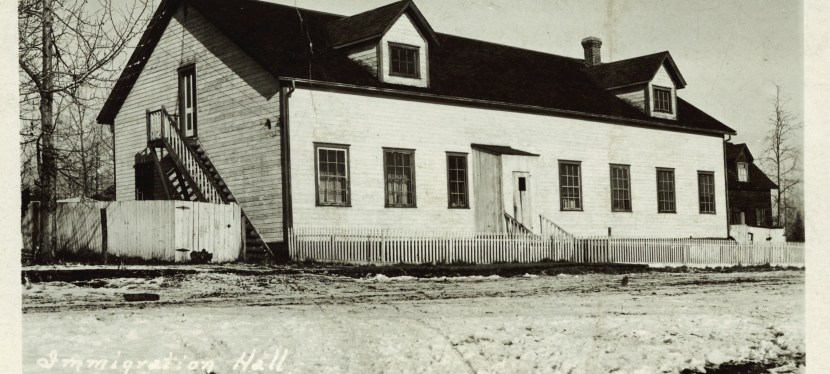
Between 1885 and 1930, the Dominion government built and operated about a dozen immigration halls in Alberta (and rented space for this purpose in a dozen more towns), from Lethbridge and Medicine Hat in the south to Grande Prairie and Peace River in the north. But what, exactly was an “immigration hall”?
An immigration hall was a place where the federal immigration branch provided free accommodations as well as advice to new arrivals from Europe, the United States and even eastern Canada. These prairie immigration halls were part of a nationwide building program, described in my recent book, for which the federal Department of Public Works designed and built: pier buildings in ports like Quebec City and Halifax (Pier 21, now the Canadian Museum of Immigration); immigrant detention hospitals; and quarantine stations on both coasts. Of all of these, the immigration halls were the most numerically significant, with more than 50 buildings erected across the three prairie provinces. The immigration hall was a newly invented building type, unique to Canada.
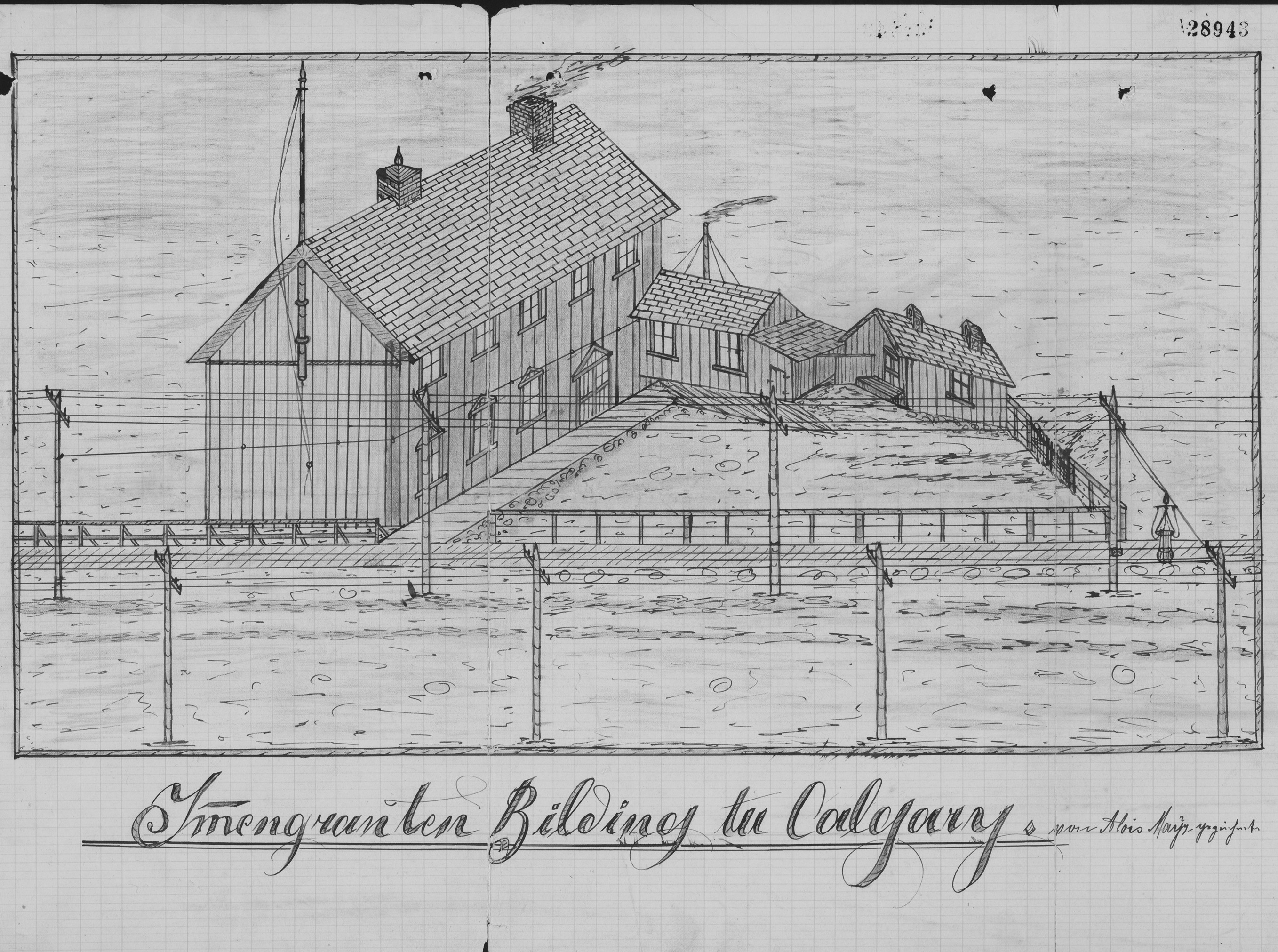
An immigrant’s late-1890s sketch of the immigration hall at Calgary, which was built in 1885 and used until 1913. Source: Library and Archives Canada, Department of the Interior fonds, Immigration Branch, RG 76, volume 20, file 180, part 1.
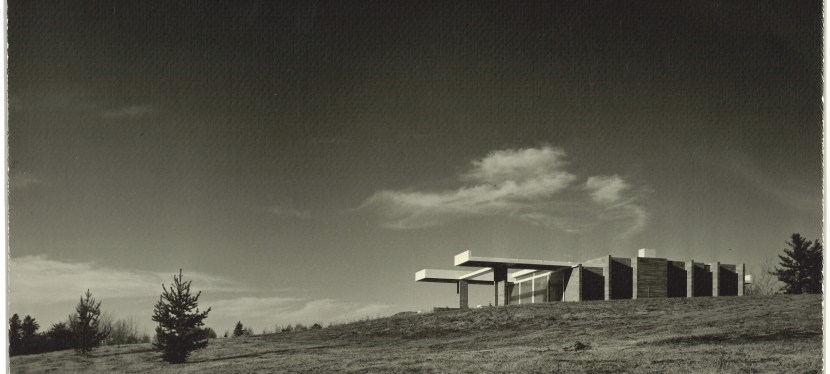
Editor’s note: The banner image of Dyde House above was taken by an unknown photographer, Edmonton, 1961-1962. Source: University of Calgary, Canadian Architectural Archives, Arthur Erickson fonds, CA ACU CAA F0002.
Written by: Robb Gilbert, Archivist, Canadian Architectural Archives
Dyde House, located a short distance outside Edmonton, is one of Canadian architect Arthur Erickson’s first notable projects in residential design. The house is located southwest of Edmonton, in Parkland County, on the grounds of the beautiful University of Alberta Botanic Gardens. The project was designed by Erickson in the Spring of 1960 and completed in late 1961 after returning from travels in Japan and Southeast Asia on a Canada Council for the Arts fellowship.
2024 marked the centenary of the birth of Erickson so I wanted to highlight one of his most important works from his early years as an architect: a rare Erickson project located in Alberta and a work that has recently been the subject of a documentary and an ongoing preservation campaign. The Canadian Architectural Archives at the University of Calgary houses the work of Erickson from 1953 to 1973 in the Arthur Erickson fonds. His archive includes thousands of original drawings and dozens of boxes of files documenting the design process behind his revered works of architecture.
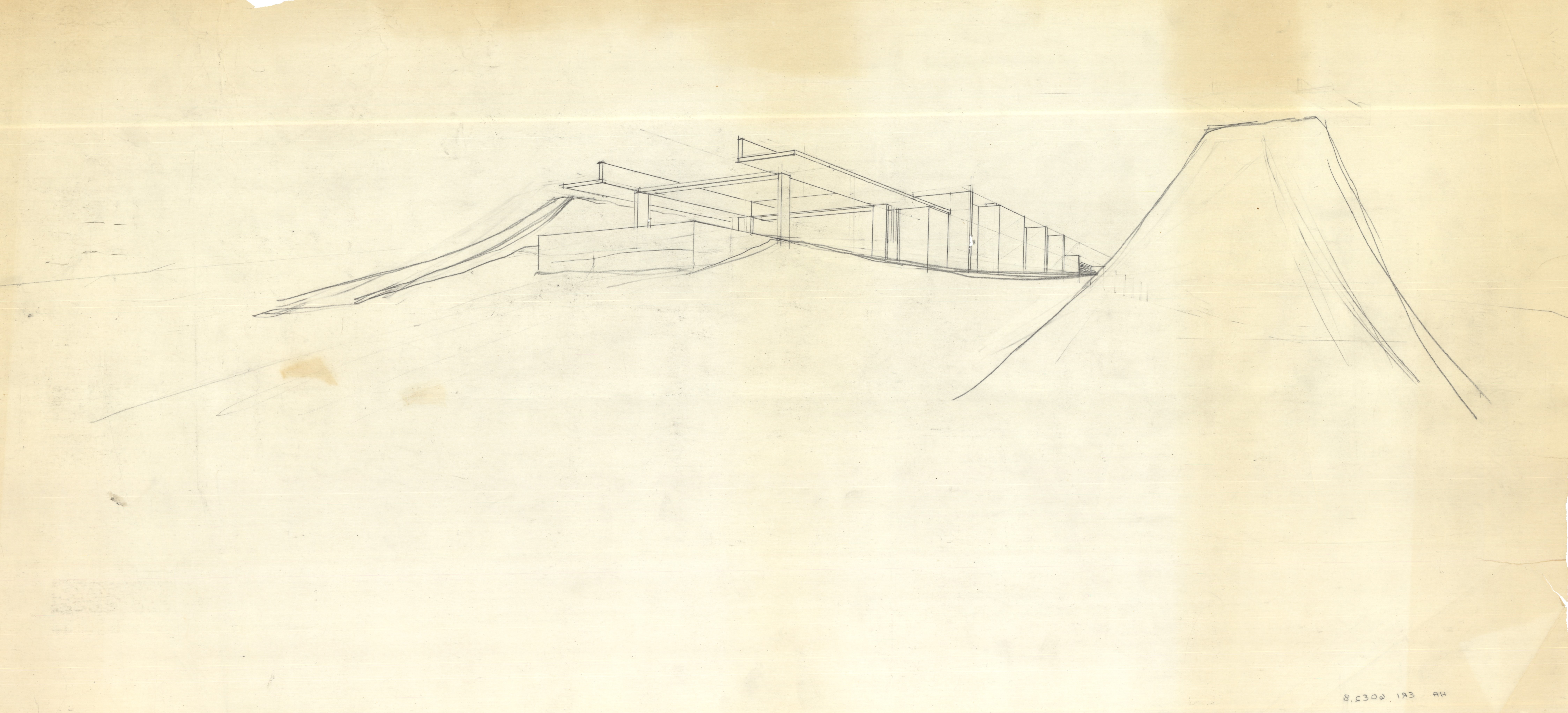
Arthur Erickson, Sketch of the Dyde Residence, Edmonton, [1960-1961]. Source: University of Calgary, Canadian Architectural Archives, Arthur Erickson fonds, CA ACU CAA F0002.
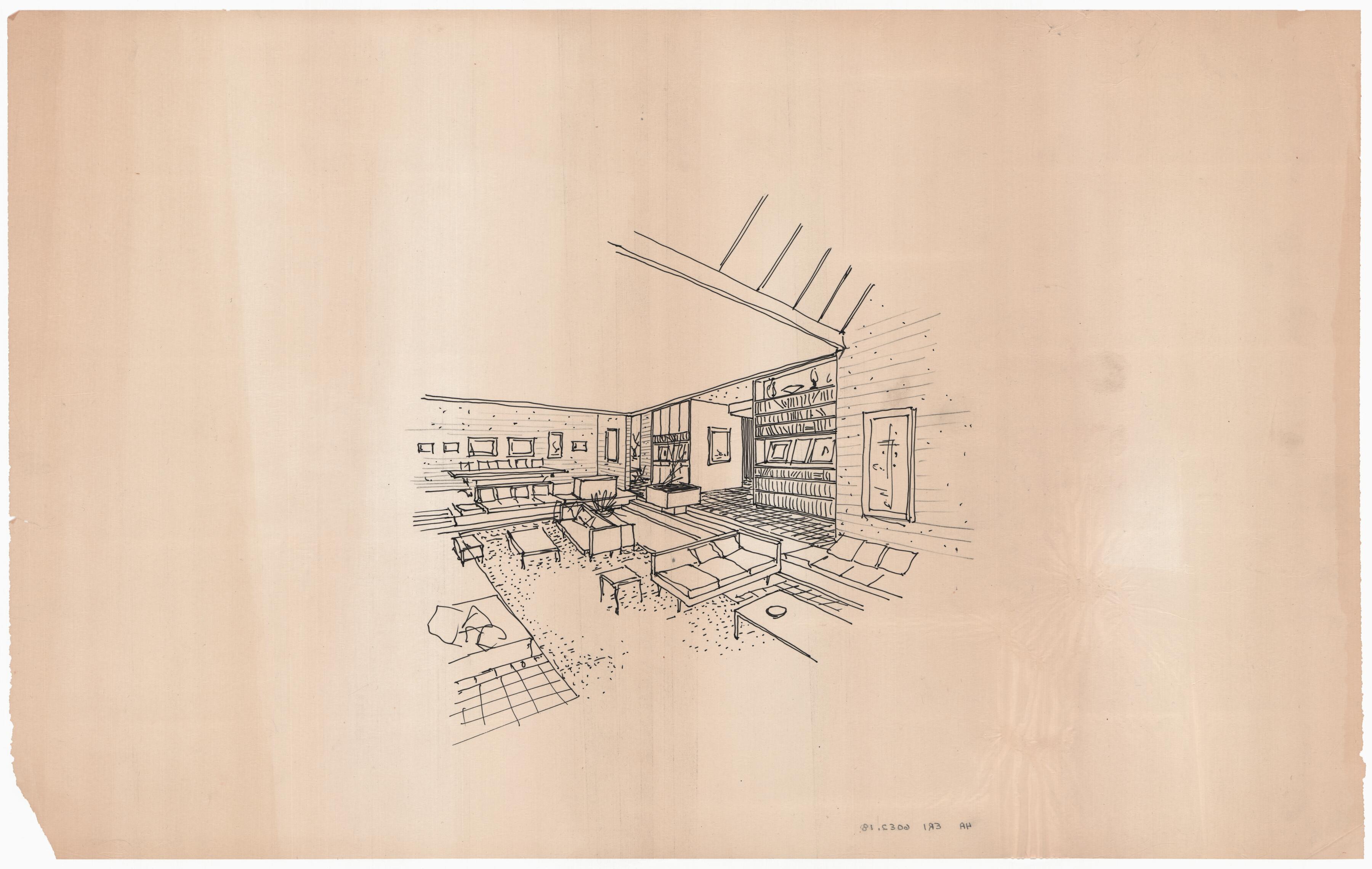
Arthur Erickson, Sketch of the interior of the Dyde Residence, Edmonton, [1960-1961]. Source: University of Calgary, Canadian Architectural Archives, Arthur Erickson fonds, CA ACU CAA F0002.
Erickson was born in Vancouver in 1924. He studied at the University of British Columbia and served overseas during World War II in India and Malaysia. Pursuing a career as an architect, he studied at McGill University and established his practice in Vancouver in the mid-1950s. In the span of the next 40 years, Erickson became Canada’s most renowned architect, nationally known but also the one of the few Canadian architects with an international reputation. His work includes icons of Canadian architecture such as Simon Fraser University, the University of Lethbridge, Robson Square and the Museum of Anthropology at UBC.
Editor’s note: Jillian Richardson is the curator of Labour and Industry at the Royal Alberta Museum (RAM) and worked on both the Doris Tanner Architecture Collection and Wallbridge & Imrie Architecture Collection there. Devon Owen Moar recently wrote his Masters thesis on Wallbridge & Imrie and worked as the cataloguer for the RAM’s Tanner Collection.
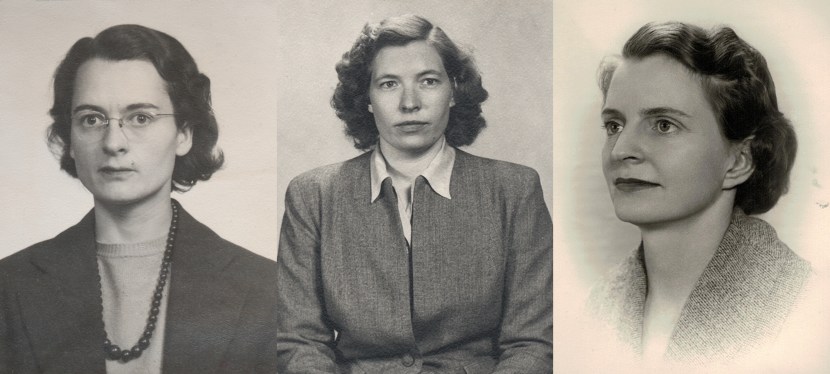
The banner image above is a composite image composed of portraits of the three architects. The portraits of Jean Wallbridge (left) and Mary Imrie (middle) are sourced from the private collection of Mary S. E. Wallbridge-Lillis. The portrait of Doris Newland Tanner (right) is sourced from Cheryl Mahaffy’s “Women Building Alberta” website.
Written by: Jillian Richardson and Devon Owen Moar
While cataloguing the Doris Newland Tanner architecture collection for the Royal Alberta Museum, we noticed something interesting. A few of Doris’s books and technical manuals were inscribed with the names of former colleagues, Mary Louise Imrie and Jean Louise Wallbridge. Finding these inscriptions made us wonder—were these books exchanged as references? Left to Doris after Jean and Mary’s passings? Or, do they hint at an ongoing professional and personal dialogue that extended far beyond the drafting table? This discovery pointed towards the deeper connection between these three architects, beyond being professional acquaintances. The presence of Wallbridge & Imrie’s names in Doris’s books offers a rare glimpse into the professional and intellectual network of Alberta’s pioneering women in architecture at a formative moment in the province’s history and urban development.
Exploring these materials raises broader questions about how museum and archival collections—including architectural tools, books, drawings and correspondence—can illuminate the network of support and influence among professional women. While this research is still in its early stages, this small but compelling kernel of evidence points toward a larger story—one of friendship, mutual mentorship, collaboration and lasting bonds.
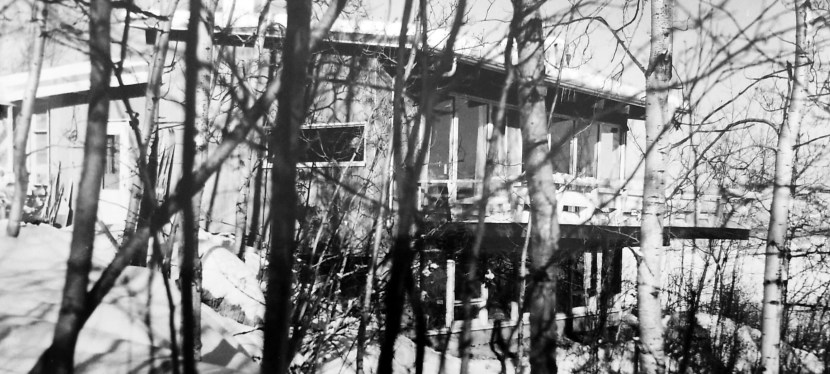
Editor’s note: The dwelling Wallbridge and Imrie created remains standing today, bequeathed to the Province of Alberta upon Mary’s death along with several other parcels of land. It is still owned, managed and maintained by the province, with its current tenants being the Land Stewardship Centre. However, its name has since shifted to “Imrie House.”
The author, Devon Moar, recently completed his Master’s thesis on this very topic.
Written by: Devon Owen Moar
First, I want to open with a quote from the poet Muriel Rukeyser:
“The universe is made of stories, not of atoms.”
The hope is that this line sets the tone for how I believe this dwelling exists, shaped both by structure and story. This place is not only a physical, humble shelter but holds a profound account of its inhabitants.
Welcome to Six Acres
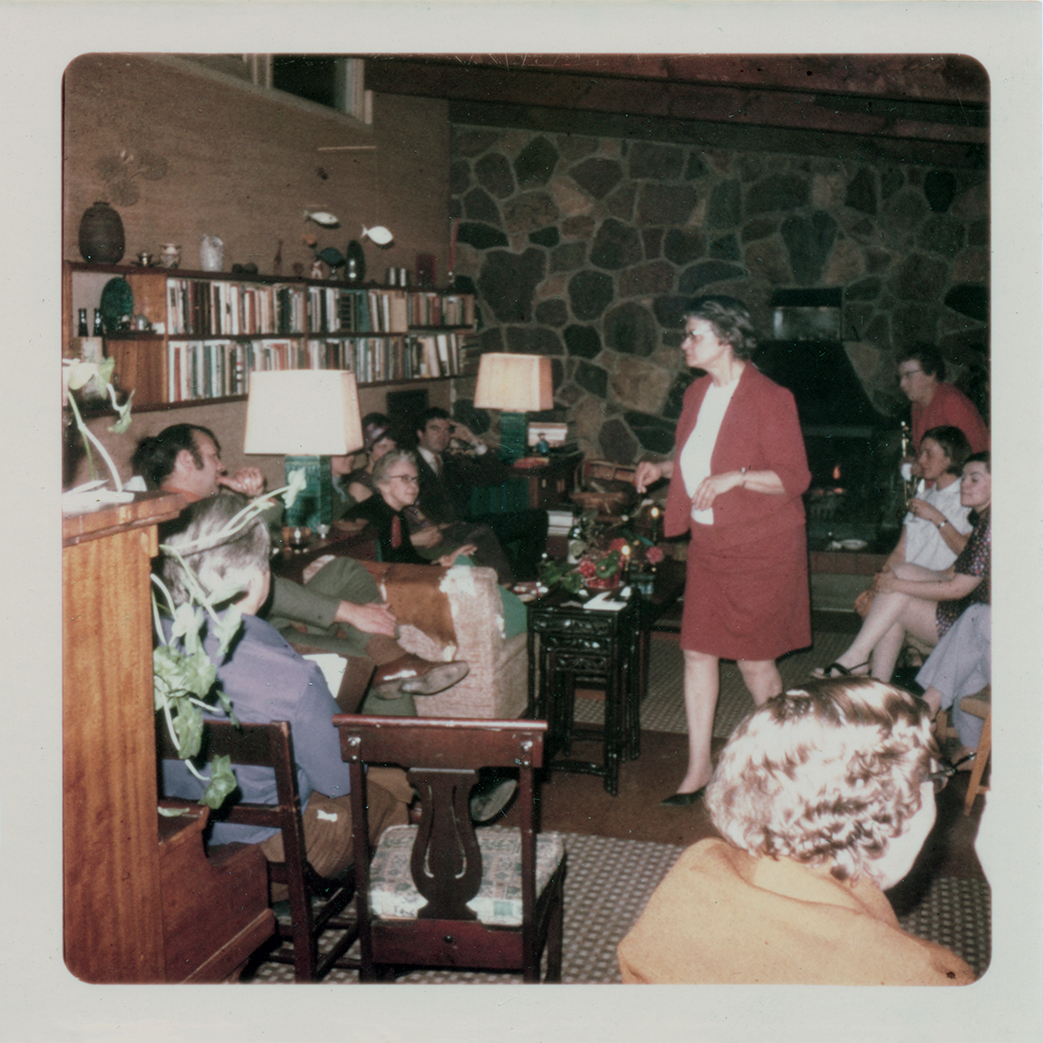
Gathering at Six Acres in the Living Room, back inscription: “French Class Finish, 1971”. Source: Private collection of Mary S. E. Wallbridge-Lillis.
Six Acres is a place where architecture, nature, and personal stories blend into one remarkable narrative. The following isn’t just a tour of a building; it’s an adventure through the living history of a place that served as both an everyday sanctuary and a bustling office for two groundbreaking Albertan women, Jean Wallbridge and Mary Imrie. Now, I’m going to share some anecdotes, quirks, and standout moments that make Six Acres far more than just a simple structure.
Editor’s note: David Murray is an architect in Edmonton and met Arni Fullerton in 1981 while working for him on an alternate, traditional plan for the development of a new town at 58˚ N as required by his contract with the province, led by Montreal architect Ray Affleck. Fullerton and his wife Merle were interviewed on Zoom in April 2024 at their home in Nanaimo.
All images courtesy of the Arni Fullerton Collection at the Provincial Archives of Alberta, unless otherwise noted.
Written by: David Murray, Architect AAA, FRAIC
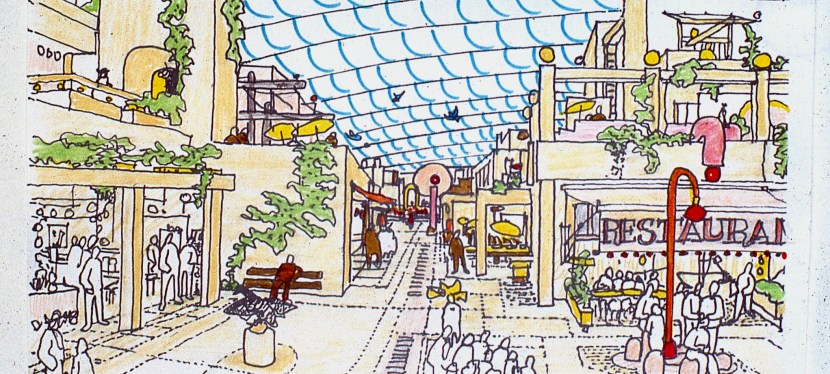
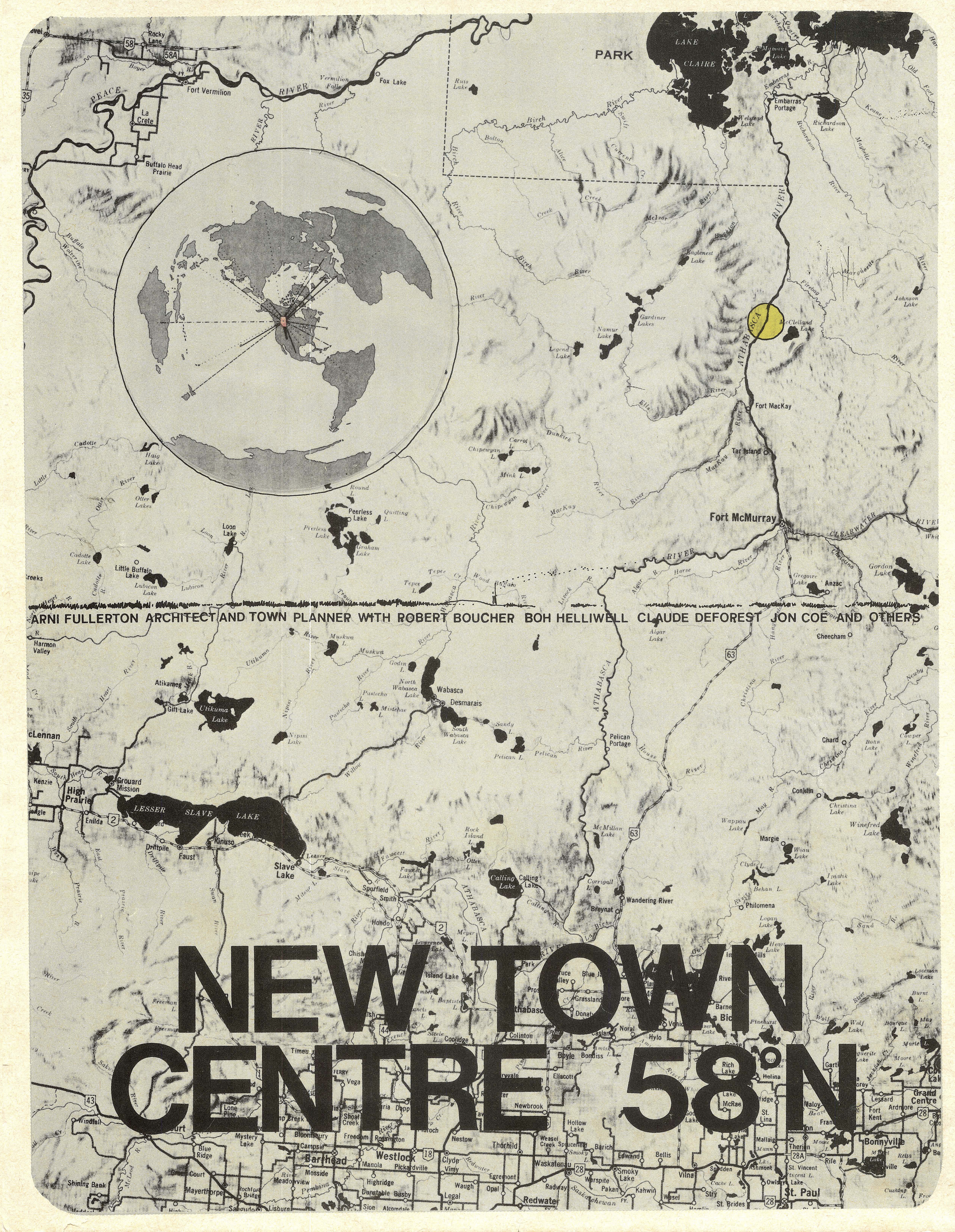
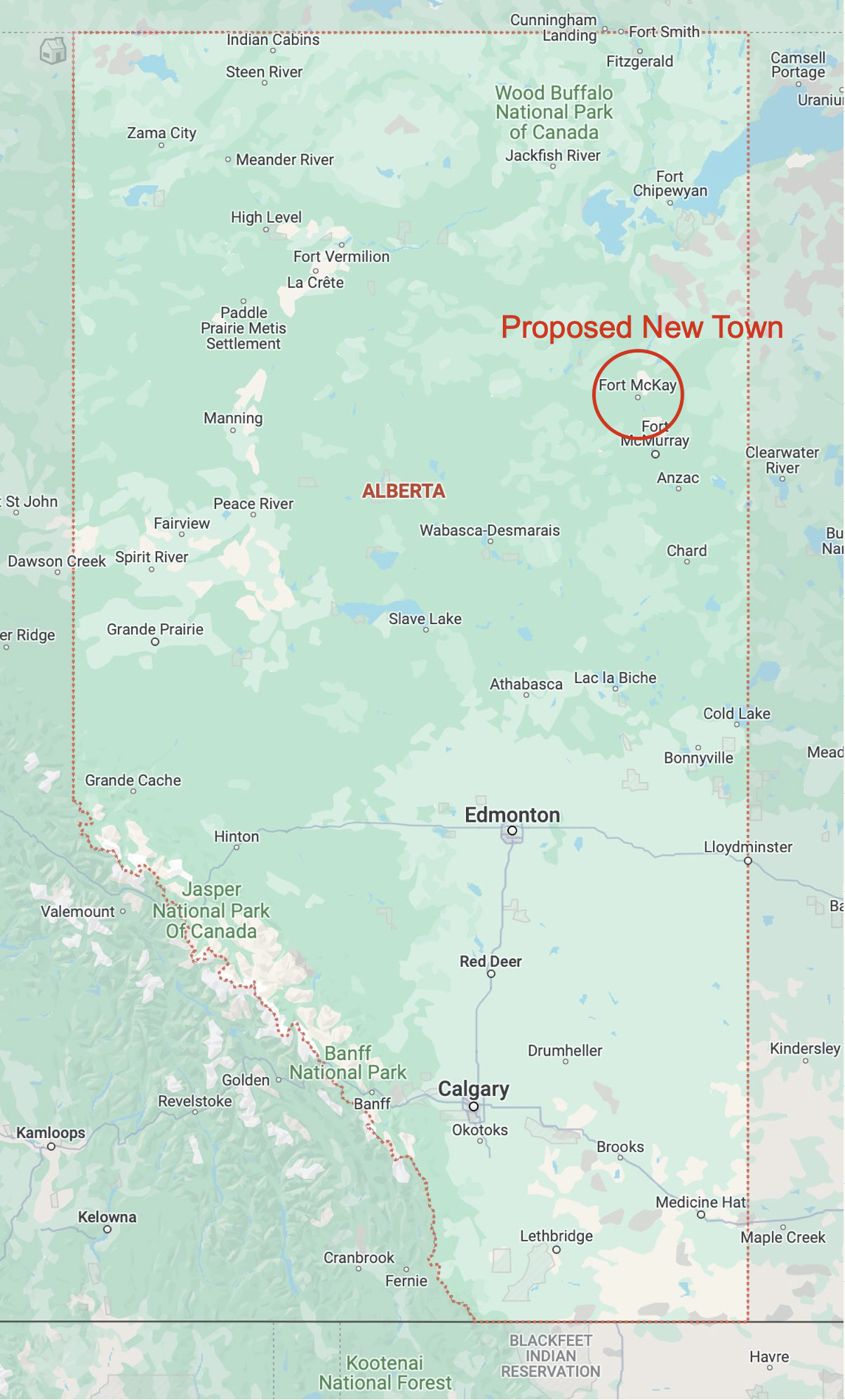
In the late 1970s, the Alberta Government’s Department of Housing and Public Works, initiated a planning process with the intent to design a new community in northern Alberta, north of Fort McMurray, specifically to house workers and their families at the expanding oil sands extraction developments. It would be a most imaginative and provocative approach to living in the north, the culmination of a lot of precedent research by a team of planning and engineering visionaries.
Illustration prepared by David Murray.
Architect Arni Fullerton was hired by the Alberta government to design the proposed new town. His vision, on which he collaborated with Britain’s Buro Happold Engineers and German structural engineer Frei Otto, was a 35 acre air-supported, weather-controlled, transparent dome, covering a town centre that incorporated housing, recreation fields, a sports complex, commercial properties, a shopping centre, schools, an amphitheatre, parks and a children’s plaza. The town was intended to grow incrementally, outside the town centre dome, over time. All parts of the town would be connected by public transit.
Editor’s note: The following interview has been lightly edited for length and clarity.The banner image above is of the Carleton University School of Architecture, Ottawa, 1970. Source: University of Calgary, Canadian Architectural Archives, Carmen and Elin Corneil fonds, CA ACU CAA F0007.
Written by: Robb Gilbert, Archivist, Canadian Architectural Archives and Dorothy Field, Heritage Survey Program Coordinator
In my work with the Alberta Heritage Survey, I’m always on the lookout for sources of reliable information about Alberta’s architectural history. One such resource that people may not generally be aware of is the Canadian Architectural Archives (CAA), which is a veritable Aladdin’s Cave full of material donated by architects from Alberta and across Canada. But just what, exactly is the CAA? Recently, I had the opportunity to ask Robb Gilbert, Archivist at the Canadian Architectural Archives, about the history, holdings and services of the CAA.
(Dorothy) Hi Robb! Can you tell me about yourself and what you do at the CAA?
(Robb) I’ve been at the CAA for five years. My role is to manage the CAA’s extensive collection, improve access to the holdings, acquire new collections and additions to existing collections, teach students about the archives, assist visiting researchers, and generally raise awareness and engagement with the archives. I previously worked at the Kamloops Museum and Archives before joining Archives and Special Collections at the University of Calgary. My educational background before becoming an archivist was in religious studies and art history. Courses in art and architectural history at Carleton University in Ottawa fueled my ongoing passion for the history of Canadian architecture.
When was the CAA established, by whom, and what was its original mission?
The CAA was established at the University of Calgary 50 years ago in 1974. The idea to start an archive originated with the Dean of the Faculty of Environmental Design (now called School of Architecture, Planning and Landscape) William T. Perks (1934-2023) who proposed an archive to Ken Glazier (1912-1989), the Chief Librarian. The archive was established and developed by Perks, as well as the professors of architecture Michael McMordie and R.D. Gillmor (1930-2019), and the rare books librarian Ernie Ingles (1948-2020). McMordie built the holdings from his connections and through outreach to architects across Canada. And Ingles and the staff in the library provided the administration and operations for the archive. The original mission was to serve as a teaching and research resource for students and researchers, to collect and preserve historical records on Canadian architecture, and to promote public education and awareness about the built environment.
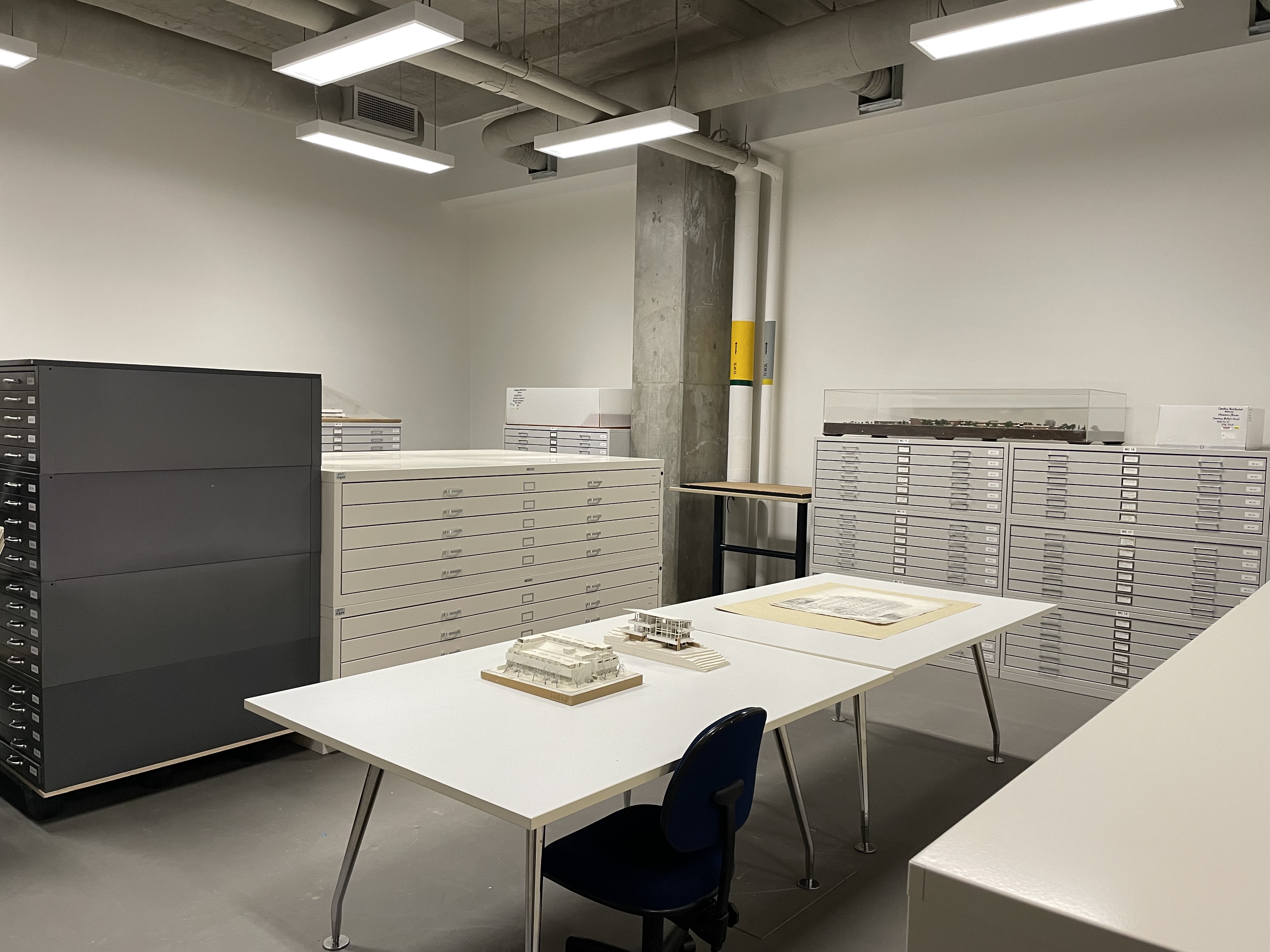
Canadian Architectural Archives, Archives Vault. Source: Photograph courtesy of the author.


 RETROactive