
Editor’s note: This article was originally published on the RAM Blog, the official blog of the Royal Alberta Museum.
Written by: Chihiro Iwamoto, Administrative Assistant, Royal Alberta Museum
When Canada declared war on Japan in 1941, people of Japanese ancestry were met with intense discrimination. The Canadian government ordered the removal of Japanese Canadians from the West Coast of British Columbia in 1942, and within two months, approximately 22,000 Japanese Canadians, about three-quarters of whom were born in Canada, were forced to leave their homes and their properties were confiscated.
Most male Japanese Canadians were sent to labour camps to work on road construction, while their families were sent to internment camps in interior British Columbia.
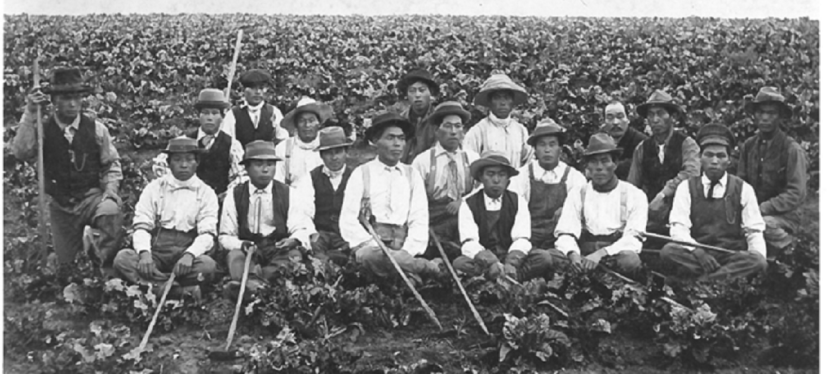
Around this time, Alberta’s sugar beet industry struggled to secure labour due to the heavy, harsh, labour-intensive nature of sugar beet cultivation. A group of 560 Japanese families agreed to move to Southern Alberta by 1943, where they signed a labour contract to work in the sugar beet fields because it allowed the families to stay together. One of the communities they were relocated to was the small town of Picture Butte, about 27 km north of Lethbridge.
 RETROactive