Written by: Royal Tyrrell Museum of Palaeontology staff
There are more than two million fossils in the Royal Tyrrell Museum’s Collections—and that number is growing. Every year, staff excavate and collect new fossils that are found through fieldwork, public finds and industry reports.
Although the Collection includes amazing fossils spanning roughly 3.5 billion years of Earth’s history, fossils are incredibly rare. Only a small fraction of the ancient organisms that ever lived become fossilized. Of those, only a small portion are discovered and collected.
Editor’s note: The banner image above is courtesy of the Royal Alberta Museum.
Written by: Todd Kristensen, Archaeological Survey of Alberta and Dan Spivak, Head, Resource Management Program, Royal Tyrrell Museum of Palaeontology
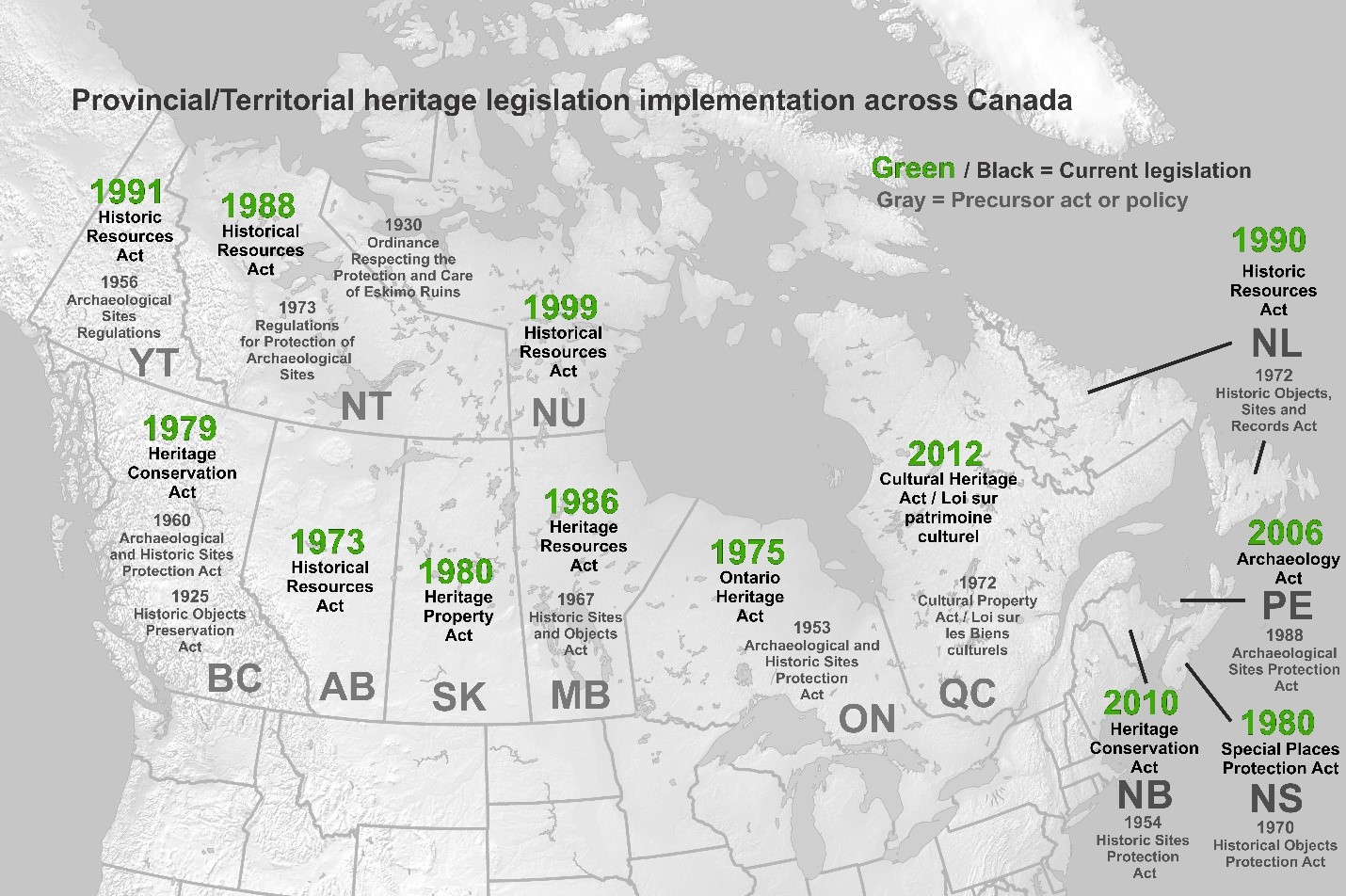
This year, the Historical Resources Act (HRA or the Act) in Alberta celebrates its 50th anniversary. When it was passed in 1973, the Act provided a range of tools to manage historic resources across the province. This now includes archaeological sites, historic buildings, Indigenous traditional use sites of an historic character and palaeontological sites. It was a landmark achievement on a national scale because it stimulated the first stand-alone provincial department whose purpose was to ensure site protection during industrial development. Since inception, the Act has led to the documentation of over 42,000 archaeological sites, 110,000 historic structures, 7,200 palaeontological sites and 2,400 historical Indigenous traditional use sites. While the goals of heritage management in Alberta have evolved along with the Act, it continues to protect the past.
To recognize this milestone, RETROactive contributors will look at the legacy of the Act in managing historic resource sites, including archaeological, palaeontological, historic building and Indigenous traditional use sites. They will also explore the role of the Act in establishing the names of geographical locations across the province.
A map of heritage legislation and preceding acts or policies across Canada. Source: Todd Kristensen.
Editor’s note: Alberta’s rich fossil history, including the field of palaeontology, is recognized around the world. RETROactive is now pleased to be sharing stories of discovery from the world-renowned Royal Tyrrell Museum of Palaeontology.
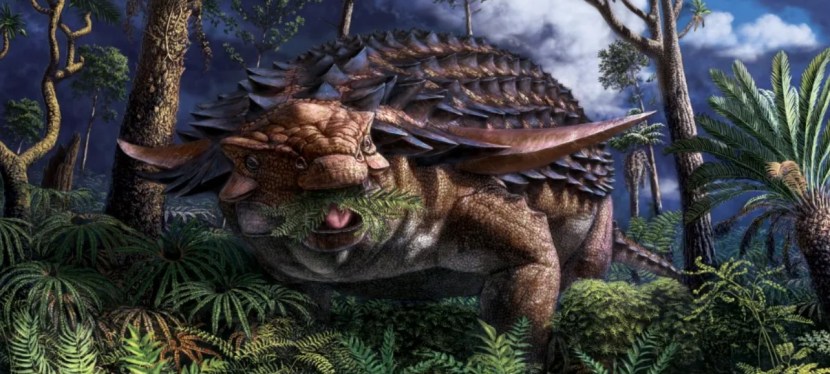
The banner illustration above is courtesy of Julius Csotonyi.
The nodosaur Borealopelta markmitchelli is the world’s best-preserved armoured dinosaur. This amazing specimen has helped answer many important questions about dinosaur biology and behaviour. Now, new research supports the theory that the nodosaur was a picky eater.
Editor’s note: We continue our series highlighting significant fossil discoveries found by members of the public. Remember, if you find a fossil, follow these instructions.
1997: Nichollsemys baieri (TMP 1997.099.0001)
Holotype skull of Nichollsemys baieri. Source: Royal Tyrrell Museum of Palaeontology.
Life in southeastern Alberta was exciting for Ron Baier and his brother growing up near Taber. They enjoyed exploring the land and searching for rocks and fossils. Development of irrigation lines unearthed many interesting artifacts, including arrowheads. As the development slowed, Ron started branching out to new areas in search of artifacts and fossils.
Ron Baier with his fossil collection, including the skull of Nichollsemys. Source: Royal Tyrrell Museum of Palaeontology.
Editor’s note: We continue our series highlighting significant fossil discoveries found by members of the public. Remember, if you find a fossil, follow these instructions.
1995: Atrociraptormarshalli (TMP 1995.166.0001)
The holotype of Atrociraptor marshalli. Source: Royal Tyrrell Museum of Palaeontology.
Wayne Marshall has been scouring the badlands for fossils in southern Alberta for more than 30 years. First, he discovered petrified wood while working as a surveyor on road construction projects. His passion for palaeontology led to a position in the Royal Tyrrell Museum’s mounting shop from 1983-85, helping construct the soon-to-open exhibits.
Editor’s note: We continue our series highlighting significant fossil discoveries found by members of the public. Remember, if you find a fossil, follow these instructions.
1987: Devil’s Coulee Nesting Site (TMP 1987.003.0003)
Technician Dawna Macleod poses with a prepared hadrosaur nest from Devil’s Coulee.Source: Royal Tyrrell Museum of Palaeontology.
Wendy Sloboda spent much of her youth exploring the Warner area of southern Alberta. As a high school student in 1986, she worked as an assistant under the direction of Dr. Len Hills at the University of Calgary on a palaeontological impact assessment for a proposed dam near Milk River. She came across abundant dinosaur eggshell fragments on the Milk River Ridge near her home, and reported them to Dr. Hills. A team from the Royal Tyrrell Museum, including Dr. Philip Currie, visited the site with Wendy and her parents to inspect the find.
The Devil’s Coulee Provincial Historic Site.Source: Royal Tyrrell Museum of Palaeontology.




 RETROactive