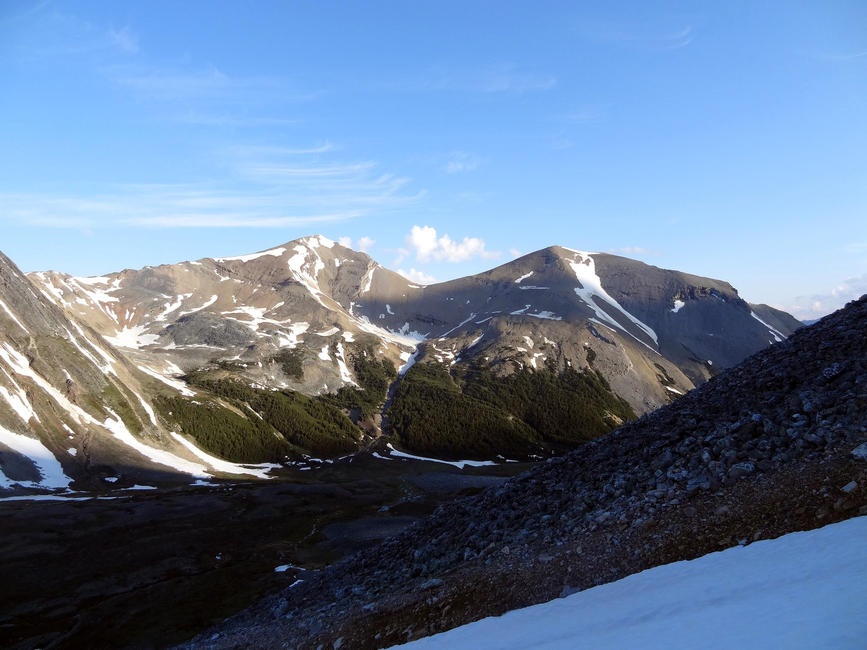
“Erin go Bragh” in Alberta

“What is the matter with the Calgary Irishmen?” asked a frustrated correspondent to the Calgary Herald in March 1916. The writer, who identified themself as ‘F. Fitzsimmons,’ was complaining about the city’s apparent lack of enthusiasm for St. Patrick’s Day, with no public events planned to celebrate the day. Fitzsimmons conceded that people were likely distracted by the war effort, but lamented that Calgary’s leading Irish citizens had gotten “cold feet” and failed to plan any celebrations. “If all Irishmen were like the Calgary bunch” closed the writer, then “‘God Save Ireland.’”

The language used by Fitzsimmons in this letter is highly suggestive. By stating that Calgary’s Irish leaders had gotten ‘cold feet,’ he/she was implying that they lacked the courage to publicly celebrate their ethnic heritage. Further, ‘God Save Ireland’ was an explicitly nationalist slogan, associated with the last words of three Irish revolutionaries executed by the British in 1867. In short, Fitzsimmons was calling for an open celebration of Irish identity that did not shy away from nationalist politics. What Fitzsimmons saw as a simple issue, however, was much more complex for the majority of Irish people in Calgary and across Alberta. The often turbulent politics of the Irish homeland, and the campaign for Irish autonomy from Britain, raised difficult questions about what it meant to be Irish in Canada in the early twentieth century. Did public expressions of Irish identity automatically imply support for Irish nationalist politics, or could the two issues be separated? Could a person support Irish nationalism and still affirm loyalty to Canada and, by extension, the British Empire? What was the best way to frame St. Patrick’s Day celebrations in such a way as to affirm devotion to both the Irish homeland and Canada? The stakes of these questions were heightened after 1914, as supporters of Irish nationalism were accused of threatening British imperial unity during a time of war, and again after Easter 1916, when Irish nationalists launched an uprising against British rule in Ireland.
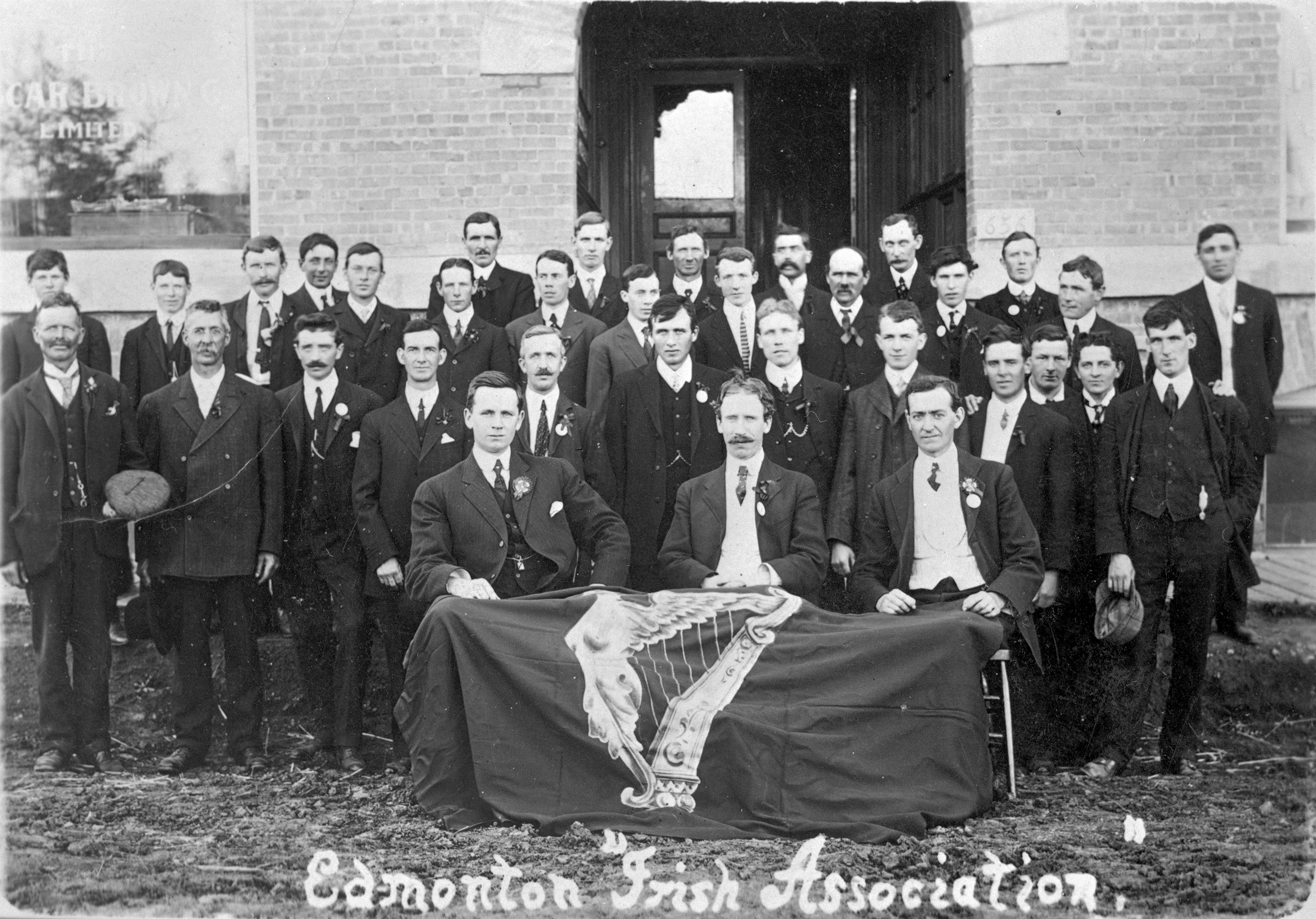
Group portrait of the Edmonton Irish Association (Provincial Archives of Alberta, A16110).

The uneasy relationship between Irish politics, identity and citizenship are reflected in the history of St. Patrick’s Day celebrations in early twentieth century Alberta. The general picture that emerges is of an Irish population that celebrated its ethnic heritage in ways that emphasized loyalty to Ireland, Canada and the British Empire. At particular times, such as the Great War (1914-18), this balancing act proved to be too difficult, and St. Patrick’s Day celebrations largely disappeared from public view. With the emergence of Ireland as an independent state in the early 1920s, Alberta’s Irish once again organized into associations dedicated to celebrating Irish heritage and St .Patrick’s Day soon emerged as an important event in the province.

The population boom of the early 1900s set the stage for significant St. Patrick’s Day celebrations in both Edmonton and Calgary. The 1916 census enumerated 58,068 Irish people in Alberta, of whom approximately 63% were Canadian-born descendants of Irish immigrants; 25% were American-born descendants of Irish immigrants; and 12% were direct immigrants from Ireland (most of whom had arrived in Canada between 1905 and 1914). The diverse origins of the province’s Irish population were reflected in the decorations chosen for the 1908 St. Patrick’s Day banquet at St. Mary’s Hall in Calgary – the platform was decorated with Union Jacks and American flags, over which hung a silk banner with the phrase “Erin go Bragh” (‘Ireland forever’). Toasts were delivered to ‘The King,’ ‘Canada,’ ‘Alberta,’ ‘The United States’ and ‘Ireland’s Future,’ and the event closed with a rousing rendition of “God Save the King,” leaving little doubt that the guests’ vision of ‘Ireland’s Future’ involved its continued association with the British Empire.

Similar scenes played out in Edmonton, where St. Patrick’s Day events were organized by the highly successful Edmonton Irish Association (EIA). Founded in 1909, the EIA grew to approximately three hundred members by 1911. While primarily a cultural and literary organization, the EIA also sponsored a number of sports teams, including the Irish Canadian Amateur Athletic Association, the Hibernian Football Club and the Irish Canadian Baseball Club. A 1911 profile in the Edmonton Capital stressed that the EIA was “non-political and non-sectarian in character,” and had “from the outset avoided the controversial.” This emphasis echoed the celebrations in Calgary, and indeed reflected a broader pattern across the Prairie West, where explicitly non-political and non-sectarian Irish associations emerged in the early 1900s.

With the worsening Home Rule crisis in Ireland in 1913-1914, it became increasingly difficult for Alberta’s Irish to continue to celebrate their ethnic heritage in an explicitly non-political way. In April 1914, for example, the Edmonton Capital advertised a meeting for those interested in forming an “Imperial British-Irish Association,” suggesting that some of the city’s Irish were no longer satisfied with the Edmonton Irish Association. The outbreak of World War One added another layer of complexity, as the British government put Ireland’s political future on hold for the duration of the war. By the end of 1914, the Edmonton Irish Association had dissolved. Similarly, there is no evidence of any Irish fraternal or benevolent societies in Calgary during the war years. Despite the non-political and non-sectarian nature of pre-war St. Patrick’s Day events, there appears to have been little appetite for Irish organization and celebration during the Great War or the subsequent Irish War of Independence (1919-21). The one exception is a short lived organization called the Irish Glee Club, which emerged in Calgary in 1919 to organize small concerts on St. Patrick’s Day. These events, however, were on a considerably smaller scale than those held prior to World War One.

With the end of the Irish War of Independence and the emergence of the Irish Free State in 1922, the province’s Irish citizens once again organized to publicly celebrate Ireland’s patron saint. Potentially awkward questions about how to reconcile devotion to Ireland and loyalty to Canada and/or Britain faded, as Alberta’s Irish honoured both Irish independence and service to Canada during the Great War. At the 1924 St. Patrick’s Day banquet, for example, the St. Patrick’s Society of Calgary celebrated Irish independence, but placed equal if not greater emphasis on Irish service, “loyalty and allegiance” to Canada during the Great War. The evening’s keynote speaker refused to take a political stance on the divisive civil war in Ireland, commenting only that “the Irish had settled the matter for themselves,” and that whether it had been settled “rightly or wrongly” was irrelevant to him as a Canadian. In place of politics, the new St. Patrick’s Society focused on the celebration of Irish folk culture, arts and crafts. A similar situation emerged in Edmonton, with the founding of the new St. Patrick’s Society of Edmonton in 1927. Like its Calgary counterpart, the society emphasized culture and avoided politics – a safely depoliticized way to honour Ireland. By the mid-1920s, Alberta’s Irish had found a comfortable balance between celebrating their Irish heritage and their contributions to Canadian growth and development.

The history of St. Patrick’s Day celebrations in Alberta thus yields significant insight into the province’s early Irish community. St. Patrick’s Day events represented an important point of intersection between the ethnic community and the rest of the population. It was a holiday intimately associated with Ireland, but widely observed by mainstream society – as such, it offered Irish organizations the opportunity to represent their heritage and their community’s values to a wide and receptive audience. The nature of those celebrations (or the absence of any organized events) is a reflection of what image Irish community leaders wanted to project to the larger population. At times, the tense situation in Ireland complicated those efforts and made it difficult for Alberta’s Irish to publicly embrace and celebrate their ethnic heritage. By the 1920s, such concerns had faded and St. Patrick’s Day celebrations flourished once again.

Written by: Allan Rowe, Historic Places Research Officer.

Further reading:

Cronin, Mike, and Daryl Adair. The Wearing of the Green: A History of St. Patrick’s Day. London & New York: Routledge, 2001.
The Victoria Cross Mountain Ranges: Commemorating the Heroism of Canadian Veterans

In Jasper National Park there are five mountains named for First World War Victoria Cross recipients with Alberta connections. The peaks are located within a series of mountains known as the Victoria Cross Ranges. The names of these mountains honour Private John Chipman Kerr, Private Cecil John Kinross, Captain George Burdon McKean, Private John George Pattison and Sergeant Raphael Louis Zengel.

The Victoria Cross was established in 1856 by Queen Victoria to recognize military personnel who demonstrated bravery when faced with the opposition during wartime. It is the highest military decoration that can be bestowed upon a soldier in the British Commonwealth. This post will look at the recipients of the Victoria Cross who the mountains in Jasper National Park are dedicated to.

Mount Kerr

Mount Kerr is named in honour of Private John Chipman Kerr, who served in the Alberta raised, 49th Battalion (Edmonton Regiment), Canadian Expeditionary Force. Kerr, originally from Fox River, Nova Scotia, moved to Spirit River, Alberta before enlisting for service in 1915.

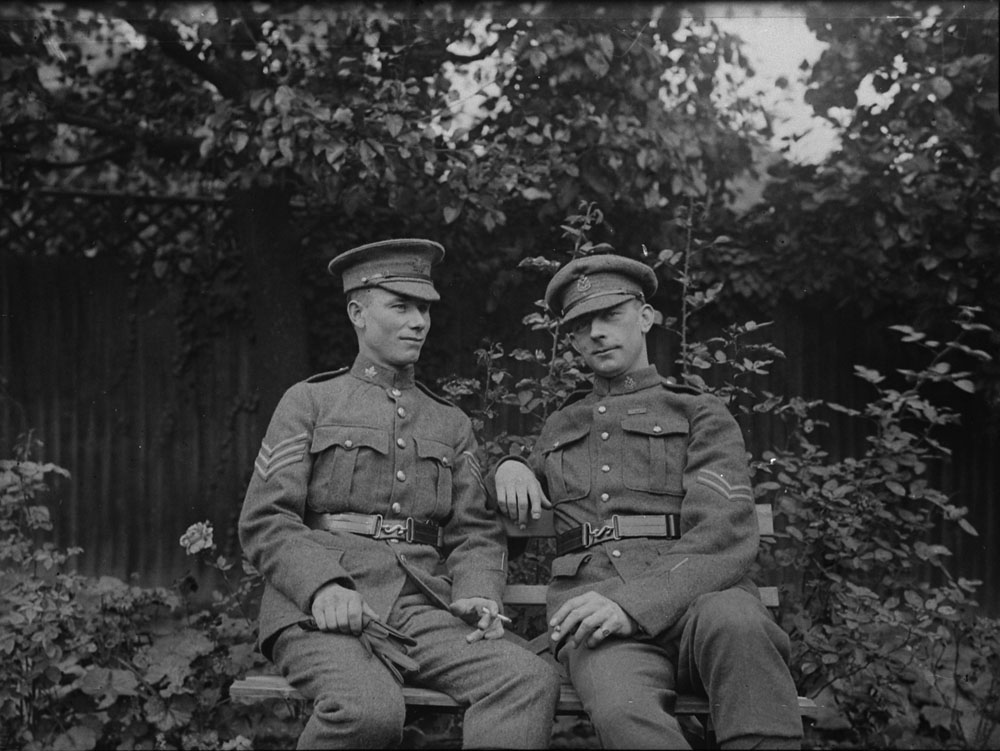
J. C. Kerr (right) c. 1914-1919 (Credit: Canada Dept. of National Defence/Library and Archives Canada).

On September 16, 1916, during the Battle of the Somme, Kerr and his unit prepared to ambush German soldiers. As the lead bayonet man, Kerr was 30 metres ahead of his comrades and exchanged fire with enemy troops. The Germans, believing that they had been surrounded, surrendered to Kerr. Sixty-two prisoners were captured and 250 yards of enemy territory was seized. Kerr was injured and lost a finger in the attack, but reported back for active duty before the wound had been fully dressed.

For his actions on that day, Private Kerr was awarded the Victoria Cross.

After the war, Kerr returned to farming, worked in the Turner Valley oil fields and as a forest ranger. He enlisted in the Second World War and transferred to the Royal Canadian Air Force. John Kerr died in Port Moody, British Columbia in February 1963. His Victoria Cross is displayed at the Canadian War Museum in Ottawa.

Mount Kinross

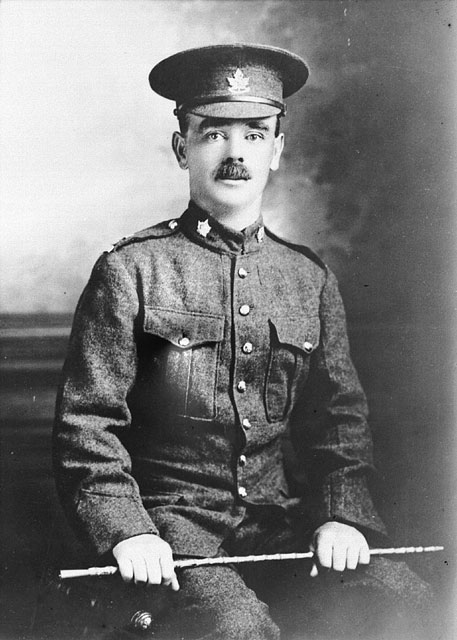
Mount Kinross was named for Private Cecil John Kinross. Originally from England, he had immigrated to a rural Alberta farm with his family at the age of 16. He enlisted in the 51st Battalion, Canadian Expeditionary Force in 1915 and later transferred to the 49th Battalion in France.

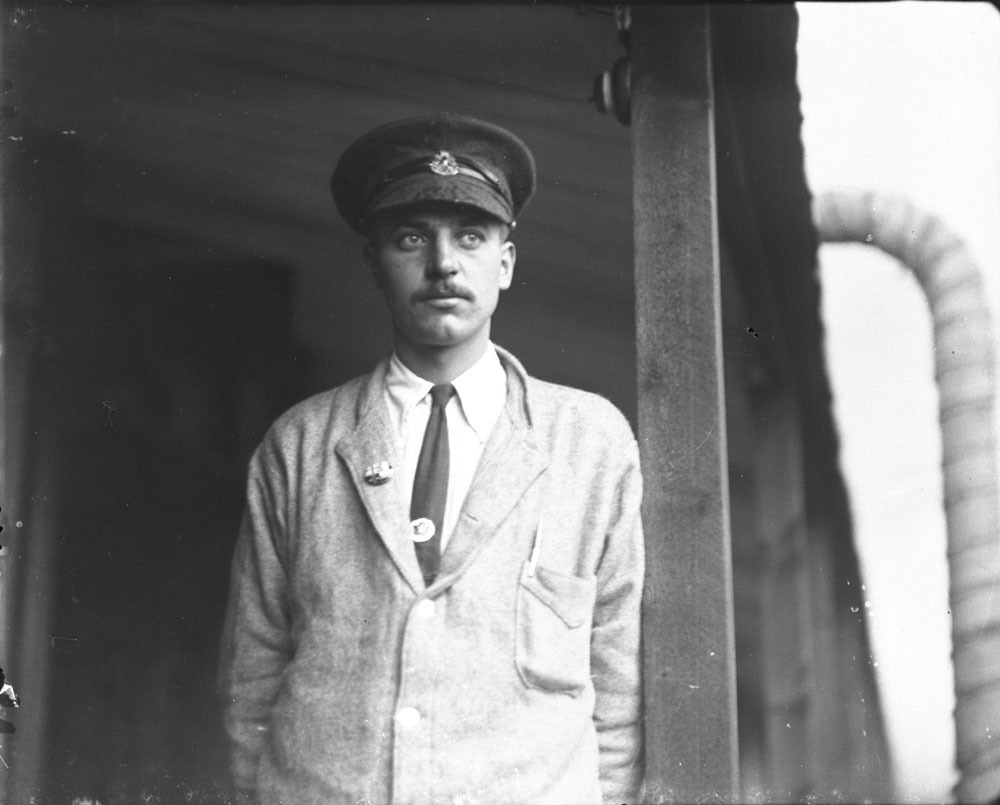
C. J. Kinross c. 1914-1919 (Credit: Canada Dept. of National Defence/Library and Archives Canada).

On October 30, 1917, during the Battle of Passchendaele in Belgium, Kinross’s unit was under intense artillery fire. Showing no concern for his own personal safety, he took off alone and charged towards the enemy, killing six soldiers and destroying their machine gun. His action inspired his comrades and their unit to advance 300 yards into enemy territory. Kinross was severely injured in the battle and did not return to the front lines.

Kinross received the Victoria Cross for his act of bravery that day.

His citation announced “he showed marvellous coolness and courage, fighting with the utmost aggressiveness against heavy odds until seriously wounded.” Private Kinross was honourably discharged and he returned to Lougheed, Alberta, where he lived until his death in June of 1957. His Victoria Cross remains with his family and the miniature is on display at the Loyal Edmonton Regiment Museum in Edmonton.

Mount McKean

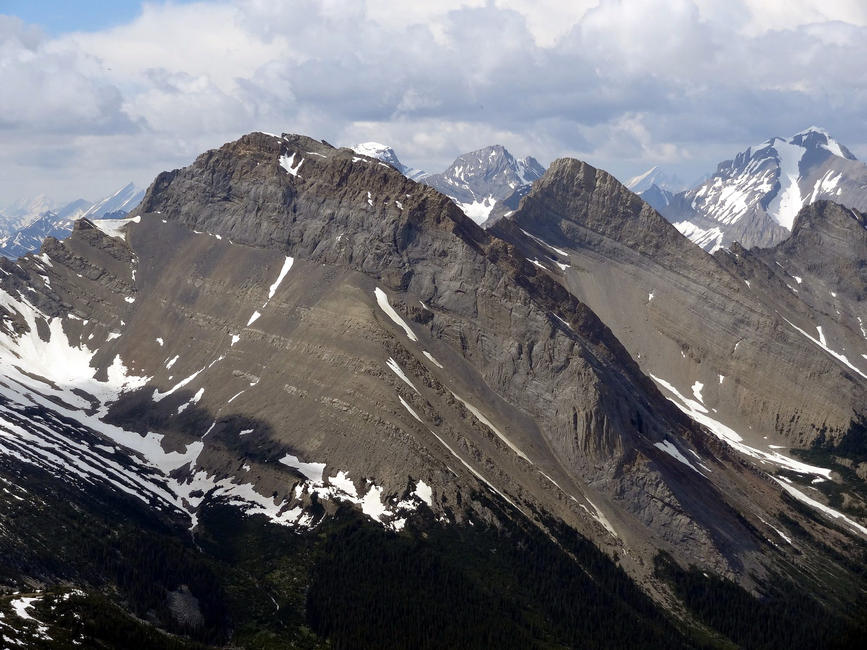
Mount McKean (Courtesy of Mountain Nerd on Summit Search).

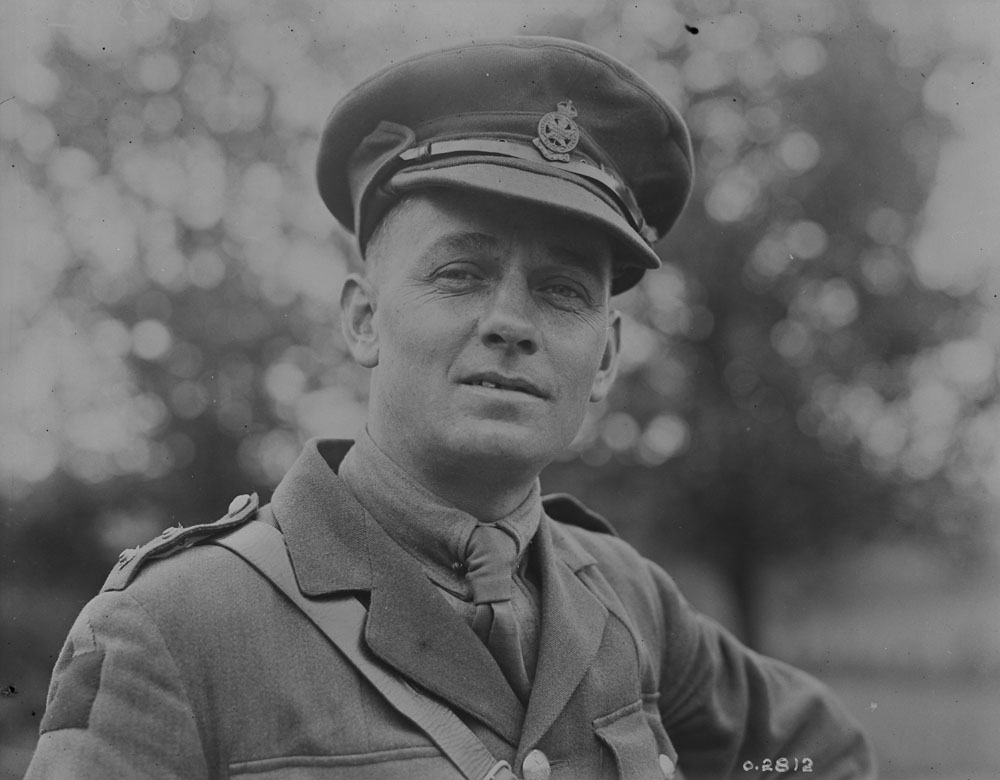
Mount McKean is dedicated to Captain George Burdon McKean, who immigrated to Canada from England in 1902 to join his brother on a farm near Lethbridge. He studied at Robertson College, a theological school in Edmonton, and was an assistant minister at the time of his enlistment in 1915. McKean first enlisted as a Private in the 51st Battalion, Canadian Expeditionary Force and later became a Lieutenant in the 14th battalion (Royal Montreal Regiment).

G. B. McKean, 1918 (Credit: Canada Dept. of National Defence/Library and Archives Canada).

In April of 1918, while stationed near Gavrelle, France, McKean led his troops in a raid against German forces. When his men hesitated, McKean took off alone towards the enemy’s heavily fortified trench, taking out two of their soldiers. This move instilled confidence in his unit, who quickly followed to seize the trench and capture its remaining soldiers. Lieutenant McKean was praised for his actions and was awarded the Victoria Cross. His citation reads “This officer’s splendid bravery and dash undoubtedly saved many lives, for had not this position been captured, the whole of the raiding party would have been exposed to dangerous enfilading fire during the withdrawal.”

In addition to the Victoria Cross, McKean also received the Military Cross and the Military Medal for his service during the war. He was later promoted to Captain. After the war, he returned to England. He was killed in an industrial accident in November 1926. In addition to being commemorated by Mount McKean, in 2003, a public square in Cagnicourt, France was named La Place George Burdon McKean. His Victoria Cross is in the collection of the Canadian War Museum.

Mount Pattison

J. G. Pattison c. 1914-1919 (Credit: Canada Dept. of National Defence/Library and Archives Canada).

Mount Pattison is dedicated to Private John George Pattison. He was born and raised in England and moved to Canada in 1906 with his wife and four children. He worked for the Calgary Gas Company. In 1916, at 40 years of age, he enlisted in Calgary with the 50th (Calgary) Battalion, Canadian Expeditionary Force.

In April of 1917 at Vimy Ridge, the 50th Battalion was advancing towards German occupied territory when they were confronted with heavy machine gun fire. Pattison charged forward to face the opposition and hurled grenades at the enemy which allowed him to take out the remainder of the German crew. He was awarded the Victoria Cross for his actions and credited with making further advances possible. Pattison was one of four Canadians to receive the Victoria Cross at the Battle of Vimy Ridge.

A few weeks later, Private Pattison was killed in action on June 3, 1917, during an attack on a German occupied power station in Lens, France. In addition to the mountain named in his honour, Pattison Bridge over the Elbow River in Calgary commemorates his service and sacrifice.

Mount Zengel

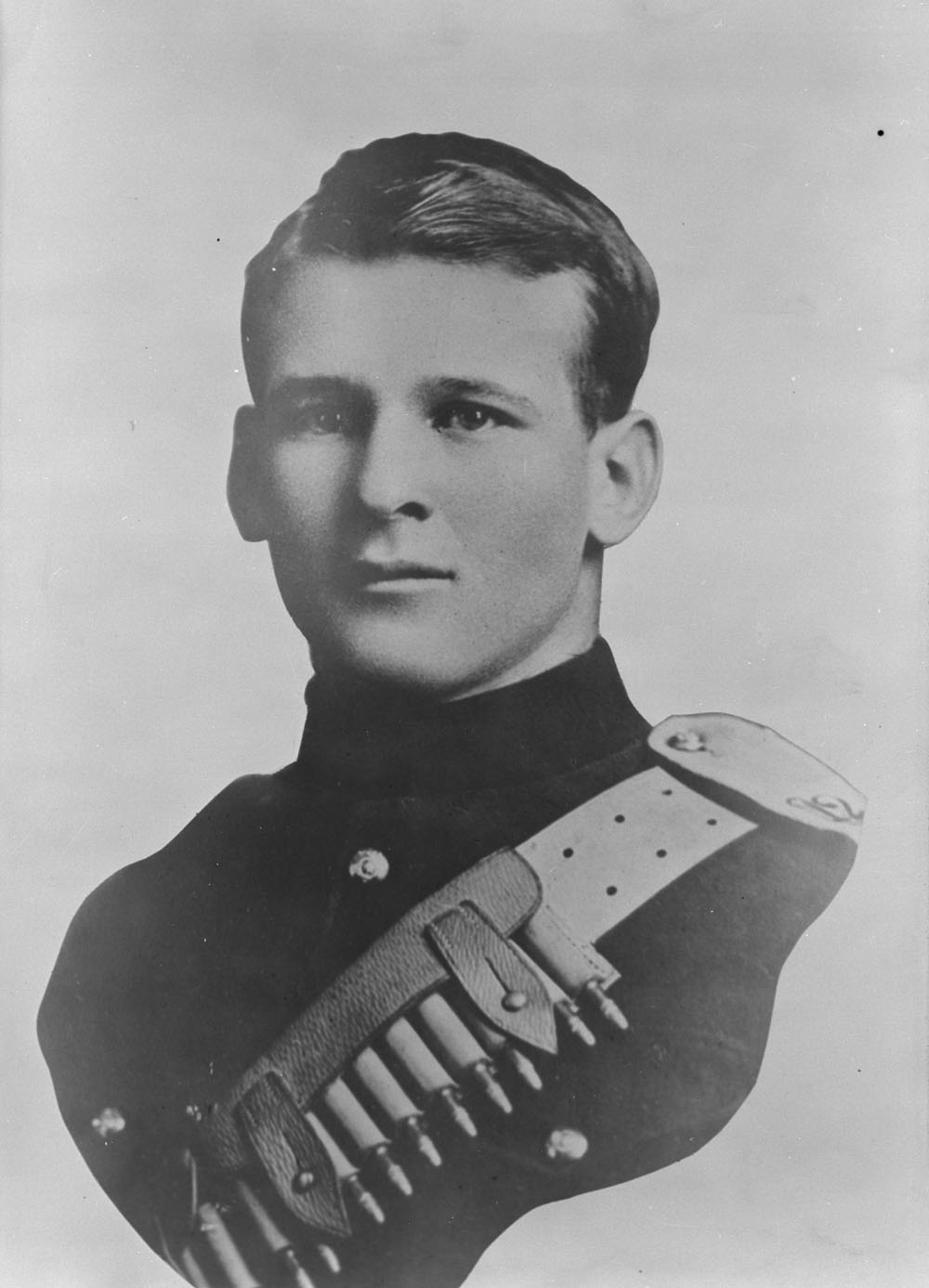
R. L. Zengel c. 1914 (Credit: Canada Dept. of National Defence/Library and Archives Canada).

Mount Zengel is named in honour of Sergeant Raphael Louis Zengel, who came to Canada from Minnesota at a young age. The Zengel family initially settled on a homestead in Saskatchewan before Raphael enlisted to the 45th (Manitoba) Battalion, Canadian Expeditionary Force in 1915. He later became a sergeant in the 5th (Western Cavalry) Battalion.

On August 9, 1918 near Amiens, France, on the second day of a massive campaign against German forces, Sergeant Zengel’s platoon came under heavy machine-gun fire. He rushed ahead and met the defensive unit, killing two of their machine gunners and forcing the others to scatter. He was cited for his excellent work through the attack and for showing utter disregard for his own personal safety.

Sergeant Zengel was awarded the Victoria Cross for his contribution at the Battle of Amiens. (He had previously been awarded the Military Medal for his service at the Battle of Passchendaele). After the war he became a long-time resident of Rocky Mountain House, Alberta. He died in February 1977. Branch No. 8 of the Royal Canadian Legion in Rocky Mountain House is named the R.L. Zengel V.C. to commemorate his award distinction. In 1936, the Geographic Board of Canada named Zengle Lake in Saskatchewan in his honour, misspelling his name in the process.

Mount Zengel on the right (Courtesy of Mountain Nerd on Summit Search).

The tribute to these soldiers in 1951 was made possible by the co-operation of federal and provincial governments. However, at the time, the proposal created controversy. The issue’s resolution would bring about the creation of the Victoria Cross Ranges and an agreement between the Governments of Alberta and Canada still governs geographical naming in in Alberta today. That will be the subject of our next place names post.

For more information on soldiers who served in the First World War, Library and Archives Canada provides digital records on the soldiers who enlisted in the Canadian Expeditionary Force.

Written by: Erin Hoar, Historic Resources Management Branch Officer

Sources:

Canadian Great War Project. (Accessed August 21, 2014).

Geographical Names Program Research File #83-D/16, Jasper Park. In custody if the Historical Resources Management Branch.

Geographic Board of Alberta Minutes: March 28, 1946-November 19, 1949.

Geographic Board of Alberta Minutes: January 22, 1950-December 17, 1954.

Library and Archives Canada. “Soldiers of the First World War: 1914-1918.” (Accessed August 22, 2014).

National Defense and the Canadian Forces. “Canada’s Victoria Cross.” (Accessed August 29, 2014).

National Defense and the Canadian Forces. “Victoria Cross – First World War, 1914-1918.” (Accessed August 21, 2014).

Nix, James Ernest. “McKean, George Burdon.” Dictionary of Canadian Biography, vol. 15, University of Toronto/Université Laval, 2005. (Accessed August 29, 2014).

Peak Finder. (Accessed August 21, 2014).

Summit Search: Mountain Community. (Accessed August 29, 2014).