

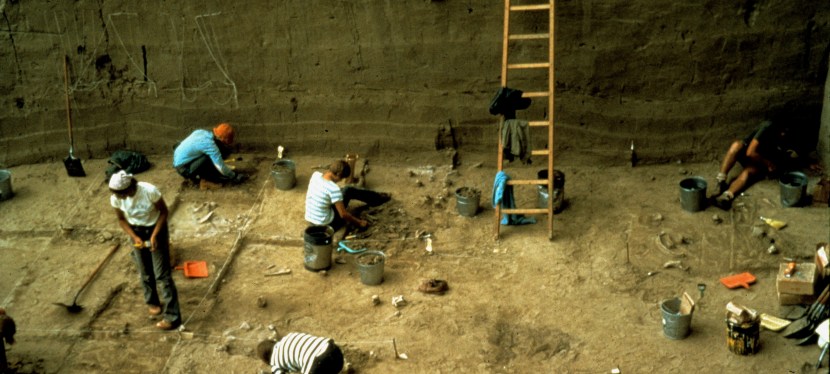
Editor’s note: The banner image above is courtesy of the Royal Alberta Museum.
Written by: Todd Kristensen, Archaeological Survey of Alberta and Dan Spivak, Head, Resource Management Program, Royal Tyrrell Museum of Palaeontology
This year, the Historical Resources Act (HRA or the Act) in Alberta celebrates its 50th anniversary. When it was passed in 1973, the Act provided a range of tools to manage historic resources across the province. This now includes archaeological sites, historic buildings, Indigenous traditional use sites of an historic character and palaeontological sites. It was a landmark achievement on a national scale because it stimulated the first stand-alone provincial department whose purpose was to ensure site protection during industrial development. Since inception, the Act has led to the documentation of over 42,000 archaeological sites, 110,000 historic structures, 7,200 palaeontological sites and 2,400 historical Indigenous traditional use sites. While the goals of heritage management in Alberta have evolved along with the Act, it continues to protect the past.
To recognize this milestone, RETROactive contributors will look at the legacy of the Act in managing historic resource sites, including archaeological, palaeontological, historic building and Indigenous traditional use sites. They will also explore the role of the Act in establishing the names of geographical locations across the province.
 RETROactive