
Written by: Sara King, Government Records Archivist, Provincial Archives of Alberta
In 1915, Alberta embarked on a social experiment that would impact the lives of everyone in the province: prohibition. A century after the repeal of prohibition in 1923, the Provincial Archives of Alberta (PAA) is pleased to present Dried Out: Prohibition in Alberta, on display until February 2024.
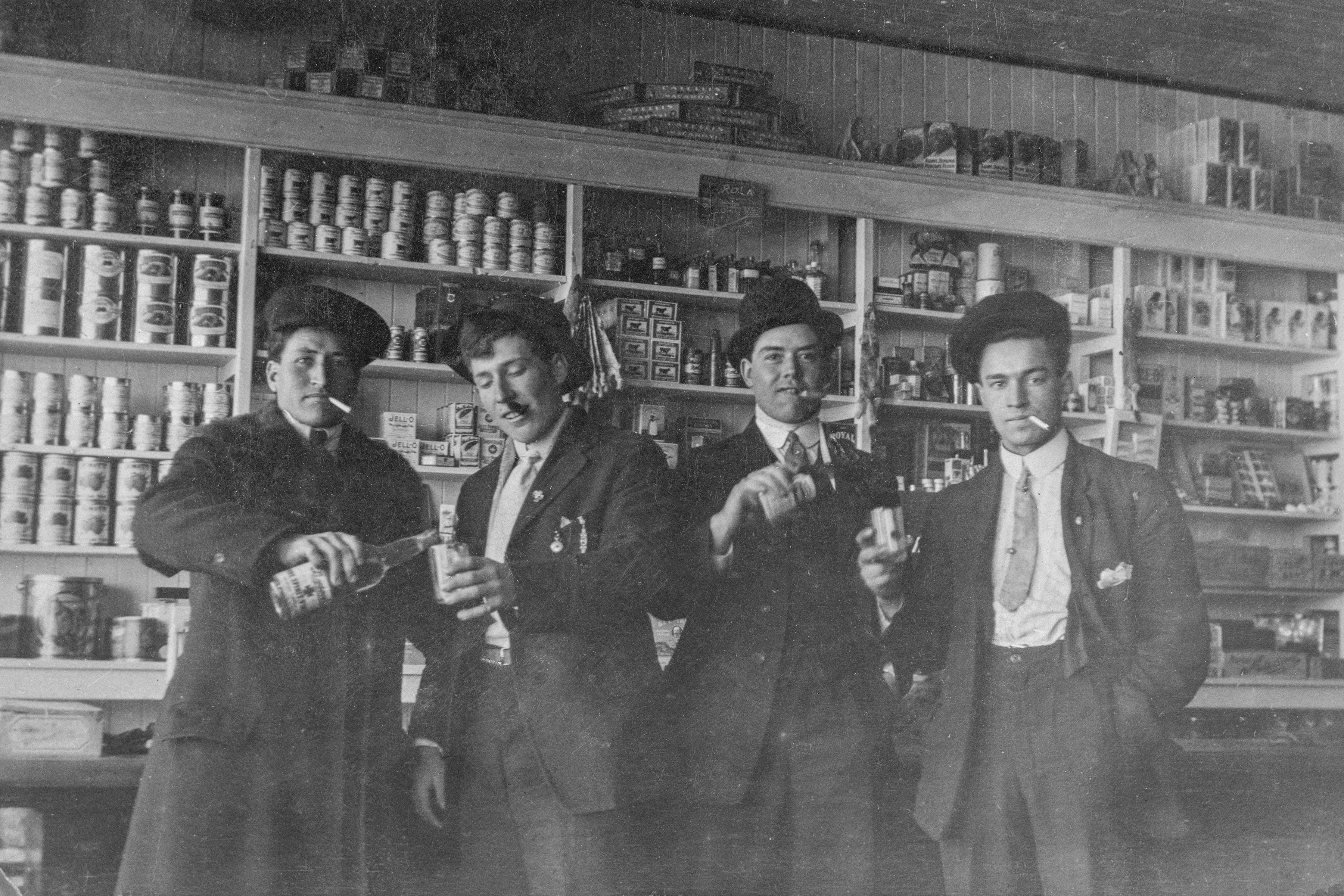
The exhibit explores how the temperance movement took root in Alberta. The moral and political crusade to ban alcohol would have unintended consequences, both good and bad. It spurred the push for women’s suffrage, led to the creation of the Alberta Provincial Police and prompted experiments in direct democracy. But it would also lead to people flouting the law at all levels of society, which would shape politics, policies and communities for years to come.
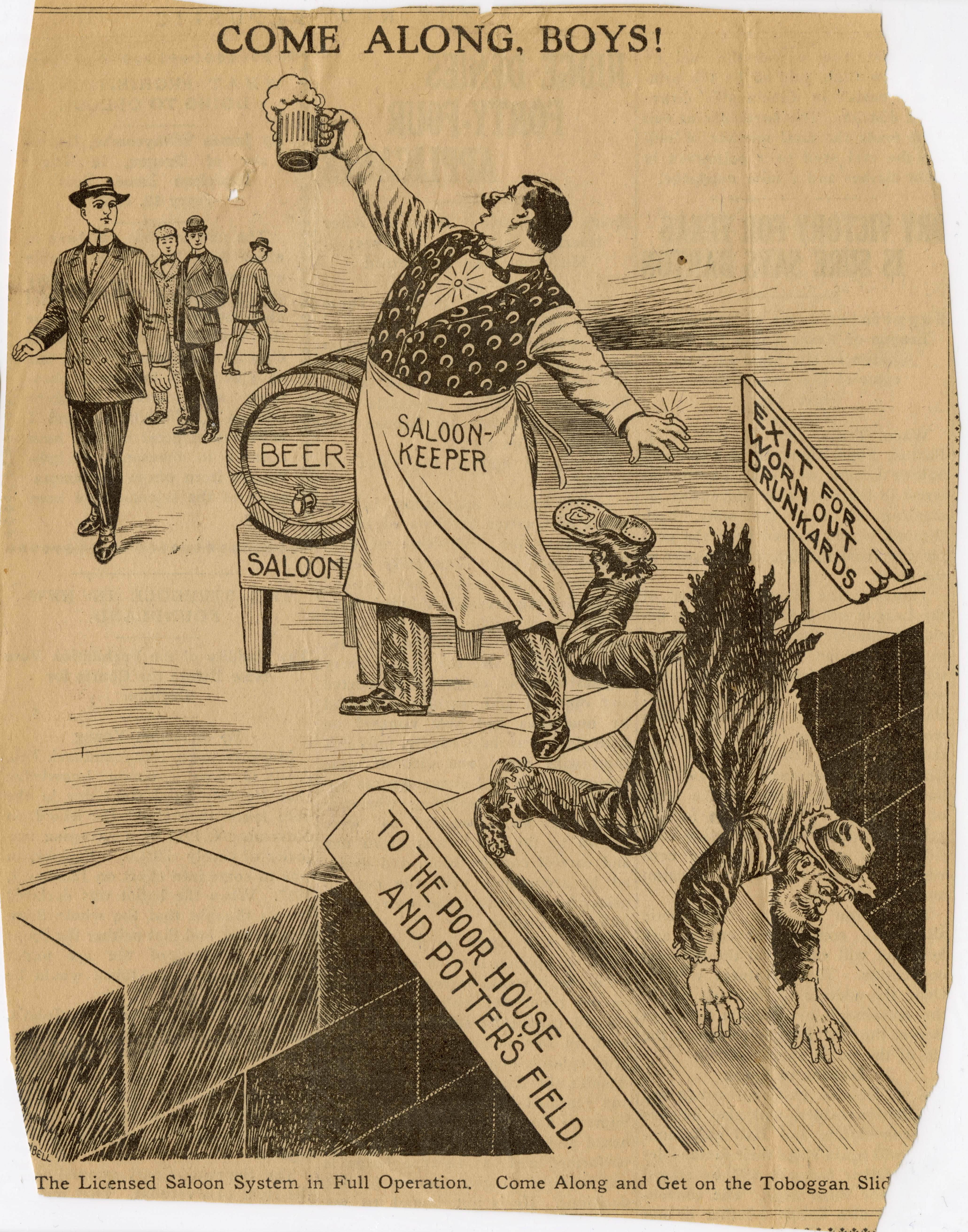
The popular conception of prohibition has been shaped, not surprisingly, by the American experience of it. Coming into effect at the dawn of the Jazz Age, reported on the radio, recorded on newsreels, and reflected in the films of a burgeoning motion picture industry, media coverage would be dominated by moving image and sound. But temperance in Alberta was an earlier affair, documented by the media of an earlier age in pamphlets, song books, photographs, and newsprint. The same arguments would be made in both countries but packaged for their respective audience and time using the tools at hand.

One of the richer sources in researching the Dried Out exhibit turned out to be the Attorney General’s files on prohibition. A collection of police reports, and letters to and from the Attorney General, the files document how localized the conflicts over prohibition were. Concerned citizens would write in to report the sale of liquor in their towns, sometimes signing their names, sometimes not, such as one letter cryptically signed “From One Who Knows.” There are also reports from the Northwest Mounted Police documenting complaints, and often their lack of interest in dealing with them, from a force that was stretched thin from so many of its members serving in the First World War. And reports were filed of liquor coming in to Alberta via provincial and national borders, openly on trains by people insisting they were travelling through, and secretly through mountain passes and farmer’s fields. These Alberta incidents paint a picture of a province that was divided between those who were set on enforcing the law and those who were just as set on breaking it, in communities large and small, and at every level of society.

While the Dried Out exhibit features a few of these records, the majority of the primary sources remain in our vaults waiting to be explored by those who want to remember the time, for better or worse, when Alberta decided to go dry. The prohibition exhibit will be on display at the Provincial Archives of Alberta, 8555 Roper Road until February 16, 2024. Admission is free. Please consult the PAA website for the facility hours.
 RETROactive
Did my own research project on it a few years back. If your are interested in the October 1916 military prohibition riot in downtown Calgary I will find the essay I wrote and send it to you.
Sounds interesting. Thanks Ian!
Hi Jared,
Here is a copy of my brief essay on the prohibition riot in Calgary in October 1916. I have been trying unsuccessfully to find the annotated version of this essay, so without the documentation it is probably of very little use to you. I attach it nevertheless.
Ian C.
Jared,
I don’t know if you ever received my barebones version of my essay on the 1916 Prohibition Riot in Calgary. I continue the hunt for my annotated version which I am sure would be more useful to you. If you have had a chance to glance at it, please let me know if I should continue my hunt.
Ian C.
I did not, Ian. Can you email it to me at jared.majeski@gov.ab.ca. Thanks!