

Written by: Ronald Kelland, Historic Places Research and Designation Program
Remembrance Day, November 11, is the day Canadians honour our military personnel and memorialize those who gave their lives while in military service. While honouring all Canadian service personnel this Remembrance Day, RETROactive is drawing particular attention to a geographical feature named to commemorate two cousins who were casualties of the First World War.
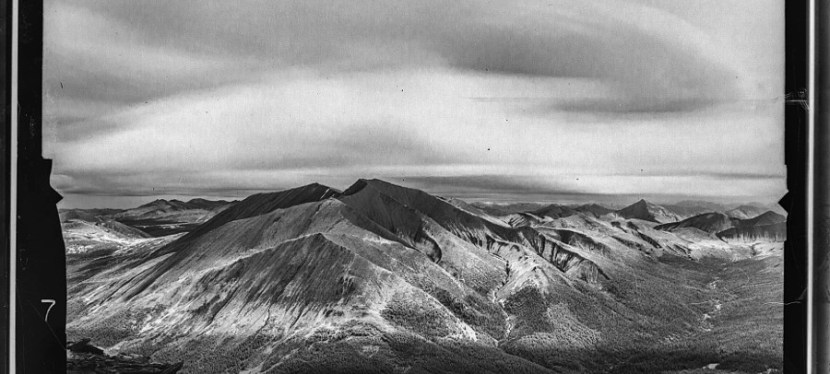
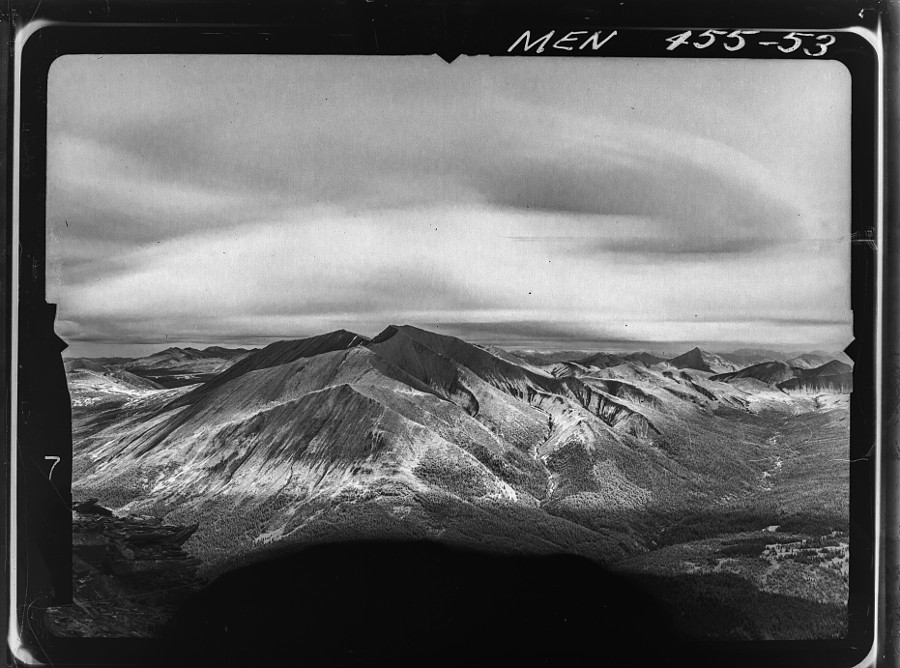

Near the Alberta/British Columbia boundary, 55 kilometres ENE of Grande Cache is a mountain known as Mount May; its two peaks are named George Peak and Francis Peak. The mountain and its peaks are named for two cousins, George and Francis May of Ottawa, both of whom were casualties of the First World War.
Francis May
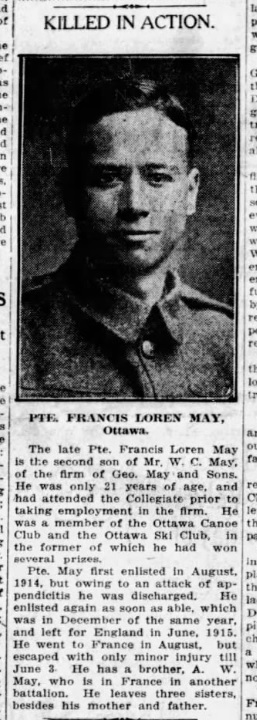
Francis Loren May (frequently misspelled Francis Lorne May) was born on August 14, 1894, at Ottawa to William Chaney May and Susan Margaret May (née Story). William May was a partner in the family firm George May and Sons, a leather goods and saddlery store on Rideau Street. In 1915, Francis was living with his parents at 155 Gilmour Street in Ottawa. Described as being nearly six feet in height and with hazel eyes, a ruddy complexion and light brown hair, he was a member of the Ottawa Ski Club and the Ottawa Canoe Club and, during his school years, he spent two years with the Ottawa Collegiate Institute Cadets. He tried to enlist for service with the Canadian Expeditionary Force in 1914 but was not accepted due to an attack of appendicitis. He did enlist for service at Ottawa on February 22, 1915. His attestation papers list his employment as clerk, and he may have been employed in the family firm or with the Dominion Government. Francis had worked with the Dominion Land Survey, notably in northeastern Alberta in 1912 as an axeman in the surveying party of George McMillan, DLS. It is possible that the May River, which was partially surveyed and named by McMillan in that year, may have been named for Francis.
On enlistment, Francis May was first assigned to the 38th Battalion, which was raised in the Ottawa, Brockville and Perth regions, but after embarking for England in June 1915 he was transferred first to the 12th Battalion and then later to the 14th Battalion (Royal Montreal Regiment).
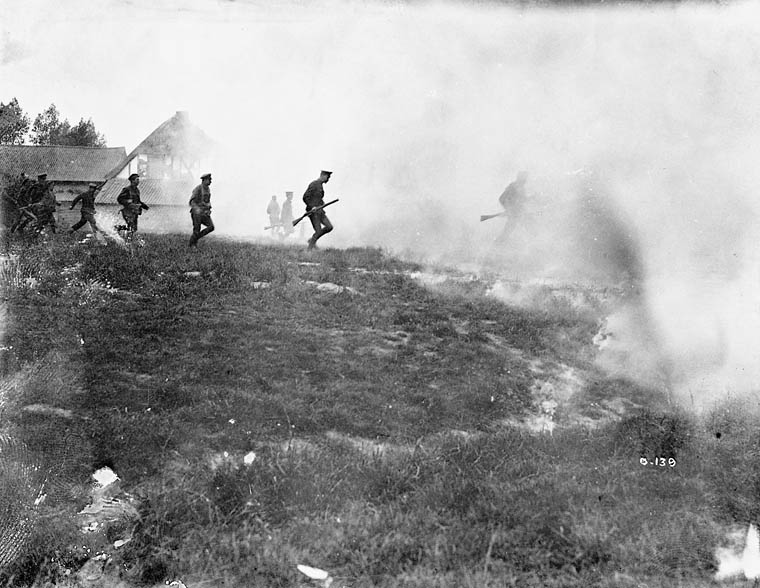
In July 1915, he was promoted to the rank of Sergeant, but at his own request, he reverted to the rank of Private in January 1916. The 14th Battalion was part of the 3rd Canadian Brigade of the 1st Canadian Division. According to battalion’s war diary, in late-April 1916, the battalion was in the trenches south of Ypres (also known by the Dutch name Ieper), having relieved the 13th Battalion from their positions on April 23. They faced sniper fire, artillery fire and a mine explosion over the ensuing days. On April 29, the battalion’s positions came under fire by rifle grenades. Six men were wounded, including Francis who appears to have received a wound to his cheek. He spent a brief time in hospital and was given eight days leave. In June 1916, the 14th Battalion was in the trenches a short distance east of Ypres for what became known as the Battle of Mount Sorrel. On June 2, a German attack on the Canadian positions resulted in the loss of the commander of the 3rd Canadian Division, Major-General Malcolm Mercer (killed) and the commander of the 8th Canadian Brigade, Brigadier-General Victor Williams (wounded and captured). The surprise of the German offensive and the loss of two significant senior leaders resulted in the German army claiming Mount Sorrel and Hill 61. The next day, a counterattack was conducted by the 3rd Canadian Division, which failed to reclaim the lost territory. During that counterattack, the 14th Battalion suffered 379 casualties, including 119 killed in action. It was the regiment’s largest, single-day loss of life during the war. Amongst those killed was Private Francis May. The exact circumstances of his death are not known. Private Francis Loren May is buried at the Menin Gate (Ypres) Memorial cemetery in Ypres, West Flanders, Belgium.
George May
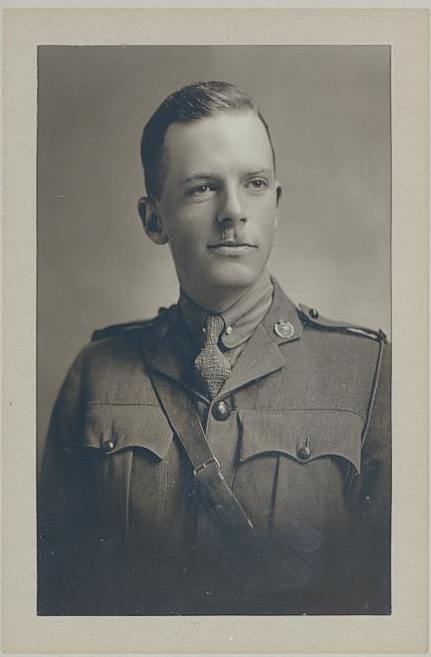
George Geoffrey May was born at Ottawa on September 25, 1893. His parents were Archibald Foster May and Emma Badgely Man (née McCarthy). Archibald May was the brother of William Chaney May, making George and Francis May first cousins. George’s father was a lawyer and a partner of the firm Gemmill & May. In 1915, George May had recently completed a Bachelor of Arts in Political Science from University College of the University of Toronto and had enrolled in Osgoode Hall law school. While at the University of Toronto, he spent two years in the university’s Canadian Officers’ Training Corps, within which he reached the rank of Sergeant. At time of enlistment, George May was a Lieutenant with the Governor General’s Foot Guards, an Ottawa-based militia unit. He carried this rank of Lieutenant into the war.
George May was transferred to numerous battalions both while in Canada and when overseas. In September 1916, he shipped overseas with the 130th Battalion, but ended up being assigned to the 75th Battalion on March 6, 1917, and joined his unit in France on March 21. On April 8, the 75th Battalion moved into the front trenches in preparation for what would become known as the Battle of Vimy Ridge. Canadian troops would claim victory at Vimy Ridge and the battle has long been considered a significant moment in Canada’s military history and the development of Canada as a nation, but the achievement came at considerable cost, more than 10,000 casualties including a confirmed 3,598 killed, one of which was George May. Early on the morning of the 9th, the men of the 75th Battalion went over the top and quickly became held up by barbed wire. Lieutenant May followed the initial charge a short time later with support troops, when he was killed from the concussion of a nearby shell detonation. He is buried at the Canadian Cemetery No. 2, which is located on the grounds of the Vimy Ridge Memorial site, one kilometre west of the Vimy Memorial. His name is also inscribed on the First World War Memorial in the Great Library of Osgoode Hall.
Mount May, Francis Peak and George Peak
So, how did these two Ottawa soldiers end up being commemorated through the naming of a mountain and its two peaks in Alberta? During the First World War, the boundary between Alberta and British Columbia was being surveyed by a commission of Alberta and British Columbia Surveyors appointed by the Dominion Government – Richard W. Cautley of Edmonton representing the Dominion of Canada and the Province of Alberta and Arthur Oliver Wheeler of Banff representing British Columbia. As the boundary commission made its way northward, the commissioners, surveyors and staff of the Surveyor General’s Office made naming recommendations to the Geographic Board of Canada for features on and near the boundary. With the First World War either currently raging or having just ended as the boundary commission was conducting its work, many of the naming recommendations made at the time commemorated battles, Royal Navy vessels, Allied military and political leaders and casualties.
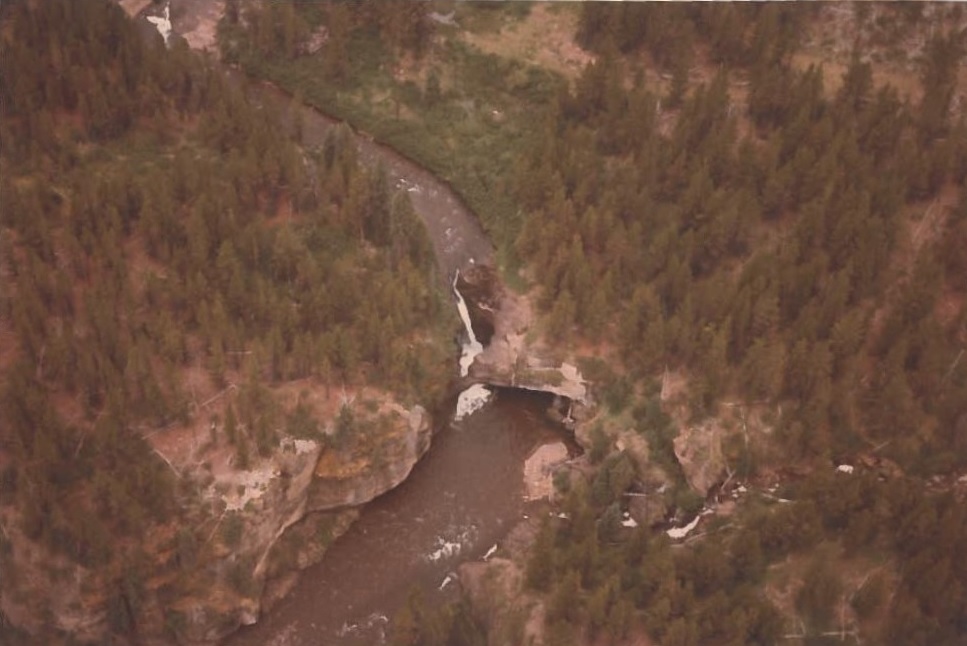
By the early 1920s, the boundary survey parties had made their may to the region northwest of Grande Cache. John Ernest May, Assistant Chief of Topographical Surveys with the Department of the Interior, suggested the names to commemorate his nephews George and Francis. The names Mount May, George Peak and Francis Peak soon appeared on the 1924 map of the area produced by the boundary commission and in Volume 3 of the Boundary Commission’s report, which was published in 1925. At the January 5, 1926, meeting of the Geographic Board of Canada, the names Mount May, Francis Peak and George Peak were adopted for the mountain and its two peaks. In 1954, the name Francis Peak Creek appeared in reports on the region for a stream that rises from the slopes of Mount May. The creek name was officially adopted in 1959. In 1991, the name Francis Peak Creek Falls was adopted for a small waterfall on the creek.
Arthur May
At lease one other member of the May family served in the First World War, Arthur William May, Francis’s older brother. Arthur, born on October 8, 1892, enlisted at Kingston, Ontario on November 7, 1914. He listed his profession as “rancher.” He served with a number of battalions – 39th Battalion, 6th Reserve Battalion, 103 Battalion and the 21st Battalion. Arthur received a serious wound to his right shoulder by either a sniper or a machine-gun (sources are inconsistent). He rose to the rank of Lieutenant and received the Military Cross with bar for his actions, leadership and bravery. Arthur May survived the war, settled for a time near Prince Albert, Saskatchewan and later at Westmount, Quebec. He served, still with the rank of Lieutenant, with the Veterans Guard of Canada during the Second World War. Arthur William May died at Kamloops, British Columbia in 1964. Arthur’s son Captain David Arthur May was killed in action in North Africa during the Second World War. May Bay on Lake Primeau, Saskatchewan is named in his commemoration.
Sources
Cautley, R. W. and A. O. Wheeler, Report of the Commission Appointed to Delimit the Boundary between the Provinces of Alberta and British Columbia, Parts III-A and III-B, 1918 to 1924, From Yellowhead Pass Northerly, (Ottawa: Office of the Surveyor General, Government of Canada, 1925)
Atlas: Report of the Commission Appointed to Delimit the Boundary between the Provinces of Alberta and British Columbia, Parts III-A and III-B, 1918 to 1924, From Yellowhead Pass Northerly (Ottawa: Office of the Surveyor General, Government of Canada, 1925)
Library and Archives Canada. Personnel Records of the First World War [database], available at https://www.bac-lac.gc.ca/eng/discover/military-heritage/first-world-war/personnel-records/Pages/personnel-records.aspx
“War Diaries – 75th Canadian Infantry Battalion,” available from
Lloyd, Al. “Arthur William May MC with Bar,” The 21st Battalion CEF [website], available from https://21stbattalion.ca/tributemn/may_aw.html
Might Directories Ltd., The Ottawa City Directory, 1915, (Ottawa: Might Directories, Ltd., 1915), available from https://archive.org/details/ottawadirec191500midiuoft/page/4/mode/2up
Morton, Desmond. A Military History of Canada: From Champlain to the Gulf War, 3rd ed. (Toronto: McClelland & Stewart, 1992)
Mountain legacy Project, https://explore.mountainlegacy.ca/
Peakfinder.com, https://www.peakfinder.com/
Royal Montreal Regiment Foundation, “14th CEF (RMR) War Diaries available in Word and Excel,” available from https://royalmontrealregiment.com/14th-cef-rmr-war-diaries-available-in-word-and-excel/.
“RMR Featured in Ottawa Citizen Article about Great War,” available from https://royalmontrealregiment.com/rmr-featured-in-ottawa-citizen-article-about-great-war/.
Veterans Affairs Canada, Canadian Virtual War Memorial, [website], (Ottawa: Government of Canada), available from https://www.veterans.gc.ca/en/remembrance/memorials/canadian-virtual-war-memorial.
Zuehlke, Mark and C. Stuart Daniel. The Canadian Military Atlas: The Nation’s Battlefields from the French and Indian Wars to Kosovo, (Toronto: Stoddart, 2001)
 RETROactive