

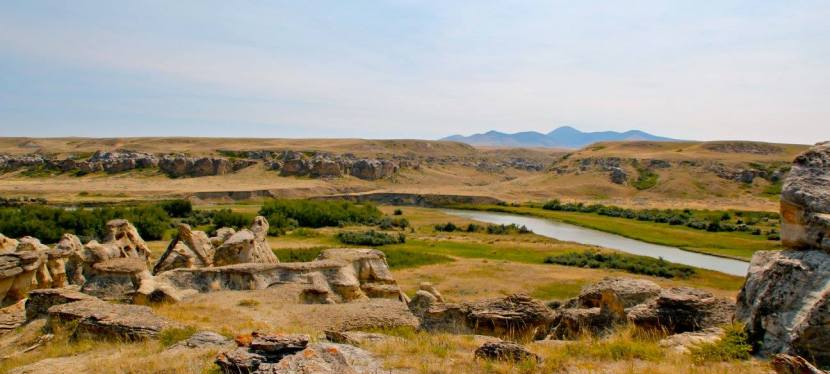
Editor’s note: The banner image above is of Áísínai’pi/Writing-on-Stone. Source: Laura Golebiowski.
Blair First Rider is a Kainai (Blood Tribe) Elder and Horn Society grandparent, and an Indigenous Consultation Adviser with the Historic Resources Management Branch. Thank you Blair for sharing your grandfather’s stories. Suukapi!
Written by: Blair First Rider and Laura Golebiowski, Indigenous Consultation Advisers
In a previous RETROactive blog post, we discussed the seasonal round: the Niitsitapi (“the real people,” how the Blackfoot refer to themselves) concept that structures the year and our relationship to the land and one another. In this post, we learn some of the ways the Niitsitapi spent time during the hot summer months at the turn of the century.
This knowledge was shared by George First Rider, Blair’s paternal grandfather. George was born in 1904 on the Kainaiwa (Blood Tribe) reserve. His father was Dog Child and his mother was The Only Handsome Woman, also known as Catching Another Horse.
George First Rider was a kipita-poka: a grandparent’s child. Deeply loved and cared for by his family, he was afforded a lifestyle of traditional knowledges and practices. He was also a member of the Horn Society and other age-grade Societies (the complex social and ceremonial system that Niitsitapi men participate in from the age of seven or eight to adulthood. Niitsitapi women participate in the Motokis Society). Through ceremonial transfers, George learned many songs and earned the ability to conduct many ceremonies.
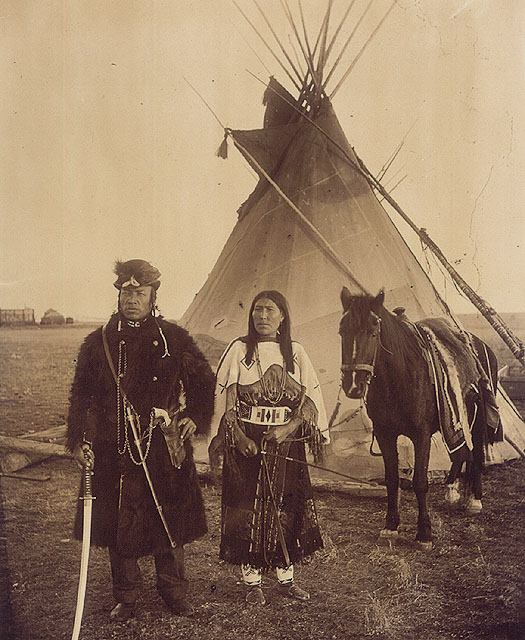
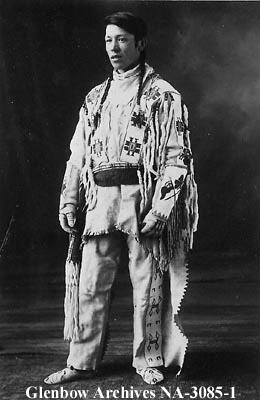
Later in his life, George recorded numerous interviews with ethnographers, anthropologists and museums. These interviews focused on historical events, Blackfoot ways of knowing, and the cultural significance of specific animals, motifs, songs and ceremonies. He was approached by many to share his knowledge and was initially frowned upon by his fellow Niitsitapi for doing so. However, as evident now, he was wise to document this knowledge. Today, George First Rider’s recordings serve as a guide for many Niitsitapi seeking ceremonial protocol and avenues for reconnection.
Many of the interviews George First Rider gave contain sacred information and should not be accessed by those without appropriate cultural, ceremonial and/or Societal qualifications. As a Horn Society grandparent himself, Blair has reviewed the interview excepts below and confirmed they are appropriate to share with a general audience.
The following stories and recollections are from an interview that took place for Glenbow Museum, some time between 1960 and 1970. The interviewer is unknown, but George’s words were translated from Blackfoot to English by Marie Waterchief and transcribed by Joanne Greenwood. The interview transcript is digitally and publicly available via the University of Regina. In this blog post, George’s stories have been reorganized for theming and clarity.
George First Rider’s interview paints a vivid picture of summers spent in community with one another and with the land: enjoying and appreciating abundance, preparing for the colder months ahead and trying to beat the heat. Some practices—digging in the soil, seeking shade, swimming in cool waters—may be similar to how you like to spend the summer months yourself!

“The grass grew green. The people head their horses. They sent them where the grass is nice and green. Where he wants to camp, he did. Right away he went around to pick rocks to hold down the tipi. When it got warm, not really hot, he went hunting.
In the summer, [the people ate] antelope, elks, moose and buffalo. We did not eat too much meat. What is dug from the ground is mostly eaten.
…When the berries are ripe, that’s when it gets really hot…The saskatoons ripened and [the people] picked and dried them. When dry, they grease them. If they do not grease them they turn white…Before the mint bloomed, they picked them. Before the grass turned, they dug up wild turnip. They peel them and string them. They cut them this way [so] they dry good. Also, these wild carrots they dug up and string them with sinew thread and dried them like that.


“In the summer all medicines grow. They turn red when brewed. Gopher ears, burrs…wolf turnips, spread roots. In the summer, this is what they picked. These are medicines—I did not name them all. We eat them. Wild rhubarbs, this they chop up and spread them…The chokecherry is dried whole and greased. They are also crushed and made into paddies. The women make thin paddies with them. This is why they do not mold.
—
“Now they are breaking camp and it is really hot. They do not have hats. So they get branches with leaves and make a hat with that.
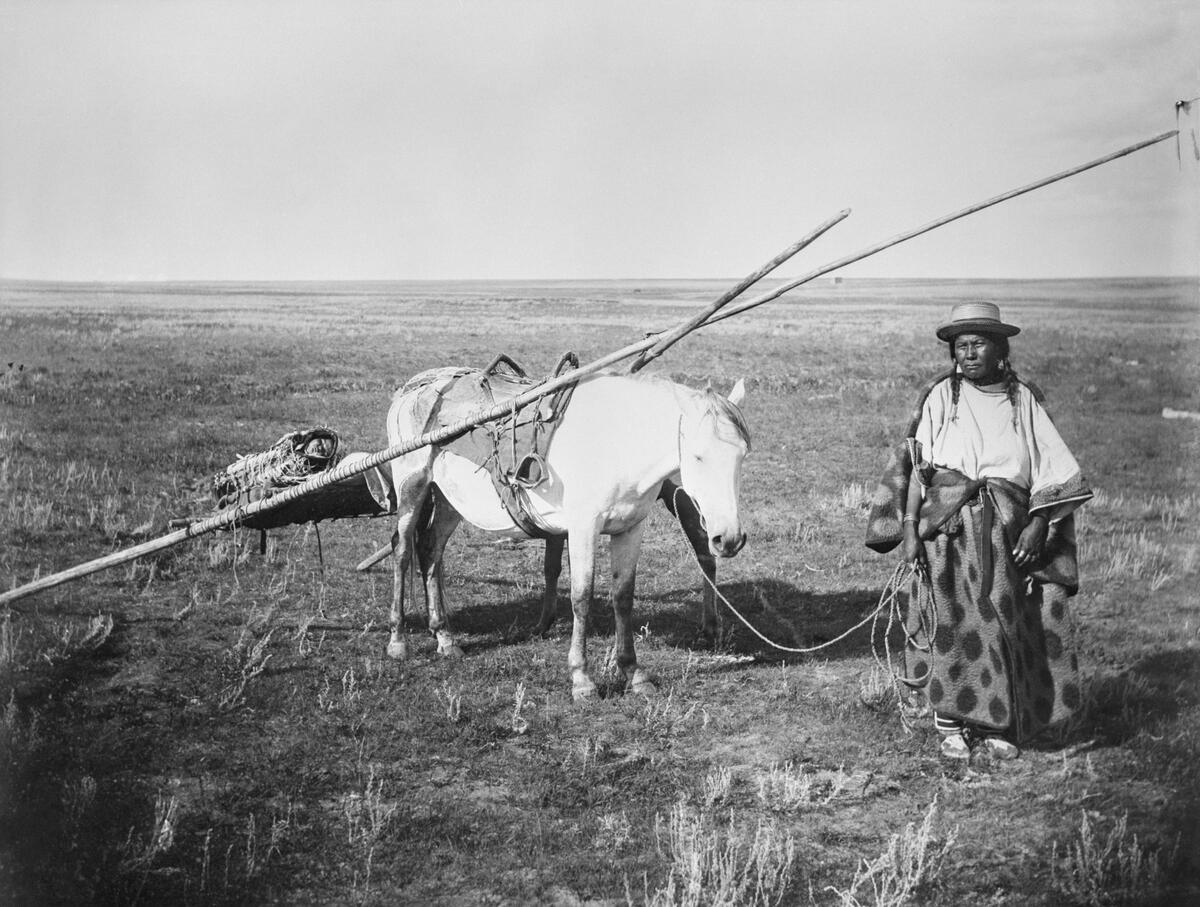
The travois poles will be held up… they lean branches of leaves to make shade…They use pine needles to cool their heads. They just spray their heads with pine needles.
—
“When the heat is unbearable, they do not look for deep water, just as long as the water goes up to the knees. He will just lay in this flowing water. Even the women and children cool themselves in the water…Children spend all day in the water. The women go in a group elsewhere. These old ladies just sit in the water with their heads out of the water. I saw many like this…They always took refuge to the river, to keep cool by swimming.
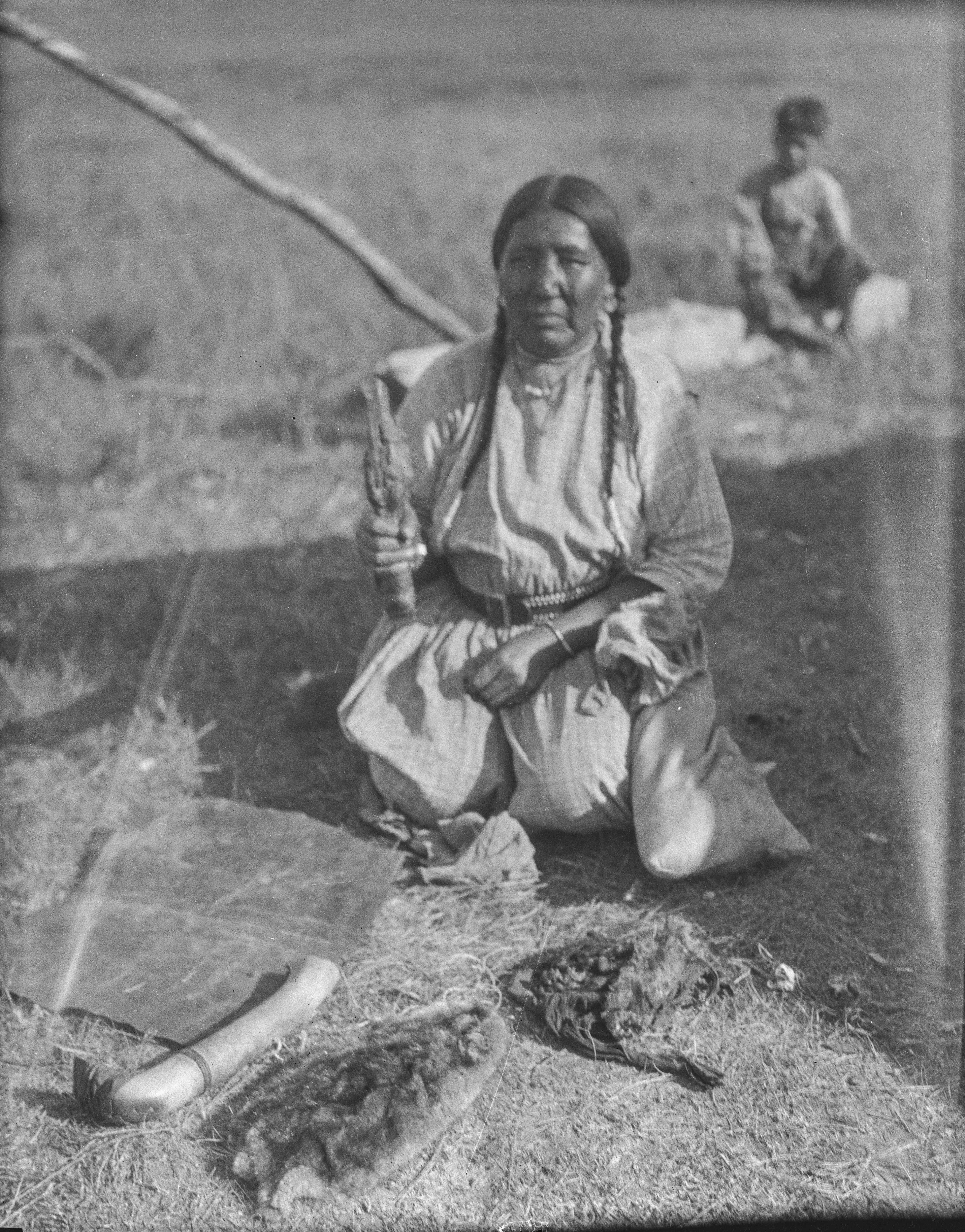
“It is during this summer that they work on the horses, they fixed their travois. Ropes all are made in this summer. In the winter they do not. They made the antler in the summer and all tipis were sewn. They did everything in summer what they needed for the winter…These old people did not just sit around. He got ready with his medicine. What they got they shared with each other.
…The summer is something like a big holiday. Now this is where I finish telling about it. That’s all.”
Sources and further learning
First Rider, George. (n.d.) Interview transcription. Retrieved online from https://iportal.usask.ca/record/29003.
Kainai Ecosystem Protection Association and Yellowstone to Yukon Conservation Initiative. Naapi’s garden: A guide to culturally important Blackfoot plants. Retrieved online from https://www.buffalotreaty.com/flux/naapis-garden-a-guide-to-culturally-important-blackfoot-plants
Johnston, Alex. (1982). Plants and the Blackfoot. Provincial Museum of Alberta, Natural History. Occasional Paper No. 4. Courtesy of Galileo Education Network Collection, Libraries and Cultural Resources Digital Collections, University of Calgary.
 RETROactive