
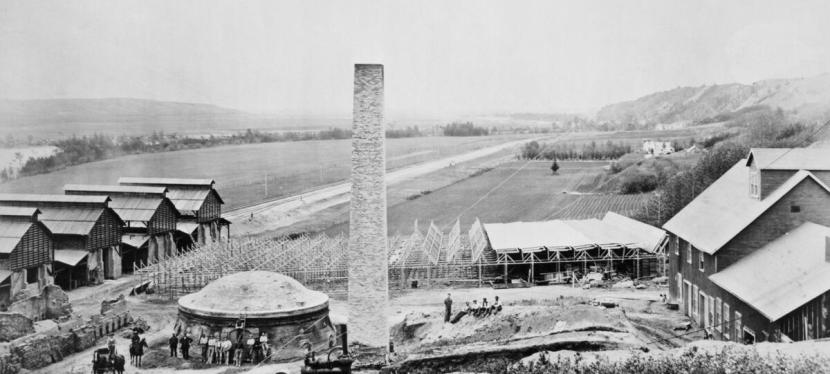
Editor’s note: The banner image above is the Calgary Pressed Brick and Sandstone Company plant, Brickburn, Alberta (ca. 1916-1920 [CU1136164] by unknown). Image courtesy of Glenbow Library and Archives Collection, Libraries and Cultural Resources Digital Collections, University of Calgary.
Written by: Sam Judson and Lindsay Amundsen-Meyer, Department of Anthropology and Archaeology, University of Calgary
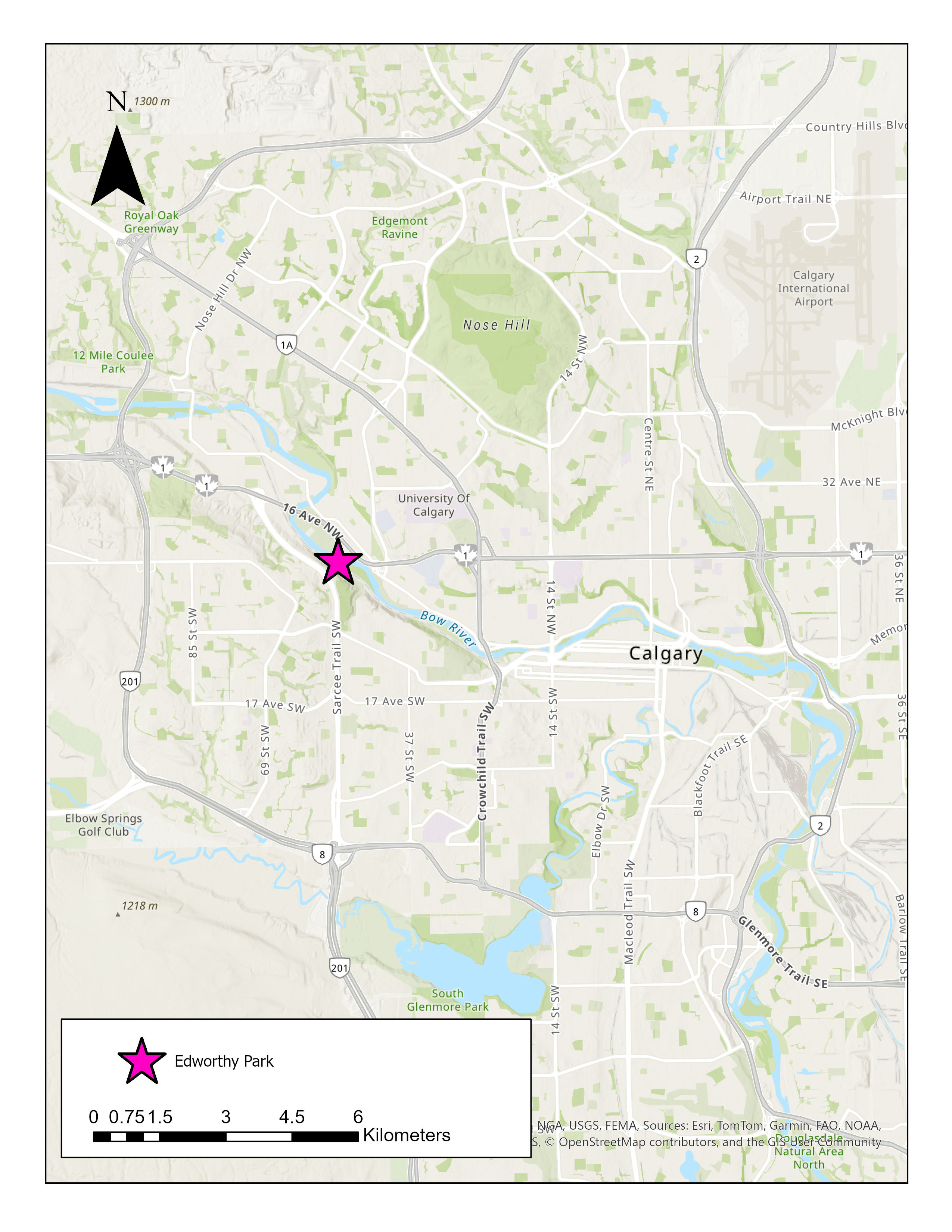
To most Calgarians, Edworthy Park is nothing more than a city park with a large and popular off-leash area for dogs, rocky ‘beaches’ along the Bow River and meandering biking and walking trails that folks enjoy throughout the year. What most users of the park do not realize is that Edworthy Park has a remarkable history: numerous pre-contact Indigenous archaeological sites within the park; the presence of a Métis winter camp in the late 19th century; the eventual establishment of one of the Calgary area’s earliest homesteads by Thomas Edworthy; and Edworthy’s operation of a sandstone quarry on the land in the early 20th century. There was even a 20th century brick factory within the park and its associated village (Brickburn) to the west. As you’ll learn, the students and staff of the University of Calgary archaeology field school and Public Archaeology Program discovered these many layers of history are present across much more of Edworthy Park than previously known.
History of Edworthy Park
The long-term presence of Indigenous communities in southern Alberta is evident through ancestral sites recorded within Edworthy Park and beyond, including sites which reflect camping and hunting activities within the park. In more recent history, the land was part of the Cochrane Ranch. After apparently squatting on the land for several years, a man named Thomas Edworthy purchased 140 acres from the Cochrane Ranch and established a homestead for himself and his family on the property. Edworthy became well-known for his vegetable gardens and his ‘Shaganappi Spud’ potatoes, which he sold to the inhabitants of the newly established municipality of Calgary. Edworthy also found deposits of high-quality sandstone on his property and operated a sandstone quarry here until his untimely death due to typhoid in 1904. Edworthy’s wife, Mary, continued operating the gardens and quarry until her own death in 1934.
Edworthy park was also home to an industrial brick making operation called the Calgary Pressed Brick and Sandstone Company, established by Edward Hendry Crandell in 1905. It was located at the small village of Brickburn (then five miles west of Calgary). The brick plants (see banner image at the top of this post) operated from 1905 until they were shuttered at the beginning of the Great Depression in 1931, with a brief hiatus during World War I. At its peak, the brick plants employed more than 100 men and manufactured approximately 80,000 bricks a day with 15 individual kilns.
The small village of Brickburn, which functioned to support the wives and children of those who worked in the factory, had a small post office, cookhouse, church, general store, housing and was supported by its own siding on the rail line. Today, remains of the brick plants (in the form of small brick piles) and the foundation of the Brickburn rail siding are visible within Edworthy Park adjacent to the Bow River and the Canadian Pacific Kansas City Railway tracks. The village itself was located on the higher bench to the west. The land that makes up Edworthy Park today was purchased by the City of Calgary in 1962 and was ultimately turned into a public park. Despite the rich, complex and relatively well-documented history of Edworthy Park, the area has seen limited archaeological study, in large part because it has been a protected park space for over six decades.
UCalgary Field School and Public Archaeology Program
Hosted by Calgary Parks and Open Space and guided by an Elders advisory group, UCalgary’s archaeology field school and Public Archaeology Program explored the many layers of Edworthy Park’s history through a four-week archaeology field program in spring 2025. Efforts were focused on two areas within Edworthy Park, both on the south side of the Bow River. The first was the archaeological site of EgPm-250, a stone circle site located within the off-leash dog park. This stone circle was first identified by archaeologists in 1977 but was not further investigated. During the 2025 field program, the stone circle itself was not disturbed, as Indigenous descendant communities have expressed a desire to leave stone circles intact whenever possible and the stone circle at EgPm-250 is not currently at-risk of damage or loss. Instead, the circle was mapped, the area around the stone circle was surveyed and two areas south of the stone circle were selected for excavation. Within these areas, students, researchers and members of the public (through UCalgary’s Public Archaeology Program) excavated more than 63 square meters across eight excavations blocks. More than 1,500 cultural belongings (artifacts) were recovered. These are almost exclusively lithics, including debitage, scrapers, hammerstones and even a biface fragment manufactured from Montana chert. The recovery of both stone tools and the detritus from making stone tools suggest that the procurement of raw materials and production of stone tools was an important activity at EgPm-250.

The second area assessed during the field program was a portion of the Bow River terrace in the lower part of the park. Here, smaller teams of students and researchers conducted a survey of the terrace to identify cultural materials and begin to create an inventory of sites present within the park. A total of 77 shovel tests were excavated and almost 600 belongings were recovered from this area, resulting in the identification of a previously unrecorded archaeological site, designated as EgPm-389.
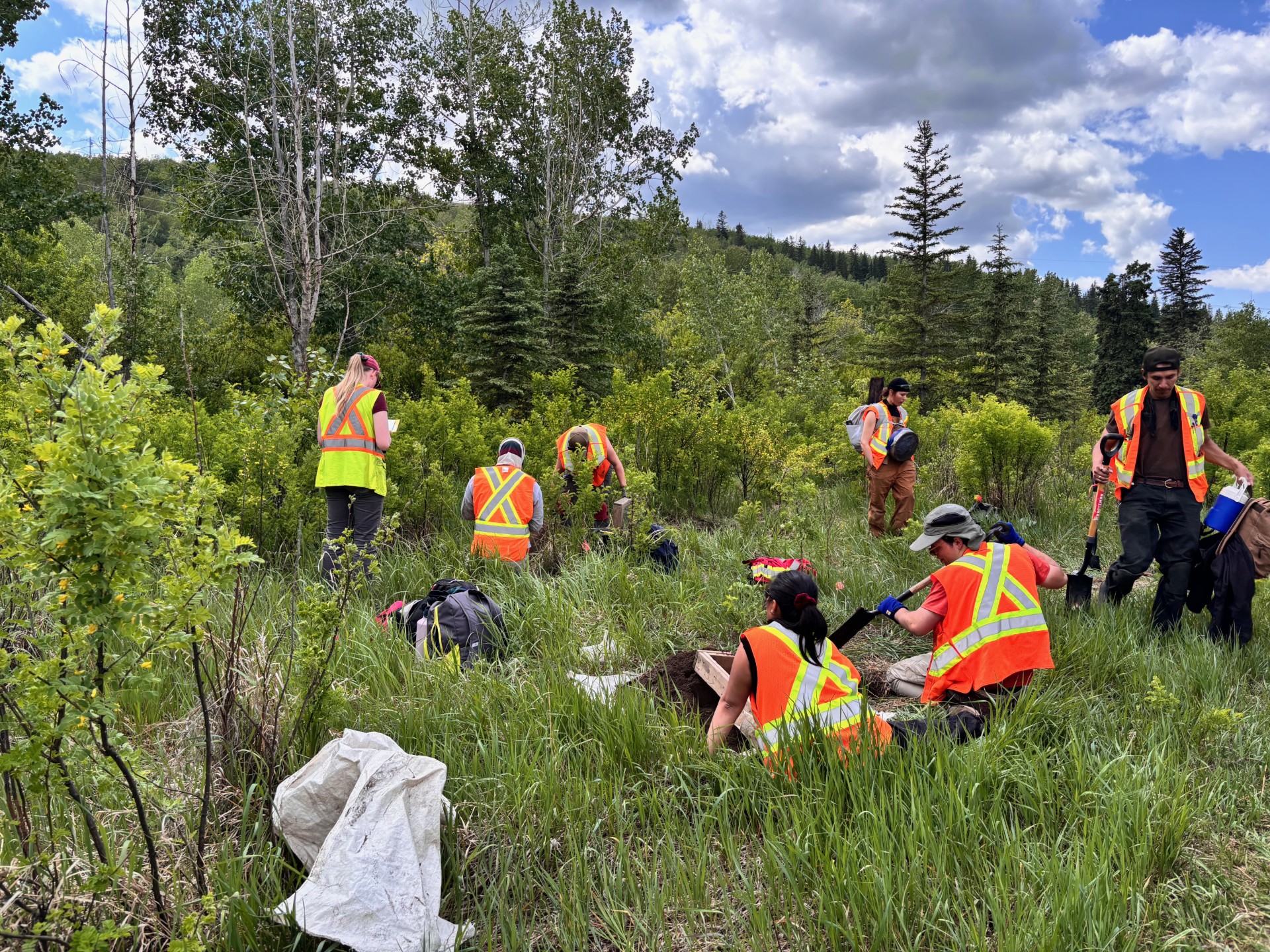
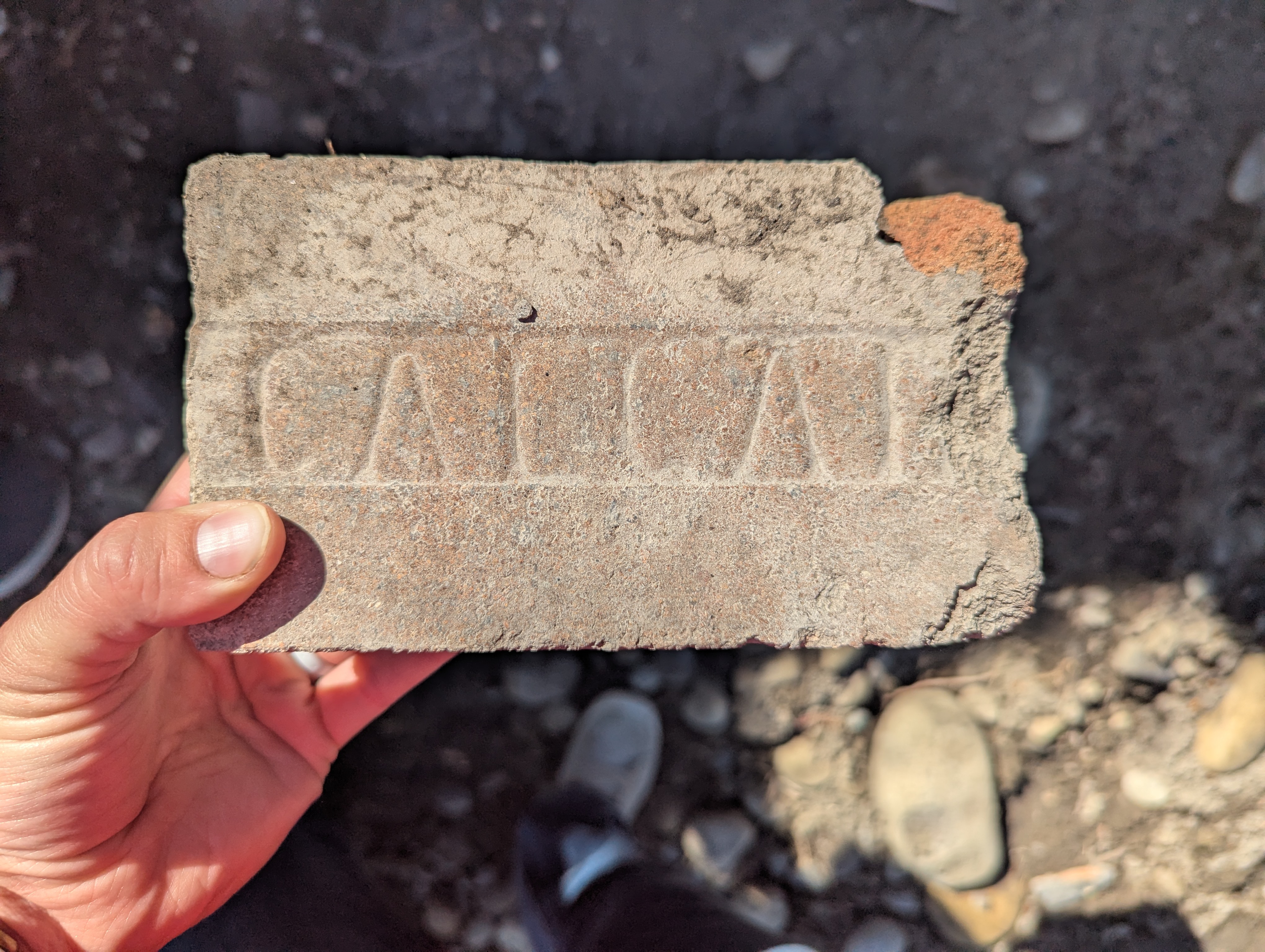
The cultural materials at EgPm-389 are thought to represent multiple layers of Edworthy Park’s history. Two historic wooden features were identified near the river’s edge, believed to be the remains of Thomas Edworthy’s pump house along with another structure, potentially a storage structure such as root cellar associated with his gardens. The majority of historic artifacts recovered are most likely associated with Brickburn, as indicated by the maker’s marks (“Calgary”/ “EHC”) on numerous bricks recovered at the site, as is an intact brick drainage system which remains buried here. Cultural materials recovered include sawn cattle bone, glass bottles with makers’ marks, pieces of ceramic dinnerware, fragments of shoes, and of course, bricks. Most intriguing, several ceramics with Chinese characters were recovered at EgPm-389, indicating the presence of Chinese workers at the Edworthy market gardens and/or Brickburn. Finally, below these historic remains evidence of the long-term importance of this place to the region’s Indigenous inhabitants is present in the form of a stone biface, several pieces of debitage, fire-broken rock and butchered bison remains.

Impact for Calgarians
Beyond the success of the archaeological investigations, the success of the Public Archaeology Program can be measured in its impact for Calgarians. Working in a public space such as a city park provides a rare opportunity for archaeologists to share their work and knowledge with members of the community. Working in an off-leash dog park, it was a common occurrence for dogs to wander into the excavation area, clearly wanting to help dig in the dirt. This drew the attention of their owners, whose curiosity about our work opened the door to productive, engaging conversations with Calgarians about the rich archaeological history of their city—and of their own neighborhoods. The Public Archaeology Program team estimates they interacted with at least 350 Calgarians over four weeks, of all ages and walks of life. A true highlight was when a great-grandson of Thomas Edworthy came to visit the site and shared his own stories and knowledge about the area.
It is clear from the continued interest of the public in this work that archaeology is exciting and interesting to Calgarians, and that programs such as the UCalgary Public Archaeology Program are a useful tool to educate and share knowledge of Alberta’s rich, diverse and long-term history. Our interactions surely created ripple effects, with those conversations continuing beyond the site and into neighborhoods, ultimately increasing knowledge of Alberta’s heritage in the larger community. It can be challenging for archaeologists to share what they do with the public in an accessible way and, in turn, it is very challenging for the average person to learn more about Alberta’s archaeology outside of a university context. Programs such as UCalgary’s field school and Public Archaeology Program are important, as they truly bridge the gap between archaeologists, their work and our communities.
Sources
City of Calgary, 2019, Uncovering Human History: Archaeology and Calgary Parks, Calgary, Alberta.
Edworthy Park Heritage Society
2022, Shaganappi Point & Edworthy Park: A New History, Inniiwaa’iitainniksissta’poohpi = Where Buffalo Run Down the Hill. Edworthy Park Heritage Society, Calgary, Alberta.
Wilson, Michael C., 1981, Once Upon a River: Archaeology and Geology of the Bow River Valley at Calgary, Alberta, Canada, University of Calgary.
 RETROactive