Pincher Creek Municipal Heritage Survey

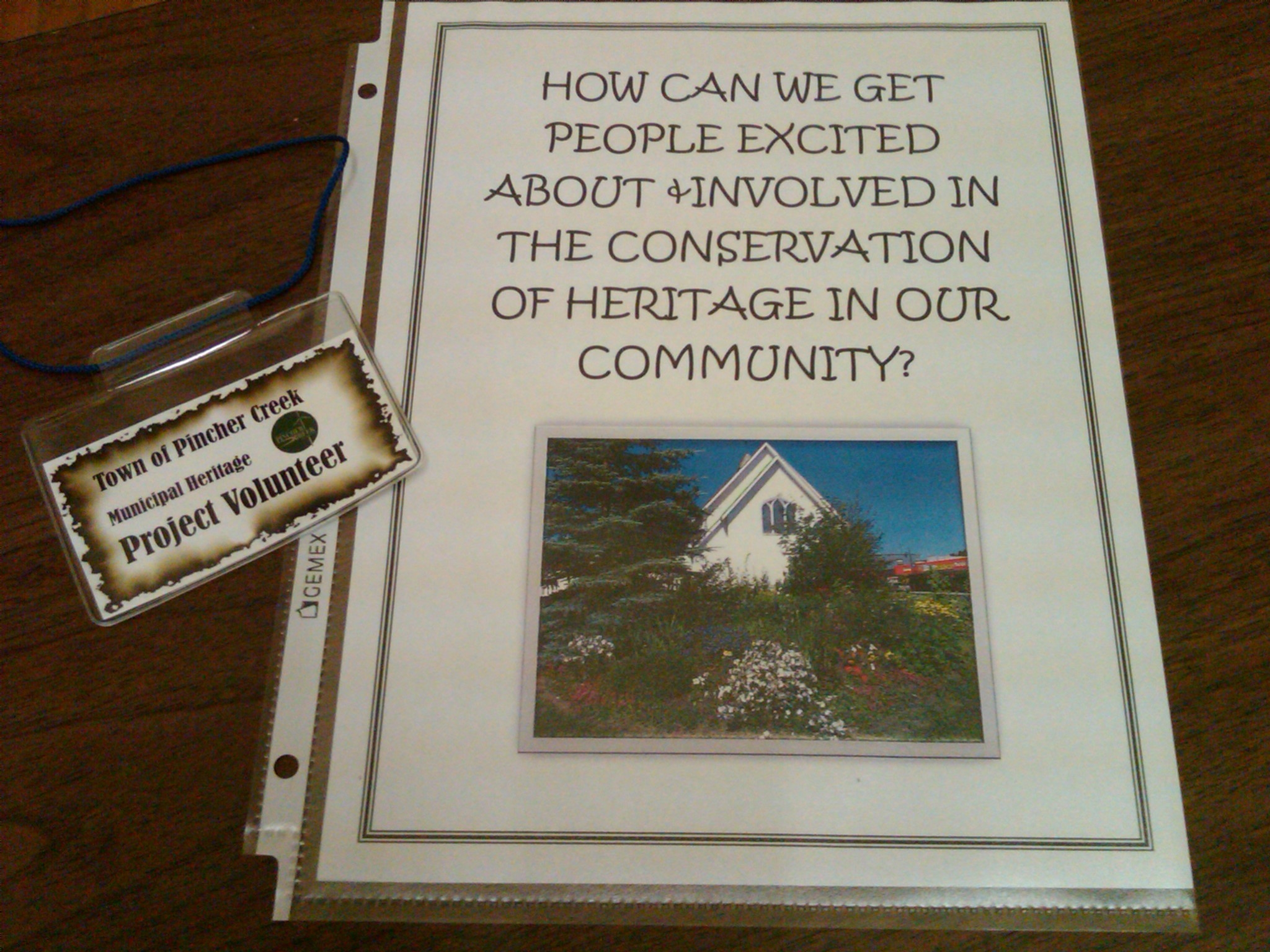
At the end of April I attended an open house for the Town of Pincher Creek Municipal Heritage Survey project. Over the past year, the Town, through the dedicated assistance of community volunteers and the guidance of Farley Wuth at the Kootenai Brown Pioneer Village, has been working on documenting up to 300 sites. These sites, all older than the 1940s, include residential, commercial and industrial properties. The sites are being documented through photography and by recording geographical, architectural and historical information. Once complete, all documented sites may be viewed on the Provincial Heritage Survey database.

The open house was attended by project volunteers and interested community members. Their interest in the project was inspiring. With each documented property, the volunteers uncover new facts about their community.  Who lived where, and when? Which properties contain unique architectural features? How did the properties evolve after alterations and repairs? With each discovery, a greater sense of community pride seems to emerge.

Completing a Municipal Heritage Survey is a great way for municipal staff to learn about the older building stock (and other sites) in their communities. The information gathered provides valuable information for things such as:

– public and private research

–   historic walking tours

–   school and museum programs

– municipal decision-making

–   information on historic and existing land uses

–   development patterns

–   tourism opportunities

– assistance in long-term conservation objectives

–   evaluation of potential historic places

–   photographic record to aide future conservation projects

Essentially, a Municipal Heritage Survey is an information gathering exercise, which enables future decisions and projects associated with potential historic places. Properties documented through a survey are not placed under any restrictions.

To learn more about the Pincher Creek Municipal Heritage Survey project, click here.

To learn how the Town of Pincher Creek is completing this project, please visit the Municipal Heritage Partnership Program website.

Written by: Brenda Manweiler, Municipal Heritage Services Officer

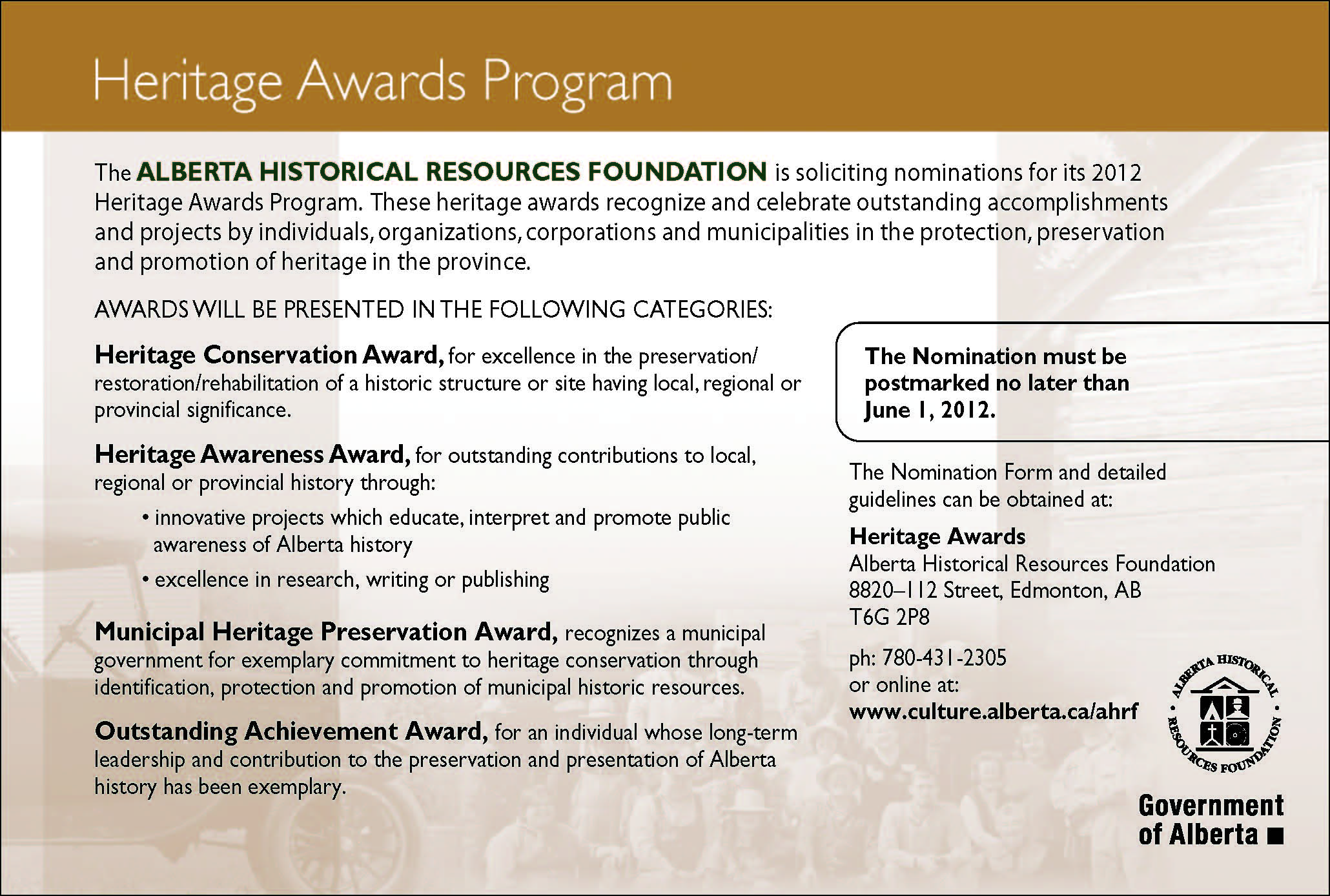
REMINDER: Submit Nominations for the AHRF Heritage Awards

Deadline: June 1, 2012

As part of its ongoing efforts to honour local contributions in the protection, preservation and promotion of Alberta’s heritage, the Alberta Historical Resources Foundation is seeking nominations for the Heritage Awards 2012.

The Heritage Awards Program provides an excellent opportunity to recognize and celebrate the outstanding accomplishments of individuals, organizations, corporations and municipalities who have demonstrated their commitment in preserving our province’s heritage.  Awards are presented as follows: to projects for the Heritage Conservation and Heritage Awareness Awards; to municipalities for the Municipal Heritage Preservation Award; and to individuals for the Outstanding Achievement Award.

Conserving Alberta’s heritage benefits all of us, but it is often the actions of individuals and communities that drive these efforts forward.  If you know of an exceptional building conservation project, a heritage awareness initiative, a municipality or individual in your community, this is your chance to have them recognized.

The deadline for submitting nominations is June 1st.  The awards ceremony will take place in November.

For a copy of the guidelines and nomination form, click here or contact me at 780-431-2305.

Written by: Carina Naranjilla, Grant Program Coordinator

Moving Mountains – My Visit to the Frank Slide Interpretive Centre

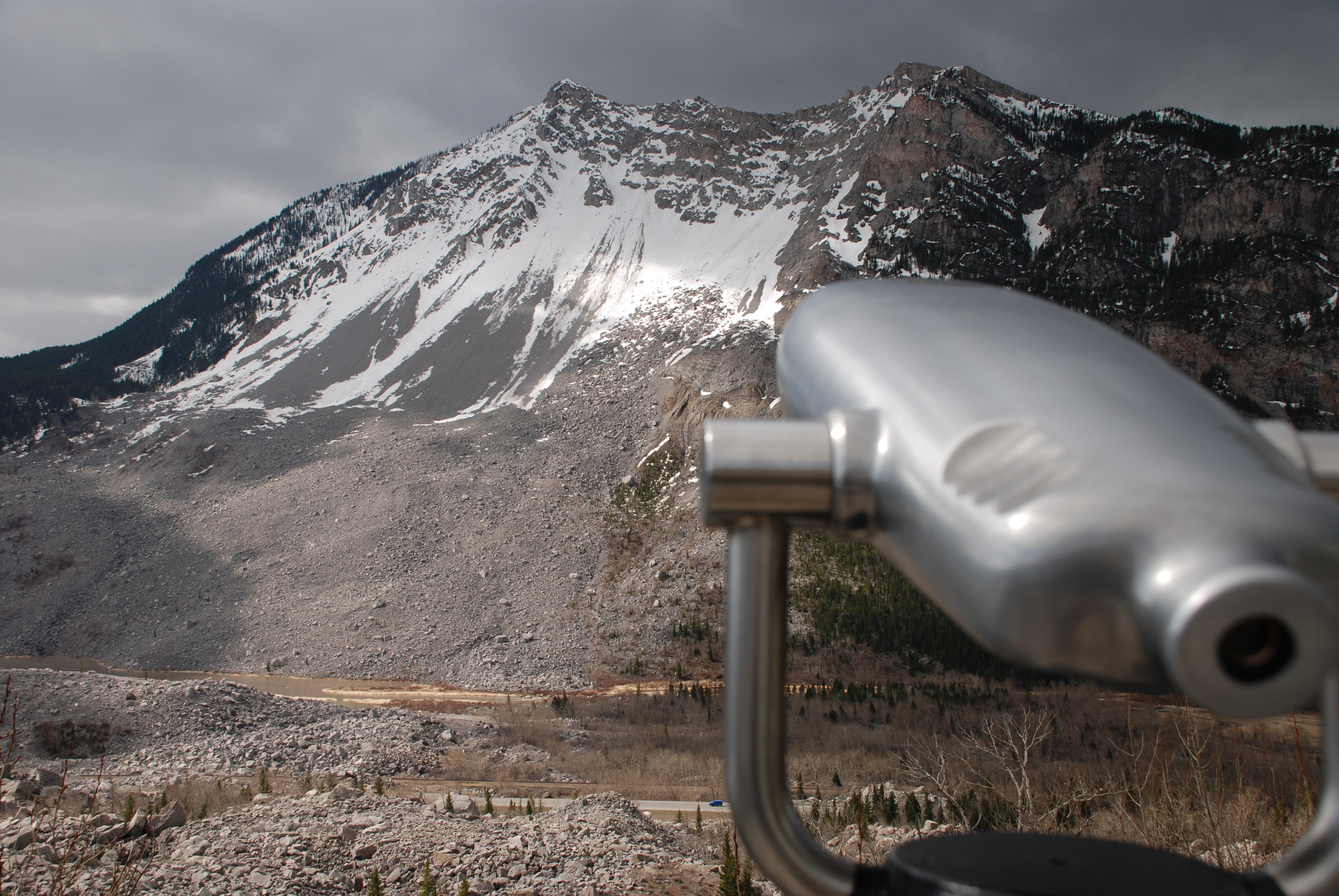
View of Turtle Mountain from the Frank Slide Interpretive Centre

Last week I was in southern Alberta for meetings with Vulcan County and the Town of Pincher Creek. To fill a meeting-free morning I decided to visit the Frank Slide Interpretive Centre (a thirty minute drive west of Pincher Creek on Highway 3). Throughout my visit grey clouds blanketed the sky, which befitted the destruction, sorrow and magnitude of the Frank Slide disaster.

On April 29, 1903 at 4:10 in the morning the east face of Turtle Mountain toppled and slid four kilometres into the Crowsnest River valley. In a mere ninety seconds, 82 million tonnes of limestone collapsed upon the southern end of the Town of Frank, a section of the Canadian Pacific Railroad (CPR) and the mine plant of the Canadian-American Coal Company. In total, at least ninety people were killed. To date, this is Canada’s deadliest rockslide.

In 1977 the Government of Alberta designated the site a Provincial Historic Resource for its significance as the site of Alberta’s worst natural disaster, for it being a geological phenomenon and for it serving as a provincial landmark (to learn more about the site’s heritage value, read the Frank Slide Statement of Significance). Visitors to the area can learn first-hand about the disaster through interactive multi-media displays at the Frank Slide Interpretive Centre, and by walking the Frank Slide Interpretive Trail.

Interpretive Centre

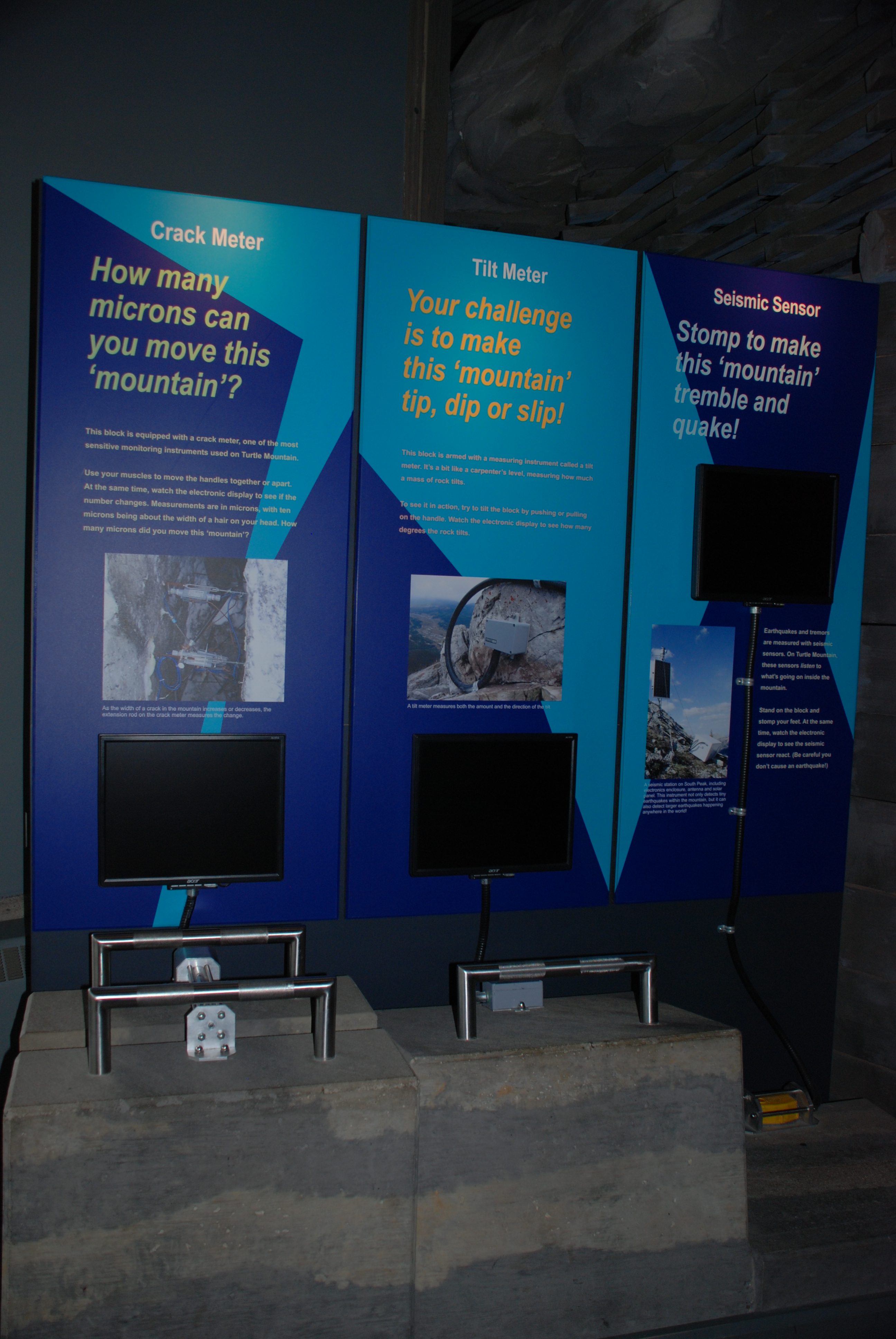
What force can you exert on a mountain by jumping, stomping, pushing, pulling, lifting ... ?

Four levels of display space recount not only the horrors and triumphs of the people that awoke one morning to find their town buried, but provide geological and seismic information about the causes of the disaster. Audio-visual components and 3-D models allow visitors to visualize how Mother Nature could wreck such havoc. My favourite display was a set of three mountain monitoring sensors that are like those currently installed on Turtle Mountain to detect movement. Visitors are encouraged to stomp, jump, push, pull and lift blocks of concrete connected to a crack meter, tilt meter and seismic sensor. Computer screens reveal how sensitive the monitors are AND how strong YOU are! Yes, I jumped, stomped, pushed and pulled … the next time someone asks I will now be able to confidently state that I really can move mountains!

Interpretive Trail

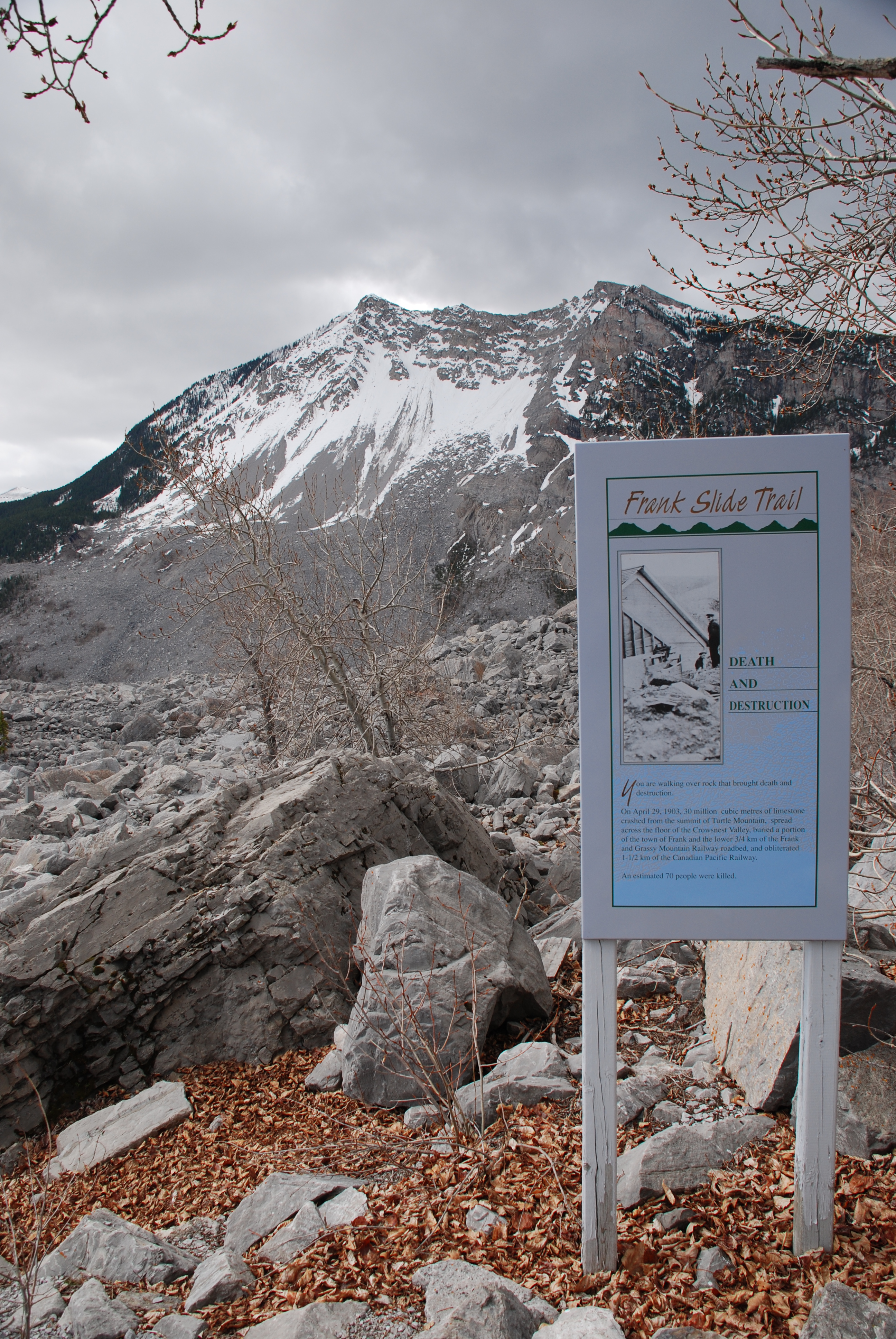
View of Turtle Mountain near the trail head.

A 1.5 kilometre trail, beginning from the Interpretive Centre parking lot, winds through mounds of limestone rubble. Looming views of Turtle Mountain offer a stark reality check when walking along the trail. Hopes, dreams and memories lay beneath.

I walked the trail with an interpretive brochure in hand. Waypoints marked along the path explained what I saw and some of the events that occurred on that fateful day. The last quarter of the trail winds along the western edge of the fallen rock and loops back up to the parking lot through a wooded area. I paused during this reconnection with nature to read that, “mammals such as bears, deer and moose use these cool, sheltered woodlands to skirt the slide’s harsh, open environment as they move through the Crowsnest River valley. Mule deer can frequently be seen along this portion of the trail, particularly early and late in the day.” Taking a step to carry on my way, I thought how great it would be to see some deer. The breaking of twigs caused me to again pause. To my amazement I looked up to discover four deer staring at me!! All five of us stared. Soon enough they returned to their feeding while I continued staring. What a joy!

Turtle Mountain Web Cameras

The Alberta Geological Survey has installed two web cameras for viewing Turtle Mountain. One is in the valley looking up at the mountain and the other is positioned on the south peak providing a view of the valley below. Click here to see a current view of Turtle Mountain.

The Frank Slide Interpretive Centre is open to the public, daily, from 10:00am to 5:00pm. July 1 through Labour Day, the Centre is open daily from 9:00am to 6:00pm. Click here for additional information.

Written by: Brenda Manweiler, Municipal Heritage Services Officer

P.S. I must extend a big thank you to Monica and Myriah for welcoming me to the Interpretive Centre and for providing a great tour! I really enjoyed my visit.

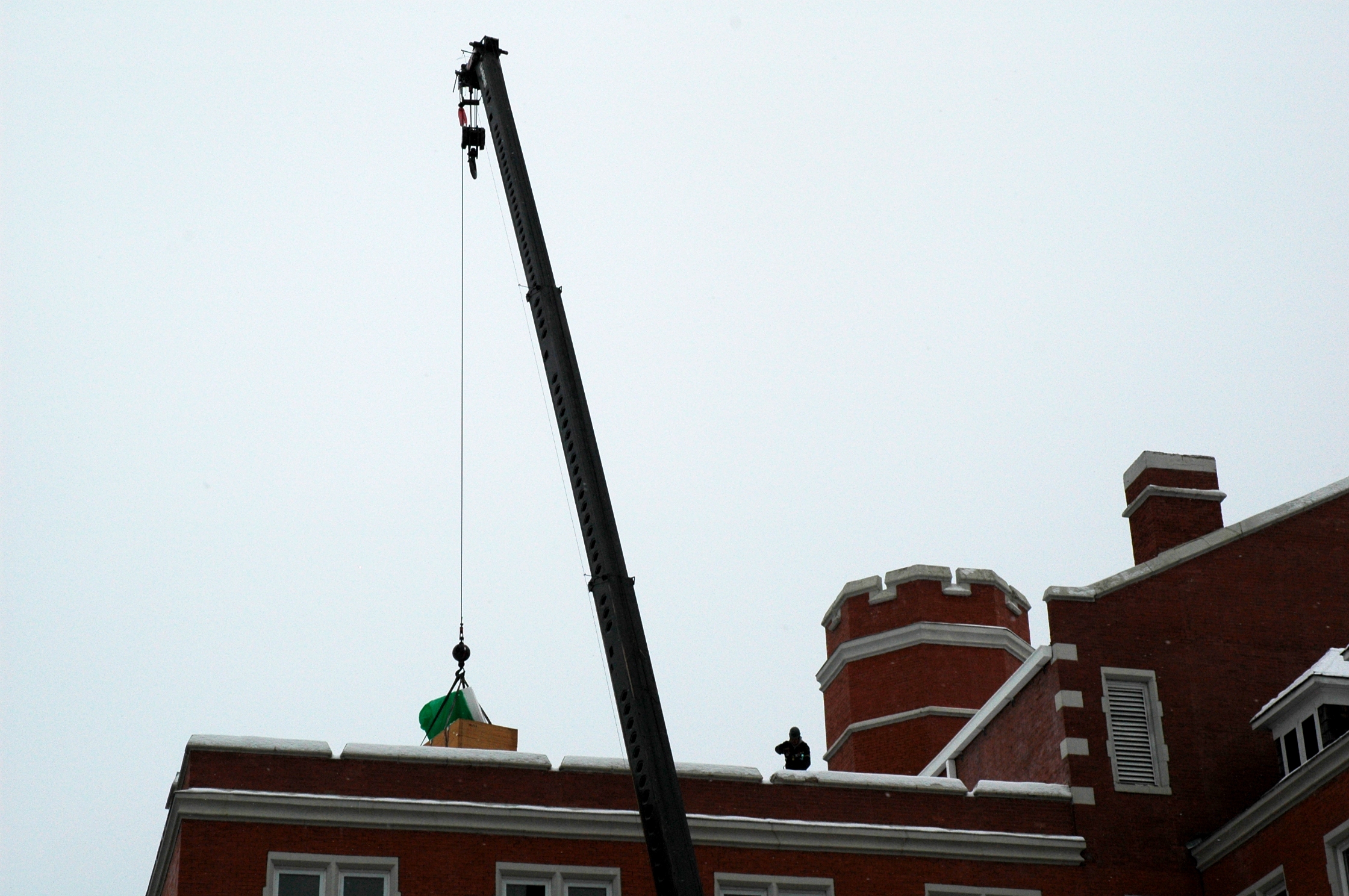
Application of the Standards and Guidelines to replace the cedar shingle roof on Old St. Stephen’s College

Old St. Stephen’s College, designated a Provincial Historic Resource in 1983, and office of the Historic Places Stewardship Section (the authors of RETROactive), is getting a new roof. The work is compliant with the principles and recommendations outlined in the Standards and Guidelines for the Conservation of Historic Places in Canada. Below is a brief description of the conservation work that will be completed throughout April and May 2012.

The roof over the west wing and its multiple hip-roofed dormers are cited in the Statement of Significance as character-defining. The design for the cedar roof replacement may seem straight-forward at first, but when planning this work it was important to consider not only the look, but how the roof would perform. The introduction of new underlay products and flashings were examined in order to better help keep the water out and extend the service life of the roof.

For any historic place, the Standards and Guidelines for the Conservation of Historic Places in Canada must be consulted for all proposed interventions.  In this case, a cedar shingle finish for roof surfaces, ridge caps and dormer side walls was verified as appropriate with reference to general Standards 1 to 9 and Standards 10 to 12 for rehabilitation treatments (see pages 22 and 23 in your Standards and Guidelines document).  Standard 8, in particular, confirms the replacement “in kind of any extensively deteriorated or missing parts of character-defining elements, where there are surviving prototypes.”

In addition to the replacement of the shingles, the opportunity to introduce new weatherproofing materials was presented.  Particular areas at risk with this roof were identified, which included the six dormers penetrating each side of the peaked roof, along with multiple valley and ridge flashings.  Also complicating the design is the presence of deep gutters with internal drains just behind the brick and cast-stone parapets.  A new continuous ice dam membrane underlay was proposed that would be installed from the parapet through the gutter, to the top of the dormers, lapping the membrane up the dormer sidewalls, and to the underside of window sills.  This has been likened to installing a weatherproof girdle under the shingles, covering most of the roof surface, to help protect the vulnerable complicated intersections from leaks.

The proposed introduction of new underlay material to this roof was confirmed in the Guidelines for Roofs (page 142), where it is recommended to “improve the detailing of roof elements, following recognized conservation methods, to correct faulty details.”  Such improvements, however, should be physically and visually compatible with the authentic roof detailing.

So, all the boxes are checked with regard to the west wing’s roof replacement and the protection of its heritage values.  The Standards and Guidelines for the Conservation of Historic Places in Canada provides a defendable verification that planned work for historic places retains recognized heritage values.

Written by: Tom Ward, Manager of Heritage Conservation Advisory Services

What’s New with the Alberta Heritage Survey? (12.01)

There’s been some spring cleaning on the Alberta Heritage Survey website – it’s been tidied up, rearranged and revamped! Check out all the information and new links. You’ll find a description of the Alberta Heritage Survey (AHS) Program, and a link to an electronic version of Photographic Memory , the Provincial Archives of Alberta  exhibit which was previously featured on RETROactive (What’s New with the Alberta Heritage Survey? 11.01). As well, links on the website will take you to pdf versions of documents providing a wealth of information about the heritage survey process, and there are sections with details about HeRMIS, the AHS eForm, and historical walking and driving tour booklets.

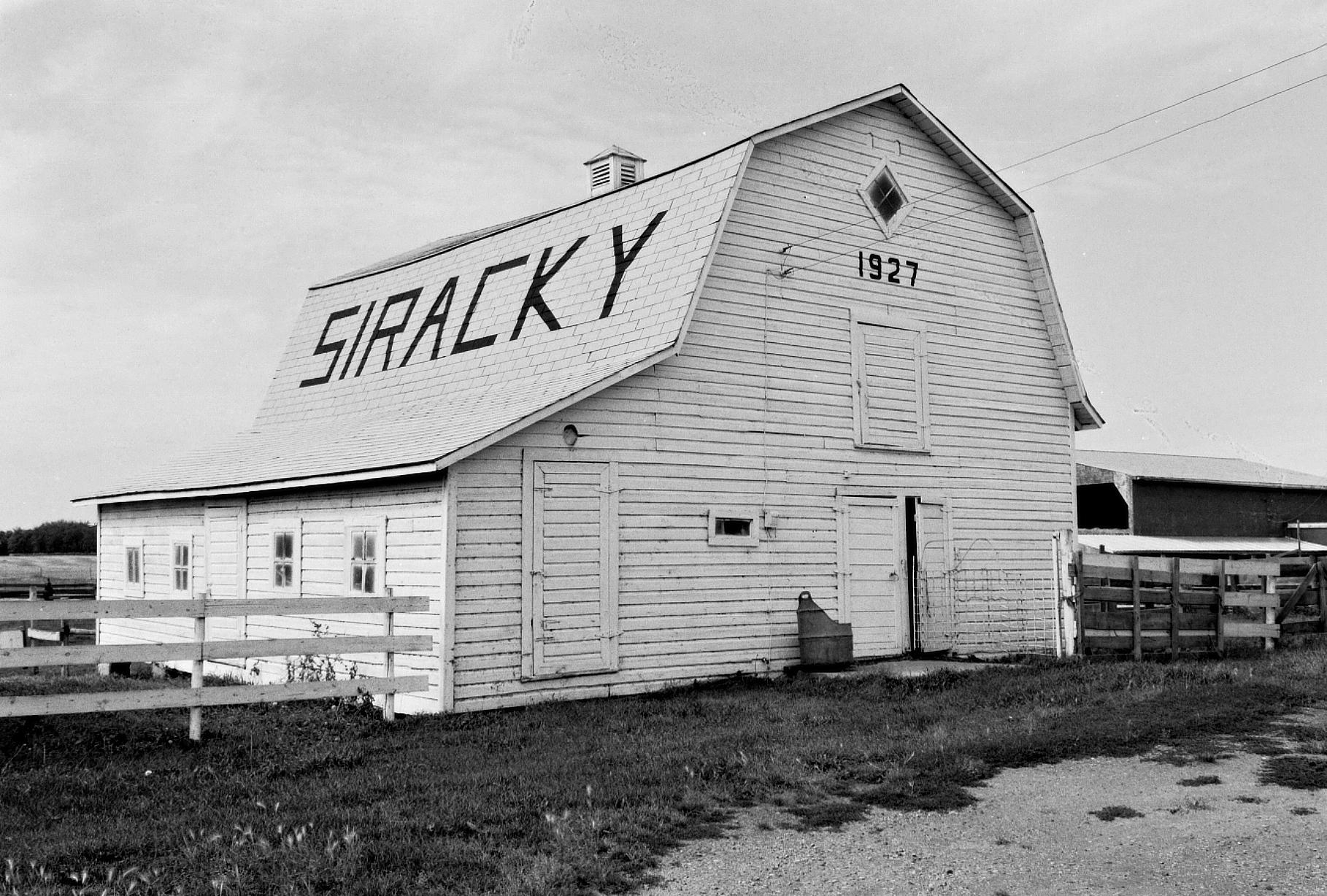
This photograph is an example of what may be found on the Alberta Heritage Survey.

HeRMIS, the Heritage Information Management System, provides online access to the database where the Alberta Heritage Survey is stored. You can explore the records of the AHS by querying the database, using the Basic or the Advanced query window. Almost 100,000 records have been entered so far, and more are being added all the time. Images are the latest innovation. A search on the name “Siracky” using the text search field of the Basic Search brings up an interesting selection of buildings in east central Alberta. To explore the records, click on View Details. Once you are in a record you can double click on the images to see larger versions. Click on “Return to Search Results” to go back to the list and access another record.

The eForm is an exciting development that allows data, including images, to be submitted to the Alberta Heritage Survey via the internet. Now, information can be added to the database from anywhere with internet access. This feature is only available on a restricted basis, but you can follow the links to learn how it works.

Over the years, in cooperation with communities and groups across the province, the AHS has produced numerous historical walking and driving tours. Many of these are now out of print, but they are still available through the AHS web page, where pdf versions of 22 tours are available for downloading. As the very first AHS blog post, Spring Forward!  pointed out, a bit of heritage sightseeing is a perfect excuse to get out and enjoy the spring weather.

If you have any comments about the spruced up AHS web page, please contact Dorothy Field.

Written by: Dorothy Field, Heritage Survey Program Coordinator

Strathcona Fire Hall No. 1

When the Calgary & Edmonton Railway arrived at the south bank of the North Saskatchewan River in 1891, the C & E immediately subdivided a town site which it named South Edmonton.  Being at the end of steel, the community steadily grew throughout the decade until, in 1899, it was incorporated as the Town of Strathcona with a population exceeding 1,000.  To serve this burgeoning community, which consisted primarily of wood frame buildings, it was obvious that some method of organized fire protection was needed.  A volunteer fire brigade was organized in 1901, and, that same year, Town Council provided for the construction of a wood frame fire hall on lot 2, block 79, just north of main street, and near the Town water well.  A horse drawn fire wagon with a wooden water tank was then acquired.

As with Edmonton to the north across the river, Strathcona grew rapidly in the wake of the Klondike gold rush.  In 1907, it was incorporated as a city with an estimated population of 3,500.  It was soon evident that the old fire hall was inadequate, and, so, provision was made for a newer and larger structure.  As the City waterworks was right next door to the old fire hall, it was felt appropriate to build the new structure at the same location.  The firm of Wilson and Herrald was thus contracted to design, and the firm of J.M. Eaton contracted to build a modern two-story red brick facility which could accommodate three fire wagons.  The estimate for construction was $13,715.  A stable in the rear was designed for nine horses, while a bell tower extended from the middle of the structure 77 feet in the air.  The second floor was made to accommodate a chief’s office, a general hall, bedrooms, a band room, and a bathroom with showers.  Two fire poles facilitated instant access to the ground floor.

The Strathcona Fire Hall with its horse-drawn wagons served the City of Strathcona until its amalgamation with Edmonton in 1912.  It was then designated as Edmonton Fire Hall #6 and became part of the Edmonton Fire Department.  A permanent salaried chief was assigned to the Hall, and the number of salaried firefighters grew over the passage of time.  The crews were always supplemented by volunteers in times of emergency.  By 1954, however, the facility was considered dilapidated and outdated, and, so, a new fire hall was constructed nearby.  The old structure was apparently slated for demolition but was considered adequate for storage, and, so, it was leased to Strathcona Furniture, which used it as a warehouse.

By the early 1970’s, there was a growing appreciation in Edmonton about the early buildings of Strathcona, and, so, when the Walterdale Theatre began to plan for a new home, thoughts turned to the old fire hall, which seemed to provide adequate space for a live theatre building.  The Walterdale group moved into its internally renovated facility in 1974, and, in 1976, the structure was designated a Registered Historic Resource.  In the years that followed, it became a central venue for Edmonton’s Fringe Festival.

In September 2007, the Strathcona Fire Hall was designated a Provincial Historic Resource.  Its historical significance lies in its provision of structural evidence of fire fighting facilities in a large urban area in the early 20th century in Alberta.  It is the oldest major fire hall in the province.  It is also important as one of the surviving early public buildings of the City of Strathcona, which tells of life in general in this community.      

Written by: David Leonard, Historian

Visit the Alberta Register of Historic Places to learn more about the heritage value of the Strathcona Fire Hall. In order for a site to be designated a Provincial Historic Resource, it must possess province-wide significance. To properly assess the historic importance of a resource, a historian crafts a context document that situates a resource within its time and place and compares it to similar resources in other parts of the province. This allows staff to determine the importance of a resource to a particular theme, time, and place. Above, is some of the historical information used in the evaluation of the Strathcona Fire Hall.

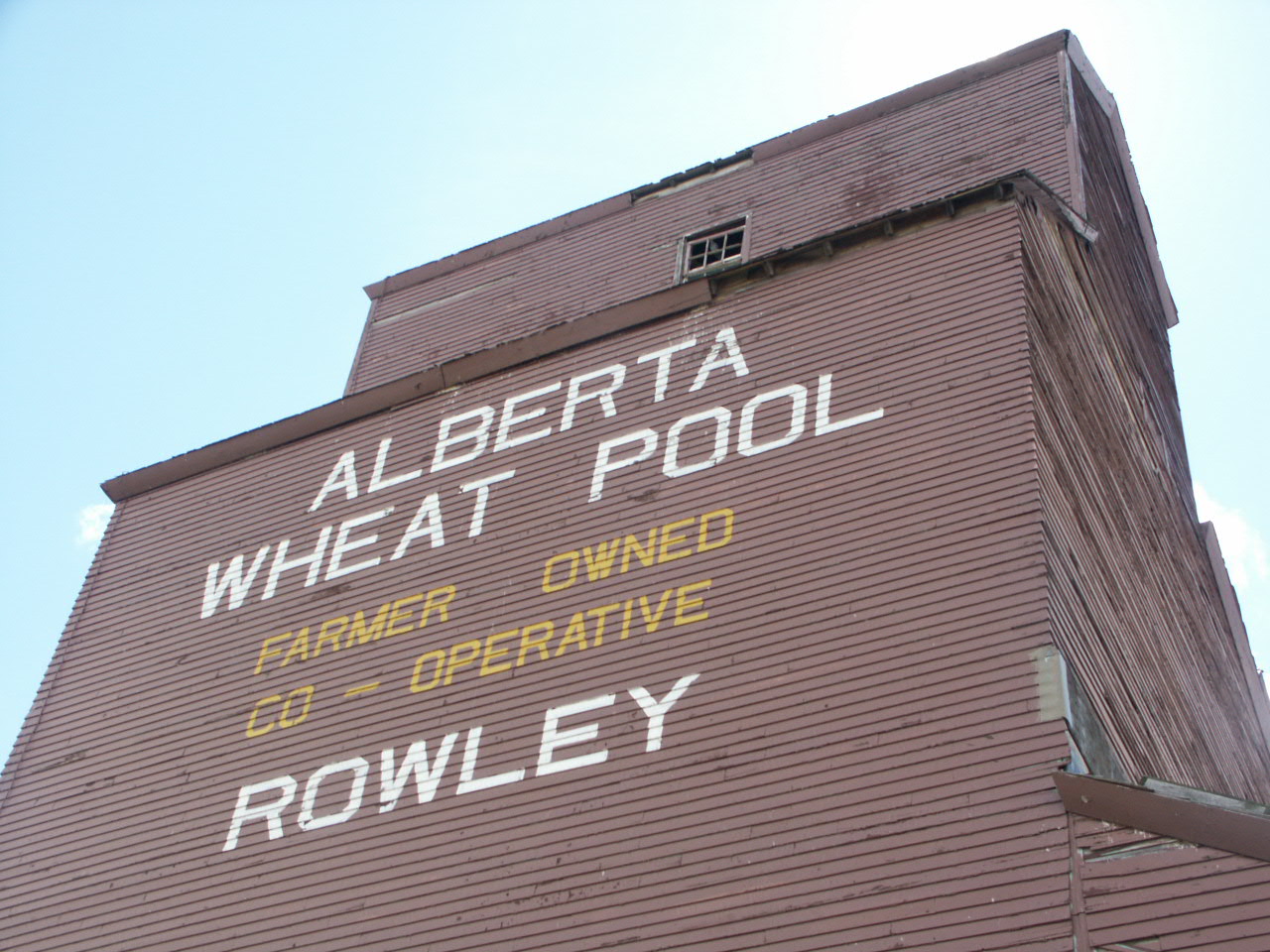
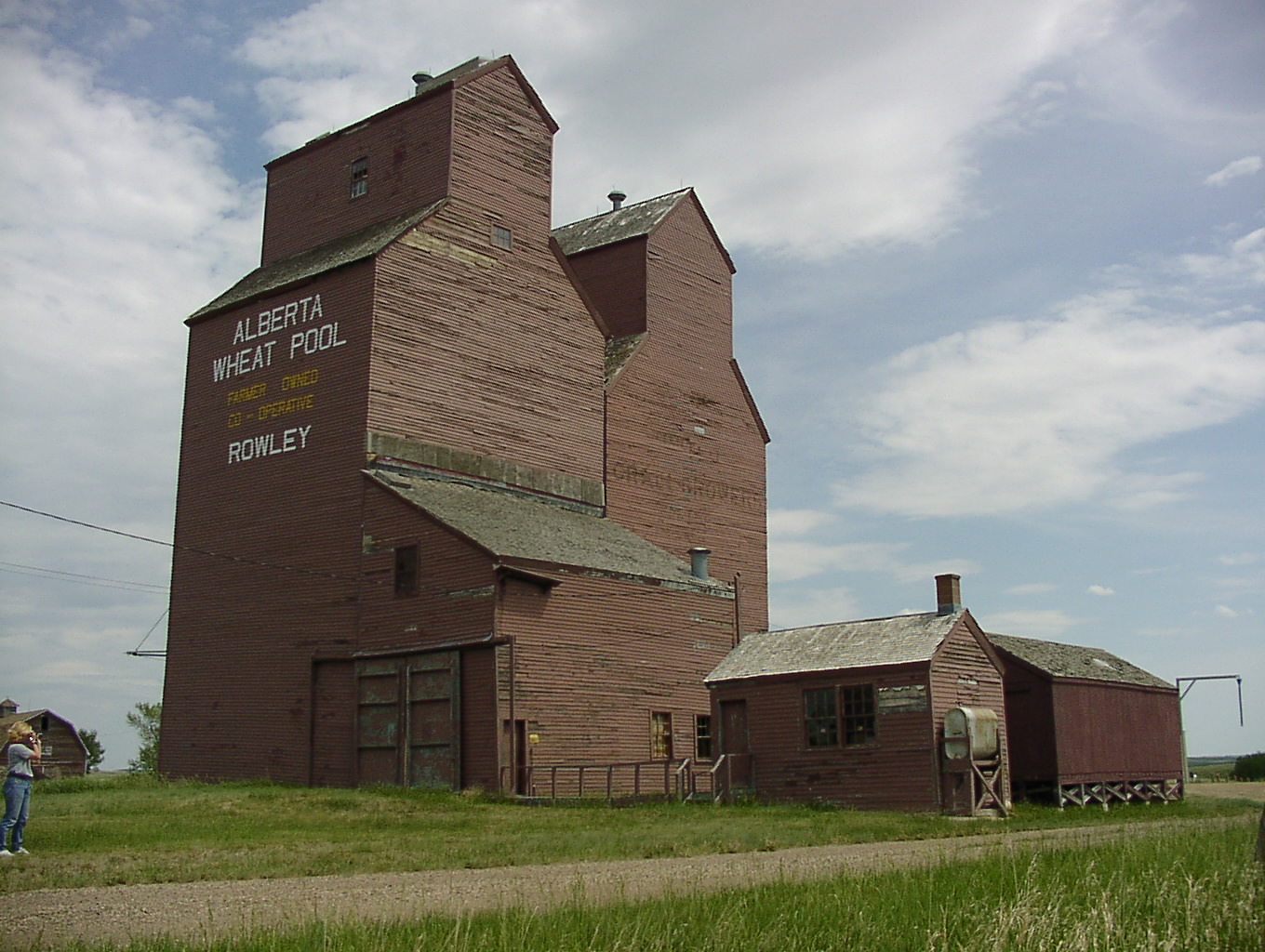
Rowley Grain Elevator Row

In the spring of 1909, Premier Rutherford of Alberta announced his government’s commitment to a vast program of railway expansion in Alberta.  To do this, the government offered to guarantee the bonds of major railway companies to the extent of $20,000 per mile of completed track.  Taking advantage of this, the Canadian Northern Railway decided to incorporate several subsidiary companies to undertake specific lines in Alberta.  One of these was the Alberta Midland, which was chartered by the provincial government in May 1909 to build a line from Vegreville south through Drumheller to Calgary.  One purpose was to open up new land for farming, another was to tap into the coal reserves around Drumheller which had hitherto been unavailable to the Canadian Northern or any of its subsidiaries.
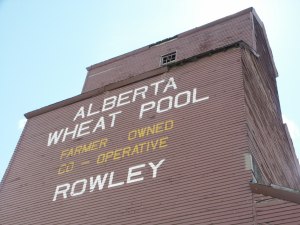
By the end of 1911, the Alberta Midland line was completed.  Along it, several stations were built.  One of these, 25 km north of Drumheller, was named Rowley, after the Manager of the Calgary branch of the Canadian Bank of Commerce.  The Bank itself had provided substantial backing to the Canadian Northern.  Behind the station, a townsite was subdivided, and, before long, a community evolved, the main purpose of which was to provide services to the surrounding hinterland where mixed farming was the staple economy.

It was essential therefore that Rowley be provided with grain elevators, and, in 1915, the first one was built by the Home Grain Company.  It was apparently not well constructed however, for, shortly after its completion, it collapsed.  Though rebuilt soon after, another mishap occurred when an annex burst, and, not long after that, the elevator burned down.  In the wake of these mishaps, two other elevators were built in 1917.  These were owned by the National Grain Company and the United Grain Growers.  The UGG had only recently been incorporated as a farmer-owned company, and it was a good time for it to build for, like most of the western prairies, the Rowley district was seeing high yields and much demand because the war in Europe was diverting the activities of farmers there to other matters.

The National and the UGG had a monopoly on the local grain export at Rowley until 1923, when the Searle Grain Company, formerly the Home Grain Company, decided erect another elevator on the site of their first one at Rowley.  At 40,000 bushels, this would be the biggest of the village’s three elevators.  It was an unusual time to build, for grain prices had recently collapsed in the wake of the post war overproduction of wheat.  Also, during 1919-20, both the Canadian Northern and the Grand Trunk Railways had been taken over by the federal government and consolidated into Canadian National.  This meant reduced services, and, in 1922, rail traffic between Vegreville and Drumheller were significantly reduced.
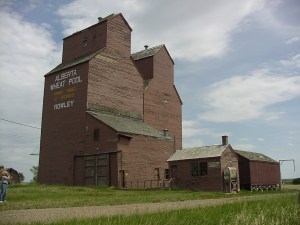
The three grain elevators in Rowley managed to survive however, and, in 1928, the UGG structure was acquired by the Alberta Wheat Pool.  Formed five years earlier, in the wake of plummeting grain prices, the Pool was a business concept advocated by UFA president Henry Wise Wood which saw farmers pool their wheat in a co-operative to ensure that no member would suffer unduly in times of stress.  Such stress occurred during the early 1930’s, when the price of #1 wheat fell to 32 cents a bushel and many farmers could not afford to ship out their wheat.  During the end of the decade however, with Great Britain gearing for war, the demand for wheat began to rise, and, with it, productivity on the Canadian prairies.  In 1940 therefore, the Wheat Pool decided to twin its elevator in Rowley with a new 40,000 bushel structure.

The three grain elevators at Rowley continued to serve the district long after the war.  In 1967, the Searle elevator was sold to the Federal Grain Company, and, in 1972, to the Wheat Pool, which then owned all three elevators.  In 1989 however, the CN line between Rowley and Morrin was closed down, and farmers soon began trucking their grain to Morrin or elsewhere.  The elevators therefore were closed also.  They remained standing however, and, in recent years, have been acquired by the Rowley Community Hall Association which is seeking to preserve them.

In June 2010, the grain elevators in Rowley were designated a Provincial Historic Resource.  Their historical significance lies in their representation of the major economy of Alberta for most of the 20th century, the growth and export of grain, and mainly wheat.  They are also important as landmarks in Rowley, providing structural evidence of the community dating back to 1917, when the district was prospering.  The first elevator represents the main source of that prosperity, and the three of them the economy of the district in the years that followed.    

Written by: David Leonard, Historian

Click here for statistics on remaining grain elevators in Alberta.

Visit the Alberta Register of Historic Places to learn more about the heritage value of the Rowley Grain Elevator Row. In order for a site to be designated a Provincial Historic Resource, it must possess province-wide significance. To properly assess the historic importance of a resource, a historian crafts a context document that situates a resource within its time and place and compares it to similar resources in other parts of the province. This allows staff to determine the importance of a resource to a particular theme, time, and place. Above, is some of the historical information used in the evaluation of the Rowley Grain Elevator Row.


Alberta’s Culture – What do you think?

On February 24 and 25, 2012 Culture and Community Services hosted Culture Forum 2012. Nearly 400 delegates from all corners of Alberta (representing a cross-section of heritage, arts, creative industry, multicultural, non-profit/voluntary, and corporate organizations) converged on Red Deer College and discussed Alberta’s cultural future. The event featured a dynamic opening ceremony of performances and Pecha Kucha presentations, along with 18 concurrent workshops. For discussion highlights, please click here.

Missed the event? Have opinions on the development of Alberta’s culture? Share your thoughts – the Government of Alberta is seeking input from the public through an online survey. Help the Government enhance Albertans’ quality of life – your quality of life! Provide feedback on your desired priorities. Share your ideas for the heritage, arts, creative industry, multicultural and nonprofit/voluntary sectors. Illustrate which ingredients are necessary for a healthy and sustainable culture. Note: The online survey is only available until March 28, 2012.

Please, forward this invitation to all individuals and organizations that may want to participate in determining Alberta’s cultural future.

Written by: Brenda Manweiler, Municipal Heritage Services Officer

Alberta’s Wooden Country Grain Elevators

In February one of our Facebook fans asked how many grain elevators still stand on the Alberta horizon. Dorothy Field, our Heritage Survey Program Coordinator has compiled some statistics.

The twentieth century saw the rise and fall – literally – of the wooden country grain elevator in Alberta. As rail lines spread across the province, grain elevators sprouted like mushrooms after a spring rain. The high water mark for wooden country grain elevators was in 1934. New elevators were added in every decade, but this has been exceeded by the rate of demolition or closure ever since. Check out the following “index” of Alberta’s wooden country elevators, called “elevators” for short in this list.

Rowley Grain Elevator Row, Provincial Historic Resource

Number of elevators in Alberta:

  • in 1934:  1,781
  • in 1951:  1,651
  • in 1982:  979
  • in 1997: 327
  • in 2005: 156
  • in 2012 on railway rights-of-way:  130

Number of communities with:

  • at least one elevator:  95
  • 2 or more elevators:  26
  • 3 or more elevators:  7
  • 4 or more elevators:  1 (Warner)
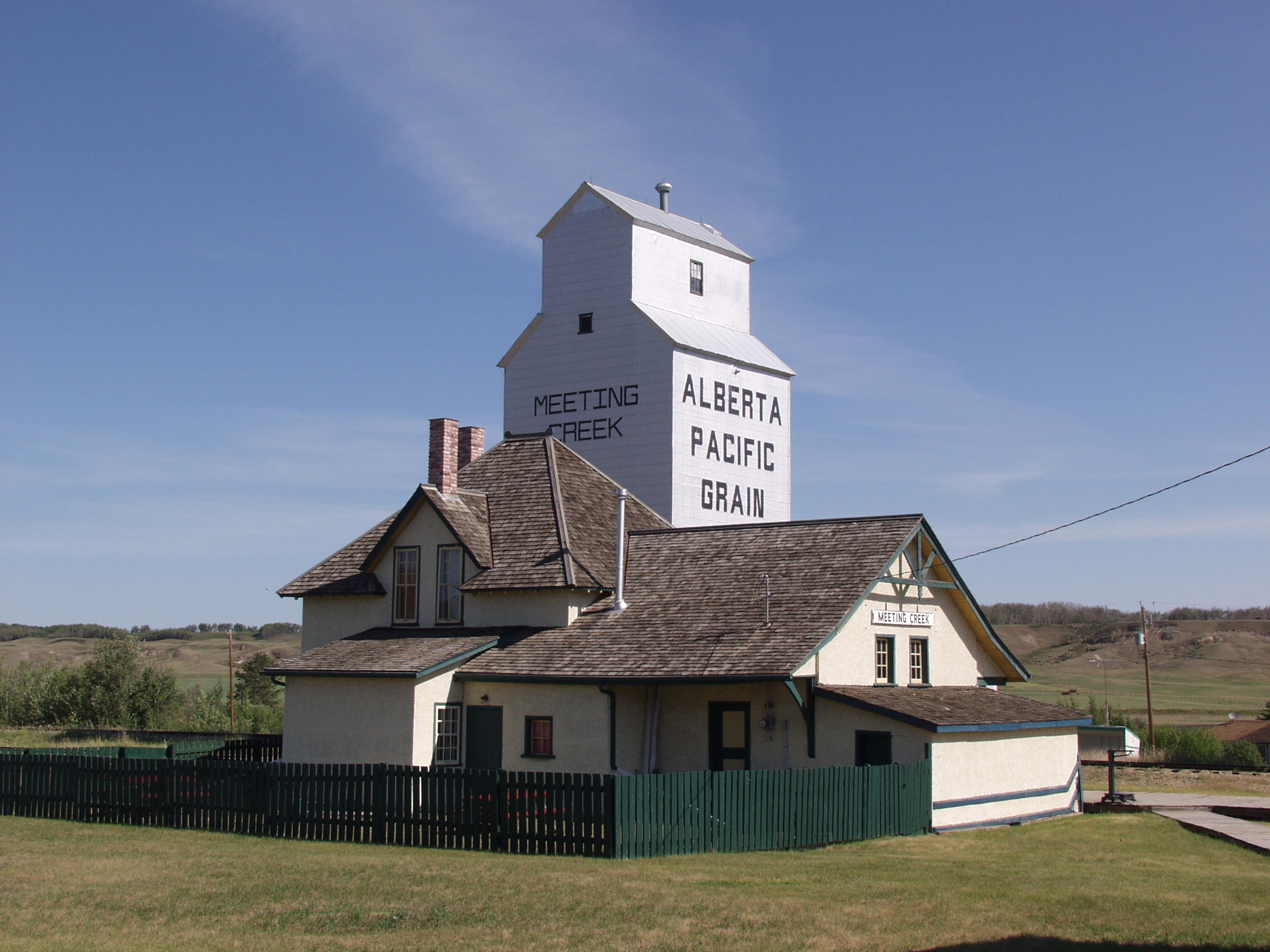
Alberta Pacific Grain Elevator Site Complex, Meeting Creek, Provincial Historic Resource

Additional statistics:

  • Number of elevators in Alberta’s longest row:  6
  • Oldest remaining elevator: 1905 (Raley)
  • Number of remaining elevators that pre-date 1910:  3 (Raley, St. Albert, De Winton)
  • Newest remaining elevator: 1988 (Woodgrove)
  • Decade with the largest number of surviving elevators:  1920s (33)
  • Decade with the second largest number of surviving elevators:  1980s (26)
  • Decade with the fewest (after pre-1910) number of surviving elevators:  1940s (5)
  • Number of elevators that have been designated a Provincial Historic Resource (PHR):  13
  • Number of communities with at least one elevator designated as a PHR:  10
  • Oldest designated elevator: 1906 (St. Albert)
  • Newest designated elevator:  Leduc (1978)
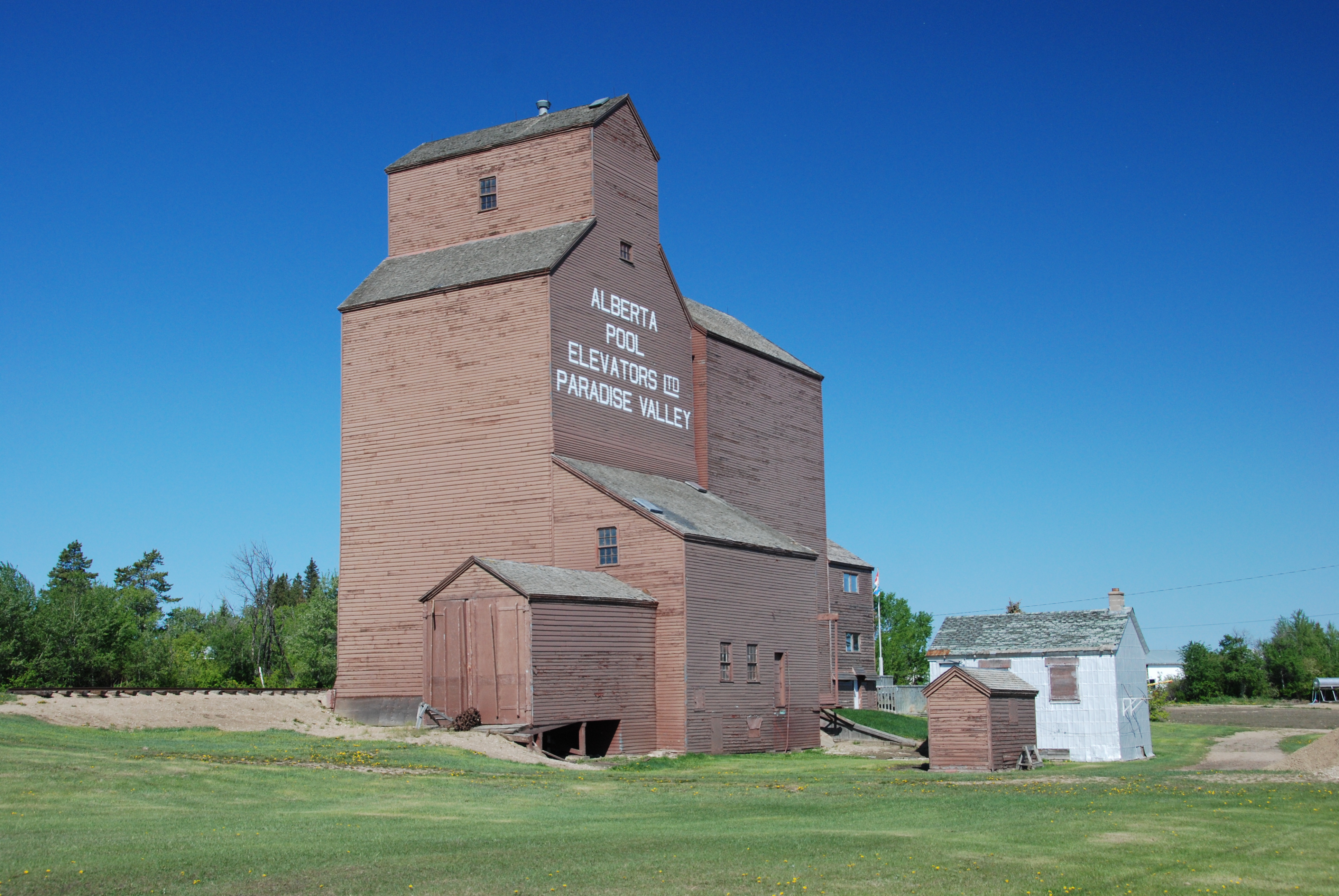
Alberta Wheat Pool Grain Elevator, Paradise Valley, Provincial Historic Resource

For a list of communities in Alberta with designated and non-designated elevators, please click here.

Please Note:

  • Grain elevators that have been moved off railway rights-of-way – to a farmyard or a museum, for instance – are not included in these statistics.
  • Grain elevators located on railway rights-of-way where the rails have been torn up are included in these statistics.
  • Concrete or steel elevators are not included.
  • Elevators used for other purposes, such as seed cleaning or fertilizer storage, are not included.
  • Most of these elevators were last documented by the Heritage Survey in 2005. It is possible that some of the elevators on the list are now gone.

Additional Information:

Written by: Dorothy Field, Heritage Survey Program Coordinator

I Defend Heritage. Literally! …Who am I?

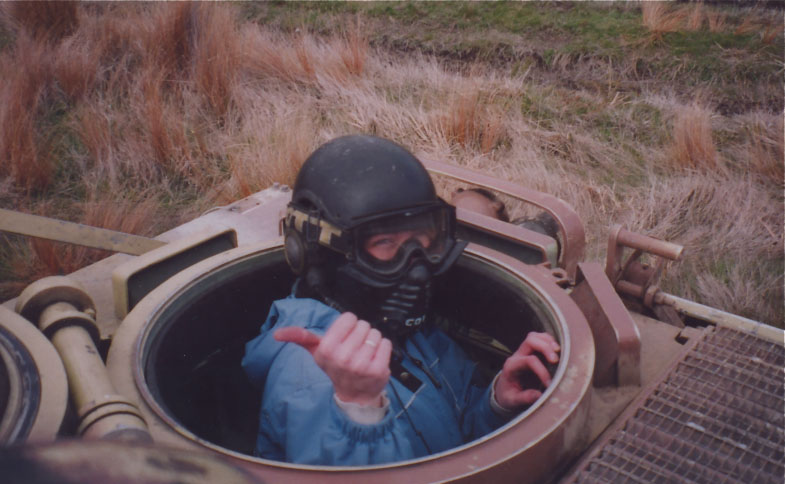
Well, not literally! Though I have driven an armoured personnel carrier while employed by a museum, I do not make a habit of using military force to ensure heritage is protected. Who am I? My name is Brenda Manweiler and like my colleagues (Carlo Laforge, Michael Thome and Ron Kelland) who have posted brief biographies, this post will introduce ME!

For those of you who do not know me, I work as a Municipal Heritage Services Officer for the Historic Places Stewardship Section of Alberta Culture and Community Services. I provide guidance, support and training to municipalities in all corners of Alberta so that successful local heritage conservation programs may contribute to the liveability and vitality of Alberta’s communities (check out our website: Municipal Heritage Partnership Program). As well, I administer this blog and coordinate content for our Facebook page and Twitter feed. Between blog posts and business trips I revel in how fortunate I am to be employed in a field that I am passionate about and how great it is that I get to travel throughout this beautiful province.

But what did I do before I landed this gig? The short of it is that I worked in heritage for the federal government, another province, an international museum, and also for municipalities and non-for-profit organizations – but the long of it? Well… for fifteen years I have been working to protect heritage (in one form or another). In 1997 I accepted my very first heritage job as a summer student at the Maple Ridge Museum – I was hooked! As a born and raised Maple Ridge, British Columbia resident (Maple Ridgian?), who was fascinated by history and “old things” since childhood, working at the Maple Ridge Museum was like a dream come true. During summers off from completing a Bachelor of Arts degree in Art History from the University of Victoria, I worked at a number of Vancouver-area museums (i.e. Pitt Meadows Museum, New Westminster Museum and Archives). After completing my BA I was fortunate to find continued employment in the heritage field. I worked at the Langley Centennial Museum, the BC Farm Machinery and Agricultural Museum and the Surrey Museum and Archives. At these community museums I completed a range of collections management projects or administered education programs for young children.  …Yes, I know how to churn butter, do laundry with a scrub board and complete “heritage” crafts. (Hmmm…I can also drive tractors! You never know what you will learn while working at a museum!!)

When presented with an internship opportunity at the National Army Museum in Waiouru, New Zealand, I could not say no. For six months I worked as the Assistant Curator of their Social History Collection. As a civilian within a military environment I was able to take advantage of many unique opportunities – yes, I really did drive an armoured personnel carrier, and yes, I also successfully completed a civilian version of a firearms qualification exam. Despite all this training, and “Officer” being part of my current job title, let me repeat myself – I do not use (or condone) military force to ensure heritage is protected!  🙂

Upon returning to civilian life, I decided it was time for another return – I went back to school! I completed a master’s degree in Canadian Studies (with a specialization in Heritage Conservation) from Carleton University. While studying in Ottawa I also worked part-time for the City of Ottawa as a Commemorations Coordinator – have you ever tried to complete an inventory of ALL the commemorations in a city of nearly one million people, and the nation’s capital at that? After graduating did I then settle down and obtain my current job? Nope. I spent some time working for the Province of British Columbia’s Heritage Branch as a Community Heritage Officer (very similar to my current job) and then returned to Ottawa for a couple years and worked for the Parks Canada Agency with their Historic Places Program Unit (a.k.a. Canadian Register of Historic Places).

Bouncing back and forth across the country confirmed for me that home is in western Canada. I have been living in Alberta (Edmonton) for the past two and half years (ever since starting my current job as Municipal Heritage Services Officer) and am very pleased to be here. Alberta is beautiful, diverse and rich in heritage!

My career path, thus far, has taken me from conserving a community’s artefacts to helping conserve communities and their significant places. The focus of these approaches may be quite different, but the common threads of community identity, connection to place and community passion is what makes it so pleasurable to work within the heritage field. When not working I train to be a life-long athlete. My sport? Living a healthy and active life. I run, bike, do yoga and enjoy most all other athletic pursuits that involve spending time outside (when it is not -30). Photography is also an interest of mine so a camera bag is often slung over my shoulder. Driving home to BC each summer and photographing mountains has proven to be one of my annual highlights.

But enough about me! Regularly scheduled programming (a post about historic places) will resume shortly. If you have any questions about the Municipal Heritage Partnership Program or other programs offered through the Historic Places Stewardship Section please post a comment below and I will ensure that the appropriate colleague responds.

Cheers,

Brenda