Christmas at Dunvegan

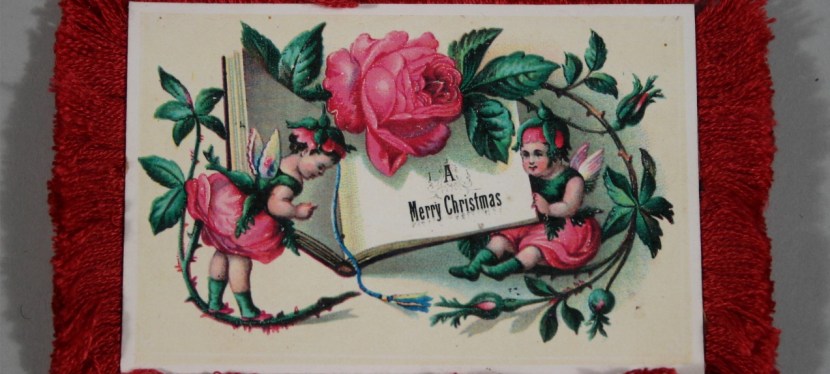
What makes your holiday season complete? Is it fruit cake, latkes or bannock? Lighting a menorah, Christmas tree or a kinara? How old or new are the traditions you participate in? Where did they originate?

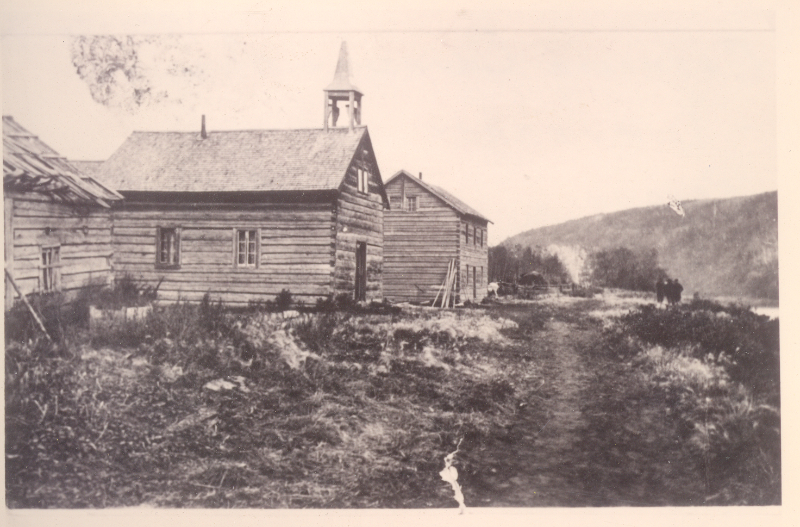
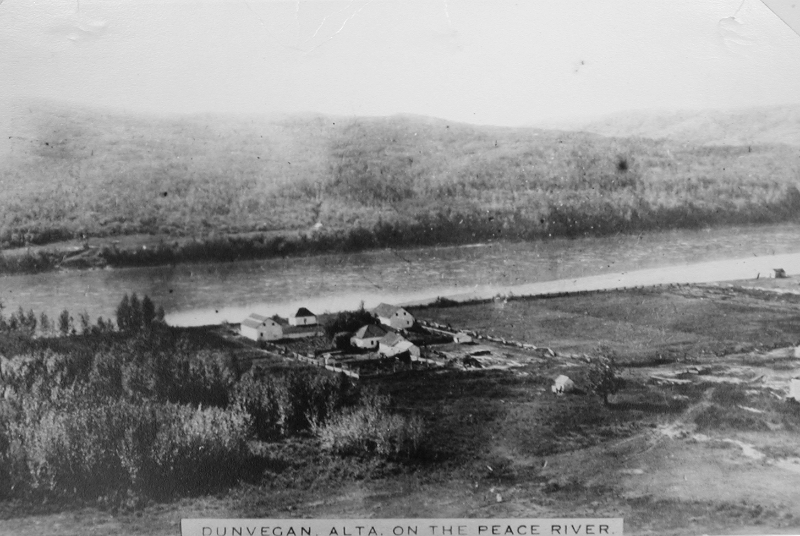
The Beaver people who first inhabited the areas bordering the Peace River have been gathering at Dunvegan for thousands of years. Like other Indigenous peoples, before the arrival of the fur traders and missionaries, it’s possible they may have celebrated the Winter Solstice while camping in the area.

When Northwest Company fur traders arrived in 1805 and established Fort Dunvegan, they brought with them the customs of European Christians, particularly those of the Scots. You’ve probably heard of Kwanzaa, but have you ever heard of Hogmanay? In Scotland, Christmas was celebrated quietly, while Hogmanay or New Year’s Eve, was well…a party! Being as many fur traders originally hailed from Scotland, those traditions came with them over to what is now known as Canada.

Indeed, this is reflected in the journals left by the men in charge at Fort Dunvegan through the 1800s. In some cases, Christmas isn’t even mentioned at all on December 25. When it is mentioned it’s often to say that nothing of importance happened. But every entry that was made on January 1 (at least between 1822 and 1844) mentions everyone gathering at the fort for their usual treat of a ration from the store. This included gifts of tobacco, rum, meat or biscuits. Even lime juice has been mentioned as a special treat given to visitors.

Read more

Designation and protection: 50 years of the Historical Resources Act (Part 2)

Editor’s note: Catch up with part one of 50 years of the Historical Resources Act. The banner image above is courtesy of the Royal Alberta Museum.

Written by: Valerie Knaga, Indigenous Heritage Section, Ronald Kelland, Historic Places Research Officer and Fraser Shaw, Heritage Conservation Adviser, Southern Region

Indigenous heritage

Indigenous heritage has existed long before Indigenous Peoples had first contact with European settlers, long before the establishment of Alberta as a province in 1905 and long before the Historical Resources Act was enacted. While Indigenous people have been subject to legislation and policies that sought to undermine their connection to their culture and heritage, they have retained a powerful connection to their historic places and the rich repository of cultural meaning they embody. While Indigenous heritage was not explicitly referenced in Alberta’s Historical Resources Act when it was passed in the 1970s, the Act has played a key role in helping to preserve Indigenous heritage sites. That is not to say that some Indigenous voices were not present during the development of this legislation.  The Public Advisory Committee on the Conservation of Archaeological and Historical Resources which advised on the creation of the legislation included representative Chief John Snow and one of the briefs presented at the public hearings was from Allan J. Wolf Leg of the Calgary Native Development Society. 

A historic settlement site south near Muskwa Lake was documented in February 2020 during field work with Bigstone Cree Nation. Source: Laura Golebiowski.
Read more

Designation and protection: 50 years of the Historical Resources Act (Part 1)

Editor’s note: The banner image above is courtesy of the Royal Alberta Museum.

Written by: Todd Kristensen, Archaeological Survey of Alberta and Dan Spivak, Head, Resource Management Program, Royal Tyrrell Museum of Palaeontology

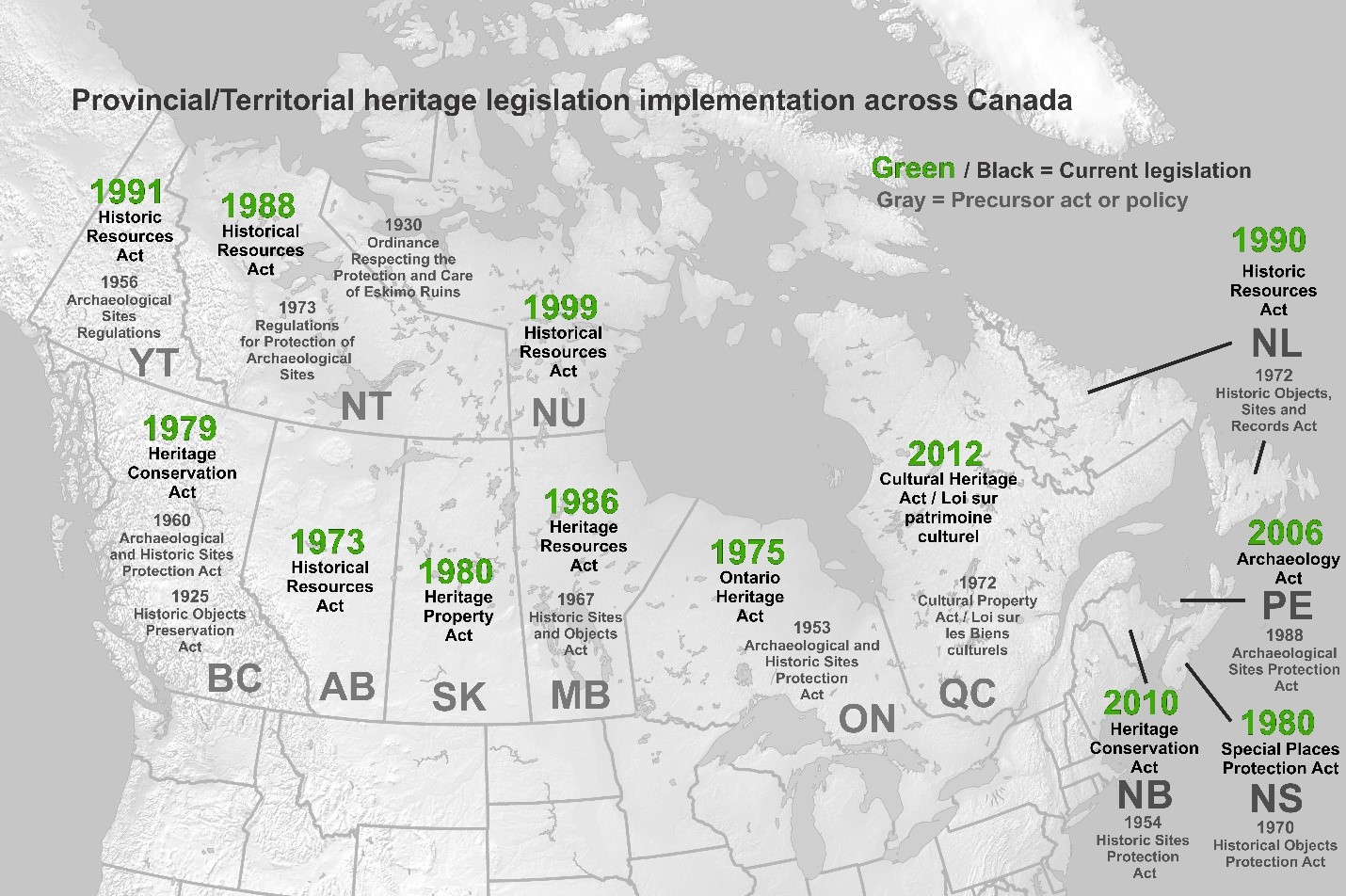
This year, the Historical Resources Act (HRA or the Act) in Alberta celebrates its 50th anniversary. When it was passed in 1973, the Act provided a range of tools to manage historic resources across the province. This now includes archaeological sites, historic buildings, Indigenous traditional use sites of an historic character and palaeontological sites. It was a landmark achievement on a national scale because it stimulated the first stand-alone provincial department whose purpose was to ensure site protection during industrial development. Since inception, the Act has led to the documentation of over 42,000 archaeological sites, 110,000 historic structures, 7,200 palaeontological sites and 2,400 historical Indigenous traditional use sites. While the goals of heritage management in Alberta have evolved along with the Act, it continues to protect the past.

To recognize this milestone, RETROactive contributors will look at the legacy of the Act in managing historic resource sites, including archaeological, palaeontological, historic building and Indigenous traditional use sites. They will also explore the role of the Act in establishing the names of geographical locations across the province.

A map of heritage legislation and preceding acts or policies across Canada. Source: Todd Kristensen.
Read more

Archaeology on the Brink: The Occasional Paper Series in 2023 (Part 2)

Editor’s note: The Archaeological Survey of Alberta is proud to release the complete volume of Occasional Paper Series No. 42, available for free download. The volume is dedicated to Alberta archaeologist Jack Brink and the initial blog featured the first five articles. This post features the remaining seven articles, which focus on a variety of archaeological topics.

Written by: Todd Kristensen, Archaeological Survey of Alberta

In the sixth paper of the volume, staff of Lifeways of Canada Limited summarize three seasons of excavation at an important archaeological site in southern Alberta. The Junction Site has produced a number of interesting pit features associated with Late Precontact Period bison kills, processing areas and winter camp activities.   

    A boiling pit feature and profile from the Junction Site. Source: Vivian and Blakey, 2023.
    Read more

    Archaeology on the Brink: The Occasional Paper Series in 2023 (Part 1)

    Editor’s note: The Archaeological Survey of Alberta is proud to release the complete volume of Occasional Paper Series No. 42, available for free download.

    Written by: Todd Kristensen, Archaeological Survey of Alberta

    Archaeology on the Brink: Papers in Honour of John W. Brink

    Cover of the 2023 Occasional Paper Series. Artwork by Shannon Ford.

    Unlike previous volumes, in which papers are published and released throughout the year, the current volume is based on an archaeology conference session dedicated to the widely respected Alberta archaeologist Jack Brink, and all articles are here released concurrently. This blog features five articles (out of 12 in the issue) that focus on archaeological work at the famous Head-Smashed-In Buffalo Jump UNESCO World Heritage Site in southern Alberta. The rest of the 12 articles will be published next week.

    Read more

    Métis Week 2023

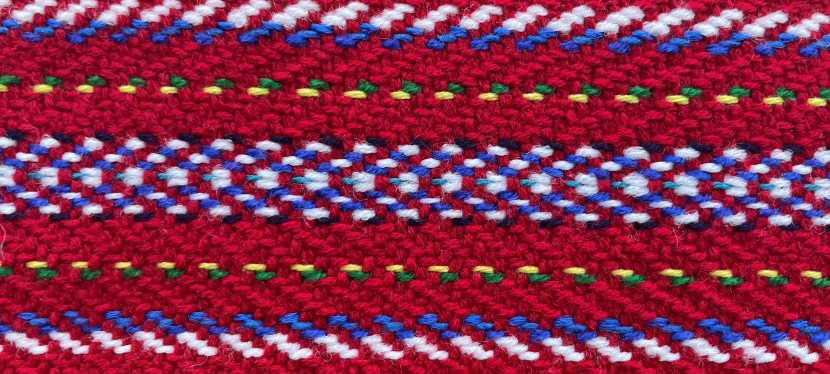
    Editor’s note: Banner image of a Métis sash courtesy of Laura Golebiowski.

    Written by: Laura Golebiowski, Indigenous Consultation Advisor

    On November 16, 1885, Métis leader and Manitoba founder the Right Honourable Louis Riel was executed in Saskatchewan, after he was charged with six counts of high treason. Now, annually, Albertans are invited to mark the sombre anniversary of Riel’s death and recognize the broader histories, sacrifices and accomplishments of the Métis Peoples. This year, Métis Week takes place November 12 – 18, 2023.

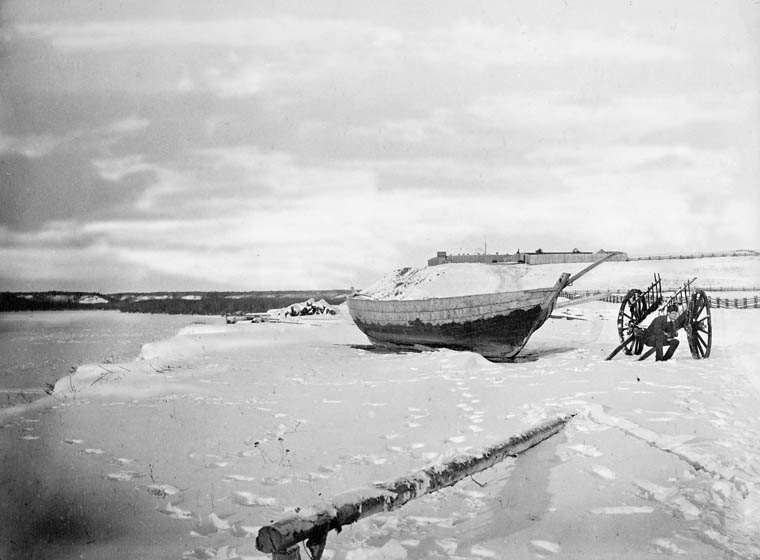
    Canadian Pacific Railway Survey. Fort Edmonton, from point below the Wesleyan Mission, December 1871. The York boat and red river cart, both pictured, are important historical contributions and symbols of Métis material culture. Source: Charles Horetzky/Library and Archives Canada/e011183607-v8.

    Youth, educators and the general public are encouraged to further their learning through Rupertsland Centre for Teaching and Learning resources, which include live online events most days of Métis Week. The live program includes jigging, red river cart stories and Michif language learning—in addition to the interactive resources, printables and videos accessible year-round.

    The St. Albert-Sturgeon County Métis Local and the City of St. Albert will be holding a flag raising and proclamation ceremony on November 16 at 2:00pm at St. Albert place. On November 13, Métis Week opening ceremony activities will take place at Calgary City Hall all morning and early afternoon.

    Visit the Métis Nation of Alberta or the Métis Settlements General Council (did you know that the eight Alberta Métis Settlements are the only collectively-held Métis land base in Canada?) websites to learn more about Métis heritage, contemporary initiatives and cultural events held throughout the year.

    If your community has a Métis Week 2023 event you’d like us to know about, please leave a comment with the details.

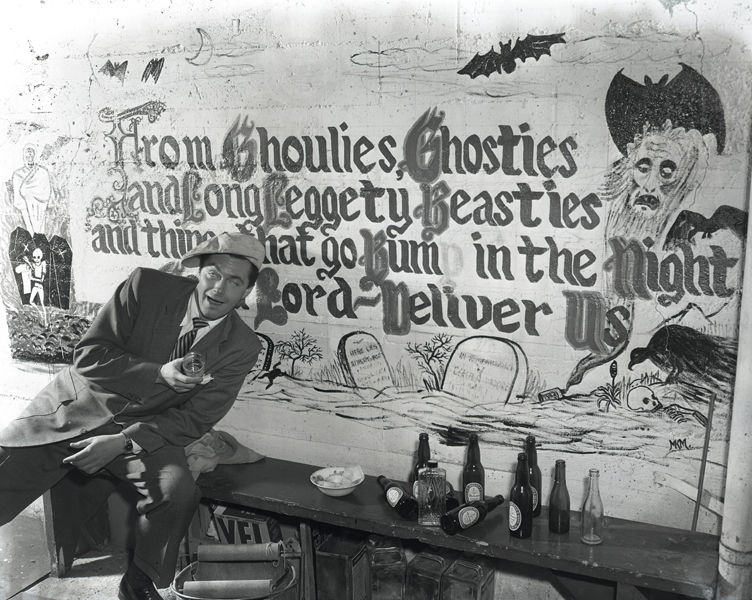
    From Ghoulies, Ghosties and Long Leggety Beasties

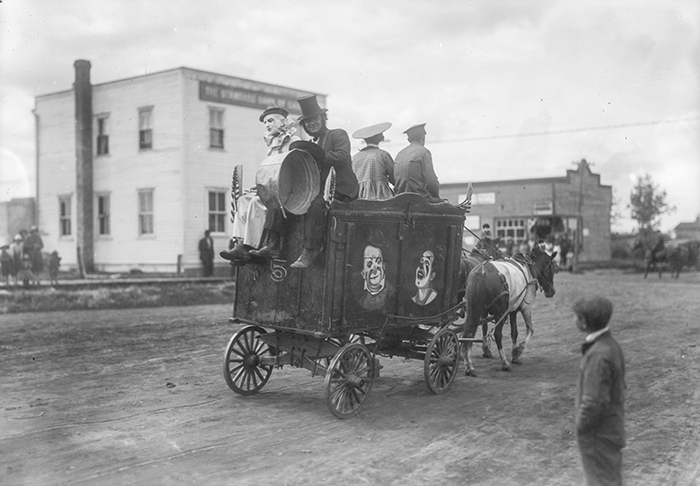
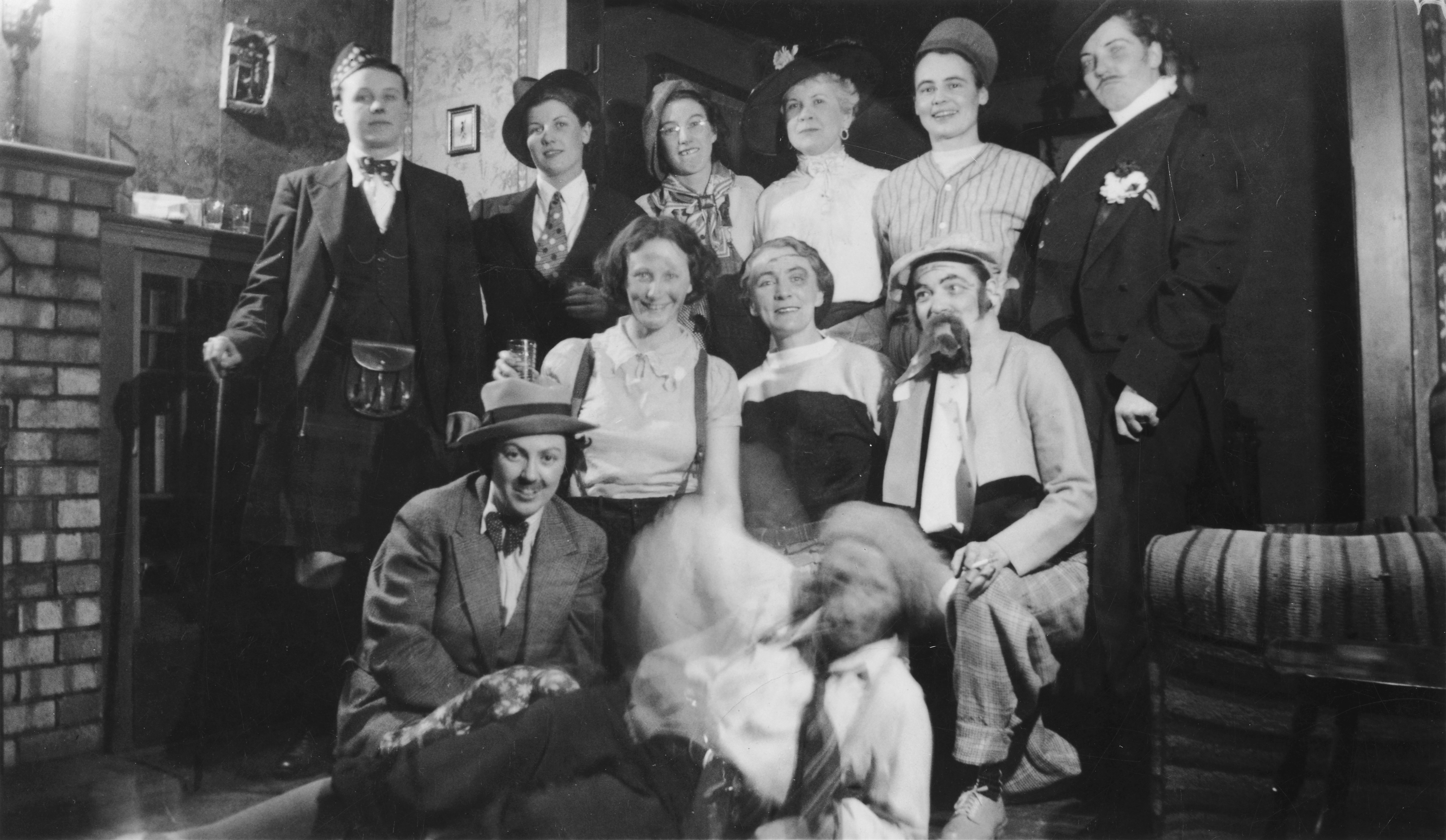
    On behalf of everyone at RETROactive, have a safe, fun and spooky Halloween! Take a look below at how Albertans celebrated the occasion decades ago. All images courtesy of the Provincial Archives of Alberta.

    Traveling Circus Comes to Smoky Lake c. 1927.
    Theatre College Saint-Jean, Edmonton, [c. 194?].
    Halloween Party, Wainwright [c. 192?].
    Braemar Badminton Club Opening Tea, Edmonton, Nov. 8, 1953.

    New issue from Alberta’s Occasional Paper Series now available

    Written by: RETROactive staff

    Issue 41 of Alberta’s Occasional Paper Series is now available online at the Archaeological Survey of Alberta publications page. Readers can download a free copy of the complete issue (focused on archaeology in Western Canada’s Boreal Forest) or peruse individual papers about: forestry-based CRM archaeology, ground stone tools in northeast BC, early sites in Alberta’s Boreal Forest (e.g., Clovis and Scottsbluff), the use of GIS to monitor impacts and identify landforms, fur trade archaeology and radiocarbon dates to inform population estimates in the Boreal Forest. 

    How to sell the Prairies: photography at the Glenbow Library and Archives

    Editor’s note: The banner image above is courtesy of the Glenbow Library and Archives Collection, Libraries and Cultural Resources Digital Collections, University of Calgary

    Written by: Sara Bohuch, BA Archaeology (Simon Fraser University) , MSc Conservation Practice (Cardiff University)

    At the turn of the 20th century, the government of Canada continued to look for ways to convince people to move to the country and transform the land there into profitable resources. The government tried many different strategies to achieve this over the years, and some of the more successful tactics were old-fashioned advertising campaigns. Polished ads were produced that depicted Canada (and the prairies within it) as the best sort of fresh start, with bountiful potential and the opportunity to forge your own community.

    However, for many prospective immigrants, Canada was not exactly the landscape as advertised. It was not a vast empty expanse rich with resources, as many of the campaigns described. It seemed that the numerous harsh realities of making a living on the prairies were quietly glossed over by the various advertisements.

    So how do you sell the Prairies in particular, over other parts of Canada?

    In the early 1800’s the propaganda campaign of the “Glorious Canadian West” was accompanied by artwork and slogans depicting bustling communities and vast farmland. During the latter half of the century, the invention of the camera upgraded the medium of the message, though the imagery stayed similar. The new technology offered a way to capture the “truth” of a place and was able to communicate that truth to an increasingly wider audience quickly.

    One of the most well-known providers of such promotional material for the government was the Canadian Pacific Railway (CPR). The CPR began to use photography to document the Canadian landscape in the late 1880s and continued with its usage well into the 20th century. They used the images captured by their photographers to promote not only a certain image of the country, but also their own operations within Canada.

    In the Glenbow’s Archives and Special Collections there is a series of these types of photographs, dating from the 1900s and documenting the landscape around the Albertan line. Even knowing the history and reason that these photos were taken in the first place, it is still undeniable that these early photographers were very good at what they did. The images that were captured showcased an Albertan landscape bursting with natural beauty and bountiful acres of farmland.

    All images courtesy of the Glenbow Library and Archives Collection, Libraries and Cultural Resources Digital Collections, University of Calgary.

    Click the link below to view the gallery.

    Read more

    National Day for Truth and Reconciliation: Remembering Emma Stanley

    Editor’s note: September 30 is National Day for Truth and Reconciliation and Orange Shirt Day. Reading residential school histories can be a painful process. If reading this is causing pain or bringing back distressing memories, please call the Indian Residential Schools Crisis Line at 1-866-925-4419. The Crisis Line is available 24 hours a day and can also provide information on other health supports provided by the Health Canada Indian Residential Schools Resolution Health Support Program.

    Written by: Laura Golebiowski (Indigenous Consultation Adviser) in collaboration with Whitefish Lake First Nation #128.

    Emma Stanley was born in 1886, in the area known today as Whitefish Lake in northeastern Alberta. Her mother was Eliza and her father was Cheepo-Koot, or Charles. She had at least two sisters. The last name Stanley was assigned to Indigenous families upon christening by the Methodist ministers of time. These assigned names are still known and common in the community today.

    Emma and her family were members of James Seenum’s Band, contemporarily known as Whitefish Lake First Nation #128. Their leader was Chief Pakan, or James Seenum: “a very forceful and highly respected figure.” When the Nation signed Treaty Six, Cheepo-Koot was selected as one of three Councillors.  

    In the years and decades prior to Emma’s birth, James Seenum’s Band members lived by the Cree seasonal round, which influenced their hunting, fishing, agricultural and travel practices. “In the spring-time, after the potatoes and turnips were planted, [the people] went south on their buffalo hunt, leaving the missionary and a few of the older people at home to look after the place and anything that had to be done. They would travel till they came to the buffalo range. After a good day’s hunt there was lots to do, such as curing the meat so it would keep. The surprising thing was that there was no such thing as flies to bother the fresh meat.”

    “James Seenum, Pakan, and family at Whitefish Lake reserve, Alberta,” ca early 1900s. (CU194507) by unknown photographer. Source: Glenbow Library and Archives Collection, Libraries and Cultural Resources Digital Collections, University of Calgary.
    Read more