The Burmis Tree: The Most Photographed Tree in Alberta?

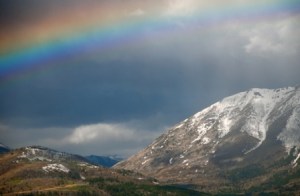
At the end of April when travelling in southern Alberta on business I had time to visit the Frank Slide Interpretive Centre (to read about my visit, click here). While driving to Frank I turned through a bend in the road to suddenly find myself in front of a snow-capped mountain framed by a beautiful rainbow! The shutter-bug in me could not resist the temptation. With camera in hand I trundled out of my vehicle to take some photos. But wait, this blog post is not about mountain views and rainbows…

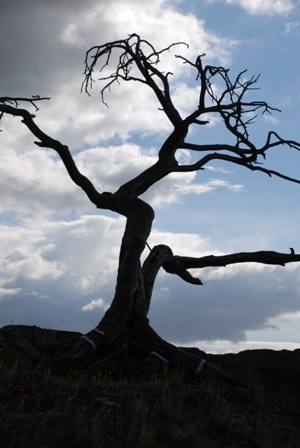
Upon turning my back on the rainbow to return to my vehicle, I discovered another beautiful site – the Burmis Tree! The Burmis Tree is a limber pine that marks the eastern edge of the Crowsnest Pass. Limber trees have one of the longest life spans of any tree in Alberta and are known for their ability to thrive in harsh conditions. As a standing testament to these facts, the Burmis Tree lived for approximately 700 years. It died in the late 1970’s but remained standing until 1998 when high winds toppled it over. The community, which regarded the tree as a significant landmark, refused to simply leave it. Rods and brackets were used to support the tree. To this day it still stands as a landmark, acting as a welcome sign to visitors of the Crowsnest Pass and as a symbol of home for area residents.

The leafless, gnarled tree simply needed to be photographed (if you are also a shutter-bug you will understand). As I explored the area photographing the tree from different angles, I next stumbled upon one of the heritage markers erected by the Government of Alberta and the Alberta Historical Resources Foundation. You have all probably seen them – large blue signs located at highway rest areas or points of interest throughout Alberta. These interpretive signs tell of Alberta’s rich heritage. This sign provides context for the Burmis Tree.

Assuming that the Burmis Tree is perhaps one of the most photographed trees in all of Alberta, I did a quick search on Flickr. Check out some of the photos. 

Do you have a photo of the Burmis Tree that you would like to share with readers of RETROactive? If so, email it to me at albertahistoricplaces@gov.ab.ca by June 10, 2012 with a completed copy of the Government of Alberta’s Photograph, Video, Name and Quotation Release Form. A future blog post will feature the submissions.

 Written by: Brenda Manweiler, Municipal Heritage Services Officer

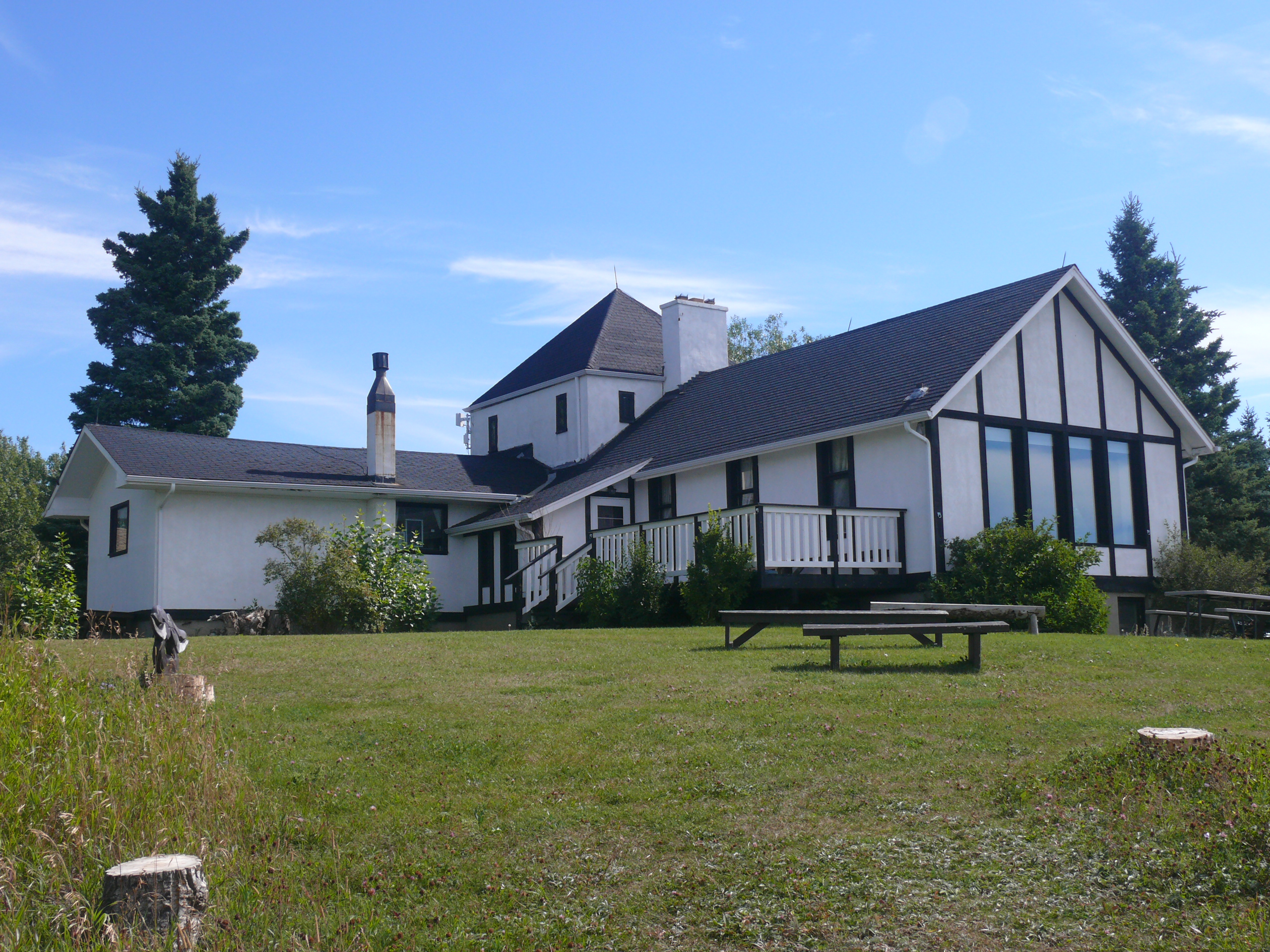
Leighton House and Art Centre

Leighton House and Art Centre

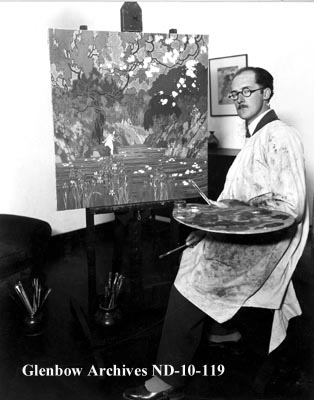
Two of the most influential individuals in the history of painting in Alberta were Barbara and Alfred Crocker Leighton.  Alfred was born in Hastings, England in October 1901.  He attended the Hastings Grammar School, and the Hastings Municipal School of Art, where he studied architecture.  He served with the Royal Flying Corps in World War I, and was severely injured after a crash.  Following the war, he began to paint landscape scenes and was encouraged to submit his work to the Royal Society of British Artists.  He became influenced by the Arts and Crafts movement, established earlier by William Morris, and his paintings in this genre began to draw attention in the early 1920s.

Alfred Leighton

In 1924, the Canadian Pacific Railway commissioned Leighton to do paintings about the western Canadian landscape in order to attract potential immigrant farmers.  In 1925, he was sent out to paint the scenic Canadian Rockies.  He produced paintings exclusively for the CPR until 1929 when he resigned and accepted the position of Director of Art for the Southern Alberta Institute of Technology and Art, a position he held until 1935 when he was forced to return to Britain due to ill health with his wife, Barbara (Harvey), an art student whom he had married in 1931.  Barbara was born in 1909 in Plymouth, and would become a direct associate in all of Alfred’s undertakings.

While at the SAIT, Alfred Leighton had been instrumental in founding the Alberta Society of Artists.  In 1933, he established a summer school in the Kananaskis which was the precursor to the Banff School of Fine Arts.  Upon returning to Canada in 1938, he resigned from SAIT and moved with Barbara to southern British Columbia.  Here he tried farming in Chilliwack, but soon moved to Crescent Beach, where he and Barbara did commercial art work.

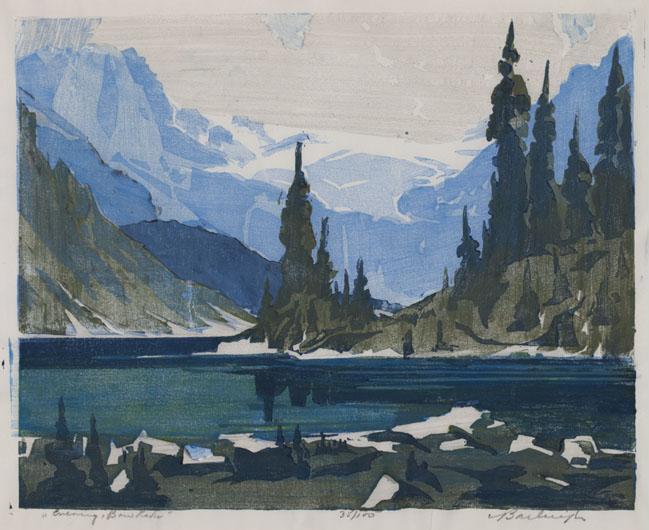
Leighton, Barbara. Evening, Bow Lake. Printmaking, woodcut. Alberta Foundation for the Arts.

In 1952, the Leightons purchased an acreage near Millarville where they designed and built a one-room dwelling with the idea of having it serve as a art studio, with adjoining rooms to be added later.  It was named Ballihamish after the school district of which it was a part.  The structure was designed in the form of a cross, which allowed painters to focus on different perspectives of the Millarville Valley and Rocky Mountains at different times of the season.  It was completed over the course of many years, with the inheritance from Arthur Leighton’s father in 1960 being a major contributing factor.

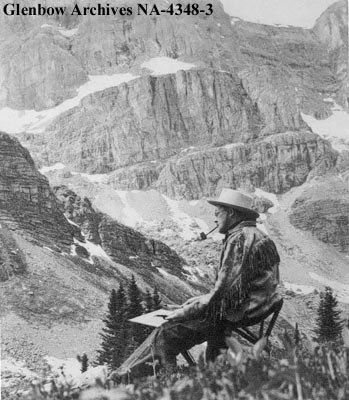
Alfred Leighton painting in mountains.

Following Alfred Leighton’s death in 1965, Barbara Leighton established the Leighton Center for Arts and Crafts, which was officially opened in November, 1970.  The 1928 Billihamish School was also brought in to become part of the complex.  In 1974, she established the Leighton Foundation for the encouragement of art, and an arts and crafts center for all people to engage in landscape painting.  The Foundation is currently housed in the Leighton Art Centre, which includes a museum, art gallery, and educational programming.

In May 2009, the Leighton House and Art Centre was designated a Provincial Historic Resource.  Its historical significance lies primarily in its direct association with Alfred and Barbara Leighton, two of the most influential people in the history of art in Alberta.

Written by: David Leonard, Historian

________

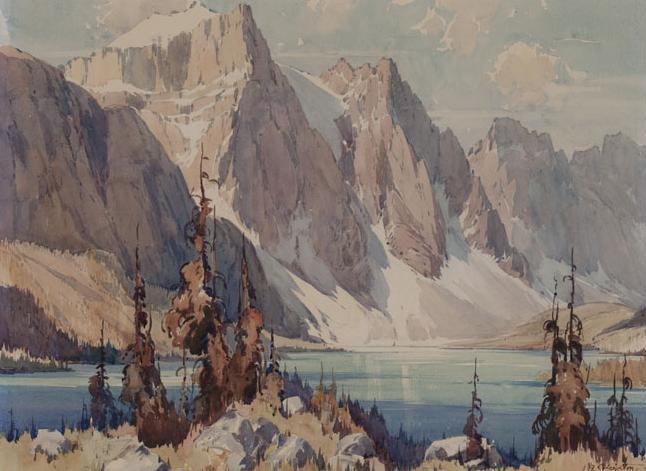
Leighton, Alfred C. Moraine Lake. Painting, watercolour. Alberta Foundation for the Arts.

In the Alberta Foundation for the Arts Collection of over 7500 works there are paintings by Alfred and Barbara Leighton. The collection represents more than 1700 Alberta artists. Like the Leightons, many of these artists have significantly contributed to the development of the visual arts throughout Alberta. You can search the Alberta Foundation for the Arts Collection, and other provincial art collections here.

To view works by Barbara Leighton, click here.

To view works by Alfred Leighton, click here.

________

Visit the Alberta Register of Historic Places to learn more about the heritage value of the Leighton House and Art Centre. In order for a site to be designated a Provincial Historic Resource, it must possess province-wide significance. To properly assess the historic importance of a resource, a historian crafts a context document that situates a resource within its time and place and compares it to similar resources in other parts of the province. This allows staff to determine the importance of a resource to a particular theme, time, and place. Above, is some of the historical information used in the evaluation of the Leighton House and Art Centre.

News from Calgary’s Heritage Scene

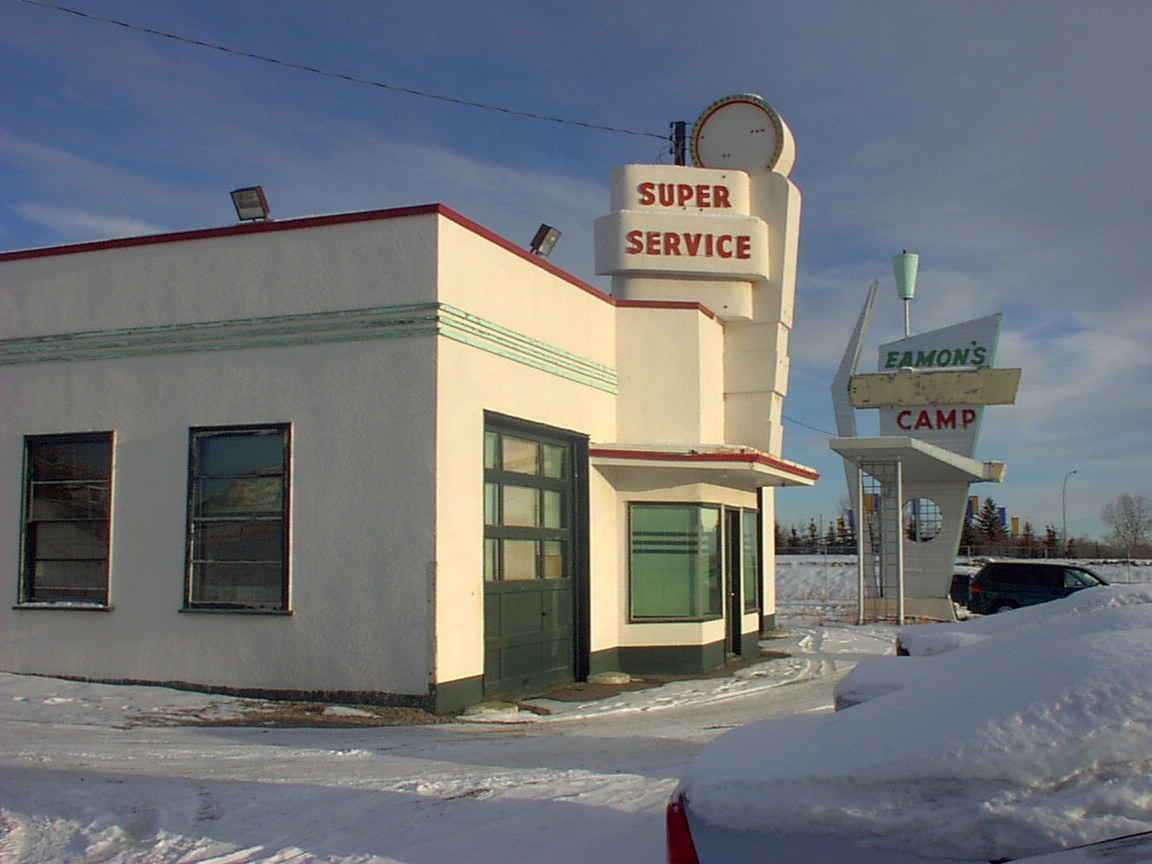
You may have read that Calgary’s city council has decided to incorporate the Eamon’s Gas Station (also known as the Eamon’s Bungalow Camp) into the planned Tuscany LRT Station. Calgary will conserve a historic resource rather than demolishing it to make room for parking. This is exciting news!

We recently talked with Christy Caswell, one of the City’s Heritage Planners, and she said that Calgarians today are enthusiastic in supporting their city’s historic places. The interest garnered by the Eamon’s project has been one of many catalysts for people to think about historic places in a new way, and how they can be creatively integrated with new development.

Alberta’s municipalities can identify and conserve historic resources without the provincial government’s permission or involvement by legally protecting these places as Municipal Historic Resources. If interested, municipalities can also offer conservation incentives. By extension, each municipality is free to determine its own criteria for deciding what to designate. Calgary is a fine example of this.

Calgary has identified a range of heritage values that a place must reflect to be considered for conservation. For example, the Calgary Heritage Authority has overseen the development of context papers for many of Calgary’s historic communities. The city’s heritage planning program regularly evaluates potential historic place for significance. The result is Calgary’s Inventory of Evaluated Historic Resources. Each place on the city’s inventory reflects a local heritage value. Indeed, the Eamon’s Bungalow Camp is one of over 600 places included on Calgary’s Inventory. Be sure to read the listing to learn about the site’s history.

The Municipal Heritage Partnership Program (MHPP) helps municipalities develop programs that will identify, evaluate and conserve locally significant historic places. For more information, visit the MHPP website.

Written by: Matthew Francis and Michael Thome, Municipal Heritage Services

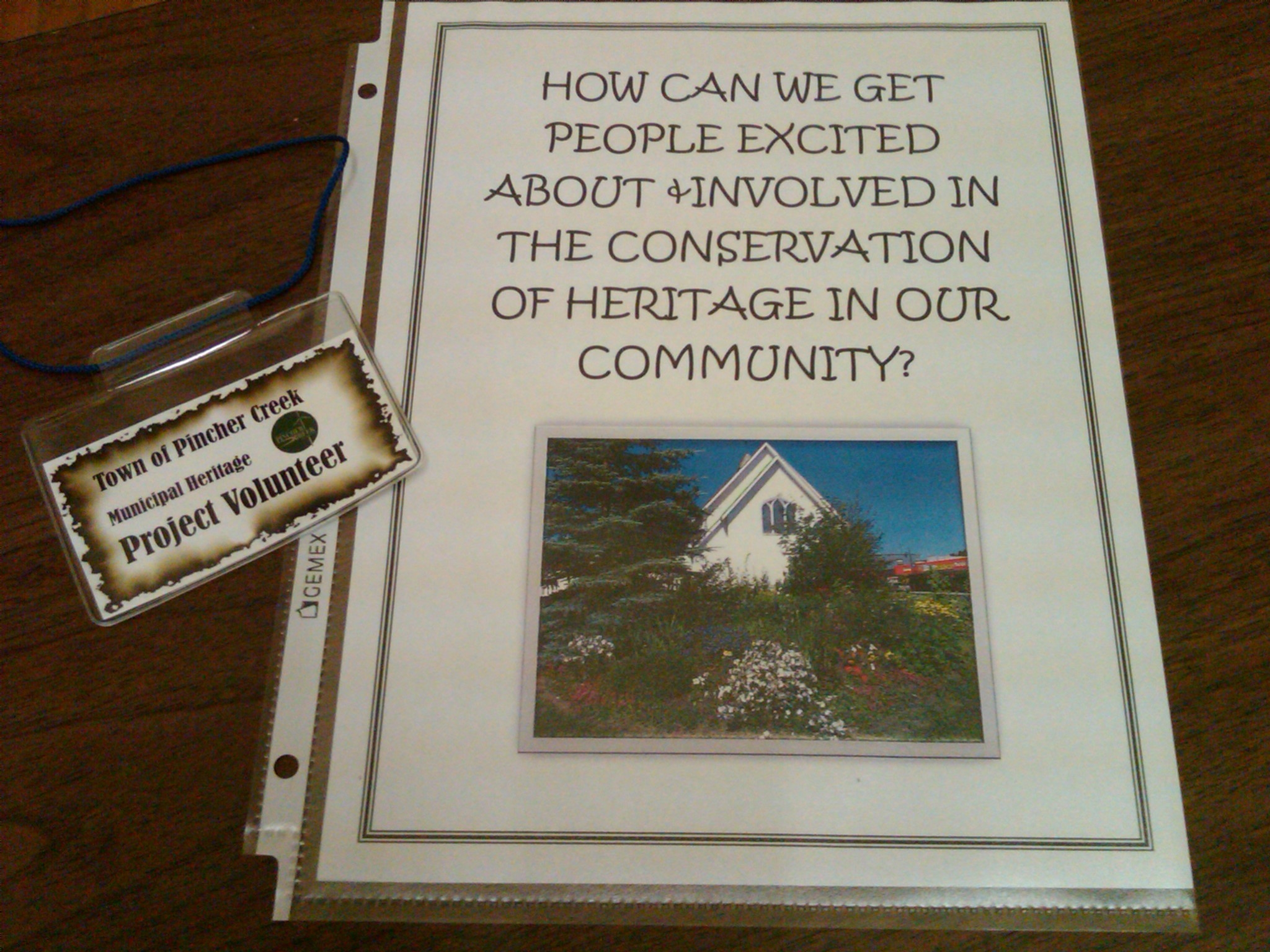
Pincher Creek Municipal Heritage Survey

At the end of April I attended an open house for the Town of Pincher Creek Municipal Heritage Survey project. Over the past year, the Town, through the dedicated assistance of community volunteers and the guidance of Farley Wuth at the Kootenai Brown Pioneer Village, has been working on documenting up to 300 sites. These sites, all older than the 1940s, include residential, commercial and industrial properties. The sites are being documented through photography and by recording geographical, architectural and historical information. Once complete, all documented sites may be viewed on the Provincial Heritage Survey database.

The open house was attended by project volunteers and interested community members. Their interest in the project was inspiring. With each documented property, the volunteers uncover new facts about their community.  Who lived where, and when? Which properties contain unique architectural features? How did the properties evolve after alterations and repairs? With each discovery, a greater sense of community pride seems to emerge.

Completing a Municipal Heritage Survey is a great way for municipal staff to learn about the older building stock (and other sites) in their communities. The information gathered provides valuable information for things such as:

– public and private research

–   historic walking tours

–   school and museum programs

– municipal decision-making

–   information on historic and existing land uses

–   development patterns

–   tourism opportunities

– assistance in long-term conservation objectives

–   evaluation of potential historic places

–   photographic record to aide future conservation projects

Essentially, a Municipal Heritage Survey is an information gathering exercise, which enables future decisions and projects associated with potential historic places. Properties documented through a survey are not placed under any restrictions.

To learn more about the Pincher Creek Municipal Heritage Survey project, click here.

To learn how the Town of Pincher Creek is completing this project, please visit the Municipal Heritage Partnership Program website.

Written by: Brenda Manweiler, Municipal Heritage Services Officer

Delburne Alberta Government Telephones Exchange Building

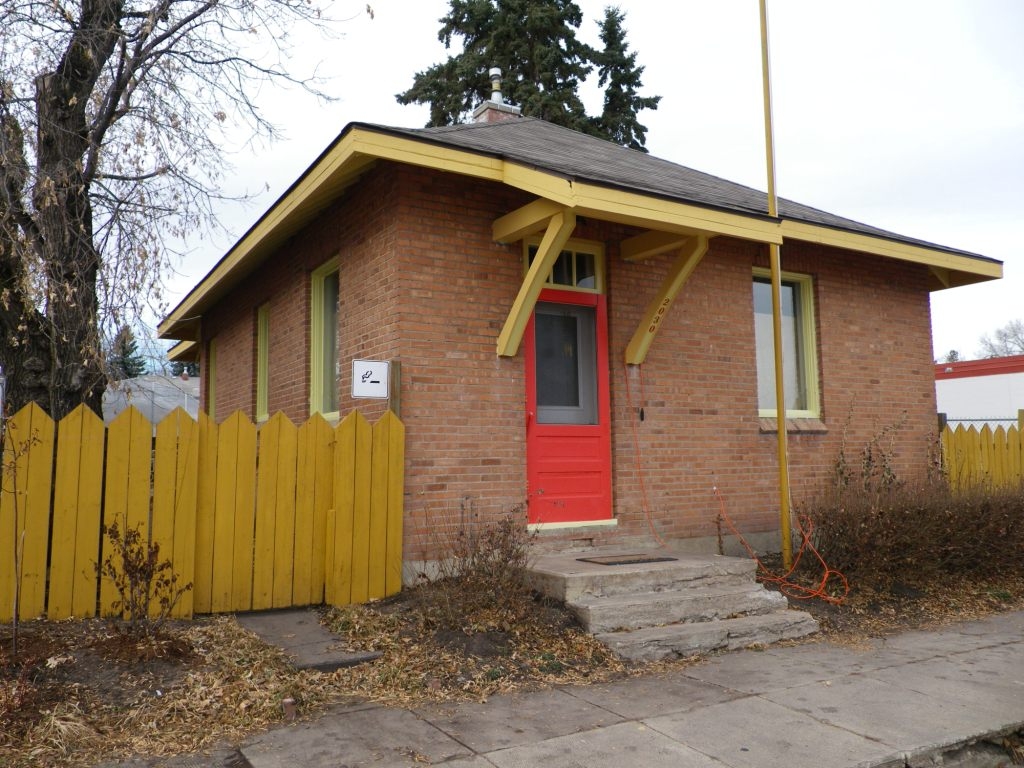
One of Alberta’s most recently designated historic resources is the Delburne Alberta Telephones Exchange Building. Designated in January as a Municipal Historic Resource by the Village of Delburne, it has recently been listed on the Alberta Register of Historic Places.

Although now a residence, the building once housed the switching equipment that first connected the village and the surrounding area to the long-distance telephone network. To read more about the heritage value of this building take a look at the statement of significance on the Alberta Register of Historic Places.

Municipal Heritage Services staff helped the Village of Delburne finalize the documentation needed to designate and then list the site on the Alberta Register of Historic Places. If you want to learn more about identifying, evaluating and protecting local heritage resources, please visit the Municipal Heritage Partnership Program website. We are available to assist your municipality.

Written by: Michael Thome, Municipal Heritage Services Officer

Nominations Invited: Prince of Wales Prize for Municipal Heritage Leadership

Since 2000, the Heritage Canada Foundation has recognized municipalities that have demonstrated leadership in conserving Canada’s historic places with the Prince of Wales Prize for Municipal Heritage Leadership. Recently the Foundation announced that this year’s deadline for nominations for the Prize has been extended to May 31st.

Mayor Mandel and the Prince of Wales

Previous recipients include municipalities across Canada, including the City of Edmonton, the only Alberta municipality to ever be awarded the Prize (awarded in 2009).

From the Heritage Canada Foundation’s website:

In keeping with His Royal Highness’ commitment to architecture, the environment, and inner-city renewal, The Prince of Wales agreed to lend his title to the creation in 1999 of a prize to be awarded annually to the government of a municipality which has demonstrated a strong and sustained commitment to the conservation of its historic places. The local government must have a record of supporting heritage preservation through such means as regulation, policies, funding and exemplary stewardship. The nomination must provide evidence that heritage properties in the given municipality have improved over a period of time.

The award consists of a metal plaque and a scroll, as well as a flag or pennant to be flown outside the winning municipality’s headquarters and/or placed on permanent display. The Prince of Wales Prize logo must be displayed on the homepage of the municipality’s website.

Communities interested in making nomination for the Prince of Wales Prize may do so by following the “Eligibility Criteria and Nomination Procedures” established by the Heritage Canada Foundation.

Written by: Matthew Francis, Manager of Municipal Heritage Services

Moving Mountains – My Visit to the Frank Slide Interpretive Centre

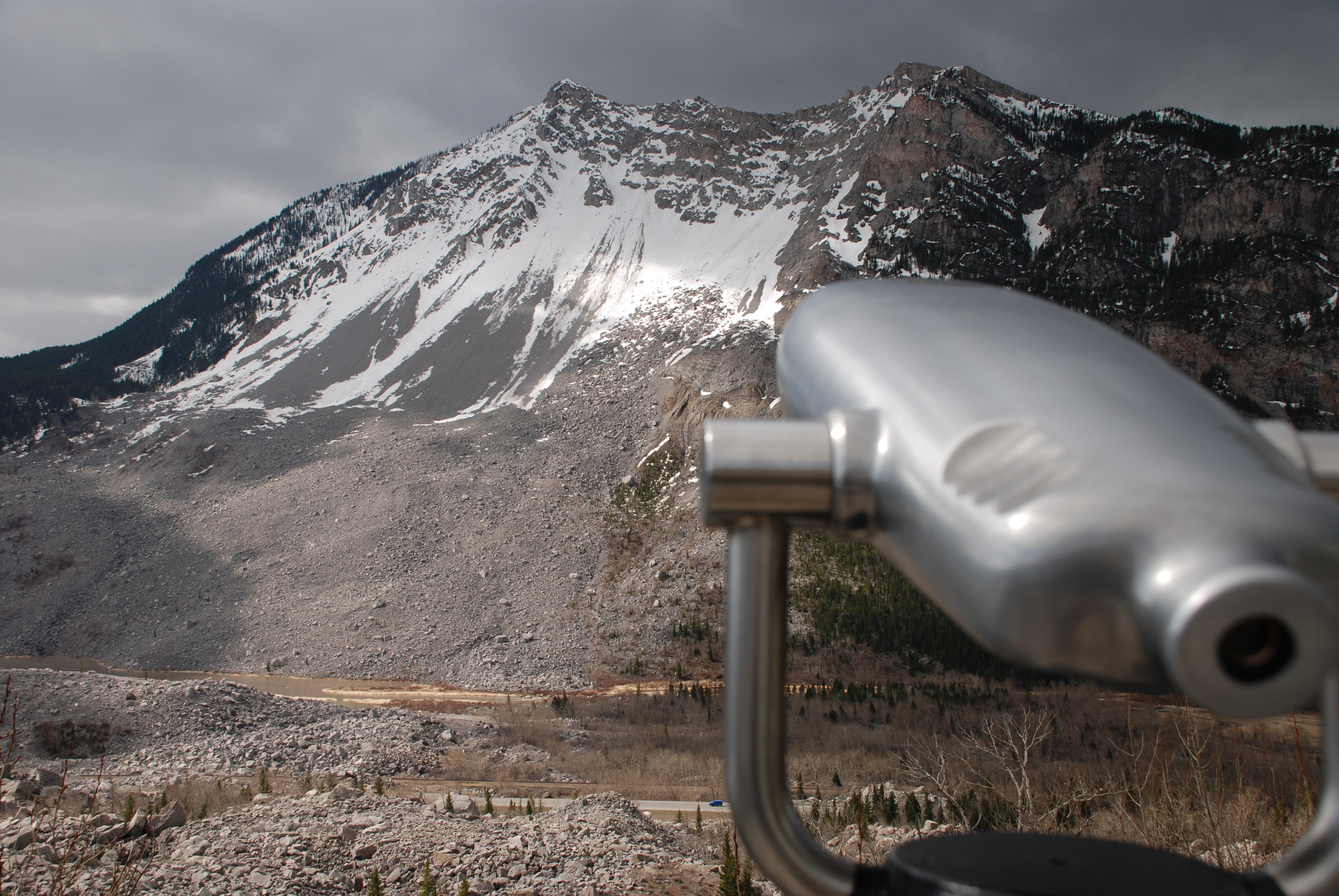
View of Turtle Mountain from the Frank Slide Interpretive Centre

Last week I was in southern Alberta for meetings with Vulcan County and the Town of Pincher Creek. To fill a meeting-free morning I decided to visit the Frank Slide Interpretive Centre (a thirty minute drive west of Pincher Creek on Highway 3). Throughout my visit grey clouds blanketed the sky, which befitted the destruction, sorrow and magnitude of the Frank Slide disaster.

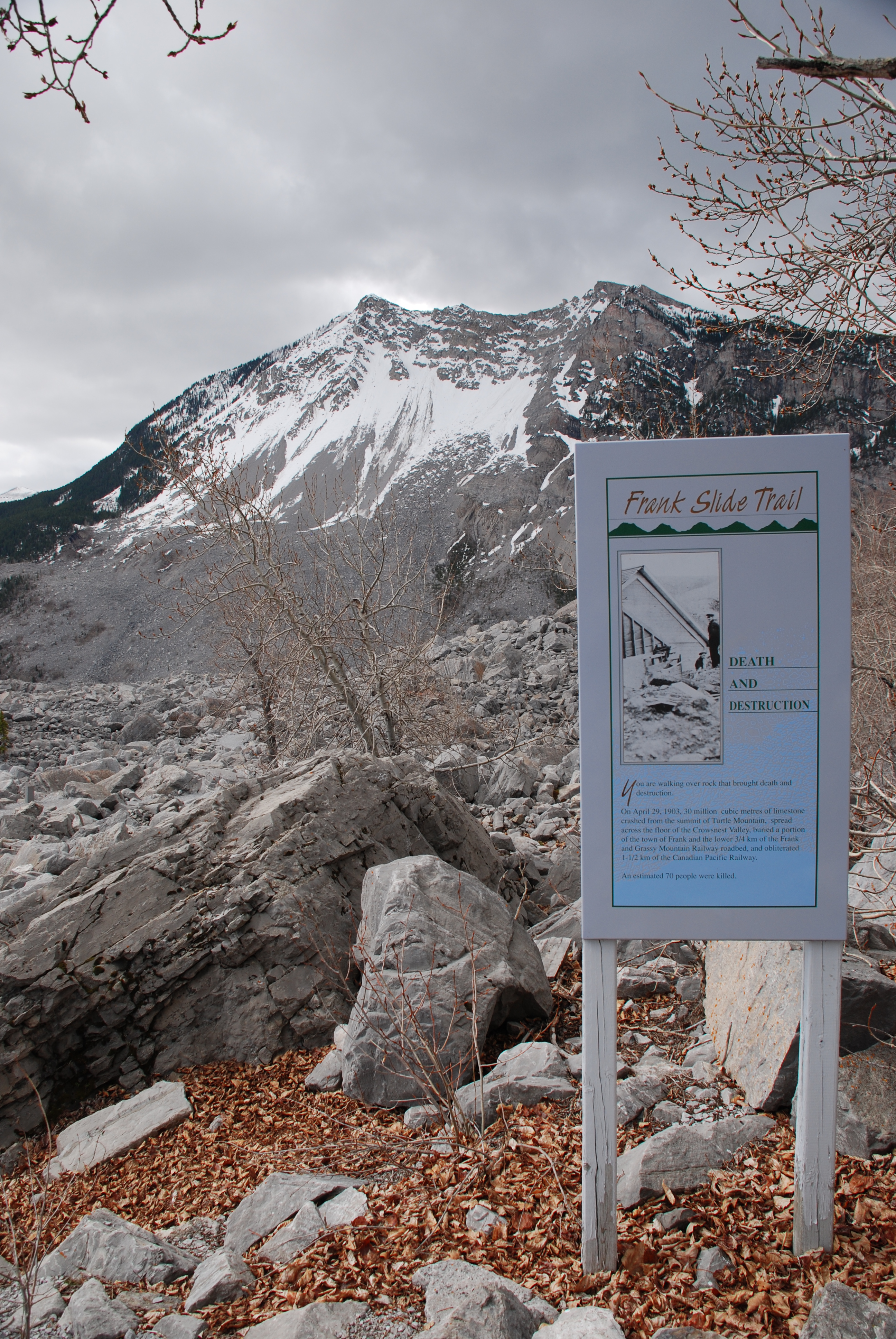
On April 29, 1903 at 4:10 in the morning the east face of Turtle Mountain toppled and slid four kilometres into the Crowsnest River valley. In a mere ninety seconds, 82 million tonnes of limestone collapsed upon the southern end of the Town of Frank, a section of the Canadian Pacific Railroad (CPR) and the mine plant of the Canadian-American Coal Company. In total, at least ninety people were killed. To date, this is Canada’s deadliest rockslide.

In 1977 the Government of Alberta designated the site a Provincial Historic Resource for its significance as the site of Alberta’s worst natural disaster, for it being a geological phenomenon and for it serving as a provincial landmark (to learn more about the site’s heritage value, read the Frank Slide Statement of Significance). Visitors to the area can learn first-hand about the disaster through interactive multi-media displays at the Frank Slide Interpretive Centre, and by walking the Frank Slide Interpretive Trail.

Interpretive Centre

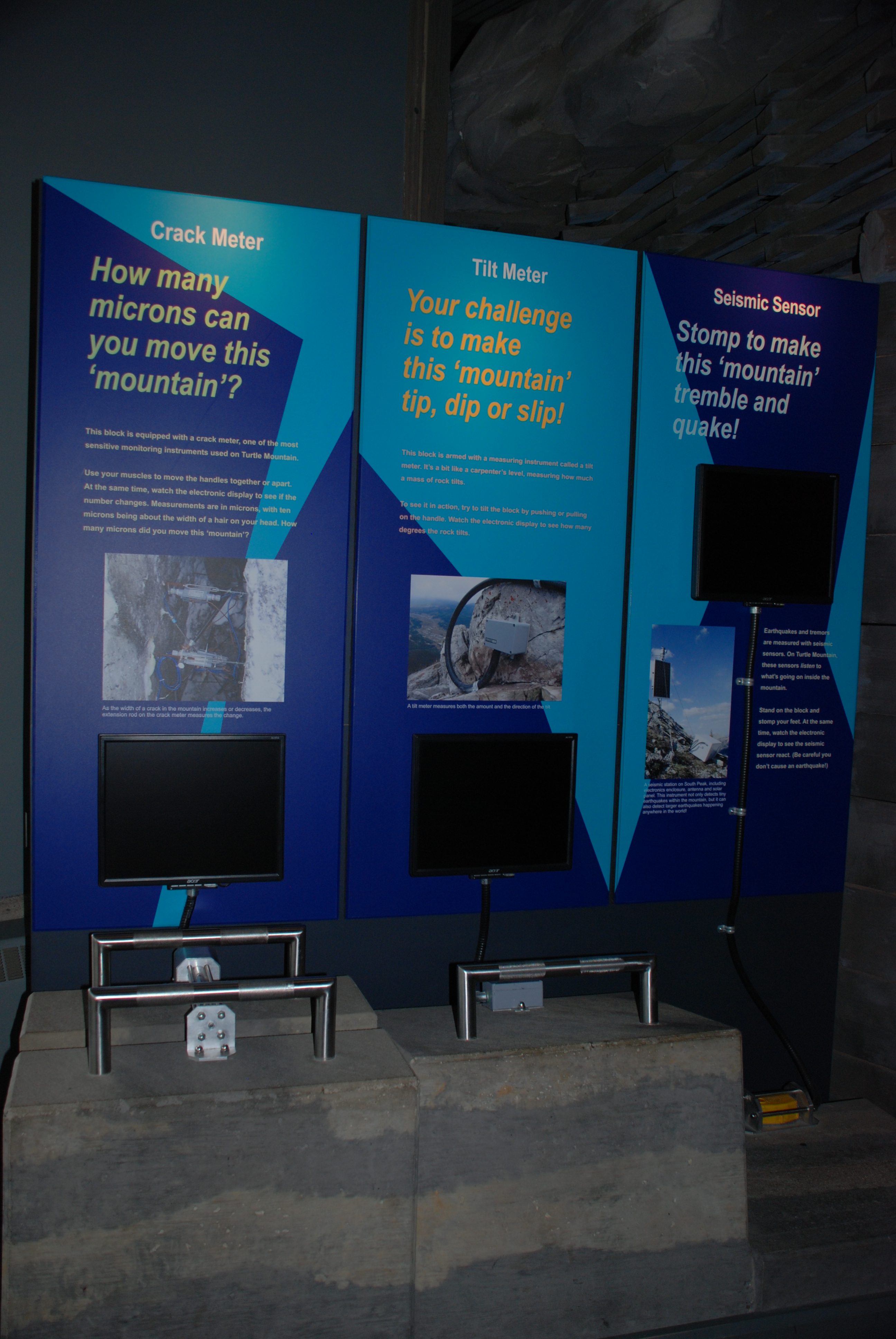
What force can you exert on a mountain by jumping, stomping, pushing, pulling, lifting ... ?

Four levels of display space recount not only the horrors and triumphs of the people that awoke one morning to find their town buried, but provide geological and seismic information about the causes of the disaster. Audio-visual components and 3-D models allow visitors to visualize how Mother Nature could wreck such havoc. My favourite display was a set of three mountain monitoring sensors that are like those currently installed on Turtle Mountain to detect movement. Visitors are encouraged to stomp, jump, push, pull and lift blocks of concrete connected to a crack meter, tilt meter and seismic sensor. Computer screens reveal how sensitive the monitors are AND how strong YOU are! Yes, I jumped, stomped, pushed and pulled … the next time someone asks I will now be able to confidently state that I really can move mountains!

Interpretive Trail

View of Turtle Mountain near the trail head.

A 1.5 kilometre trail, beginning from the Interpretive Centre parking lot, winds through mounds of limestone rubble. Looming views of Turtle Mountain offer a stark reality check when walking along the trail. Hopes, dreams and memories lay beneath.

I walked the trail with an interpretive brochure in hand. Waypoints marked along the path explained what I saw and some of the events that occurred on that fateful day. The last quarter of the trail winds along the western edge of the fallen rock and loops back up to the parking lot through a wooded area. I paused during this reconnection with nature to read that, “mammals such as bears, deer and moose use these cool, sheltered woodlands to skirt the slide’s harsh, open environment as they move through the Crowsnest River valley. Mule deer can frequently be seen along this portion of the trail, particularly early and late in the day.” Taking a step to carry on my way, I thought how great it would be to see some deer. The breaking of twigs caused me to again pause. To my amazement I looked up to discover four deer staring at me!! All five of us stared. Soon enough they returned to their feeding while I continued staring. What a joy!

Turtle Mountain Web Cameras

The Alberta Geological Survey has installed two web cameras for viewing Turtle Mountain. One is in the valley looking up at the mountain and the other is positioned on the south peak providing a view of the valley below. Click here to see a current view of Turtle Mountain.

The Frank Slide Interpretive Centre is open to the public, daily, from 10:00am to 5:00pm. July 1 through Labour Day, the Centre is open daily from 9:00am to 6:00pm. Click here for additional information.

Written by: Brenda Manweiler, Municipal Heritage Services Officer

P.S. I must extend a big thank you to Monica and Myriah for welcoming me to the Interpretive Centre and for providing a great tour! I really enjoyed my visit.

Application of the Standards and Guidelines to replace the cedar shingle roof on Old St. Stephen’s College

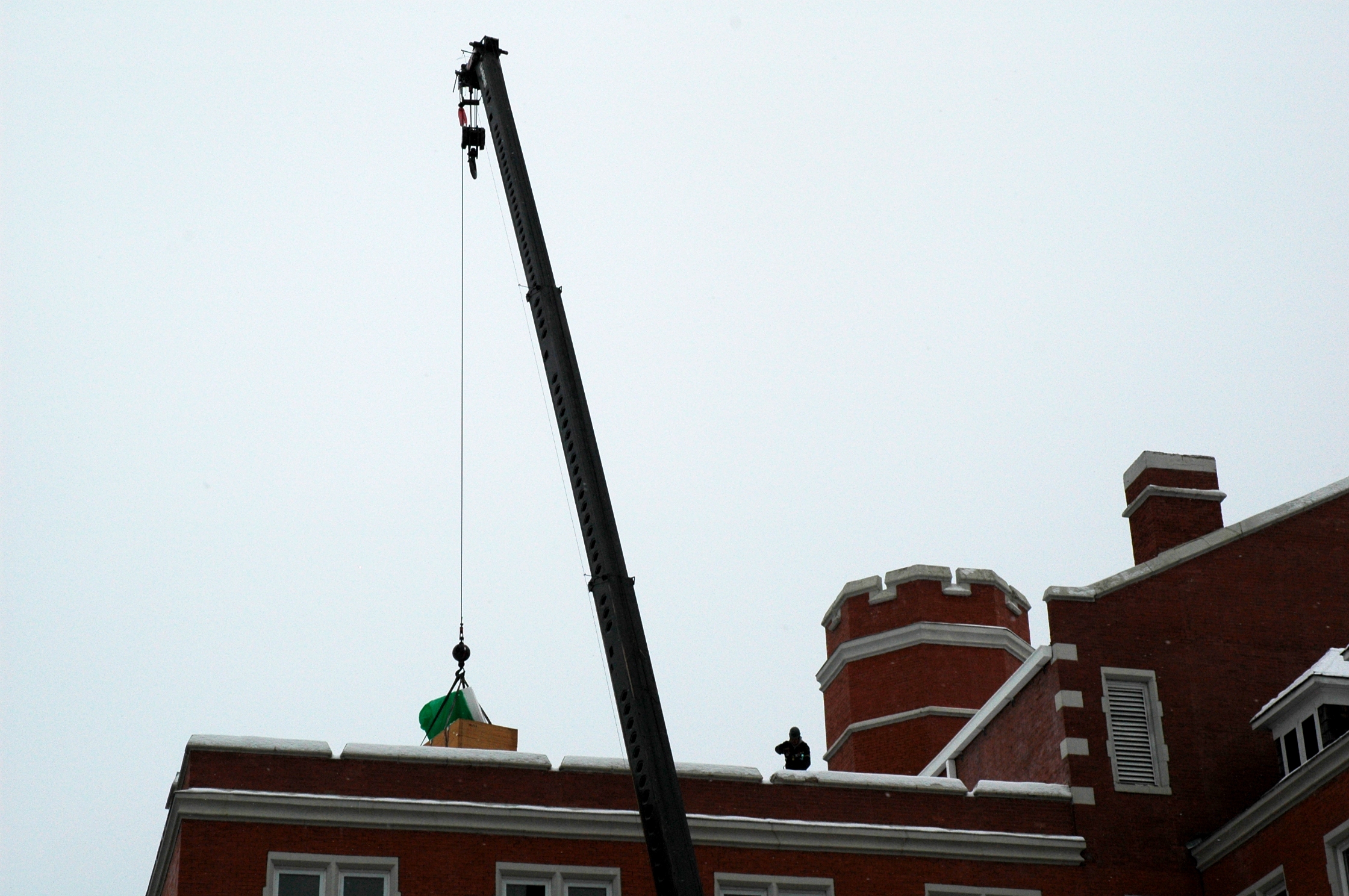
Old St. Stephen’s College, designated a Provincial Historic Resource in 1983, and office of the Historic Places Stewardship Section (the authors of RETROactive), is getting a new roof. The work is compliant with the principles and recommendations outlined in the Standards and Guidelines for the Conservation of Historic Places in Canada. Below is a brief description of the conservation work that will be completed throughout April and May 2012.

The roof over the west wing and its multiple hip-roofed dormers are cited in the Statement of Significance as character-defining. The design for the cedar roof replacement may seem straight-forward at first, but when planning this work it was important to consider not only the look, but how the roof would perform. The introduction of new underlay products and flashings were examined in order to better help keep the water out and extend the service life of the roof.

For any historic place, the Standards and Guidelines for the Conservation of Historic Places in Canada must be consulted for all proposed interventions.  In this case, a cedar shingle finish for roof surfaces, ridge caps and dormer side walls was verified as appropriate with reference to general Standards 1 to 9 and Standards 10 to 12 for rehabilitation treatments (see pages 22 and 23 in your Standards and Guidelines document).  Standard 8, in particular, confirms the replacement “in kind of any extensively deteriorated or missing parts of character-defining elements, where there are surviving prototypes.”

In addition to the replacement of the shingles, the opportunity to introduce new weatherproofing materials was presented.  Particular areas at risk with this roof were identified, which included the six dormers penetrating each side of the peaked roof, along with multiple valley and ridge flashings.  Also complicating the design is the presence of deep gutters with internal drains just behind the brick and cast-stone parapets.  A new continuous ice dam membrane underlay was proposed that would be installed from the parapet through the gutter, to the top of the dormers, lapping the membrane up the dormer sidewalls, and to the underside of window sills.  This has been likened to installing a weatherproof girdle under the shingles, covering most of the roof surface, to help protect the vulnerable complicated intersections from leaks.

The proposed introduction of new underlay material to this roof was confirmed in the Guidelines for Roofs (page 142), where it is recommended to “improve the detailing of roof elements, following recognized conservation methods, to correct faulty details.”  Such improvements, however, should be physically and visually compatible with the authentic roof detailing.

So, all the boxes are checked with regard to the west wing’s roof replacement and the protection of its heritage values.  The Standards and Guidelines for the Conservation of Historic Places in Canada provides a defendable verification that planned work for historic places retains recognized heritage values.

Written by: Tom Ward, Manager of Heritage Conservation Advisory Services

Strathcona Fire Hall No. 1

When the Calgary & Edmonton Railway arrived at the south bank of the North Saskatchewan River in 1891, the C & E immediately subdivided a town site which it named South Edmonton.  Being at the end of steel, the community steadily grew throughout the decade until, in 1899, it was incorporated as the Town of Strathcona with a population exceeding 1,000.  To serve this burgeoning community, which consisted primarily of wood frame buildings, it was obvious that some method of organized fire protection was needed.  A volunteer fire brigade was organized in 1901, and, that same year, Town Council provided for the construction of a wood frame fire hall on lot 2, block 79, just north of main street, and near the Town water well.  A horse drawn fire wagon with a wooden water tank was then acquired.

As with Edmonton to the north across the river, Strathcona grew rapidly in the wake of the Klondike gold rush.  In 1907, it was incorporated as a city with an estimated population of 3,500.  It was soon evident that the old fire hall was inadequate, and, so, provision was made for a newer and larger structure.  As the City waterworks was right next door to the old fire hall, it was felt appropriate to build the new structure at the same location.  The firm of Wilson and Herrald was thus contracted to design, and the firm of J.M. Eaton contracted to build a modern two-story red brick facility which could accommodate three fire wagons.  The estimate for construction was $13,715.  A stable in the rear was designed for nine horses, while a bell tower extended from the middle of the structure 77 feet in the air.  The second floor was made to accommodate a chief’s office, a general hall, bedrooms, a band room, and a bathroom with showers.  Two fire poles facilitated instant access to the ground floor.

The Strathcona Fire Hall with its horse-drawn wagons served the City of Strathcona until its amalgamation with Edmonton in 1912.  It was then designated as Edmonton Fire Hall #6 and became part of the Edmonton Fire Department.  A permanent salaried chief was assigned to the Hall, and the number of salaried firefighters grew over the passage of time.  The crews were always supplemented by volunteers in times of emergency.  By 1954, however, the facility was considered dilapidated and outdated, and, so, a new fire hall was constructed nearby.  The old structure was apparently slated for demolition but was considered adequate for storage, and, so, it was leased to Strathcona Furniture, which used it as a warehouse.

By the early 1970’s, there was a growing appreciation in Edmonton about the early buildings of Strathcona, and, so, when the Walterdale Theatre began to plan for a new home, thoughts turned to the old fire hall, which seemed to provide adequate space for a live theatre building.  The Walterdale group moved into its internally renovated facility in 1974, and, in 1976, the structure was designated a Registered Historic Resource.  In the years that followed, it became a central venue for Edmonton’s Fringe Festival.

In September 2007, the Strathcona Fire Hall was designated a Provincial Historic Resource.  Its historical significance lies in its provision of structural evidence of fire fighting facilities in a large urban area in the early 20th century in Alberta.  It is the oldest major fire hall in the province.  It is also important as one of the surviving early public buildings of the City of Strathcona, which tells of life in general in this community.      

Written by: David Leonard, Historian

Visit the Alberta Register of Historic Places to learn more about the heritage value of the Strathcona Fire Hall. In order for a site to be designated a Provincial Historic Resource, it must possess province-wide significance. To properly assess the historic importance of a resource, a historian crafts a context document that situates a resource within its time and place and compares it to similar resources in other parts of the province. This allows staff to determine the importance of a resource to a particular theme, time, and place. Above, is some of the historical information used in the evaluation of the Strathcona Fire Hall.

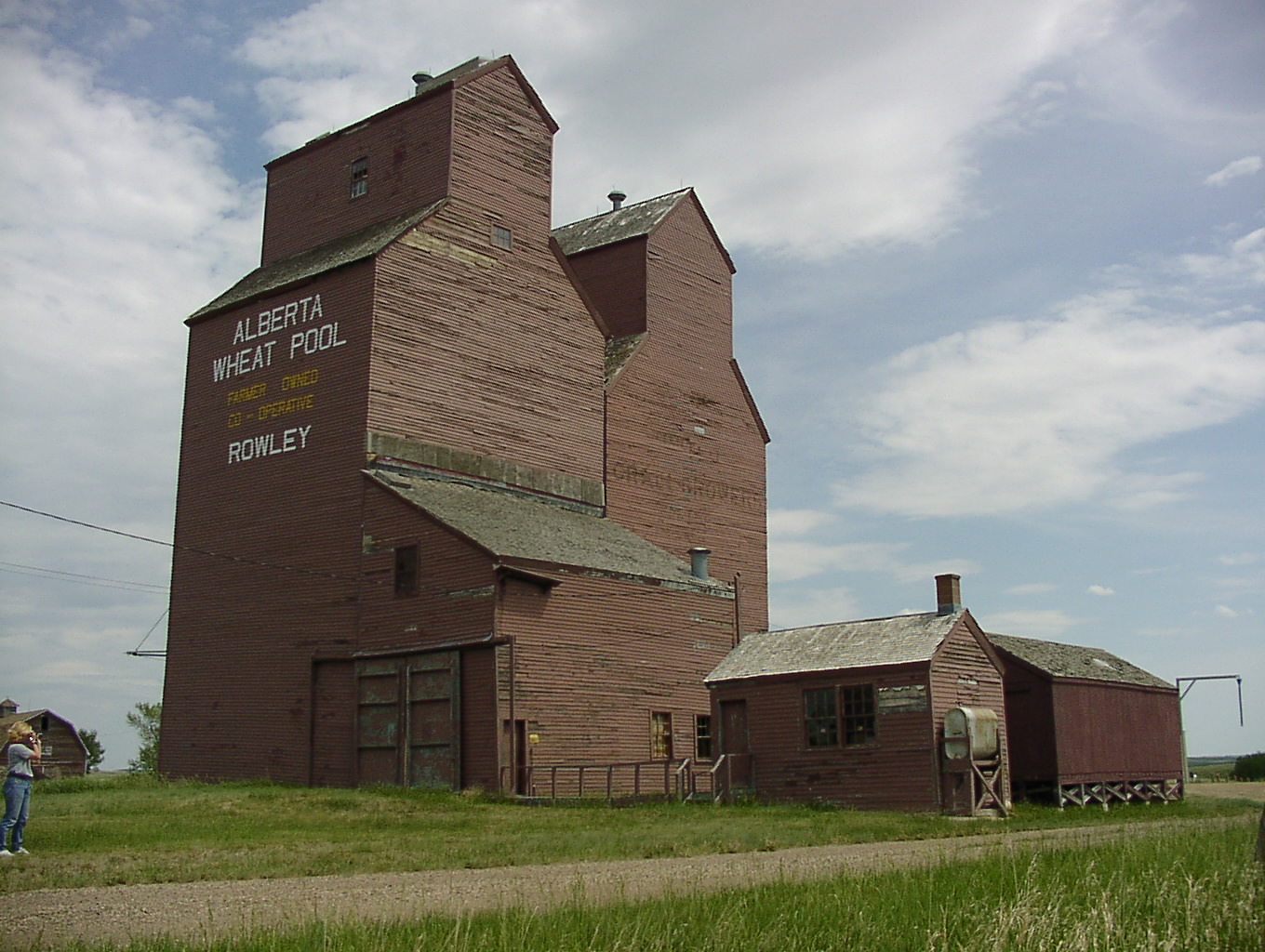
Rowley Grain Elevator Row

In the spring of 1909, Premier Rutherford of Alberta announced his government’s commitment to a vast program of railway expansion in Alberta.  To do this, the government offered to guarantee the bonds of major railway companies to the extent of $20,000 per mile of completed track.  Taking advantage of this, the Canadian Northern Railway decided to incorporate several subsidiary companies to undertake specific lines in Alberta.  One of these was the Alberta Midland, which was chartered by the provincial government in May 1909 to build a line from Vegreville south through Drumheller to Calgary.  One purpose was to open up new land for farming, another was to tap into the coal reserves around Drumheller which had hitherto been unavailable to the Canadian Northern or any of its subsidiaries.
By the end of 1911, the Alberta Midland line was completed.  Along it, several stations were built.  One of these, 25 km north of Drumheller, was named Rowley, after the Manager of the Calgary branch of the Canadian Bank of Commerce.  The Bank itself had provided substantial backing to the Canadian Northern.  Behind the station, a townsite was subdivided, and, before long, a community evolved, the main purpose of which was to provide services to the surrounding hinterland where mixed farming was the staple economy.

It was essential therefore that Rowley be provided with grain elevators, and, in 1915, the first one was built by the Home Grain Company.  It was apparently not well constructed however, for, shortly after its completion, it collapsed.  Though rebuilt soon after, another mishap occurred when an annex burst, and, not long after that, the elevator burned down.  In the wake of these mishaps, two other elevators were built in 1917.  These were owned by the National Grain Company and the United Grain Growers.  The UGG had only recently been incorporated as a farmer-owned company, and it was a good time for it to build for, like most of the western prairies, the Rowley district was seeing high yields and much demand because the war in Europe was diverting the activities of farmers there to other matters.

The National and the UGG had a monopoly on the local grain export at Rowley until 1923, when the Searle Grain Company, formerly the Home Grain Company, decided erect another elevator on the site of their first one at Rowley.  At 40,000 bushels, this would be the biggest of the village’s three elevators.  It was an unusual time to build, for grain prices had recently collapsed in the wake of the post war overproduction of wheat.  Also, during 1919-20, both the Canadian Northern and the Grand Trunk Railways had been taken over by the federal government and consolidated into Canadian National.  This meant reduced services, and, in 1922, rail traffic between Vegreville and Drumheller were significantly reduced.
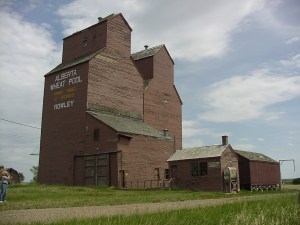
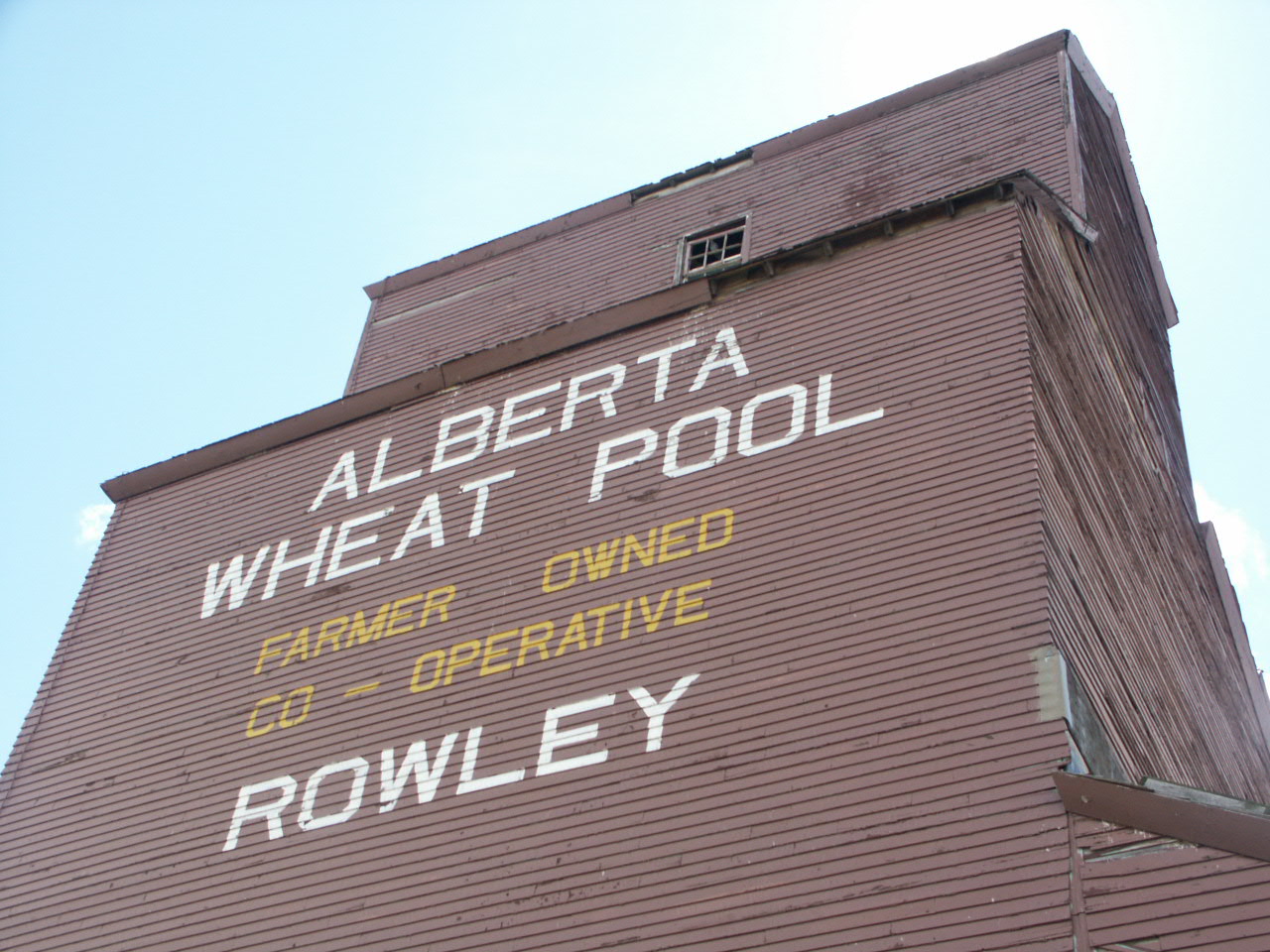
The three grain elevators in Rowley managed to survive however, and, in 1928, the UGG structure was acquired by the Alberta Wheat Pool.  Formed five years earlier, in the wake of plummeting grain prices, the Pool was a business concept advocated by UFA president Henry Wise Wood which saw farmers pool their wheat in a co-operative to ensure that no member would suffer unduly in times of stress.  Such stress occurred during the early 1930’s, when the price of #1 wheat fell to 32 cents a bushel and many farmers could not afford to ship out their wheat.  During the end of the decade however, with Great Britain gearing for war, the demand for wheat began to rise, and, with it, productivity on the Canadian prairies.  In 1940 therefore, the Wheat Pool decided to twin its elevator in Rowley with a new 40,000 bushel structure.

The three grain elevators at Rowley continued to serve the district long after the war.  In 1967, the Searle elevator was sold to the Federal Grain Company, and, in 1972, to the Wheat Pool, which then owned all three elevators.  In 1989 however, the CN line between Rowley and Morrin was closed down, and farmers soon began trucking their grain to Morrin or elsewhere.  The elevators therefore were closed also.  They remained standing however, and, in recent years, have been acquired by the Rowley Community Hall Association which is seeking to preserve them.

In June 2010, the grain elevators in Rowley were designated a Provincial Historic Resource.  Their historical significance lies in their representation of the major economy of Alberta for most of the 20th century, the growth and export of grain, and mainly wheat.  They are also important as landmarks in Rowley, providing structural evidence of the community dating back to 1917, when the district was prospering.  The first elevator represents the main source of that prosperity, and the three of them the economy of the district in the years that followed.    

Written by: David Leonard, Historian

Click here for statistics on remaining grain elevators in Alberta.

Visit the Alberta Register of Historic Places to learn more about the heritage value of the Rowley Grain Elevator Row. In order for a site to be designated a Provincial Historic Resource, it must possess province-wide significance. To properly assess the historic importance of a resource, a historian crafts a context document that situates a resource within its time and place and compares it to similar resources in other parts of the province. This allows staff to determine the importance of a resource to a particular theme, time, and place. Above, is some of the historical information used in the evaluation of the Rowley Grain Elevator Row.