Camaraderie and Commitment:

Volunteers are key to the Town of Pincher Creek’s Municipal Heritage Survey Project

Throughout the next twelve months the Town of Pincher Creek will be completing a Municipal Heritage Survey. Approximately 300 sites (older than the 1940s) ranging from houses, commercial buildings and industrial sites will be documented through photography and by recording geographical, architectural and historical information. Diane Burt Stuckey, Director of Community Services, will serve as the Municipal Coordinator and Farley Wuth, Curator of the Kootenai Brown Pioneer Village, will be the Heritage Consultant.
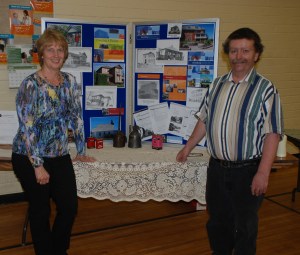
Diane Burt Stuckey and Farley Wuth

Working together, Diane and Farley will coordinate the volunteer efforts of community residents interested in contributing to this project. These volunteers will photograph each site, conduct historical research, upload information to the Alberta Heritage Survey Program database and most importantly, gain a greater understanding and appreciation for the unique history that provides Pincher Creek with its strong community identity and sense of place.

On April 27, 2011, a public information meeting was held for area residents interested in learning about the project. Attendees exhibited an interest in the project and a passion for their community. On May 14, 2011, Brenda Manweiler, Municipal Heritage Services Officer, and Dorothy Field, Heritage Survey Program Coordinator, provided a detailed training session so that volunteers would understand their roles and responsibilities. With camaraderie and commitment, the attendees were excited to begin work.
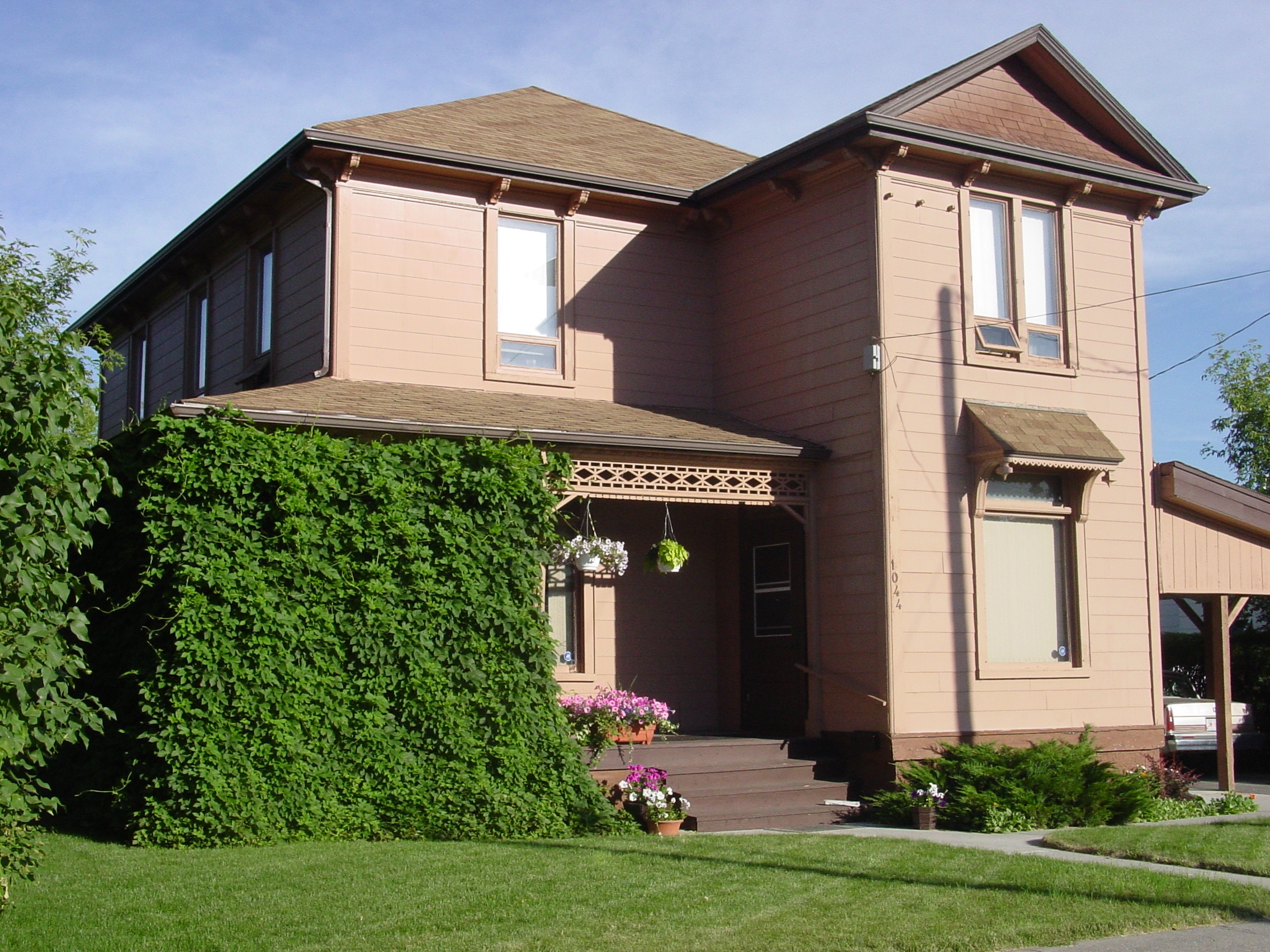
The Philips House will likely be documented in the Town of Pincher Creek Municipal Heritage Survey.

To offset costs associated with the Municipal Heritage Survey, cost-shared funding assistance was provided by the Alberta Historical Resources Foundation via the Municipal Heritage Partnership Program.

Written by: Brenda Manweiler, Municipal Heritage Services Officer
Welcome A-board!

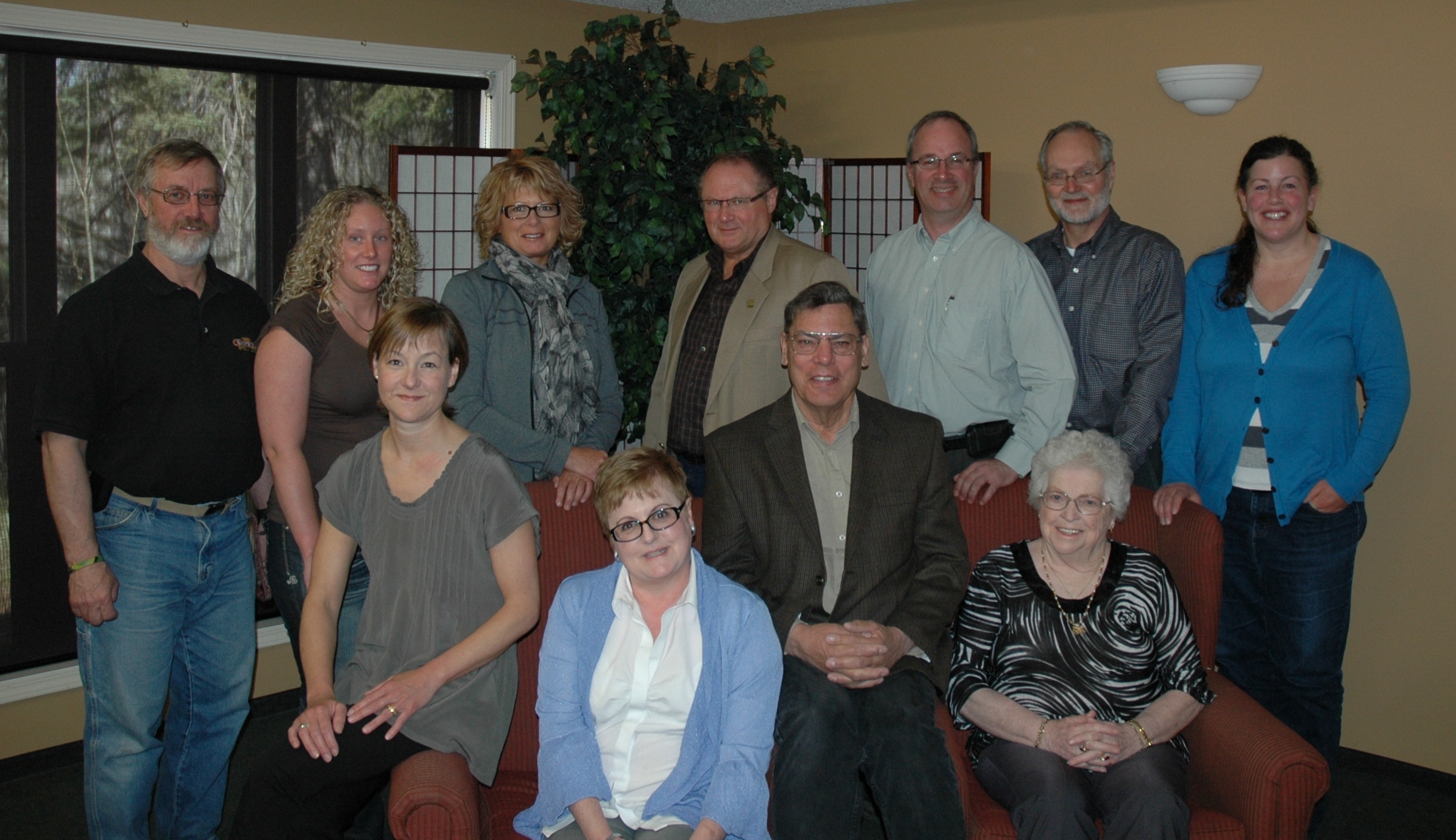
Early this year, the Alberta Historical ResourcesFoundation (AHRF) welcomed six newly appointed members to the Board, strengthening its size to 12 members. Dr. Carolee Pollock, Board Chair, with Larry Pearson, Acting Executive Director, and staff ushered them in with an engaging orientation session held at the Edmonton headquarters in February.

“I am delighted to welcome Geraldine Bidulock, Joe Friedel, Robert Gaetz, Laurel Halladay, Leah Millar and Naomi Nind to AHRF’s Board of Directors.  I really appreciate the good questions and discussion that were generated by our newly strengthened Board,” said Dr. Pollock.

The most recent meeting held in Pigeon Lake in May was an equally engaging assembly as Board and staff gathered for the annual report presentations of the five provincial heritage organizations supported by AHRF (Alberta Museums Association, Archives Society of Alberta, Historical Society of Alberta, Alberta Genealogical Society and the Archaeological Society of Alberta); and the adjudication of applications submitted to AHRF’s grant programs (Heritage Preservation Partnership Program, Municipal Heritage Partnership Program and the Alberta Main Street Program).

Dr. Pollock concluded the meeting by saying, “We are fortunate to have a great diversity of skills and backgrounds among our Board members.  This makes for both good decision-making and lively and interesting meetings. The more the merrier!”

Pictured above: Board of the Alberta Historical Resources Foundation. Back row (L-R): Don Totten, Leah Millar, Geraldine Bidulock, Bob Gaetz, Joe Friedel, Fred Bradley, Laural Halladay. Front Row (L-R): Linda Affolder, Carolee Pollock (Chair), Tom Clark, Hazel Hart. (Missing: Naomi Nind.)

Written by: Carina Naranjilla, Grant Program Coordinator

Canadian Northern Railway Station, Meeting Creek

In 1909, Premier Rutherford of Alberta announced a program of vast railway expansion in the province, offering bond guarantees to major railway companies to build branch lines in districts where they seemed warranted.  The railway company to undertake the greatest extent of track as a result of this was the Canadian Northern, which had arrived in Edmonton directly from the east in 1908, and was soon to extend its track north to Sangudo and Athabasca and west into British Columbia.

Other Canadian Northern lines were built in the southern part of the province.  One of the more significant of these was between Stettler and Camrose, and was completed in 1911, opening up new farmland for settlement.  As was its practice, the Canadian Northern erected stations at key points along the line, and, in some cases, townsites were subdivided.  This was the case with Meeting Creek, which was located in a district that had already been settled, largely by farmers from the United States.  When the railway came through, the tiny community, established in 1905, was moved five miles to be included in the new townsite.

Being less than 18km from the larger farming centers of Donalda and Bashaw, and 30km away from Camrose, Meeting Creek never grew to sufficient size to be incorporated.  It did, however, possess most of the amenities of a prairie farming community, including stores, garages, livery stables, a blacksmith shop, a bank, a hotel, and, eventually, three grain elevators.  It also had a small, but busy, railway station, constructed in 1913.  This was a two-story structure with a warehouse attached.  It was subdivided into an office, waiting room, freight house, and living quarters for the station agent and his family.

Life in the community of Meeting Creek evolved around the businesses along Main Street, which ran perpendicular to the station, and the station itself.  All passengers and incoming and outgoing freight were handled by the station agent, including the export of grain.  The agent was also the district telegrapher.

When the Canadian Northern was merged with the Grand Trunk Pacific Railway in 1919 to form Canadian National, many small branch lines were closed down in Alberta, but the Camrose – Stettler line remained open, as sufficient agricultural products were being shipped out from the district in between to warrant this.  By the 1960’s, however, improved highway traffic saw the closure of train service in Meeting Creek, although the Camrose – Stettler branch line would remain operating until 1997.

Being that there was little development in Meeting Creek in the years after the railway station was closed, the structure managed to survive, along with the Alberta Pacific Grain Elevator, and, in 2008, it was designated a Provincial Historic Resource.  Today it is an integral part of the Canadian Northern Society’s tour of significant rail sites.

Written by: David Leonard, Historian

Visit the Alberta Register of Historic Places to learn more about the heritage value of the Canadian Northern Railway Station in Meeting Creek. In order for a site to be designated a Provincial Historic Resource, it must possess province-wide significance for either its history or architecture. To properly assess the historic importance of a resource, a historian crafts a context document that situates a resource within its time and place and compares it to similar resources in other parts of the province. This allows staff to determine the importance of a resource to a particular theme, time, and place. Above, is some of the historical information used in the evaluation of the Meeting Creek railway station.

“How is Yellowhead County going to accomplish this?”

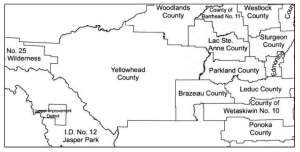
Yellowhead County, a large rural municipality west of Edmonton that stretches between the Pembina River in the east all the way to the Jasper National Park gates in the west, is currently embarking upon a Municipal Heritage Survey.

Over the coming months the County will identify and document a broad range of potential historic places within the County’s boundaries. With Yellowhead County spanning an area of 7,012,000 acres you might be asking, “How is the County going to accomplish this?”

1) Under the Municipal Heritage Partnership Program (MHPP) Yellowhead County has received cost-shared funding. All municipalities in Alberta are eligible to apply for cost-shared funding to assist in the completion of a Municipal Heritage Survey, Municipal Heritage Inventory and/or a Municipal Heritage Management Plan. These projects are designed to assist with the identification, evaluation and management of historic places. Municipalities throughout Alberta have participated in MHPP and learned about the rich historic resources that make their communities unique and livable.

2) Yellowhead County staff, combined with the services of a heritage consultant and the participation of area residents, will complete the Municipal Heritage Survey. The survey will systematically document resources through photographs and record geographical information, design features and construction and historical information.

3) Perhaps most importantly, the County’s Heritage Advisory Board will provide advisory assistance to staff and the consultant throughout the completion of the survey. In September 2010, Yellowhead County Council passed a bylaw establishing a Heritage Advisory Board. This Board, comprised of area residents, has been tasked with the job of advising Council on matters pertaining to the development and maintenance of a heritage program. For instance, the Board will be able to:

  • assist in the implementation of heritage initiatives (i.e. the Municipal Heritage Survey);
  • facilitate community heritage awareness through partnerships and educational initiatives; and
  • advise Council on proposed Municipal Historic Resource designations.

This committed group of volunteers has the important job of providing public input and expertise to Council so that informed decisions about Yellowhead County’s heritage can impact current residents and future generations.

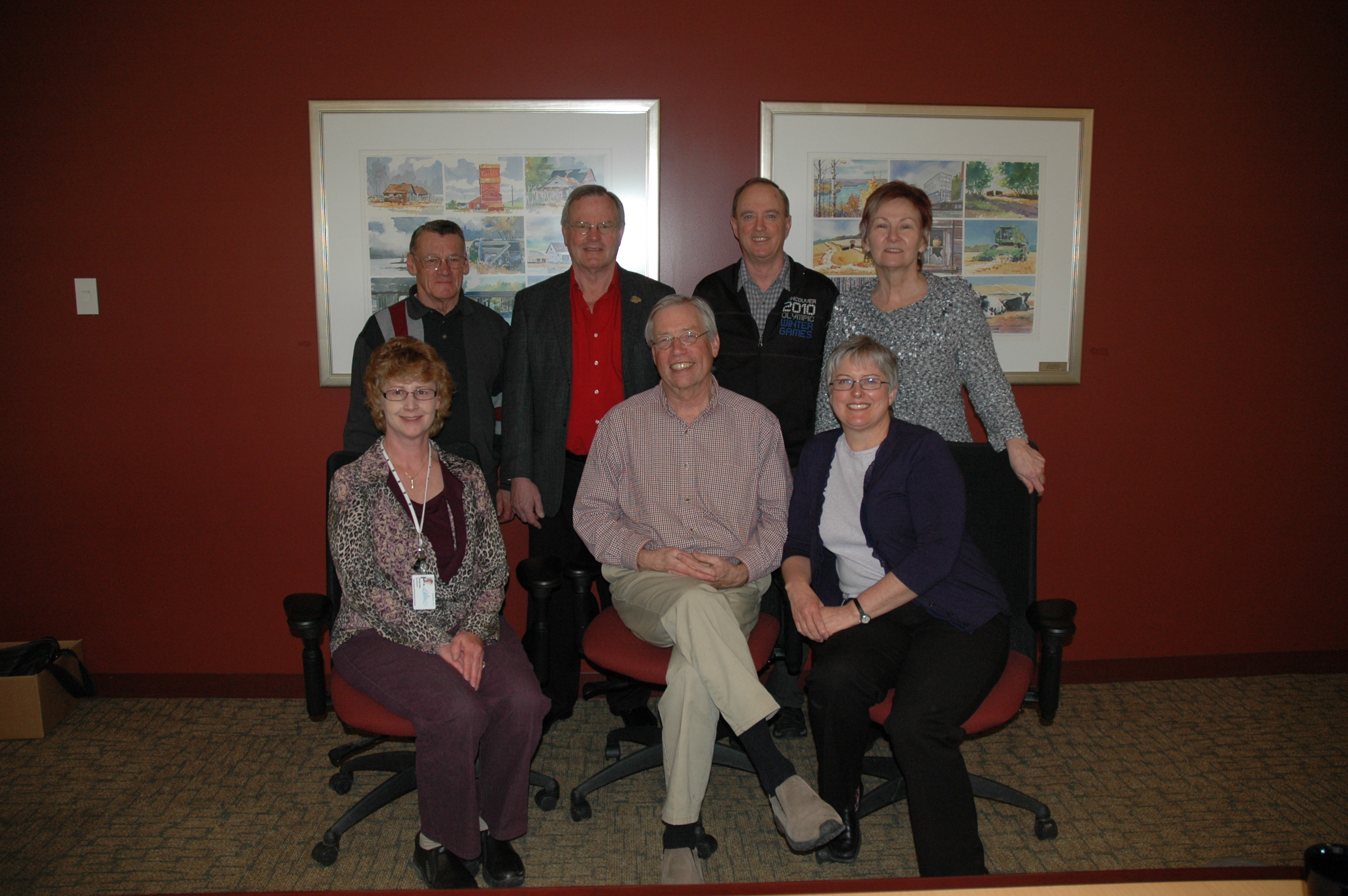
Back L-R: Gary Conger, Shawn Berry, Brian Broughton, Pat DiMarcello. Front L-R: Cheryl May (Heritage Coordinator), Marshall Hoke (Chair), Debbie Charest (Director of Community and Protective Services).

Do you have questions about how your municipality can participate in the Municipal Heritage Partnership Program? Contact program staff to learn more.

Written by: Brenda Manweiler, Municipal Heritage Services Officer
Rutherford House is 100 Years Old!

…and you are invited to help celebrate!

On Sunday, June 5, 2011 (12:00pm to 4:00pm) staff of Rutherford House Provincial Historic Site will host a celebration to mark this milestone. All are welcome to attend – a traditional Founder’s Day Tea Party along with parlour music, a family craft, a history display and tours of the home will surely entertain.

For more information about this event, click here.

Rutherford House, located in Edmonton on the grounds of the University of Alberta, was built in 1911 as the home of Alberta’s first premier, Dr. Alexander Cameron Rutherford. The house was designated as a Provincial Historic Resource in 1979 by the Government of Alberta and currently operates as an interpreted Provincial Historic Site.

To learn more about Rutherford House Provincial Historic Site, click here.

To read about the heritage significance of Rutherford House and why it was designated a Provincial Historic Resource, click here.

Written by: Brenda Manweiler, Municipal Heritage Services Officer

Sesquicentennial Celebration?


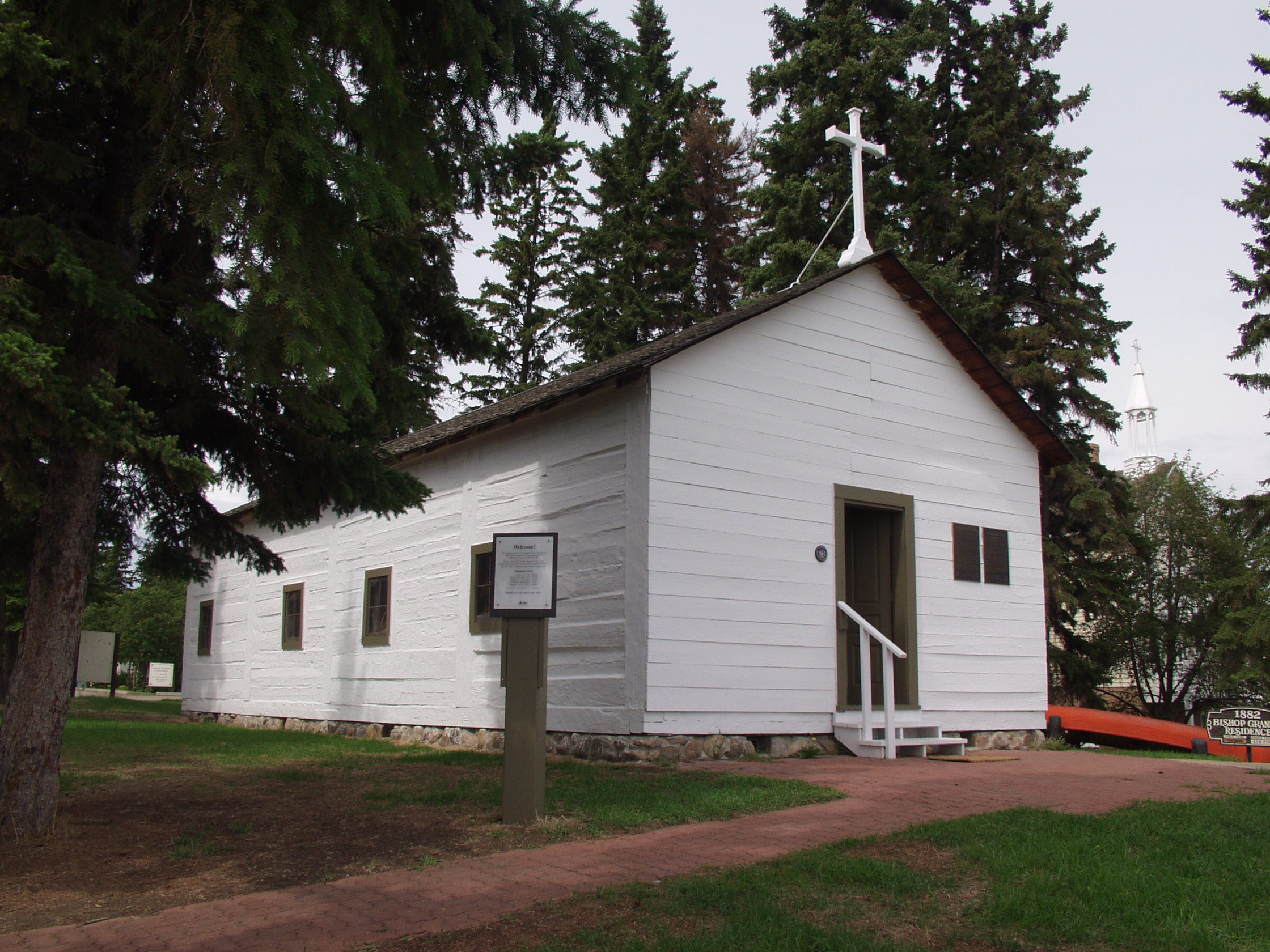
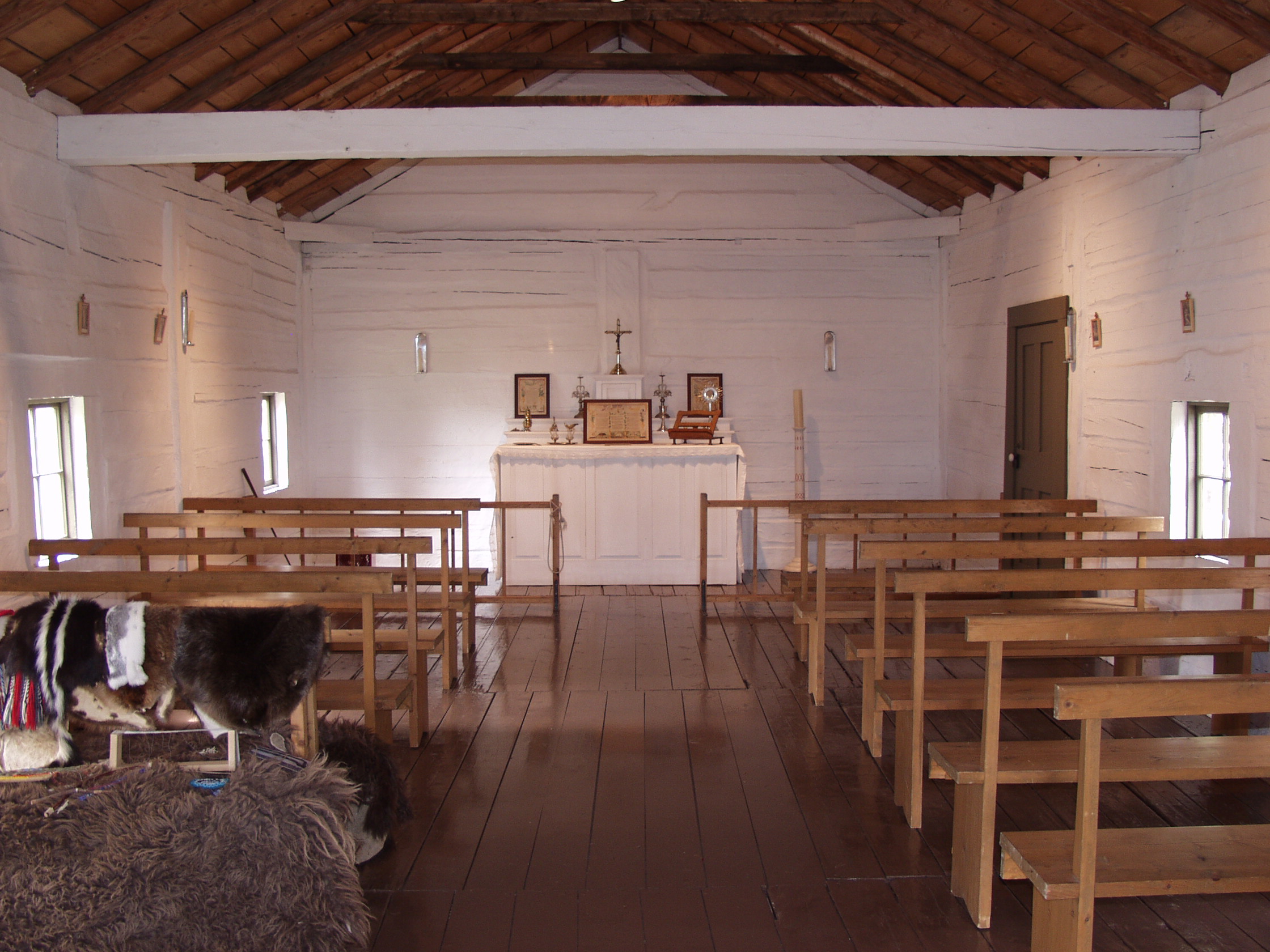
Did you know that a special Alberta community is celebrating its sesquicentennial this year?  For that matter, do you know what a sesquicentennial is?  It’s a 150 year anniversary and the City of St. Albert is marking that major milestone in 2011.  At the heart of the celebrations is the Father Lacombe Church situated on Mission Hill.  Erected in 1861, the church is the oldest extant building in Alberta and embodies the community’s early history as a Roman Catholic mission.  From those humble beginnings, St. Albert developed into one of the largest settlements between Red River and Vancouver.  Today, it’s a vibrant, prosperous city.  Learn more about this site and other historic places in St. Albert by visiting the Alberta Register of Historic Places and searching for “St. Albert” under the Municipality advanced search option.

Written by: Matthew Wangler, Manager of Alberta’s Historic Places Research and Designation Program

Paradise Valley Grain Elevator


The Alberta Wheat Pool Grain Elevator in Paradise Valley was designated a Provincial Historic Resource in 2008. In order for a site to be designated a Provincial Historic Resource, it must possess province-wide significance for either its history or architecture. To properly assess the historic importance of a resource, a historian crafts a context document that situates a resource within its time and place and compares it to similar resources in other parts of the province. This allows staff to determine the importance of a resource to a particular theme, time, and place. Below is some of the historical information used in the evaluation of the Alberta Wheat Pool Grain Elevator. 

When members of the Barr Colony settled in what would become the Lloydminster district at the turn of the 20th century, they were soon served by the Canadian Northern Railway, which arrived in 1904.  With this, the farming district quickly expanded.  One of the areas to be flooded with homesteaders was located just southwest of Lake Bricker, in a district to be named Paradise Valley by a promoter with the California Land Company named Frank Henton.  The first settlers began to take up land in 1906, and in 1910 a store and post office was opened by Kenneth Gunn on SE30 TP46 R2 W4.  Schools and churches soon followed in the district, although the main commercial centers remained Kitscoty and Lloydminster, some 20 km to the north and northeast.  Like much of rural Alberta, the Paradise Valley district prospered during the World War I years but suffered a recession at war’s end, with the overproduction of grain causing international prices to fall.  Then, with the Locarno Pacts opening up markets in Europe, the demand for western Canadian grain began to rise.  When coupled with high yields, this brought prosperity to the district during the late 1920s.

It was no doubt the high yields and growing demand for grain that encouraged the Canadian Pacific Railway to extend a branch line from Marsden, Saskatchewan through to Paradise Valley in 1929.  The track was built through to LSD 13 of NW6 TP47 R2 W4, where the CPR subdivided a townsite and erected a small station.  The post office was brought in and a community called Paradise Valley quickly evolved, although it was never large and would not be incorporated as a village until 1964.  The district was prosperous however, and the farmers were happy not to have to haul their farm produce all the way to Kitscoty, for, almost immediately after the railway arrived, several grain elevators dotted the skyline.  These were owned by the United Grain Growers, Searle, the western Grain Company, and the Alberta Wheat Pool.  In time, these elevators were joined by structures owned by the McCabe Brothers and the Federal Grain Company. Read more

McNaught Homestead


The McNaught Homestead near Beaverlodge was designated a Provincial Historic Resource in 2003. In order for a site to be designated a Provincial Historic Resource, it must possess province-wide significance for either its history or architecture. To properly assess the historic importance of a resource, a historian crafts a context document that situates a resource within its time and place and compares it to similar resources in other parts of the province. This allows staff to determine the importance of a resource to a particular theme, time, and place. Below is some of the historical information used in the evaluation of the McNaught Homestead.

In the spring of 1909, a group of excommunicated Methodists from Ontario known as the Christian Association (or Burnsites after their leader, Nelson Burns) made their way in convoy to the western edge of the Grande Prairie in northwestern Alberta and began to carve out homesteads.  The district along the lower Beaverlodge River was just being surveyed, and this group of 31 settlers came to constitute what would become the first successful attempt at group settlement in the Peace River Country.  They were soon joined by other settlers from Ontario, some of them Christian Association members, some not.  Among the latter was Charles McNaught who, with his wife Eliza, arrived in the district in June, 1911 to visit his brother, Sam, who had settled in the area two years earlier. 

Taken by the country, Charles and Eliza also decided to try establishing a farm there, taking two quarter-sections of land off the Beaverlodge River on NE15 and SE22 TP71 R10 W6 with half-breed scrip, and one on NE25 TP70 R11 off the Red Willow River by homesteading.  They decided to reside on NE15, and so they constructed a log dwelling, a barn, and other structures, and proceeded to work the land.  In 1914, they received title to both NE15 and SE22.

Being at some distance from the more heavily settled areas of the south Peace River Country, the settlers around the Beaverlodge constituted a tightly knit group, most of whom were members of the Christian Association.  Many non-members participated in Association activities.  Though the Association itself would eventually go into decline, due partly to the lack of any formal church structure, the community remained closely connected, with many families inter-marrying.  The children of Charles and Eliza McNaught would remain on the family homestead for years, becoming strong pillars of the community.  Indeed, three of them came to serve as local schoolteachers. Read more

St. Ambrose Anglican Church


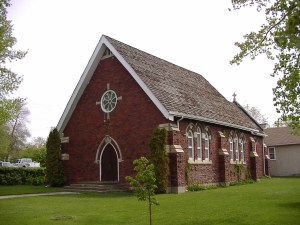
The St. Ambrose Anglican Church in Redcliff was designated a Provincial Historic Resource in 2008. In order for a site to be designated a Provincial Historic Resource, it must possess province-wide significance for either its history or architecture. To properly assess the historic importance of a resource, a historian crafts a context document that situates a resource within its time and place and compares it to similar resources in other parts of the province. This allows staff to determine the importance of a resource to a particular theme, time, and place. Below is some of the historical information used in the evaluation of the St. Ambrose Anglican Church.

When the Canadian Pacific Railway was extending its survey grade across the southern prairies during 1881-82, a point was made to identify places suitable for the erection of stations and the subdivision of townsites.  One such spot was where the railway was earmarked to cross the South Saskatchewan River at present dayMedicine Hat.  Among the established industries in the area was that of clay products.  Common clay and shale were readily available along the river flats, while ball clay, fire clay, and stonewear clay were to be found in the outlying areas.


In 1906, with the population ofMedicine Hatgrowing, the Stoner Land Company, which owned land along the South Saskatchewan River northwest of town, incorporated the Redcliff Brick Company and began to make bricks for the many buildings going up inMedicine Hatand elsewhere along the CPR line.  In 1907, a townsite was subdivided and a water & sewer system was installed near the plant.  With people arriving to engage in the brick industry, and its related service industries, Redcliff was soon incorporated as a village.  With the demand for brick growing, and the red clay off theSouth Saskatchewanproviding an excellent product, Redcliff also continued to grow.  The plentiful supply of natural gas was another inducement for industry as well as people, and Redcliff was referred to as a “Smokeless Pittsburgh.”  In 1912, with its population listed at 3,000, Redcliff was incorporated as a town.  By this time, three major brick plants were in business, along with an iron works, a truck-manufacturing plant, and the Dominion Glass Company.  Read more

What is the Alberta Register of Historic Places?


The Alberta Register of Historic Places is a database listing most historic places designated under the Historical Resources Act. If a site is designated a Provincial Historic Resource, a Registered Historic Resource or a Municipal Historic Resource it is likely included in the Register.  

Approximately 700 sites are listed in the Register. The Register contains sites from all over Alberta and includes all aspects of Alberta’s rich heritage. To learn about the designated sites in your region simply visit the site and start exploring. You can search the Register by: 

  • historic function (i.e. Bank, School, Residence)
  • current function (i.e. Fire Station, Grain Elevator)
  • ownership type (i.e. Municipal, Private, Not For Profit)
  • formal recognition type (i.e. Municipal Historic Resource, Provincial Historic Resource)
  • municipality (i.e. Brooks, Mackenzie County)
  • constituency (i.e. Wetaskiwin-Camrose riding)
  • site name (i.e. Zephyr Creek Pictographs)
  • community/nearest community (ie. Fort Vermilion, Cherry Point)
  • location (i.e. ATS-LSD Location, PBL Location)
  • map (i.e. enter a location and see which sites are in the area) 

The Alberta Register of Historic Places is administered through Alberta’s Historic Places Designation Program.  This program is responsible for identifying, evaluating and designating Provincial Historic Resources, updating and maintaining the Alberta Register of Historic Places, and submitting eligible sites to the Canadian Register of Historic Places.   

Sites listed on the Alberta Register of Historic Places are eligible for listing on the Canadian Register of Historic Places; a national database listing formally recognized historic places from all across Canada. Visit the Canadian Register and explore from “coast to coast to coast” the varied historic places of local, provincial, territorial and national significance.

Written by: Brenda Manweiler, Municipal Heritage Services Officer