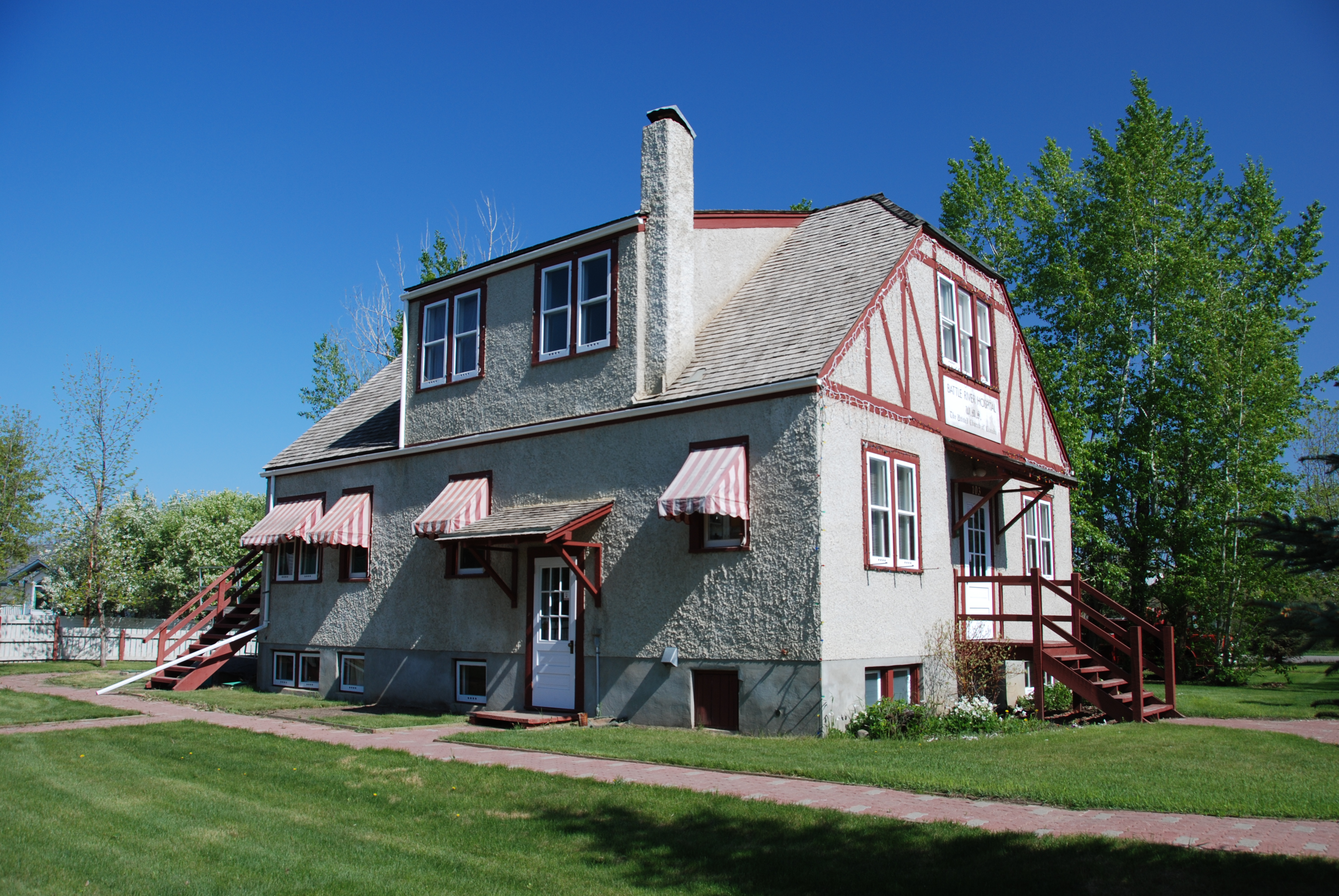
Battle River Hospital, Manning

In 1918, the Dominion government set up a Soldiers Settlement Board in order to secure employment for some of the vast number of soldiers expected to enter the workforce following their service in World War I.  Through the Board, many veterans were encouraged to settle on the Battle River Prairie, about 75km north of Peace River.  By 1921, the district had an estimated population of 500, while a tiny community called Battle River Prairie emerged off the Notikewin (formerly Battle) River.  In 1924, the store and post office was re-named Notikewin and moved to the site of present day Notikewin, some 8km to the north.
For supplies, most of the first settlers on the Prairie used the facilities at Peace River.  Commercial transportation on the River was common, while winter roads were opened for horse-drawn sleighs.  One major concern, however, was medical.  By the Public Health Nurses Act of 1919, visits were made by registered nurses with mobile clinics, but these could not accommodate emergency situations.  Throughout the 1920s, therefore, a demand began to grow for a regular physician to be assigned to some point on the Prairie.

In 1928, the provincial government decided to sponsor a permanent nurse for the district, with Mary Little moving to Notikewin.  In 1929, she was replaced by Dr. Mary Percy who was recruited from England.  In 1931, Mary Percy married Frank Jackson and moved to Keg River.  Several other nurses then followed until 1936, when Dr. Arthur Doidge became the first resident physician for the area.

The early 1930s had seen a continuing influx of settlers to the Prairie, many coming from the drought areas of southeastern Alberta.  As a result, there was growing pressure for a hospital.  Much of this came from the Women’s Missionary Society of the United Church of Canada, which began to collect promissory funds for a hospital in the area.  The government agreed to contribute the same amount as the WMS and appoint a physician if the WMS would build the hospital.  With support coming throughout the Prairie, sufficient funds were finally in place by the spring of 1936 to begin work on a facility large enough to serve the entire Prairie.

The site chosen for the hospital was on the bank of the Notikewin River, on the road midway between North Star and Notikewin.  The land was donated by John Robertson.  Work began that summer, with most of the labour and building supplies volunteered.  The Chair of the Building Committee was H.A. Inglis, while construction of the balloon frame structure was supervised by W.D.C. Buchanan.   Work continued throughout the winter, when possible, and into the following spring and summer.  Finally, on 4 September 1937, the new eight bed Battle River Hospital was officially opened.  It was an all inclusive facility, with space for an operating room, a waiting room, and a kitchen.  Electricity was provided by an external Delco gas engine.  The second floor was largely given over to living quarters for the three nurses, while Dr. Doidge lived in a separate cabin. Read more
Planes, Trains and Automobiles?

RETROactive is all about Alberta’s historic places. But what is a historic place: is it a home, a commercial building, a church or a baseball diamond? Could planes, trains or automobiles be historic places? The Standards and Guidelines for the Conservation of Historic Places in Canada defines a historic place as, “a structure, building, group of buildings, district, landscape, archaeological site or other place in Canada that has been formally recognized for its heritage value.” Does this mean any place in Alberta could be a historic place?

Not quite. For a place to be listed on the Alberta Register of Historic Places something must be  designated as a Provincial Historic Resource or a Municipal Historic Resource and  must meet one of the following significance criteria:

  • Theme / Activity / Cultural Practice / Event – a place directly associated with a theme, activity, cultural practice or event that has made a significant contribution to the broad pattern of provincial or municipal history.
  • Institution / Person – a place directly associated with a significant institution or with the life of a significant person in the province’s or municipality’s past.
  • Design / Style / Construction – a place displaying distinctive characteristics of a type, style, period or method of construction, or representing the work of a master, or expressing high artistic values.
  • Information Potential – a place yielding, or likely to yield, information important to a municipality’s or the province’s history, prehistory or natural history.
  • Landmark / Symbolic Value – a place particularly prominent or conspicuous, and that has acquired special visual, sentimental or symbolic value that transcends its function. A landmark contributes to the distinctive character of the province or municipality.

Note: The Historical Resources Act limits Municipal Historic Resource designation to real property. This means that while the province can designate a plane, train or an automobile, municipalities may only designate land and “immovables” (meaning buildings and other things permanently affixed to land). For additional information please see: Evaluating Historic Places and Designating Municipal Historic Resources.

So do historic places in Alberta include planes, trains and automobiles? I have searched the Alberta Register of Historic Places and this is what I have uncovered:

Planes: Hangar #14, Edmonton Municipal Airport

Hangar #14 is significant, “as a rare surviving Canadian example of hangar design from the World War Two period and as a symbol of Canada’s wartime experience.” It is also significant, “for its association with Wilfred R. May, one of Edmonton’s most significant aviation figures and the 418 City of Edmonton Squadron.” Hangar #14 is designated as both a Municipal Historic Resource and a Provincial Historic Resource.

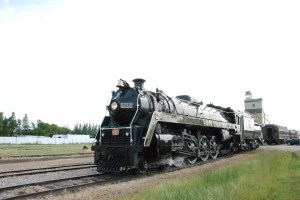
Trains: Canadian National Railways Steam Locomotive 6060

The 6060 Locomotive (pictured above) is significant, “as an excellent representation of a late-era steam locomotive.” The engine currently services the Alberta Prairie Railway Excursions line, which runs between Stettler and Big Valley. It is designated as a Provincial Historic Resource.

Automobiles:  

Do you have any suggestions? Approximately 700 historic places are listed on the Alberta Register of Historic Places. Search the register to discover one that is associated with automobiles. Let us know what you find by submitting a comment at the bottom of this post.

Written by: Brenda Manweiler, Municipal Heritage Services Officer

Welcome Forestburg!

The Forestburg Masonic Temple is the newest Municipal Historic Resource listed on the Alberta Register of Historic Places. Constructed in 1921, the Village of Forestburg values this place for its historic use as the meeting place for the Masonic Order and as a community hall. The hall is the Village of Forestburg’s first Municipal Historic Resource.

This listing contains an example of a Statement of Significance for a site that is valued as for its historic use.

Written by: Micheal Thome, Municipal Heritage Services Officer

The Leavings at Willow Creek (Oxley Ranch Site)

When the Montana cattle industry began to thrive in the aftermath of the American civil war, and the extension of railways to the western states, many cattle barons began to extend their activity north of the 49th Parallel.  Sensitive to the encroachment of American influence in western Canada, the Dominion government took several measures to ensure the “Canadianization” of this region.  A Department of the Interior was formed to oversee developments on the central prairies, a North-west Mounted Police force was formed to establish law and order, and a Dominion Lands Act was passed to see to the orderly disposition of Crown lands to British subjects, or those who would agree to become British subjects.  Plans were also put in place to extend a transcontinental railway through the region.

Another measure taken by the government to ensure the loyalty of the region to Canada was to encourage a ranching industry in the western foothills, with capital to be provided by eastern Canadian and British entrepreneurs.  For such Canadian or British cattle companies, vast tracts of land would be set aside as grazing leases.  By the early 1880’s, much of the southern foothills of what was to become Alberta was therefore given over to a few major cattle companies, including the Cochrane, Winder, Walrond, Northwest, Quorn, Stewart and Stinson Ranches.  Their success depended to a great extent on the arrival of the CPR, which reached the site of Fort Calgary in 1883.

Another major ranching operation was founded in 1882 by Alexander Staveley Hill, a Conservative Member of the British House of Commons, backed by Lord Lathan.  This was the Oxley Ranch, which came to base its operation on two vast tracts in the districts of present day Champion and Staveley, north of Fort Macleod.  This ranch flourished throughout most of the 1880’s and 1890’s, and, during much of this time, its success appears to have been due to the efficient management of John Roderick Craig.  An added benefit was the extension of the Calgary & Edmonton Railway from Calgary to Fort Macleod in 1892, which eliminated the necessity of making long cattle drives to Calgary.

By the end of the decade however, changes were in the air.  In order to provide a greater population base in western Canada, the new Liberal government of Sir Wilfrid Laurier began to curtail the predominance of many of the large ranches by not renewing the grazing leases on much of the range land.  The idea was to encourage smaller independent farms and ranches, which would specialize in mixed farming.  During the early 20th century, many of the large ranches went out of business, while others saw their scope of operation severely curtailed, including the Oxley Ranch.

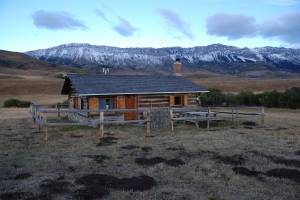
During its heyday, the western portion of the Oxley Ranch had based its operation from headquarters on NE14 TP13 R28 W4.  On this site today there is a log house which was, no doubt, part of the Oxley Ranch operation at some point, and possibly the home of its manager, John Craig.  It is located next to a trail that extended from Fort Macleod to Calgary, but which went out of use after the C & E Railway to the east saw the center of activity also shift, when railway communities like Claresholm and Staveley emerged.  Near the house is a wood frame barn on a large concrete foundation built into a hillside which could also have been part of the Oxley Ranch.  The buildings are also spoken of as having been part of a North-west Mounted Police detachment, which existed in the district in the late 1880’s, but was moved to Claresholm shortly after the railway came through.

The Oxley Ranch buildings provide structural evidence of one of the biggest ranching operations in the southern Alberta foothills, prior to 1900.  They tell of both social and commercial activities of the ranch, and of the southern Alberta cattle industry in general during this time.   The buildings are also important in being close to the original cattle trail between Fort Macleod and Calgary, which was the major thoroughfare between these two centers prior to the coming of the railway in 1892.  In November 2006, they were designated a Provincial Historic Resource.

Written by: David Leonard, Historian

Visit the Alberta Register of Historic Places to learn more about the heritage value of the Leavings at Willow Creek (Oxley Ranch), near Claresholm. In order for a site to be designated a Provincial Historic Resource, it must possess province-wide significance. To properly assess the historic importance of a resource, a historian crafts a context document that situates a resource within its time and place and compares it to similar resources in other parts of the province. This allows staff to determine the importance of a resource to a particular theme, time, and place. Above, is some of the historical information used in the evaluation of the Leavings at Willow Creek.

Special Places in the Special Areas

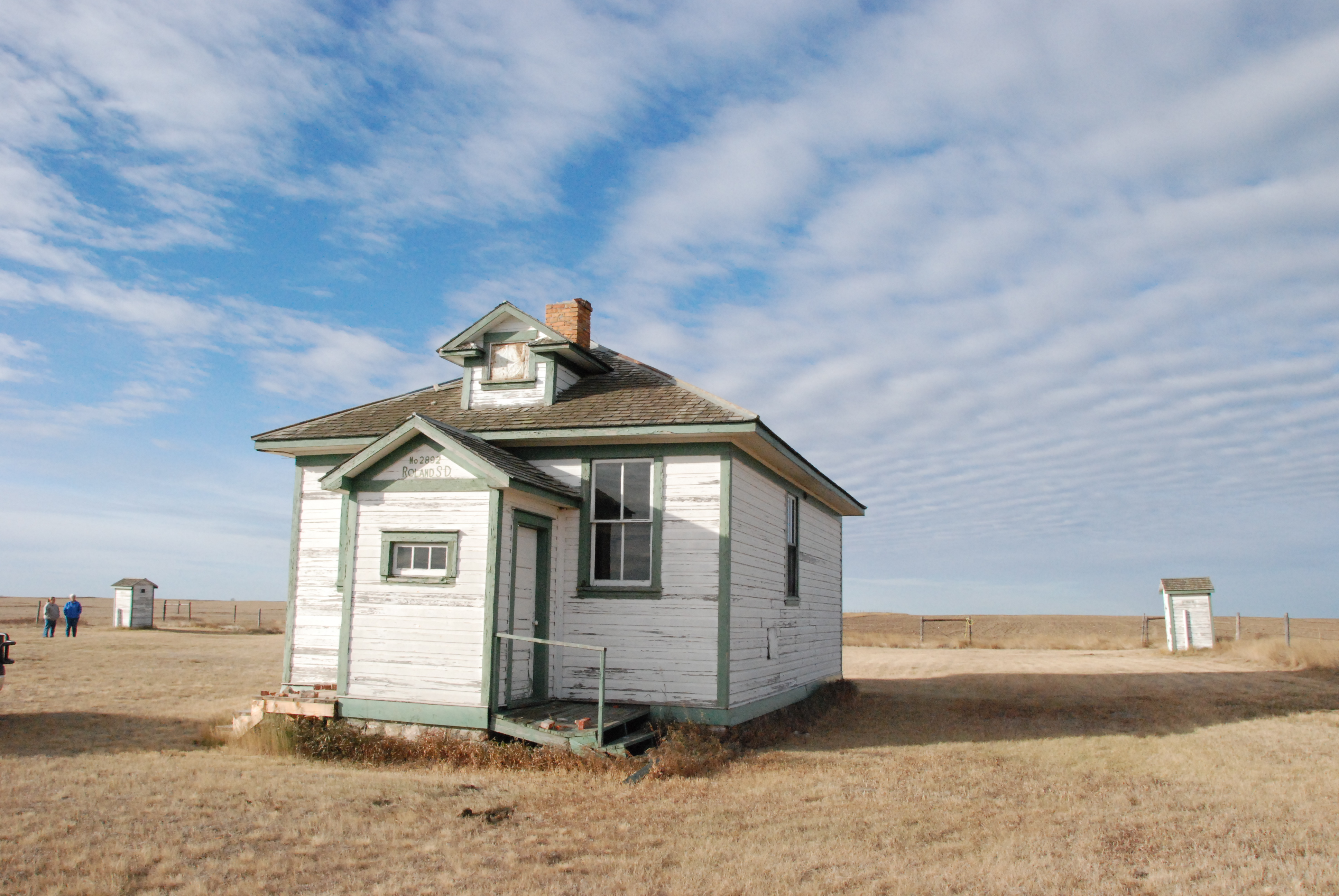
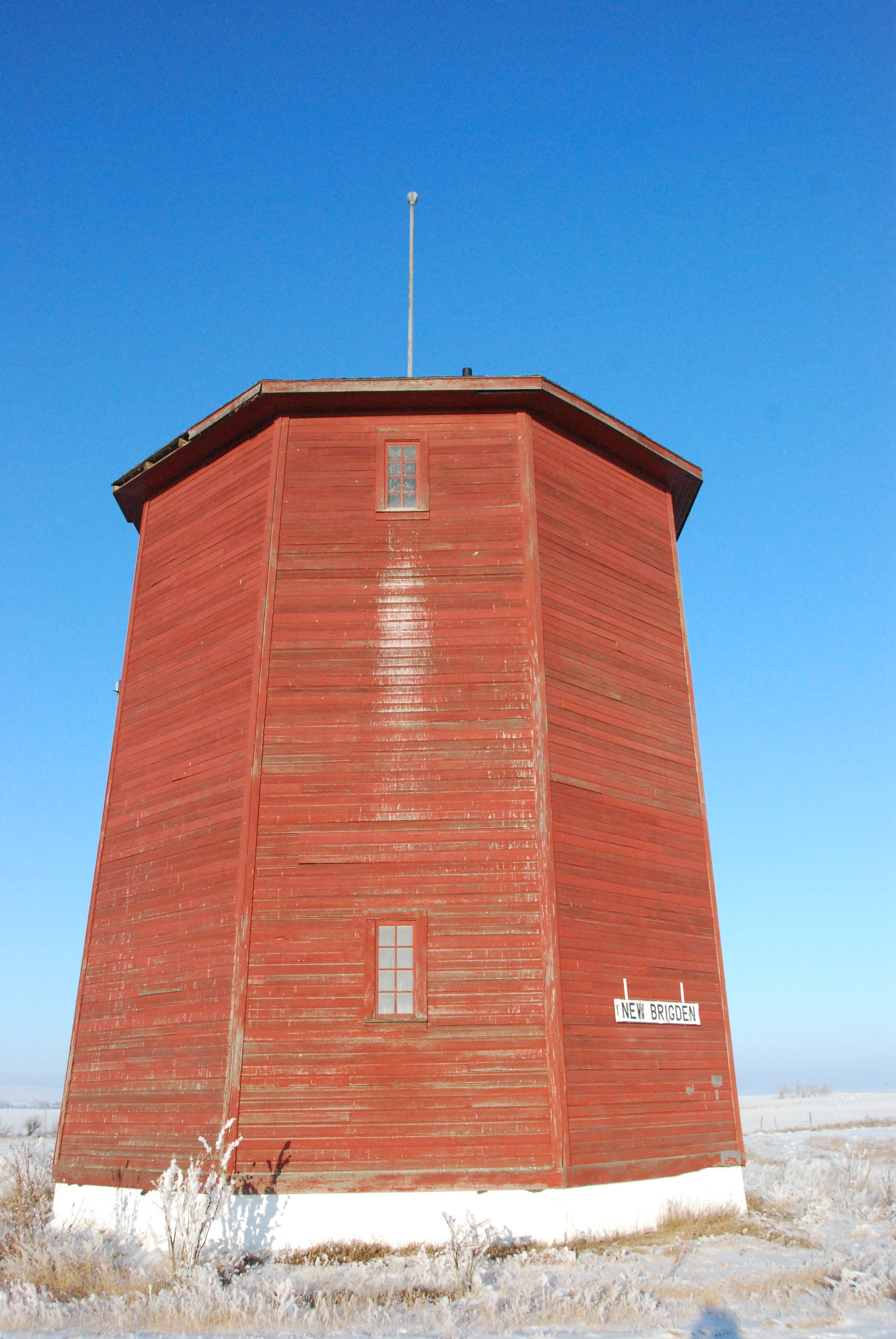
The three most recent Municipal Historic Resources listed on the Alberta Register of Historic Places are in the Special Areas. The three Special Areas form a unique municipality. Located in southeastern Alberta, the 2.1 million hectare municipality is administered by a provincially appointed board. The sites are:

  • The St. Laurence Anglican Church, which was built in the Hamlet of Monitor in 1915. This wood-framed church is valued for its use as an Anglican Church and its association with the foundation and development of the local community.
  • The Roland School, a one room school located south of the Village of Consort. The community values it for its use, first as a public school between 1913 and 1933 and subsequently as a community hall.
  • The New Brigden Water Tower, which was constructed by the Canadian National Railway in 1925 as the company installed a branch line through the area. The tower is valued for being a landmark in the Hamlet of New Brigden.

The Historical Resources Act enables Alberta’s municipalities to conserve their significant places. By designating a site a Municipal Historic Resource, municipalities can protect their special places from unsympathetic alterations. Since 2006, when the Municipal Heritage Partnership Program was established, Alberta’s municipalities have designated almost a hundred Municipal Historic Resources. The variety of historic places that our communities are preserving illustrates the variety of ways Albertans have lived their lives.

The above three sites are just a small sample of the 165 Municipal Historic Resources currently listed on the Alberta Register of Historic Places. We encourage you to explore the register to learn more about Alberta’s provincially and municipally designated historic places. Perhaps one of the listings will inspire you to look at a place in your community in a new way.

Written by: Micheal Thome, Municipal Heritage Services Officer

Alberta’s Historic Places in the Space Age

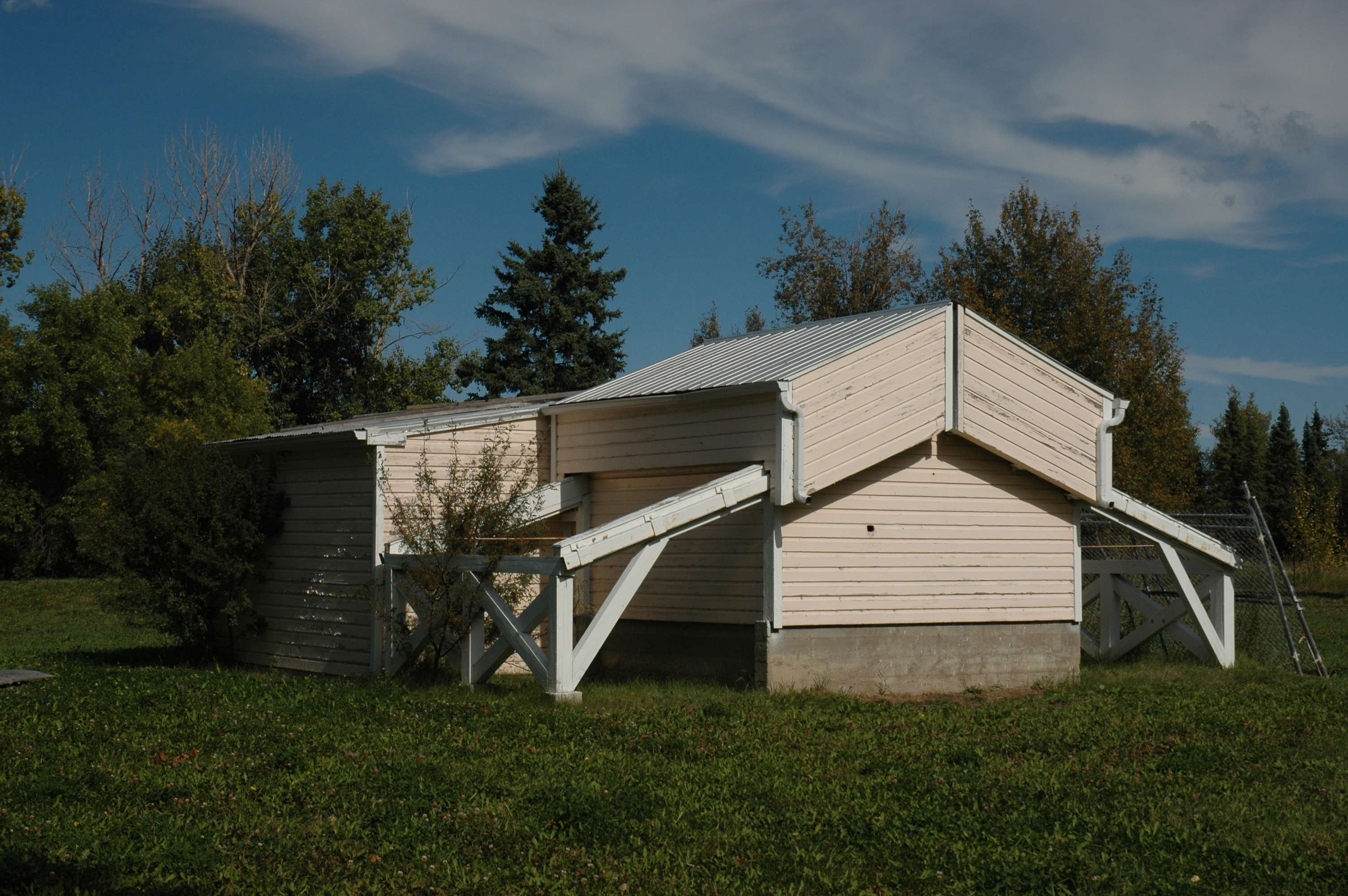
While it may not look like much from this 2006 photo, Alberta’s Newbrook Observatory played a key role in the “space race” of the twentieth century.

The field station’s listing on the Alberta Register of Historic Places recounts how on “October 4, 1957, the Union of Soviet Socialist Republics (U.S.S.R.) astounded the world by announcing the successful launch of Sputnik I, the first artificial satellite to be sent into space. Less than a week later, Art Griffen, resident scientist at the Newbrook Observatory, took the first North American photograph of Sputnik, confirming the Russians’ claim. The news of the launch sent shockwaves around the world.”

The Newbrook Observatory was designated in 1995 as a Provincial Historic Resource.

Written by: Matthew Francis, Manager of Municipal Heritage Services

Did you know… ?

Did you know that the discovery of oil near Turner Valley, in 1914, resulted in the first major oil boom in western Canada? When returning from a business trip in southern Alberta I stopped at the Turner Valley Oil Field heritage marker and learned about the birth of Alberta’s oil industry.

To learn more, check out the video below or scroll down to read the heritage marker text.


Heritage marker location: on the west side of Highway 22, north of the Town of Turner Valley.

Learn about other aspects of Alberta’s heritage in the Turner Valley area – explore the Alberta Register of Historic Places and read about various Provincial Historic Resources:

Written by: Brenda Manweiler, Municipal Heritage Services Officer


Heritage marker text:

Alberta’s History: Turner Valley Oil Field 

In the nearby town of Turner Valley is the discovery well of the first major oil and gas field in Alberta, drilled by Calgary Petroleum Products. Dingman No. 1, named after a major stockholder, blew in on May 14, 1914. The well produced large quantities of gas and light oil and began Alberta’s first oil boom. With the boom came a flood of stock speculation, but by late that summer the boom had collapsed. Many new oil companies had proven fraudulent, other wells were disappointing, and soon the investment capital that was needed for more development was focused on the war effort instead. 

The second boom began in 1924 with the Royalite No. 4 well owned by Imperial Oil. Royalite No. 4 produced even more of the light-gravity oil called naptha than the discovery well, but was not deep enough to reach the crude oil below. In June 1936, a new well discovered extensive oil deposits at 2,081 metres. This well, called Royalties No. 1, produced almost 1,000 barrels of oil a day, reviving interest in oil exploration in the field. By late 1936 the whole Turner Valley field was producing about 10,000 barrels per day. 

From 1914 to 1947, Turner Valley produced nearly all of Alberta’s petroleum, and it remained Canada’s most important oil field from 1925 until the discovery of oil south of Edmonton, near Leduc, in 1947.

Canadian Northern Railway Station, Fort Saskatchwan

When the Canadian Pacific Railway was planning for its continental line to the pacific coast during the 1870s, a favoured route saw the track proceeding northwest from Brandon, Manitoba through the Yellowhead Pass, crossing the North Saskatchewan River near the small Northwest Mounted Police community of Fort Saskatchewan.  In the end, the CPR chose the Kicking Horse Pass, and the line was extended past Fort Calgary in 1883.  Eight years later, a subsidiary of the CPR, the Calgary & Edmonton Railway, brought rail service directly to South Edmonton, and Edmonton soon emerged as a district metropolis.

In 1904, Edmonton became a city, and the following year it was named the capital of Alberta.  As this was taking place, the city was making preparations for the arrival of the Canadian Northern Railway, which would give it a direct rail connection with eastern Canada.

Somewhat ironically, the route chosen for the Canadian Northern was roughly that selected for the CPR in 1877, except that, after passing by Fort Saskatchewan, it was made to swing southwest to include Edmonton. Fort Saskatchewan thus received a railway as early as the fall of 1905.

Canadian Northern Railway Station Provincial Historic Resource

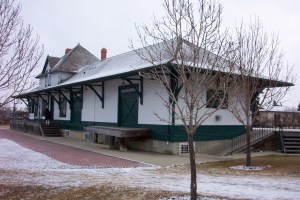
In anticipation of the arrival of the railway, Fort Saskatchewan began to grow rapidly.  In July 1904, it became a town with over 500 people.  It was, therefore, appropriate that the Canadian Northern construct a station befitting the largest community on its line between Edmonton and North Battleford.  While rail construction proceeded, work WAS begun on a wood frame station according to a newly devised 100-19 plan, which called for a long, vertical building, with an upper floor to accommodate the station agents and their families.  It was located just west of the town center and was completed in October, 1905.  In its immediate vicinity, a large water tower and a Brackman-Kerr elevator were erected at the same time.

Being in the center of a rich farming district, Fort Saskatchewan continued to grow after the arrival of the CNoR.  The railway bridge across the North Saskatchewan also served as a traffic bridge, giving the town direct automobile access to Edmonton some 20km away.  Several other elevators soon dotted the skyline near the station, and a stockyard was located nearby. Read more

5th Annual Municipal Heritage Forum – Save the Date!

The dates and location for this year’s annual Municipal Heritage Forum have been set! It’s hard to believe that this year marks five years since our intial “Summit for Stakeholders” back in 2007.  It’s going to be a tremendous event, and you will not want to miss it – so save the date on your calendars now. Registration materials will be available soon!

Questions? Contact Matthew Francis, Manager, Municipal Heritage Services: (780) 438-8502 or via email matthew.francis@gov.ab.ca

Need help understanding your historic place? Develop a SoS

Many municipalities are busily writing Statements of Significance (SoS) for their historic places. Listing Municipal Historic Resources and Provincial Historic Resources on the Alberta Register of Historic Places requires a SoS, but that’s hardly the best reason to write one. Statements of Significance are not online plaques, histories or even calls for help.

A properly written SoS explains why we value a particular historic place, linking these values to physical, character-defining elements that manifest those values. If you would like to see an example of a SoS just look at the entry for any Municipal Historic Resource or Provincial Historic Resource listed on the Alberta Register of Historic Places, such as the SoS for the D.U. Ranchlands Cabin.

A Statement of Significance explains where a historic place is located (a quarter section in the M.D. of Pincher Creek), what you will find at the site (a one-room log cabin) and the reasons why the community feels the place is significant. A SoS does not describe a place’s history (such as who built it), it explains why the community values the place (as an example of an early 1900 homesteader’s cabin). A SoS relates these values to physical elements that must be conserved (wood log construction). Removing these character-defining elements would undermine the place’s significance; without these elements, the site would no longer be a historic place.

Without understanding historic places–why each is valued and how each exhibits its values–nobody can objectively determine how proposed alterations will affect a historic place. Many historic places have been scarred by well intentioned “repairs” that didn’t take into account why it was significant. A Statement of Significance may not be a call for help, but these documents do help in planning for and managing the effective conservation of historic places. 

Written by: Michael Thome, Municipal Heritage Services Officer