You have all probably seen them – large blue heritage markers located at highway rest areas or points of interest throughout Alberta. These interpretive signs tell of Alberta’s rich heritage. Have you ever stopped to read one? At the end of April I was attending meetings in the Town of Pincher Creek and came across a heritage marker telling the story of Sergeant Wilde and Charcoal. I stopped, curious to learn about an aspect of Alberta’s history. With camera in hand, I decided to also produce an impromptu video blog post. Please watch and enjoy (but bare in mind that my videography skills require some fine tuning).
Heritage marker location: east side of Highway 6, four kilometers south of the Town of Pincher Creek.
A previous RETROactive post notes that the City of St. Albert is celebrating its Sesquicentennial (150th) Anniversary in 2011. Such anniversaries are rare in Alberta, so St. Albert’s big year is worth at least one more post. St. Albert is one of the oldest communities in Alberta. It received its current name in 1861. Most people believe that the city was named for Father Albert Lacombe, OMI, and it was…kind of.
Portrait of Father Lacombe, ca. 1900, (A2283, Provincial Archives of Alberta)
Albert Lacombe was born in 1827 at Saint-Sulpice, Lower Canada (now Quebec). He was ordained in 1849 and was sent to Pembina, Dakota Territorywhere he met with and accompanied the Métis on their hunts. After a short posting in Lower Canada in 1851/52, he was sent to the Red River Settlement to assist Bishop Alexandre-Antonin Taché, who sent him to the Lac Ste. Anne Mission northwest of Edmonton. Although Lac Ste. Anne would be his base for the next seven years, Lacombe travelled throughout Central and Northern Alberta ministering to the Métis and native people of those regions. Due to its poor agricultural prospects, Lac Ste Anne had been deemed unsuitable as a permanent mission site and a search was made for a more promising location. On January 14, 1861, Father Lacombe and Bishop Taché arrived at “Big Lake Settlement,” a Métis community immediately northwest of Fort Edmonton on the shores of, you guessed it, Big Lake. The surrounding lands seemed ideal for agriculture and the settlement’s proximity to Fort Edmonton made it much easier to minister to the Cree and Blackfoot peoples trading at the post. Climbing a nearby hilltop, where they ate a meal of tea and pemmican, Bishop Taché reportedly stuck his staff in the snow and declared to Lacombe, “You were right. This sight is magnificent. I choose it for a new mission and I want it to be called St. Albert, in honour of your patron saint. Here you will build a chapel.”
Albert Lacombe’s patron, or name saint, was Saint Albert of Louvain. In 1191, Albert of Louvain was chosen to be Bishop of Liege (in Belgium), but his appointment was disputed by Emperor Henri VI of the Holy Roman Empire, who had been excommunicated by Pope Celestine III for imprisoning Richard I of England. Henri VI appointed his own candidate to the bishopric of Liege. Albert appealed to the pope and to Archbishop William of Rheims. Although Albert’s appointment was confirmed, he was accosted and murdered by Henry VI’s supporters. Albert of Louvain was later canonized and his feast day is acknowledged on November 21.
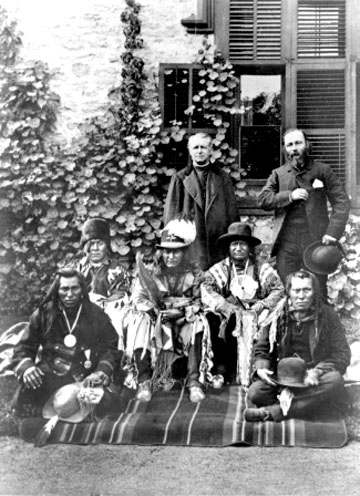
Father Lacombe with Chiefs at Earnscliffe (home of Sir John A. Macdonald), Ottawa, October 1886. Front Row, L to R: North Ax (Piegan), One Spot (Blood) Middle Row, L to R: Three Bulls (Blackfoot), Crowfoot (Blackfoot), Red Crow (Blood) Back Row, L to R: Albert Lacombe, Jean L’Heureux (P200, Provincial Archives of Alberta)
So, was St. Albert named for Father Albert Lacombe? In a way it was, but it is more correct to say that the City of St. Albert and Father Albert Lacombe are both named for the same person – St. Albert of Louvain. Incidentally, for many years it was believed that Albert Lacombe’s patron saint was a different Albert, namely Albertus Magnus, or St. Albert the Great, who was Bishop of Regensburg (1260-1262) and an advocate for the harmonization of science and religion. However, Albert the Great was not canonized, or elevated to the sainthood, until 1931 – 15 years after Father Lacombe’s death and 70 years after the establishment of the mission, making it unlikely that either the mission or the missionary would have been named for Albert the Great.
Father Lacombe had a relatively short connection with the mission at St. Albert. He did build a chapel along with a flour mill, a bridge across the Sturgeon River and a school near Fort Edmonton, but his stay at the new mission site was short. By 1865, he was tasked with establishing an itinerant mission to the east and south, living with, working with and more directly influencing the Cree and Blackfoot people. Over the next seven years he would travel from Rocky Mountain House in the west, Fort Victoria (Pakan) in the east, St. Albert in the north and Fort Benton, Montana Territory and St. Louis, Missouri in the south. In 1872, he was reassigned to the Red River Settlement. Although he returned to the west in 1882, he was more closely associated with southern Alberta for the rest of his career and life. Albert Lacombe died in Midnapore, now part of Calgary, on December 12, 1916.
The community of St. Albert grew slowly in stature and population through the years. A post office was established in 1880. It was erected as a village in 1899 and as a town in 1904. By 1911, the population had reached approximately 600 people. By 1971, the population had reached 11,800. Six years later, on January 1, 1977, St. Albert became a city with a population of about 24,000 people. St. Albert is currently the province’s sixth largest city with 60,138 residents.
Written by: Ron Kelland, Historic Places Research Officer and Geographical Names Program Coordinator
City’s Location
National Topographic System Map Sheet: 82 H/12 –St. Albert
Latitude/Longitude: 53° 38′ 13″ N & 113° 37′ 13″ W
Alberta Township System: Twp 25 Rge 25 W4
Description: Immediately north-west of Edmonton on the Sturgeon River.
Additional Resources
More information about Father Albert Lacombe, OMI can be found in:
After the Canadian Pacific Railwayextended its track from Medicine Hat to Calgary in 1883, land along the rail line became viable for homesteading. The CPR also acquired 3 ½ million acres of land between Brooks and Calgary as part of its agreement with the Dominion government to build its line. Here, the CPR subdivided 80 acre plots and proceeded to advertise this land for sale to immigrant farmers. Because much of the land was bereft of adequate water supplies, a vast irrigation scheme was undertaken off the Bow River to make the land more attractive.
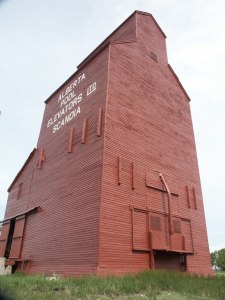
The irrigation project was completed in 1914, but, due to the war in Europe, settlers did not arrive in the area in large numbers until after the armistice. Many more arrived after the CPR pushed through branch lines to parts of the district in the late 1920’s. One of these lines extended south of Brooks to the hamlet of Scandia, where a post office had been opened in 1924. In 1928, the hamlet was graced with an Alberta Wheat Pool elevator.
The Wheat Pool elevators were a part of the farmers’ co-operative movement in Alberta. They had been promoted from within the United Farmers of Alberta by Henry Wise Wood. A major complaint of the province’s farmers had been the control exercised by independent grain companies which could fix prices at will. As a result, and given the extreme fluctuations in the international demand for grain, farmers had often gone from prosperity to bust within short periods of time. According to Wood, the answer lay in a co-operative through which farmers could pool their grain and have it sold at opportune times with the profits shared. He managed to convince the UFA of this, and, when the Alberta Wheat Pool was formed in 1923, Wood became its first president. Before long, Alberta Wheat Pool elevators were to be found in most farming communities which had rail access. They eventually became the largest grain company in the province.
That the first elevator in Scandia should have been a Wheat Pool one was appropriate, for the farmers in this district had been coming together for some time over their collective bitterness against the CPR for having sold them their land. Though the yields of grain were high, 80 acres was simply not enough land on which to establish a profitable farm. The farmers formed associations to deal with the CPR, which argued that its irrigation projects were not turning a profit, despite what the farmers were paying for water. Finally, in 1934, a number of them at the eastern end of the area, led by one Carl Anderson, formed what they called the Eastern Irrigation District, which took over the management of the water supply from the CPR. Despite its cost, the irrigated water proved its worth in dry years, when other parts of southeastern Alberta were succumbing to drought conditions.
The productivity of the land in the Scandia district was such that, in 1937, the Federal Grain Company also built an elevator there. With World War II, the demand for western Canadian grain rose, and the train service to Scandia became thrice weekly. Following the war, the Pool bought out the Federal elevator and soon shut it down. Eventually, improved roads were making it convenient for farmers in the northern parts of the district to take their grain to Brooks, and, so, the elevator at Scandia was closed in 1977, as was the train service to the community. The elevator, however, was acquired by the Eastern Irrigation District Historical Park and Museum, and is now the centerpiece of an agricultural museum. In 2008, it was designated a Provincial Historic Resource.
Written by: David Leonard, Historian
Visit the Alberta Register of Historic Places to learn more about the heritage value of the Alberta Wheat Pool Grain Elevator and Bow Slope Stockyard. In order for a site to be designated a Provincial Historic Resource, it must possess province-wide significance for either its history or architecture. To properly assess the historic importance of a resource, a historian crafts a context document that situates a resource within its time and place and compares it to similar resources in other parts of the province. This allows staff to determine the importance of a resource to a particular theme, time, and place. Above, is some of the historical information used in the evaluation of the site.
Volunteers are key to the Town of Pincher Creek’s Municipal Heritage Survey Project
Throughout the next twelve months the Town of Pincher Creek will be completing a Municipal Heritage Survey. Approximately 300 sites (older than the 1940s) ranging from houses, commercial buildings and industrial sites will be documented through photography and by recording geographical, architectural and historical information. Diane Burt Stuckey, Director of Community Services, will serve as the Municipal Coordinator and Farley Wuth, Curator of the Kootenai Brown Pioneer Village, will be the Heritage Consultant.
Diane Burt Stuckey and Farley Wuth
Working together, Diane and Farley will coordinate the volunteer efforts of community residents interested in contributing to this project. These volunteers will photograph each site, conduct historical research, upload information to the Alberta Heritage Survey Program database and most importantly, gain a greater understanding and appreciation for the unique history that provides Pincher Creek with its strong community identity and sense of place.
On April 27, 2011, a public information meeting was held for area residents interested in learning about the project. Attendees exhibited an interest in the project and a passion for their community. On May 14, 2011, Brenda Manweiler, Municipal Heritage Services Officer, and Dorothy Field, Heritage Survey Program Coordinator, provided a detailed training session so that volunteers would understand their roles and responsibilities. With camaraderie and commitment, the attendees were excited to begin work.
The Philips House will likely be documented in the Town of Pincher Creek Municipal Heritage Survey.
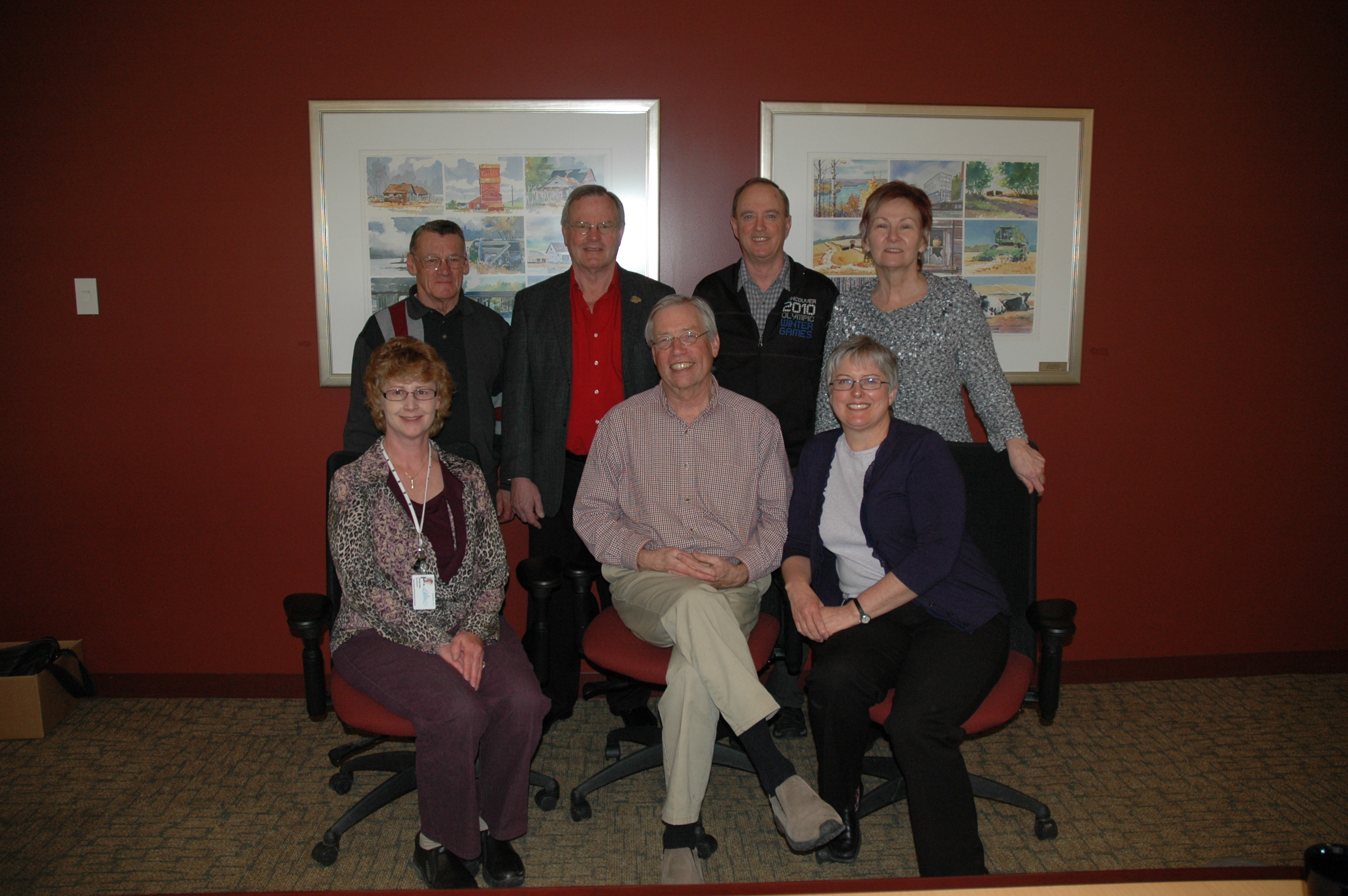
Early this year, the Alberta Historical ResourcesFoundation (AHRF) welcomed six newly appointed members to the Board, strengthening its size to 12 members. Dr. Carolee Pollock, Board Chair, with Larry Pearson, Acting Executive Director, and staff ushered them in with an engaging orientation session held at the Edmonton headquarters in February.
“I am delighted to welcome Geraldine Bidulock, Joe Friedel, Robert Gaetz, Laurel Halladay, Leah Millar and Naomi Nind to AHRF’s Board of Directors. I really appreciate the good questions and discussion that were generated by our newly strengthened Board,” said Dr. Pollock.
Dr. Pollock concluded the meeting by saying, “We are fortunate to have a great diversity of skills and backgrounds among our Board members. This makes for both good decision-making and lively and interesting meetings. The more the merrier!”
Pictured above: Board of the Alberta Historical Resources Foundation. Back row (L-R): Don Totten, Leah Millar, Geraldine Bidulock, Bob Gaetz, Joe Friedel, Fred Bradley, Laural Halladay. Front Row (L-R): Linda Affolder, Carolee Pollock (Chair), Tom Clark, Hazel Hart. (Missing: Naomi Nind.)
Written by: Carina Naranjilla, Grant Program Coordinator
In 1909, Premier Rutherford of Alberta announced a program of vast railway expansion in the province, offering bond guarantees to major railway companies to build branch lines in districts where they seemed warranted. The railway company to undertake the greatest extent of track as a result of this was the Canadian Northern, which had arrived in Edmonton directly from the east in 1908, and was soon to extend its track north to Sangudo and Athabasca and west into British Columbia.
Other Canadian Northern lines were built in the southern part of the province. One of the more significant of these was between Stettler and Camrose, and was completed in 1911, opening up new farmland for settlement. As was its practice, the Canadian Northern erected stations at key points along the line, and, in some cases, townsites were subdivided. This was the case with Meeting Creek, which was located in a district that had already been settled, largely by farmers from the United States. When the railway came through, the tiny community, established in 1905, was moved five miles to be included in the new townsite.
Being less than 18km from the larger farming centers of Donalda and Bashaw, and 30km away from Camrose, Meeting Creek never grew to sufficient size to be incorporated. It did, however, possess most of the amenities of a prairie farming community, including stores, garages, livery stables, a blacksmith shop, a bank, a hotel, and, eventually, three grain elevators. It also had a small, but busy, railway station, constructed in 1913. This was a two-story structure with a warehouse attached. It was subdivided into an office, waiting room, freight house, and living quarters for the station agent and his family.
Life in the community of Meeting Creek evolved around the businesses along Main Street, which ran perpendicular to the station, and the station itself. All passengers and incoming and outgoing freight were handled by the station agent, including the export of grain. The agent was also the district telegrapher.
When the Canadian Northern was merged with the Grand Trunk Pacific Railway in 1919 to form Canadian National, many small branch lines were closed down in Alberta, but the Camrose – Stettler line remained open, as sufficient agricultural products were being shipped out from the district in between to warrant this. By the 1960’s, however, improved highway traffic saw the closure of train service in Meeting Creek, although the Camrose – Stettler branch line would remain operating until 1997.
Being that there was little development in Meeting Creek in the years after the railway station was closed, the structure managed to survive, along with the Alberta Pacific Grain Elevator, and, in 2008, it was designated a Provincial Historic Resource. Today it is an integral part of the Canadian Northern Society’s tour of significant rail sites.
Written by: David Leonard, Historian
Visit the Alberta Register of Historic Places to learn more about the heritage value of the Canadian Northern Railway Station in Meeting Creek. In order for a site to be designated a Provincial Historic Resource, it must possess province-wide significance for either its history or architecture. To properly assess the historic importance of a resource, a historian crafts a context document that situates a resource within its time and place and compares it to similar resources in other parts of the province. This allows staff to determine the importance of a resource to a particular theme, time, and place. Above, is some of the historical information used in the evaluation of the Meeting Creek railway station.
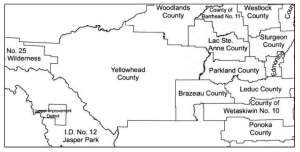
Yellowhead County, a large rural municipality west of Edmonton that stretches between the Pembina River in the east all the way to the Jasper National Park gates in the west, is currently embarking upon a Municipal Heritage Survey.
Over the coming months the County will identify and document a broad range of potential historic places within the County’s boundaries. With Yellowhead County spanning an area of 7,012,000 acres you might be asking, “How is the County going to accomplish this?”
1) Under the Municipal Heritage Partnership Program (MHPP) Yellowhead County has received cost-shared funding. All municipalities in Alberta are eligible to apply for cost-shared funding to assist in the completion of a Municipal Heritage Survey, Municipal Heritage Inventory and/or a Municipal Heritage Management Plan. These projects are designed to assist with the identification, evaluation and management of historic places. Municipalities throughout Alberta have participated in MHPP and learned about the rich historic resources that make their communities unique and livable.
2) Yellowhead County staff, combined with the services of a heritage consultant and the participation of area residents, will complete the Municipal Heritage Survey. The survey will systematically document resources through photographs and record geographical information, design features and construction and historical information.
3) Perhaps most importantly, the County’s Heritage Advisory Board will provide advisory assistance to staff and the consultant throughout the completion of the survey. In September 2010, Yellowhead County Council passed a bylaw establishing a Heritage Advisory Board. This Board, comprised of area residents, has been tasked with the job of advising Council on matters pertaining to the development and maintenance of a heritage program. For instance, the Board will be able to:
assist in the implementation of heritage initiatives (i.e. the Municipal Heritage Survey);
facilitate community heritage awareness through partnerships and educational initiatives; and
advise Council on proposed Municipal Historic Resource designations.
This committed group of volunteers has the important job of providing public input and expertise to Council so that informed decisions about Yellowhead County’s heritage can impact current residents and future generations.
Back L-R: Gary Conger, Shawn Berry, Brian Broughton, Pat DiMarcello. Front L-R: Cheryl May (Heritage Coordinator), Marshall Hoke (Chair), Debbie Charest (Director of Community and Protective Services).
Do you have questions about how your municipality can participate in the Municipal Heritage Partnership Program? Contact program staff to learn more.
Written by: Brenda Manweiler, Municipal Heritage Services Officer
On Sunday, June 5, 2011 (12:00pm to 4:00pm) staff of Rutherford House Provincial Historic Site will host a celebration to mark this milestone. All are welcome to attend – a traditional Founder’s Day Tea Party along with parlour music, a family craft, a history display and tours of the home will surely entertain.
For more information about this event, click here.
Rutherford House, located in Edmonton on the grounds of the University of Alberta, was built in 1911 as the home of Alberta’s first premier, Dr. Alexander Cameron Rutherford. The house was designated as a Provincial Historic Resource in 1979 by the Government of Alberta and currently operates as an interpreted Provincial Historic Site.
To learn more about Rutherford House Provincial Historic Site, click here.
To read about the heritage significance of Rutherford House and why it was designated a Provincial Historic Resource, click here.
Written by: Brenda Manweiler, Municipal Heritage Services Officer
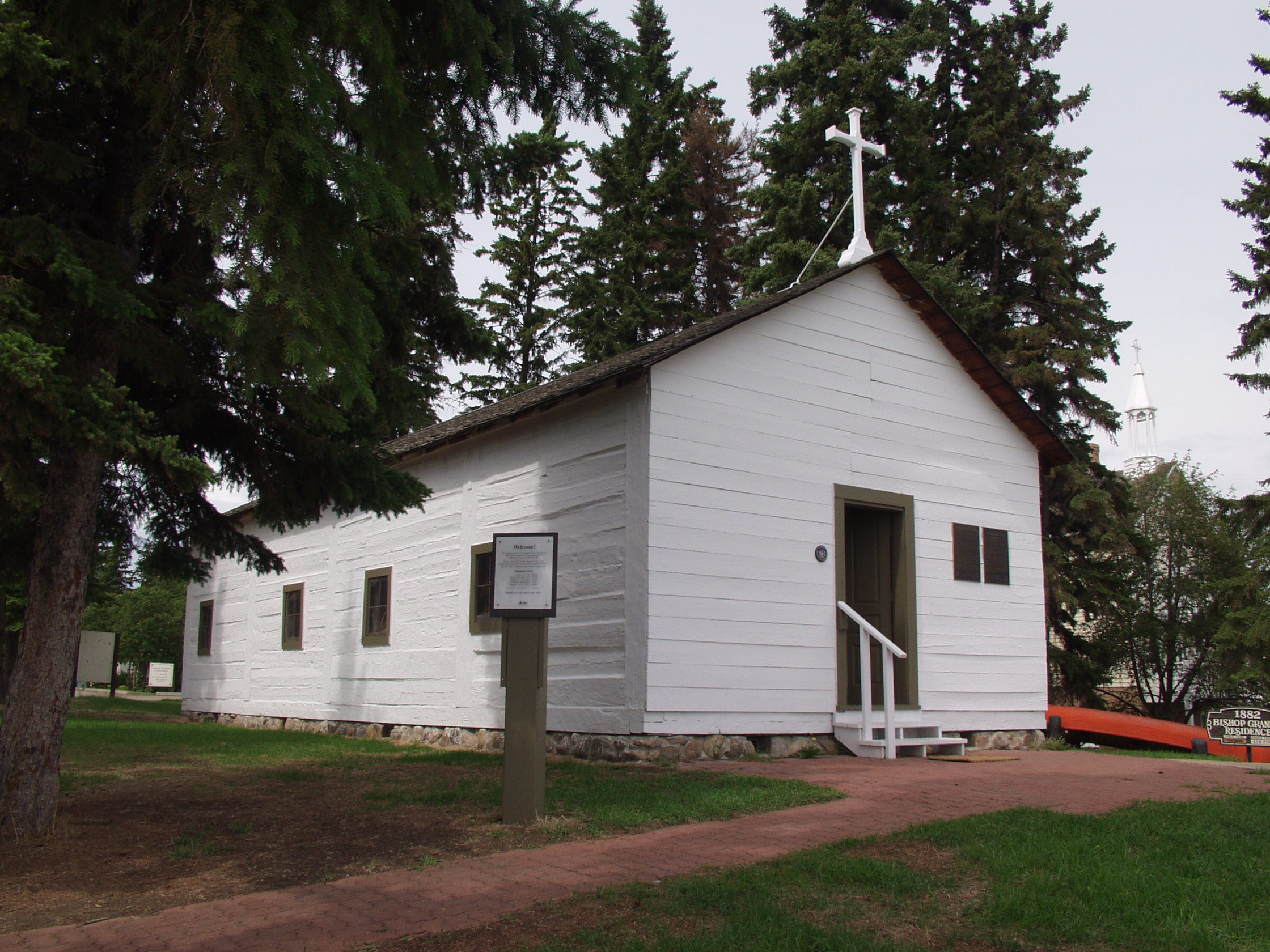
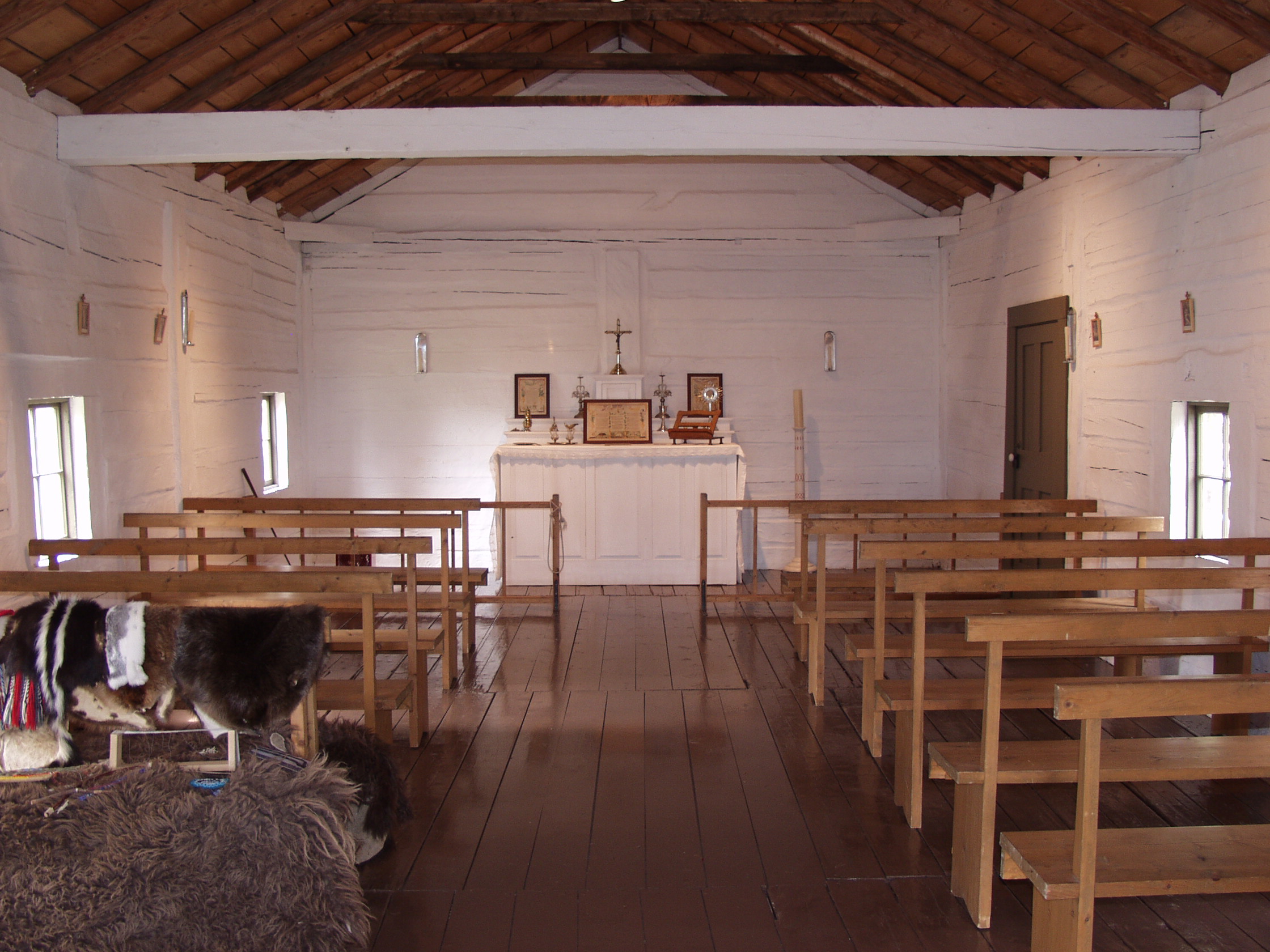
Did you know that a special Alberta community is celebrating its sesquicentennial this year? For that matter, do you know what a sesquicentennial is? It’s a 150 year anniversary and the City of St. Albert is marking that major milestone in 2011. At the heart of the celebrations is the Father Lacombe Church situated on Mission Hill. Erected in 1861, the church is the oldest extant building in Alberta and embodies the community’s early history as a Roman Catholic mission. From those humble beginnings, St. Albert developed into one of the largest settlements between Red River and Vancouver. Today, it’s a vibrant, prosperous city. Learn more about this site and other historic places in St. Albert by visiting the Alberta Register of Historic Places and searching for “St. Albert” under the Municipality advanced search option.
Written by: Matthew Wangler, Manager of Alberta’s Historic Places Research and Designation Program
The name Skrine Creek has been officially adopted for a previously unnamed creek in the Porcupine Hills. The name commemorates Walter and Agnes “Nesta” Skrine (pronounced “screen”), who were early operators of a medium-sized ranch in the region. The spring-fed creek rises in the Municipal District of Ranchland No. 66 and flows northerly into the Municipal District of Willow Creek, where it joins Mosquito Creek approximately 24 kilometres west of Nanton.
Walter Skrine was born in Somerset England in 1860. After receiving his education at Oxford University, he managed a coffee plantation in Ceylon until the early 1880s. In either 1883 or 1884, he to migrated to the Canadian northwest, where he began ranching along the Highwood River in the “Pekisko Hills” (Little Rolling Hills) region. After losing most of his cattle during the disastrous winter of 1886/87, he moved further west and established a ranch on Mosquito Creek. He chose the site due to the protection offered by the surrounding hills and the plentiful water supplied by the area’s creeks and springs. He settled first as a squatter, but later filed on a 160-acre homestead and leased nearly 16,000 acres of surrounding land. Starting with 200 head of cattle, he grew the herd to 700 head by 1898. Walter was active socially and politically within the ranching community. He ran, unsuccessfully, for the Territorial Assembly and, in 1885, the North-West Stock Association, a protest movement against the policies of the existing territorial stock association, was formed during a meeting at Skrine’s house in 1885.
In 1895, Walter travelled to Ireland where he married Agnes “Nesta” Shakespeare Higginson of County Antrim. Walter and Nesta travelled back to Canada, where she took an active role in the daily activities of the ranch. Nesta was a very well-educated young woman and a talented writer and poet. She was published throughout Europe, mainly in Blackwood’s Magazine, under the pseudonym Moira O’Neill. She also published a short novel, The Elf-Errant (1895) and two books of poetry, Songs of the Glens Antrim (1900) and More Songs of the Glens of Antrim (1920). Ranching life and the landscape of the Canadian West provided inspiration for much of her prose and poetry, notably a prose piece entitled “A Lady’s Life on a Ranche,” which has been republished in many anthologies about southern Alberta ranching history, and a number of poems in both of her published books.
Unlike many of their fellow ranchers, the Skrine’s welcomed the arrival of farmers into the region and assisted many of them in establishing themselves. However, the transition of the local economy from ranching to farming put pressures on many ranchers. In 1902, Walter and Nesta sold the Bar S Ranch to a neighbour and returned to Ireland. They settled at Ballyrankin House in County Wexford. In 1921, the house was burned by Irish patriots, one of many such attacks on English gentry during “The Troubles.” Undaunted, the Skrines, purchased the Newlands House, about a mile away and re-christened it as Ballyrankin House. Walter Skrine died here in 1930 following a hunting accident. Nesta Skrine died on January 22, 1955. As of 2011, the Bar S Ranch continues to operate on the same land originally selected by Walter Skrine in the 1880s.
The proposal to name this water feature Skrine Creek was received from Clay Chattaway, the current owner/operator of the Bar S Ranch in September 2009. The proposed name was supported by both Municipal Districts, the surrounding land-owners and descendants of the Skrine family living in Ireland. The proposed name received the approval of the Alberta Historical Resources Foundation in November 2010 and the Minister of Culture and Community Spirit in February 2011.
National Topographic System Map Sheet: 82 J/8 – Stinson Creek
Latitude/Longitude: 50° 16′ 56″ N & 114° 5′ 57″ W to 50° 19′ 37″ N and 114° 6′ 18″ W
Alberta Township System: Sec 20 Twp 15 Rge 1 W5 to Sec 5 Twp 16 Rge 1 W5
Description: Rises in the MD of Ranchland No. 66 and flows north into the MD Willow Creek No. 6. The creek flows northerly into Mosquito Creek, approximately 24 km WSW of Nanton.
Additional Resources
Additional information about Walter and Nesta Skrine and the history of the Bar S Ranch can be found in the following resources:
Skrine, Agnes, “A Lady’s Life on a Ranche,” In A Flannel Shirt and Liberty: British Emigrant Gentlewomen in the Canadian West, 1880-1914, edited by Susan Jackel, 95-110. Vancouver: University of British Columbia Press, 1982. Originally published in Blackwood’s Edinburgh Magazine vol. 163 no. 987 (January 1898).
Higginson, T. B. “Moira O’Neill in Alberta,” Alberta Historical Review vol. 5 no. 2 (Spring 1957): 22-25.
Klassen, Henry. “A Century of Ranching at the Rocking P and the Bar S.” In Cowboys, Ranchers and the Cattle Business: Cross-Border Perspectives on Ranching History, edited by Simon Evans, Sarah Carter and Bill Yeo, 101-122. Calgary: University of Calgary Press and Boulder: University Press of Colorado, 2000.
Blog Post Written by: Ron Kelland, Historic Places Research Officer and Geographical Names Program Coordinator


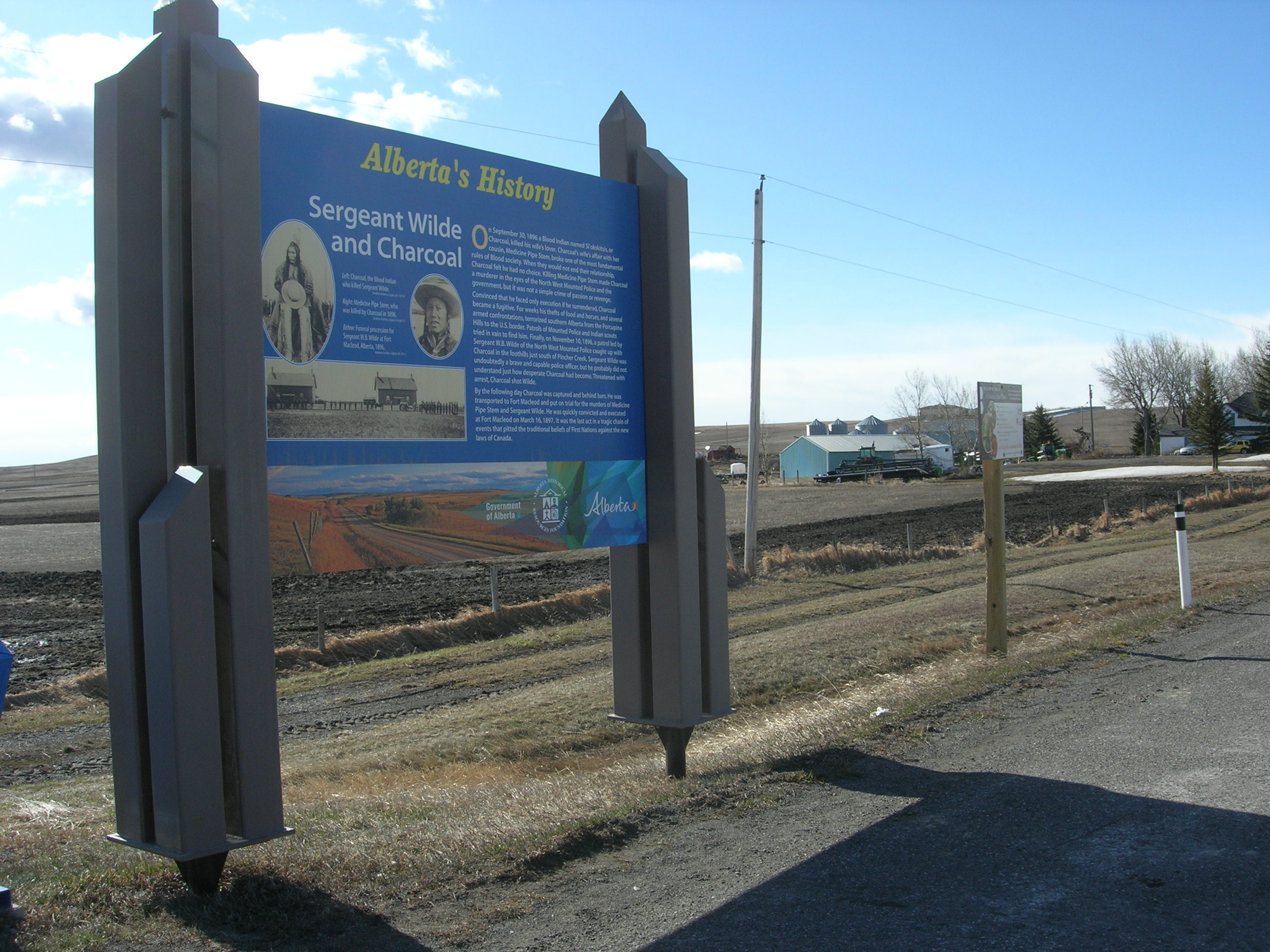 You have all probably seen them – large blue heritage markers located at highway rest areas or points of interest throughout Alberta. These interpretive signs tell of Alberta’s rich heritage. Have you ever stopped to read one? At the end of April I was attending meetings in the Town of Pincher Creek and came across a heritage marker telling the story of Sergeant Wilde and Charcoal. I stopped, curious to learn about an aspect of Alberta’s history. With camera in hand, I decided to also produce an impromptu video blog post. Please watch and enjoy (but bare in mind that my videography skills require some fine tuning).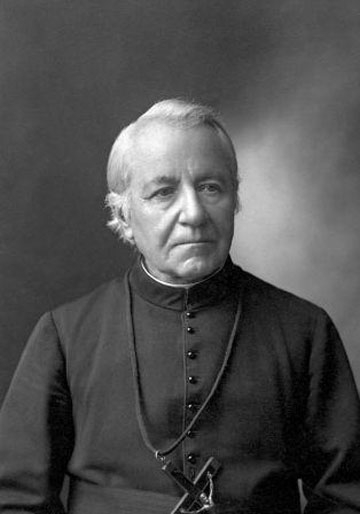









 RETROactive